How to grow potted narcissus and points to note: water generously
Everyone has surely seen the narcissus; it is a very beautiful flower, honored as one of China's top ten famous flowers and deeply loved by flower growers. In daily life, many people grow flowers, and most of them like beautiful blooms, so quite a few choose to grow narcissus. So how do you grow potted narcissus? Below is a carefully compiled guide to narcissus growing methods and points to note, in which watering is the key, so friends who want to grow it should not miss it.
I. How to grow potted narcissus: create the right conditions
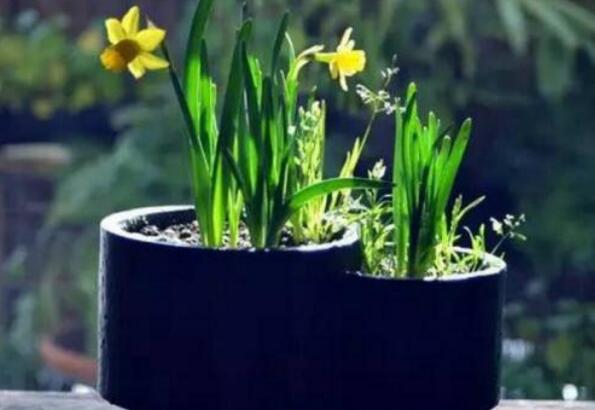
How to grow narcissus is mainly about the growing itself. Since you want to grow it, you need to understand its growth habits, and what we need to do is meet them! Below are the growing methods and points to note for narcissus, covered mainly through 5 aspects: soil, light, watering, temperature and fertilizing. Let's take a look at the specifics.
II. Growing methods and points to note for narcissus
1. Soil: loose with good drainage
When it comes to how to grow potted narcissus, the first consideration is naturally soil, since without soil there is no pot growing at all. It is understood that narcissus has strong adaptability, so it is not demanding about soil. But to grow it well, it is best to grow it in soil that is loose in texture, well structured and strong in water retention.
Points to note: Although narcissus is not demanding about soil, heavy clay soil and gravelly ground are not suitable for its growth. Apart from that, alluvial soil and other soils rich in organic matter with good drainage can be used for planting.
2. Light: about 6 hours a day
In narcissus growing methods, light is indispensable, but narcissus is a short-day plant, so about 6 hours of light a day is normally enough. During the growing period, however, the light time for narcissus should be increased and kept at about 10 hours.
Points to note: Narcissus is not demanding about light, but once the light time is insufficient, it will bloom less. So when growing narcissus at home, it is best to place it on the balcony, which ensures enough light time.
3. Water: water more during the growing period
When it comes to narcissus growing methods, adequate water is very key. It is understood that narcissus belongs to the wet-growing type, and its water requirements differ at different stages:
① Early stage of bulb planting: at this time the narcissus roots have just emerged and are still very fragile, so the water requirement is small; water lightly and just keep the soil moist.
② Growth and development stage: at this time the narcissus metabolism is very active and the water requirement is large, so it must be replenished in time and watered frequently.
③ Maturity stage: at this point the narcissus metabolism begins to weaken again, so the water requirement decreases accordingly and watering can be reduced.
Points to note: When watering narcissus, it is best to use well water, rainwater, river water or stream water for water culture; if tap water is used, it should be stored in a basin or vat for 2 to 3 days in advance to settle and clear. Apart from that, do not water heavily, to prevent root rot from occurring and affecting the growth of the narcissus.
4. Temperature: 18-20°C is best
Besides the points above, temperature is also very important for how to grow narcissus. It is understood that narcissus likes shade in the early stage and warmth in the later stage, so keeping the temperature at 18-20°C is best.
Points to note: Narcissus is relatively cold-tolerant, though this is also relative to other flowers. According to research, the critical cold tolerance of narcissus is -3°C; once it drops below -3.5°C, frost damage to the leaf tips occurs. So in winter, narcissus should be moved indoors.
5. Fertilizing: apply a small amount of phosphorus fertilizer
Flowers, like people, need adequate nutrition during the growing period, so in narcissus growing methods, fertilizing is also a point that cannot be ignored. It is understood that after budding, the nutrients in the narcissus bulb are almost exhausted, so in the later part of the growing period, growers should fertilize appropriately, and applying a little phosphorus fertilizer is enough.
Points to note: Although narcissus needs fertilizing, its requirements are actually not high, so the idea some growers have that more fertilizer will make narcissus grow faster must be avoided, because once too much fertilizer is applied, it causes fertilizer burn and thus affects plant growth.
III. Points to note when planting narcissus
In the narcissus growing methods above, a few points to note have already been introduced, and I believe everyone has remembered them. But besides those mentioned, there are two more points growers need to note: 1 is pests and diseases, 2 is placement. The points to note when planting narcissus are as follows:
1. Pest and disease control
In the process of growing narcissus, pests and diseases will inevitably appear for various reasons, and this is when you should pay attention. The main disease is stem base rot, which mainly harms the bulb; the main pest is the narcissus stem nematode, which mainly harms the leaves and flower stems. Specific solutions are described in detail in narcissus pest and disease control, so they will not be discussed further here.
2. Placement issues
When it comes to points to note in narcissus planting, placement is also something growers must be extremely careful about. Ripe fruit must not be placed beside the narcissus plant: this prevents gases such as ethylene released by various fruits from accelerating flower withering and thus shortening the narcissus flowering period.
Growing methods and points to note for household potted narcissus
Chinese narcissus is one of the important varieties of the widely cultivated French narcissus, mainly concentrated along the southeastern coast of China. Narcissus likes warmth and moisture, and also needs good drainage. Narcissus originated in Jiangling, Hubei. It has a cultivation history of more than a thousand years in China and is one of China's traditional famous flowers.
Selecting bulbs
The quality of the narcissus bulb determines how many flowers bloom and whether the fragrance is rich. To grow a good pot of narcissus, you must start by selecting good narcissus bulbs. Bulb selection can be done from four aspects: shape, color, pressing and "zhuang" grade.
1. Shape: High-quality narcissus bulbs are generally large, flat in shape and hard in texture, with relatively wide spacing between the longitudinal vein stripes on the surface, a very tight inner membrane, bright skin color, a broad and thick root plate, and symmetrical small bulbs growing beside the main bulb.
2. Color: Seen from the outside, bulbs that are dark brown, with intact outer membrane, bright luster, and no traces of decay or pest damage are top grade.
3. Pressing: Pressing is the main means of selecting and identifying how many flower scapes a narcissus has. You can pinch the bulb between thumb and forefinger and press slightly; if it feels columnar in outline, elastic and fairly firm, it is a flower scape; if it feels soft, flat in outline and slightly less elastic, it is mostly a leaf bud.
4. Zhuang grade: Narcissus is generally packed in bamboo baskets of the same size, with four packaging specifications of 20, 30, 40 and 50 bulbs per basket, commonly called 20 zhuang, 30 zhuang, 40 zhuang and 50 zhuang. The fewer the number per basket, the larger the individual bulbs. For example, with 20 zhuang bulbs packed 20 per basket, each bulb can reach 12 cm in diameter, making it first grade; with 30 zhuang, the individual bulbs are slightly smaller than 20 zhuang. The above two kinds of narcissus bulbs can generally produce more than 4-7 scapes per bulb, making them top grade. With 40 zhuang and 50 zhuang bulbs, the individuals are much smaller, and generally they can only produce flowers on 1-3 scapes.
Sprouting dormant bulbs
1. Peeling: that is, peeling off the layer of brown skin on the outside of the bulb.
2. Cutting the bulb: on the upper half of the bulb, make a horizontal cut downward at 1/3 on the left and right, then cut horizontally upward to remove 2-3 layers of scales, and at the same time make a vertical cut downward on both sides of the bud at the center, deep to the middle of the bulb. During the operation, avoid injuring the tender buds, and carefully remove the old roots and soil at the base.
3. Soaking the bulb: soak the cut bulb in clean water for 1-2 days, then rinse off the sticky fluid that flows out of the bulb.
4. Sprouting: the soaked bulb should be exposed to sunlight, preferably placed in a container and covered with a layer of rice husk. Water once a day to keep the rice husk warm and moist. At this time, be careful to guard against cold and excessive light, and cover appropriately. After a week, new buds sprout and can be fully exposed to sunlight. After about 50 days, the flower heads emerge, and the narcissus bulb can be taken out, rinsed clean, and transplanted into a water basin for growing.
Growing methods
Narcissus likes sunlight and warmth, requires high air humidity, is not very cold-tolerant, and fears heat; during the vegetative growth period it needs moist but non-waterlogged sandy soil. Unlike other perennial herbaceous flowers that go dormant, narcissus has the characteristics of starting growth in autumn, blooming in winter, storing nutrients in spring, and going dormant in summer. There are two ways to cultivate narcissus: water culture and soil culture.
1. Water culture method for narcissus
The water culture method is cultivation by shallow-basin immersion; place the sprout-treated narcissus upright in a shallow narcissus basin, add water to about one third of the bulb's height, and use quartz sand, pebbles, etc. in the basin to fix the bulb.
① During the day, the narcissus basin should be placed in a sunny spot; at night, move it indoors and pour out the water in the basin to control leaf etiolation. Add clean water again the next morning, and be careful not to change the direction of the bulb. Just after potting, narcissus can be given fresh water once a day, then once every 2-3 days, and once a week after the flower buds form. Narcissus grows well at 10-15°C, blooms in about 45 days, and the flowering period can last more than a month.
② During the water culture period, narcissus must especially be given adequate light; place it in a sunny spot during the day and under lamplight at night. This prevents the stems and leaves from etiolating, making the narcissus leaves short, broad and thick, sturdy, deep green, and the flowers fragrant. Water-cultured narcissus generally does not need fertilizing; if conditions allow, applying a little quick-acting phosphorus fertilizer during the flowering period can make the flowers bloom better.
③ Growing narcissus requires no flower fertilizer at all, only clean water. To make narcissus grow robustly, it should be taken to the balcony to sunbathe during the day. If you want to delay the flowering period, you can lower the water temperature, or pour out all the water in the basin in the evening and add clean water again early the next morning. In addition, if full flower buds cannot be seen 10 days before the festival, you can raise the water temperature to force flowering, with the water temperature preferably close to body temperature.
As long as you master the conditions for narcissus care, you can make "flowers bloom as you wish"; otherwise they will be delayed, or even grow only leaves without blooming.
2. Soil culture method for narcissus
① The soil culture method is less commonly used by households; it cultivates narcissus using the method for most moisture-loving flowers. In mid to late October, plant large bulbs in a small flowerpot with a drainage hole using fertile sandy soil, planting half and leaving half exposed, with a little fine sand placed under the bulb beforehand to aid drainage. Place the flowerpot in a sunny room with suitable temperature. 4 to 12°C is good; too low a temperature easily causes frost damage, while too high a temperature plus insufficient light easily causes etiolation, making the plant thin and weak, shortening the flowering time and reducing ornamental value. If light and temperature requirements are met during management, the leaves will be thick and large and the flower stalks stout, so the flowers bloom large and the fragrance lasts. For soil-cultured narcissus, apply liquid fertilizer two to three times before flowering.
② Due to limited climatic conditions, narcissus cannot reproduce on its own. When cultivating narcissus, if there is no pest or disease damage, no pesticide spraying is needed. For winter water culture of narcissus, temperature, light and water supply are the three key elements for whether it can bloom. Narcissus growth requires adequate sunlight; a suitable temperature of 12°C-15°C; and clean water.
Preventing "dumb flowers"
The so-called "dumb flowers" refers to the phenomenon during water culture of narcissus in which the flower scape dies midway, the flower buds wither, or the buds decline before opening. The "dumb flower" phenomenon is mainly caused by the following reasons:
1. Poor quality narcissus bulbs. The bulb is small and the flower buds develop poorly; the bulb suffers pest or disease damage, the root plate is dry and decayed, few roots form, and the constitution is weak.
2. Improper care. Infrequent water changes, insufficient light, too high room temperature and poor ventilation cause leaf etiolation and thin, weak flower scapes. In addition, injuring the roots and flower scapes when changing water can also lead to "dumb flowers".
3. Improper water culture season. For example, water culture performed before Frost's Descent when the bulb is in dormancy, or after Qingming when temperatures rise, will both produce "dumb flowers".
To prevent "dumb flowers", first select high-quality three-year-old bulbs for water culture. For water culture, it is best to use rainwater or pond water; if tap water is used, it should be stored for a day before use. Then ensure the narcissus receives adequate light, no less than 6 hours a day, and also pay attention to indoor ventilation. Keeping the temperature at 12-15°C is most favorable for narcissus growth. In the north, where the weather is dry, spray the narcissus plant with water every day.
Pest and disease control
The main pests and diseases of narcissus include large brown spot disease, leaf blight, nematode disease, Aspergillus disease and Penicillium disease.
1. Brown spot disease, mainly harming the leaves and stems of narcissus. When first infected it appears at the leaf tips, brown; when widely infected, lesions appear on both leaves and stems, causing the leaves to twist, the plant to stop growing, and eventually death. In the early stage of the disease, a 600-700 times water solution of 75% chlorothalonil wettable powder can be sprayed once every 5-7 days; several consecutive sprays can control the development of the disease. Before planting, peel off the membranous scales and soak the bulb in a 0.5% formalin solution, or in a 500 times water solution of 50% carbendazim for half an hour, to prevent this disease.
2. Leaf blight, mostly occurring on narcissus leaves. When it first appears it is a faded green yellow spot, then it expands in a fan shape, with a yellow-green halo around the edge, and later the leaf dries up and black granular matter appears. This disease can be prevented before planting by peeling off the dry scales and rinsing 2-3 times with dilute potassium permanganate. In the early stage of the disease, spray with a 1500 times water solution of 50% zineb.
3. Nematode disease, mainly harming the leaves and flower stems of narcissus. When it first appears, yellow-brown mosaic stripes appear on the narcissus leaves and flower stems, then blister-like or wave-like swellings appear, causing the leaf and stem epidermis to rupture and turn brown, until they wither. This disease can be prevented by soaking the bulb in a 0.5% formalin solution at 40-43°C for 3-4 hours. If a plant is found to be seriously infected during care, the diseased plant should be removed immediately and destroyed.
Controlling the flowering period
The flowering period of narcissus comes earlier than peach and plum but later than plum blossom. Generally, water culture starts in autumn and winter, and it blooms in winter and spring. So how can you make narcissus bloom during New Year's Day and the Spring Festival? This can be achieved by artificially controlling the narcissus flowering period.
Generally, a narcissus bulb under normal water culture can bloom on schedule in 45-50 days. So-called normal water culture means ensuring that after the narcissus is put in water, it has 6 hours of light a day and the room temperature is kept at around 10-15°C. If the weather is abnormal, with insufficient light and too low (or too high) a temperature, then measures must be taken so that the narcissus can bloom on schedule.
1. When the temperature is too low and light is insufficient, you can change the water in the narcissus basin to 12-15°C warm water; at night, wrap the narcissus basin with plastic film and use a 60-watt light 40-50 cm from the flowers to increase warmth and strengthen light, and at the same time spray water on the narcissus leaf surface to prevent a sudden temperature rise.
2. When the temperature is too high, add an appropriate amount of cold water to the narcissus basin, pour out the water in the basin at night, and carry out low-temperature treatment; this can delay the narcissus flowering.
Preventing excessive growth
1. If you want to cultivate narcissus with short leaves and long flower stalks, the key is to promote flower stalk growth and avoid leaf etiolation. When water-culturing narcissus, first remove the brown outer membrane of the narcissus bulb, make a vertical cut on the upper part of the bulb between the buds, cutting through 3-4 layers of scales, then make a horizontal cut on each side, taking great care not to injure the flower buds; wash off the sticky fluid and place it in a shallow basin for cultivation.
2. Place it in a sunny spot during the day, pour out the water in the basin at night, and add water again the next morning for cultivation; this can avoid leaf etiolation.
3. You can also achieve the effect of short leaves and long flower stalks by first planting in the ground or in a pot and then water-culturing. The specific method is to first plant the narcissus bulb in soil in a sunny spot, water it every day until the flower stalk emerges, then dig out the narcissus bulb, wash off the soil, and water-culture it indoors for viewing.
Post-flowering handling
Generally, after the Spring Festival, the narcissus flowers wither. People usually throw away the narcissus bulbs that have finished blooming, which is actually a great pity. Narcissus is a perennial plant that reproduces by bulbs; if those bulbs that have already bloomed are buried in soil again, they can continue to grow and reproduce.
Choose a vegetable garden or nursery plot that is sheltered from the wind, sunny and has deep soil; after deep plowing and raking level, build high ridges, open furrows on the ridges, and bury the bulbs that have already bloomed in them, naturally keeping the leaves. After a month, the leaves wither and the plant goes dormant; at this time dig up the bulbs, cut off the fibrous roots, and cut off the withered yellow leaves along the base, then bury the bulbs again, with a depth of 10 cm as appropriate, and at the same time apply decomposed cake fertilizer liquid or human and animal manure, then rake level. Do not take the easy way out and just bury them in a flowerpot, because the bulbs must spend the long three seasons of spring, summer and autumn in the soil, especially in summer and autumn, when it is hot; with the bulbs buried there and no leaves above, if you forget to water and fertilize them, they will die of drought.
After handling the bulbs, the next work is routine care and management. Usually you only need to make sure the plot gets adequate nutrients and stays moist but not waterlogged, and the bulbs will grow naturally. Wait until November or December, then dig out the bulbs; by then you will find the old bulbs have rotted and become hollow, but many bulbs of various sizes have multiplied around them. Pick out those bulbs with large, numerous buds, wash off the soil on them, peel off the brown surface membrane, then leave them outside in the sun for a few hours, and use a knife to cut a "" shaped incision on the top of the bulb, with a depth that does not injure the bud eyes inside the scales, to facilitate the growth of buds and leaves. Soak in clean water for 24 hours, wash off the gelatinous mucus flowing from the cut, and then normal water culture can begin. Generally after 3 days, white fibrous roots grow from the bottom of the bulb, and leaves gradually sprout from the bud eyes at the top. As for the small bulbs, since they will not bloom that year, let them grow in the soil for another year, and after they develop strong in the following year, dig them out for water culture.
Growing tips
1. Aspirin can help narcissus bloom. Dissolve 1-2 aspirin tablets thoroughly in water and use it to replace the clean water in the narcissus basin; this can make the flowers sturdier and more luxuriant.
2. Raising the temperature to force narcissus flowering. Narcissus grows slowly at low temperatures, so warming methods can be used to force flowering:
① Sunlight warming: move it outdoors into the sunlight during the day, or place it indoors by a south-facing window with ample sunlight, until it blooms.
② Lamplight warming: cover the flowerpot with a plastic cover and turn on an electric light to shine on it; stop when the temperature inside the cover rises to 23°C.
③ Electric heater warming: turn on an electric heater or place a hair dryer in a position where it will not scald the narcissus, letting warm air blow gently over the plant for several consecutive days until the flowers bloom.
④ Warm water warming: put a small amount of warm water into the water basin, letting the water temperature rise to 12-15°C.
3. Salt can extend the narcissus flowering period. When the narcissus flowers are in full bloom, put a small amount of table salt into the basin to extend the flowering period. Never put salt in when the narcissus buds are just about to open, otherwise it will instead inhibit the buds from opening. Alternatively, grind two aspirin tablets into powder, put them into 1000 ml of water, and after dissolving, sprinkle it into the basin of blooming narcissus; this can extend the narcissus flowering period by about a week.
4. Color enhancement method. When the narcissus flower scape grows to a height of about 25 cm, use a medical syringe to inject an aqueous solution of food coloring used for making pastries into the scape stem, with the injection point at the upper 1/4 of the stem height.
5. Preventing root rot. First, if the water is emptied at night, the fibrous roots will not dry out. If the fibrous roots turn yellow and soft: change the water frequently. Narcissus must keep its water clean; it is best to change the water once every 2-3 days to prevent root rot. The yellowed areas can be gently brushed with a soft toothbrush.
Complete guide to narcissus growing methods: points to note in narcissus cultivation
How do you grow narcissus? This is something many flower growers pay close attention to. With its pure white flowers, narcissus has a great decorative effect whether in the living room, bedroom or on the balcony, and is a fine indoor potted flower. Next, Xiao Qi will introduce the growing methods and points to note for narcissus.
Potted narcissus pictures
I. Growing methods for narcissus
1. Water culture growing method for narcissus
Before water culture, the dry brown scale leaves on the outer layer of the bulb should be peeled off, the root-protecting soil and the brown decayed roots at the base removed (be careful not to injure the white new roots), and the surface washed clean. Stand it upright in a shallow basin without a drainage hole, add water to about 1 cm below the bulb of the narcissus head, and place it in a cool place; after the bulb grows roots, place it in the sunlight.
For water-cultured narcissus, it is best to change the water every day; on one hand this prevents water deterioration and contamination that cause root rot, and on the other hand, changing the water daily keeps the water clean and the roots that grow white and beautiful. When changing the water, use sun-exposed tap water, and avoid too much water; soaking to a little less than half of the flower head is enough. Before flowering, it can be changed to once every 2-3 days.
Narcissus growth requires adequate sunlight; the suitable temperature is around 15°C. To make narcissus grow robustly, it should be taken to the balcony during the day to get more sun. Narcissus likes sunlight most; away from sunlight, it is very hard for narcissus to bloom. After the sun comes out, move the narcissus outdoors for direct exposure, and move it back indoors when the sunlight becomes insufficient.
2. Soil culture growing method for narcissus
For soil culture of narcissus, loose humus soil is required. Before planting, peel off the dry scale pieces on the outside of the narcissus head and scrape off the old roots, add humus soil to 3 cm below the pot rim, and firm the humus soil, then set the narcissus bulb base in the pot, continue adding soil for about 1 cm, then water thoroughly, and place the flowerpot in a cool place; after 5 days, when the bulb base has grown roots, place the flowerpot in a sunny spot for growing.
For soil planting, watering should follow "dry then wet", that is, do not water when the soil is not dry, and once you water, water until it leaks from the bottom of the pot. Watering should be done in the morning and evening, otherwise it will damage root growth.
3. Sand culture growing method for narcissus
For sand culture, it is best to use washed clean fine sand, and the pot should also be a breathable tile pot. Before planting, first put sand into the pot to 3 cm below the pot rim, then set the narcissus head with the old stem pieces and old roots removed in the flowerpot filled with fine sand, add about 1 cm more sand, so that the lower stem of the narcissus head is buried about 1 cm in the sand. Then water thoroughly and place in a cool place. After 5 days, place it in a sunny spot until it blooms. When planting narcissus heads in sand, water thoroughly every day; failure to water in time causes water shortage and affects the growth of the flower's roots. Watering should also be arranged in the morning and evening.
White narcissus pictures
II. Points to note in narcissus cultivation
1. Suitable temperature. Narcissus is a plant that likes shade in the early stage and warmth in the later stage. Generally, 18-20°C is the most suitable temperature for narcissus growth, so to grow narcissus well, you must first understand its requirements for growing temperature.
2. Soil requirements. Generally, when growing narcissus there are certain requirements for soil; in the growing process, narcissus needs loose, fertile soil, and it is best to choose sandy soil with good water retention.
3. Appropriate light. Narcissus is generally a short-day plant; usually about 6 hours of light a day is enough, so during growing you can place the narcissus on the balcony for an appropriate amount of light. If the light time is insufficient, the narcissus will bloom less.
4. Adequate water. Narcissus generally needs adequate water during growth and development; during the growth and development period, sufficient water must be provided. The growth and development period is the period of active metabolism for narcissus; generally at the maturity stage, metabolism weakens.
5. Adequate nutrition. Narcissus needs adequate nutrition during growth, so during the growth and flowering period, apply a little phosphorus fertilizer; this can make the narcissus bloom more beautifully. But also note that phosphorus fertilizer should not be applied in excess, otherwise it will affect the narcissus.
Yellow narcissus pictures
The above isgrowing methods and points to note for narcissusintroduced. Narcissus can be grown by water culture, soil culture or sand culture; flower growers can choose the growing method that suits their preference.