Why is my calla lily plant wilting? Do these 4 things to bring it back to life
The beauty of the calla lily lies in its neat, upright plant form and in its pure white, delicate flowers. Every year as the year draws to a close, the calla lily blooming season arrives, and we can enjoy a visual feast. However, due to improper care and other reasons, the plant can develop problems, such as yellowing and wilting calla lily leaves. So why is the calla lily plant wilting? Below, the editor introduces 4 solutions; once you do them, your calla lily will enjoy a second spring.
1. Why is the calla lily plant wilting? Root damage
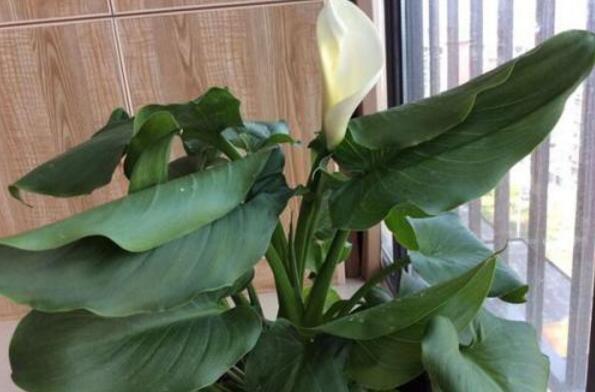
In our guide to growing calla lilies, we explained that it has requirements for soil, light, watering and so on, and once these requirements are not met, the calla lily will show wilting symptoms, seriously affecting its ornamental value.
As for why the calla lily plant wilts, the answer is: the calla lily is a tuberous-rooted plant, and damage to its roots is the main cause of wilting. There are 4 causes: improper watering, non-breathable soil, improper fertilizing and pests and diseases, as follows:
1. Improper watering
During the calla lily's growth, its water requirements are very high. However, when watering, be very careful: never water from above, because this easily pours water into the center of the calla lily leaves as well, causing water to accumulate in the tuber. At this point the plant easily contracts bacterial soft rot, leading to root damage. So why is the calla lily plant wilting? It may be that your watering method is wrong.
Solution: The watering method must be right. Specific operation: use the soaking method, letting water slowly seep into the pot through the base, thereby moistening the soil surface. This method avoids water accumulation and thus prevents root rot. In addition, growers can build a small mound of soil about 2 cm high at the base of the calla lily, which prevents water from pouring directly onto the root base when watering.
2. Non-breathable soil
Why is the calla lily plant wilting? Besides improper watering, soil that is too wet and not breathable is also one of the causes. Calla lilies like loose, breathable soil and dislike non-breathable yellow clay with poor drainage. Once you use the wrong soil, or bury the tuber too deep, root rot will occur, causing the plant to wilt. Not only that, roots that are too dry due to overly dry soil will also cause the plant to wilt.
Solution: If you find that the wilting is caused by soil, growers should dig out the calla lily tuber, remove the rotted parts of the roots, then soak it in a 800x dilution of carbendazim solution or a 1000x dilution of potassium permanganate solution for 30 minutes, let it dry, and replant it in a pot. Note: if the potting soil is already infected, replace it directly. After repotting, cut the calla lily leaves and stems as short as possible to promote root development.
3. Improper fertilizing
During the calla lily's growth, its optimum temperature is 22-30°C. Once the temperature falls below 10°C or rises above 30°C, the calla lily enters dormancy, and at this point the plant stops growing. If you are a beginner grower, you may not pay attention to this and still fertilize as usual. This is absolutely wrong, and the result is root rot, which causes the plant to wilt.
Solution: After reading the above, it is obvious that the calla lily plant is wilting due to over-fertilizing. At this point growers can adjust the temperature to wake the calla lily from dormancy; during this stage do not fertilize, and after a while it will enjoy a second spring.
4. Red spider mite infestation
In our guide to calla lily pest and disease control, we introduced one of the calla lily's pests, the red spider mite. It sucks the plant's sap, causing a nutrient deficiency, and the plant then shows wilting symptoms, with severe cases leading to death.
Solution: Open the windows for ventilation, and regularly mist to maintain air humidity. If you find red spider mites, growers can spray the branches and leaves with an 800x dilution of dimethoate, focusing on the undersides of the leaves.
When people lack energy they feel tired and weak all over; in fact, when plants lack nutrients the same happens, and this is the root cause of plant wilting. After reading the above, I believe everyone now understands why the calla lily plant wilts. The solutions are not difficult either. If you love flowers, be sure to remember them, so that when you encounter this situation you can solve it right away. Finally, may your calla lily bloom beautiful flowers!
Why is the calla lily plant wilting?
Causes of calla lily wilting
The calla lily is a tuberous-rooted plant, and the main cause of plant wilting is root damage. The causes are as follows:
Improper watering
The calla lily needs plenty of water during its growing period, but it must not be watered from above, as this easily pours water into the center of the leaves, causing water to accumulate in the tuber and making it prone to bacterial soft rot, which leads to root damage.
Soil too wet and not breathable
Tuberous and bulbous plants generally need loose, breathable potting soil, and dislike heavy, non-breathable yellow clay with poor drainage. If the tuber is buried too deep, it easily rots. If the soil is too dry, the roots dry out, which also causes the plant to wilt.
Improper fertilizing
When the temperature drops below 10°C or rises above 28°C, the calla lily enters natural dormancy and the plant stops growing. At this point watering must be controlled and fertilizing stopped. Otherwise the plant wilts and is very difficult to keep alive after the dormancy period.
Red spider mite infestation
Red spider mites suck the plant's sap and like to spin webs. When the entire leaf is wrapped in webs, the calla lily becomes extremely weak and soon dies.
Solutions for calla lily wilting
Unpot and disinfect
Dig out the calla lily tuber, remove the rotted parts of the roots, then soak it in a 800x dilution of carbendazim solution or a 1000x dilution of potassium permanganate solution for 30 minutes, let it dry, and replant it in a pot.
If the original potting soil is already infected with bacteria, it is recommended to replace it. After repotting, cut the leaves and stems as short as possible to promote root development.
Watering and fertilizing
For watering, use the soaking method, letting water slowly seep into the pot through the base, thereby moistening the soil surface; this method prevents root rot. Alternatively, when repotting, build a small mound of soil 1.5-2 cm high directly above the roots to prevent water from pouring directly onto the root base when watering.
For fertilizing, choose granular fertilizer and sprinkle it on the surface. While the wilting symptoms have not fully eased, try not to apply liquid fertilizer.
Pest and disease control
Open the windows for ventilation, and regularly mist to maintain air humidity. If you find pests, spray the branches and leaves with an 800x dilution of dimethoate, focusing on the undersides of the leaves. Even simpler is to use a small amount.
Calla lily Zantedeschia aethiopica Spreng Calla lily profile: how to grow calla lilies / how to propagate calla lilies
Calla lily fact sheetCalla lily Zantedeschia aethiopica Spreng
Aliases: arrowroot flower, water taro horse, Guanyin lotus
Classification: tuberous flower
Family and genus: Plantae, Angiosperms, Monocots, Alismatales / Alismatales, Araceae, Zantedeschia
Peak blooming season: spring, summer, winter
The calla lily is a bulbous flower of the Araceae family, genus Zantedeschia. It is one of the emerging flowers of recent years, with relatively large demand as a cut flower and broad prospects. Because the calla lily's leaves are emerald green and its spathe is pure white and large, just like a horse's hoof, with a peculiar shape, it is an important cut flower at home and abroad and has a very wide range of uses. The calla lily's natural blooming season runs from November until June of the following year, and it generally rarely produces ripe fruit.
Calla lily growing methods and precautions Calla lily introduction
The calla lily is a bulbous flower of the Araceae family, genus Zantedeschia. It is one of the emerging flowers of recent years, with relatively large demand as a cut flower and broad prospects. Because the calla lily's leaves are emerald green and its spathe is pure white and large, just like a horse's hoof, with a peculiar shape, it is an important cut flower at home and abroad and has a very wide range of uses.
The calla lily's natural blooming season runs from November until June of the following year, and it generally rarely produces ripe fruit.
Morphological characteristics of the calla lily
The calla lily is a perennial herb with a thick, fleshy tuber, and the plant is about 1-2.50 m tall. The leaves are basal, with long petioles; the petiole is generally twice the length of the leaf, ridged at the top and sheathing and folded around the stem at the bottom; the leaves are ovate-arrow-shaped, entire, and bright green.
The calla lily's peduncle grows beside the leaves, rising above the leaf cluster. The spadix is enclosed within the spathe, and the spathe is large and opens into a horseshoe shape; the spadix is cylindrical and bright yellow, with stamens on the upper part and pistils on the lower part.
The calla lily's fruit is fleshy and enclosed within the spathe; its natural blooming season runs from November until June of the following year, with the whole blooming period lasting 6-7 months, and it coincides with the peak flower-using season. In places with suitable climate conditions, seeds can be harvested, but it generally rarely produces ripe fruit.
Ecological habits of the calla lily
The calla lily likes a warm climate, is not cold-tolerant and not heat-tolerant, and its optimum growing temperature is around 20°C; at 0°C the rhizome freezes and dies. In winter it needs plenty of sunlight, and with insufficient light it produces few flowers; it is slightly shade-tolerant. In summer, when the sunlight is too intense and scorching, provide appropriate shading.
The calla lily likes moisture, and slight water accumulation does not affect its growth much, but it is not drought-tolerant. The calla lily likes loose, fertile loam rich in humus. Its dormancy period varies with the region. When cultivated in the Yangtze River basin and northern China, it should be moved into a greenhouse in winter, blooming in winter and spring, and it goes dormant in summer due to high temperatures and drought; in subtropical regions where winter is not cold and summer is not dry and hot, it does not go dormant all year round.
Calla lily cultivation techniques Cultivation points
Calla lilies are usually planted as bulbs after autumn, with a row spacing of 25 cm and a plant spacing of 10 cm in beds. Use fertile, slightly clayey soil, for example: 2 parts garden soil, 1 part rice husk ash, plus a little bone meal or barnyard manure; or use a soil mix of 2 parts finely crushed pond mud, 1 part leaf mold (or compost), with an appropriate amount of superphosphate and decomposed cow manure added.
After planting, cover with 3 cm-4 cm of soil, and seedlings emerge in about 20 days. During the calla lily's growing period it likes plenty of water; frequently sprinkle water on the leaves and the ground, and keep the leaf surfaces clean. Apply liquid fertilizer once every half month. After fertilizing, immediately rinse with clean water to prevent accidents. Move into the greenhouse before frost, keeping the room temperature above 10°C. During the care period, to avoid too many leaves affecting light exposure, the outer leaves can be removed, which also helps the peduncle extend. February-April is the peak blooming period; after blooming, gradually stop watering; after May the plant begins to turn yellow, so pay attention to ventilation and keep it dry to prevent the tuber from rotting. When the plant is completely dormant, the tuber can be taken out, dried and stored, then replanted in autumn.
Cultivation tips
The calla lily is a perennial herb of the Araceae family with a thick, fleshy tuber. It grows 60-70 cm tall. The leaves are ovate-arrow-shaped, the spadix is yellow, and the spathe is white and horseshoe-shaped, hence the name. In the greenhouse it blooms profusely in March-April, and when planted in the ground in northern greenhouses it can bloom until May. It is native to South Africa. It likes a warm, humid environment with slight shade, and needs sunlight during the blooming period. Propagate by division or by planting small offsets in autumn, and it can bloom in 2 years. Plant in pots in late September, keeping the temperature above 10°C in winter. Apply fertilizer once every 15 days, and never let water get into the leaf petioles. Water thoroughly during the growing period. In May it turns yellow; reduce watering to promote dormancy. In autumn, remove the aged parts at the base of the tuber and repot. The same genus includes yellow and red calla lilies, which have high planting requirements. The calla lily's spathe is as pure as jade, making it an important material for potted plants and cut flowers.
Calla lily growing methods Potted cultivation techniques
Calla lilies are suitable for planting from late August to early September. Field planting is used for cut flower production: plant 3 vigorous rhizomes as a group in fertile fields, and they can bloom around New Year to supply the market. For potted plants, plant 2-3 large bulbs or 1-2 small bulbs per pot, and the potting soil can be garden soil plus organic fertilizer.
After planting, place in semi-shade; after sprouting, place in sunlight; when frost comes, move into the greenhouse, keeping the room temperature above 10°C. During the growing period, keep the potting soil moist, usually sprinkling water on the leaves and the ground to increase air humidity.
Apply liquid fertilizer once every half month. Before blooming, it is advisable to apply fertilizer mainly of phosphorus to control stem and leaf growth, promote flower bud differentiation and ensure flower quality. When fertilizing, never let the fertilizer water flow into the leaf petioles, to avoid causing rot. If there are too many leaves during the growing period, a few outer old leaves can be removed to help the peduncle emerge; February-May is the period of abundant blooming. After the weather turns hot in late May, the plant begins to turn yellow, so gradually stop watering, provide moderate shading and prevent water accumulation.
Potted plants should be moved to a ventilated, semi-shaded place and the pot laid on its side to avoid rainwater accumulation, keeping it dry and promoting dormancy. After all the leaves have turned yellow, the bulbs can be taken out, dried and stored in a ventilated, cool place. Before planting in autumn, cut off the aged parts at the base of the bulbs and replant. Large bulbs bloom, while small bulbs can be grown on for stock.
Propagation methods of the calla lily
The calla lily is mainly propagated by dividing the bulbs. After the plant enters dormancy, peel off the small bulbs around the tuber and plant them separately.
The calla lily can also be propagated by seed; sow the seeds in pots as soon as they mature. The optimum germination temperature is around 20°C.
Calla lily cut flower techniques Cut flower points
Harvesting can be done according to the different requirements of different customers, fully meeting customer needs. Harvesting technique: when harvesting, you should hold the base of the fresh flower and pull it straight up with force; if you hold it too high up, the flower is easily snapped off, and if you pull at too much of an angle, it easily damages the plant or even uproots weak-growing plants entirely.
Fresh flower packaging and storage techniques Calla lily cut flowers should be packaged and stored promptly after harvesting. Generally, ten stems make a bunch; align and bring together the heads of the ten flowers and tie the neck, middle and lower parts separately with narrow tape. Generally, keep 80 cm of the flower and cut off the rest of the tail, and note that some of the tail of each flower should be cut off to help water travel upward. After packaging, the flowers should be placed vertically in a bucket promptly and stored in a cool place; keep the water clean and it should cover 2/3 of the height of the flower stems.
The calla lily is a potted plant grown for both foliage and flowers, and is also an important cut flower material. For potted cultivation, choose well-drained sandy loam and apply plenty of base fertilizer. A good base fertilizer is fully decomposed cake fertilizer or pig barnyard manure. After the first blooming in early spring (or in autumn), dig out the sprouted bulbs around the rhizome of the mother plant and plant them separately in pots. After planting, water thoroughly, place in shade and keep the potting soil moist. After sprouting, move to under a shade frame in a place with scattered light for care; be careful not to expose it to direct sun, and do not shade it completely. In addition to the base fertilizer applied before planting, apply liquid fertilizer once every 20 days or so during the growing period. The fertilizer can be decomposed cake fertilizer water; during the peak growing season, apply an additional dilute liquid fertilizer mixed with nitrogen, phosphorus and potassium once every 10 days or so. When fertilizing, never pour the fertilizer water into the leaf sheaths, to avoid causing rot.
In addition, during the growing period it needs frequent watering, and in the morning and evening spray water on the ground around the pot to increase humidity; it is best to wipe the leaf surfaces with a water-soaked sponge every 5-7 days to keep the leaves fresh and clean. When the leaves are luxuriant, thin them out promptly to help the peduncle emerge. The calla lily begins blooming at Spring Festival, with March-April being the peak blooming period; after the flowers fade, promptly cut off the spent flowers and scapes to avoid consuming nutrients. Blooming can continue until May. From after May to July, it enters dormancy, so water less and do your best to create a relatively dry environment for it; after all the leaves have turned yellow, take out the bulbs and store them in a ventilated, cool place, then plant them in pots again in autumn.
If you do not let the calla lily go dormant, you can move it in late June to a fully shaded place with excellent ventilation for care. Spray water on the ground 2-3 times every noon and afternoon to lower the temperature; as long as the daytime temperature does not exceed 30°C, the calla lily can continue to bloom.
Generally, before the Cold Dew solar term in October, move the calla lily indoors, control watering and keep the room temperature no lower than 10°C. Once a week, wash the leaf surfaces with shallow water close to room temperature to keep the leaves fresh and green. If the air is dry, spray water around the flowers to increase humidity. In winter, pay attention to increasing light. To promote early spring blooming, water with dilute fertilizer water 1-2 times in December.
Cut flower preservation
When the calla lily's spathe has extended to its maximum, curled and opened, it can be harvested. After harvesting, wrap the upper part of each cut flower stem with cellophane, grade by size, then pack in boxes and bring to market. Fresh cut flower transport: because of their own characteristics, cut flowers need attention during transport to avoid damage during the process. For long distances, about 20 bunches should be one transport unit, first put in plastic bags and then packed in boxes for transport; for short distances, to save costs, large plastic bags alone can be used, and all of them should be fastened together with tape before bagging for transport. During the process they should be laid flat on top of a surface to avoid being crushed and damaged by other items.
Soilless cultivation of the calla lily Variety selection
Common horticultural varieties of the calla lily include the white-petiole type, the green-petiole type and the red-petiole type. The white-petiole type has smaller tubers, with the petiole base white-green, slow growth, a white spathe, an early blooming season and many flowers, and tubers only 1-2 cm in diameter can bloom. The green-petiole type has thick, large tubers, with the petiole base green, vigorous growth, a tall plant and yellow-white flowers, blooms late, and the tubers must reach 5-6 cm or more in diameter to bloom. The red-petiole type has moderate growth vigor, with the petiole base tinged red and a white spathe, and its blooming season falls between the white-petiole and green-petiole types.
In addition, there are some common horticultural cultivars in the same genus as the calla lily, such as the silver calla lily, red calla lily and yellow calla lily.
Soilless cultivation of the calla lily mainly takes the forms of pot culture and trough culture. For pot culture, generally choose the short, compact white-petiole type, the red calla lily and the silver calla lily; if large plants are the goal, choose the tall green-petiole type or the yellow calla lily. Calla lilies grown for harvesting the spathe as cut flowers are suitable for the trough culture form.
Soilless cultivation system
The calla lily soilless cultivation system mainly consists of growing troughs, a drip irrigation system, a nutrient solution tank, a water pump and a liquid supply timer. The growing troughs can be built from bricks, with a trough frame 80 cm wide and 20 cm high, and the trough length determined by the actual length of the greenhouse, generally required not to exceed 30-40 cm. Inside the trough, first lay a layer of plastic film to isolate the soil, then put in 15-18 cm of substrate. Substrates suitable for soilless cultivation of cut flower calla lilies include rice husk ash and sawdust in a 3:1 volume ratio, or a mixed substrate of perlite and sawdust in a 2:1 volume ratio. For the drip irrigation system, embedded drip irrigation tape can be used, with outlet holes 10 cm or 20 cm apart, laying 2 strips per growing trough. The volume of the nutrient solution tank is generally 1-2 cubic meters. The choice of water pump depends on the working pressure and number of drip irrigation tapes; generally one 450-watt submersible pump can supply liquid for 3 greenhouses.
Planting
Soilless cultivated calla lilies can be planted in late August. Select healthy, disease-free bulbs of uniform size and plant them in the growing trough at a plant spacing of 15 cm. For bulbs of uniform size, the row spacing is 40 cm, and the bulbs are inserted to a depth of 3-4 cm. After planting, lay 2 drip irrigation tapes on the outer side of the bulbs to supply liquid.
Nutrient solution management
For soilless cultivation of the calla lily, the following nutrient solution formula can be used: calcium nitrate 800 g, monopotassium phosphate 210 g, magnesium sulfate 250 g, potassium nitrate 500 g, ammonium nitrate 30 g, EDTA iron 10 g, manganese sulfate 2 g, zinc sulfate 1 g, boric acid 1.3 g, copper sulfate 0.15 g, ammonium molybdate 0.1 g. In the early stage of calla lily growth, the nutrient solution concentration can be controlled at 1.2 ms/cm; in the middle and late stages of growth it can be appropriately raised to 1.5 ms/cm, and throughout the growing period the nutrient solution pH must be adjusted to 5.6-6.5. The nutrient solution supply amount is mainly determined by the weather conditions and plant size; generally supply liquid 2-3 times a day, ensuring the substrate layer is moist, with a shallow layer of water at the bottom of the trough.
Key points for forcing calla lilies into bloom
The calla lily is not very cold-tolerant, so potted plants should be kept warm in winter. Its suitable temperature is 15-25°C, 13-17°C in winter, and the lowest temperature must not fall below 5°C. At home, you can cover it with a double layer of plastic; put it on the balcony to sunbathe during the day and move it indoors at night. If the temperature cannot be reached, use lights or an electric blanket to add warmth.
The calla lily's growth and blooming require fresh air, and it is very sensitive to smoke and toxic gases. Therefore, the placement of potted flowers should be far from the kitchen or coal stove to avoid smoke and dust pollution. During the growing period the calla lily needs plenty of light, so in winter let it sunbathe as much as possible.
Second, pay attention to air circulation. If ventilation conditions are poor and the temperature is somewhat higher than the natural temperature, it will lead to damage from pests such as thrips, mealybugs, aphids, leaf rollers and noctuid moths. Once found, promptly kill them with a 1500-2000x dilution of omethoate. Under moderate fertilizer and water management, flowers can be enjoyed around New Year, and blooming is abundant around Spring Festival.
Post-harvest work for the calla lily
At present, the 5 commercially produced colored calla lily varieties are all varieties bred from the deciduous calla lily through long-term crossbreeding and selection.
Cut flower cultivation and production
The white calla lily (Zantedeschia aethiopica) likes cool conditions; in summer when temperatures are high, the leaves easily scorch and the plant enters a dormant state, but in a cool environment with sufficient water it can remain evergreen year-round. The optimum growing temperature for the white calla lily is 13-18°C. When the rhizome matures, every 4 leaves unfurled on the main stem differentiates two flower buds; if temperature and nutrient conditions are sufficient, each main stem can differentiate 6-8 flower buds in a year, but if the summer temperature is too high, the flower bud differentiation process is blocked, forming blind buds or causing flower buds to die, thus reducing cut flower yield.
Taking the small-to-medium-flowered 'Childsiana' variety as an example, the suitable planting time is May-June, with a row spacing of about 50 cm X 30-40 cm. Trim the above-ground part and roots of each plant to about 15 cm, keeping 3-4 main bulbs. To prevent high summer temperatures from hindering growth, shading and cooling can be carried out, with a shading level of 50-60%, irrigating with low-temperature water kept at 13-18°C, with soil pH at 6.5-7.0 and a low EC value. If the cultivation soil for the white calla lily has too high a nutrient level, growth will be too luxuriant; at this point reduce fertilizing or carry out leaf removal to suppress vegetative growth. The white calla lily has good cold tolerance; after planting, it can go 3 years without digging up the bulbs and replanting, and can still maintain good growth and blooming.
For cut flower production of colored calla lilies, dormant bulbs with a diameter of more than 4 cm are broken and placed at room temperature (20-25°C) for about 1 week, and once the shoots have sprouted to about 0.5 cm, forcing treatment can be carried out. The forcing treatment is mainly soaking the bulbs in GA3 (gibberellin). The GA3 concentration is 50-100 ppm, and the bulb soaking time is 10-15 minutes. It is recommended that the bulbs be planted in a net house with rain protection facilities for cut flower production. The planting row spacing is 25-30 cm, adjusted according to bulb size. About 2 months after planting the bulbs (varying according to the environmental temperature at planting time and the variety), flower bud formation and flower production can be seen.
Calla lily cut flower harvest maturity and harvest handling
To extend the ornamental period of white calla lily cut flowers, producers often harvest when the spathe length is unchanged and the flower bud has not yet opened; for colored calla lily cut flowers, the harvest maturity is when the spathe has fully opened but the pollen has not yet dispersed. Pollen usually disperses 4-7 days after the spathe opens, but the number of days to harvest varies depending on the cut flower's environment.
Cut flowers can be harvested by the pull-out method or the cut method. The pull-out method gives longer peduncles, but easily strains the flower stem or causes infection of root base injuries; the cut method gives shorter peduncles, and the cut flower stem base easily curls back, so it must be combined with preservation treatment. Therefore, producers still mainly use the pull-out method. The best harvest time is early morning or evening, and after harvesting, water uptake treatment should be carried out immediately; if this is not convenient, send them to the packing house as soon as possible.
After grading and packing at the grading and packing house, the stem base needs to be re-cut once and then dipped in preservative. The preservative is mainly fungicide and sucrose. A commercially usable reference formula is 120 ml LVB Chrysal + 40 ml HQC (100 ppm) + 250 g sucrose made up to 20 liters of aqueous solution, or 20 g Rovral (50% WP) + 40 ml HQC + 200 g sucrose made up to 20 liters of aqueous solution.
After 3-4 hours in the preservative at room temperature, move them into a 5-6°C cold storage for storage. If cold storage lasts more than one day, move the bunches into clean water or water containing only fungicide and keep them refrigerated. For long-term cold storage, change the water once every 2 days. Since the calla lily flower stem has no leaves, if cut flowers take up water again after a period of time, they may be unable to recover due to too long without water, or after taking up water the flower stem may bend and deform and be unable to stand upright. To avoid this, take up water immediately after harvesting the cut flowers, and fix the flowers on a rack or container to prevent them from falling over. To ensure cut flower quality, the plants harvested for cut flowers must be healthy and not infected with soft rot; otherwise, when packing and transport are completed and they reach the auction market or consumers, rot and bad odor easily occur, creating a poor impression of calla lilies and reducing consumers' willingness to buy.
Harvest timing and post-harvest handling of colored calla lily bulbs
The success of colored calla lily cut flower production often depends on the bulbs, and whether bulb quality is good depends on whether growth in the previous growing season was good. Therefore, to promote cut flower yield and quality, attention must be paid to bulb development and the critical bulb harvest and storage. So here we introduce bulb harvest timing, handling and storage:
1. Harvest timing of colored calla lily bulbs:
(1) If colored calla lilies are planted in the field, water supply should be gradually reduced in the late cultivation period (about 4 months after planting), and harvesting can begin once more than half of the whole plant's leaves have yellowed. Because it is not easy to stop water in the field, attention should be paid to the planting time, and harvesting should be completed before the plum rain season arrives as much as possible. (Therefore it is recommended to complete planting before the end of October and complete harvesting in April of the following year.)
(2) If colored calla lilies are planted in a soilless medium under rain protection facilities, water supply should be reduced in the late cultivation period and water cut-off treatment carried out; once the leaves have completely yellowed and wilted, bulb harvesting can begin.
2. Points to note when harvesting colored calla lily bulbs
(1) Try to avoid causing unnecessary wounds when harvesting. Because colored calla lily bulbs are delicate, try to avoid injuring them when digging them up, and avoid throwing the bulbs.
(2) When harvesting, dig out the whole plant together with leaves and roots; avoid immediately removing the leaves or roots and causing wounds, which increases the chance of soft rot infection.
(3) If bulbs carrying soft rot bacteria are dug up during harvesting, isolate these bulbs and try to avoid touching healthy bulbs and causing cross-infection. Diseased bulbs should be centrally managed and discarded, and not put back into the field, to avoid becoming the main source of pathogens for the next cultivation season.
(4) After harvesting on the same day, bulbs should not be left in the field, where direct sunlight will reduce bulb quality. Bulbs harvested on the same day should be handled immediately that day and placed in a cool place, and bulbs should not be piled up too much together, which causes them to accumulate too much heat and increases the chance of bulb rot.
3. Post-harvest handling of bulbs
(1) After harvesting, bulbs should immediately be placed in a cool place at about 25-30°C and high relative humidity (about 75-80%) for curing for about 3-5 days; or placed under a strong cool draft to blow away the heat and increase wound curing. The shorter the curing period, the better the effect.
(2) After the bulbs are dried in the shade, leaf removal and root removal can be carried out. After handling, the bulbs also need to be cured by blowing with a strong cool draft to heal the wounds caused.
(3) After the bulbs are handled, chemical treatment begins to reduce the large amount of rot caused by mutual infection during bulb storage.
(4) Chemical treatment: at present there is still no effective chemical to control soft rot; according to pathologists' recommendations, the chemicals are streptomycin (diluted 500x) + copper Kocide (diluted 500x) + calcium-magnesium essence (diluted 500x) + spreader (Tween 20, diluted 2000x) mixed together, and the bulbs are soaked in this mixed chemical for about 20-30 minutes.
(5) After the bulb soaking is completed, dry them immediately with a strong draft; after the bulbs are air-dried, they can be put into cold storage.
IV. Storage and Treatment of Bulbs
(1) Colored calla lily bulbs that have been soaked in chemicals and air-dried can be stored in the warehouse. The bulb storage method is dry storage, that is, the bulbs are placed in shallow baskets, preferably with a height not exceeding 15 cm and with ventilation holes; the bulbs placed in each shallow basket should not be piled up too much, and the principle is not to exceed two layers of bulbs; smaller bulbs (those with a diameter less than 2 cm) can be kept moist with wood shavings or vermiculite to prevent the small bulbs from losing too much water.
(2) The bulb storage temperature depends on the purpose for the colored calla lily bulbs:
1. Storage to break bulb dormancy: It varies with the colored calla lily variety. It is generally recommended to store at 13-15°C for at least 2 months. Since the storage method is dry storage, the relative humidity should be 75-90%; if the relative humidity is lower than 50%, the bulbs will lose too much water and the bulb quality will be affected.
2. Long-term storage of bulbs: The storage temperature is between 7-10°C, and they can be stored for more than 6 months. The relative humidity (RH) should still be maintained at 75-90%. The storage temperature should not be too low; if it is lower than 5°C, the bulbs are prone to cold damage, which will affect the flowering quality later.
Disease Control of Calla Lily
The main disease of calla lily pests and diseases is soft rot. Control methods include removing diseased plants and disinfecting the planting holes with 200-times formalin; avoiding continuous cropping as much as possible; draining water in time; keeping air circulation; and spraying Bordeaux mixture when the disease occurs. The main pest is red spider mite. It can be controlled with 3000-times liquid of trithion.
Calla lily plant management is relatively simple, mainly removing yellow leaves and some outer leaves. The purpose of removing outer leaves is to avoid crowded leaves affecting light and ventilation, and to allow the flower stalks to extend. The main pests and diseases of calla lily include bacterial soft rot, aphids, red spider mites, etc. Bacterial soft rot can harm leaves, petioles and tubers, and is mainly spread by bacteria carried on tubers. At the initial stage of the disease, spray 500-times Bordeaux mixture for control.
Rhizoctonia
This fungus damages the buds of the plant near the ground. Tolclofos-methyl and flutolanil can be used to treat the soil to control this fungus.
Penicillium
This fungus can cause infection during tuber storage, causing damage to tubers during and after storage, especially when the tubers have suffered mechanical damage, the relative humidity in the storage room is too high, or the air flow in the microenvironment is insufficient. Providing sufficient air flow can prevent the occurrence of this pathogen. Fungicides can also be used to disinfect tubers, such as captan.
Botrytis
It can occur on flowers and leaves. During open-field cultivation, preventive treatment combining fungicides and insecticides every 10 days is necessary. Botrytis infection on leaves almost always appears as the formation of small spots. At the end of August or the beginning of September, spraying only once for prevention is already sufficient. The pests thrips and aphids cause damage throughout the entire growth process of the plant. Spray twice with parathion before flower harvesting, and during cultivation, acephate or deltamethrin can be used every 7-10 days for prevention.
The common diseases of colored calla lily mainly include bacterial diseases, fungal diseases and pests, which are introduced separately below. Bacterial disease Erwinia: Erwinia disease is also called soft rot, caused by Erwinia carotovora subsp. carotovora. Infected leaves and stems become dark green, with necrotic spots and rot spots, and secrete mucus, and eventually the plant collapses. The tubers also begin to rot and have a foul odor. When the plant grows poorly, infection can occur through small wounds. These bacteria can also secrete some enzymes to dissolve cell walls and penetrate the plant. If the plant is dry, the infected plant and the soil in which it grows should be carefully removed. Attention should be paid to selecting infected tubers as early as possible before planting and carrying out disinfection prevention. Sensitivity to Erwinia infection also varies among varieties. Generally speaking, yellow and orange varieties are more susceptible to infection than white and cream-colored varieties. The best control method is to provide the plant with an optimal growing environment throughout cultivation, so that it can develop without disturbance. The growing environment of colored calla lily should meet the following requirements:
Provide sufficient water (do not plant too shallowly; water again when the soil becomes dry);
The soil should have good drainage to prevent excessively wet conditions;
Avoid excessively high temperatures in the greenhouse, especially when the relative humidity is high;
Prevent damage to plants and tubers (prevent wind damage to plants, be careful not to let herbicides affect plant growth, and handle carefully during harvest and handling);
Prevent damage caused by other fungal diseases and pests. (For example, damage caused by Pythium or Rhizoctonia may provide a port for Erwinia invasion);
Do not use too much nitrogen fertilizer, because a nitrogen fertilizer application rate exceeding 150 kg per hectare can easily cause Erwinia infection.
After tuber harvest, they should be dried as soon as possible: if there is any delay within the first week after harvest, it will cause large losses later. Fungal disease Pythium: This fungus causes root rot, leading to restricted water uptake by the plant. Crop rotation and precise irrigation (and drainage) are important factors in preventing infection. Before planting, steam-sterilize the soil and treat it with fungicides.
Variety Classification of Calla Lily
At present, three varieties are commonly cultivated.
(1) White-stem calla lily: The tubers are relatively small and growth is relatively slow. But it blooms early, has many flowers, the flower stalk is white, and the spathe is large and round.
(2) Red-stem calla lily: The base of the flower stalk is slightly reddish, blooming slightly later than the white-stem calla lily, and the spathe is relatively round.
(3) Green-stem calla lily: The tubers are thick and large, growth is vigorous, and flowering is late. The flower stalk is sturdy and slightly triangular. The spathe is pointed at the tip and curls backward, yellow-white, and smaller in size than the previous two.
In addition, there are also common cultivated species in the same genus, such as:
Golden calla lily: The spathe is slightly small, golden yellow, and the leaves are bright green with white transparent spots. Deep yellow, flowering period July-August, dormant in winter;
Red calla lily: The spathe is rose red, the leaves are lanceolate, dwarf, flowering period June;
Silver-star calla lily: The leaves have white patches, the spathe is white or pale yellow, with purple-red spots at the base, flowering period July-August, dormant in winter;
Black-throat calla lily: Deep yellow, with black spots in the throat.
Distribution Area of Calla Lily
Calla lily is native to southern Africa and often grows beside rivers or in swamps. It is cultivated for ornamental purposes in Beijing, Jiangsu, Fujian, Taiwan, China, Sichuan, Yunnan and the Qinling region.
Medicinal or Dietary Therapeutic Value of Calla Lily
The medical information and health dietary therapy information on Huahua Network is for reference only and cannot be used as a basis for diagnosis or medical treatment. Any health problems should be consulted with professional medical personnel, and the treatment of any disease should follow medical advice.
Ultimate flower-care task: To love yourself, start from reality and strictly follow medical advice. For illness, do not be careless, do not delay, do not give up hope, face it bravely, use love to warm the silent world, and use your heart to care for the flower field within.
Toxicity
Calla lily flowers are toxic, containing a large amount of raphides and alkaloids. Ingestion by mistake can cause symptoms of poisoning such as lethargy. This species is a toxic plant included in the Chinese Plant Atlas Database, and its toxicity is that the tubers, spathe and spadix are toxic. Chewing a small piece of tuber can cause swelling and pain of the tongue and throat. An 8-year-old girl was poisoned after eating the inflorescence, was unconscious for 12 hours, and recovered after 24 hours. Calla lily can be used medicinally and has the effect of clearing heat and detoxifying. To treat burns, take an appropriate amount of fresh calla lily tuber, mash it and apply externally. To prevent tetanus, at the wound site, mash calla lily tuber and apply externally. Calla lily is toxic and is contraindicated for internal use.
This plant is toxic throughout, and eating even a little will cause vomiting, but after boiling it can be fed to wild boars, and the boiled leaves can treat mild headaches, but medicinal use must be under the guidance of a doctor.
Uses of Calla Lily Often Used for Bouquets and Wreaths
Calla lily, also known as Guanyin lotus, Cigu flower, and water taro horse. In European and American countries, it is a commonly used flower in bridal bouquets. Flower colors include white, red, yellow, silver-star, purple-spotted, etc. Generally speaking, the white ones are called calla lilies, and the colored ones we call alocasia. The cut flower lifespan is long, 10-15 days. For preservation, use mud to seal the opening of the flower stalk tube, and every day cut off 0.5 cm from the base of the flower stem in water and seal it with mud. Suitability and taboos: suitable as a bride's bouquet; small and white varieties are suitable for giving to young friends; do not give orange-red varieties to ordinary friends of the opposite sex; give an even number, not an odd number.
For Cut Flowers
Harvesting and preservation of calla lily cut flowers: When the spathe of the calla lily has extended to its maximum, curled and opened, it can be harvested. After harvesting, the upper part of each cut flower is wrapped with cellophane, graded by size, packed and marketed. Transport of fresh cut flowers Fresh cut flowers should be transported with attention to their own characteristics to avoid damage caused by the transport process. For long-distance transport, about 20 bunches should be used as one transport unit, first put into plastic bags and then packed in boxes for transport. For short-distance transport, to save costs, only large plastic bags may be used. They should all be fastened together with adhesive tape and then bagged for transport. During transport, they should be placed flat on a surface above to avoid being squeezed and damaged by other items.
For Pot Culture
Key points for potting and cultivation of calla lily:
1) When potting, apply sufficient base fertilizer, and appropriately keep a few side buds beside the large bulbs to increase the density and ornamental value of flowers and leaves.
2) Appropriately control watering, increase ventilation, and maintain plant spacing so that the plant shape is attractive.
3) After the plant spacing is finally determined, try to avoid moving the flower pots, and keep the soil below the flower pots moist. In this way, the flower roots can penetrate through the drainage holes below the flower pots into the soil below, making them grow luxuriantly. Key points for potted flower transport Before transporting potted flowers, first wrap the flowers in small plastic bags, then wrap the entire plant with newspaper to avoid soiling the flowers and breaking the leaf and stem parts during transport, which would affect the ornamental effect. When loading, they can be placed flat and transported in layers to increase transport volume and reduce transport costs.
Home Matching
The colors of calla lily are elegant and noble. At home, this kind of flower mainly in white, cool colors and light colors can reflect the coolness of the environment and the spaciousness of the space. In addition, it has flower meanings such as eternal union and pure love, adding a more romantic atmosphere to married life. Especially under modern minimalist decoration, that is, in the style of Nordic modern minimalist furniture, the eye-catching and exotic calla lily plays a supplementary role in highlighting the neatness of the room. Sturdy antique-style hardwood furniture makes the quiet home dignified and calm, and the unadorned white calla lily caters to the atmosphere with a lush language of life, while its flower meaning of passion lets elegance and harmony come with a smile.
In addition to white calla lilies, colored calla lilies have also appeared as a new floral variety. They are novel and high-end, with a relatively small plant shape, suitable for placing on tables, coffee tables, and corner cabinets as home decoration. The flowering period is about one month, and the bright leaves can set off a noble feeling. However, it is recommended not to place calla lilies too close to the TV, as radiation will make the flowers fade faster.
Overall, calla lily is a very good home DIY flower material, and its posture is beautiful. On the market, besides white, there are also red, yellow and other colored calla lilies, which can match various home styles. So, if you love beauty, you can grow a pot to make your home more beautiful.
Landscape Uses of Calla Lily
Calla lily flowers are beautiful, bloom in spring and autumn, and the single flower period is especially long. It is a good potted flower for decorating living rooms and studies, and is also an ideal material for cut flowers, bouquets and flower baskets. Used as a cut flower, it lasts a long time without fading, and is a gift flower for relatives and friends. In tropical and subtropical regions, it is a good material for flower beds. Calla lily has become one of the important cut flower varieties in the international flower market.
Flower Language of Calla Lily
Calla lily flower language: universal love, holy devotion, eternity, nobility, honor, hope, purity, pure friendship, elegant temperament, pure and flawless love.
White calla lily is elegant and beautiful, and its flower language is "faithful and unchanging, eternal union".
Red calla lily symbolizes holy devotion, eternal union, good fortune, purity, and liking.
Pink calla lily: symbolizes loving you for a lifetime
Calla Lily Pictures