What to do when bromeliad colors fade, pay attention to 4 points to bring on a second spring / fertilize once every 2 weeks
The bromeliad is a very special and beautiful flower, and its trait of blooming only once in its lifetime makes growers treasure it immensely. The beauty of the bromeliad is 6 parts shown in its bright red leaves, but for some reasons, many growers' bromeliads' blood-red petals fade, greatly reducing their ornamental value. So what should you do when bromeliad colors fade? Here are several causes of fading and ways to handle them, let's take a look together!
1. What to do when bromeliad colors fade, prevention and control are key
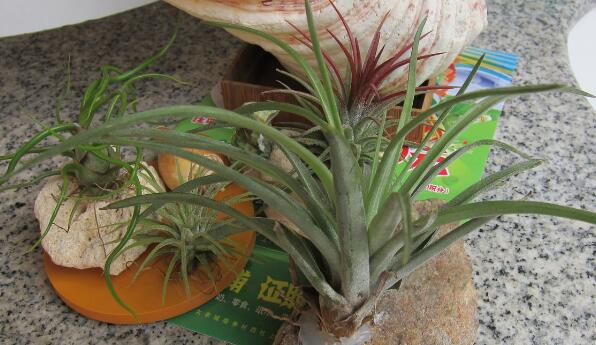
The bromeliad, sometimes also called "Hongyun Dangtou" (good fortune arrives), not only carries a beautiful meaning but also has bright red flowers, making it deeply loved by growers. If the bromeliad's flower color fades, it will greatly reduce its ornamental value. As for what to do when bromeliad colors fade, prevention and control are the key. Here are 4 causes of fading and their solutions, let's continue reading.
2. Causes of bromeliad color fading and solutions
1. Soil does not meet the standard
What to do when bromeliad colors fade, you should first consider the soil problem. In the bromeliad cultivation method, we mentioned its soil requirements: the bromeliad likes loose, well-drained soil rich in organic matter, and sticky soil should be avoided. Once the soil does not meet the standard, the phenomenon of bromeliad colors fading will appear.
Solution: If it is a soil problem, then it is easy to handle. Repot and change the soil, giving the bromeliad loose, well-drained soil rich in organic matter, then care for it carefully for a period of time, and the bromeliad's color will naturally regain its radiance.
2. Insufficient light
In the process of growing flowers, the vast majority have requirements for light, and the bromeliad is no exception. It is understood that the bromeliad likes semi-shade but also needs sufficient sunlight. Once it is placed in too shady a spot for a long time, the beautiful color of its leaves will become lighter and fade. So what to do when bromeliad colors fade, ensure the bromeliad gets sufficient light.
Solution: Early spring and late autumn: it can be placed outside directly in the sun, at this time direct light is beneficial and not harmful to it; all summer and early autumn: place the bromeliad in a bright, indirect light environment for care; spring and winter: the bromeliad can be placed in a spot where sunlight can reach it for sunbathing care. Meet the above requirements, and your bromeliad's color will recover before long.
3. Lack of potassium fertilizer
Since the bromeliad relatively likes fertilizer, in order to make it grow robustly, we need to apply a potassium-containing fertilizer once every two months. The specific amount depends on the instructions on the fertilizer and the growth of the flower. It is understood that appropriate phosphorus and potassium fertilizer can make leaf color more vivid. So the reason for bromeliad color fading may be a lack of potassium fertilizer.
Solution: Generally, color fading caused by lack of fertilizer is usually due to a lack of potassium. At this time, growers can try dripping some diluted nutrient solution at 1:100, and believe that within a few days, the bromeliad's color will regain its radiance again.
4. Improper watering
The bromeliad has very high requirements for moisture, so watering is very important. When growers water it, they should water directly from the top of the plant, so that it goes down layer by layer and every part gets watered, and the water-storing layers such as the leaf cup at the base also store water. This not only ensures the bromeliad's water supply but also keeps its color vivid.
Solution: Through the above description, as for what to do when bromeliad colors fade, we need to consider whether everyone's watering has been adequate. In daily care, watering of the bromeliad should maintain: water when the soil surface is slightly dry, but it must not be too wet. After doing this for a period of time, the bromeliad can basically recover its most beautiful appearance.
5. Emergency treatment for bromeliad color fading
Through the above introduction, everyone should know the causes of bromeliad color fading. However, many growers simply cannot determine which aspect is the problem. At this time there is an emergency treatment method: that is, apply a foliar fertilizer to the bromeliad once every two weeks, note that you should use a mixed solution of 0.1% urea + 0.2% potassium dihydrogen phosphate. At the same time, water along the inside of the leaf cup so that the bromeliad can store water.
How to water a bromeliad, winter watering method for bromeliads / best to water and fertilize together
In flower cultivation, watering is a link that cannot be ignored. Once a mistake is made, it will cause various problems, which can be said to be terribly troublesome. Among these, watering the bromeliad requires particular attention, because its roots cannot absorb water, and all nutrients and moisture are absorbed by the leaves. So how do you water a bromeliad? Here are the summer and winter watering methods for bromeliads, flower lovers must take a look~
1. How to water a bromeliad, water when the soil surface is slightly dry
In the bromeliad cultivation method and precautions, we have already introduced that watering is very important for the bromeliad. But the bromeliad absorbs water through its leaves, not its roots, so watering can be neither too much nor too little. The best watering method is: when the soil surface is slightly dry, start watering, but it must not be too wet, as being too wet easily rots the roots.
Can bromeliad leaves be watered
Other flowers absorb water through their roots, absorbing from the bottom up, but the bromeliad is an exception, because its roots cannot absorb water, and nutrients and moisture are all absorbed through the leaves. So can bromeliad leaves be watered? Definitely yes. The reason for this is that the bromeliad originally grew in the hot and humid regions of South America, and is a wild plant attached to tree branches and forks.
Reason for watering bromeliad leaves
Because it is attached to tree branches and forks, the bromeliad does not come into contact with soil, and its roots naturally cannot absorb moisture from the soil. What to do then? In order to survive, the bromeliad evolved a function on its own, which is to absorb moisture and nutrients through the leaf cup and other leaf tissue.
In modern times, the bromeliad has gradually been artificially cultivated, but compared with other flowers, its roots are still frighteningly fragile. When we propagate bromeliads, we can hardly see the roots, and all we can see is black soil. In addition, the bromeliad's roots are also black and particularly thin, so it absorbs nutrients and moisture through its leaves, which is the reason for watering bromeliad leaves.
2. Winter watering method for bromeliads
In spring and autumn, the temperature is neither high nor low, and watering the bromeliad appropriately is enough. What we need to pay attention to is winter watering. As for how to water a bromeliad in winter, growers only need to water inside the leaf cup, generally once every 8-9 days. Note that the water in the leaf cup must not be kept for more than a week, otherwise it will not be fresh, and non-fresh water carries pathogens.
Note: When flowering, do not fill the bromeliad's leaf cup with water. Store it in a place away from sunlight to extend the flowering period. After flowering, it enters dormancy, and the flower stalk must be cut off to reduce nutrient consumption. Do not fill the cup with water in winter.
3. How to fertilize a bromeliad
Moisture is absorbed through the leaves, and nutrients are also absorbed through the leaves, so if you fertilize a bromeliad, you must also dilute the fertilizer and pour it into the leaf cup, so that it can produce beautiful flowers. It should be noted that watering must not be excessive, otherwise the roots easily rot.
From late spring to autumn, during the growing season, the amount of watering can be appropriately increased, and some clear water can also be poured into the leaf cup, changing the water once every half month. At this time, watering and fertilizing can also be done together, so that the bromeliad can produce beautiful flowers. As for how to water a bromeliad, the editor has introduced it here, hoping to bring help to everyone.
What to do when worms grow in a bromeliad, pest and disease control for bromeliads / 3 pests 3 diseases
The beauty of the bromeliad is 8 parts shown in the flower, after all, it only blooms once a year. But because some growers care for it improperly, the bromeliad can be invaded by worms, leading to a decline in ornamental value. So what to do when worms grow in a bromeliad? Actually, everyone does not need to panic, you only need to find out which pest it is, and then solve it accordingly. Here is the common pest and disease control for bromeliads, let's take a look together.
1. What to do when worms grow in a bromeliad, spray pesticide to kill them
In the bromeliad cultivation method, the places that need attention during its growth have already been introduced. If growers do not pay attention, worms will come knocking. What to do when worms grow in a bromeliad, find out which kind of worm it is, and then solve it accordingly. Here are three common pests of bromeliads, as follows:
1. Scale insects
Scale insects harm all flowers, so they are also one of the pests of bromeliads. According to observation, scale insects mainly harm the bromeliad's leaves, and in severe cases the leaves will yellow, wither, and even fall off. The solution for bromeliad leaves turning yellow has been introduced earlier, let's look at the method to solve scale insects.
Solution: When scale insect damage is found, it should be solved immediately. When there are a small number of scale insects, they can be directly scraped off. When there are many scale insects, 50% parathion can be used for spray killing.
2. Spodoptera litura
Spodoptera litura, also called lotus-pattern armyworm, is also one of the pests of bromeliads. It generally hides in dark places such as the potting soil and the bottom of the pot during the day, and comes out in the evening to feed on the bromeliad's petals, stamens and pistils.
Solution: When this pest is found, spray pesticide to kill it immediately. As for which pesticide to use, any insecticide on the market will do.
3. Red spider mite
Red spider mite, one of the common pests of bromeliads, mainly inhabits the underside of the bromeliad's leaves or the base of the leaf axils, and pierces and sucks the leaf, bud and flower leaf sap, affecting normal growth and development. When invaded by this pest, in mild cases it affects appearance, and in severe cases it can even cause the whole plant to wither and die.
Solution: Red spider mites are relatively small, and we can hardly find them with the naked eye, but once found they should be solved quickly. When there are a small number of pests, they can be rinsed off with clear water; when there are many pests, spray a 1:1000 dimethoate solution, spraying once every 4 days, 2-3 times in a row is enough.
2. Bromeliad diseases and solutions
Worms growing in a bromeliad, after reading the above content everyone should know what to do! But besides being invaded by worms, diseases also constantly harm the bromeliad, and the bromeliad's diseases are mainly 3 kinds: heart rot, root rot and leaf tip yellowing disease. The specific symptoms and solutions are as follows:
1. Heart rot
This disease is not common, but it is one of the common diseases of bromeliads. When suffering from this disease, the tissue at the base of the bromeliad's leaf cup becomes soft and rotten, with a foul odor. A light pull on the leaf or leaf cup can remove the leaf or leaf cup, and if left alone, the leaf cup will fall over on its own after a long time.
2. Root rot
After suffering from this disease, the bromeliad's root tips will turn black-brown or rot, and no lateral roots will grow, thus affecting the plant's absorption of water and fertilizer, leading to slow and weak growth of the bromeliad. It is understood that in hot and humid seasons, both heart rot and root rot can be caused.
Solution for heart rot and root rot: After discovering the above symptoms, growers can use 75% oxadixyl-mancozeb 400 times solution or 40% fosetyl-aluminum 400 times solution to irrigate the leaf cup, once a month, 3 times in a row is enough to cure it.
3. Leaf tip yellowing and withering
Another disease of the bromeliad, it is generally related to moisture. Once watering is improper, or air humidity is low, it will cause the salt content in the soil to be too high and cause salt damage. At this time, leaf tip yellowing and withering will come knocking. In mild cases it causes leaves to yellow, and in severe cases the plant dies directly.
Prevention and control method: When watering, try to choose water with less salt content. If you choose household water, it should be used after being exposed to the sun.