How to grow grape hyacinth? Master these cultivation key points
When cultivating grape hyacinth, you can choose imported bulbs from abroad for autumn and winter planting. Leaf mold or sandy loam soil is best. After planting, keep the soil moist. Once leaves grow, you can apply diluted nitrogen, phosphorus, and potassium solution to promote development. When flower buds emerge in spring, move to a location with 60%-70% sunlight to make the flower stems elongate rapidly.
Grape hyacinth has strong adaptability, is easy to cultivate and manage, can be transplanted at any time, and can also be used for winter forcing cultivation.
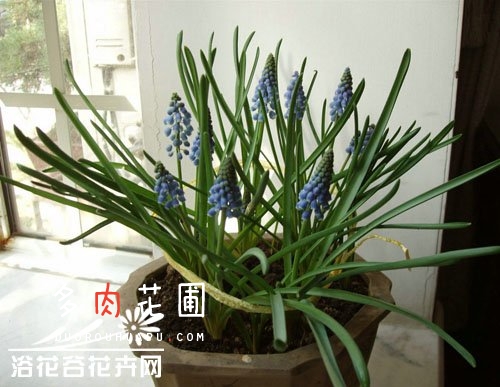
At the end of August, place the bulbs in a freezer at 6°C to 8°C for 50 days of cold storage, then take them out and place them in a cool, ventilated room. In early December, plant them in flower pots used for chrysanthemums, placing 8 to 12 bulbs per pot. Maintain them at 15°C to 25°C, and they will bloom by New Year's Day and Spring Festival, making them suitable as indoor hanging potted flowers.
Grape hyacinth can be used as ground cover under forests, and can also be used for flowerbed edging or arranging flower borders, offering a unique charm.
Grape hyacinth prefers a warm and cool climate, likes light and also tolerates partial shade, requires soil rich in humus, loose and fertile, with good drainage, and has relatively strong cold resistance.
In the North China region of China, in winter only part of the leaf tips of the aboveground parts wither, and they can survive winter in the open field. Because grape hyacinth has a low, compact clump, bright flower colors, a long flowering period, and a relatively long green leaf period, it is an excellent ground cover plant for landscaping. It is often used as ground cover under sparse forests or for mass, strip, and edging planting in flower borders and lawns, and is also used in rock gardens as dotted clump planting. As a household potted flower, it also has a good ornamental effect.
Key points for cultivation and management of grape hyacinth
Grape hyacinth has strong adaptability, is easy to cultivate and manage, can be transplanted at any time, and can also be used for winter forcing cultivation.
When cultivating grape hyacinth, you can choose imported bulbs from abroad for autumn and winter planting. Leaf mold or sandy loam soil is best. After planting, keep the soil moist. Once leaves grow, you can apply diluted nitrogen, phosphorus, and potassium solution to promote development. When flower buds emerge in spring, move to a location with 60%-70% sunlight to make the flower stems elongate rapidly.
At the end of August, place the bulbs in a freezer at 6°C to 8°C for 50 days of cold storage, then take them out and place them in a cool, ventilated room. In early December, plant them in flower pots used for chrysanthemums, placing 8 to 12 bulbs per pot. Maintain them at 15°C to 25°C, and they will bloom by New Year's Day and Spring Festival, making them suitable as indoor hanging potted flowers.
Grape hyacinth can be used as ground cover under forests, and can also be used for flowerbed edging or arranging flower borders, offering a unique charm.
Grape hyacinth prefers a warm and cool climate, likes light and also tolerates partial shade, requires soil rich in humus, loose and fertile, with good drainage, and has relatively strong cold resistance.
In the North China region of China, in winter only part of the leaf tips of the aboveground parts wither, and they can survive winter in the open field. Because grape hyacinth has a low, compact clump, bright flower colors, a long flowering period, and a relatively long green leaf period, it is an excellent ground cover plant for landscaping. It is often used as ground cover under sparse forests or for mass, strip, and edging planting in flower borders and lawns, and is also used in rock gardens as dotted clump planting. As a household potted flower, it also has a good ornamental effect.