Watering and fertilizing mimosa: water once a day in summer, fertilize 3 times every 10 days during the growing season
Mimosa (Mimosa pudica), a common ornamental plant, has leaves that move at the slightest touch and pretty pink shy-looking flowers, making it very pleasing to the eye. In daily life, because of mimosa's characteristics, many flower lovers grow it in pots at home, but improper watering and fertilizing can cause its leaves to turn yellow and wither, which affects its ornamental value. So how do you water and fertilize mimosa? Please let the editor explain in detail.
I. How to water and fertilize mimosa, follow its habits
In our mimosa growing methods, we mentioned that mimosa originates from the tropical regions of South America. It likes warm, humid environments and is highly adaptable, so it is easy to grow indoors. However, if you want mimosa to look good, you cannot just grow it casually; you need to pay special attention to watering and fertilizing. As for how to water and fertilize mimosa, the editor will explain each separately.
(1) How to water mimosa, once a day in summer
On this question, we need to water according to the actual situation. 1. According to the condition of the potting soil: if it is a medium or large pot, the soil must be very dry before you must water it; normally once a week is enough. 2. Summer growing season: in summer the temperature rises and water evaporates quickly, and this is also mimosa's growing season, so at this time you should water once a day to ensure sufficient moisture.
When to water mimosa
For how to water mimosa, timing is very important. When you are unsure whether to water, you can pick up the flower pot and tap it lightly with your finger. If it makes a crisp banging sound, that means the potting soil is dry and has shrunk away from the inner wall of the pot, and it is time to water. Grasp this timing well, and your mimosa will certainly grow very beautifully.
How to water mimosa, use a spray bottle and water slowly
Watering plants is a skilled job; it is not as simple as we think. For how to water mimosa, it is best to use a spray bottle and water slowly to ensure the potting soil absorbs the water thoroughly. Never water at the edge of the pot, as this causes the water to run off quickly. If you do not have a dedicated watering can, then water slowly over the center of the potting soil, making sure to water thoroughly in one go.
When to water mimosa, morning and evening
For how to water mimosa, choosing the time is also very important. It is understood that mimosa is a plant that likes cool shade. When watering in summer, you should do it around 7 a.m. or around 8 p.m., when the weather is not too hot. Never water at noon; at that time the water evaporates immediately, and the water vapor is very bad for mimosa.
(2) How to fertilize mimosa, fertilize 3 times every 10 days
Mimosa has strong adaptability, so it does not have high fertilizer requirements; generally loose, fertile soil is enough. But to make mimosa grow well, proper fertilizing is also key. So how do you fertilize mimosa? We can fertilize according to different times, as follows:
Normally, you only need to fertilize once a month. If it is the seedling stage, you also need to apply a top dressing once every half month. During the growing season, you can combine fertilizing with watering and apply diluted decomposed liquid fertilizer 3-4 times about every 10 days. Note: mimosa should be fertilized in warm weather, and when fertilizing, pay attention to keeping the soil and water moist.
What fertilizer to use for mimosa
When it comes to fertilizing mimosa, I believe everyone wants to know exactly what fertilizer to use. According to the editor's research, the fertilizer that flower lovers respond to very well is: Chenfeng Biological Flower Special Fertilizer. This fertilizer has very comprehensive nutrients and can make mimosa grow very well. Note: if you do not want the plant shape to be too large, then reduce the amount of fertilizer.
That is all the editor has to say about mimosa's watering and fertilizing methods. I believe everyone has gained some understanding! Although it looks complicated, as long as you care for it for a period of time you will understand that mimosa is really easy to grow! Finally, the editor wants to remind you: mimosa is toxic, so be sure to wash your hands after touching it~
How to water mimosa, how to propagate mimosa
Watering is an important task that must be done for all artificially cultivated plants during their survival period. And whether watering is done correctly can also play a decisive role in plant growth. The saying that water is the source of all things is true, and propagation is the foundation for plants to continue growing endlessly.
How to water mimosa
Mimosa likes moisture and is a plant that rather prefers damp, cool shade, so care should be taken to keep the soil from becoming too dry. In addition, when the weather is very hot, note that watering should be done in the early morning when the temperature is not yet too hot and around 8 p.m. in the evening; never water at noon.
Mimosa likes moisture; during the summer growing season, water once a day. During the growing season, the potting soil should be kept slightly moist. Too much watering easily causes rot disease, while too dry easily causes the leaves to dry up.
Mimosa needs frequent watering. Mimosa originally belongs to tropical plants and likes humid environments, so the potting soil should often be kept moist. In summer, water according to the condition of the potting soil, about once a day; do not let the soil dry out. You can often spray water on the plant. In winter, to prevent frost damage, reduce the amount of watering. Summer is rather stuffy and hot, and the sunlight is rather scorching. After taking mimosa home, if you place it in a spot exposed to sunlight for a long time, then you must make sure to water it 2 times a day or even more.
How to propagate mimosa
I. Collecting mimosa seeds
Mimosa pods often cluster together in one place, and the ripening period is very uneven. A single branch often simultaneously bears mature cracked pods, young fruit and flower buds, so seeds should be harvested in batches. Usually, the seeds in the early-formed pods on the middle and lower parts of the branch should be harvested.
II. Sowing time for mimosa
Before sowing mimosa, you should select mature, plump, large, full and colored seeds for planting. The seed germination storage period is relatively short, so you should sow immediately after harvesting or store them mixed with fine sand in a cool indoor place and sow in the following spring; generally sow indoors in early spring.
III. Sowing method for mimosa
1. Mimosa can be sown directly in a small pot, or grown in a shallow pot and then divided for transplanting. The sowing soil is prepared by mixing 2 parts leaf mold, 3 parts garden soil and 5 parts fine yellow sand after sieving. When sowing, first fill the pot with an appropriate amount of growing medium, spread it level and press it firm, then use a spray bottle to sprinkle water thoroughly. Once the water has fully seeped in, sow immediately. For direct sowing in a small pot, sow 1-2 seeds per pot. If using a shallow pot for raising seedlings, sow by dibbling at a spacing of 2×2 cm.
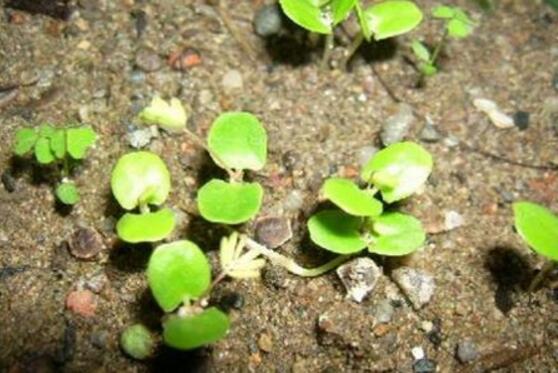
2. After sowing mimosa seeds, cover with soil 3-5 cm deep, just enough to cover the seeds. Cover the pot with glass or plastic film to keep in moisture, and place the pot in a spot with scattered light at about 20°C. Later, when the potting soil is dry, water by the immersion method. After about 7-10 days, the seeds germinate and emerge. IV. Seedling management of mimosa
1. After mimosa seedlings emerge, remove the covering from the pot and gradually let them receive sunlight. When the seedlings grow to 3 cm tall, those sown in shallow pots can be divided and transplanted. When dividing seedlings, they should be transplanted with soil, otherwise they are not easy to survive. After the newly potted seedlings are watered thoroughly, first place them in half shade, and after they recover, move them to a spot with ample sunlight.
2. Mimosa sown directly in small pots can be placed directly in a spot with ample sunlight to grow. In southern China in mid-April and in northern China in early May, the seedling pots can be moved outdoors for cultivation, and watered promptly to keep the potting soil moist at all times. When the seedlings grow to 4 leaves, begin applying liquid fertilizer, generally once every 7-10 days with diluted decomposed liquid fertilizer. After the seedlings grow larger, they can be repotted once more, but the pot used should not be too large; generally, planting them into a medium-sized flower pot of 15-20 cm is sufficient.
How to grow mimosa in winter
1. Planting method. Generally propagated by sowing, sown from late March to early April. Evenly scatter the seeds on fine soil, cover with about 1.5 cm of soil, and at a temperature of about 18°C, seedlings can emerge in about 10 days (generally they grow once in the soil, with no need for special effort in management). Seedlings grow relatively slowly, and can be planted out when they reach 7-8 cm.
2. Field management. For field planting, the spacing between plants is 25-30 cm, and loosen the soil, hoe weeds and water promptly. For indoor pot cultivation, water once a day in summer. Fertilize once a month; if you do not want the plant shape to be too large, then reduce the amount of fertilizer, or even do not fertilize.
3. Pest and disease control: basically no pests or diseases. If there are slugs, they can be controlled in the morning with fresh lime powder.
Why mimosa is “not shy” in winter
It turns out that the structure of the tissue cells in the upper and lower halves of the mimosa “pulvinus” is different. The cell walls of the upper part are thicker, while those of the lower part are thinner, and the intercellular spaces of the lower tissue cells are also larger than those of the upper part. Under external stimulation, the cytoplasmic permeability of the lower cells of the “pulvinus” increases rapidly, and water and solutes seep out from the vacuoles and are discharged into the intercellular spaces. Therefore, the tension of the lower tissue cells decreases and the tissue becomes limp; while the upper tissue still maintains its tense state at this time, and the petiole of the compound leaf bends at the “pulvinus”, producing a drooping movement, resembling shyness. The mechanism of leaflet movement is the same as this. In winter, mimosa is affected by low temperatures, the permeability of the cytoplasm weakens, and therefore its response to external stimuli becomes sluggish. As the amount of low temperature increases, mimosa will completely lose this characteristic, and this is even more obvious on young leaves.
The techniques and methods for watering and propagating mimosa are described in great detail in the text. Winter is a very difficult period for the survival of many plants, so winter cultivation techniques are a very important link in maintaining the vitality and vigor of plants, and winter care for mimosa is no exception.
How to fertilize mimosa, mimosa fertilizing methods
Mimosa is a common cultivated plant. Mimosa flowers are attractive in shape and it has unique characteristics. As long as you gently touch mimosa, it will automatically contract, appearing cute and shy, and from this it gets the name mimosa. Mimosa has strong adaptability and is easy to cultivate. So, how do you fertilize mimosa? Today let us learn about mimosa fertilizing methods.
How to fertilize mimosa
Mimosa does not have high soil requirements; ordinary soil is enough. But if you want mimosa to grow better, you can choose soil that is relatively loose and fertile, and you can also use a mixed soil of leaf mold and sandy soil. You can also use only leaf mold, and humus soil is also a good choice.
Mimosa growth requires a warm, humid environment with ample sunlight. Generally, it is first planted in a small pot, and after the plant grows larger it is planted into a correspondingly larger pot. During the growing season, combined with watering, diluted liquid fertilizer can be applied several times as a top dressing. The liquid fertilizer used can be decomposed urine, decomposed crushed bones, vegetable leaves, and rice-washing water, diluted with water before application.
Mimosa fertilizing methods
1. During the mimosa seedling stage, apply a top dressing once every half month. If you do not want the plant shape to be too large, then reduce the amount of fertilizer.
2. During the mimosa growing period, combined with watering, apply diluted decomposed liquid fertilizer (3-4) times about every 10 days.
3. Mimosa should be fertilized in warm weather, and when fertilizing, pay attention to keeping the soil and water moist.
The above is a brief summary of how to fertilize mimosa and mimosa fertilizing methods. Mimosa is a perennial herbaceous plant with strong vitality and easy growth. Mimosa blooms from summer to autumn, and when it blooms, the fluffy spherical flowers are very cute, making it a plant that many friends like to grow. Mimosa is not cold-tolerant and likes strong light, so good care management must be done.