Want your Phalaenopsis orchid to bloom? Master these care tips
There are generally three reasons that affect the flowering quality of Phalaenopsis orchids. The first is genetic factors, including flower color, shape, size, number, number of stems, whether the flower stem branches, flower stem length, and so on. If we already have the plant at home, there is no way to change or choose these, haha.
The second is health condition. Before low-temperature stem induction, the Phalaenopsis orchid must reach sufficient maturity; the plant must store enough dry matter; the plant must be free of disease, pests, viruses, and phytotoxicity, and there must be no salt accumulation at the roots.
The third is environmental factors, including daytime temperature, nighttime temperature, relative humidity, photoperiod and light quantity for the leaves, as well as moisture, temperature, and fertilizer levels at the roots. All of these environmental factors must be kept in the most appropriate state. The root environment is mutually affected by factors such as the pot, the medium, and management techniques. Management techniques include irrigation, fertilization, repotting, and other tasks.
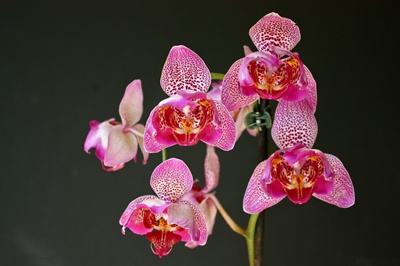
We can divide the temperature management of the Phalaenopsis orchid flowering stage into the following specific indicators: first, the day and night temperatures for low-temperature stem induction; second, the upper limit of daytime temperature and the upper limit of nighttime temperature from flower bud differentiation to the completion of flower stem growth; third, the day and night temperatures during the cultivation period. As long as the day and night temperatures in the greenhouse are lower than the critical daytime temperature and the critical nighttime temperature, there will be a stem induction effect. The lower the temperature, the more effective the stem induction, and the faster the stem emerges. However, the temperature must not be allowed to fall below the cold damage threshold, otherwise it is likely to produce the opposite effect.
In order to control the market time of flowering Phalaenopsis plants, the period from flower bud differentiation to the opening of flower buds, when they can become commodities for sale, is further divided into two stages: the flower stem growth stage and the flower bud opening stage. The day and night temperature settings during the flower stem growth stage can regulate the speed of flower stem growth, so as to control the market time of flowering plants. The higher the daytime temperature, the faster the flower stem grows, and raising the nighttime temperature also helps increase the flower stem growth rate, but the temperature absolutely must not exceed the daytime temperature of the usual cultivation period, otherwise the flower stem will reverse-differentiate into vegetative growth, leaves will grow on the flower stem, and it will become a new plant. During the flower stem growth stage, the day-night temperature difference affects flower stem length. The greater the day-night temperature difference, the longer the flower stem; the smaller the day-night temperature difference, the shorter the flower stem. The higher the daytime temperature, the farther the first flower bud is from the base, and the length of each flower bud becomes progressively shorter.
Tips to make Phalaenopsis orchids bloom on time
There are generally three reasons that affect the flowering quality of Phalaenopsis orchids. The first is genetic factors, including flower color, shape, size, number, number of stems, whether the flower stem branches, flower stem length, and so on. If we already have the plant at home, there is no way to change or choose these, haha. The second is health condition. Before low-temperature stem induction, the Phalaenopsis orchid must reach sufficient maturity; the plant must store enough dry matter; the plant must be free of disease, pests, viruses, and phytotoxicity, and there must be no salt accumulation at the roots. The third is environmental factors, including daytime temperature, nighttime temperature, relative humidity, photoperiod and light quantity for the leaves, as well as moisture, temperature, and fertilizer levels at the roots. All of these environmental factors must be kept in the most appropriate state. The root environment is mutually affected by factors such as the pot, the medium, and management techniques. Management techniques include irrigation, fertilization, repotting, and other tasks.
We can divide the temperature management of the Phalaenopsis orchid flowering stage into the following specific indicators: first, the day and night temperatures for low-temperature stem induction; second, the upper limit of daytime temperature and the upper limit of nighttime temperature from flower bud differentiation to the completion of flower stem growth; third, the day and night temperatures during the cultivation period. As long as the day and night temperatures in the greenhouse are lower than the critical daytime temperature and the critical nighttime temperature, there will be a stem induction effect. The lower the temperature, the more effective the stem induction, and the faster the stem emerges. However, the temperature must not be allowed to fall below the cold damage threshold, otherwise it is likely to produce the opposite effect.
In order to control the market time of flowering Phalaenopsis plants, the period from flower bud differentiation to the opening of flower buds, when they can become commodities for sale, is further divided into two stages: the flower stem growth stage and the flower bud opening stage. The day and night temperature settings during the flower stem growth stage can regulate the speed of flower stem growth, so as to control the market time of flowering plants. The higher the daytime temperature, the faster the flower stem grows, and raising the nighttime temperature also helps increase the flower stem growth rate, but the temperature absolutely must not exceed the daytime temperature of the usual cultivation period, otherwise the flower stem will reverse-differentiate into vegetative growth, leaves will grow on the flower stem, and it will become a new plant. During the flower stem growth stage, the day-night temperature difference affects flower stem length. The greater the day-night temperature difference, the longer the flower stem; the smaller the day-night temperature difference, the shorter the flower stem. The higher the daytime temperature, the farther the first flower bud is from the base, and the length of each flower bud becomes progressively shorter.
Article source: http://www.yuhuagu.com
What are the tips and methods to make Phalaenopsis orchids bloom on time? How can you make Phalaenopsis orchids produce beautiful flowers?
When it comes to Phalaenopsis orchids, I believe everyone is familiar with them. Phalaenopsis is a common orchid family plant. Its flower colors are beautiful and its fragrance is captivating. It is often used for decorating courtyards, offices, and studies. It is deeply loved by many flower enthusiasts. Quite a few flower enthusiasts also grow Phalaenopsis orchids at home themselves. So, do you know the tips to make Phalaenopsis orchids bloom on time? Let's learn about them together with the editor.
There are generally three reasons that affect the flowering quality of Phalaenopsis orchids. The first is genetic factors, including flower color, shape, size, number, number of stems, whether the flower stem branches, flower stem length, and so on. If we already have the plant at home, there is no way to change or choose these, haha. The second is health condition. Before low-temperature stem induction, the Phalaenopsis orchid must reach sufficient maturity; the plant must store enough dry matter; the plant must be free of disease, pests, viruses, and phytotoxicity, and there must be no salt accumulation at the roots. The third is environmental factors, including daytime temperature, nighttime temperature, relative humidity, photoperiod and light quantity for the leaves, as well as moisture, temperature, and fertilizer levels at the roots. All of these environmental factors must be kept in the most appropriate state. The root environment is mutually affected by factors such as the pot, the medium, and management techniques. Management techniques include irrigation, fertilization, repotting, and other tasks.
We can divide the temperature management of the Phalaenopsis orchid flowering stage into the following specific indicators: first, the day and night temperatures for low-temperature stem induction; second, the upper limit of daytime temperature and the upper limit of nighttime temperature from flower bud differentiation to the completion of flower stem growth; third, the day and night temperatures during the cultivation period. As long as the day and night temperatures in the greenhouse are lower than the critical daytime temperature and the critical nighttime temperature, there will be a stem induction effect. The lower the temperature, the more effective the stem induction, and the faster the stem emerges. However, the temperature must not be allowed to fall below the cold damage threshold, otherwise it is likely to produce the opposite effect.
In order to control the market time of flowering Phalaenopsis plants, the period from flower bud differentiation to the opening of flower buds, when they can become commodities for sale, is further divided into two stages: the flower stem growth stage and the flower bud opening stage. The day and night temperature settings during the flower stem growth stage can regulate the speed of flower stem growth, so as to control the market time of flowering plants. The higher the daytime temperature, the faster the flower stem grows, and raising the nighttime temperature also helps increase the flower stem growth rate, but the temperature absolutely must not exceed the daytime temperature of the usual cultivation period, otherwise the flower stem will reverse-differentiate into vegetative growth, leaves will grow on the flower stem, and it will become a new plant. During the flower stem growth stage, the day-night temperature difference affects flower stem length. The greater the day-night temperature difference, the longer the flower stem; the smaller the day-night temperature difference, the shorter the flower stem. The higher the daytime temperature, the farther the first flower bud is from the base, and the length of each flower bud becomes progressively shorter.
That is all the content I have learned today about Phalaenopsis orchids. I hope it will be helpful to flower enthusiasts after reading this article. If you want to learn more about Phalaenopsis orchids, please continue to follow Succulent Garden, and we will provide you with more related knowledge!