What to Do When Daisy Leaves Turn Yellow? Pay Attention to 5 Points: Control Temperature and Prevent Pests and Diseases
The daisy is the national flower of Italy and has extremely high ornamental value. However, no matter how high a flower's ornamental value is, if yellowing appears, it will affect its overall beauty. As for what to do when daisy leaves turn yellow, the editor below will walk everyone through it.
I. What to Do When Daisy Leaves Turn Yellow / Find the Cause and Address It
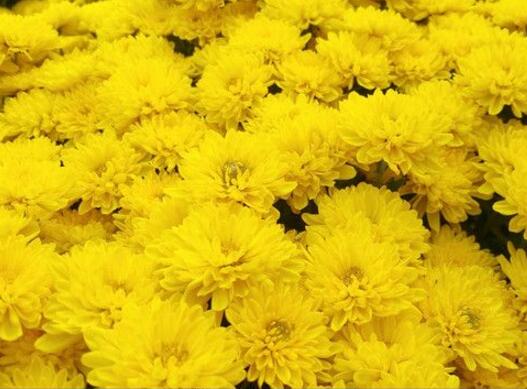
If you want to know what to do when daisy leaves turn yellow, you first need to understand which causes can lead to this phenomenon. Once the cause is found, the problem is very easy to solve. There are many causes of yellowing daisy leaves: too high a temperature, improper watering, and the appearance of pests and diseases can all lead to this phenomenon. As for what the solutions are, let us continue reading.
II. Treatment Methods for Yellowing Daisy Leaves
1. Soil that is not breathable
When planting daisies, the choice of soil is still a relatively important point. Generally, it is best to choose relatively loose soil, as this gives better drainage and aeration, and the plant can also absorb nutrients better. If you choose soil that is not very loose, aeration will be a big problem, and this can easily lead to yellowing leaves.
2. Improper watering
When watering daisies, be sure to confirm that the soil has dried out before watering. If you water too much and waterlogging occurs, it will cause the leaves to turn yellow. But you also cannot go without watering for a long time, otherwise the daisy will lack nutrients and develop yellowing leaves.
3. Too much fertilizer
Although fertilizer is one of the main nutrients for daisies, applying more is not necessarily better. You still need to grasp a proper degree, otherwise it can easily cause daisy leaves to turn yellow. The methods of fertilizing are introduced in detail in the article on daisy cultivation methods, so everyone can take a look.
4. Temperature too high
The growing environment is also a very important point for daisies. If the ambient temperature is too high, its nutrients will be lost too quickly, leading to yellowing. The most suitable ambient temperature for daisy growth is 18-25°C, and everyone can take note of this point.
5. Pests and diseases
When daisies suffer from pests and diseases, yellowing leaves and even wilting can also occur. Once this phenomenon appears, prevention and control must be carried out promptly. As for the methods, everyone can refer to the article on daisy pest and disease control; the editor will not introduce too much here.
What to Do When Asparagus Fern Leaves Turn Yellow | What to Do When Asparagus Fern Leaves Turn Yellow | Asparagus Fern Cultivation Methods
Asparagus fern leaves are slender and elegant, densely growing like feathers, with a graceful plant shape and unique charm. It is deeply loved by people and is a relatively common indoor foliage flower. Friends who have grown asparagus fern will find that its leaves easily turn yellow during cultivation. What should be done when asparagus fern leaves turn yellow? Today, the editor will teach everyone some care methods for asparagus fern.
Causes of Yellowing Asparagus Fern Leaves
1. Temperature too high. Although asparagus fern likes warmth, it should not be placed near a fire for a long time, otherwise the entire fronds will turn yellow and fall off, and the stems will also dry up.
2. Direct exposure to strong sunlight. Asparagus fern cannot be placed in direct strong sunlight, as that will cause the branches and leaves to wither and yellow; in addition, if asparagus fern is exposed to strong light for too long, the plant will first stop growing, and then the leaves will turn yellow and fall.
3. Improper watering. Asparagus fern likes moisture. If watering is neglected, or only the surface potting soil is watered, the root system does not absorb enough water, and the stems and leaves slowly turn yellow. But absolutely do not let water accumulate in the flowerpot either; too much water easily causes root rot and yellow, withered leaves.
4. Insufficient light. Asparagus fern likes warmth. If it is placed in a shaded environment for a long time, the plant will grow weakly and then turn yellow. In winter, it is best to place it in a sunny place. If it is placed in a place with insufficient light, plus poor ventilation and cold, it is prone to causing withered and yellow branches and leaves. If such a phenomenon occurs, the asparagus fern needs to be given new potting soil.
5. Improper fertilizing. Asparagus fern should be fertilized regularly so that it has enough nutrients. If nutrient supply falls short of demand, yellowing branches and leaves will appear. If the concentration is too high or fertilizer that has not yet decomposed is applied, it easily burns the seedlings and causes drying up; if fertilizer is not applied for a long time, it will also become nutrient-deficient and turn yellow.
6. Suffering freezing damage. Asparagus fern likes warmth. In winter, when the temperature is relatively low, if the indoor temperature is below 5℃, a plastic cover should be used to protect it from the cold, otherwise it is prone to freezing and withering.
7. Infection by pests and diseases. Once asparagus fern is infected by pests such as scale insects, it will also cause withered and yellow branches and leaves, and prevention and control should be carried out promptly.
8. Improper placement. If asparagus fern is placed next to a television, the leaf tips will gradually dry up.
Methods for What to Do When Asparagus Fern Leaves Turn Yellow
1. Place it appropriately. Asparagus fern likes a semi-shaded, semi-sunny environment with slight moisture. First, avoid exposure to strong sunlight, but choose a place where it can see sunlight; second, it should be able to feel air circulation; third, keep it away from stoves and televisions; fourth, keep it warm, and the lowest room temperature should not be below 5℃. If the room temperature is 0-4℃, use a plastic cover to protect it from the cold.
2. Regulate fertilizer and water. During the growth period of asparagus fern, fertilizing does not need to be too frequent. Generally, topdressing is only suitable in spring and autumn, applying a dilute decomposed manure or urine or a low-concentration compound fertilizer solution once every 10-15 days, or applying rice-washing water or soybean juice water. Fertilizing is not suitable during high summer temperatures or low winter temperatures. Fertilizing should be controlled so as not to be excessive or mistimed. Watering should follow the principle of not watering until dry, and when dry, water thoroughly at one time, leaving no standing water on the pot surface. Dust on the leaf surface should be removed by regular spraying with water.
3. Shape it in time. Asparagus fern tends to grow in clusters. First, when repotting and adding soil, prune old and residual fibrous roots and thin out excess stems and leaves to avoid excessive consumption of nutrients and to protect the roots and leaves; second, cut off locally yellowed leaves; third, for stems and leaves that are yellow at the same time, cut them off together.
Care for What to Do When Asparagus Fern Leaves Turn Yellow
At different stages, the focus of asparagus fern care also differs. In late November, asparagus fern can be fertilized once. Starting in December, move it indoors, water once every half month (using the soaking-pot method), supplement light with a fluorescent lamp on cloudy and rainy days, and spray once every two or three days.
In March of the following year, asparagus fern can be moved out of the room to fully receive light, but avoid direct strong light. Whether the potting soil needs watering can be determined according to the daily weather conditions and the dryness and wetness of the potting soil, while spraying once in the morning and once in the evening is done almost every day. Apply fertilizer water (urea solution can be used) once a week.
From early May to late August, the plant needs to receive indirect sunlight or be shaded, and cannot be exposed to strong sunlight. Water once every 2-3 days, and sprinkle more water around the environment to increase air humidity. In this way, asparagus fern can maintain vigorous growth momentum. Note that when the summer temperature is too high, the plant can be placed under tree shade, but it cannot be placed under an air conditioner to be blown by wind, as this easily causes yellow leaves. From September to November, move the plant out from under the tree and place it directly on a platform, rotating the pot once a week. Fertilizer and water management are the same as spring care.
Conclusion:Although asparagus fern has the characteristic of remaining evergreen for many years, if cared for improperly, it often shows symptoms of yellowing branches and leaves, affecting the ornamental effect. After understanding the measures and care methods for what to do when asparagus fern leaves turn yellow, you should pay more attention during the process of growing asparagus fern! For more decoration information, you can log in to Aiyouwo website.
[More Information]
|The Language of Red Roses|Formaldehyde-Removing Plants|The Role of Pothos Flowers|The Efficacy and Functions of Hangzhou White Chrysanthemum|When Do Lotus Flowers Bloom|
|The Efficacy and Functions of Jasmine Tea|Images of the Happiness Tree|The Role of Lavender|The Language of Little Daisies|The Efficacy of Kunlun Snow Chrysanthemum|
|Cultivation Methods for Guzmania|Cultivation Methods for Clivia|Cultivation Methods for English Ivy|Ginkgo Tree Planting|Orchid Varieties|
|Are Carnations Easy to Grow|Cultivation Methods for Bougainvillea|The Efficacy and Functions of Yellow Chrysanthemum|The Language of Gesang Flowers|Is Calla Lily Poisonous|
|What Plants Absorb Formaldehyde|Images of Potted Flowers|The Efficacy of Jasmine Tea|The Efficacy and Functions of Costus Root|Hydroponic Lucky Bamboo|
What to Do When Orchid Leaves Turn Yellow | What to Do When Orchid Leaves Turn Yellow and Black?
?`?.??.?′′ˉ`?Related Recommendations:
?Radiation Protection by Ball Cactus ?Uses of Cactus ?The Language of Little Daisies ?The Language of Calla Lily
?`?.??.?′′ˉ`?Indoor Plants, this article originates from [Decoration Information]
Orchids are loved by many flower enthusiasts. Whether from their ornamental value or their air-purifying function, they are also a good choice for home potted plants. But what should be done if improper care of orchids causes orchid leaves to turn yellow and black? If the leaves turn yellow, the ornamental value is greatly reduced. Below are some solutions for what to do when orchid leaves turn yellow and black. I hope they can help everyone.
[Causes of Orchid Leaves Turning Yellow and Black] First: Too much or too little water:Orchids like a humid climate. If they lack water for a long time, it will cause the base to shrink, water will be insufficient, and the leaves will turn yellow and black. If the orchid potting soil is watered too much, it will also cause root rot, yellow leaves, and even death.
Second: Temperature too high:Yellowing orchid leaves are greatly related to temperature. If the indoor temperature is too high or it is too stuffy and hot, yellowing leaves will also appear.
Third: Too little light:Orchids like sunlight. If there is too little sunlight, it will also cause poor plant growth and yellow leaves. Especially for orchids placed indoors, they must be placed in a place where sunlight can reach them.
Fourth: Too much fertilizer:Many friends think that applying more fertilizer is very helpful for plant growth, but this is not the case. Orchids do not need too much fertilizer. If too much fertilizer is applied, it will cause burns to the base and then lead to yellowing and blackening of the leaves. Chlorosis can also cause leaves to turn yellow and fall off, and in severe cases the plant will die.
Fifth: Harm from pests and diseases:Any plant suffering from pest damage will show yellowing and blackening leaves. When orchids suffer from pest and disease damage, it will cause damage to the leaves, resulting in yellow and black leaves. Also, unsuitable use of soil with high acidity or alkalinity makes root rot likely. When the root system rots and turns black, the leaves will also become withered, yellow, and fall off.
[What to Do When Orchid Leaves Turn Yellow and Black]
1. Water appropriately. After the potting soil dries, when watering at one time, the amount of water should not be too much, and it also cannot be left in a state of drought without watering for a long time.
2. Keep the temperature stable, neither too high nor too low. Between 5-10℃ is most suitable. When the temperature rises and the environment is stuffy and hot, pay attention to ventilation and breathability, and strengthen humidity management.
3. White orchids are suitable for planting in courtyards or home balconies, windowsills, and other places. They need sufficient sunlight, but cannot be exposed to strong sunlight. In summer, when sunlight is intense, pay attention to shading.
4. The potting soil for white orchids should use slightly acidic soil, and more alkaline inorganic fertilizer or water should not be applied. Use 0.2% ferrous sulfate for foliar spraying once a week.
5. Root rot is mainly caused by too much water. Usually, wait until the surface of the potting soil turns white before watering, and loosen the soil frequently. During the plum rain period or when there is too much rain, it is advisable to move it under the eaves or indoors to avoid rain.
Conclusion:The above are the solutions for orchid leaves turning yellow and black. I hope they are helpful to all flower enthusiasts. Orchids have very high ornamental value, so orchids must be grown well. If you want to learn many methods for growing indoor plants, please continue to follow Aiyouwo.
▓ Recommended Reading
?How to Grow Water Lilies ?Images of Golden Camellia ?Images of Balloon Flowers ?The Language of Cornflowers ?Succulent Sempervivum
?Images of Agave ?Poppy Cultivation ?Information on Epiphyllum ?Ginkgo Tree Planting ?Images of Gesang Flowers