What to do when Cymbidium ensifolium leaves turn yellow? Repot in time and pay attention to fertilizing methods
Cymbidium ensifolium is a plant grown in major gardens throughout our country, with extremely high ornamental value. But no matter how high the ornamental value, if yellow flowers appear, it will affect its overall beauty, because it will look abrupt. As for what to do when Cymbidium ensifolium leaves turn yellow? Actually, once you find the right method, it is relatively easy to solve. Let us look at the specific methods below.
1. What to do when Cymbidium ensifolium leaves turn yellow / pay attention to fertilizing methods
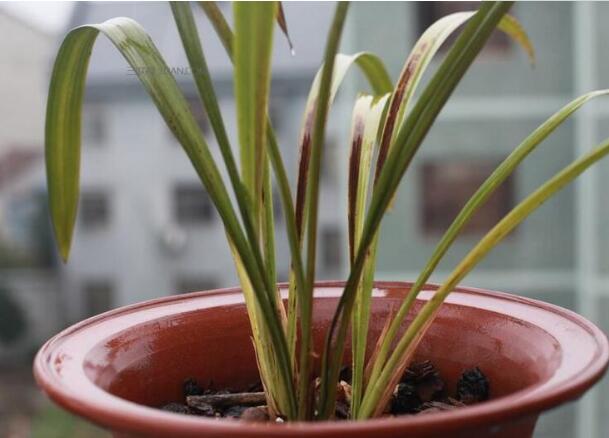
When Cymbidium ensifolium leaves turn yellow, we first need to find the cause, because only by finding the cause can we better deal with it in a targeted way. There are many reasons that cause Cymbidium ensifolium leaves to turn yellow; fertilizing, absorbing sunlight in the wrong way, and the appearance of pests and diseases can all cause this problem. If it is caused by pests and diseases, everyone can refer to the article on pest and disease control for Cymbidium ensifolium, which has detailed solutions, so the editor will not introduce too much here.
2. Causes of yellowing leaves in Cymbidium ensifolium
1. Wrong soil choice
Choosing soil is the first step in planting Cymbidium ensifolium, and it is also a very important step, with many points to pay attention to. When choosing soil, it is best not to choose soil that is too sticky, because if it is planted in this kind of soil, it may have difficulty absorbing nutrients and cause yellowing leaves.
Solution: When choosing soil before planting Cymbidium ensifolium, it is best to choose relatively loose soil, such as a mixture of humus soil, coarse sand and garden soil, which is very good. This can make the soil better drained and make it easier for Cymbidium ensifolium to absorb nutrients.
2. Too much or too little sunlight
When growing Cymbidium ensifolium, sunlight is a very important point. If it is placed in direct sunlight, it is very easy for sunburn to occur, thus causing the leaves to lose vitality and turn yellow. Of course, if it is placed indoors for a long time without sunlight, Cymbidium ensifolium will be unable to carry out photosynthesis and will lack nutrients, gradually turning yellow.
Solution: Cymbidium ensifolium does not like direct sunlight, especially in summer when sunlight is strong. It is best to move Cymbidium ensifolium indoors to a semi-shaded place for growing, and the environment must be ventilated. This can avoid direct sunlight and also prevent it from being unable to absorb nutrients from sunlight.
3. Wrong fertilizing method
A wrong fertilizing method or choosing the wrong fertilizer can both cause Cymbidium ensifolium leaves to turn yellow. During fertilizing, the fertilizing method is key, and once the right method is found, handling it is relatively simple.
Solution: During the growth process of Cymbidium ensifolium, there are three fertilizations that are very important and absolutely indispensable. They are the bud-promoting period, the germination period, and before the flowering period. During the bud-promoting period, granular fertilizer can be chosen for external application. During the germination period, nitrogen fertilizer should be chosen for once-a-week fertilizing, and before the flowering period, phosphorus fertilizer should be chosen for once-a-week external root application.
As for what to do when Cymbidium ensifolium leaves turn yellow, friends who have read the above should all know how to solve this problem. As said before, as long as you find the cause of the yellowing, handling it is still very simple. In any case, I still hope this article can bring everyone some help.
Causes of yellowing leaves in Cymbidium ensifolium and what to do when Cymbidium ensifolium leaves turn yellow
Cymbidium ensifolium is one of the very popular flowering plants for home growing. If the Cymbidium ensifolium you are growing shows yellowing leaves, you may as well quickly come and look at the causes of yellowing leaves in Cymbidium ensifolium and the solutions for yellowing leaves in Cymbidium ensifolium!
Causes of yellowing leaves in Cymbidium ensifolium:
Unsuitable soil
Cymbidium ensifolium has fleshy roots, and its root system is developed and thick, so it has relatively high requirements for soil permeability. If planted in relatively sticky soil, it will affect the growth of the root system and cause the nutrient transport channel between the roots and leaves to be interrupted.
Improper lighting
Cymbidium ensifolium is an orchid variety that relatively likes light. If it is kept in a shady place for a long time, the plant will have reduced chlorophyll due to lack of photosynthesis, and the leaf color will turn yellow; if it is exposed to the sun for a long time, the light is too strong, the plant is easily burned, and the leaves will also lose vitality.
Improper fertilizing
Too much nitrogen fertilizer. Everyone knows that nitrogen fertilizer can promote leaf growth, but the roots of Cymbidium ensifolium have root nodules, which have a certain effect of aggregating nitrogen elements. If the fertilizer applied during a certain period has a relatively high nitrogen content, it will cause fertilizer damage and yellowing leaves.
Interference from pests and diseases
Root rot is one of the causes of yellowing leaves. If the rhizome rots, the leaves aboveground will inevitably grow poorly, turn yellow, or even wither.
In addition, damage from scale insects can also cause yellowing leaves. The branches are covered with insects, which affects the plant's photosynthesis, and the branches slowly wither.
What to do when Cymbidium ensifolium leaves turn yellow:
Change the soil and provide suitable light
If unsuitable soil is found, change the soil immediately. You can choose professional orchid growing soil, which is relatively suitable in both permeability and pH. Try not to use soil dug directly from outside, because this kind of soil is not very breathable.
In daily maintenance, place the orchid pot in a bright place. In spring and winter, it can receive all-day sunlight without shading. In summer and autumn, avoid the midday sun and provide appropriate shading.
Apply thin fertilizer frequently
What orchids dread most is heavy fertilizer. Flower lovers who do not understand fertilizing must study well. Fertilize in time when it should be done. Whether fertilizing is right or wrong affects the growth of Cymbidium ensifolium. Persist in applying thin fertilizer frequently and do not be lazy. Only in this way can Cymbidium ensifolium grow robustly.
Prevent and control pests and diseases
If the plant is found to be infected with pests or diseases, deal with it in time. When roots rot, take the plant out of the pot, clean up the rotten parts, soak it in disinfectant for 20~30 minutes, let it dry, and then replant it.
If scale insects appear on the leaves, spray pesticide in time. Omethoate 1000 times solution can be used.
What to do when Cymbidium ensifolium leaves turn yellow
Cymbidium ensifolium likes a warm, humid and semi-shady environment, and has poor cold resistance. The overwintering temperature should not be lower than 3°C. It fears direct strong light, is not tolerant of waterlogging or drought, and is suitable for loose, fertile and well-drained leaf mold. Cymbidium ensifolium flowers are elegant and beautiful, and with emerald green leaves they are like an elegant beauty. But your own Cymbidium ensifolium may develop yellow leaves as you grow it.
Causes of yellowing leaves in Cymbidium ensifolium1. Unsuitable soil: Cymbidium ensifolium has fleshy roots, and its root system is developed and thick, so it has relatively high requirements for soil permeability. If planted in relatively sticky soil, it will affect the growth of the root system and cause the nutrient transport channel between the roots and leaves to be interrupted.
2. Improper lighting: Cymbidium ensifolium is an orchid variety that relatively likes light. If it is kept in a shady place for a long time, the plant will have reduced chlorophyll due to lack of photosynthesis, and the leaf color will turn yellow; if it is exposed to the sun for a long time, the light is too strong, the plant is easily burned, and the leaves will also lose vitality.
3. Improper fertilizing: Too much nitrogen fertilizer. Everyone knows that nitrogen fertilizer can promote leaf growth, but the roots of Cymbidium ensifolium have root nodules, which have a certain effect of aggregating nitrogen elements. If the fertilizer applied during a certain period has a relatively high nitrogen content, it will cause fertilizer damage and yellowing leaves.
4. Interference from pests and diseases: Root rot is one of the causes of yellowing leaves. If the rhizome rots, the leaves aboveground will inevitably grow poorly, turn yellow, or even wither.
In addition, damage from scale insects can also cause yellowing leaves. The branches are covered with insects, which affects the plant's photosynthesis, and the branches slowly wither.
What to do when Cymbidium ensifolium leaves turn yellow (handling methods)1. Change the soil: If unsuitable soil is found with suitable light, change the soil immediately. You can choose professional orchid growing soil, which is relatively suitable in both permeability and pH. Try not to use soil dug directly from outside, because this kind of soil is not very breathable.
2. In daily maintenance, place the orchid pot in a bright place. In spring and winter, it can receive all-day sunlight without shading. In summer and autumn, avoid the midday sun and provide appropriate shading.
3. Apply thin fertilizer frequently: What orchids dread most is heavy fertilizer. Flower lovers who do not understand fertilizing must study well. Fertilize in time when it should be done. Whether fertilizing is right or wrong affects the growth of Cymbidium ensifolium. Persist in applying thin fertilizer frequently and do not be lazy. Only in this way can Cymbidium ensifolium grow robustly.
4. Prevent and control pests and diseases: If the plant is found to be infected with pests or diseases, deal with it in time. When roots rot, take the plant out of the pot, clean up the rotten parts, soak it in disinfectant for 20~30 minutes, let it dry, and then replant it.
5. If scale insects appear on the leaves, spray pesticide in time. Omethoate 1000 times solution can be used.