Potted oleander is highly toxic: detailed guide to growing methods and precautions
You have probably heard of oleander; it is a plant with a long flowering period and brilliant flowers, deeply loved by many flower enthusiasts. In daily life, many people grow oleander at home, but the whole oleander plant is highly toxic, so anyone growing it must be careful. So how do you grow potted oleander? Below are the growing methods and precautions for oleander, very comprehensive. Anyone who wants to grow it should take a look!
I. How to grow potted oleander: create the right conditions
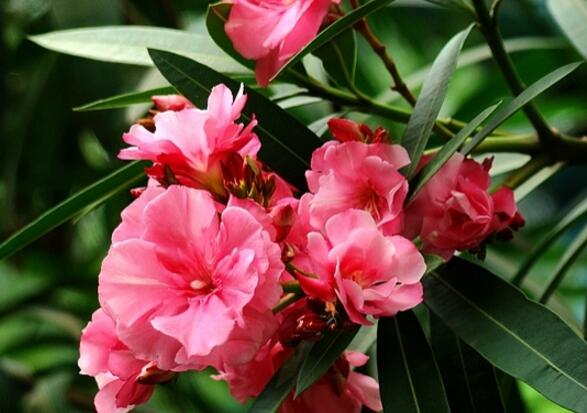
Although oleander is toxic, some flower enthusiasts still grow it at home, and they very much want to know how to grow potted oleander. For this, you can create growing conditions according to oleander's growth habits, such as slightly acidic soil, bright light, and appropriate water and fertilizer. For details, let's continue reading the growing methods and precautions for oleander.
II. Growing methods and precautions for oleander
1. Soil: slightly acidic
How to grow potted oleander? First, of course, is choosing the soil. Oleander has extremely strong adaptability, so it does not demand much from soil, but to grow oleander well, it is best to grow it in fertile, slightly acidic soil.
2. Light: must be sufficient
According to oleander's growth habits, it likes sunlight, so we should ensure it gets sufficient light time, especially during the growing period, when it must be met.
Precaution: Once light is insufficient, or it is kept in shade for a long time, oleander will still bloom, but only sparsely, and the flower color will be very pale, seriously affecting its ornamental value.
3. Temperature: above 0°C
In the growing methods and precautions for oleander, temperature is also something we need to pay attention to. It is understood that oleander likes warmth, so it is best to place it in a sheltered, sunny spot. But oleander has strong adaptability, so as long as the temperature is not lower than 0°C, it is fine; in winter, pay attention to cold protection.
Precaution: Although oleander likes warmth, too high a temperature is also not good, as it will severely consume nutrients, so that growth and flowering the next year will be very poor.
4. Watering: water when dry, stop when wet
Oleander likes a humid climate, so when growing potted oleander, watering is very important. It is understood that oleander likes water but fears waterlogging, so when watering oleander, you must pay attention. In spring and autumn, water according to the principle of water when dry, stop when wet, keeping the potting soil moist; in summer, oleander is in its growing and flowering period, so its water demand is high. At this time, water once each morning and evening every day.
Precaution: When watering oleander, you must not give too much, because once water accumulates in the pot, it will cause root rot, oleander leaves will turn yellow, and in severe cases it will affect flowering the next year. So the four words "water when dry, stop when wet" must be kept firmly in mind!
5. Fertilizing: once every 20 days
Applying fertilizer: Oleander likes fertilizer. From when it is moved outdoors until the flowers fade (Frost's Descent), apply 1 time of dilute liquid fertilizer about every 20 days. After the Start of Autumn, oleander grows rapidly; at this time, apply fertilizer water about every 15 days until just before it is moved indoors.
6. Pruning: 4 times a year
How to grow potted oleander? Pruning is also very important. If you want to grow oleander well, it is best to prune it 4 times a year: first, after Grain Rain in spring; second, during July and August; third, during October; fourth, winter pruning. In addition, after flowering, pruning should also be carried out, otherwise there will be fewer flowers the next year, or even no flowers.
III. Precautions for growing oleander
In the growing methods for oleander above, several points needing attention have already been mentioned, and I believe everyone has remembered them. However, besides those mentioned above, there are three more points flower enthusiasts need to note: 1 is pests and diseases, 2 is toxicity. The precautions for growing oleander are as follows:
1. Pests and diseases
During plant cultivation, being troubled by pests and diseases is very common, and oleander is naturally no exception, except that its strong adaptability gives us plenty of time to deal with them. Among them, the main insect pests of oleander are: oleander aphid and mealybug; the main diseases are: brown spot and black spot. For specific treatment, there is a detailed introduction in oleander pest and disease control, so I will not say more here.
2. The whole plant is toxic
Among the precautions for growing oleander, one point everyone must pay attention to is that the whole oleander plant is highly toxic, and accidental ingestion by humans or livestock is dangerous. Not only that, the floral fragrance of oleander can also make people drowsy and reduce intelligence; the milky white sap secreted by oleander's stems, leaves, bark, flowers, and fruit can also induce cancers of the respiratory and digestive systems!
How to grow oleander: growing methods and precautions for oleander
Oleander's leaves are like willow and bamboo, and its red flowers blaze like peach blossoms; it is a famous ornamental flower. How do you grow oleander? Let's take a look together at the growing methods and precautions for oleander.
Growing methods for oleander:
I. Repotting
Potted oleander should be repotted and have its soil changed once every two years, and a small amount of long-acting fertilizer such as feathers, horns, and hooves can be placed at the bottom of the pot. During the growing period, apply 1 to 2 times of liquid fertilizer as appropriate according to growth. Oleander tolerates pruning and has strong sprouting ability. Aged plants can be renewed and pruned in spring along with repotting and soil changing, cutting all branches off from the base to promote new branches and rejuvenation. Generally, plants should also be moderately pruned in spring to keep the plant shape symmetrical and the tree vigor strong.
II. Pruning
Through pruning, the branches are evenly distributed, the flowers are large and colorful, and the tree shape is beautiful. The upper branches of oleander have the characteristic of one dividing into three, and shaping can be done by pruning as needed. If a three-fork, nine-top shape is desired, part of the top of the three forks can be cut off, and nine tops can then be produced. If nine tops and eighteen branches are desired, six branches can be kept and cut from the top leaf axils, and eighteen branches can then grow. Pruning time should be after each flowering. In the north, oleander's flowering period is from April to October. Faded flowers should be removed promptly to ensure concentrated nutrients. Generally, pruning is divided into four times: first, after Grain Rain in spring; second, during July and August; third, during October; fourth, winter pruning. If flowering indoors is desired, move it to a sunny spot indoors at about 15°C. Prune immediately after flowering, otherwise there will be few and small flowers, or even no flowers.
III. Root thinning
Oleander's fine roots grow quickly. A three-year-old oleander planted in a pot with a diameter of 20 cm can fill the pot with roots by July of that year, forming a ball that hinders the penetration of water and fertilizer and affects growth. If roots are not thinned in time, conditions such as withering, leaf drop, and death may occur. The best time for root thinning is from early August to late September. At this time the roots are dormant, making it a good opportunity for root thinning. Root thinning method: use a sharp shovel to cut away the surrounding yellow fibrous roots; then use a three-pronged hook to loosen along the main root. Remove about half or one third of the yellow fibrous roots, then replant in the pot. After root thinning, place it in shade and water thoroughly, keeping the potting soil moist. Keep it shaded for about 14 days, then move it into sunlight. For field-planted oleander, in mid-September, the yellow fibrous roots should also be cut around the main trunk. After cutting the roots, water and apply dilute liquid fertilizer.
IV. Topdressing
Oleander is a flower that likes fertilizer and water and likes neutral or slightly acidic soil. Fertilization should maintain about 20% organic mixed soil manure in the potting soil. If chicken manure is used, 15% is sufficient. Fertilization time: once before Qingming, once after the Autumn Equinox. Method: dig a ring-shaped trench around the edge of the pot, apply fertilizer, then cover with soil. After fertilizing at Qingming, topdress about every ten days with soybean cake water fermented with water; after fertilizing at the Autumn Equinox, topdress about every ten days with soybean cake water or peanut cake water, or ten times diluted chicken manure liquid. If the above fertilizers are unavailable, use human urine fermented for more than seven days, diluted with water five to seven times, pour it along the edge of the pot, then water thoroughly. For fertilizers containing much nitrogen, the principle is dilute, light, little, and frequent, strictly preventing root burn.
V. Watering
Proper watering is the key to managing oleander well. Improper watering in winter and summer can cause leaf drop, flower drop, and even death. In spring, water once a day; in summer, water once each morning and evening, keeping the potting soil moisture at about 50%. The leaf surface should be sprayed with water frequently. Excessive dryness easily causes leaf drop and withering. In winter, water less, but the potting soil moisture should be kept at about 40%. The leaf surface should often be rinsed with clean water to remove dust. If you want it to bloom in winter, keep the room temperature above 15°C; if you do not want it to bloom in winter, lower the room temperature to 7-9°C and place it in a bright spot indoors without direct sunlight. In the north, field-planted oleander needs to be wrapped with straw mats for cold and freeze protection, and the protective covering should be removed around Qingming. Although oleander is easy to manage, you still must not be careless.
Precautions for growing oleander:
Oleander likes sufficient light and warm, humid climate conditions. It is also slightly cold-tolerant and can overwinter outdoors in warm temperate regions without losing its leaves. In summer, potted plants should be watered and sprayed frequently to keep the potting soil and environment moist, but must never remain wet and waterlogged for long. Oleander has another characteristic: as long as there is one instance of drought and dehydration or excessive water and waterlogging, the lower leaves of the plant will quickly all turn yellow and fall off, so watering must be timely and appropriate. After heavy pruning in early spring, pay attention to withholding water to prevent root infection and rot. Loosen the potting soil in time, promptly remove faded flowers, and in summer there may occasionally be aphids and red spider mites, which can be eliminated with general pesticides. The whole oleander plant is highly toxic, and symptoms after poisoning include nausea, vomiting, drowsiness, and irregular heartbeat; in severe cases, loss of consciousness or even death is possible. So when facing oleander, just admire it, and do not touch it!
Growing methods and precautions for oleander: oleander picture appreciation
Although oleander is toxic, it is highly ornamental, and many flower enthusiasts still like to grow it. Oleander has terminal cymes and funnel-shaped corollas, red or white, and is commonly seen in gardens. So how do you grow oleander? What should be noted during cultivation? Next, Xiao Qi will share it.Growing methods and precautions for oleander。
White oleander picture
I. Growing methods for oleander
1. Watering: Although oleander likes water, it fears waterlogging. During continuous rainy days, promptly pour out accumulated water in the pot to prevent root rot. Too much watering will cause leaves to turn yellow and fall off one after another, affecting flowering the next year. In spring and autumn, water according to water when dry, stop when wet, preferably keeping the potting soil moist. Summer is exactly when oleander grows vigorously and blooms, so it needs more water; water once each morning and evening every day, and pay attention to frequently spraying and washing the branches and leaves to keep the leaf surface fresh and green. Move it indoors in mid-October, and after moving indoors control watering; never let the water be excessive, otherwise it easily causes root rot and leaf drop, affecting growth the next year.
2. Light: Oleander likes sunlight, so during the growing period it needs to be kept in a place with sufficient sunlight, otherwise there will be few flowers and pale color.
3. Temperature: Oleander should be planted in a sheltered, sunny spot. In winter, move it indoors to prevent freezing; the room temperature only needs to be no lower than 0°C. Too high a temperature consumes nutrients and is unfavorable for growth and flowering the next year. Where outdoor temperatures are high in winter, soil can be mounded up for cold protection.
4. Fertilizing: Oleander likes fertilizer. From when it is moved outdoors until the flowers fade (Frost's Descent), apply 1 time of dilute liquid fertilizer about every 20 days. After the Start of Autumn, oleander grows rapidly; at this time, apply fertilizer water about every 15 days until just before it is moved indoors.
5. Pruning: If oleander is left unpruned, the plant shape becomes too large, so when cultivating it in clump form, the branches or trunks should be organized. Oleander has strong sprouting ability; if cut in the middle of a branch, many small branches will emerge from the cut, affecting the plant shape, so in principle pruning must be done at the base of the branch.
6. Insect pests: Brown spot is an important disease on oleander. In the early stage of onset, spray 50% benomyl wettable powder 1000x solution or 25% carbendazim wettable powder 600x solution, or 36% thiophanate-methyl suspension concentrate 500x solution.
Peach-colored oleander picture
II. Precautions for growing oleander
Oleander likes sufficient light and warm, humid climate conditions. It is also slightly cold-tolerant and can overwinter outdoors in warm temperate regions without losing its leaves. In summer, potted plants should be watered and sprayed frequently to keep the potting soil and environment moist, but must never remain wet and waterlogged for long. Oleander has another characteristic: as long as there is one instance of drought and dehydration or excessive water and waterlogging, the lower leaves of the plant will quickly all turn yellow and fall off, so watering must be timely and appropriate. After heavy pruning in early spring, pay attention to withholding water to prevent root infection and rot. Loosen the potting soil in time, promptly remove faded flowers, and in summer there may occasionally be aphids and red spider mites, which can be eliminated with general pesticides. The whole oleander plant is highly toxic, and accidental ingestion by humans or livestock is dangerous. It should be avoided near wells and drinking water pools. When facing oleander, do not touch it!
White oleander picture
The above isgrowing methods and precautions for oleanderintroduced. There is still some knowledge involved in growing oleander, and I hope it can help everyone. The precautions for growing oleander must be kept firmly in mind.
Recommended reading:
① Is oleander toxic? Can it be grown at home with children?
② What is oleander's flower language? Oleander's symbolic meaning
③ How to plant rose of Sharon: sharing rose of Sharon planting techniques
④ Growing methods for purple magnolia: purple magnolia picture appreciation
⑤ How to grow elm-leaved spirea: growing methods and precautions for elm-leaved spirea