How to plant Gesang flowers? Planting methods and management tips
Gesang flowers grow at an altitude above 5000 m. The Gesang flower, which belongs to the Asteraceae family, is the azalea, also called Suoluo. Its homeland is the boundless prairies of Tibet, Qinghai, western Sichuan and northwestern Yunnan, and it is regarded by Tibetan villagers as a symbol of love and good fortune. So how exactly do you plant the beautiful Gesang flower? The editor has carefully compiled the following points to note on how to plant Gesang flowers for your reference!
Growth habits
It likes sunlight, is not cold-tolerant, fears frost, and dislikes intense heat. It tolerates poor, thin soil; too much fertilizer and water easily causes leggy growth with fewer flowers, or even lodging. Cosmos can self-seed and multiply in large numbers.
Propagation
It is usually propagated by sowing. Sow in spring in April; germination is rapid, sprouting 7-10 days after sowing. It can also be propagated by softwood cuttings, rooting 15-18 days after sticking.
Cultivation
Transplant when the seedlings have 4-5 true leaves, and pinch out the growing tips; thinning after direct sowing is also possible. If base fertilizer is applied to the planting site, no further fertilizing is needed during the growing period; if the soil is too rich, the branches and leaves easily grow leggy and flowering decreases. Plants that bloom during the high temperatures of July-August do not easily set seed. The seeds fall off easily once mature, so collect them in the early morning. Cosmos is a short-day plant; spring-sown seedlings tend to have abundant leaves but few flowers, while summer-sown seedlings are short, uniform and bloom continuously. (This point is the most important!)
Pests and diseases
Leaf spot and powdery mildew are common. Spray with a 500-fold dilution of 50% thiophanate-methyl wettable powder. Insect pests include aphids and scarab beetles; spray with a 2500-fold dilution of 10% beta-cypermethrin EC.
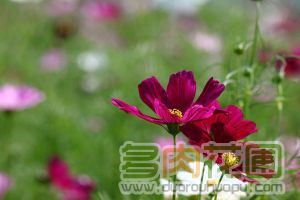
Environmental requirements for Gesang flowers
The homeland of the Gesang flower is the boundless prairies of Tibet, Qinghai, western Sichuan and northwestern Yunnan, and it is regarded by Tibetan villagers as a symbol of love and good fortune. Gesang flowers like sunlight, are not cold-tolerant, fear frost, and dislike intense heat. They tolerate poor, thin soil; too much fertilizer and water easily causes leggy growth with fewer flowers, or even lodging.
How to plant Gesang flowers
The planting method is actually very simple. Before planting, choose good seeds (just buy mature, sterile seeds). In April, plant the seeds; the temperature is suitable at this time, and they germinate 7-10 days after sowing. Once true leaves appear, they can be divided and potted up.
Caring for Gesang flowers
Transplant when the seedlings have 4-5 true leaves, and pinch out the growing tips; thinning after direct sowing is also possible. If base fertilizer is applied to the soil, no further fertilizing is needed during the growing period; if the soil is too rich, the branches and leaves easily grow leggy and flowering decreases. Plants that bloom during the high temperatures of July-August do not easily set seed. The seeds fall off easily once mature, so collect them in the early morning.
Cosmos is a short-day plant; spring-sown seedlings tend to have abundant leaves but few flowers, while summer-sown seedlings are short, uniform and bloom continuously. (This point is the most important!)
Pest and disease control for Gesang flowers
Gesang flower diseases include leaf spot and powdery mildew, which can be treated by spraying a 500-fold dilution of 50% thiophanate-methyl wettable powder. Insect pests include aphids and scarab beetles, which can be killed by spraying a 2500-fold dilution of 10% beta-cypermethrin EC.
How to plant Gesang flowers? Home planting methods for Gesang flowers
Image: Gesang flowers
[Gardener's question]How do you plant Gesang flowers?
[Answer from an experienced gardener]The Gesang flower is the hardiest and most ordinary wildflower on the plateau, yet this wildflower is intoxicatingly beautiful. Many gardeners surely want to grow a pot of Gesang flowers at home, but after all, the Gesang flower belongs to the wild. To grow it at home, you should also pay attention to the following points.
1. Seed collection
Some time after the Gesang flowers fade, they form seeds; when you see the color turn withered yellow, they are nearly mature. You can cut off the flower heads with large, brightly colored blooms, dry them in the sun and keep the seeds. Flowers that bloom during high temperatures do not easily set seed, and the seeds fall off easily once mature, so watch closely for harvesting.
2. Sowing
Gesang flowers are generally propagated from seed. In the coastal areas of Guangdong, you can sow once the temperature is above 15 degrees, and they can germinate from spring to autumn. Sown in early spring, they can bloom in May-June; because the climate is hot in August-September, they bloom less, then continue blooming after the autumn cools. I once tried sowing in November, and they could still bloom in January. The south is warm, which is just right for growing flowers. Do not sow when the temperature is below 15 degrees; it wastes seeds.
3. Temperature and soil
Gesang flowers like warmth and face the sun, and should be grown in a spot with direct sunlight, so the outskirts of town and rooftops are good choices. The Gesang flower plant is relatively tall, so it needs a large pot; growing it as a whole flower border looks very beautiful. It is slightly tolerant of early frost and not demanding about soil; neutral to slightly acidic soil is best. I used ordinary garden soil.
Image: Gesang flowers
4. Transplanting
When the Gesang flower seedlings grow to 5 cm tall, they can be transplanted. Find a somewhat larger, deeper pot for final planting; Gesang flowers grow quickly, so it is recommended to pinch out the growing tips several times, which increases branching and produces many flower buds.
5. Watering
Gesang flowers tolerate drought and severe cold, and too much watering is actually harmful, which is why the Gesang flowers seen on the dry highlands are so vivid. Water according to the rainfall of the year; on damp spring days, water twice a week, and after flowering the potting soil should be even drier. After May, because summer temperatures are high, water a bit more to keep the potting soil moist. During the bud stage, keep it slightly moist, but also be careful not to water too much.
6. Fertilizing
Gesang flowers can grow even in poor soil and do not need frequent fertilizing during the growing period; too much fertilizer instead causes excessive growth of branches and leaves with fewer flowers, meaning they only grow leaves and no flowers. Therefore, fertilizing should focus on light, diluted fertilizer; during bud formation, an ordinary flower fertilizer about once every 10 days is enough.
[Editor's summary]In Tibetan, “Gesang” means happiness. I believe that if you can grow a pot of Gesang flowers at home, it will surely bring happiness and good fortune. Above, this experienced gardener introduced the home planting methods for Gesang flowers, and I hope it helps fellow gardeners!