What to do about yellowing and falling leaves on Serissa japonica? Pay attention to three points, avoid strong light and lack of water
Serissa japonica, as its name suggests, has pure white flowers that are very endearing, and combined with its emerald green leaves, its ornamental value is truly off the charts. However, no matter how beautiful the plant, improper care can also cause symptoms of yellowing and falling leaves. So what should be done about yellowing and falling leaves on Serissa japonica? Actually, it is very simple, find the cause of the yellowing leaves and then address it accordingly. Follow along with the editor to take a look.
I. What to do about yellowing and falling leaves on Serissa japonica, find the cause
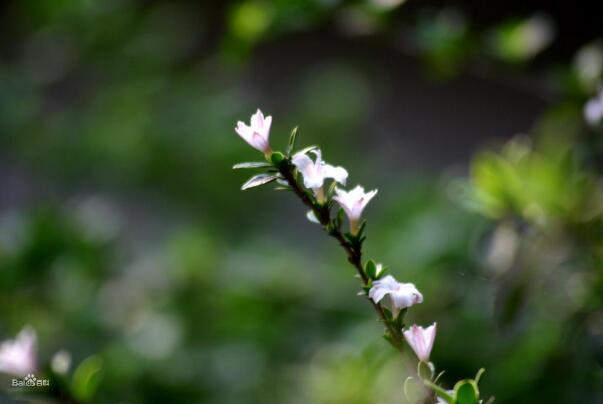
The beauty of Serissa japonica is endearing; its emerald green leaves and pure white flowers complement each other beautifully. However, once improper care causes yellowing and falling leaves on Serissa japonica, it will seriously affect its ornamental value. What should be done at this point? Actually, it is very simple, find the cause and address it. Below are several causes of yellowing and falling leaves on Serissa japonica, along with solutions. Let us continue reading.
II. Causes and solutions for yellowing and falling leaves on Serissa japonica
1. Sudden environmental change
There are many reasons for yellowing and falling leaves on Serissa japonica. First, we should consider: did you just buy a Serissa japonica potted plant? Because some flower enthusiasts find that shortly after buying Serissa japonica, it very easily drops leaves. This is actually caused by not adapting to the new growing environment.
Solution: Place the newly purchased Serissa japonica potted plant in a ventilated, shady place for a few days, then resume normal care. Believe that before long, the plant will recover its health.
2. Normal yellowing
After seeing yellowing and falling leaves on Serissa japonica, we should first consider whether this is a normal phenomenon. Because during growth, Serissa japonica continuously sprouts new leaves while old leaves yellow, which is normal metabolism.
Solution: At this point, observe the plant's growth and if it is found to be a normal phenomenon, we only need to pluck off the yellowed old leaves of Serissa japonica.
3. Too much light
In the cultivation methods for Serissa japonica, we mentioned that it needs sufficient light. However, once the light given is too strong, it will also cause yellowing and falling leaves on Serissa japonica.
Solution: For Serissa japonica to grow well, sufficient light is fundamental, but in summer, we should pay attention to shading to prevent the leaves from being scorched and yellowing. If Serissa japonica leaves are found to be sun-yellowed, water appropriately, place it indoors in a spot with scattered light for a period of care, and it will recover.
4. Too little or too much watering
For yellowing and falling leaves on Serissa japonica, we should also consider the watering issue. Because too little watering, or compacted potting soil, will prevent the roots of Serissa japonica from absorbing water, resulting in yellowing leaves and even leaf drop. In addition, too much watering is also not good, because water accumulation in the potting soil will also cause Serissa japonica leaves to yellow.
Solution: When watering too little, increase the frequency of watering and place it in a spot with scattered light to adjust. When watering too much, move it to a place with sufficient light and ventilation, reduce watering, and keep the potting soil moist. If necessary, replace the potting soil.
5. Pests and diseases
In addition to the above points, pests and diseases are also one of the causes of yellowing and falling leaves on Serissa japonica. Pests like aphids and snails can all cause Serissa japonica leaves to yellow. Once discovered, we need to treat them promptly. As for how to treat them, there is a detailed introduction in the pest and disease control for Serissa japonica, so we will not say more here.
6. Human-caused injury
Actually, there is another cause of yellowing and falling leaves on Serissa japonica, and that is human-caused injury! When repotting Serissa japonica, some flower enthusiasts may accidentally injure the roots due to inexperience, which will cause leaf drop.
Solution: Very simple, just place Serissa japonica in a shady place.
Overall, Serissa japonica has strong adaptability and generally it is very difficult for the above symptoms to appear. However, no matter how easy a plant is to grow, careless and negligent care from us will also cause problems. So everyone must be careful and meticulous during the cultivation process, only then can you grow a beautiful Serissa japonica. Regarding the causes of yellowing and falling leaves on Serissa japonica, the editor will introduce this much, hoping to bring help to everyone.
What to do about yellowing and falling leaves on Serissa japonica
Yellowing and falling leaves on Serissa japonica are very harmful to the plant, and Serissa japonica is no exception. Once such a situation occurs, measures need to be taken promptly so that Serissa japonica can grow and bloom well.
What to do about leaf drop on Serissa japonica 1. Improper care causes yellowing and falling leaves on Serissa japonicaSun exposure can cause yellowing leaves on Serissa japonica. Although Serissa japonica needs more sun to make its branches and leaves dense, in summer, attention should be paid to shading to prevent the leaves from being scorched and yellowing.
Improper watering can also cause Serissa japonica leaves to yellow. If the soil is compacted and has poor water permeability, causing the roots of Serissa japonica to be unable to absorb water, it will cause Serissa japonica leaves to yellow due to lack of water. In addition, if watering too much, it will also cause leaves to yellow due to water accumulation. So cultivating Serissa japonica requires loose and breathable soil and reasonable watering, and there will no longer be yellow leaves.
Serissa japonica may also have yellowing and falling leaves due to pests and diseases. Pests like aphids and snails can all cause Serissa japonica leaves to yellow. Pest and disease control needs to be done promptly to prevent yellowing leaves.
2. Normal yellowing and falling leaves on Serissa japonicaYellowing leaves on Serissa japonica may be a normal phenomenon, because as Serissa japonica grows, new leaves continuously sprout and old leaves yellow, which is normal metabolism. At this point, you only need to pluck off the yellowed old leaves of Serissa japonica.
3. Yellowing and falling leaves on newly potted Serissa japonicaSometimes, flower enthusiasts buy a potted Serissa japonica but find that it very easily yellows and drops leaves. This is because it is not adapting to the new growing environment and needs some time to adjust. Place the newly purchased potted Serissa japonica in a ventilated, shady place for a few days, then resume normal care.
Of course, it is also possible that Serissa japonica has just been repotted and the roots were accidentally injured, which will cause leaf drop. Just place it in a shady place.
What to do about yellowing and falling leaves on Serissa japonica, analysis of the causes of yellowing and falling leaves
Serissa japonica prefers a warm climate, and can also somewhat tolerate cold and drought. It prefers well-drained, fertile, moist and loose soil. It has low requirements for the environment and strong growth capacity. It grows by riverbanks or in mixed woods on hills. So what to do about yellowing and falling leaves on Serissa japonica? Today, the editor of wed114 wedding website brings you the causes of yellowing and falling leaves on Serissa japonica as well as the cultivation methods for Serissa japonica.
What to do about yellowing and falling leaves on Serissa japonica
Sometimes, flower enthusiasts buy a potted Serissa japonica but find that it very easily yellows and drops leaves. This is because it is not adapting to the new growing environment and needs some time to adjust. Place the newly purchased potted Serissa japonica in a ventilated, shady place for a few days, then resume normal care.
Of course, it is also possible that Serissa japonica has just been repotted and the roots were accidentally injured, which will cause leaf drop. Just place it in a shady place.
Causes of yellowing and falling leaves on Serissa japonica
1. Normal yellowing and falling leaves
Yellowing leaves on Serissa japonica may be a normal phenomenon, because as Serissa japonica grows, new leaves continuously sprout and old leaves yellow, which is normal metabolism. At this point, you only need to pluck off the yellowed old leaves of Serissa japonica.
2. Improper care causes yellowing and falling leaves
Sun exposure can cause yellowing leaves on Serissa japonica. Although Serissa japonica needs more sun to make its branches and leaves dense, in summer, attention should be paid to shading to prevent the leaves from being scorched and yellowing.
Improper watering can also cause Serissa japonica leaves to yellow. If the soil is compacted and has poor water permeability, causing the roots of Serissa japonica to be unable to absorb water, it will cause Serissa japonica leaves to yellow due to lack of water. In addition, if watering too much, it will also cause leaves to yellow due to water accumulation. So cultivating Serissa japonica requires loose and breathable soil and reasonable watering, and there will no longer be yellow leaves.
3. Pests and diseases cause yellowing and falling leaves
Serissa japonica may also have yellowing and falling leaves due to pests and diseases. Pests like aphids and snails can all cause Serissa japonica leaves to yellow. Pest and disease control needs to be done promptly to prevent yellowing leaves.
Cultivation methods for Serissa japonica
Soil
Serissa japonica is not strict about soil and is suitable for growing in loose, well-drained soil (fertile soil is even better). However, flower enthusiasts should note that slightly acidic soil is more beneficial for the growth of Serissa japonica, which is somewhat similar to gardenia.
Environment
The environment is crucial for growing flowers, and Serissa japonica is no exception. Serissa japonica grows wild in the Yangtze River basin and other regions of China (there are quite a few planted outdoors), distributed in forests or by streams, mostly on shady slopes. It prefers a warm and humid environment, is relatively cold-tolerant, likes sun and also tolerates shade. However, if it is a potted Serissa japonica, during the growing season it should be placed in semi-shade and humid places such as under tree shade, otherwise too strong light will affect growth and be unfavorable for ornamental value.
Fertilizing
Serissa japonica relatively likes fertilizer, and in daily care, more fertilizer should be given. However, remember that although Serissa japonica likes fertilizer, if too much fertilizer is applied, it will cause excessive branching and easily cause new branches to grow excessively. So generally, apply decomposed cake fertilizer water only once before winter and once after flowering.
Watering
Serissa japonica has a certain drought tolerance and relatively likes water, but does not tolerate waterlogging. Watering should follow the principle of alternating between dry and wet, and not watering when not dry. During the rainy season, prevent water accumulation in the pot. If in rainy weather, the pot should be placed on its side. In summer during high temperature and dry periods, spray water on the leaves in the morning and evening to cool down and increase air humidity, to facilitate its growth and flowering. (Regarding watering, many flower enthusiasts truly do not understand it, one moment saying dry, the next saying wet. Flower enthusiasts should learn to understand that potted plants are different from ground-planted ones. Potted plants are limited by many factors, such as the depth of the pot, the water permeability of the soil, etc. So when watering, flower enthusiasts must not refer to time, but touch the soil. The best state should be moist but not wet, occasionally dry, which is more beneficial for plant growth).
Propagation
Flower enthusiasts often need to propagate two pots of Serissa japonica for themselves as backups, or to share with other flower enthusiasts. Serissa japonica propagation is mainly by cuttings, and can also use layering, division, cuttings and other methods. Generally, in early spring, hard branches are used, but in the plum rain season, tender branches or old branches can all be used. Cut the bottom of the branch at a 45°C angle with a sharp knife, insert it into vermiculite or sand, cover with film to keep warm, pay attention to spraying water, and about 40 days later it can take root. At this point, transplant it.
Pruning
As mentioned earlier, Serissa japonica is very tolerant of pruning and easy to shape, so it can also be made into bonsai. Flower enthusiasts do not need to worry about pruning it badly. Every year after half-leaf fall in winter and before the beginning of spring when buds sprout, carry out one shaping and pruning, cut short long branches and excessive growth branches, thin out overly dense fine weak branches, cut off diseased and pest-damaged branches and other messy branches that affect ornamental value. During the growing season, timely pinch tips, remove buds, remove branches, etc., to maintain a beautiful shape.