What to do when the leaves of the nine-segment orchid turn yellow? Avoid too much water and too little light, 5 points to easily solve it
The nine-segment orchid is a plant grown in the homes of many cultivation enthusiasts, with extremely high ornamental value. However, no matter how high a plant's ornamental value is, if its leaves turn yellow, it will also affect its overall beauty. What should be done when the leaves of the nine-segment orchid turn yellow? Below, the editor will take everyone through it.
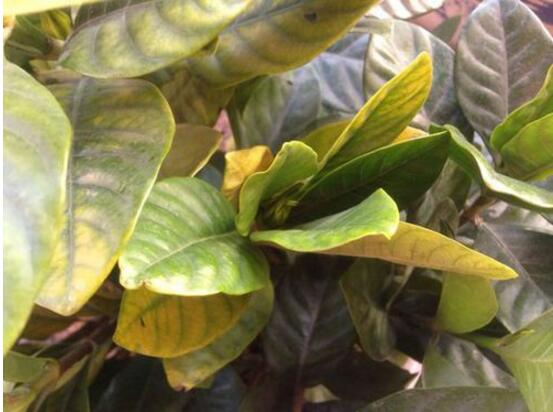
What to do when the leaves of the nine-segment orchid turn yellow
If you want to know what to do when the leaves of the nine-segment orchid turn yellow, you first need to know what is causing it. Only by finding the cause can you solve it in a targeted way. Among these, light, improper watering, and the appearance of pests and diseases can all cause this phenomenon. As for how to solve it, let us continue reading below.
1. Maintain ventilation
If the nine-segment orchid is allowed to grow in an environment with poor air circulation, it will cause the leaves to turn yellow, so during the process of cultivating the nine-segment orchid, the environment must be kept ventilated. This can also effectively avoid this problem.
2. Apply less heavy fertilizer
Although fertilizer is one of the main nutrients for the nine-segment orchid, there is still one thing to note when fertilizing: it must be diluted before application, otherwise it will burn the plant and cause the leaves to turn yellow.
3. Control the amount of water
When watering the nine-segment orchid, it must be based on the environment. In summer, when the weather is relatively hot, water evaporates relatively quickly, so at this time we can choose to increase the watering frequency. On the contrary, in winter when the weather is relatively cold, the amount of watering should be reduced.
4. Control light
Spring and autumn are the seasons more suitable for the growth of the nine-segment orchid. It can be placed outdoors all day to receive light without issue. However, in summer when the light is too strong, especially at noon, it should be moved indoors to a semi-shaded place for cultivation, otherwise the leaves can easily turn yellow.
5. Prevent and control pests and diseases
The appearance of pests and diseases is also one of the reasons for the yellowing of the nine-segment orchid leaves, so during the maintenance process you must be careful. For problems in this area, everyone can refer to the article on pest and disease prevention and control for the nine-segment orchid, which contains detailed solutions.
In fact, as long as everyone pays attention to the issues mentioned by the editor above during the process of cultivating the nine-segment orchid, the phenomenon of yellowing leaves generally will not occur. The editor will introduce the question of what to do when the leaves of the nine-segment orchid turn yellow here, hoping it can bring everyone some help.
Small tips for growing flowers during a cold wave
The Spring Festival is coming soon, and many citizens will buy some flowers and plants to decorate their homes. So, what kinds of flowers are suitable for planting in winter? If a cold wave hits, how should these flowers be cared for? For this reason, the reporter invited Li Jiao, a landscaping maintenance worker at Nanning People's Park, and Ali, an expert with more than ten years of flower-growing experience, to give everyone some tips together.
Camellia Meaning: modesty, ideal love, virtue
Camellia likes warm, humid environments. If there is no rare cold wave, Nanning's winter is also very suitable for planting camellias. Camellias have diverse varieties, rich colors, and a relatively long flowering period. Every year from October to May of the following year, flowers will bloom. Placing a pot of camellia with beautiful colors and frequent blooming on the balcony is a good choice.
Care: Newly bought camellias do not need urgent watering or fertilizing. First wait a period of time, then according to the camellia's growth condition, water appropriately; after the camellia's flowering period ends, all flower branches should be pruned once, pruning about 2 cm from each flower branch, which helps its branches grow denser the next year and produce more flowers; if the camellia is growing well, there is no need to fertilize frequently. You can wait three or four months or even more than half a year before fertilizing once.
Orchid Meaning: beauty, nobility, virtue
There are many varieties of orchids, most with a faint fragrance. Their flower colors are elegant and their ornamental value is extremely high, and since ancient times they have been deeply loved by Chinese people. China has a long history of planting orchids. Common orchid varieties include Duzhanchun, Cymbidium goeringii, and the nine-segment orchid.
Care: Entering winter, the number of times orchids are watered can be appropriately reduced, but the flowerpot must not be allowed to dry out completely before watering; if there is a season with more rain, the orchids should be moved back indoors to prevent the leaves or root system from rotting; fertilize once a month, and you can use rice-washing water mixed with some compound fertilizer and pour it into the flowerpot.
Osmanthus Meaning: loyal person, unyielding and strong
Osmanthus is suitable for planting in a ventilated and light-transmitting place, and has a pleasant fragrance, making it very suitable for planting on a balcony. Friends can choose four-season osmanthus. Four-season osmanthus blooms all year round, especially blooming more abundantly in February and March. Its floral fragrance is the lightest among many osmanthus varieties, its flowers are slightly white, and its leaves are relatively thin.
Care: You can spray the leaf surface with clean water once every one or two days. Spray until water droplets drip from the leaf surface, in order to keep the leaf surface moist and wash away dust attached to the leaves; Nanning has more rainy days in winter, so not only is less watering needed, but you must also prevent water accumulation in the osmanthus pot soil placed on the balcony. Once water accumulates, it can easily cause the osmanthus root system to rot.
Four-season begonia Meaning: longing, care, sincerity
Four-season begonia is the most common and relatively widely cultivated type among begonia plants. Its leaf color is tender and bright, its flowers grow in clusters, and its flower colors include orange-red, peach red, pink, white, etc. It can bloom almost all year round, but is more abundant in late autumn, winter, and spring. Four-season begonia itself carries a delicate fragrance, and its decorative effect when placed on a balcony is very ideal.
Care: Compared with other plants, four-season begonia is not very cold-tolerant, so when cold waves or frost occur, four-season begonia needs to be moved back indoors and placed in a ventilated place with good light. If placed on an outdoor balcony, before going to sleep at night, you can use a piece of plastic film to wrap it entirely, then remove the film the next morning. If there is no plastic film at home, you can take a larger plastic bag and cut it open to make a simple film to cover the four-season begonia.
Money tree Meaning: bringing in wealth and treasure
As the Spring Festival approaches, many citizens choose to buy money trees home to seek good luck. Money trees like sunlight and have vigorous vitality, and are also very suitable for placing on a balcony. But the closer it gets to the Spring Festival, the more cautious you should be when buying money trees, because some merchants will sell money tree potted plants with dried branches or roots that have just sprouted. After these money trees are taken home, they often die quickly because the root system is unstable. Therefore, when buying a money tree, the best leaf color is dark green. Second, check whether the soil is new soil. Press the soil with your hand to see whether it is firm and whether the soil shows signs of having been loosened.
Care: After buying a money tree, some citizens continuously fertilize it in order to make it grow better. This is a wrong approach, because merchants, in order to maintain the plant's leaf effect, have already been continuously fertilizing it during cultivation. After taking the money tree home, you should first let the fertilizer on the plant's leaves be consumed. After a period of time, once the plant has adapted to the home environment, then you can fertilize.
Small tips for growing flowers during a cold wave
● Do not water too frequently, especially indoor plants. Indoor plants generally lack light, and frequent watering will accelerate plant yellowing. Watering once or twice within half a month to a month is enough.
● Do not often move flowering plants indoors. Some people, afraid that the plants they grow will freeze, move them indoors and leave them there for several days, sometimes even forgetting to move them back out. This is not good for the plants. For flowering plants, especially potted plants with dense flower branches, if you want a good flowering effect, you still have to rely on light.
● When a cold wave hits, after moving foliage plants indoors, sun-loving plants should be placed in a sunny spot, while shade-tolerant plants should have their orientation changed regularly. No matter what kind of plant it is, windows should often be opened for ventilation, so the plants gradually adapt to the indoor environment temperature.