What to Do When Ivy Leaves Turn Yellow? Control Watering and Prevent Pests and Diseases
Ivy is a plant with high ornamental value and is also a must-have plant in the homes of many growing enthusiasts. It will bring a touch of greenery to your balcony. However, no matter how pleasing a plant is, if yellowing appears, it will also affect its beauty, and ivy is no exception. Regarding what to do when ivy leaves turn yellow? Below, the editor will take everyone to learn about it.
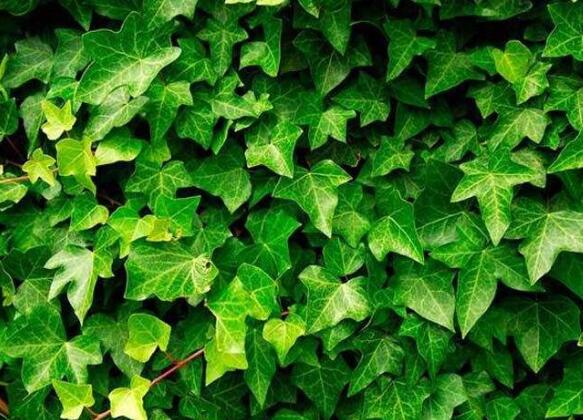
What to Do When Ivy Leaves Turn Yellow / Control Watering / Prevent Pests and Diseases
1. Strong Light Exposure
Ivy is a plant that likes light but avoids high temperatures. In spring, autumn, and winter, direct sunlight is fine and will not have much effect on it, but in summer, when the sunlight is too strong, be sure to remember to move it indoors to a semi-shaded place for growing. Otherwise, it is very easy to cause ivy leaves to turn yellow.
2. Improper Watering
Like many conventional plants, water is one of the main nutrients for ivy and is indispensable during the growing process, but the amount of watering must be controlled. The potting soil must not be too dry, nor should it be waterlogged. Both of these situations will cause the leaves to turn yellow, so the amount of watering must be well controlled.
3. Pests and Diseases
The appearance of pests and diseases is also one reason for ivy leaves turning yellow, and of course the appearance of pests and diseases is definitely caused by improper care. As for how to solve it, everyone can refer to the article on ivy pest and disease control, which contains detailed prevention and control methods.
4. Environmental Influence
The growing environment of ivy needs ventilation, and it also has high requirements for environmental temperature. Generally, a temperature of 20-25°C is the most favorable environment for its growth. If the temperature is too low or too high, it is also one of the reasons for ivy leaves turning yellow.
5. Improper Fertilization
Ivy needing fertilizer is the same principle as people needing to eat. If you do not eat enough, you will be hungry; if you eat too much, you will be stuffed. Everything must be just right. Fertilizer is one of the main nutrients for ivy, so the amount of fertilization needs great attention.
The greatest ornamental feature of ivy is its leaves, so during the growing process, attention must be paid to the methods and one must not be careless. After reading this article, I believe everyone also knows how to solve the problem of what to do when ivy leaves turn yellow, and I also wish everyone's ivy can grow vigorously.
How to Grow Ivy: The Effects and Functions of Ivy
Ivy is a plant suitable for beautifying the home and is a rather popular large indoor potted ornamental plant. How do you grow ivy? Below, let us talk about the effects and functions of ivy.
Introduction to Ivy:
Ivy, (Latin scientific name: Hedera nepalensis var. sinensis (Tobl.) Rehd), a perennial evergreen climbing shrub of the genus Hedera in the family Araliaceae, with aerial roots, stems grayish brown or blackish brown, smooth, single leaves alternate; petioles without stipules but with scales; leaves on flowering branches elliptic-lanceolate, umbels solitary and terminal, flowers pale yellowish white or pale greenish white, anthers purple; disk raised, yellow. Fruit spherical, red or yellow, flowering period September to November, fruiting period March to May of the following year.
Ivy has beautiful leaf shapes and is evergreen throughout the four seasons. In various places in the south, it is often used for vertical greening. It is mostly planted beside rockeries and at the base of walls, allowing it to naturally attach and grow vertically or as ground cover, achieving the effect of decorating and beautifying the environment. When potted, small and medium pots are mainly used, and various shapes can be created for indoor display. It can also be used to cover the walls of indoor gardens, making the indoor garden landscape more natural and beautiful. The entire ivy plant can be used as medicine, with effects of dispelling wind-dampness, promoting blood circulation, and reducing swelling. It has therapeutic effects on conditions such as bruises, waist and leg pain, and rheumatoid arthritis.
Growing Methods for Ivy:
1. Transplanting
When potting, pay attention to shading in summer, and move it indoors for overwintering in winter. During the growing period, keep the potting soil moist, do not let it become too dry, and also pay attention to ventilation. It is advisable to apply thin, diluted fertilizer, 2-3 times per year is enough; if too much fertilizer is applied, the plant will lose its graceful characteristics. When planting, heavy pruning should be carried out to promote branching. After that, carry out appropriate pruning once every spring, shortening the main vines to control excessive growth. Usually pay attention to environmental ventilation.
2. Soil
Ivy is not strict about soil requirements, tolerates poor soil, and likes moist, loose, fertile sandy soil, while avoiding saline-alkaline soil. Generally, fertile loose soil is often used as the potting medium, such as equal amounts of garden soil and leaf mold mixed together. It can also be prepared from leaf mold, peat soil, and fine sandy soil with a small amount of base fertilizer, or mixed from garden soil, about 1/4 plant ash, and a small amount of base fertilizer. Plant ash can both keep the potting soil loose and breathable and provide relatively more potassium fertilizer to meet the growth needs of ivy. It can also be grown alone in sphagnum moss.
3. Light
Ivy is a typical shade-tolerant vine ornamental plant. It tolerates shade and moisture, and can also grow in a full-light environment. It can be cultivated for a long time in a bright room. In a dark room, as long as supplemental lighting is provided, it can also grow well. It grows well under warm and humid climate conditions, and is not cold-tolerant.
In spring, when branches and leaves sprout abundantly, whether variegated-leaf or green-leaf types, they should all be placed in sunlight to receive sufficient light, so that the branches and leaves that grow will be lush and sturdy. Usually, it should be placed under diffused light so that the leaf color is deep green and glossy. For variegated varieties, in a shaded environment, the leaf color is even more beautiful. In the intense heat of summer, it must be placed in a cool and ventilated place.
4. Watering
The rainy season and high summer temperatures require the most care. For ivy placed outdoors during the rainy season, as soon as there is accumulated water in the pot, it should be poured out promptly to avoid the roots being soaked for a long time and rotting. In summer, the high environmental temperature is unfavorable for ivy growth, and growth stops above 30°C, so it is advisable to use more foliar water spraying and irrigation. If water is insufficient, the base of the plant easily loses leaves; if watered too much, root rot easily occurs. Watering can be chosen in the early morning or evening to avoid a large difference between soil temperature and water temperature, which can cause root stress and injury, ultimately leading to plant withering and death.
In winter, place it in a greenhouse for overwintering. Indoors, air humidity should be maintained and it should not be too dry, but the potting soil should not be too wet. When transplanting, be careful to keep soil around the roots, as this makes it easier to survive.
5. Pest Control
Strengthening ventilation and air permeability can reduce the occurrence of pests. Ivy often suffers from aphids in spring, and under conditions of high temperature, dryness, and poor ventilation, it is also prone to damage from red spiders, scale insects, and mites, so pesticides should be applied early for prevention and control.
In the stuffy and hot summer climate, pests are likely to occur, mainly scale insects, especially numerous on the back of leaves and petioles. Strengthening ventilation and air permeability can reduce the occurrence of pests. If there are few pests, an old toothbrush dipped in soapy water can be used to brush them clean. If there are many pests, a 800-fold dilution of 40% omethoate solution can be sprayed to kill them, once every 7 days, continuously spraying 2 to 3 times.
Precautions for Growing Ivy:
1. Temperature should be suitable. Ivy likes warmth, and the suitable growth temperature is 20°C to 25°C. It fears heat and is not cold-tolerant. Therefore, when placed indoors for care, attention should be paid to ventilation and cooling in summer. In winter, the indoor room temperature should preferably be kept above IO-C, and at the lowest not below 5°C.
2. Fertilize reasonably. For home cultivation of ivy, the potting soil should preferably be a culture soil made by mixing leaf mold or peat soil with 1/4 river sand and a small amount of bone meal. During the growing season, apply a thin cake fertilizer water once every 2-3 weeks. Generally, do not fertilize in summer and winter. When fertilizing, never apply nitrogen fertilizer alone, otherwise the patterns and patches on the leaves of variegated varieties will fade to green. The ratio of nitrogen, phosphorus, and potassium is preferably 1;1;l. During the peak growing season, a 0.2% potassium dihydrogen phosphate solution can also be sprayed on the leaves 1-2 times, which will make the leaf color appear even more beautiful. However, note that when applying liquid fertilizer, avoid contaminating the leaves, so as not to cause leaf scorching.
3. Light should be moderate. Ivy likes light and is also relatively shade-tolerant. When cultivated under semi-light conditions, the internodes are shorter, the leaf shape is consistent, and the leaf color is vivid, so it is suitable to place it in a bright indoor place for cultivation. If in spring and autumn, a period of time can be chosen in each season to place it outdoors in a shaded place, allowing it to see more sunlight in the morning and evening, then it will be full of vitality and the leaves will be green and colorful. But attention must be paid to preventing direct strong light, otherwise it is prone to sunscald.
4. Water appropriately. During the growing season, watering should follow the principle of watering when dry and stopping when wet. The potting soil must not be too moist, otherwise root rot and leaf drop easily occur. In winter, when room temperature is low, watering should especially be controlled, and keeping the potting soil slightly moist is enough. In the dry winter climate of the north, it is best to spray and wash Du Chuan once a week with clean water close to room temperature to maintain air humidity, so that the plant appears lively and the leaf color is tender green and glossy.
The Effects and Functions of Ivy:
1. Ornamental and Eye-Pleasing
Ivy is most commonly planted on outdoor walls or in courtyards, or grown indoors in hanging baskets. No matter where they are, they have vigorous vitality like geckos climbing and extending like spider webs. Every late spring and summer, we see a stretch of emerald green. Its leaves are like maple leaves, and when the flowering period comes, it also opens small pale yellow-white flowers, very beautiful and fresh. It has become a popular greening ornamental plant. Whether in an outdoor environment or indoors, it can bring a stretch of emerald green and bring hope, especially indoors where it is a very eye-pleasing green plant that can play a role in decoration and beautification.
2. Fresh Air
It can improve the naturalness and freshness of the owner's living environment. Moreover, it is also a very healthy and environmentally friendly ornamental plant. It can not only green the environment but also purify the air, absorb indoor exhaust gas, and release oxygen through photosynthesis, among many other effects.
3. Auspicious Meaning
When talking about ivy, everyone thinks of patches of emerald green plants and also ivory towers representing knowledge one after another. Famous American universities are all called the Ivy League. It seems that when we mention ivy, we think of words like youth, youthful vitality, hope, and vigor. It is not only its emerald green appearance, but also the flower language of infinite youth that people have given it, as if it belongs only to young people in their youth and their time, and their pure friendship, love, and so on during their school days.
4. Medicinal Value
Ivy also has good medicinal value. The entire plant can be used as a traditional Chinese medicine. It can clear heat and reduce internal heat, has a good protective and nourishing effect on the human liver, relieves pain in body parts, and can also eliminate swollen abscesses, with a good disinfecting and sterilizing effect. In addition, ivy also has a good cosmetic effect, capable of firming the skin and reducing edema.
How to Grow Ivy Indoors: Methods for Indoor Cultivation of Ivy
Ivy has beautiful leaf shapes and is evergreen throughout the four seasons. In various places in the south, it is often used for vertical greening. It is mostly planted beside rockeries and at the base of walls, allowing it to naturally attach and grow vertically or as ground cover, achieving the effect of decorating and beautifying the environment. When potted, small and medium pots are mainly used, and various shapes can be created for indoor display. Today, I will introduce to everyone the growing methods and precautions for ivy.
Growing Methods for Ivy
1. Soil Selection
The stems and vines of ivy are soft, making it easy to shape by hand, and it can also be potted. Use ordinary culture soil for potting. Repot and change the soil once every 1-2 years, always keep the potting soil moist, place it in a shaded place or indoors for display, do not apply too much fertilizer, but strengthen ventilation to prevent scale insects.
2. Fertilization Management
During the spring and autumn growing seasons, apply a thin liquid fertilizer once every 2-3 weeks. Variegated varieties especially should not be given nitrogen fertilizer alone, so as to avoid the patterns and patches on the leaves fading to green. In winter, stop fertilizing.
Ivy likes fertilizer, mainly nitrogen fertilizer. But if there is too much nitrogen fertilizer, it is prone to excessive growth, which is not conducive to a beautiful plant shape. When phosphorus and potassium fertilizers are insufficient, the markings on ivy leaves easily fade. Young plants can be given, during the growing season, a topdressing every 15 days of fermented 10-fold liquid fertilizer mixed with an equal amount of 500-fold potassium dihydrogen phosphate solution.
For established plants, apply mixed liquid fertilizer once every 30 days. If established plants are not normally fertilized, when yellowing of leaf color is found, a 1000-fold urea solution can be sprayed on the leaves 1-2 times. When applying fermented liquid fertilizer, use a fine-spout watering can and slowly pour along the edge of the pot. Do not splash the fertilizer liquid onto the leaves, otherwise the leaves are easily burned.
3. Watering Management
Ivy likes moist soil and relatively high air humidity. It tolerates waterlogging and fears drought. After growth resumes in spring, keep the potting soil in a moist state. During the growing season of ivy, the potting soil should be kept moist. Because indoor air humidity is relatively low, water should often be sprinkled on ivy leaves and the surrounding area to increase air humidity. After the temperature drops in late autumn, gradually reduce the frequency of watering and keep the potting soil on the drier side. When the temperature is lower in winter, it is better to keep the potting soil on the drier side.
Ivy likes moisture. During the growing season, the potting soil should be kept moist, and foliar water spraying should be carried out every day so that the air humidity reaches 50%-60%. In winter, reduce the frequency of watering, but it should not be too dry.
4. Temperature Requirements
The suitable growth temperature is 18-20°C. When the temperature reaches above 35°C, growth stops. Leaves turn yellow. Ivy has relatively strong cold resistance and can endure low temperatures of 2-3°C. In winter, it should be placed indoors for overwintering. Temperatures of 0-5°C will not cause harm, and above 10°C is preferable.
5. Light Requirements
When ivy is cared for indoors, it requires sufficient light. Especially for plants cared for indoors year-round, they should be placed near a south-facing window as much as possible so they can see more sunlight. In this way, the plant's internodes are short, the leaf shape is consistent, and the leaf color is vivid, but direct strong sunlight should be avoided. Low temperatures in winter easily cause the plant to lose leaves. As long as the stems and vines are not frozen, after the warmth of the following spring, prune heavily once, and new buds can grow again from the lower part of the stems and vines.
6. Pest and Disease Control Methods
Anthracnose is likely to occur during continuous autumn rain and damages leaves, causing leaf chlorosis and weakening plant growth. For prevention and control, pay attention to ventilation and light transmission, and do not water onto the leaves. After onset, spray a 500-800-fold dilution of 50% carbendazim wettable powder, once every 7 days, continuously spraying 3-4 times.
Leaf spot disease is a common disease that damages leaves. In severe cases, it causes leaves to dry up and fall off. Attention should be paid to ventilation and light transmission. Diseased leaves found should be removed promptly and burned in a centralized manner. At the same time, spray a 800-fold dilution of 40% Penco wettable powder, once every 7 days, continuously spraying 2-3 times.
Scale insects are a common pest and can cause sooty mold, causing leaves to turn yellow, dry up, and even fall off. When the occurrence is small in area, they can be scraped off manually; if the occurrence is severe, carbofuran can be buried at the roots or a 1500-fold dilution of 20% fenvalerate emulsifiable concentrate can be sprayed for control.
Precautions for Growing Ivy
1. Planting can be carried out during any period when the branches and vines have stopped growing. For potting, the culture soil is best a loose and fertile soil mixed with garden soil, leaf mold, and sand. Change the pot once every 1-2 years. During the growing period, keep the potting soil moist, and often spray water on the leaf surface and surrounding ground to increase air humidity. In winter, move it indoors, and it can overwinter above 3°C. Place it in a place with sufficient light, pay attention to ventilation, and reduce the frequency of watering.
2. For newly planted plants, pinch the tips after spring sprouting to promote branching. For perennial plants, strengthen pruning, cutting out dead branches, thin and weak branches, and diseased and pest-damaged branches.
3. Frequently spray the leaf surface of ivy to prevent dry air from causing the leaf tips to wither and turn brown.
4. If placed on a windowsill or stand so that the stems and vines hang down, it will appear messy and disorderly, and the ornamental value will not be high. In an indoor garden, it can be used as a material for beautifying walls. Stretch thin strings on the wall for them to twine and climb.
If displayed as a single pot, a bamboo frame or No. 8 galvanized wire should be used to make a trellis, and through artificial guiding, the stems and vines should be evenly distributed on the trellis for shaping. Pruning should also be strengthened to prevent multiple layers of stems and vines from entwining and causing disorder. There are many forms of trellises for potted ivy to climb on, and they can be tied according to personal preference. Common trellis forms include spiral, cylindrical, spherical, fan-shaped, and so on.
5. Ivy has relatively strong cold resistance and can overwinter safely in ordinary family rooms. In winter, water less and stop topdressing. Place it near a south-facing window so they can see more sunlight. In a room without heating equipment, if leaves fall due to low temperature, as long as the stems and vines are not frozen, there is no need to worry about it. After the warmth of the following spring, carry out a strong pruning to let the dormant buds at the lower part of the stems and vines sprout and send out new stems and vines, then guide and tie them again, so that the plant is renewed once every year and the size of the plant can also be controlled within a certain range, making it convenient for indoor display.