How do you prune a Serissa japonica bonsai? Prune in April, flowers bloom in June
Serissa japonica (snow-in-summer), a plant very well suited to bonsai, looks superb when grown at home. Growing Serissa japonica is simple, but making it look beautiful is not easy, because pruning is involved. So how do you prune Serissa japonica? Next, let the editor tell you the pruning methods for Serissa japonica bonsai. Those who don't know how should definitely take a look~
I. How to prune Serissa japonica, timing/methods
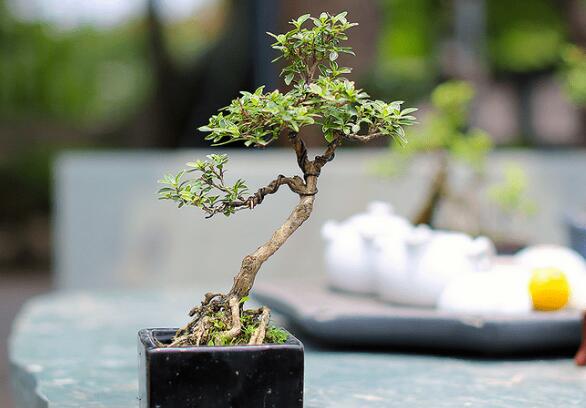
If you want your Serissa japonica bonsai at home to look good, gardeners must prune it! It is said that Serissa japonica has strong sprouting ability and tolerates pruning very well, and its branches are soft, twisted and irregular, so everyone can use their imagination and prune boldly to create the shape they like! As for how to prune Serissa japonica, we can explain it in detail in terms of timing and methods.
(1) Pruning time for Serissa japonica
To prune Serissa japonica perfectly, you first need to choose the right pruning time. Based on the information the editor has gathered, Serissa japonica is best pruned twice a year: once in mid-April, which after pruning helps it bloom in June; the second time after the flowers fade (after July), cutting off the tips of branches that have already flowered so they sprout new buds. New shoots growing from the remaining stems and roots, as well as overly dense branches, should be cut off at any time.
(2) Pruning methods for Serissa japonica bonsai
1. Pruning parts
In the pruning methods for Serissa japonica bonsai, we first need to know the parts to prune: protruding growth, densely growing parts and parts affected by pests and diseases should all be pruned. Simply put, shorten long branches, thin out dense foliage and branches, and directly cut away parts with pests and diseases to avoid spreading the problem to new growth.
Note: during the growing season, you should also pinch out growing tips, remove buds and remove side shoots at the right time to keep the shape graceful. Healthy branches that are cut off can be used for cutting propagation. As for how to propagate Serissa japonica, that was covered in detail earlier, so I won't say more here.
2. Pruning methods
For a Serissa japonica bonsai, choose about 5 branches as the main trunks, and cut off the leggy growth at the base. During growth, if a main trunk also grows too long, cut off the tip of that main trunk branch.
In addition, we should keep cutting off old branches and dense branches growing from the roots, which helps root growth and prevents other parts from blocking the light. Old woody branches should be cut flat at the spot where new buds emerge from the stem and root, without leaving a stub, and then use your hands or a small knife on the shoots that sprout during the growing period.
3. Shaping and pruning
As mentioned earlier, Serissa japonica tolerates pruning very well, so gardeners don't need to worry about cutting it badly. Every year, after it half-drops its leaves in winter and before the beginning of spring when buds sprout, one shaping prune should be done: shorten long branches and leggy branches, thin out overly dense thin and weak branches, and cut off diseased and pest-damaged branches as well as other messy branches that affect the ornamental look.
4. Repotting and pruning (roots)
In the cultivation methods for Serissa japonica, we once said that it should be repotted once every 1-2 years, generally in February-March of spring. At this time, you can combine repotting with appropriate pruning of the plant's roots to form exposed roots and increase its ornamental value.
5. Pruning and shaping
Serissa japonica has soft, twisted and irregular branches. Based on these characteristics, you can prune it into various shapes, such as curved-trunk style, slanting-trunk style, cascade style, clump style and so on, shaping it according to personal preference.
III. Notes on pruning Serissa japonica bonsai
1. Pruning principles
After knowing how to prune Serissa japonica, there are also some points we need to pay attention to. First, when pruning Serissa japonica bonsai, we should master the principle of "strong main branches, light pruning" so as to conveniently regulate the growth of the main branches; for side branches, use the principle of "strong side branches, heavy pruning; weak side branches, light pruning" in order to regulate branch vigor and promote flowering.
2. Do not prune frequently
Besides mastering the pruning principles, also note: do not prune frequently over the long term, otherwise newly grown young branches will shrivel and become diseased, affecting the growing shape.
How to prune Serissa japonica
Pruning steps for Serissa japonica
Because its tree form is already very graceful, Serissa japonica is easy to prune.
There is a method for pruning Serissa japonica more perfectly: first, the pruning time. It can be pruned every year in winter after the leaves of Serissa japonica have mostly fallen, and before buds sprout the following spring.
Second is which parts to prune. Look for protruding growth, densely growing parts and parts affected by pests and diseases, and prune them, that is, shorten long branches, thin out dense foliage and branches, and directly cut away parts with pests and diseases to avoid spreading the problem to new growth.
Finally, during the growing period, pay attention to pinching out growing tips and removing buds, which will maintain the graceful appearance of Serissa japonica.
Bonsai pruning of Serissa japonica
Serissa japonica is often used for bonsai cultivation and placed indoors for enjoyment, so how do you prune the bonsai?
Pruning time
Pruning of Serissa japonica bonsai should be done between February and March in winter.
Pruning methods
Choose about 5 branches as the main trunks, and cut off the leggy growth at the base. During growth, if a main trunk also grows too long, cut off the tip of that main trunk branch.
In addition, keep cutting off old branches and dense branches growing from the roots, which helps root growth and prevents other parts from blocking the light.
Old woody branches should be cut flat at the spot where sprouts emerge, without leaving a stub, and then use your hands or a small knife on the shoots that sprout during the growing period.
Finally, carry out one shaping prune each year in early winter in November.
Pruning and shaping
It can be pruned into curved-trunk style, slanting-trunk style, cascade style, clump style and so on, shaping it according to personal preference.
Pruning principles for Serissa japonica bonsai
Pruning Serissa japonica bonsai requires attention to its principles: for the main trunk use the principle of "strong main branches, light pruning" to conveniently regulate the growth of the main branches, while for side branches use the principle of "strong side branches, heavy pruning; weak side branches, light pruning" in order to regulate branch vigor and promote flowering.
Other points to note: do not prune frequently over the long term, otherwise newly grown young branches will shrivel and become diseased, affecting the growing shape.
When does Serissa japonica bloom and how should its bonsai be made
When does Serissa japonica bloom? This is something many people want to know before growing Serissa japonica, because everyone likes to see flowers bloom, but they are not too familiar with the flowering period of Serissa japonica. Today, the editor from Biyibi Decoration Quotation will take everyone to learn about when Serissa japonica blooms and how its bonsai should be made.When does Serissa japonica bloom
Before learning when Serissa japonica blooms, let's first get to know Serissa japonica. It is a small shrub 60-90 cm tall, with a foul odor. Leaves are leathery, ovate to oblanceolate, with tips from short-pointed to long-pointed, entire margins, hairless, and short petioles. Flowers are solitary or several clustered at the tips of small branches or axillary, with hairy, shallowly wavy bracts, calyx limb lobes small, awl-shaped, hairy, corolla pale red or white, lobes spreading, stamens protruding beyond the throat of the corolla tube, style long and protruding, slightly forked.
When does Serissa japonica bloom? In fact, many people may have already guessed from the name Serissa japonica. Indeed, Serissa japonica blooms in June, with small white flowers that look very much like snowflakes from a distance. Its branches and leaves are dense, and when the white flowers bloom, it looks as if the whole tree is covered in snow, elegant and lovely. It is an excellent ornamental plant for both foliage and flowers. Its flowering period is generally from May to July.
When does Serissa japonica bloom
When does Serissa japonica bloom? Serissa japonica is one of the main tree species in bonsai in Sichuan, Jiangsu and Anhui. Its leaves are small and its root system is well developed, making it especially suitable for making miniature or root-exposed bonsai. Placing the bonsai on a coffee table, desk or windowsill in the living room makes it look very elegant, and it is a fine choice for indoor beautification and decoration. When planted in the ground, it is suitable for flowerbed borders, flower hedges and understory plants, or planted among rocks and rock crevices.
Now that we have discussed when Serissa japonica blooms, let's talk about how to make Serissa japonica bonsai. A bonsai made from Serissa japonica has exposed roots and claws, is clear and elegant, with varied postures and a unique charm.
1. Serissa japonica bonsai can be propagated by cuttings or division.
Cuttings can use softwood or hardwood. Softwood cuttings are taken in early summer each year; select semi-lignified branches as cuttings, about 8 cm long, generally with 3-4 buds. Hardwood cuttings are taken in February-March each year. Use dormant branches as cuttings, with 3-4 buds on each cutting. Serissa japonica roots easily from cuttings and has a large production volume, so this method is mostly used to obtain seedlings in batch production.
The division method, that is, obtaining new individuals by separating the sprouting plants of Serissa japonica, is usually carried out in March of spring. Natural old stumps can also be used.
2. Potting and shaping1) Potting: every year in March-April, before Serissa japonica enters the vigorous growing season, pot it. The pot used should generally be relatively long and narrow, such as a rectangular or oval purple clay pottery pot or glazed pottery pot. A slightly darker color is better. The potting soil should be loose, well-drained neutral or slightly acidic soil rich in organic matter. 2) Shaping: Serissa japonica is commonly shaped by the method of coarse wiring and fine pruning. The main trunk is formed into an irregular "S" shape. Side branches are pruned finely into sheet-like layers. Serissa japonica has strong sprouting ability, tolerates pruning and has many fibrous roots, so it can also be made into root-exposed style, stone-attached style, cascade style or connected-root style and other bonsai with strict requirements for roots. After branches are wired, they must be kept for about 2 years to set their shape. If the wiring is removed too early, they often easily return to their original form and all previous work is wasted.
3) Pruning: Serissa japonica should be pruned twice a year. The first time is in mid-April, which helps it bloom in June; the second time is after the flowers fade, cutting off the tips of flowering branches so they sprout new buds. Root sprouts and overly dense branches should be cut off at any time. During the growing season, pinch out growing tips frequently so that the branches and leaves meet the shaping needs.
When does Serissa japonica bloom
3. Care
1) Location: Serissa japonica likes cool, shady conditions, so in summer it should be kept in a semi-shaded place. In winter, place it indoors to overwinter, with room temperature not lower than 5°C, but it should not be too high either; usually 10-20°C is best.
2) Watering: the amount and frequency of watering Serissa japonica should be determined by its growth condition and the season. Generally, in spring and summer it grows vigorously and the potting soil should be kept moist, but be careful not to let water accumulate, while in autumn and winter watering should be controlled.
When does Serissa japonica bloom
3) Fertilizing: Serissa japonica is fairly tolerant of poor soil, so do not fertilize too much, lest it cause leggy growth and affect the shape. Generally, applying 1-2 light fertilizer applications during the growing season is enough.
4) Shaping: Serissa japonica has strong sprouting ability and should be pruned at least twice a year. The first time is in mid-April, which helps flowering, and at the same time messy branches should be cut off. The second time is after the flowers fade, and promptly use methods such as leaf removal and bud removal to maintain its graceful shape.
5) Pest and disease control: apart from aphids, Serissa japonica rarely suffers from other diseases. Therefore, pay attention to timely control of aphids.
The above is the relevant introduction on when Serissa japonica blooms and how its bonsai should be made. We hope it will be helpful to everyone. To learn more about decoration prices and decoration cases, please follow Shengduoduo Decoration Network, a renovation platform that makes decorating worry-free and money-saving.