How to grow wintersweet? Master the growing methods and precautions, and ensure ample light
When it comes to wintersweet, I believe no one is unfamiliar with it. As the first of China's top ten famous flowers, wintersweet can be said to be a household name, and it can basically be seen all over the country. However, many people may not know much about how to grow it. Regarding how to grow wintersweet, what are the growing methods and precautions for wintersweet? Below, the editor will take everyone to learn about it.
1. How to grow wintersweet / ample light is needed
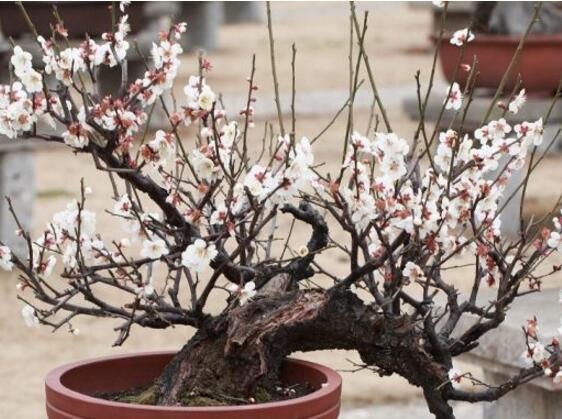
I believe everyone knows and has seen this plant, wintersweet, but some people may not know much about how to grow it. To grow wintersweet, there are many aspects that need attention, such as light and soil. As for what the specific growing methods are, let us continue reading.
2. Growing methods and precautions for wintersweet
1. Soil selection
Soil selection is the first step and a relatively key step in the growing methods and precautions for wintersweet. Generally, we can choose a soil mixed with leaf mold and sandy soil. The resulting soil will have better drainage and will be more conducive to wintersweet absorbing nutrients.
2. Watering requirements
In the process of growing wintersweet, watering is also quite particular. Generally, the principle of watering when dry should be maintained, meaning water after the potting soil dries, and watering thoroughly once is enough. If it has not dried, it is best not to water.
3. Temperature requirements
Wintersweet is a plant with strong vitality. Whether the temperature is as low as -10°C or as high as 40°C, it can grow. However, too high or too low a temperature is not its best growing environment. The most suitable growing environment for wintersweet is generally between 16-25°C. Maintaining this environmental temperature allows it to grow better.
4. Light requirements
Wintersweet is a light-loving plant, and it is suitable for growing in an environment with abundant sunlight. If the environment is dark and it cannot get sunlight for a long time, wintersweet will become very listless and will not produce many flowers, so everyone should pay attention to this point.
5. Replacing potting soil
Wintersweet is not something that can be left alone after planting. It still needs its potting soil replaced every year. This time is generally around March to April each year. When changing the soil, you can also trim off the old roots and rotten roots grown in the previous year.
Regarding the question of how to grow wintersweet, I believe everyone has gained some understanding after reading the above. In fact, as long as everyone remembers the above points, they can grow it well. The editor will introduce the growing methods and precautions for wintersweet here, hoping to bring everyone some help.
How to grow crown of thorns, growing methods and precautions for crown of thorns / ample sunlight
Crown of thorns is a plant native to Africa and later introduced to China. It is now also a relatively common plant in China, and many people want to grow it. So how do you grow crown of thorns? Regarding the growing methods and precautions for crown of thorns, below the editor will take everyone to learn about it.
1. How to grow crown of thorns / ample sunlight
It is difficult to summarize the question of how to grow crown of thorns in one sentence, because many aspects need attention during the growing process, such as light and watering amount. Below is a detailed explanation of the growing methods and precautions for crown of thorns. Friends who are interested can take a look.
2. Growing methods and precautions for crown of thorns
1. Soil selection
When growing crown of thorns, soil selection is the first step and also a point that needs relatively more attention. When choosing soil, it is best to choose sandy soil. This kind of soil has better drainage and can allow crown of thorns to absorb nutrients better.
2. Fertilization requirements
Although fertilizer is one of the main nutrients for crown of thorns, the principle of rather less than more should still be followed. Generally, we can choose to fertilize about once a month, and before fertilizing, remember to dilute the fertilizer before applying it, otherwise it cannot be absorbed.
3. Watering requirements
Crown of thorns is a relatively drought-tolerant plant, so when watering it, the principle of watering when dry should be maintained. Do not water too frequently, otherwise root rot is very likely to occur, so everyone must pay attention to this point.
4. Light requirements
In the process of growing plants, light is indispensable, and crown of thorns is no exception. It is best to grow it in a place with direct sunlight, so that it can carry out photosynthesis better and thus produce beautiful flowers.
5. Pay attention to repotting
After growing crown of thorns for about 2 years, repotting is necessary. The best season for repotting is generally spring, and when repotting, some dead branches and rotten leaves of crown of thorns can also be pruned.
How to grow wintersweet, growing methods and precautions for wintersweet / seven must-learn tips
Most plants first grow branches and leaves and then bloom, but wintersweet is different. It first blooms and then grows leaves, and can safely overwinter even at -15℃. So how do you grow wintersweet to make it look its best? Today let us take a look at the growing methods and precautions for wintersweet.
How to grow wintersweet
Before learning how to grow wintersweet, you can first look at its growth habits. Wintersweet has extremely strong adaptability. It is both cold-resistant and drought-resistant, likes sunny places, fears waterlogging, and also has strong shade tolerance. It can be planted in the open ground in both the north and south, and is a plant that blooms in winter.
Growing methods and precautions for wintersweet
1. Temperature
Although wintersweet can safely overwinter at low temperatures, the temperature suitable for its growth is 16-23℃, and the lowest temperature should not be lower than -10℃. In addition, wintersweet also has strong tolerance to severe heat and can maintain growth in a 40℃ environment.
Precautions: If the temperature remains below -10℃ for a long time, the flowers may be frostbitten, so try to avoid too low a temperature. In addition, although it can grow when the temperature is too high, growth is relatively slow, so pay attention that the temperature is not too high.
2. Soil
Wintersweet does not have high requirements for soil, but if loose, fertile sandy loam rich in humus can be used, that is best. In the growing methods and precautions for wintersweet, good soil conditions can make wintersweet grow better and bloom more.
Precautions: No matter what kind of soil is chosen, it is necessary to ensure that there are no pathogens or insect eggs in the soil, otherwise pests and diseases are very likely to occur. The way to reduce insect eggs is to expose the soil to the sun.
3. Light
Wintersweet likes sunlight but also has a certain shade tolerance, so during planting, sufficient light should be maintained, and it should receive as much sunlight as possible. If planted indoors, supplementary lighting measures should be used, such as scattered light and so on.
Precautions: During the flowering period or growing period, wintersweet must be allowed to enjoy enough light, avoiding the phenomenon of slow growth and few flowers or growth without flowering caused by lack of light.
4. Fertilization
In the growing methods and precautions for wintersweet, fertilization is very important, as it can help wintersweet grow better. Generally, a thin liquid fertilizer should be applied once a month. In September to October, additional fertilizer should be applied to promote flower bud differentiation. Stop fertilizing when the branches grow to more than 20 cm.
Precautions: Unlike other plants, wintersweet fertilization should mainly use phosphorus and potassium fertilizers and apply less nitrogen fertilizer. Generally, the approximate ratio of phosphorus, potassium, and nitrogen is 2:1:0.5, which can ensure that the flowers produced are large and numerous, and the fragrance will also be stronger.
5. Watering
Wintersweet is a plant with strong drought tolerance that fears waterlogging, so when watering, the principle of not watering until dry must be followed. Check the soil condition before watering. If the top and bottom are completely dry, then it should be watered.
Precautions: No matter when watering, be careful not to cause waterlogging. Broken tiles can be placed at the bottom of the pot to help accumulated water in the pot drain out smoothly.
6. Pruning
If you want wintersweet to bloom more, you need to pay attention to pruning during the growing process. It can promote the growth of more strong flowering branches. Cut off dead branches, overly dense branches, crossing branches, and diseased and pest-infested branches, and leave 2 to 3 pairs of buds at the base of one-year-old branches.
Precautions: Before flowering, pruning should be avoided as much as possible, while after the flowers fade, timely pruning should be carried out. This can avoid nutrient loss and at the same time keep wintersweet blooming continuously.
7. Pests and diseases
Wintersweet has strong cold tolerance, so it has fewer opportunities for disease, while insect pests are more common. For example, aphids, scale insects, stinging moths, leaf-rolling moths, and others can damage the branches, leaves, and flowers of wintersweet, so timely prevention and control should be carried out.
Precautions: Pests and diseases need prevention and treatment. Before they appear, the probability of occurrence can be avoided through correct care and a good environment. When pests and diseases appear, chemical control is generally needed.