How to grow a Serissa japonica bonsai and key points to note: do not overwater
Serissa japonica is probably familiar to many flower lovers. It is the most popular bonsai tree today and sells very well both in China and abroad. In daily life, many beginners buy Serissa japonica bonsai from flower markets, but they do not know how to care for them. For this reason, the editor has carefully compiled the growing methods and key points for Serissa japonica, very comprehensively. Anyone who wants to grow it should definitely take a look~
1. How to grow a Serissa japonica bonsai: do not water too much
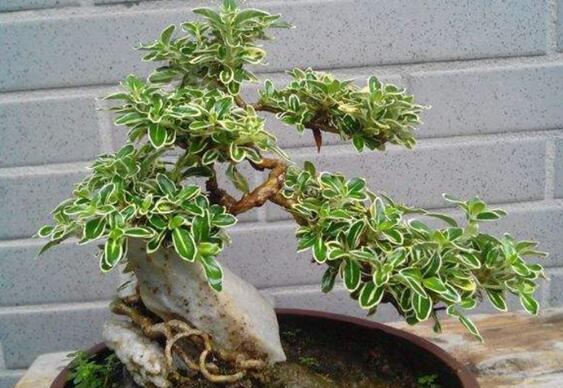
After buying a Serissa japonica bonsai from a flower market, we can grow it indoors or indoors. As for how to grow a Serissa japonica bonsai, in terms of light, Serissa japonica does not have high requirements, but with water and fertilizer you must be careful not to give too much, otherwise growth will be affected. The details are all in the growing methods and key points for Serissa japonica, so let us continue reading.
2. Growing methods and key points for Serissa japonica
1. Soil: slightly acidic
After buying a Serissa japonica bonsai, there is soil inside it. The soil mentioned here is what we need when repotting. Serissa japonica has strong drought tolerance, so it is not strict about soil, but if you want it to grow well, it is best to prepare a slightly acidic growing medium containing humus, loose and fertile, with strong permeability.
2. Light: needs to be sufficient
In the growing methods for Serissa japonica, light is naturally indispensable, but the specific requirements depend on the situation. If grown outdoors, Serissa japonica must be given sufficient light; if grown indoors, it can be placed near a window, and when light is insufficient, use a fluorescent lamp to supplement light.
Note: once light is insufficient, Serissa japonica will grow very loosely, and its appearance will not be so attractive. In addition, if it is grown outdoors and you want to move it indoors, at this time you need to change the environment slowly, do not move it indoors all at once, and also make sure the indoor position where it is placed can receive light.
3. Watering: water again after the soil dries
How to grow a Serissa japonica bonsai: watering is very important. It is understood that Serissa japonica likes moisture but hates waterlogging, so we cannot water too much or too frequently. Just keep the potting soil moist, and water again after the soil dries.
Note: when growing outdoors, during the rainy season do not let water accumulate in the pot, to avoid root rot. In hot summer weather, in addition to watering, also spray water on the leaves in the morning and evening to cool them and increase air humidity, to help its growth.
4. Fertilizing: once a month
Having covered watering, let us now talk about fertilizing. In the growing methods for Serissa japonica, it has requirements for fertilizer. In winter, we should reduce fertilizing, and from early summer increase the amount, fertilizing once a month.
Note: when fertilizing, keep the compost moist to avoid burning the root tips. Fertilizing favors slightly acidic soil conditions. When Serissa japonica has already lost its leaves, stop fertilizing, or if it does not show new growth.
5. Temperature: 18-26°C
How to grow a Serissa japonica bonsai: suitable temperature is very important. It is understood that Serissa japonica likes a warm, shady and moist environment, is not tolerant of cold, and the most suitable temperature is 18-26°C. If the room temperature is above 15°C, it can remain evergreen without dropping leaves.
Note: although Serissa japonica has strong adaptability, it also needs protection. If it is outdoors, when the temperature is below 7°C, it must be moved indoors.
3. Key points to note when growing Serissa japonica
In the growing methods for Serissa japonica above, several points to note have already been mentioned, and I believe everyone should remember them. However, besides what was mentioned above, there are three more points that flower lovers need to note, namely pruning, repotting and pest and disease control. The key points to note when growing Serissa japonica are as follows:
1. Pruning
Serissa japonica grows very fast, so flower lovers need to prune it often to maintain its shape. Every year from leaf drop in winter to before bud break the following spring, we should give Serissa japonica a shaping prune, cutting short long branches and leggy branches, thinning out overly dense fine weak branches, and cutting off diseased and pest-infested branches. During the growing season, also carry out pinching, bud removal, branch removal, etc. The specific operations are introduced in detail in how to prune Serissa japonica, so they will not be repeated here.
2. Repotting
To ensure Serissa japonica has sufficient nutrients, it needs to be repotted once every 1-2 years, generally in spring from February to March. Remove all the old soil and replace it with clean growing medium: loose and fertile, slightly acidic soil with strong permeability. When repotting, the roots can be pruned appropriately to form exposed roots and improve ornamental value.
3. Pest and disease control
Serissa japonica bonsai has relatively few pests and diseases, but during the growing process, if there is slight negligence, aphids, snails, root rot and so on can still appear, thereby affecting plant growth and ultimately leading to reduced ornamental value. What to do specifically is introduced in detail in pest and disease control for Serissa japonica, so it will not be repeated here.
How to grow a Serissa japonica bonsai, the complete guide to growing methods and care knowledge for Serissa japonica bonsai
Serissa japonica is an evergreen subtropical tree, with beautiful white flowers all year round. The trunk has rough texture, and thorny branches grow out, forming a dome-shaped crown together with the leaves. How to grow a Serissa japonica bonsai: in fact, many points need attention when growing Serissa japonica. The article below very comprehensively sets out how to grow a Serissa japonica bonsai as well as the complete guide to growing methods and care knowledge for Serissa japonica bonsai.
Placement of a Serissa japonica bonsai matters
Serissa japonica is very particular about its growing location. Although the tree does not like being moved, it may be necessary to give it a happy home. When grown indoors, the tree needs six to eight hours of direct sunlight. It should not be placed on a windowsill, because it does not like temperature changes. In addition, it must be placed outside for several weeks every year in spring or summer. This tree can be grown outdoors year-round in subtropical climates.
Issues to note when watering a Serissa japonica bonsai
The tree must always be kept moist. Maintain a regular watering schedule, letting two-thirds of the soil dry out, then water thoroughly.
"Food feeding" for a Serissa japonica bonsai
Feed this tree twice a month during the growing stage. Reduce feeding to once a month in autumn and winter. When the leaves fall or growth stops, do not feed the plant. According to the application instructions, feed with potted fertilizer in liquid form. When the plant is fertilized, it is important that the soil is moist. This eliminates the risk of root burn.
Serissa japonica bonsai making video_ growing methods and key points for Serissa japonica
Serissa japonica is also known as Mantianxing, Suiye Dongqing, Baimagu and so on. It is a kind of evergreen small shrub in the Rubiaceae family. Its height is generally 90cm, and it has a very strong foul odor. The leaves of Serissa japonica are leathery, the petioles are very short, the flowers grow singly or in multiple numbers at the top of small branches or in the leaf axils, the corolla is pale red or white, the style is relatively prominent, and the flowering period is generally from May to July. It has very good ornamental value. Below let us learn together about the bonsai making video for Serissa japonica, as well as the growing methods and key points for Serissa japonica.
[Serissa japonica bonsai making video]
The styling of Serissa japonica bonsai is very elegant and beautiful. In particular, the edges of the leaves of Golden-edged Serissa japonica are yellow, as if inlaid with rings of golden edges, and they set each other off with the white Serissa japonica flowers blooming in summer, giving it very good ornamental value. The Serissa japonica plant is very low, and the tree shape is also very beautiful. In the hot summer it blooms full of small white flowers, giving people a feeling as white as snow, just like its name. Serissa japonica can be propagated at home as a decoration to beautify the home, bringing people a sense of beauty, and it will give a cool feeling in the air, like the feeling of forgetting the summer heat in June.
[Growth habits of Serissa japonica]
The flowers of Serissa japonica are relatively small white flowers, the tree shape is very small, and the branches and leaves are loose. It likes to grow in places with relatively light shade and is afraid of direct strong light. Wild Serissa japonica generally grows in deep mountains in environments with relatively dense trees. It is generally propagated in spring, and can be cuttings-propagated during the Huangmei rainy season; light tea water can be used. Serissa japonica is not particularly strict about temperature. It is generally evergreen in South China, and semi-evergreen in Southwest China. Its drought tolerance is very strong, and it is not particularly strict about soil. If choosing potting for Serissa japonica, a slightly acidic soil that is loose and fertile, with relatively strong permeability and rich in humus is suitable, and is very beneficial to the growth of Serissa japonica.
[Growing methods and key points for Serissa japonica]
1. Transplanting: the best time is in February to March, and the plum rain season and late autumn are also good seasons. For the transplanting pot, it is best to choose a purple clay pot or glazed pot, and choose a relatively dark color for the pot, so that when the flowers open they form a sharp contrast with the potting soil. For the potting soil, it is best to choose sandy soil, and choose loose, fertile organic matter soil, and it also needs good drainage and ventilation. Generally, humus, peat, pine needle soil and rice husk are mixed together for cultivation, and some base fertilizer is also added, which is more beneficial to the vigorous growth of the plant.
2. Light: Serissa japonica likes to grow in an environment with sufficient sunlight, warmth, moisture and ventilation. In summer, appropriate shading treatment should be carried out; it cannot be grown under strong light. In winter, it should be placed indoors, and a certain temperature also needs to be maintained. The temperature is best at 5-12°C, which is relatively ideal.
3. Watering: when growing Serissa japonica, the potting soil should be kept moist, neither too dry nor too wet, maintaining an appropriate amount of water. In winter, reduce the amount of watering, and in summer you can spray water on the leaves more, generally 1-2 times is enough.
4. Fertilizing: the best time for Serissa japonica is April to May. Generally, phosphate fertilizer, potassium fertilizer, liquid fertilizer and so on are applied. In winter, fertilizing can also be carried out once more, and thin organic fertilizer can be applied, but concentrated fertilizer must not be applied, otherwise it will harm the plant.
5. Repotting: generally repot Serissa japonica once every other year, which can make the soil looser, and the plant grows relatively fast. When repotting, the old soil can be removed, and the roots should be pruned appropriately, which can effectively improve ornamental value.
6. Pruning: pruning Serissa japonica is generally carried out in winter. Cut off long and short plants, and prune relatively dense plants, removing relatively messy branches and leaves, thereby improving ornamental value. When encountering branches and leaves harmed by pests and diseases, prune them in time to avoid causing infection. Carry out branch removal, pinching, bud removal and so on to keep the plant's shape beautiful.
7. Pest and disease prevention: Serissa japonica encounters relatively few pests and diseases during growth. They are generally aphids, which can be sprayed with diluted essential balm. Diseases that appear include root rot, which can be treated with root rot remedy or copper abietate emulsifiable concentrate. Generally, spray once a week, and it can heal after three consecutive times.
[Key points to note when growing Serissa japonica]
Serissa japonica has very strong vitality, but it also needs a certain amount of protection. Avoid growing it at low temperatures below 7°C; it must be placed indoors, and humidity must be maintained, otherwise the plant will turn yellow and then the leaves will fall off. Watering should be appropriate; do not give too much or too little water. In hot or dry climates, the leaves will slowly turn yellow, thereby reducing the ornamental value of Serissa japonica.
More related information: What to do if Clivia miniata has stuck arrows How to grow orchids How to grow Mimosa pudica The flower language of the black tulip Watercress pictures