Bougainvillea pruning method illustrated: 5 tricks to teach you how to prune beautiful shapes
Bougainvillea, a very beautiful plant, has a long flowering period, brilliant flower colors, and extremely strong ornamental value. It is deeply loved by flower enthusiasts and is grown by many as a potted plant indoors. It is easy to grow bougainvillea well, but to make it beautiful, proper pruning is needed. So how do you prune bougainvillea? Below is an illustrated guide to bougainvillea pruning methods. Follow the editor to learn more.
I. How to prune bougainvillea, 5 tricks
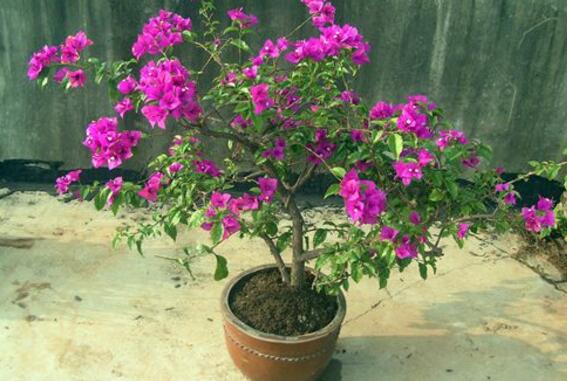
Bougainvillea grows quickly. If it is not pruned properly, various problems will appear, such as branches becoming too dense and bougainvillea failing to bloom, which will seriously affect its ornamental effect. As for how to prune bougainvillea, the editor has summarized 5 tricks: heavy pruning, short pruning, light pruning, thinning, and renewal pruning. They are very practical. Let us continue reading.
II. Illustrated guide to bougainvillea pruning methods
According to research, there are many pruning methods for bougainvillea, but all are meant to help it grow better and look more beautiful. For pruning bougainvillea, the editor has summarized 5 tricks, as follows:
1. Heavy pruning
This trick is for experienced growers; new flower enthusiasts rarely use it. If you are dissatisfied with a bougainvillea and want to greatly change its shape, then heavy pruning is needed. Specific pruning method: cut off all branches, keeping only a few main branches. In addition, the main branches must also be pruned heavily. Heavy pruning looks very thorough.
2. Short pruning / medium pruning
This trick is suitable for all flower enthusiasts, and the pruning is relatively light. Specific pruning method: cut off some dead branches and unnecessary branches on the bougainvillea plant, and only slightly shorten the rest. Short pruning can weaken the thickening trend of the mother branch and will not change the plant's shape.
3. Light pruning
Among bougainvillea pruning methods, light pruning is easy to master. The pruning extent is very small, and beginners can use it. Specific pruning method: slightly prune weak branches, diseased branches, and dead branches, generally on seedlings.
4. Thinning
This trick is generally used after bougainvillea flowers fade. Flower enthusiasts should learn thinning, as it helps flowering the next year. Specific pruning method: cut off one-year-old or perennial branches from the base. This promotes the sprouting of new buds, branch formation, and growth in the new branches below the cut.
5. Renewal pruning
Among bougainvillea pruning methods, everyone should also master renewal pruning. Specific pruning method: prune branches that have grown for many years. If the plant is too large, renewal pruning can be done in stages. Renewal pruning helps promote the growth of branch tips below the cut and the sprouting of latent buds, and weakens the growth rate of the mother branch. Renewal pruning is mainly to rejuvenate old branches.
Note: Through understanding the illustrated guide to bougainvillea pruning methods, everyone will find that bougainvillea pruning is mainly based on short pruning, heavy pruning, and thinning. However, everyone should note that places that need pruning must be pruned. To ensure the beauty of the plant shape, do not be reluctant to prune. You must understand that only by giving up something can you gain something!
How to prune bougainvillea, bougainvillea pruning methods
If you want the bougainvillea grown at home to be beautiful, it must be pruned comprehensively twice a year. So how do you prune bougainvillea, and what are the methods for pruning bougainvillea? Today the editor will let you know:
Bougainvillea pruning methods
First, the soil and nutrients in a pot are very limited, and the growing space is also limited. It must be cut back so that the potted plant maintains a certain size and shape, avoiding insufficient nutrients, poor plant growth, and naturally less beautiful flowering.
Second, people want potted flowers not only to bloom more, but also to have a good-looking shape when blooming. Pruning achieves an organic combination of potted flowers and bonsai, giving bougainvillea potted flowers a bit of a bonsai feel, so the plant shape can usually be appreciated.
Third, prune off weak branches, dead branches, and some useless branches, and create layers so that all branches receive light. This allows the healthy, thick branches you need to obtain more nutrients, grow stronger, accumulate more nutrients, and bloom more beautifully.
Fourth, the above three points refer only to the initial pruning. During the growth process, you must also slowly appreciate and slowly prune, and constantly pinch and remove buds, removing some unnecessary buds and branches. If there are too many buds and too many branches and leaves, the nutrients in the pot will always be insufficient.
After reading the editor's introduction above, now you know how to prune bougainvillea and what the methods for pruning bougainvillea are! I hope the editor's sharing above is helpful to you!
Bougainvillea pruning method pictures, bougainvillea bonsai pruning pictures
Spring has come, and trees and flowers are sprouting! It is time again to prune bougainvillea. To give bougainvillea enthusiasts a reference, the author photographed the pruning process for a before-and-after comparison, to share with readers. This can only serve to offer a modest spur to induce others to come forward with valuable contributions, and is for reference only. Because everyone's aesthetic views are different, I hope you will forgive me, and criticism is welcome.
To grow bougainvillea beautifully, it must be comprehensively pruned twice a year. How do you prune bougainvillea? When pruning bougainvillea, you must master three principles: short, heavy, and thinning. Shorten horizontal branches; heavily prune new branches; thin out dense branches and weak branches.
Bougainvillea pruning method pictures
1. Upright branch: a branch growing upright upward in the canopy.
2. Drooping branch: a branch whose tip droops downward.
3. Parallel branch: two branches on the same horizontal plane, extending parallel to each other.
4. Overlapping branch: two branches in the same vertical plane, overlapping one above the other.
5. Dead branch: a branch with no vitality.
6. Water sprout: a branch protruding beyond the outer periphery of the canopy.
7. Inner canopy branch: a short, small branch caught between main branches.
8. Cross branch: a branch growing toward the center of the canopy and crossing the trunk or main branches.
9. Whorled branch: several branches growing at the same node or very close together, extending radially in all directions at the same time. Such branches are called whorled branches.
10. Root sprout: [sucker branch] a sprout at the root crown of a flowering plant.
The above branch types are all branches that should first be considered for removal during bougainvillea pruning.
Bougainvillea pruning method pictures
Cut and cut bud:
After a branch is cut, the remaining wound is called the cut, and the bud closest to the cut is called the cut bud.
Cut type: when short-pruning a branch, the cut can use a flat cut or a slanted cut.
Flat cut: located about 5 mm above the cut bud, in a horizontal state. A flat cut has a smaller wound surface and is easy to heal. It is commonly used in short pruning of small branches.
Slanted cut: cut upward from the opposite side of the cut bud. Cut at a 45° slant so that the slant is slightly about 5 mm higher than the bud tip. The lowest part of the slant is level with the base of the bud. In this state, the wound will not be too large, it is also easy to heal, and the cut bud grows better.
Cut bud: the direction and quality of the cut bud determine the growth direction of new shoots and the growth vigor of the branch, so the choice of cut bud should be made carefully. Considering the distribution of branches in the canopy and the desired strength of new branch growth, when the canopy needs to expand outward, the cut bud should be left on the outer side of the branch; if you want to fill an empty inner canopy, the cut bud should face inward; for overly vigorous branches, to inhibit their growth, use a weak bud as the cut bud; when strengthening a weak branch, choose and keep a plump, strong bud.
Bougainvillea pruning method picture comparison bougainvillea pruning1. Heavy pruning: basically cut off all branches, leaving the stump and a few main branches. The few main large branches left must also be cut very short. In particular, unnecessary branches and branches that ruin the plant shape must be completely cut off. Heavy pruning is generally used when changing the shape.
2. Medium pruning: lighter than heavy pruning. It only cuts off some dead branches and unnecessary branches. Branches in good growing positions are only shortened, and the overall tree shape does not change much. Medium pruning is generally used on formed potted flowers and bonsai.
3. Light pruning: only slightly shortens some weak branches and cuts off diseased and dead branches. Healthy branches are slightly shortened. It is generally used on seedlings, small plants, and small trees, preserving as many branches as possible to form a strong tree vigor for photosynthesis, so that small plants grow quickly.
4. Cutting back: cut all branches short so that this year's tree shape is about the same size as last spring's tree shape, thereby freeing up space for the plant to grow and bloom, and making new branches stronger and flowering more beautiful and spectacular.