As a beautiful ornamental plant, many flower lovers keep bougainvillea as a potted plant at home, and it is said that when it blooms, the display is extremely beautiful. However, some flower lovers report that the bougainvillea they grow has dropped its flowers! What is going on? In fact, there are many reasons for bougainvillea flower drop, among which human factors are a factor that cannot be ignored. Let us take a look together below.
I. What to Do When Bougainvillea Drops Its Flowers: Find the Cause
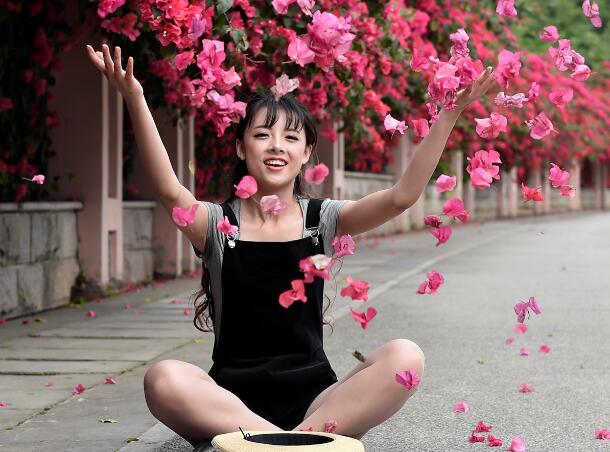
In daily life, many flower lovers grow bougainvillea at home, not only because it is beautiful, but more importantly because it is easy to grow, requiring only a little attention to light and watering. However, during the growing process, if care is not adequate, bougainvillea will show flower drop. At this point, we should stay calm and find the cause, then solve it accordingly. Overall, the causes of bougainvillea flower drop are the following, and we will continue below.
II. Causes of Bougainvillea Flower Drop, 5 Points
1. Human/Natural
If you find that your bougainvillea has dropped its flowers, do not think of anything else first; think carefully about yourself and recall whether you frequently move the bougainvillea! This is because moving bougainvillea back and forth affects the plant's growth, leading to symptoms of flower drop;
In addition, we should also consider whether it is caused by natural factors, because bougainvillea being blown by strong wind or rained on will both cause flower drop.
Solution: During the flowering period of bougainvillea, we should keep the pot in a fixed position, preferably on a windowsill or balcony facing the sun and able to avoid rain.
2. Improper Watering
Although bougainvillea likes a moist environment, it is best not to water during the flowering period, as this can extend the flowering time. Once watered during the flowering period, it very easily causes the flowers to drop quickly. In addition, insufficient water supply in hot seasons or excessive watering in winter can both easily cause leaf drop.
Solution: When bougainvillea is blooming, do not water it; at other times, give it an appropriate amount of water: in summer, water once each morning and evening, while in winter reduce the watering frequency, watering once every 3-5 days.
3. Too Much Fertilizer
Besides watering, the causes of bougainvillea flower drop naturally include fertilizing. Once we fertilize too much or choose the wrong fertilizer, it will cause root burn in bougainvillea, leading to symptoms such as bougainvillea root rot, yellowing bougainvillea leaves, and bougainvillea flower drop.
Solution: Choose fully rotted organic fertilizer, and when fertilizing, adhere to the principle of light fertilizer applied frequently to avoid root burn. As for how to fertilize bougainvillea, it was introduced specifically earlier, so we will not say more here.
4. Improper Temperature
In bougainvillea cultivation methods, the importance of temperature was mentioned before; we should best keep bougainvillea in a 20-30°C environment. Once the temperature is too low or changes too much, it will cause bougainvillea flower drop.
5. Insufficient Light
Bougainvillea likes light, and we need to ensure it gets more than 8 hours of light each day so that it can grow well. If during the flowering period the light does not meet the requirement, bougainvillea flower drop will appear very easily.
Solution: Supplement light and promptly move the plant to a sunny place; after a period of time, the bougainvillea will gradually recover.
Summary: The beauty of bougainvillea is beyond doubt, and its blooming display attracts countless people. However, during bougainvillea cultivation, flower drop easily occurs, affecting the ornamental effect. Therefore, in order to avoid bougainvillea flower drop, everyone must pay attention in daily care! Finally, may everyone's bougainvillea bloom into beautiful flowers.
The Influence of Plants on Feng Shui
The Influence of Animals and Plants on Feng Shui: What Trees Are Suitable to Plant Around a House. Whenever we think of changing an ominous residence into an auspicious one, we often use trees to improve it. For example, planting trees on triangular soil, planting trees in the missing-corner direction of a building, or even planting trees on the outer side of a house can also cover ominous meaning. This precisely shows how important the spiritual energy of trees is to humans. But then again! Although the spiritual energy of trees is very important to us, not every tree can bring auspicious meaning. For example, in the case of a private residence, there are some trees that cannot be planted because they carry ominous signs. Types of ominous trees: willow, plantain, fig, cherry tree, magnolia, yucca, phyllostachys aurea, zelkova, white poplar, etc. In principle, these trees cannot be planted in the garden of a private residence. Because they are ominous trees, they cannot bring the auspicious signs that trees possess. In particular, willow absolutely must not be planted in a private residence. Otherwise, it will reverse the fortunes of the whole family; that is to say, women will take the role of men and dominate everything, while men will be unable to perform the functions a man should. This is the unique ominous meaning of willow. In particular, children will become weak and frail. In addition, under specific conditions the following trees become ominous trees: Trees that become ominous when the private residential plot is narrow: persimmon tree, peach tree, jujube tree, barrel tree, jujube tree, guava tree, plum tree, pomelo tree, kumquat tree, loquat tree, and other fruit-bearing trees. Trees that grow taller than the roof: ginkgo, camphor, fir. If a garden has these trees, they must be transplanted elsewhere. Some people think, is it not enough to cut them down? Cutting them down is very simple, but the ominous meaning will become even greater. Especially when the trees are already quite large, they must not be cut down casually. All living things in this world possess spiritual energy connected to the universe. Just as humans have souls, trees also have tree spirits. All things maintain ecological balance under mutual harmony. Therefore, we should try our best to let tree spirits survive; otherwise, one's own family will also find it difficult to obtain happiness. If, by chance, one has no choice but to cut them down, then a "ritual of exorcising the spirit" must be held in order to send away the tree spirit. Invite a monk of high virtue or a cultivator to hold the same offering as in a foundation-laying ceremony, begging the tree spirit to move away. Even a single tree cannot be exempted. Cutting down a willow tree of more than 3 m also requires holding this kind of ritual. Once cut down, it should be pulled out together with the roots. Even if it is to be transplanted elsewhere, a foundation-laying ceremony must still be held. Because the tree has already lived in the same place for decades, even hundreds or thousands of years. Even if it is transplanted only a few m, one must first pray that the tree will not wither after transplanting, and only then begin to transplant it. As for yucca, if there are only one or two, then transplant it near the house! Transplanting trees such as willow to temples, schools, and other places is most ideal. Fruit-bearing trees will not bring ominous meaning if there is more than 1,000 ping of land around the house. For ominous trees in excessive numbers within a building plot, it is enough to transplant them near the boundary line of the house; there is no need to worry about what direction. As for trees that grow very tall, pinching can be used to prevent them from continually growing taller. When a fir grows to 10 m, the area covered by its branches will reach 5 m. For tall trees like this, one may as well prune frequently to limit their growth. Some are not ominous trees, yet due to certain special circumstances, they have to be transplanted elsewhere. For example, fir. Conifers are not ominous trees, but they are the main cause of pollinosis, so they really have to be transplanted. The scent of sweet osmanthus is too strong, and once it becomes a cause of headaches for family members, then it must be moved away. At this time, a ritual similar to foundation laying must still be held. Plant Auspiciousness and Inauspiciousness and Symbolic Meaning. In the application of feng shui, plants are often used to attract auspiciousness and transform evil, so different plants are endowed with different meanings. Plants regarded as auspicious: Orange: "orange" is homophonous with "auspiciousness," so potted citrus became a household decoration during the Spring Festival. Lucky grass: lucky grass is small and delicate, evergreen all year round, and easy to grow in both soil and water, symbolizing "good fortune and happiness," and is also called auspicious grass. Chinese toon tree: the Chinese toon tree grows easily and lives long, and in some places the custom of touching the Chinese toon tree is popular. On New Year's Eve, children all touch the Chinese toon tree and also walk around it a few times, praying to grow tall quickly; in some places, on the morning of the first day of the first lunar month, children hug the Chinese toon tree and recite, "Chinese toon tree, Chinese toon tree, you are king, you grow thick and I grow tall." Sophora tree: considered to represent "emolument"; in ancient courts, three sophora and nine jujube trees were planted, and the nobles and high officials sat beneath them, with those facing the three sophora trees being the three highest officials, and later sophora trees were conveniently planted in courtyards. Peach tree: traditionally regarded as the essence of the five elements, able to control all ghosts, so during the New Year peach charms were hung on doors. Willow: like the peach tree, willow branches were inserted at doors to drive away evil. Gourd: originally in feng shui arts, the gourd was considered a plant capable of driving away evil, and the ancients often planted it in front of and behind houses. Modern physical testing proves that vessels shaped like the "treasure gourd" can shield interference from various waves and radiation. Plants regarded as ominous: Eucalyptus: this "giant" among trees can grow as tall as a twenty-plus-story building, and young and middle-aged people dare not plant it; it is said that when the tree is large, the person will die; to plant this tree one has to ask an elderly person, since by the time the tree grows large, the planter's lifespan will also be about over. Feng shui trees. In the south, near some villages a small patch of verdant trees is preserved, mostly evergreen trees such as camphor, pine, cypress, and nanmu. As a sightseer, do not touch them. Because these are feng shui trees, also called water mouth trees. Do not look down on them just because they are only a small patch of verdant trees; they are tied to the feng shui lifeline of the whole village, and the locals also do not dare to touch a single blade of grass or tree there, fearing damage to the village's feng shui. Tree Environment. On trees: 1. Trees bending and embracing, leisure and blessings. 2. Peach and apricot in front of the gate, lust for flowers and heavy drinking. 3. Gate facing weeping willow, beard hanging from a beam. 4. A solitary tree at the gate, widowed mother and orphaned grandchild. 5. Peach trees facing the gate, shadow protecting descendants. 6. Gate facing the forest, many disasters, illnesses, and misfortunes. 7. Two trees in front of the gate, livestock harmed and people healed. 8. A solitary tree flat and bald, two surnames not harmonious. 9. A large tree strange and odd, qi pain and reputation ruined. 10. Tall trees all even, early step on the cloud ladder. 11. Swollen roots under the tree, deafness, blindness, illness, and dizziness. 12. Bamboo and trees winding around, the family has enough clothing and green. 13. A large tree pillowing the emperor, there will surely be much panic. 14. Trees on the left and none on the right, little auspiciousness and much inauspiciousness. 15. Red flowers on the right tree, charming and ruining the family. 16. The right tree heavily embracing, wealth and emolument long preserved. 17. The tree bent like a hunchback, both population and wealth decline. 18. A withered tree at the gate, fire disaster and dead people. 19. Tree branches entangled by vines, hanging from a beam and overturning a boat. 20. A withered tree on the roof, there will surely be a widow. 21. A large tree pressing the gate, no women and few men. 22. Fruit trees leaning left, miscellaneous illnesses and phlegm-fire. 23. Tree heads facing outward, one will surely suffer exile. 24. Tree heads hanging over water, one will surely invite drowning. 25. Two trees flanking the house, surely losing flesh and blood. 26. A tree like a crouching ox, frosty widowhood and many illnesses. 27. Banana trees often in front, the widow is pitiable. 28. A sophora in front of the gate, glory, honor, and abundant wealth. 29. A dead tree in front, losing wealth and collapsing on the road. It is best to have a large tree to the northwest of a residence; the northwest is qian, and trees have wood essence, which can protect the master of the residence. There must not be a large tree in front of the main gate of the house. There must not be a large tree in the courtyard. Bamboo groves around a residence are an auspicious sign. The Influence of Animals and Plants on Feng Shui: What Plants Are Suitable to Plant in a Residence. There is a story like this: a person placed several pots of azaleas in his home, adding some vitality to a room originally full of furniture and appliances, but at this time his family members fell ill one after another, and their health was very poor. Is this an accidental phenomenon or an inevitable one? If it is an inevitable phenomenon, then besides azaleas not being able to be placed in the home, what other plants cannot be placed in the home? From the perspective of feng shui, placing some plants in the home can indeed add vitality to the family, and some even play a role in transforming evil. But not all plants are suitable to be placed in the home, and the azaleas mentioned in the story are one of them. So exactly what plants are suitable to be placed in the home, and what plants are not? Usually, thorny or needle-shaped plants such as azaleas, roses, and cacti are absolutely not suitable to be placed in the home, otherwise they will affect the health of family members, and there may appear the situation in the story of family members taking turns getting sick. There are many plants suitable to be placed in the home. You can choose some plants with luxuriant branches and leaves to place in the home; green is the best choice of color, and those with flowers are also acceptable. Varieties include violet, evergreen, dragon bone, golden pothos, and so on. These plants can make family members full of vitality and energetic at work. But one must take care to look after them; do not think that just placing them there will bring benefits without effort. If withered flower branches are found, they should be cut off as soon as possible, otherwise work will encounter many obstacles and the family's fortune will be unfavorable. In addition, common ribbon flowers and plastic flowers can also be placed indoors; these decorations actually have no life at all and have little influence on the feng shui of the house. But note that if rockery is used to set off plants, do not buy jagged shapes, because all jagged shapes are a kind of evil, and placing them in the home will make people prone to injury or illness. Indoor plants and water. Feng shui's theory on greening is: "Trees in villages and townships are like clothes on people; if too thin, one fears cold. If too thick, one suffers heat. The principle here is that yin and yang must be balanced." What trees are suitable to plant inside and around residences and courtyards? Which are not? Feng shui studies have special discussions: "Plant peach and willow in the east (benefits horses), plant elm in the west, plant plum and jujube in the south (benefits cattle), plant apple and apricot in the north." "All trees are auspicious for each house and inauspicious if behind the house." "Bamboo and trees around a residence, lush and green, bring in wealth." "Planting trees in the central courtyard causes separation and division; planting jujube at the gate brings happy events and auspiciousness; planting trees in the courtyard center brings much idle hardship; long planting in the courtyard center causes disaster." "A sophora at the middle gate, wealth and honor for three generations; an elm behind the house, a hundred ghosts do not approach." "Apricot in the east of the house is inauspicious; plum in the north of the house and peach in the west of the house are all lewd and evil." According to research results: "Plants themselves are divided into yin and yang, and among plants there also exists mutual generation and mutual restraint and mutual restriction; humans and plants also have mutual generation and mutual restraint..." For example: sun-loving plants that need 1,800 lux of light intensity to bloom normally, such as white orchid, rose, jasmine, plum blossom, peony, Chinese peony, azalea, chrysanthemum, and so on, will not grow well or will not bloom in a shady environment. Or they will not bear fruit or will die. Moisture-loving plants such as monstera, evergreen, ponytail palm, Brazilian iron, and pothos. Under 1,800 lux illumination, even under 100 lux illumination, they can still grow at a low level, and are shade-loving plants. Mutual generation and mutual restraint among normal plants is quite common; planting grapes beside pine trees will result in no fruit; planted beside elm trees, even if fruit forms it is sour; pears release ethylene substances; therefore they cannot be placed together with bananas, otherwise the banana will quickly rot its peel. Humans and plants also have a relationship of mutual generation and mutual restraint. For example, golden pothos and tree-loving banana release carbon dioxide at night, and will compete with people indoors for oxygen; the scent released by night-blooming jasmine makes people with high blood pressure and heart disease indoors feel uncomfortable. These plants restrain people. Spider plant has the effect of filtering air and generates with people, and has the effect of prospering the house and transforming evil. More of it can be placed indoors. In addition, cactus plants; dragon green, jade qilin, and others also have the effect of prospering the house and transforming evil. There are also plants such as rose and thorny azalea that can be placed in the "declining position" and "ominous position" indoors. In feng shui they also have the effect of transforming evil. According to the requirements of feng shui, indoor plant arrangements should fully bring into play the elements of mutual generation between people and plants, achieving harmony between people and plants. The varieties of plants placed in various parts inside a residence are as follows: 1. Bedroom: choose cactus, cactus ball, spider plant, rose, tulip, tuberose, lily, calla lily, to achieve a quiet, peaceful, and gentle effect. Under fragrant flowers, husband and wife are harmonious, children are calm, and it is easy to fall asleep and rest very well. 2. Living room: should be a bit more refined; varieties that can be chosen are lucky bamboo, ponytail palm, cactus, podocarpus, schefflera, palm grass, money tree, clivia, hoya, orchid, cyclamen, citrus, bird's nest fern, dragon blood tree, and so on. These plants are auspicious things in feng shui, and can bring good fortune and happiness and gather wealth and blessings. 3. Study: should be full of the air of books; plants should be placed in the owner's wenchang position. Varieties that can be chosen are mountain bamboo flower, asparagus fern, lucky bamboo, ivy, and so on. These plants can strengthen people's thinking ability and are beneficial to study. On the desk one can also place a pot of leaves grass and sweet flag, which has the effect of calming the spirit and opening the orifices and preventing insomnia. 4. Dining room: besides health, it requires neatness and unity. Plants can first choose yellow rose, yellow carnation, yellow jasmine, and so on, mainly orange-yellow, to increase appetite and promote good health. 5. Balcony: four-season flower and grass varieties should be selected according to sunlight conditions, such as jasmine, chrysanthemum, Dutch, begonia. Passionflower, asparagus fern orchid, dianthus, begonia, sun flower, aglaia, osmanthus, crab orchid, and so on; when arranging various flowers, place the yang-natured ones near the sunlight and the yin-natured ones behind them, so that each gets what it needs in terms of light. 6. If the main gate faces a staircase, one can use sword-leaf red and fishtail palm. Palm grass transforms evil. Place them at the mutually conflicting place. Also, if the balcony window faces evil qi, one can use cactus, rose, and jade qilin to transform evil, and one can also pot a gourd to transform evil. In short, if the indoor greening layout is improper and the selected plant varieties are wrong. It will bring adverse consequences to the residents' careers. Plants can treat illness, can regulate the mind and cultivate nature, prosper the house and prosper people, and can also harm people and kill people. Plants definitely have a "field." This should be further studied.