How do you prevent and treat root rot in home hydroponic flowers?
The presence of trace nutrients such as phosphorus and nitrogen in water will promote synthesis reactions and increase green plants, especially algae. When their rate of increase exceeds their rate of degradation, eutrophication occurs. The continuous death of algae produces a musty odor; at the same time, it accelerates root decay. To prevent and reduce the occurrence of root rot in flowers, the following points must be noted in daily flower care:
1. Do not leave flowers on a balcony for long periods, to avoid direct sunlight, which speeds up flower respiration and causes the dissolved oxygen in the nutrient solution to drop due to increased oxygen consumption by the roots;
2. Do not use too much ammonium nitrogen in the nutrient solution, and also pay attention to lowering the concentration of the nutrient solution to increase the oxygen concentration within it.
3. When choosing a container, choose one with as large a contact area as possible between the nutrient solution and the air, to effectively increase the rate of oxygen dissolution;
4. Appropriately increase the frequency of changing the nutrient solution, especially in hot summer; it is best to change the nutrient solution once a day to increase dissolved oxygen.
If hydroponic flowers have already developed root rot, the treatment methods are: 1. Use a small submersible pump to aerate the nutrient solution, to rapidly increase the dissolved oxygen in the nutrient solution so the roots obtain sufficient oxygen. 2. Immediately remove the rotten roots to prevent the rot from spreading further.
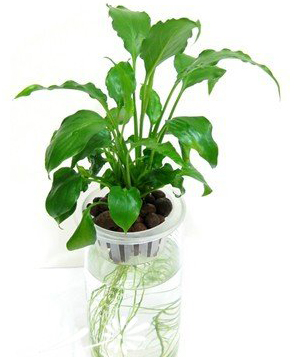
Prevention and treatment of root rot, which readily occurs in home hydroponic terrestrial flowers
For the static hydroponic flowers commonly introduced on the market, according to the way oxygen is supplied to the roots, one way is to use the dissolved oxygen in the nutrient solution; the other is to take in oxygen directly from the air. In the former, the root tips are immersed in the nutrient solution, and oxygen is naturally dissolved through contact between the liquid surface and the air; in the latter, the upper part of the roots, that is, part of the root system, is exposed to the air and directly absorbs oxygen.For the part of the flower root system exposed to the air, the roots are directly in an environment with an oxygen concentration of 2.3 x 100000 ppm (oxygen makes up about 21% of air by volume); when the flower root tips are planted in water, the oxygen concentration in the root zone drops sharply and is affected by the saturated dissolved amount of oxygen in water (<15ppm)的限制。两者氧浓度落差达10000倍。在一定温度和压力下,水中所溶解的氧已达最大量称为氧的饱和溶解量。溶于水中的氧(O2)在不同气压、不同温度下,氧的饱和溶解量是不同的。
For home hydroponic flowers, because the root tip portion is in the nutrient solution, the oxygen concentration naturally dissolved through the water surface averages about 4%-8% of the saturated dissolved amount of oxygen. For example, at a liquid temperature of 20°C, the amount of dissolved oxygen in the hydroponic solution is only about 0.37 ppm-0.74 ppm. When most terrestrial plants are grown hydroponically, if the dissolved oxygen content in the root zone is below 2.8 ppm, the upper leaves begin to wilt; when the dissolved oxygen in the root zone falls below 1.5 ppm, root respiration rapidly deteriorates and growth becomes difficult; when the dissolved oxygen in the root zone is below 0.5 ppm, the roots almost stop growing or die (rot).
The dissolved oxygen in hydroponic water is extremely low, making root oxygen respiration extremely difficult, and it has already dropped to the critical standard at which the life of ordinary terrestrial plants stops or they die (0.5 ppm). It should be emphasized here that even if part of a flower's roots is directly exposed to the air, it cannot change the dangerous state in which the root tip portion that remains soaked in the nutrient solution suffers from respiratory failure; that is, it is hard to escape the severe consequence that "stagnant water must rot"; if the roots fortunately do not rot, at best they merely linger on and sustain the plant's life, and the "water roots," that is, roots without root hairs, are inevitably far inferior to the growth condition in soil potting. In some static hydroponic flowers, when the roots are planted in a transparent glass vessel, carbon dioxide in the nutrient solution can also cause a light reaction.
The presence of trace nutrients such as phosphorus and nitrogen in water will promote synthesis reactions and increase green plants, especially algae. When their rate of increase exceeds their rate of degradation, eutrophication occurs. The continuous death of algae produces a musty odor; at the same time, it accelerates root decay.
Root rot readily occurs in home hydroponic terrestrial flowers; expedient countermeasures:
1. Never place flowers on a balcony; avoid direct sunlight to lower the level of root oxygen respiration, so that the dissolved oxygen in the nutrient solution does not drop sharply due to an increased rate of oxygen consumption by the roots;
2. Lower the total concentration of the nutrient solution so that the electrical conductivity is below 0.6 millisiemens/cm (ms/cm);
3. Never use ammonium nitrogen in the nutrient solution, and use chelated iron, manganese, zinc and copper;
4. Increase the contact surface area between the nutrient solution and air as much as possible, to increase the rate of oxygen dissolution;
5. Increase the frequency of changing the nutrient solution; especially in hot summer, change the nutrient solution once a day (lower the nutrient solution concentration); this is beneficial for increasing dissolved oxygen.
The ultimate countermeasures when root rot occurs in hydroponics:
Thoroughly remove the rotten roots, and use a small submersible pump (all standard aquarium products) to aerate the nutrient solution, to increase the dissolved oxygen in the nutrient solution; thoroughly remove the rotten roots, and immediately transfer the flowers to soilless potting using inorganic minerals such as vermiculite or agricultural rock wool, or mineral wool, as the substrate (with holes in the bottom of the pot). The oxygen concentration in the root zone can reach 1 x 100000 ppm-2 x 100000 ppm; at this time all the roots obtain sufficient oxygen and have vigorous respiration.
A brief discussion of the key points for caring for hydroponic flowers
Although hydroponic flowers have certain advantages over soil-cultivated flowers, this does not mean everyone can grow hydroponic flowers well. Next, based on the care experience of many flower lovers, the editor will discuss the key points for caring for hydroponic flowers, for the reference and study of flower lovers everywhere.
1. Temperature:
The growth temperature for hydroponic plants is between 15-30°C. If it is too high or too low, the plants stop growing and enter a dormant state. Below 10°C, plants are prone to cold damage. Because northern China has heating facilities in winter, indoor temperatures are usually not lower than 10°C, and the temperature is instead better than in the south, so hydroponic flowers are more suitable for home cultivation in northern regions.
2. Light:
Because water conducts light strongly, under intense sunlight the water temperature rises rapidly and scalds the cells and tissues of the plant roots. Therefore, the light requirement for hydroponic plants is limited to a bright indoor location, but not direct sunlight. In winter, supplement light appropriately. Because of the light requirements of hydroponic plants, when choosing hydroponic flowers we should choose those shade-loving or shade-tolerant indoor ornamental plants.
3. Growing medium (water):
a) Domestic tap water (neutral), with chlorine removed (method: let it stand for two days, or add the fish medicine Yulebao and use it directly).
b) Change the water regularly; once a week is suitable. (The purposes of changing water: a. It adds oxygen for plant root respiration. In summer, when temperatures are high, the oxygen content in water is low, so the frequency of water changes should be increased compared with usual. b. Plant metabolic waste is excreted into the water; regular water changes help clean the water environment.)
c) When changing the water, rinse off the secretions from the plant roots, clean the vessel, remove rotten roots, and add hydroponic plant nutrient solution.
4. Nutrient solution for hydroponic plants:
It is composed of more than a dozen major elements and trace elements required for plant growth. Acidic elements and alkaline elements each account for part of it. If they are put into one bottle, chemical reactions will occur and generate other substances, affecting plant absorption. Therefore, the A and B bottle separate packaging method is used. Moreover, they are added separately.
5. Root care:
The physiological characteristics of plant roots include avoidance of light (indoor light is still acceptable); strong light will accelerate the aging of plant root cells and lead to root rot. When changing water, be careful not to damage the roots (in winter, when changing water, note that the water temperature must not be too low); when rotten or decayed roots occur, remove them promptly and clean them thoroughly, and increase the frequency of water changes. Continue until normal.
6. Humidity and ventilation:
Because hydroponic flowers are cultivated indoors, this determines the range of plants we choose: shade-loving or shade-tolerant indoor ornamental plants. In addition to preferring warm environmental conditions, most of these plants also have the ecological characteristic of liking moisture. Therefore, during cultivation, spray water mist on the leaf surfaces (do not spray water on the leaves at night) to increase humidity and help plant growth. Excessive humidity easily breeds bacteria and leads to bacterial damage to plants. Ventilation is an effective way to adjust humidity and prevent bacterial damage. Of course, in the process of home cultivation, excessive humidity usually does not occur. However, appropriate ventilation and air circulation will also help plant growth.
7. After plants are grown hydroponically, they must still follow their original ecological habits:
After plants are transformed from terrestrial forms to hydroponic cultivation, although they share some common cultivation principles, they do not all become exactly the same from then on. For example, plants that like a dry environment cannot be sprayed on the leaf surface every day after being grown hydroponically, because their ecological habits have not changed. Therefore, when cultivating them, we must still follow their inherent ecological habits.
8. Techniques for preventing and controlling diseases and pests of hydroponic flowers:
Hydroponics escapes infection by soil-borne diseases and pests, but it does not grow in a strictly disinfected vacuum environment, and it can still be harmed by diseases and pests in the display environment. Fungi, bacteria and viruses in the air can still infect the stems and leaves of hydroponic flowers, causing varying degrees of disease. Aphids and scale insects can drift indoors with the wind and land on hydroponic flowers to suck sap. Moths lay eggs on flowers, and the hatched larvae also chew the tender leaves and stem tips of flowers. Flowers that have been removed from pots, had their roots washed, and been converted to static hydroponics also carry fungi, bacteria, viruses, eggs and larvae; if these are not carefully checked and removed, they will leave hidden dangers.
For diseases and pests that may occur in hydroponic flowers, prevention should be the main approach. When choosing flowers for hydroponics, select as far as possible plants that are robust, grow luxuriantly, and are free of pests and diseases. If pests are found during cultivation, they can be caught by hand or washed away with tap water. Infectious diseases occur infrequently in hydroponic flowers; only a few leaves may have brown lesions, become shriveled and necrotic, or have irregular round wet-soaked lesions, which are formed by fungal or bacterial infection. After discovery, the entire diseased leaf should be removed and burned so it does not spread. Prevention of non-infectious diseases. Non-infectious diseases are not caused by infection by pathogens; they are caused by unsuitable environments. Hot, stuffy high-temperature weather in summer, cold winter, dry climate, scorching sun, poorly ventilated environments, excessive shading, nutrient solution concentration that is too high, or an inability to absorb it in a balanced way can all cause the leaf tips of static hydroponic flowers to scorch and lower leaves to turn yellow and drop. When summer temperatures are too high, because the dissolved oxygen in the solution drops sharply, root rot is likely to occur, and this is an even more common symptom of static hydroponics. In response to the above different symptoms, identify the corresponding causes, correct them, improve the cultivation environment, and avoid the occurrence of non-infectious diseases.
Summary: The above are the key points for caring for hydroponic flowers. I hope everyone will exchange more experience in growing hydroponic flowers.