How to grow mosquito repellent grass? Cultivation methods and precautions
The scientific name of mosquito repellent grass is Pelargonium graveolens, a plant under the genus Pelargonium, which can naturally emit a lemon-scented fragrance. Therefore, mosquito repellent grass occupies a very important position in the perfume industry, being cultivated artificially in large quantities to distill the essential oil from its leaves. Mosquito repellent grass has a variety of scents, including rose, citrus, mint, coconut and cardamom, as well as various fruit flavors. This fragrance has a very significant effect on repelling mosquitoes.
Chinese name: Mosquito repellent grass
Scientific name: pelargonium graveolens
Aliases: Mosquito repellent herb, rose-scented geranium, rose geranium
Family: Geraniaceae geraniaceae
Genus: Pelargonium pelargonium
Origin and distribution: Native to southern Africa, especially the Cape of Good Hope area of South Africa
Morphological characteristics: Young plants are herbaceous, fleshy and juicy; old plants are semi-woody with hollow pith. The whole plant has a distinctive odor. Simple leaves alternate, round, kidney-shaped or fan-shaped, with palmate deep lobes, the common petiole is relatively long with fine hairs. Umbel inflorescence, perigynous flower, pink flowers, 5 sepals, 5 petals, 5 stamens, compound pistil.
How to grow mosquito repellent grass?
▲ Mosquito repellent grass grows very fast and needs repotting with added soil and fertilizer once a year, usually in early spring from early to mid-February to March. First prune, keeping only 3 lateral buds at the base of each branch, pull out the old and decayed roots, replace with new fertilized potting soil and apply base fertilizer.
▲ Mosquito repellent grass prefers neutral to slightly acidic soil, generally fertilizing once every 15-20 days. In early April, after mosquito repellent grass grows new branches, apply a diluted organic liquid fertilizer once a week, and when moved outdoors in late April it will bloom successively. In early June move it to the inner side of the balcony in diffused light. If the surface of the potting soil turns white, water it. Water mosquito repellent grass thoroughly once every 3-6 days, but do not let water accumulate. In July-August, spray water frequently to cool it down and keep the surrounding environment moist.
▲ Mosquito repellent grass loves light. Apart from slight shading in summer, it should receive direct sunlight in autumn, winter and spring. Mosquito repellent grass loves warmth and water. 10-25°C is the suitable growing temperature. Temperatures below 7°C and above 32°C are unfavorable for growth. The indoor overwintering temperature should not be lower than 12°C.
▲ If mosquito repellent grass shows yellowing leaves, they need to be removed promptly.
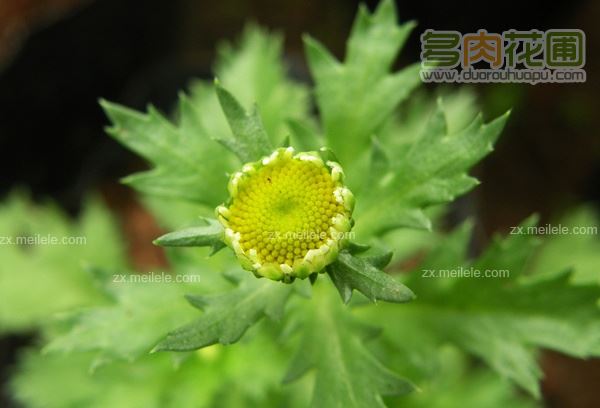
Generally, the planting season for mosquito repellent grass is in early March. Sowing or cuttings can be used, and cuttings in spring and autumn are generally easier to survive. When planting, bury the seeds in fine sandy soil at a depth of about 3 cm. Generally, water thoroughly after 4 hours and keep the soil moist. In spring, place it indoors at a temperature of about 20°C. After it sprouts, it can be transplanted.
Mosquito repellent grass grows very fast and generally needs soil replacement and fertilizer addition once a year. The season for repotting and adding soil is usually around February. You can prune first, then repot. When it grows new buds in April, you can fertilize once. In late April, it can be moved outdoors. When the weather is hot, try to move it to a shady place for cultivation and keep the soil moist. In winter, around October, it can be moved indoors for cultivation.
For pest and disease control of mosquito repellent grass, generally when mosquito repellent grass shows rotten leaves and root rot, it is caused by improper management, which is due to excessive humidity and poor ventilation. Generally, the common short-term leaf drop is due to insufficient light for the plant, and it can be appropriately placed in a place with light. Leaf drop and yellowing is due to lack of water. In winter, this situation may also be caused by too low temperature. Excessive fertilization or too strong light can cause leaf scorching, which needs attention.
The cultivation of mosquito repellent grass should pay attention to temperature changes. Mosquito repellent grass is a very effective mosquito repellent plant. Research shows that when the leaves of mosquito repellent grass reach 15, its mosquito repellent rate can reach 97.8%. The effective mosquito repellent range of each plant is about 18 sq m. It is environmentally friendly and has strong mosquito repellent performance.
[More information]
|What does a white rose represent|What plants protect against computer radiation|Succulents|Effects and functions of osmanthus|Lavender blooming period|
|Spider plant 'Golden Heart'|Cultivation methods and precautions for azaleas|Indoor foliage plants|Boston ivy|How to fold a lily|Osmanthus|
|How to grow mimosa|How to grow succulents|Effects and functions of jiaogulan|Effects and functions of honeysuckle|Pelargonium|
How to grow mosquito repellent grass
How to grow mosquito repellent grass
Mosquito repellent grass is a perennial evergreen herbaceous plant with tenacious vitality. People today like to keep it as a potted plant indoors or on the balcony. Do you grow mosquito repellent grass at home? Master a few cultivation tips, and your mosquito repellent grass will surely grow plumper and stronger.
1. Light. Mosquito repellent grass likes adequate sunlight, so it can be placed outdoors during the day to receive light, but be careful to shade it appropriately to prevent its leaf tips or edges from being scorched by the sun.
2. Soil. Mosquito repellent grass prefers loose sandy loam, and acidic soil is best.
3. Water. Just keep the soil in the flower pot moist, for example watering once a week. There is no need to overwater, to avoid causing soil alkalization.
4. Repotting. Mosquito repellent grass has a well-developed root system. If it grows too luxuriantly, you might as well transplant the new plants into other flower pots, or give the mosquito repellent grass a larger pot.
5. Fertilizing. You can apply a compound fertilizer to mosquito repellent grass once every 15-20 days. Apply it to the soil rather than spraying it directly on the leaves.
Usage: At night when there are many mosquitoes, move the mosquito repellent grass into the room, sprinkle a little water on its leaves to let the leaves release citronellal to drive away mosquitoes and insects.
How to propagate mosquito repellent grass
The propagation method of mosquito repellent grass is the same as most potted plants. It can be propagated both by sowing and by cuttings. But both propagation methods require testing your potting skills. Let's take a look at the correct operation methods below.
If you choose sowing propagation, sow the seeds into clean fine sandy soil in early March at a depth of about 3 cm; if you choose cutting propagation, it is best to do it in spring and autumn. Remember to water thoroughly 4 hours after cutting. When cultivating mosquito repellent grass indoors, keep the room temperature at about 20°C, so that after 1 month, the sown seeds can germinate, and the new cuttings can also take root.
Mosquito repellent grass grows really fast. Remember to repot it once a year, and also do a little pruning in February-March each year, removing yellow and withered leaves and aged roots, and fertilize once every 15-20 days, so that mosquito repellent grass can grow and bloom better.
How does mosquito repellent grass overwinter
Whether in the north or the south, winter temperatures are relatively low, and the soil temperature and humidity in the flower pot are not quite suitable for the growth of mosquito repellent grass. How should you help mosquito repellent grass get through the winter smoothly? Here are some practical tips you might want to take a look at first.
1. Keep it exposed to sunlight. Winter temperatures are low, so placing mosquito repellent grass on a sunny windowsill is a good choice. This allows photosynthesis and appropriately raises the soil temperature.
2. Remove standing water in the pot. In winter, the evaporation of water in the soil decreases. Be careful to reduce the amount and frequency of watering, to avoid too much standing water in the pot, which can cause the roots and stems of mosquito repellent grass to rot.
3. Cut off excess branches and leaves. Only by shedding burdens can it get through the winter easily, so cut off the branches and leaves that have grown too "ugly" as well as the withered and yellowed ones.
4. Stick to "staying indoors". The suitable growing temperature for mosquito repellent grass is 10-25°C, and this temperature range can only be provided indoors, so your mosquito repellent grass should not be moved outdoors in winter. Open the window to give it some fresh air when necessary, and that's OK.
What to do when mosquito repellent grass leaves turn yellow
Yellowing leaves are a sore point in growing potted plants. Many incorrect care methods can cause leaves to turn yellow and dry up. So when mosquito repellent grass leaves turn yellow, how should you handle it correctly?
Symptom 1: Sudden leaf drop in a short period
The cause is too rapid a temperature change or insufficient light. The correct approach is to place the mosquito repellent grass in a sunny spot to get more sun, and note that the light duration should be increased gradually, not exposed to direct sunlight for a long time all at once.
Symptom 2: Leaves turn yellow and soon fall off
The cause is overwatering. The correct approach is to reduce the amount and frequency of watering, just keeping the soil moist, especially in winter.
Symptom 3: Leaf tips dry out or leaf edges wither
The cause is excessive fertilization. The correct approach is to lengthen the interval between fertilizations, so that the mosquito repellent grass reaches nutrient balance, and the leaves will gradually recover.
Symptom 4: Large areas of leaves turn dry and yellow
The cause is infection with yellow leaf disease pathogens. The correct approach is to cut off the yellow leaves and spray fungicides such as baijunqing or carbendazim, while strengthening light exposure.
Why does mosquito repellent grass have a fragrance
You must have noticed that mosquito repellent grass is different from other potted plants. After all, its fragrance cannot be concealed. Why does mosquito repellent grass have a magical fragrance? Curious readers might as well hear what Mama Network Encyclopedia has to say.
The fragrance of mosquito repellent grass comes from a substance in its body called "citronellal". Mosquito repellent grass combines the characteristics of geranium plants and citronellal-containing plants, so it has both fragrance and volatility. When mosquito repellent grass carries out photosynthesis or respiration, the pores on its leaves open, and citronellal molecules are released into the air. This aromatic molecule can drive away mosquitoes and insects and purify the air, so its environmental value and ornamental value are both very high.