How to grow red spider lily? Detailed guide to cultivation methods and precautions
Temperature
Many members of the Amaryllidaceae family love warm climates, so amaryllis, crinum lily, spider lily, society garlic, autumn zephyr lily, pink rain lily and fireball lily all belong to this category and are suitable for cultivation on flat land. The optimal growth temperature for golden spider lily and clivia is between 5 and 25°C, making them more suitable for planting in northern regions. Clivia should avoid excessively hot and humid environments in summer. Narcissus species prefer cool conditions and can only be planted during winter and spring on flat land; cyrtanthus and kangaroo paw are better suited for cultivation at medium and high altitudes.
Sunlight
Most bulbous flowers of the Amaryllidaceae family prefer growing in environments with ample sunlight, and are well suited to full sun or partial sun conditions; insufficient light will cause poor flowering. Chinese narcissus grown in water still requires more than two to three hours of sunlight daily, otherwise it will grow leggy and topple over. Clivia prefers shaded and cool environments and should avoid direct sunlight in summer, with 50% to 70% sunlight being optimal.
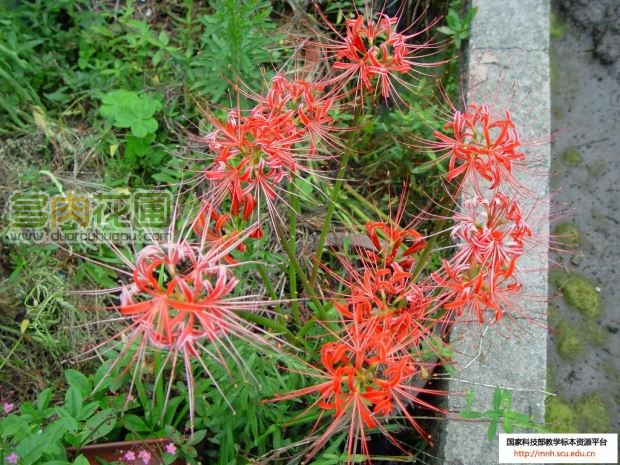
2. Origin and Distribution
Native origin: East Asia including China and Japan, as well as Vietnam and other parts of Southeast Asia.Domestic distribution: Wild populations exist in the Yangtze River basin and various southwestern provinces of China, and it is widely cultivated in domestic gardens.
Overseas distribution: Also found in Japan, Vietnam, Malaysia and other places.
Viewing locations: Domestically, mainly Dali and Lijiang in Yunnan, China, as well as Taroko and Matsu in Taiwan, China; internationally, mainly Takachiho in Japan and other places.
3. Ornamental Value
In gardens, it can be used as understory groundcover flowers, planted in clusters in flower borders, or naturally planted among rocks. Because it blooms when it has no leaves, it is best paired with other shade-tolerant herbaceous plants.It has a long cultivation history in China and is recorded in the "Flower Mirror" (Hua Jing). In winter, the spider lily's dark green leaves cover the courtyard, breaking the bleak and lonely atmosphere of winter. In late summer and early autumn, tall flower scapes break through the soil, with bright and beautiful flowers, prominent stamens and long styles, extremely beautiful. It can be planted in masses in courtyards, or grown in pots, in water, or used as cut flowers.
4. Propagation Methods
Propagated by bulb division, sowing, basal plate cutting of scales, and tissue culture, with bulb division being the primary method.Bulb division propagation method:During the dormant period or after flowering, dig up the plant and remove the offset bulbs attached near the mother bulb for planting; they will bloom in about one to two years.
Sowing method:Generally used only for hybrid breeding. Since the seeds have no dormancy, they should be sown immediately after collection; at 20°C, the radicle can be seen emerging after 15 days. When sown in natural environments, only a few seedlings produce a single leaf in the first growth cycle, and the seedlings can be transplanted once during the seedling stage. Seedlings take about 4 to 5 years from sowing to flowering.
Basal plate cutting method:Cut the cleaned bulb basal plate in a radial pattern into eight sections, with a cutting depth of about 1/2 to 2/3 of the bulb length. After disinfection and drying in the shade, insert into moist sand, perlite or other substrate; after 3 months, adventitious buds can be seen forming at the junction of the scales and basal plate, gradually producing small bulbils, which can be grown into seedlings after separation and cultivation.
Tissue culture propagation method:Using MS medium, with flower scapes and ovaries as explant materials, callus tissue can be produced at the cut surface after culture. After 1 month, adventitious roots can form, and after 3 to 4 months, adventitious buds can form. Using flower scapes and scales with stems as explant materials can also produce adventitious buds and bulblets.
5. Cultivation Techniques
Pot cultivation
Red spider lily prefers scattered light and does not like strong light, so the light should not be too intense. Red spider lily has no particular requirements for soil. However, since it is a southern flower after all, the soil should be acidic, somewhat sandy, and well-draining and breathable. Red spider lily has ornamental value above ground throughout the year, with leaves but no flowers, and flowers but no leaves.Spider lily has strong adaptability, and the bulbs have a dormant phenomenon. In northern regions, pot cultivation for ornamental purposes is needed, and spider lilies planted at the end of May should also be able to bloom. Suitable planting time for northern cultivation: should be planted in spring (April-May). Most varieties prefer warm climates, with a maximum temperature not exceeding 30°C and a ten-day average temperature of 24°C, suitable for spider lily growth. Ten days after planting, the root system grows vigorously, and leaves successively emerge above ground. In winter, when the daily average temperature is above 8°C and the minimum temperature reaches 1°C, spider lily growth is not affected. Do not water too much, otherwise the rhizomes will rot.
Cultivation Methods for Red Spider Lily
Red spider lily, also known as dragon claw flower, is native to China and mainly distributed in the various provinces of the Yangtze River basin. It has strong cold resistance, prefers partial shade, and also tolerates intense sun; it likes moisture and also tolerates drought. It can grow in all types of soil, with loose, fertile humus soil being the best. It has a summer dormancy habit. In winter, the leaf clusters are verdant and full of vitality. Cultivation: Mainly propagated by bulb division. Dig up the bulbs and divide them for replanting after the leaves just wither in spring or after flowering in autumn. After planting, divide the bulbs again after 3-4 years. Natural seed set rate is low, seed maturity is poor, and when propagated by sowing, germination is uneven. Seedlings take 5-6 years to bloom.Planting: It has strong stress resistance and is easy to manage. A planting depth of 8-10 cm is optimal. In summer, if the soil is too dry before flowering, water thoroughly to help the flower scapes emerge. Apply fertilizer once before the flower scapes emerge in August, and apply fertilizer again after the young leaves sprout and emerge in autumn, so that the leaf clusters emerge verdant and neat.
Pests and diseases: Anthracnose is the main disease threat; spray 50% carbendazim wettable powder at 500 times dilution every half month for prevention and control.
Uses: Red spider lily blooms brilliantly in summer and autumn, very gorgeous. When arranged on lawns, under trees, or planted in perennial mixed flower borders, it can create a beautiful early autumn scene. It is both an ideal green groundcover plant for winter and an excellent material for potted flowers and cut flowers.