How to grow a Peace Tree? Detailed guide to cultivation methods and lighting precautions
Native to Taiwan, China, the Peace Tree is much loved for its unique flower meaning, so more and more people choose to grow it. However, many people do not understand how to grow a Peace Tree. Today, the editor brings you a detailed guide to Peace Tree cultivation methods and precautions.
How to grow a Peace Tree
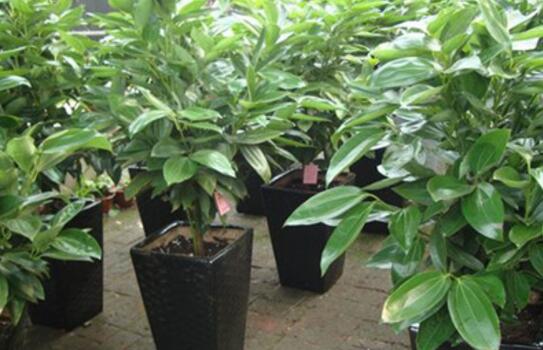
The Peace Tree's favorite growing environment is warm, humid and sunny; it is also shade-tolerant, fond of warm heat, and thrives in high-temperature places without frost, snow or fog. It has poor drought tolerance and weak resistance to waterlogging, severe cold and dryness. Therefore, you must understand the Peace Tree's cultivation methods and precautions. Below we introduce how to grow a Peace Tree from five aspects: light, temperature, water, soil and fertilizer.
1. Light requirements
The Peace Tree likes sunlight but is also fairly shade-tolerant. Its light requirements vary greatly at different growth stages. For example, in the sapling stage it tolerates shade, but when it grows to 6-10 years it needs fairly sufficient light. So for Peace Trees at different stages, pay attention to different light requirements.
Cultivation method: After potted Peace Trees enter summer, they can be moved under tree shade or indoors; if kept outdoors, the light will be too strong and cause the leaves to turn yellow. After summer ends, when moving them outdoors, be careful to first place them in a shaded environment for care, and then move them outdoors; do not be too hasty.
2. Temperature requirements
The ideal temperature is 20-30 degrees, but most places find it hard to meet this requirement, so how should the Peace Tree be grown then? First we must know that small trees are not tolerant of low temperatures; if placed outdoors they easily suffer frost cracks in the bark or even freeze to death. Therefore, in winter at the very least ensure the ambient temperature is above 5 degrees, and in summer do not place it in a high-temperature environment above 32 degrees.
Cultivation method: In winter, move the Peace Tree indoors to a place without cold drafts for care; in summer, place it in a ventilated and shaded place. If the temperature is too high, appropriate cooling measures can be taken.
3. Watering requirements
The Peace Tree likes a humid environment, so in the Peace Tree's cultivation methods and precautions, be sure to keep the potting soil moist, but do not let it become waterlogged. A humidity of 80% is best.
Cultivation method: In summer or other drier periods of the year, move it indoors and frequently spray water on the leaves and potting soil. After autumn, watering should be controlled, and in winter it should be watered less. Never allow waterlogging in the potting soil.
4. Fertilizer requirements
Because the Peace Tree has a full plant form and large leaves, it needs a relatively large amount of fertilizer, so pay attention to fertilizing it in time, but avoid situations such as yellowing leaves caused by fertilizing.
Cultivation method: From spring to autumn, apply a thin cake fertilizer water or alum fertilizer water once a month. After autumn, apply phosphorus and potassium fertilizer 2 times in succession, which can promote plant growth. In winter, stop fertilizing.
5. Soil requirements
The Peace Tree has good acid tolerance, so when choosing soil, try to create a warm and humid environment for it.
Cultivation method: When choosing soil, try to choose loose, breathable soil with good drainage. Acidic sandy loam rich in organic matter is even better.
What are the uses of the Peace Tree? Peace Tree cultivation methods
The Peace Tree mostly originates from Lanyu Island. It is a bright green, auspicious Lanyu cinnamon (cinnamon, Peace Tree, peace wood). In recent years it has begun to enter households in large numbers and is loved by flower enthusiasts.
The Peace Tree has important uses. Its bark can be used as medicine, with effects of dispelling wind and dispersing cold, relieving pain and resolving stasis, and promoting blood circulation and strengthening the stomach. Also, because its plant body is rich in cinnamon oil (the main component is cinnamaldehyde), it can give off a fragrance that corrects odors and purifies the air. People in the flower planting and flower business industries gave it the auspicious name "Peace Tree" to cater to urban people's consumer psychology of loving green beauty and longing for peace, and also to help relax people's nerves from tense work. Thus it is quite popular among urban people in both north and south; although the price is not low, it still sells well.
The Peace Tree not only has the above medicinal effects, but also has many uses in the home. Below, let's learn about the uses and cultivation methods of the Peace Tree.
The Peace Tree likes warm, humid, sunny environments; it likes light but is also shade-tolerant, and likes warm heat, places without frost and snow, and foggy high-temperature places. It is not tolerant of drought, waterlogging, severe cold or dry air. For cultivation, use loose, fertile, well-drained, acidic sandy loam rich in organic matter. In its native environment, Phalaenopsis orchids are abundant, so under artificial cultivation conditions, it is best to create a warm, hot and humid environment for it. The fruiting period is from August to September. Its optimum growth temperature is 20°C~30°C.
The role of the Peace Tree in matching home styles
The Peace Tree has an upright trunk and branches, yellow-green in color, smooth and without down. It belongs to the evergreen Lauraceae family and originates from Lanyu Island in Taiwan, China. It can be used as a potted landscape plant and can also be a very beautiful garden landscape plant. The Peace Tree grows vigorously and is relatively full of vitality and energy, and its flower meaning includes family happiness, praying for peace, and everything going as wished. Many people choose to use the Peace Tree to decorate their homes.
The Peace Tree has effects such as purifying indoor air and absorbing decoration pollution.
The entryway is the area where family visitors form their first impression after entering the home, so the indoor plants placed there play an important role. Placing a pot of Peace Tree in the entryway greening the indoor environment and increasing vitality. However, note that entryway plants must remain evergreen, so if the Peace Tree's leaves wither and yellow, replace it as soon as possible. When placing the Peace Tree, pay attention to ensuring sufficient light; do not let the Peace Tree stay in a dim room all the time. In a dimly lit room, either turn on the lights often, or frequently move the flower pot to a sunny place to receive sunlight.
Modern minimalist style is currently deeply loved by modern people. Its home design is characterized by simplicity and brightness, pursuing the display of personality, and it uses color and shape boldly, making it a "versatile" style in the home decoration world. So there are not so many rigid rules when choosing green plants either.
Domestic ornamental plants emphasize "observing the leaves, appreciating the form", and Peace Trees and similar plants are most suitable for placing at home, as potted plants with soil. This can show the owner's noble taste and also fully express the charm of Chinese style.
The feng shui role of the Peace Tree
The original name of the Peace Tree is Lanyu cinnamon. Because its bark can be used as medicine, with effects such as promoting blood circulation and strengthening the stomach, relieving pain and resolving stasis, it has a certain edible value. At the same time, its bark can purify the air, absorb odors, bring health to human family environments, and make people's guardian of health, so it was renamed the Peace Tree, implying peace and health. Its branches are upright, generally showing a yellow-green color, and its leaves are generally opposite, and it can be planted in pots and used as an ornamental plant.
Placing a Peace Tree in the home helps relax people's nerves from tense work, lets people experience a relaxed mood, and increases the comfort of the home.
At home it can be placed in relatively spacious places such as the living room or balcony, because the Peace Tree is an evergreen plant that can change indoor airflow, increase indoor vitality, and let people feel a warm breath of life. At the same time, the Peace Tree can eliminate indoor odors, bringing health and peace to people.
A Money Tree placed in the living room can be placed at the wealth position 45 degrees diagonally from the main door. It can also be placed in a relatively open space. However, note that during the cultivation of the Peace Tree, if it dies, it should be moved out of the room in time.
The role of the Peace Tree in the home
The flower meaning of the Peace Tree: praying for peace, family happiness, and everything going as wished. In feng shui, it can avoid misfortune and open luck.
The Peace Tree can give off a fragrance that corrects odors and purifies the air. Its bark can be used as medicine, with effects of dispelling wind and dispersing cold, relieving pain and resolving stasis, and promoting blood circulation and strengthening the stomach. Also, because its plant body is rich in cinnamon oil (the main component is cinnamaldehyde), it can give off a fragrance that corrects odors and purifies the air. People in the flower planting and flower business industries gave it the auspicious name "Peace Tree" to cater to urban people's consumer psychology of loving green beauty and longing for peace.
Peace Tree cultivation methods
Temperature: Its optimum growth temperature is 20°C to 30°C. Small trees are not tolerant of low temperatures. If exposed to more than 5 days of frost, plants maintained or cultivated in the open field are prone to bark frost cracks, withered branches and leaves, and even the whole plant freezing to death. Whether it is a small number of household potted plants or large-scale production and business cultivation, in winter the greenhouse temperature should be maintained at no lower than 5°C so that the leaves can always maintain their beautiful green color. Larger plants can endure short periods of low temperature around 0°C when there is no cold draft in the greenhouse.
Light: Lanyu cinnamon needs fairly good light, but is also fairly shade-tolerant. Its light requirement changes with age. Young trees tolerate shade. For 3-year to 5-year-old plants, under shaded conditions the plant height grows quickly. For 6-year to 10-year-old plants, fairly sufficient light is required.
Water: Lanyu cinnamon requires an environment with moist potting soil. For this reason, potted plants should often keep the potting soil moist, but there must not be waterlogging. The relative humidity of the environment should preferably be maintained above 80%. In the high-temperature summer season or in periods when autumn air is relatively dry, including during winter when placed indoors, water should often be sprayed on the leaves and surrounding environment to create a relatively humid local micro-environment and promote robust growth.
Soil: For potted or bag-cultivated Lanyu cinnamon, use loose, breathable, well-drained, fertile acidic culture soil or leaf mold rich in organic matter. If the potting soil is compacted or the pH value is above 7.5, it will also cause yellowing of the plant's leaves, seriously poor growth and reduced sprouting ability, and affect sprout renewal, even shortening its cultivation life.
The above is the sharing of the uses and cultivation methods of the Peace Tree. For more home plants, please stay tuned.
Cultivation methods and precautions for the Yuanbao Tree: teaching you how to grow a Yuanbao Tree
For indoor home greenery, everyone likes to choose some feng shui plants, or plants with auspicious names, such as the Money Tree, Peace Tree, Money Plant, Fortune Tree, etc. The Yuanbao Tree is also a commonly used one. So what are the cultivation methods and precautions for the Yuanbao Tree, and how do you grow a Yuanbao Tree? What feng shui roles does the Yuanbao Tree have? The editor has compiled some related information to share with everyone:
(This article comes from a website, for more please visitBasic information about the Yuanbao Tree:
(This article comes from a website, for more please visitThe Yuanbao Tree is a deciduous tree. Also known as hemp willow and water hemp willow. The genus has about 9 species, native to the north temperate zone. China has about 7 species, mainly distributed south of the Yellow River basin, from eastern Shandong in the east, to southern Gansu and Shaanxi below 1500 m altitude in the northwest, to Hubei and Sichuan below 1000 m altitude in the west, to Yunnan and Guizhou in the southwest, and to Guangdong and Guangxi in the south.
The Yuanbao Tree has once-pinnate compound leaves with an odd number of leaflets. The leaflets are long oval, nearly opposite, entire, leathery and glossy. The seed ball sprouts from the base, about the size of an egg, leathery and thick, plump and round, glossy, persisting on the potting soil surface. The panicle grows on the branches, small flowers are yellow, and the flowering period is spring and summer.
Yuanbao Tree cultivation methods:
(This article comes from a website, for more please visit1. Soil:The Yuanbao Tree should use fertile, humus-rich sandy loam, mixed with rotted sawdust and small pieces of pine bark, with crushed stone at the bottom of the pot to facilitate drainage.
2. Watering:Watering the Yuanbao Tree should be "wet then dry"; often keep the potting soil moist, but there must not be waterlogging. The relative humidity of the environment should preferably be maintained above 80%, keeping the potting soil moist. In winter keep the potting soil slightly dry; do not water if not dry, to prevent excessive water causing root rot.
3. Light:Young Yuanbao Trees tolerate shade, with about 50-70% sunlight; mature plants need sufficient sunlight and require medium-intensity scattered light. They can tolerate shade, and in summer avoid scorching sun exposure.
4. Temperature:The Yuanbao Tree likes high temperatures, and the most suitable growth temperature is 22-30 degrees C.
5. Fertilizing:The Yuanbao Tree likes fertilizer; apply alum fertilizer water once a month.
6. Pests and diseases:The Yuanbao Tree sometimes suffers from scale insect damage. In the early spring germination period, 0.3-0.5 Baume degree liquid can be used.
7. Pruning:During growth, the Yuanbao Tree needs pinching to maintain a perfect plant shape. After the flowering period ends, prune in time, pull out and burn the damaged stems and leaves, and reduce the source of infection.
Precautions for growing the Yuanbao Tree:
(This article comes from a website, for more please visit1. The Yuanbao Tree likes light but cannot be directly exposed to the sun, and water must be guaranteed to soak through each time.
2. If it is a newly bought Yuanbao Tree or one that has just been repotted, it may also drop leaves. It is impossible not to drop leaves; plants must metabolize. But look specifically at how many drop. If it lacks sunlight, appropriately compensate with some light. Of course, excessive fertilizer or overly frequent watering can also cause this situation.
3. Watering the Yuanbao Tree has particular requirements. Do not directly water with tap water, because tap water contains chlorine and other disinfecting substances. If using tap water, it is best to let it sit in the sun for a day before use. Watering should be "wet then dry". Do not directly water with tap water; tap water in the north is too "hard" (highly alkaline), and the Yuanbao Tree's soil likes acidity. In the high-temperature summer season or in periods when autumn air is relatively dry, including during winter when placed indoors, water should often be sprayed on the leaves and surrounding environment to create a relatively humid local micro-environment and promote robust growth. After autumn begins, watering should be controlled; in winter, spray more and water less. If there is waterlogging in the potting soil, it easily causes the plant to yellow, with lower leaves turning yellow and then falling off; in severe cases it can cause root rot and plant death. Special attention should be paid during the plum rain season.
The feng shui role of the Yuanbao Tree:
(This article comes from a website, for more please visitThe Yuanbao Tree is one of the fortune trees. Many families choose Yuanbao Tree potted plants. Whether in terms of name or the indoor effect brought by the plant, the Yuanbao Tree is one of the first-choice plants for prospering the home. Among them, lucky bamboo, Money Tree and Yuanbao Tree are evergreen plants, while Guzmania, cyclamen and clivia are flowering plants. These are recommended to everyone as plants for boosting home feng shui, mainly able to help achieve harmonious and prosperous effects. Of course, if these plants are placed in the office, they also have a good luck-boosting effect.
The Yuanbao Tree is a green plant with an auspicious meaning, but it also grows relatively fast. Small plants can be potted and placed in the home for ornament, while large plants can be moved into larger pots or planted directly in the courtyard, with good results as well. The information on Yuanbao Tree cultivation methods and precautions is shared with everyone here. We hope it is helpful to everyone. For more information, please continue to follow us.