What to do when a Money Tree drops its leaves? Nine causes explained, water and fertilizer are key
The Money Tree (Pachira aquatica) is a very beautiful foliage plant, with a sturdy, well-proportioned form and emerald-green leaves. Kept at home, it not only carries an auspicious meaning but also purifies the air, making it popular and beloved among a wide range of people. However, during cultivation, some flower lovers run into the situation of dropping leaves, which is incredibly frustrating. So what should you do when a Money Tree drops its leaves? Below are several causes analyzed by the editor; let's take a look together.
I. What to do when a Money Tree drops its leaves: find the cause
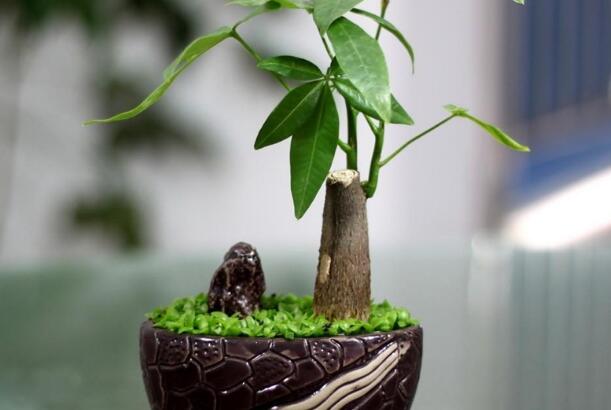
In daily life, many people keep Money Trees, but sometimes they run into frustrating problems, such as the leaves turning yellow and falling off at the slightest touch. What exactly is going on? To address this, the editor analyzes nine aspects one by one, including watering, fertilizing, light and temperature. It is very detailed, so let's read on.
II. Nine causes of Money Tree leaf drop and their solutions
1. Overwatering or lack of water
During Money Tree cultivation, watering is essential, but many flower lovers run into problems here. Improper watering can lead to all kinds of situations, such as the Money Tree dropping its leaves. The specific symptoms and solutions are as follows:
Overwatering: water accumulates in the potting soil, the soil lacks oxygen, and the Money Tree's root system rots, which affects the plant's water and nutrient uptake and ultimately causes the leaves to turn yellow and fall off. The symptoms are: young leaves turn pale yellow, and old leaves slowly turn yellow. Solution: immediately reduce watering, stop fertilizing, and loosen the soil often to give the soil good aeration. In addition, move it to a semi-shaded, well-ventilated spot.
Underwatering: the potting soil dries out, the Money Tree becomes dehydrated, nutrient absorption is affected, and the leaves very easily become dull and lusterless, falling off at the slightest touch. The symptoms are: the lower old leaves age and gradually wither and yellow from bottom to top, then drop. Solution: water lightly and mist the plant (do not add too much at once), let it gradually recover, then return to normal watering.
2. Too much fertilizer or too little fertilizer
Besides improper watering, too much or too little fertilizer can also cause a Money Tree to drop its leaves. The specific symptoms and solutions are as follows:
Too much fertilizer: new leaves grow thick and fleshy with an uneven surface, and old leaves develop dry, scorched tips and fall off. Solution: immediately stop fertilizing and increase the amount of water to dilute the fertilizer in the pot; or, more simply, just replace the potting soil so the Money Tree starts fresh.
Too little fertilizer: if the potting soil has not been changed for a long time, or no nitrogen fertilizer has been applied, the soil will lack nutrients, causing the Money Tree's branches and leaves to become weak, the leaves to turn yellow, and to fall off at the slightest touch. Solution: to be direct, replace the potting soil with fresh, loose, fertile growing medium, and apply a diluted compound flower fertilizer.
3. Improper light
The Money Tree likes light but fears direct strong sunlight, so improper light can also cause it to drop its leaves. The specific symptoms and solutions are as follows:
Too much light: in summer, if we put the Money Tree outside in the sun, it very easily causes the tips and edges of young leaves to scorch, or the leaves to turn yellow and fall off. Solution: promptly move it to a well-ventilated shady spot and water lightly.
Insufficient light: if the Money Tree gets no light, the chlorophyll in the leaves decreases, and over time the leaves turn yellow and fall off. Solution: very simple, increase the light exposure time.
4. Alkaline soil
The Money Tree likes acidic soil. If you never repot it and water it with mineral water for a long time, the soil will gradually become alkaline, and the result is that the leaves slowly turn yellow and even fall off.
Solution: apply a certain amount of ferrous sulfate to the soil to change the soil's acidity and alkalinity, and after a period of time the plant will recover; or, to be direct, repot the Money Tree with fresh soil to give it a fresh start.
5. Not pruning in time
In Money Tree cultivation methods, we have mentioned that it should be pruned once a year. Because if it is not pruned in time, its branches and leaves become too dense, and the leaves hidden at the bottom turn yellow and fall off due to insufficient light and poor ventilation.
Solution: the Money Tree grows fairly fast, so we should prune it once a year. Don't be reluctant; only by being willing to cut can it grow more beautifully.
6. Dry air
In the correct watering methods for the Money Tree, it was mentioned that when watering it, you need to sprinkle water around it to increase humidity. The reason is that if the air is too dry, the Money Tree often shows scorched, falling leaf tips.
Solution: pay attention to increasing air humidity by misting, covering with a plastic film cover, and other methods.
7. Improper temperature
Improper temperature is also a culprit behind Money Tree leaf drop. If the temperature is too high in summer or too low in winter, it will cause the leaves to turn yellow and fall off.
Solution: in summer, promptly move the plant to a shady spot and sprinkle water to cool it down; in winter, move it indoors and raise the temperature.
8. Pests and diseases
During Money Tree care, improper handling can lead to pest and disease problems. When it contracts leaf spot disease, its leaves develop localized necrosis, with yellow spots or blotches, and in severe cases the whole leaf withers, yellows and falls off. In addition, when the Money Tree is harmed by scale insects, red spider mites and the like, its leaves are also at risk of dropping.
Solution: identify which pest or disease it is, then spray the corresponding pesticide. As for what to spray, that is covered in detail in Money Tree pest and disease control, so we won't say more here.
9. Environmental shock
Money Tree care should be gentle. Once the environment changes too drastically, or the plant suffers external shock, such as too high a concentration when spraying pesticide for pest and disease control, toxic gas pollution in the air, sudden rises and falls in temperature, or watering with cold water, its leaves are at risk of dropping. Solution: normal care for a period of time is enough for it to recover.
About Money Tree leaf drop, after reading the above, everyone should know what to do! Actually, Money Tree leaf drop can be caused by a single reason, but it is often caused by multiple factors, so when you run into this situation, you must make a correct diagnosis to treat the right cause.
What to do when Money Tree leaves turn yellow: learn 7 tricks to solve it easily / controlling water and fertilizer is key
As a plant with an auspicious meaning and good looks, the Money Tree is grown in pots in many homes. However, indoor cultivation cannot compare with outdoors, and because of care issues, all kinds of problems often appear, such as yellowing leaves. So what should you do when Money Tree leaves turn yellow? Below are 8 causes of yellowing Money Tree leaves summarized by the editor. Go take a look!
I. What to do when Money Tree leaves turn yellow: find the cause
Growing a Money Tree is simple for experienced hands, but for flower lovers encountering it for the first time, it is not so simple. They often cause the plant to turn yellow through improper care, which affects the Money Tree's ornamental value. As for what to do when Money Tree leaves turn yellow, the editor has summarized 8 points and attached solutions. Let's read on.
II. Causes of yellowing Money Tree leaves and their solutions
1. Sudden environmental change
There are actually many causes of yellowing Money Tree leaves, and the first thing we should consider is environmental factors. This situation is generally related to online shopping: many flower lovers buy their Money Trees online, and because the growing environment may change drastically all at once and the plant cannot adapt, its leaves turn yellow as it is being kept.
Solution: at this point you should communicate with the seller to learn the Money Tree's previous growing environment, then adjust conditions at home to try to keep the environment unchanged. Then change it slowly until the plant fully adapts, and after a period of time the Money Tree will return to health.
2. Too much light
The Money Tree likes light and needs plenty of it, but it also fears direct strong sunlight. In summer, if you move the Money Tree outside into the sun, the light may be too strong and the leaves may turn yellow.
Solution: move the Money Tree to a ventilated, semi-shaded spot and water it appropriately. Wait for the yellowed leaves to gradually fall off and new buds to grow, and it will be fine.
3. Too much watering
The Money Tree's root system is not well developed and its water-absorbing ability is poor, so once we water too much and cause water to accumulate in the pot, the Money Tree's roots and stems easily rot. This then gradually spreads to the branches and stems, and finally the leaves turn yellow.
Solution: if the yellowing is caused by overwatering, move it to a ventilated spot so the water in the pot evaporates quickly. To speed up the process, you can also place a layer of absorbent cotton cloth at the bottom of the pot. If necessary, you can also directly replace the potting soil.
4. Too much / too concentrated fertilizer
After watering, let's talk about fertilizing, which is also one of the causes of yellowing Money Tree leaves. The Money Tree likes fertilizer, but if you fertilize too much or too concentrated, it will scorch the roots and stems, causing the leaves to turn yellow and, in severe cases, even killing the plant.
Solution: in mild cases, you can dilute it by watering; if the situation is serious, you need to replace the potting soil, then clean away the rotted roots, and after a period of time the plant will return to health.
5. Unsuitable temperature
Because the Money Tree is a southern tree, it likes a warm climate. Once the summer temperature is too high or the winter temperature is too low, the plant's growth is affected, which can cause the leaves to turn yellow.
Solution: if the yellowing is caused by temperature, in summer promptly move the plant to a shady spot and sprinkle water to cool it down; in winter, move it indoors and raise the temperature. After a period of time, the plant will slowly return to health.
6. Not pruning in time
During Money Tree cultivation, we should prune it once a year. If it is not pruned in time, its branches and leaves become too dense, and the leaves hidden at the bottom turn yellow due to insufficient light and poor ventilation.
Solution: the Money Tree grows fairly fast, so we should prune it once a year. Don't be reluctant; only by being willing to cut can it grow more beautifully.
7. Pest and disease damage
Besides the above points, pest and disease damage is also one of the causes of yellowing Money Tree leaves. If the Money Tree contracts leaf spot disease, localized necrosis appears, producing yellow blotches or spots.
Solution: remove the diseased leaves and spray the relevant pesticide. As for exactly what to spray, that is covered in detail in Money Tree pest and disease control, so we won't say more here.
8. Alkaline soil
If the above points can be ruled out, then the yellowing Money Tree leaves may be caused by alkaline soil. It is said that the Money Tree likes acidic soil. If you never repot it and water it with mineral water for a long time, the soil will gradually become alkaline, and the result is that the leaves slowly turn yellow.
Solution: very simple, repot the Money Tree with fresh soil to give it a fresh start. Or apply a certain amount of ferrous sulfate to the soil to change the soil's acidity and alkalinity, and after a period of time the plant will recover.
Overall, the Money Tree is not hard to grow. As long as you follow Money Tree cultivation methods, it will not develop problems. Of course, if problems do appear, don't panic; just follow the methods above. That is all the editor has to introduce about yellowing Money Tree leaves, and I hope it helps everyone.
How to rescue a Fortune Tree that is dropping leaves: learn 7 tricks to solve it easily / improper water and fertilizer are key
The Fortune Tree (Pachira aquatica), a beautiful foliage plant, is surely familiar to everyone, since its other name, Money Tree, is world-famous. In daily life, many people keep Fortune Trees, but many also run into problems, such as leaf drop, which is a real headache. So how do you rescue a Fortune Tree that is dropping leaves? To address this, the editor has summarized 7 tricks. Let's take a look together.
I. A Fortune Tree dropping leaves: find the cause
As a common indoor potted plant, the Fortune Tree's cultivation method can be said to be very simple, yet during cultivation many flower lovers still run into frustrating problems, such as the Fortune Tree's leaves turning yellow and falling off at the slightest touch. What exactly is going on? To address this, the editor analyzes seven aspects one by one for everyone, including watering, fertilizing, light and temperature, and gives rescue plans. For specifics, let's read on.
II. Causes of Fortune Tree leaf drop and rescue methods
1. Environmental shock
When a Fortune Tree drops its leaves, the first thing to consider is whether the environment has changed too much recently and shocked the plant, such as sudden rises and falls in temperature, using cold water when watering, or too high a concentration when spraying insecticide. These are all culprits behind leaf drop!
Rescue method: for this kind of situation, you generally do not need to do extra work. Simply place it in a spot with suitable ventilation and light and care for it for a period of time, and it will recover.
2. Improper light
① Too much light: the Fortune Tree likes light but fears direct strong sunlight. In summer, if it receives direct strong sunlight, it very easily causes the tips and edges of young leaves to scorch, or the leaves to turn yellow and fall off. Rescue method: promptly move it to a well-ventilated shady spot and water lightly.
② Insufficient light: if the Fortune Tree gets no light, the chlorophyll in the leaves decreases, and over time the leaves also turn yellow and fall off. Rescue method: very simple, just add more light.
3. Improper watering
① Overwatering: water is key to Fortune Tree growth, but once you water too much, it causes water to accumulate in the potting soil and ultimately rots the root system, which affects the plant's water and nutrient uptake, and the leaves easily drop. Rescue method: immediately reduce watering and loosen the soil often to give the soil good aeration.
② Underwatering: the Fortune Tree cannot lack water either, because if the leaves cannot absorb water, they become dull and lusterless and fall off at the slightest touch. Rescue method: water lightly and mist the plant (do not add too much at once), let it gradually recover, then return to normal watering.
4. Improper fertilizing
① Too much fertilizer: sufficient nutrients can make the Fortune Tree sturdier and its leaves more emerald green, but once you fertilize too much, it causes old leaves to develop dry, scorched tips and fall off. Rescue method: immediately stop fertilizing and increase the amount of water to dilute the fertilizer in the pot; in severe cases, directly replace the potting soil so the Fortune Tree starts fresh.
② Too little fertilizer: if the potting soil has not been changed for a long time, or no nitrogen fertilizer has been applied, the soil will lack nutrients, and the Fortune Tree's branches and leaves will become weak, the leaves will turn yellow, and they will fall off at the slightest touch. Rescue method: fertilize appropriately to replenish nutrients.
5. Unsuitable temperature
The Fortune Tree likes a warm environment, and its most suitable growing temperature is 20-30°C. Once the temperature is too high or too low, the Fortune Tree's growth is affected, and the result may be yellowing leaves or even leaf drop.
Rescue method: how do you rescue a Fortune Tree that is dropping leaves? If the temperature is too high, promptly move the plant to a shady spot and sprinkle water to cool it down; if the temperature is too low, move the plant indoors and raise the temperature.
6. Alkaline soil
The Fortune Tree likes acidic soil. If you never repot it, or water it with mineral water for a long time, the soil will gradually become alkaline, which affects the plant's growth. Over time, the Fortune Tree will start dropping leaves.
Rescue method: very simple, repot the Fortune Tree with fresh soil to give it a fresh start. Or apply a certain amount of ferrous sulfate to the soil to change the soil's acidity and alkalinity, and after a period of time the plant will recover.
7. Pests and diseases
Besides the above points, Fortune Tree leaf drop may also be caused by pest and disease problems. When the Fortune Tree contracts leaf spot disease, or is harmed by scale insects or red spider mites, its leaves are also at risk of dropping.
Rescue method: identify which pest or disease it is, then spray the corresponding pesticide. As for what to spray, that is covered in detail in Fortune Tree pest and disease control, so we won't say more here.
About how to rescue a Fortune Tree that is dropping leaves, after reading the all-round analysis of the 7 aspects above, everyone should know what to do! Actually, Fortune Tree leaf drop can be caused by a single reason, but it is often caused by multiple factors, so when you run into this situation, you must make a correct diagnosis to treat the right cause.