How to care for a potted money tree? Growing methods and precautions, don't water too much
Gardeners are certainly familiar with the money tree (Pachira aquatica). It is a very beautiful plant, and its pleasant name, graceful shape and evergreen leaves have won it widespread popularity and affection. In daily life, many people keep a money tree at home, so how do you care for one? Below are the growing methods and precautions for potted money trees, carefully compiled by the editor, very comprehensive, so anyone who wants to grow one should definitely take a look~
1. How to care for a money tree: create the right conditions
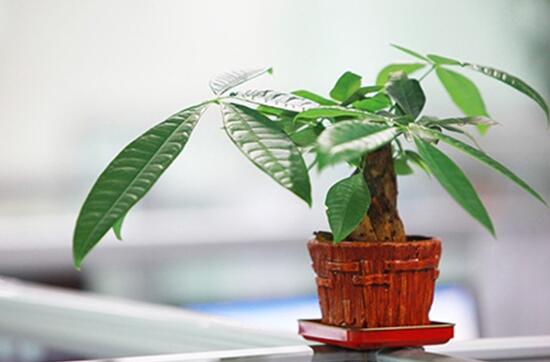
Growing plants indoors is not like growing them in the wild; we need to create a favorable environment for them. So how do you care for a money tree? According to its growth habits, simply meet its needs one by one in terms of soil, light, water and fertilizer, and temperature. The specific requirements are all covered in the money tree's growing methods, so let's read on.
2. Growing methods and precautions for potted money trees
1. Pot and soil
If you buy a ready-grown money tree directly from a plant market, then you don't need to worry about the pot and soil. But if we start growing a money tree from a seedling, we need to make good choices regarding the pot and soil, as follows:
① Choosing a pot: You can use a clay pot, plastic pot, porcelain pot or ceramic pot for cultivation. As for pot size, since it is a young money tree, generally choose a pot with a diameter of 16-24 cm. Friendly reminder: when the plant grows larger, it needs to be moved to a pot with a diameter of 24—34 cm.
② Choosing soil: How to care for a money tree, the choice of soil is very critical. Since the money tree likes fertile, loose, well-drained sandy soil, we can choose the following formula: mix 4 parts seedling soil, 4 parts garden soil, and 2 parts leaf mold.
2. Light
In the money tree's growing methods, light is extremely important. It is said that the money tree likes light and has high light requirements, so normally we should give it plenty of sun. Otherwise, once light is insufficient, the money tree's leaves will curl.
Precautions: Giving the money tree sun is good, but avoid direct sunlight, because when the sun is too strong, the leaves will get sunburned and develop white spots. So in summer, when giving the money tree sun, provide appropriate shade.
3. Watering/humidity
How to care for a money tree, water is certainly indispensable, but its root system is not well developed and its water-absorbing ability is poor. In addition, the money tree is drought-tolerant, so when watering you must be careful: you need to water, but not too much, otherwise it will cause root rot. It is said that watering the money tree once a month is fine.
Precautions: During the seedling stage, keep the potting soil moist, and mist around it several times a day to raise air humidity; for a mature plant, keep the potting soil on the dry side, and likewise mist around it several times a day to meet its need for highly humid air.
4. Fertilizing
In the money tree's growing methods, fertilizing is very critical. It is said that the money tree likes fertilizer. During the growing period of a young plant, we should apply diluted 10-fold liquid fertilizer once every 20 days, but do not fertilize when summer temperatures are high or winter temperatures are low; during the growing period of a mature plant, no fertilizing is needed. If the money tree's leaves turn yellow at this time, spray the leaves with a 500-fold urea solution, which can restore the leaf color.
Precautions: If you have prepared fertile soil, then the money tree does not need fertilizing; wait until the nutrients in the soil are used up before considering fertilizing. In addition, you must never apply concentrated fertilizer, otherwise it will cause root rot in the plant; some common foliage fertilizers are enough.
5. Temperature
To grow a money tree well, temperature is also something we need to pay attention to. Because the money tree is a southern tree species, it likes a warm environment, and it is best to keep it in an environment of 20-30°C.
Precautions: The money tree is not cold-tolerant. Once the temperature is too low, leaf drop often occurs, and in severe cases the entire branches become bare, which not only affects its ornamental value but can also easily cause the plant to die.
6. Pruning and repotting
In the money tree's growing methods and precautions, pruning and repotting are what gardeners need to pay particular attention to. Every year, we need to prune the money tree once, usually done together with repotting. Repotting procedure: change to a larger pot, place base fertilizer at the bottom of the pot, taking up one third of the potting soil. After that, cut off weak branches and withered leaves, and replant in the soil.
7. Pests and diseases
During the money tree's growth, it will inevitably be troubled by pests and diseases, which affects the plant's ornamental value, and this is usually caused by poor ventilation. At this point we need to pay attention and promptly identify which pest or disease it is, then deal with it. Because pest and disease control for the money tree has been introduced in detail earlier, we won't go into it here.
3. How to care for a money tree so it grows more vigorously
In the process of growing a money tree, many people actually follow the requirements, but after all, we are not professionals, and often have no time to care for it, so problems arise. So how to care for a money tree so it grows more vigorously? It's simple: if everyone follows the above requirements and does everything properly, it will naturally grow very vigorously, and vice versa.
How to care for the indoor potted money tree? The money tree's growing methods and precautions
The money tree's growing methods and precautions
Indoor cultivation
For ornamental display, place it where there is some scattered light, and it should not stay there for more than 30 consecutive days. If it shows signs of decline or leggy growth, gradually expose it to sunlight; never suddenly expose it to strong light, to prevent it from dying from shock. During the growing period, keep the potting soil moist, and do not water until it is dry. Its swollen trunk can store a certain amount of water and nutrients. The pot should drain freely, and it is better to keep it dry than wet; do not let it stay damp and waterlogged. If there is too much water and it accumulates, growth will be poor, or the rhizome will rot; but the soil should not be too dry either. Especially on sunny days when the air is dry, water should be sprayed appropriately to keep the leaves glossy green.
During the growing period, apply diluted decomposed peanut bran fertilizer water, or organic nitrogen, phosphorus and potassium fertilizer, or compound fertilizer 1—2 times a month. For general indoor ornamental display, fertilizing is not necessary. But apply compound fertilizer to the pot once every 1—2 months, about 6—8 grams per pot, preferably a diluted application; never use concentrated fertilizer, and increase phosphorus and potassium fertilizer to make the stem swell.
Or spray fertilizer on the leaves 1—2 times, using nutrient solutions such as Green Vigor + Plant Treasure Essence + 0·2% potassium dihydrogen phosphate, to make the leaves thick and dark green. Spray once every 10—15 days to keep the leaves green and glossy. In winter, overwinter in a warm, shaded place; the temperature should not be lower than 5°C, and the soil should not be too dry. On sunny days when the air is dry, spray water appropriately.
In spring, prune the branches and leaves once to encourage new growth. It likes high temperatures and high humidity, and has poor cold tolerance. Seedlings are sensitive to frost; adult trees can tolerate light frost and long periods of 5-6C low temperatures. In South China it can overwinter outdoors; in regions to the north, it must be moved into a greenhouse in winter to protect it from the cold. It likes fertile, loose, breathable, water-retentive sandy loam, likes acidic soil, and dislikes alkaline or heavy clay soil. It is relatively tolerant of wet conditions and also slightly drought-tolerant. When mature, it is best to sow the seeds as soon as they are collected. Indoor ornamental potted plant.
Care precautions
Temperature
The minimum winter temperature is 16-18 degrees; below this temperature the leaves turn yellow and drop; below 10 degrees it easily dies.
Light
The money tree is a strongly sun-loving plant and is grown outdoors in places such as Hainan Island, but this plant has fairly strong shade tolerance and can be displayed indoors in a low-light spot for 2-4 consecutive weeks. After that, place it in a bright spot.
Water
During the high-temperature growing period it needs plenty of water, but it is fairly drought-tolerant and will not be harmed by going several days without water. But avoid water accumulating in the pot. Reduce watering in winter.
Air temperature
During growth it likes relatively high air temperatures; you can spray a small amount of water on the leaves from time to time.
Repotting
Repot in spring as needed.
Sensitive to cold
The money tree is sensitive to cold. At 10 degrees it should be brought indoors; below 8 degrees it will suffer cold damage, with mild cases dropping leaves and severe cases dying.
Potted growing methods and precautions for the money tree
The money tree has always been a favorite potted plant among gardeners. Whether at the office or at home, people are willing to grow a pot of money tree, some in small pots and some in large pots, but they are unsure about the growing methods for the money tree, and after growing it for a while they find that it is not doing well. Below we explain how the money tree should actually be grown.
The money tree's growing environment
The money tree is highly adaptable, likes light and is also shade-tolerant, growing well in full sun, partial sun or shade. But if grown in a dark place for a long time, its vitality will decline. When summer arrives, it is best to shade it 50%, to prevent intense sun from scorching the leaf tips and leaf edges.
For indoor ornamental growing, place it where there is some scattered light, and it should not stay there for more than 30 consecutive days. If it shows signs of decline or leggy growth, gradually expose it to sunlight; never suddenly expose it to strong light, to prevent it from dying from shock.
The money tree's pot and soil selection
Most money trees bought nowadays come with soil provided by the seller. Gardeners do not need to change the soil immediately after buying; grow it as is for now and consider repotting later. If you do change the soil, a money tree in a pot generally uses loose vegetable garden soil or peat soil, leaf mold, coarse sand, plus a small amount of compound fertilizer or chicken manure as base fertilizer and growing medium.
The money tree's watering method
The money tree's root system is very poorly developed. Many gardeners' money trees die mostly because of root rot. Some gardeners will ask, how often exactly should a money tree be watered, and how much at a time? Here it must be clearly stated that conditions differ from place to place, and the pots and soil used also differ, so there is no fixed watering standard. So how should gardeners water? Generally speaking, watering a money tree once a month is not too little. Also, here's a little tip for gardeners: a plant will not die quickly from lack of water, and it will recover quickly after watering, but if it is waterlogged, it basically cannot be saved. Normally you can mist a money tree more and water it less.
The money tree's fertilizing method
Normally, if the soil is fertile enough, no fertilizing is needed. If it has been grown for a long time, consider giving diluted fertilizer; never use concentrated fertilizer. For fertilizing, you can use some common foliage fertilizers, and remember to use diluted fertilizer.
Generally speaking, money trees have had their tops cut off, so every spring gardeners can also prune them appropriately; this both improves their appearance and encourages new branch growth.
The money tree's pest and disease control
If the stem's surface turns black or black thread-like fibers are exposed, it is stem rot causing the money tree's stem to rot. In the early stages of the disease, spray a 50% fungicide water-soluble powder 1000-fold solution, once every 10 days, for 2—3 consecutive treatments. For anthracnose, spray 50% chlorothalonil wettable powder 800-fold or 50% carbendazim 600-fold solution for control, once every 7—10 days. For cabbage caterpillars, inchworms and red spider mites, regularly spray 40% omethoate 800-fold or 50% dichlorvos 1000-fold solution, once every 7 days for 2—3 consecutive sprays.
Money tree growing precautions
1. Sunlight should be appropriate: When growing a money tree, place it in a spot indoors with plenty of sunlight. When positioning it, make sure the leaf surfaces face the sunlight, and do not leave it shaded for a long time, otherwise the branches and leaves will become twisted and deformed. It is best to mist the money tree's leaves once every 3 to 5 days, which both helps photosynthesis and makes the branches and leaves more attractive.
2. Moderate watering: The money tree has fairly strong adaptability to water; generally, heavy outdoor watering or going more than ten days without water indoors will not cause waterlogging or drought. But watering is still an important part of growing a money tree. Too little water easily stalls the development of branches and leaves. Too much water may cause the roots to rot and the plant to die. With a moderate amount of water, the branches and leaves grow thick and large. The first principle of watering a money tree is to keep it moist rather than dry. Water more in the hot summer season and less in winter. Water more during the vigorous growing period, and less for small, newly planted ones. Under normal circumstances, watering once every 15 to 20 days is enough.
3. How to fertilize: The money tree's demand for fertilizer is greater than that of other flowers and trees. When repotting, the proportion of fertilized soil can be one third. Fertilized soil includes a mixture of decomposed leaf litter, miscellaneous bone meal, bean cake residue, etc. This fertilized soil is highly effective and easy to obtain. But note that it should be fully decomposed, to avoid "burning" the leaves yellow. It is worth noting that during the money tree's growing period (that is, from May to September), a decomposed liquid fertilizer or flower-growing fertilizer should be applied once every 15 days, to make its roots deep and leaves lush.
4. Temperature and humidity: Growing a money tree has relatively high requirements for temperature and humidity. If the temperature is too low or the humidity is insufficient, leaf drop may occur, and in severe cases the branches may become bare, which is bad for ornamentation and may also cause the plant to die. When growing a money tree, take care to maintain a temperature above 15°C, and frequently mist the branches and leaves to increase humidity. In late autumn and winter, take care to protect it from cold and freezing. For indoor growing in summer, water once every 3-5 days; in spring and autumn, water once every 5-10 days. In winter it depends on room temperature; if the room temperature is around 12°C, watering once a month is enough. Its most suitable growing temperature is 18-30°C.
5. How to repot: A newly acquired money tree does not need repotting that year, to prevent its tree shape from being disrupted. The suitable season for repotting is spring, or it can be done in July or August, taking advantage of the plant's semi-dormant state during the high-temperature period. The money tree has relatively strict requirements for potting soil; the potting soil should preferably be slightly moist and well-drained, and an acidic sandy loam containing humus can be used.