A detailed guide to repotting the Peace Lily tree, and how many days after repotting to water it
How to repot the Peace Lily tree
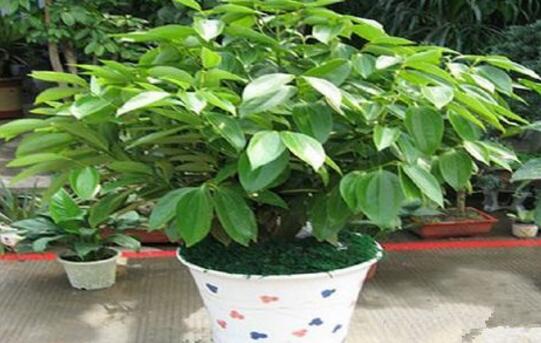
In our guide to growing the Peace Lily tree and things to watch out for, we covered its soil requirements. Usually, a breathable, well-draining, acidic, fertile soil containing organic matter is best, with a pH of up to 7.5, so when repotting you must prepare the soil according to these requirements.
1. When to repot the Peace Lily tree
If you are growing a small Peace Lily tree, repot it once a year; if you are growing a large one, repot it once every 2 years. The best time to repot is in spring each year, because the temperature is suitable then, which helps the Peace Lily tree return to normal growth as quickly as possible after repotting.
2. How to repot the Peace Lily tree
a. Choose suitable soil and make the preparations according to the soil requirements. You can choose leaf mold or sandy soil, and before repotting you need to loosen the soil first.
b. Dig open the soil around the Peace Lily tree, then pull the plant up together with its roots, keeping a soil ball around the roots, and then transplant it into the pot you have already prepared.
Note: when digging, you must avoid damaging the roots of the Peace Lily tree; do not dig close to the roots.
c. After transplanting into the new pot, let the roots come into large-area contact with the newly prepared soil. Then add an appropriate amount of water.
How many days after repotting the Peace Lily tree to water it
After repotting the Peace Lily tree, you can water it right away, but at first be sure not to water too much at once and do not let water accumulate in the new pot, because that can cause the roots to rot and be damaged. We have previously covered in detail how to water the Peace Lily tree, so you can refer to the specific watering method.
About 1 week after repotting, you can fertilize it; a compound fertilizer is fine, and afterwards you can apply a top dressing once a month, switching to a phosphorus-potassium fertilizer after autumn.
Summary: after repotting, make sure the environment where the Peace Lily tree sits is suitable for its growth, for example sufficient light and a moderate temperature; in summer, pay attention to sprinkling water regularly to avoid the Peace Lily tree dying during the acclimatization process.
How to water the Peace Lily tree, and how often to water it
The Peace Lily tree can be used as medicine, strengthens the body, and also symbolizes the safety of one's family, so many people like to grow it. When growing the Peace Lily tree, you must pay attention to watering it, but how do you water the Peace Lily tree, and how often? The answers are given below.
If you want to know how to water the Peace Lily tree and how much water to give, it is important to understand its habits:
The Peace Lily tree likes a warm, humid, sunny environment; it likes light but also tolerates shade, and prefers warm, hot places with no frost or snow, plenty of fog and high temperatures. It does not tolerate drought, waterlogging, severe cold or dry air. For cultivation, use a loose, fertile, well-draining, organic-rich acidic sandy loam.
The Peace Lily tree likes a humid environment and does not tolerate drought. Its potting soil should be kept relatively moist. In dry weather, spray the leaves with water; in summer, spray the leaves once a day, and keep the indoor relative air humidity at preferably above 60 percent. When watering, you can water once first, then water again half an hour later, which avoids the appearance of half-watering. The number of waterings depends on the season; water whenever the surface soil looks a little dry.
For the Peace Lily tree, watering about once a week is enough. But note that when watering the Peace Lily tree you should water thoroughly, and do not let water accumulate in the pot, so as to prevent the Peace Lily tree from root rot.
The above covers how to water the Peace Lily tree, and we hope it helps. One more thing to note: when growing the Peace Lily tree, pay attention to light and give it sun regularly.
How does the Peace Lily tree propagate? An introduction to the propagation methods of the Peace Lily tree
The Peace Lily tree was originally named Lanyu cinnamon (Cinnamomum kotoense), with aliases including Hongtouyu cinnamon, Hongtoushan cinnamon, Fanglanshan cinnamon, large-leaf cinnamon and Taiwan cinnamon. It is an evergreen small tree of the genus Cinnamomum in the family Lauraceae, widely produced in southern Taiwan, China. Its propagation methods are mainly seed propagation and cutting propagation. Let's take a look below at the propagation methods of the Peace Lily tree!
Seed propagation of the Peace Lily tree
1. Sowing time: for seed propagation of the Peace Lily tree, in South China you can sow from September to October using ripe purple-black fruits. Wash off the peel and pulp, float off the empty, shriveled seeds, spread them in a cool place to dry, and sow them as soon as they are collected.
2. Seed treatment: if the Peace Lily tree seeds cannot be sown immediately because of bad weather or because the nursery bed is not yet ready, store the seeds in damp sand in a cool place, taking care to prevent the seeds from molding, and sow them in the ground or in bags only after the seeds crack open and show white. For seeds not stratified in sand to promote germination, before sowing you can soak them in a 0.3% formalin solution for 30 minutes, pour off the excess liquid, seal for 2 hours, then rinse with clean water to remove the liquid clinging to the seed coat, and immediately soak the seeds in clean water for 24 hours, which can increase the germination rate. If you do not disinfect the seeds, you can directly soak them in warm water at about 40°C, which can also increase the germination rate.
3. Sowing method: usually mainly by drilling holes and sowing at points, with a row spacing of 20 cm to 25 cm and a plant spacing of 5 cm to 7 cm, covering with soil 1.5 cm to 2 cm deep and adding straw to retain moisture; they will germinate after 20 to 30 days.
4. Post-sowing management: keep the seedbed moist. After 1/3 of the seeds have emerged, remove the covering grass in 2 to 3 rounds, then build a shed for shade. When the seedlings have grown 3 to 4 true leaves, apply a liquid fertilizer once a month as a top dressing, stop applying it after autumn, do a good job of cold protection, and overwinter at a shed temperature of no lower than about 5°C. Because the plant has few fibrous roots, transplanting should be done early, or use the method of sprouting in a sand bed and transplanting the sprouts into bags. In southern regions, bag sowing or bag cultivation to produce commercial seedlings works very well.
Cutting propagation of the Peace Lily tree
1. Cutting time: the cutting time for the Peace Lily tree is April to May in the first half of the year and September to October in the second half; the best time is when the temperature is 22°C to 28°C.
2. Cutting medium: for Peace Lily tree cuttings, use nutrient pots or flower pots, with a medium of pure vermiculite or vermiculite : peat = 1:1. Before cutting, the medium must be disinfected; you can pour it with 0.1% potassium permanganate or a 600 to 800 times dilution of Dexon, or expose it to the sun.
3. Cutting treatment: choose shoots with strong apical dominance, semi-lignified from the current year, robust and full, free of pathogen infection, and with bright green leaves. It is best to cut the shoots in the morning when there is dew or on a cloudy day. Cut the shoots into 10 cm to 15 cm lengths, leaving 2 to 3 leaves to reduce water loss. Cut the lower end of the cutting into a slanted opening, leaving 3 cm to 5 cm.
4. Cutting method: soak the base 3 cm to 5 cm of the prepared cuttings in a rooting solution (2.5 g diluted in 2 kg of water, soak slowly for 2 to 3 hours; for a quick soak, dilute in 0.2 kg of water and soak for 15 to 30 seconds) or in a strong rooting agent (each 5 g packet diluted in 0.5 kg of water, soak the base for 16 to 20 hours). After soaking, take them out and insert them 3 cm to 5 cm into the medium. Too shallow and they easily fall over; too deep and they easily rot and mold. Then press firm with your fingers. Insert one seedling per small pot, and after inserting all of them, water thoroughly until water flows out from the bottom of the pot. Cover the whole cutting with a plastic bag to maintain 100% humidity, and place it in a cool place, avoiding direct sunlight.
5. Post-cutting management
① Watering: about 4 days after cutting, water thoroughly once. In the north, add a few drops of hydrochloric acid or a few drops of edible vinegar each time you water, keeping the pH at about 5.8, and the cuttings will easily survive. When the medium is very moist, do not water, but keep the medium moist, with a relative environmental humidity of about 80%. Too little watering and the cuttings die of drought; too much watering and the wound tissue will rot and mold.
② Light: after about 15 days, tie on the plastic bag; after about 20 days, remove the plastic bag. After removing the plastic, you can increase the time of weak sunlight in the morning and evening. After 25 days they begin to root; after about a month they can grow new roots 1 cm to 2 cm long, and after 2 months they can grow roots 5 cm to 6 cm long.
③ Soil: if the old leaves do not fall off and new roots form, it means the cuttings have survived. At this stage, move them into a larger pot; the medium ratio is leaf mold to fine sand at 2:1, or sandy loam. When moving to a larger pot, pull the cuttings up together with the medium, plant them into the large pot, then fill in the prepared medium and water thoroughly.
④ Fertilizing: after a week, you can apply a compound fertilizer at 1‰ concentration. After the plant sends out new leaves, you can apply a dilute cake fertilizer water once a month. After autumn begins, you can apply 2 consecutive top dressings of a 0.3% potassium dihydrogen phosphate solution, thereby increasing the plant's cold resistance, helping the tender shoots lignify early, and enabling it to pass the winter safely. When fertilizing, avoid raw fertilizer, concentrated fertilizer and heavy fertilizer; in particular, do not use high-concentration chemical fertilizer solutions, otherwise it is very easy to cause fertilizer burn to the roots, leading to yellowing and scorching of the leaves and death of the plant.
How to grow the Peace Lily tree
1. Temperature: the Peace Lily tree loves a hot, humid environment, and the best temperature is 22°C to 30°C. When the temperature exceeds 32°C, build a shed to shade the Peace Lily tree and spray water on the leaves to increase humidity and lower the temperature, so that it can maintain vigorous growth. In winter, the lowest temperature must not be below 5°C.
2. Watering: the Peace Lily tree likes moist soil; water an appropriate amount every morning and evening. In winter, spray more water and water less. There must be no water accumulating in the pot.
3. Light: the Peace Lily tree needs fairly good light, but is also fairly shade-tolerant. It is suitable for care in a semi-shaded environment. Its light requirement varies with age; if the light is too strong, it easily causes the leaves to turn yellow and lose their luster, lowering its ornamental value.
4. Fertilizing: fertilize the Peace Lily tree once a month. After autumn begins, apply 2 consecutive top dressings of phosphorus-potassium fertilizer. In winter, stop all forms of top dressing to prevent fertilizer burn damaging the roots.
5. Soil: repot small plants once a year, and change the soil for large plants once every 2 years. During the growing season, loosen the soil once a month. The best time to repot and change the soil is in spring.
6. Pests and diseases: aphids easily appear on the tender leaves and new buds of the Peace Lily tree. After spreading plant ash on the plant, rinse it clean with water. Spraying chinaberry leaf juice can effectively kill the insects, and spraying a 10% imidacloprid wettable powder 2000 times dilution can kill them.