What to do when the leaf tips of the Radermachera sinica turn black? Respond to waterlogging and lack of light this way
The leaves of the Radermachera sinica are famous for being large; they can grow to 10-22 cm and also have a metallic sheen, so they are highly ornamental whether placed indoors or outdoors. But some people encounter blackened, moldy leaves, which seriously affects the tree's appearance. So what should be done when the leaf tips of the Radermachera sinica turn black? What should be done when the leaves of the Radermachera sinica become moldy? The editor has compiled the main causes and solutions for everyone.
What to do when the leaf tips of the Radermachera sinica turn black
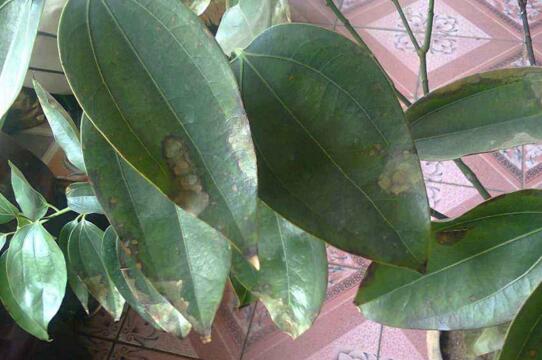
There are three main causes of blackened leaf tips on the Radermachera sinica, namely: improper watering, lack of light, and pests and diseases. Therefore, when solving the problem of what to do when the leaf tips of the Radermachera sinica turn black, different measures need to be taken according to different situations.
1. Improper watering
Watering is a very important step for growing any plant, and the Radermachera sinica's water requirements are not especially low. If watered too much, the roots will become waterlogged, leading to blackened leaf tips and drooping leaves. We previously introduced what to do when the leaves of the Radermachera sinica droop, and the solution for blackening caused by watering is as follows.
Solution: Pour out the accumulated water in the potting soil, stop watering, and water again after the potting soil has dried slightly. Note that it should be done by alternating dry and wet conditions, keeping the potting soil moist.
2. Lack of light
Although the Radermachera sinica is shade-tolerant, it still needs sufficient light. Many people often place it indoors in a place with insufficient light, which can cause the leaf tips to turn black. So what should be done when the leaf tips of the Radermachera sinica turn black? The method is as follows.
Solution: Move it to a ventilated place with good light transmission. If it is summer, do not move it directly outdoors; just ensure there is enough light. If it is winter, do not place it in a shady and concealed place.
3. Caused by pests and diseases
Pests and diseases are one of the chief culprits affecting the health of the Radermachera sinica, and they are also one of the causes of blackened leaf tips. For example, brown spot disease will cause brown spots on the leaves, and then small black dots will appear. Therefore, pest and disease prevention and control for the Radermachera sinica should be done well.
Solution: If blackened leaf tips appear due to pests and diseases, first remove the diseased leaves, then spray with professional medication, and at the same time cut off the rotten roots and replace with clean, fresh soil. Gradually the Radermachera sinica will return to normal.
What to do when the leaves of the Radermachera sinica become moldy
Usually, moldy leaves are caused by pests and diseases. At this time, what should be done is prevention and control. The correct approach is as follows:
1. Apply sterilization powder to the leaves;
2. Spray specialized insecticide for prevention and control;
3. Loosen the soil. You can insert a soil-loosening tool around the edge of the pot, then gently shake the potting soil so that there are gaps in the potting soil. Doing this can make the soil better aerated;
4. Move the Radermachera sinica to a ventilated place and water moderately. After the mold problem has eased somewhat, wait until there are signs of whitening on the sprayed surface before watering heavily. Note that you only need to ensure it is watered through, and stop watering once the sprayed surface feels moist.
Summary: Whether the leaves turn black or moldy, it is a very troublesome matter. In addition to mastering the correct cultivation methods for the Radermachera sinica, the blackened and moldy plant needs to be treated. As long as the methods are appropriate, the Radermachera sinica can be revived with vitality.
What to do when the leaves of the Radermachera sinica droop? Watering, repotting, and temperature control can restore it to normal
Usually, the leaves of the Radermachera sinica are upright and glossy, but sometimes you may encounter drooping leaves. So what should be done when the leaves of the Radermachera sinica droop? You need to first figure out the cause of the drooping, then take corresponding measures to restore it to normal.
What to do when the leaves of the Radermachera sinica droop
The leaf growth of the Radermachera sinica is affected by many factors, so there are many reasons for its drooping. So what should be done when the leaves of the Radermachera sinica droop? Only by finding the cause can the problem truly be solved. In the process of leaf drooping, there is also normal drooping and abnormal drooping. Below we will introduce it from these 2 aspects.
I. Normal drooping
So-called normal drooping refers to leaf drooping that is not caused by the cultivation methods of the Radermachera sinica. For example, a newly purchased Radermachera sinica drooping due to repotting is a normal phenomenon. You can check whether its roots show signs of rot and blackening. If not, then it is not drooping due to disease.
Response method: Place the Radermachera sinica in a ventilated place and water it. The principle is to water the soil thoroughly so that the entire flowerpot remains moist, while letting excess water drain from the bottom. Never let water accumulate in the pot. Generally after 1 day, the drooping leaves will improve.
II. Abnormal drooping
1. Caused by light
Normal growth of the Radermachera sinica requires sufficient light. If it is placed in an environment with insufficient light for a long time, the leaves will droop.
Response method: Move it to a window or balcony. In summer, it needs to be shaded.
2. Caused by temperature
We know that the most suitable temperature for the Radermachera sinica is 20-30 degrees. If the temperature is too low or too high, the leaves may droop.
Response method: Observe the temperature of the environment where the Radermachera sinica is located. If it is because it is too cold or the temperature is too high, the ambient temperature should be adjusted in time.
3. Caused by overwatering
The Radermachera sinica likes a moist environment, so its water requirements are relatively high. Watering frequently is one method, but sometimes too much watering can cause problems with its roots, such as rotting, and so on. This will produce a series of chain reactions, and the most intuitive feeling is drooping leaves.
Response method: When watering the Radermachera sinica, be sure not to overdo it. Just ensure the potting soil is moist; do not pour too much water at one time. In winter, water less, and you can use the method of spraying water.
4. Caused by soil that is too alkaline
Although the Radermachera sinica does not have high soil requirements, it prefers acidic soil and may not adapt well to alkaline soil. Therefore, growing the Radermachera sinica in the north is prone to drooping leaves. So what should be done when the leaves of the Radermachera sinica droop? The answer is to repot or change the watering strategy.
Response method: When watering, acidic substances such as ferrous sulfate or edible vinegar can be added to the water. After a period of time, the acidity in the soil will increase, and the leaves will gradually return to normal.
Summary: Leaf drooping is caused by problems with light, temperature, soil, and watering. Of course, a newly purchased Radermachera sinica may also show this situation. When facing these problems, the cause should be found as early as possible, and then reasonable measures should be taken to avoid the drooping phenomenon becoming more and more serious.
Radermachera sinica Radermachera Sinica Radermachera sinica illustrated guide: how to grow Radermachera sinica / how to propagate Radermachera sinica
Radermachera sinica profileRadermachera sinica Radermachera Sinica
Cultivation methods and precautions for Radermachera sinica Introduction to Radermachera sinica
Radermachera sinica is also called: snake tree, bean-pod tree, bone-setting parasol, etc., commonly known as the happiness tree; it is a small tree, up to 10 m tall; the petiole, leaf rachis, and inflorescence are all hairless. 2-pinnately compound leaves, rarely 3-pinnately compound leaves, the leaf rachis about 30 cm long; leaflets ovate to ovate-lanceolate, 4-7 cm long, 2-3.5 cm wide, apex caudate-acuminate, base broadly cuneate, margin entire, lateral veins 5-6 pairs, extending obliquely upward, both surfaces hairless.
Radermachera sinica likes a high-temperature, humid, sunny environment, and grows in sparse forests in valleys or flat land; it is distributed in tropical regions of China such as Guangdong and Taiwan, China, and also in countries abroad such as India and the Philippines. The roots, leaves, and fruits of Radermachera sinica can be used medicinally, having the effects of cooling blood, reducing swelling, and reducing fever, and can also treat bruises, venomous snake bites, and so on.
Radermachera sinica has many names, and in the flower market it is also called by commercial names such as happiness tree and Kirin purple trumpet creeper.
Morphological characteristics of Radermachera sinica
Radermachera sinica is a small tree, up to 10 m tall; the petiole, leaf rachis, and inflorescence are all hairless. 2-pinnately compound leaves, rarely 3-pinnately compound leaves, the leaf rachis about 30 cm long; leaflets ovate to ovate-lanceolate, 4-7 cm long, 2-3.5 cm wide, apex caudate-acuminate, base broadly cuneate, margin entire, lateral veins 5-6 pairs, extending obliquely upward, both surfaces hairless, the lateral leaflets sparsely bearing a few disc-fungus-shaped glands on one side near the base; lateral petiolules less than 5 mm long, terminal petiolules 1-2 cm long.
Terminal panicle, upright, 25-35 cm long, 30 cm wide; bracts linear-lanceolate, up to 10 cm long, caducous, bracteoles linear, 4-6 cm long. Calyx closed in bud, conical, containing white latex inside, calyx teeth 5, ovate-lanceolate, midrib obvious, about 12 mm long.
Corolla campanulate-funnelform, white to pale yellow, about 6-8 cm long, lobes 5, rounded, wrinkled, about 2.5 cm long. Stamens 4, didynamous, smooth, staminodes present, filiform. Ovary smooth, 2-locular, ovules in 2 rows per locule.
Radermachera sinica is 5-12 m tall. Root straight, root bark thick and fleshy, white. Bark rust-black, branches and leaves clustered at the top of the trunk. Leaves opposite, 2-3-pinnately odd-compound leaves; leaflets opposite, ovate to ovate-lanceolate, 2-9 cm long, 1-3.5 cm wide, apex caudate-acute, base nearly rounded, margin entire, both surfaces green and hairless. Racemes terminal; corolla white, long-tubular, 12-14 cm long, lobes 5. Fruit long-cylindrical, like a bean pod, up to 50-80 cm long, drooping, splitting longitudinally into 2 when ripe, with many seeds inside, membranous. Flowering in summer.
Radermachera sinica flowers from May to September and fruits from October to December. Capsule slender, drooping, cylindrical, slightly curved, many-grooved, acuminate, up to 85 cm long, about 1 cm in diameter, pericarp thinly leathery, small lenticels extremely inconspicuous; septum slender cylindrical, slightly flat. Seeds elliptical, about 2 cm long including wing, about 5 mm wide.
Ecological habits of Radermachera sinica
Radermachera sinica likes a high-temperature, humid, sunny environment; it is tolerant of high temperatures, afraid of cold, suited to moisture, and avoids dryness. It grows in sparse forests in valleys or flat land.
For cultivating Radermachera sinica, loose, fertile, well-drained loam and sandy loam rich in organic matter should be used.
Cultivation techniques for Radermachera sinica Temperature
Radermachera sinica likes a warm, hot environment, and the suitable growth temperature is 20°C to 30°C. During the midsummer heat, when the ambient temperature reaches above 30°C, shade should be provided appropriately with a shed, and water spraying of the environment and leaf surfaces should be increased, or it should be moved to a shaded, ventilated, cool place to spend the summer. When late autumn arrives and the ambient temperature drops to about 10°C, it should be moved into a shed or room in time. During overwintering, it is best to maintain a shed or room temperature of no less than 8°C, and at the lowest not below 5°C, so as to avoid cold damage to the leaves or leaf drop. For household pot cultivation, it can be moved indoors with air conditioning or an electric heater to ensure the room temperature is not lower than 8°C, so that it can pass the winter safely.
Note: In winter, the temperature of the shed or room where Radermachera sinica is grown should be kept no lower than 8°C, otherwise cold damage may easily occur, and even the whole plant may die.
Light
Radermachera sinica is a light-loving plant, and can also tolerate shade somewhat. Full sun and semi-shade environments are both acceptable. Its seedlings are relatively shade-tolerant, and in summer a shed should be set up for shading. For potted plants, during indoor display they should be placed by a window with sufficient light or indoors. If placed in a dim indoor area for a long time, leaf drop is likely to occur. For household pot cultivation, during overwintering it can be placed in a higher position in front of a window or on a balcony so that it receives more light.
Moisture
Cultivating Radermachera sinica requires a relatively moist soil and display environment. During the seedling stage, the seedbed should be kept moist. In the high-temperature, dry season after summer begins, even more attention should be paid to water supply. For potted Radermachera sinica, in order to keep it from growing too tall, watering can be appropriately controlled when new shoots sprout in spring, and it is enough to keep the potting soil relatively moist. For potted plants displayed indoors, in addition to keeping the potting soil moist, the plant should also be sprayed with water 2 to 3 times a day during high-temperature seasons. For plants placed outdoors for maintenance in summer and autumn, spraying of the plant and the surrounding micro-environment must be strengthened to create a cool, moist, suitable environment for it. For plants placed indoors in winter, because the general indoor temperature is below 10°C, the plant enters a dormant state, so do not water too much, to avoid water accumulation and root rot. Every 2 to 3 days, around noon on a fine day, spray the plant once with slightly warm clean water to maintain its fresh appearance and also increase environmental humidity. In addition, Radermachera sinica can also be hydroponically grown.
Soil
For potted Radermachera sinica, a loose, fertile, well-drained and aerated culture soil rich in organic matter should be selected. Usually, it is mixed with 5 parts garden soil, 3 parts leaf mold, 1 part decomposed organic fertilizer, and 1 part river sand. During the growing season, loosen the soil once a month to ensure that the root area is always in a well-aerated state. In the plum rain season, for potted plants placed in the open air, check the potting soil promptly after each heavy rain. If water accumulation is found in the pot, drain it as soon as possible, and after the potting soil dries, repot and change the soil. Under normal circumstances, for small and medium-sized household potted plants, repotting can be done once a year in early April when they are moved out, to meet the soil fertility requirements for their whole year of growth.
Fertilizer
For potted Radermachera sinica, in addition to adding an appropriate amount of decomposed cake fertilizer and 3% multi-element compound fertilizer to the culture soil, topdressing should also be given continuously. During the growing season, a quick-acting liquid fertilizer can be applied once a month, usually decomposed cake fertilizer water. For a small number of household potted plants, or for large potted plants displayed in public places for a long time, a small amount of multi-element slow-release compound fertilizer granules can be buried and applied regularly, or a mixed solution of 0.2% urea plus 0.1% potassium dihydrogen phosphate can be used for watering. For pot cultivation in northern regions, after the Mid-Autumn Festival, 0.3% potassium dihydrogen phosphate solution can be applied 2 to 3 times continuously to increase the plant's cold resistance and help it overwinter safely. When the summer temperature is above 32°C, and after the temperature is below 12°C in late autumn and early winter, topdressing should be stopped.
Propagation methods of Radermachera sinica Sowing
At the end of December, when its capsules are close to splitting and the seeds are fully mature, harvest the long strip-like capsules. After drying in the shade, extract the winged seeds, rub them, and winnow away the membranous wing fragments. Store them dry until sowing in the following spring. They can also be soaked for 2 to 3 hours, then mixed into wet sand, spread thinly in a large plastic basin in a shed or room, keeping the seeds and sand moist, and checked frequently to prevent mildew. After the seeds germinate, sow them in the ground. For dry-stored seeds, between March and April, first soak them for 3 to 4 hours, take them out and spread them to dry slightly, then mix them with sandy soil and broadcast them on a prepared seedbed, lightly cover with a thin layer of soil, cover with plastic film to retain moisture, and after the seeds emerge, remove the film and set up a light-shade shed for shading. For sale.
Cuttage
Between March and April, when the ambient temperature reaches about 15°C, cut 1- to 2-year-old lignified branches, about 15 cm to 20 cm long, remove all leaves, with the lower cut preferably located 0.5 cm below a node, and insert them into a sandy loam seedbed. The insertion depth of the cuttings is about 1/3 to 1/2 of the cutting length. During the period of callus formation and rooting at the lower cut, spray water to keep the seedbed moist. Only after they have grown a good root system can they be transplanted into pots with a soil ball. It is best to plant 2 to 3 together, so they can take shape and be sold earlier.
Layering
Between March and April, on 2-year-old strong branches or stems, perform ring barking below a node. The bark-stripping width is generally 2 to 3 times the diameter of the layered stem. Below the ring-barked opening, tie a piece of 15 cm x 20 cm plastic film. For the water opening, tie it against a thick main trunk to prevent it from drooping and being broken by wind. By late autumn, after the ring-barked opening has grown a relatively good root system, cut it off from the mother plant and plant it separately in a pot.
Disease control of Radermachera sinica Leaf spot disease
In environments with high temperature, high humidity, and poor ventilation, its leaves are prone to leaf spot disease. Control method: Whether indoors or outdoors, ventilation and light transmission should be strengthened to avoid prolonged water retention on the leaf surface and reduce the possibility of leaf spot disease. If a small number of diseased leaves are found, remove and burn them in time, and regularly spray 50% carbendazim wettable powder 600 times dilution, once every half month, for 3 to 4 times continuously. For household pot cultivation, for disease spots appearing on a small number of leaves of individual plants, Daktarin cream can be applied.
Scale insects
Under conditions of high temperature, high humidity, and poor ventilation, especially during autumn and winter when placed in a shed or room for a long time, scale insect damage is likely to appear on its stems and leaves. Control method: Strengthen ventilation and light transmission, and pay attention to controlling environmental humidity. If a small number of live insects are found, they can also be removed by sticking them off with clear tape. For commercial cultivation, during the peak hatching period of the nymphs, spray with 25% buprofezin wettable powder 1500 times dilution.
Variety classification of Radermachera sinica Small-calyx Radermachera sinica
1-pinnately compound leaves, 40 cm to 60 cm long, leaflets 5 to 7, ovate-oblong, 11 cm to 26 cm long, 4 cm to 6 cm wide. Calyx 3 mm to 5 mm both in length and width, corolla pale yellow. Produced in Yunnan and Guangxi.
Guangxi Radermachera sinica
1-pinnately compound leaves, leaflets 3 to 7, long elliptical, 18 cm to 21 cm long, 7.5 cm to 9 cm wide. Corolla white, corolla tube purple-red outside, white inside. Produced in Guangxi and Guangdong.
Yunnan Radermachera sinica
2- to 3-pinnately compound leaves, leaves up to 70 cm long. Leaflets ovate, 4 cm to 9 cm long, 2 cm to 5 cm wide, densely covered with small white glandular dots above and densely covered with very small pits below. Corolla white or pale yellow. Produced in Yunnan.
Hainan Radermachera sinica
1- to 2-pinnately compound leaves, leaflets oblong-ovate, apex acuminate. Corolla pale yellow, 3.5 cm to 5 cm long. Capsule 40 cm long, about 0.5 cm in diameter. Produced in Hainan, Guangdong, Yunnan, and other places.
Beautiful-leaved Radermachera sinica
2-pinnately compound leaves, 30 cm long. Leaflets 5 to 7, elliptical, 4 cm to 6 cm long, leaf back pale white, petiole and leaf rachis covered with powdery fine hairs. Corolla white, 3.5 cm to 4 cm long, capsule 20 cm to 40 cm long, 0.5 cm to 0.6 cm in diameter. Produced in Guangdong, Guangxi, and Hainan.
Distribution range of Radermachera sinica
Radermachera sinica is distributed in Bhutan, Taiwan, China, as well as Guangdong, Yunnan, Guizhou, Guangxi, and other places in mainland China. It grows in areas at altitudes of 340 m to 750 m, generally in sparse forests in valleys and flat land.
It is native to Taiwan, China, Guangdong, Hainan, Guangxi, Guizhou, Yunnan, and other places, mostly distributed in sparse forests in valleys and flat land at altitudes of 300 m to 850 m (Guangxi, Hainan) and 1,100 m to 1,700 m (south of central Yunnan). At present, it has not yet been introduced and cultivated artificially. It is also distributed in India, the Philippines, and other countries.
Environmental distribution: sparse forests in valleys or flat land.
Edible or medicinal value of Radermachera sinica
The medical information and health food therapy information on Hudong Huahui are for reference only and cannot be used as a basis for diagnosis or medical treatment. Any health problem should be consulted with professional medical staff, and treatment for any disease should follow a doctor's advice.
Ultimate flower-protecting task: To love yourself, start from reality and strictly follow a doctor's advice. For illness, do not be careless, do not delay, do not give up hope, face it bravely, warm the silent world with love, and care for the flower field in your heart with your heart.
The medical content on Hudong Huahui is for reference only and cannot be regarded as professional advice. For any health problem, you should consult professional medical staff. Medicinal information (1)
Deciduous tree, 6-12 m tall. Twice odd-pinnately compound leaves, leaflets elliptical, with a long tail-like tip at the apex. Panicle terminal, corolla yellow-white, tubular, enlarged on one side, lobes 5, unequal. Capsule linear-cylindrical, up to 70 cm long, about 7 mm in diameter. Distributed in Taiwan, China, Guangdong, Guangxi, Guizhou, and Yunnan, growing in sparse forests in valleys or flat land at altitudes of 340-750 m. Also distributed in Bhutan.
Aliases: snake tree, bean-pod tree, bone-setting parasol, ox-tail tree, morning glory flower, mountain bean tree, bitter ling jiu (Taiwan, China), small-leaf ox-tail lian, ge lu (Hainan Island), snake cub tree, red-flowered wood (Guangdong and Guangxi trees and shrubs records), ox-tail tree (Dendrology Volume 2), cowpea tree (Funing, Yunnan), chili tree (Hekou, Yunnan), bone-setting parasol, forest wood parasol, morning glory flower, ox-tail wood (Guangxi practical Chinese herbal medicine), bean-pod wood, ox-tail bean, snake cub bean, big morning glory (Guangxi Chinese veterinary medicinal plants), die-cat tree (Hainan)
Source: Radermachera sinica (Hance) Hemsl., a plant of the genus Radermachera in the family Bignoniaceae, with roots and leaves used as medicine. Roots can be collected throughout the year, washed, sliced, and dried in the sun; leaves are collected before autumn and dried in the sun or used fresh.
[Nature and flavor] Bitter, cold.
[Functions and indications] Clear heat and detoxify, dissipate blood stasis and reduce swelling. Used for summer-heat fever. External use for bruises and fractures, venomous snake bites, and carbuncles.
[Usage and dosage] Oral administration: decocted in water, 3 to 5 qian. External use: pounded and applied, or decocted in water for washing.
Excerpt: "Compilation of National Chinese Herbal Medicines"
Chemical composition
The root bark and leaves of Radermachera sinica contain 8-hydroxy-2,6-dimethyl-(2E,6E)-octadienoic acid, glucosyl-8-hydroxy-2,3-dimethyl-(2E,6E)-octadienoate, 8,10-dihydroxy-2-methyl-(2E,6E)-octadienoyl catalpol, 6-O-4''-hydroxy-3''-methoxy-benzoyl ajugol, specicoside, minecoside, nemoroside I, and amphicoside.
The xylem contains naphthoquinone components: lapachol, dehydro-alpha-lapachone, dehydroiso-alpha-lapachone, 3-hydroxy-6-methoxy-dehydroiso-alpha-lapachone, 3,6-dimethoxydehydroiso-alpha-lapachone, 3,5-dihydroxy-6-methoxydehydroiso-alpha-lapachone, 2-isopropenylnaphtho[2,3-6]furan-4,9-quinone, and radrmasinin.
Discussions by various schools
1. "Guangxi Chinese Herbal Medicine": Dissipate blood stasis and reduce swelling, clear heat and detoxify.
2. Guangzhou Air Force "Handbook of Common Chinese Herbal Medicines": Cool blood and dissipate stasis, reduce swelling and relieve pain. Treats high fever and headache, stomach pain, sprains and contusions, fractures, carbuncles and furuncles, and venomous snake bites.
Selected formulas
(1) To treat summer-heat fever: an appropriate amount of fresh leaves of Radermachera sinica, decocted in water and used to wash the whole body externally.
(2) To treat bruises: 1 to 2 liang of Radermachera sinica root. Decocted in water or soaked in wine and taken.
(3) To treat venomous snake bites: pound the leaves or fruits of the bean tree and apply to the fontanelle on the head (shave the hair first). (Selected formulas from "Guangxi Chinese Herbal Medicine")
Uses and purposes of Radermachera sinica Decoration
The happiness tree is a small to medium-sized potted plant and can be placed on balconies, in bedrooms, in entrance halls, and other places. Among these, the balcony is the most open place in the home. It can absorb outside sunlight, air, wind, and rain, and is where the residence draws in qi. Placing plants on the balcony has two effects: transforming sha and promoting prosperity.
Landscape use of Radermachera sinica Ornamental
The medium leaves are opposite, ovate or ovate-lanceolate, the corolla campanulate-funnelform, white or pale yellow, and the capsule leathery, cylindrical and long-strip-shaped like a bean pod, slightly curved and many-grooved. A large happiness tree, with dense, green leaves, is full of vitality and vigor and can be used as a plant to promote prosperity, and it also carries the meaning of bringing happiness to people.
Flower-growing Q&A about Radermachera sinica
Q: Why do plants placed indoors show massive leaf drop?
Answer: This is because the indoor light is too dim and the ventilation is poor. If it is not the cold winter, you can move it to a balcony to let it get ventilation and light, and it will quickly send out new leaves. In winter, it should be placed on a south-facing balcony or in front of a floor-to-ceiling window with plenty of light.
Question: Why do the leaf tips of plants placed indoors in northern regions turn yellow and dry?
Answer: The main reason is the dry indoor air. You can spray clean water on its leaves 2 to 3 times a day, which can effectively prevent the leaf tips of newly emerging leaves from turning yellow and dry.
Question: Is it harmful to human health to grow Radermachera sinica indoors?
Answer: The roots, leaves and fruits of Radermachera sinica are used medicinally and have the effects of cooling the blood, reducing swelling and bringing down fever. They can treat bruises, venomous snake bites and so on. As an indoor display, it is not only harmless to the human body but also beneficial to human health.
The flower meaning of Radermachera sinica
The flower meaning of Radermachera sinica: happiness and peace.
Pictures of Radermachera sinica