How to save a money tree with root rot? Cut away the rotten roots and replant; overwatering is the main cause
The money tree (Zamioculcas zamiifolia), with its bright green, attractive leaves and auspicious symbolism, is welcomed and loved by a wide range of people and is kept in many homes. However, quite a few gardening enthusiasts report that their money trees often develop root rot. Why is that? How do you save a money tree with root rot? On this subject, the editor has summarized several causes of money tree root rot. Read on to find out!
1. Causes of money tree root rot: waterlogged soil / pests and diseases
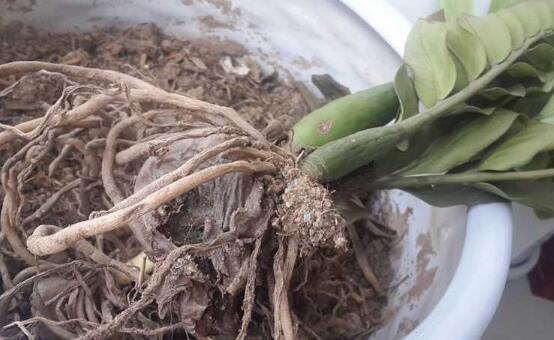
Before answering how to save a money tree with root rot, we need to know how the money tree develops root rot in the first place. On this subject, according to the editor's research, there are four main causes of money tree root rot: overwatering, improper fertilizing, temperatures that are too low, and pathogen invasion.
2. Causes of money tree root rot
1. Overwatering
The money tree is highly drought-tolerant and has low water requirements. Once we water it too much, it will develop root rot, which also causes its leaves to turn yellow. Cause of root rot: when overwatered, the potting soil becomes waterlogged, the money tree's roots struggle to breathe, and large amounts of pathogens breed, resulting in root rot.
2. Too much or too concentrated fertilizer
In our guide to growing money trees, we mentioned that the money tree likes fertilizer and that proper feeding makes it grow more beautifully. However, once fertilizer is applied too much or too concentrated, the money tree's root system, before it has developed well, is prone to root rot.
3. Temperature too low
Besides watering and fertilizing, temperature is also one of the causes of money tree root rot. The money tree likes a warm environment. Once the temperature is too low, especially when winter temperatures are very low, cold damage occurs, chilling the plant and leading to root rot.
4. Pathogen invasion
In addition, pathogen invasion can also cause money tree root rot, and this situation arises easily. If pathogens accidentally get into the water during rain or watering, the plant becomes infected by the pathogens, which may lead to root rot.
3. How to save a money tree with root rot
After discovering root rot in the money tree, cut off the rotten roots, then soak them in a carbendazim solution or dust them with some charcoal to disinfect. After that, place the plant in a cool, shaded spot to dry, and finally repot it. In addition, you can also prune away some branches and leaves to help it survive better.
How to save a money tree with root rot: simply put, cut away the rotten roots and replant. But this is too much trouble, so everyone should focus on prevention. In daily care, do not water too much, and avoid waterlogged conditions; when fertilizing, remember not to use too concentrated or too frequent applications - light, frequent feeding is best. This way you can avoid root rot.
Overall, money trees easily develop root rot because of watering and fertilizing, and this is a situation many gardening enthusiasts encounter. So everyone must be careful when watering and fertilizing, and follow the requirements in our guide on how to water and fertilize a money tree - only then will your money tree grow beautifully. That is all the editor has to share about money tree root rot, and I hope it helps everyone.
Appreciation and introduction of common foliage plant pictures
Appreciation and introduction of common foliage plant pictures, Part 1Rubber tree[Aliases] Large-leaf ficus, red Burmese tree, red-lipped rubber tree, Indian rubber fig
[Family and genus] Moraceae, Ficus
[Place of origin] China
[Morphological features] Evergreen tree. Plant height 2-3 m. Stems hairless, with milky sap. Leaves thick, leathery, with long petioles; leaves are oblong or elliptical
[Growing medium] A sandy loam rich in humus is preferable
[Watering] Simply keep the soil on the dry side or slightly moist at all times. Summer is the period when the rubber tree needs the most water, so it can be watered more. Winter is the period when it needs the least water, so supply less
[Fertilizing] During the vigorous growing season, diammonium phosphate, monopotassium phosphate, etc. should be applied as a top dressing
[Light] The rubber tree likes strong, direct sunlight and also tolerates shady conditions. However, during cultivation it should receive no less than 4 hours of direct sunlight per day. If conditions allow, it is best to ensure the plant receives full sun
[Ventilation] Just keep the environment appropriately ventilated
[Temperature] The rubber tree likes high-temperature environments, so it grows fastest in summer and autumn. The ambient temperature should be kept between 20-30 degrees. When the ambient temperature drops below 10 degrees, the rubber tree is basically in a state of stalled growth. The overwintering temperature should not be lower than 5 degrees
[Disease control] The rubber tree is prone to anthracnose, caused by the fungus Gloeosporium elasticae. This disease mainly occurs in the hot summer season, and the main affected part is the leaves. Its symptoms are round or elliptical gray spots appearing on both sides of the leaf veins; in severe cases the spots merge into one patch and spread over the whole leaf. Control methods are to avoid mechanical damage to the plant, reducing opportunities for the pathogen to infect it; promptly remove diseased leaves to prevent spread; and prune rationally so the tree keeps a natural open-center form, achieving good light penetration and ventilation.Asparagus fern
Asparagus fern, also known as cloud-leaf bamboo and mountain grass, belongs to the Liliaceae family, Asparagus genus.
Origin and habits: The asparagus fern is native to South Africa. It likes warm, humid and semi-shaded conditions, and does not tolerate drought or frost. It requires soil rich in humus with good drainage.
Morphological features: The asparagus fern is a perennial herbaceous plant with smooth, slender, climbing stems. The leaves are fine, spread horizontally, and small, about 3-5 mm long. True leaves are reduced to scales or spines. Flowers are small, bisexual, white. Berries are spherical, purple-black. The flowering period is mostly in February-March or June-July, and some bloom twice.
Propagation techniques: The asparagus fern is mostly propagated by sowing and division. Sowing is done in March-April, with seeds soaked for 24 hours before sowing. Sow in spots in a 10 cm deep pot, cover with glass or plastic film, keep the temperature at 20-25 degrees C and the potting soil moist; germination occurs in 20-30 days. When seedlings are 5-10 cm tall they can be planted out in a greenhouse or potted up. Large 4-5 year old plants can be divided in spring for propagation.
Management techniques: The asparagus fern is a shade-loving plant and should not be placed in too bright a spot, otherwise its branches and leaves easily turn yellow and wither. Watering should be moderate, keeping the potting soil alternately moist and dry; generally, watering the surface soil until moist is enough. In dry seasons, spray the leaves with clean water frequently. The asparagus fern likes fertilizer; apply a fully rotted, diluted liquid fertilizer mainly of nitrogen and potassium once every 10-15 days, or water it with leftover milk diluted with water. The asparagus fern grows fast, so weak, overly dense, old and withered stems should be thinned and pruned at any time, which helps ventilation and keeps it low-growing. The asparagus fern can also be grown in bamboo tubes, which have good drainage and water retention, so no holes need to be drilled in the bottom.
Ornamental value: The asparagus fern is mainly grown in pots for its foliage; it is fresh and elegant, and placed in a study it adds even more of a scholarly atmosphere. The roots, stems and leaves of the asparagus fern can all be used medicinally and can be harvested year-round. Its branches and leaves are fine, upright and elegant, with an airy, verdant appearance and a graceful bearing; it is a good accompanying material for cut flowers, bouquets and flower baskets.Areca palm
Family and genus: Arecaceae, Dypsis genus, evergreen shrub.
Origin and habits: Native to the island of Madagascar in Africa; it is mostly grown in pots throughout China. The areca palm likes warm, humid environments, and likes light but also tolerates shade. It grows slowly in height but develops its crown quickly, and self-prunes well. It requires slightly acidic, well-aerated sandy loam and dislikes alkaline soil.
Morphological features: Plant height 3-4 m. Stems branch from the ground and have ring marks; leaves spread in an arch, up to 2 m long; petioles smooth, yellow; pinnae lanceolate, 60 cm long, soft at the tip, with 3 raised main veins on the underside; flowers small, borne in strings, golden yellow; flowering period March-April.
Propagation techniques: The areca palm can be propagated by sowing or division. Potted plants generally use division. Division can be done in all four seasons, but autumn is best. Select well-developed shoots from a robust mother plant, cut them away from the mother plant at the roots, and transplant them into a new pot. Newly potted plants, because their root systems are not yet well developed, should avoid long exposure to strong light. Water moderately and spray the leaves several times a day to keep them moist. Keep the temperature at around 20-25 degrees C, and normal growth occurs in about 20 days.
Management techniques: Indoor potted areca palms should use slightly acidic soil; in the north, sandy loam with high humus content should be chosen. Watering should follow the principle of “dry thoroughly, wet thoroughly” according to the season; water more in dry, hot seasons and control watering in cold, rainy weather. In northern regions, especially where the water contains more salt and alkali, black alum should be used regularly to adjust soil acidity. Liquid fertilizer can be applied in all four seasons; in summer, appropriately top-dress with nitrogen-containing organic fertilizer, and in winter apply organic flower fertilizer such as sesame paste residue. Rotate the pot regularly, frequently prune the lower and inner dead leaves, and pay attention to shaping the crown. In winter, the indoor temperature must be kept above 10 degrees C. When it stays below 5 degrees for a long time, it will suffer cold damage.
Ornamental value: The areca palm is tall, with drooping, emerald-green leaves and a free and easy bearing, evergreen all year round. Potted plants arranged in conference venues, halls and rooms look especially majestic and display a tropical flavor. This species is good material for park and courtyard landscaping in South China. In places such as Hong Kong, China and Macao, China, because its leaves grow radially in all directions, it is regarded as a symbol of a career “flourishing in all directions.” It is highly favored.Alocasia (Dumb Cane Alocasia / "Dripping Guanyin")
"Dripping Guanyin" is a trade name; when the soil moisture content is high, water drips down from the leaf tips or leaf edges, so in many places it is called Dripping Guanyin. This plant is a perennial evergreen herbaceous plant of the Araceae family, Alocasia genus - Alocasia macrorrhizos. It is native to the subtropics and likes warm, humid and semi-shaded environments; it is not cold-tolerant, and in areas north of the Yangtze River basin in China it is grown in pots and moved indoors before winter. Alocasia has low soil requirements, but grows best in well-drained sandy loam or humus loam containing organic matter. Potting soil generally uses a mix of leaf mold, peat soil and coarse sand in a 2:2:1 ratio. During the growing season, keep the potting soil moist and apply a dilute N, P, K liquid fertilizer mainly of N once or twice a month. In summer, place it in a semi-shaded, ventilated spot and frequently spray water around it and on the leaves to increase air humidity, lower leaf temperature and keep the leaves clean. In winter, stop fertilizing and control watering frequency. Alocasia grows very fast, so during its growth, fertilizer and water must be applied in the right amounts to avoid the lower part of the stem becoming bare and bald, which would reduce its ornamental value.Malabar chestnut (money tree)
[Aliases] Money tree, Central American kapok, chestnut tree, American peanut
[Family and genus] Malvaceae (Bombacaceae), Pachira genus
[Place of origin] Central America, from Mexico to Costa Rica
[Soil] Well-drained sandy loam rich in humus is best
[Light] The money tree is not strict about light and adapts well both in strong light and in low-light indoor conditions. However, full sun can make the leaf nodes shorter and the plant compact and full. With insufficient light, the cultivated plant grows more slowly. Do not move the plant suddenly from shade into strong light, otherwise the leaves will be scorched and their edges burned, affecting appearance
[Temperature] The money tree likes a warm, humid climate; generally 15-30 degrees is most suitable during the growing stage. In winter it should be brought indoors to overwinter, and the room temperature should preferably not be lower than 5 degrees
[Watering] The money tree should generally be kept moist at ordinary times; remember not to let it get too wet, to avoid root rot. In summer, a money tree kept indoors should be watered once every 3-5 days; in spring and autumn, once every 5-8 days; in winter, watering should be restrained, keeping the potting soil slightly moist
[Fertilizing] Normally apply organic liquid fertilizer once every 2-3 months. A multi-element compound fertilizer high in phosphorus and potassium can also be applied to promote thickening of the stem base and enhance ornamental value. The hot, humid summer season is very favorable for the money tree's growth, so fertilizer and water management should be strengthened during this stage
[Economic value] The money tree has a graceful form, bright green leaves and a spindle-shaped trunk; it can be trained into many shapes and made into uniquely styled bonsai of various forms. Because its seeds contain oil, it was once widely promoted in tropical regions as an oil-bearing woody plantParlor palm
[Aliases] Dwarf palm, dwarf coconut, parlor palm, miniature palm
[Family and genus] Arecaceae, Ceroxyloideae, Chamaedorea genus
[Place of origin] Mexico and Guatemala
[Growth habits] Likes high temperature and high humidity and semi-shaded conditions; does not tolerate strong light and is not very cold-hardy
[Soil] Requires well-drained, fertile, moist soil. Repot once every 2 years in spring; because the roots are very fine, avoid damaging too many roots during repotting, which would affect its recovery
[Temperature and environment] The optimum growing temperature is 20-30 degrees; at 13 degrees it enters dormancy, and the overwintering temperature is 10 degrees. It fears direct sunlight and does not tolerate drought. Under blazing sun its leaf color fades or turns yellow, and in severe cases sunscald occurs, producing scorched leaves and black spots and losing its ornamental value
[Fertilizing and watering] This species has a growing period from March to September; water promptly to keep the potting soil moist, but watering should follow the principle of preferring dry over wet. In summer and autumn, when the air is dry and hot, spray the leaves with water frequently to increase air humidity. During dormancy, water less and keep the pot surface slightly dry. During the growing season, fertilize once or twice a month, and stop fertilizing at the end of September
[Economic value] This species has a small, exquisite form, elegant and graceful, with emerald-green glossy leaves; it is highly shade-tolerant and full of tropical charmKing palm
[Family and genus] Arecaceae, Ceroxyloideae, Ravenea genus
[Place of origin] Eastern Madagascar
[Growth habits] Grows in swamps and along riverbanks in areas with ample rain and sunlight. Likes environments with ample light and ample water; also relatively cold-tolerant and shade-tolerant
[Soil] Not strict about soil, but loose, fertile and well-drained soil favors its growth
[Temperature] Grows rapidly when sunlight and water are ample; the optimum growing temperature is 22-30 degrees. When potted, it can be brought indoors to overwinter in cold regions
[Fertilizing] Likes magnesium fertilizer; top-dress once a month to keep the leaves emerald green. When magnesium is deficient, the leaves turn yellow
[Economic value] This species has a thick trunk and a light, graceful form, beautifully green, with pinnate compound leaves resembling feathers. At the same time, because it adapts to a wide range of regions and grows well, it is an increasingly popular landscaping tree species. Potted plants used for indoor display have a strong tropical feelUmbrella tree (Schefflera)
[Aliases] Duck-foot wood, hand tree
[Family and genus] Araliaceae, Schefflera genus
[Place of origin] New Hebrides Islands, South Pacific
[Growth habits] Likes high temperature and high humidity
[Soil] The growing medium is best as well-drained loam or sandy loam
[Temperature and environment] The optimum growing temperature is about 20-28 degrees. The temperature should generally not be lower than 12 degrees nor higher than 30 degrees. If winter temperatures are too low, leaves drop and it loses ornamental value. When the temperature drops to 5 degrees, insulation is needed. In summer, avoid strong direct sunlight all day. It should be placed in a bright indoor spot, but not in direct sunlight. In a dark spot, the yellow-white patches of variegated varieties will gradually disappear. After direct exposure to strong light, the leaves easily turn yellow and drop. When growing on a balcony, shade in spring and summer and provide light in autumn and winter
[Watering and fertilizing] In spring and autumn, the potting soil should be alternately dry and moist; in summer, mainly moist; in winter, mainly dry. There is little selectivity regarding water quality. The main growing period is from April to October; fertilize once every half month
[Economic value] The umbrella tree has oily-green leaves in palmate compound form, leathery and glossy; variegated varieties, with alternating yellow and green, are an ideal indoor ornamental plant. The umbrella tree tolerates pruning and has strong sprouting ability; the plant has a graceful shape, and especially for beautifying living spaces it can rival high-end flower varieties. The umbrella tree's flowers are a winter nectar source, and its root bark and leaves can also be used medicinallyShort-spike fishtail palm
[Aliases] Clustered fishtail palm, wine coconut
[Family and genus] Arecaceae, Caryota genus
[Place of origin] Guangdong, Guangxi and Hainan in China; Indochina; India
[Growth habits] A semi-heliophilous species that grows poorly under strong sunlight; likes warm, humid and well-ventilated environments; has relatively strong cold tolerance and is one of the more cold-tolerant palm plants
[Soil] It has strong growth vigor and a well-developed root system, and is not strict about soil conditions. When potted, garden soil and humus soil mixed in equal amounts can be used as the medium. Generally repot once every 1-2 years; during repotting, remove part of the old soil, prune part of the old roots, replant with new soil, and add a small amount of rotted organic fertilizer
[Temperature] The suitable growing temperature is 18-30 degrees; the overwintering temperature is 3 degrees; it can endure short periods of -1 to -2 degrees, and long-term exposure below this temperature will cause cold damage
[Light] It is a light-loving plant and needs ample sunlight during the growing season. It has strong adaptability to light and is also suitable for cultivation and display in brighter indoor spots
[Watering] The roots are semi-succulent and have fairly strong drought resistance. During the growing period from March to October, water once a day; in other seasons, watering should be kept moderately dry and moist; never let the potting soil become waterlogged, to avoid root rot. During dormancy, just keep the potting soil moist. In dry climates, spray water on the leaves to keep them deep green and glossy
[Fertilizing] During the growing season, generally apply liquid fertilizer or compound fertilizer once or twice a month to promote vigorous growth
[Economic value] This species grows in clusters and is very vigorous; the plant is graceful and varied in form, with luxuriant branches and leaves; the tree shape is full and richly layered, the leaf shape is unusual and the leaf color deep green, making it an excellent indoor greening and decorative plant. It is often grown in medium to large pots and placed in lobbies, entrance halls, meeting rooms and other venues, where it looks extraordinarily impressive. The pith of the stem contains starch, which can be made into “sago” for eating. The sap of the inflorescence can be used to make sugar and brew winePothos
Pothos, also known as stone orange, is a large evergreen climbing vine of the Araceae family. Native to the Solomon Islands, in tropical regions it often climbs on rocks and tree trunks in fish forests and can grow into a huge vine. The green leaves have yellow patches.
Pothos is one of the very best indoor decorative plants. Its vines are slender and soft, and its leaves are delicate and elegant, like green reliefs. With bright, lively green decoration, it is full of vitality and adds a warm, pleasant charm to a room.
It is highly shade-tolerant and an excellent material for beautifying living spaces; placed indoors, it makes the room full of life.
Temperature: Likes a warm environment; the minimum overwintering temperature is 10-13 degrees C; for variegated pothos, 16 degrees C.
Light: Likes semi-shaded environments; grows well in fairly bright rooms; fine variegated varieties easily die under weak light conditions.
Water: In spring, summer and autumn, the potting soil should have ample moisture; water when the top 1-2 cm of potting soil has dried. In winter, when temperatures are low, reduce watering.
Air humidity: Likes high temperature and high humidity; spray the plant frequently.
Repotting: Repot in spring as needed.
Propagation: Stem cuttings root easily in spring and summer; for totem poles, tip cuttings with large leaves must be used, as these take shape relatively quickly.Dracaena fragrans (corn plant)
The scientific name of the corn plant is Dracaena fragrans, also known as Brazilian iron tree, Brazilian millennium tree and golden-edged fragrant dracaena; it is a plant of the Liliaceae family, Dracaena genus.
Origin and habits: The corn plant is native to tropical regions. It likes environments with ample light, high temperature and high humidity, and also tolerates shade and dryness; it grows well in bright indirect light and in the relatively dry environment of northern homes.
Morphological features: The corn plant is an evergreen tree with a neat form and an upright stem. Leaves are clustered at the top of the stem, 40-90 cm long and 6-10 cm wide, with slightly blunt tips, curved into a bow shape, and with bright yellow or milky-white stripes; the leaf edges are bright green with wavy undulations and glossy. Flowers are small, yellow-green, fragrant.
Propagation techniques: The corn plant is propagated by cuttings. Use stems pruned from plants with poorer form as cutting material; cut them into 5-10 cm sections and insert them upright or flat in a cutting bed using coarse sand or vermiculite as the medium. They can also be rooted in water. Specifically, insert the cut stem sections into water with a smooth cut surface; the upper end can be coated with wax to prevent water evaporation, which is especially important in dry seasons; the lower end is immersed 2-3 cm in water; the temperature should be above 25 degrees C, and the water and container should be kept clean. Tip cuttings with leaves root relatively quickly and can be potted up after rooting in 3-4 weeks; stem sections root more slowly and sometimes need 2-3 months to grow new roots and shoots.
Management techniques: As long as conditions such as temperature are suitable, the corn plant can grow all year round. In hot summer, appropriate shading is needed; in winter the room temperature must not be lower than 5 degrees C, but it is best to let it go dormant in winter, with a dormancy temperature of 13 degrees C. If the temperature is too low, yellow-brown spots will appear on the leaf tips and edges. An indoor corn plant should be placed in a spot with ample light. If the light is too weak, the stripes on the leaves turn green, the basal leaves yellow, and it loses ornamental value. During cultivation, keep the water clean and water once or twice a week; avoid too much water to prevent trunk rot. In hot summer, spraying can be used to increase air humidity, and water can be sprayed on the leaves to keep them moist.
During the growing period, the corn plant should receive appropriate foliar top-dressing, spraying the leaves with a 100-fold diluted nutrient solution once every half month. After several years of cultivation, when the plant is too tall or the lower stem has lost its leaves and the form is poor, it should be pruned. Repot or change the soil every year in early spring. If the environment is unsuitable, potted corn plants may be harmed by red spider mites, thrips, scale insects, etc. In addition, excessive ventilation, drought, irregular watering and over-fertilizing can all cause the leaf tips to scorch.
Ornamental value: The corn plant is a fairly popular large indoor potted foliage plant, especially when placed in a relatively spacious living room, study or sitting room, where it has an elegant, simple style with a southern exotic feel. It is a world-famous new-generation indoor foliage plant with a graceful, neat form.Peacock plant (Calathea)
Also known as mosaic calathea, it is a foliage plant of the Marantaceae family, Calathea genus. It has tubers at the base; plant height 20-30 cm; leaves long-elliptical, with a green-white upper surface and relatively brown markings along the edges of the midrib; the leaves are evergreen all year round with a unique metallic luster; the brown patches are like a peacock displaying its tail, with fresh, gorgeous and soft colors. It is a common indoor foliage plant. Many plants of this genus have high ornamental value and are important plants used worldwide to decorate indoor environments. Common varieties include:
(1) Variegated calathea. Also known as variegated arrowroot [Maranta], its leaves are long-elliptical, large and thin, the upper surface green like velvet, with zebra-stripe-like feathery bands on both sides of the midrib, and the leaf underside purplish-red.
(2) Red-backed Maranta. Leaves broadly elliptical, green on the surface with inconspicuous markings, and purplish-red on the underside.
(3) Mosaic Maranta. Also called arrow-feather-pattern calathea, the upper leaf surface is green with pale yellow feathery stripes on both sides of the midrib, the leaf underside is deep purple, and the flowers are pale yellow.
(4) White-spotted calathea. Plant height 50-60 cm, stems weak, leaves large and thin, ovate-lanceolate, with irregular white patches interspersed on the green leaves.
(5) Double-line calathea. Also called red-feather calathea, leaves long-elliptical, the surface pale green, with white or peach-pink parallel double-line stripes on both sides of the midrib, very beautiful.
Calathea makoyana originates from the Americas. It prefers semi-shade and a hot, humid environment, and is not cold-tolerant. Its optimum growing temperature is 20-30°C; above 35°C or below 7°C, growth is poor. The overwintering temperature must not be too low, otherwise the leaves tend to curl. It requires loose soil rich in humus with good drainage.
Maranta-family plants are mainly propagated by division, usually in spring from April to May when repotting is done. Division should not be done too early, otherwise the low temperature easily damages the roots and affects survival and growth. When dividing, separate into 2-3 clumps per plant; too few will affect growth. After planting, water thoroughly once and place in a semi-shaded spot for care. Before new roots emerge, control watering and do not let the soil become too wet.
The potting soil can be made by mixing 3 parts leaf mold, 1 part peat or sawdust, and 1 part sand, with a small amount of soybean cake added as a base fertilizer. When potting, first place a 3 cm layer of coarse sand at the bottom of the pot as a drainage layer to facilitate drainage.
From May to September, shade the plant or place it in semi-shade during growth, maintaining a light transmission rate of 40%-60%, and avoid direct sunlight, otherwise the leaves are easily scorched or their edges burn and curl. If kept indoors for a long time with low temperature and insufficient light, growth will also weaken and the leaves will lose their characteristic luster. In winter it can receive direct sunlight through glass.
Calathea has high humidity requirements. During routine care, place the flower pot on an upside-down flower pot and frequently spray water on the leaves and the surrounding environment to keep the surroundings and ground moist, thereby increasing the ambient humidity. Water before the potting soil dries out completely, otherwise the leaves easily curl and their edges scorch from dryness. During the peak growing season, apply a dilute cake fertilizer or a slow-release chemical fertilizer once a week; do not use too much nitrogen fertilizer. In summer when temperatures are high, apply a thin fertilizer once every half month; stop fertilizing when the temperature is below 15°C. During care, maintain good ventilation, otherwise scale insects easily occur, affecting stem and leaf growth and reducing ornamental value.
Calathea makoyana is a perennial evergreen herbaceous plant. Its leaf surface bears feather-like markings alternating dark green with white or pale yellow, and has a unique metallic luster, resembling a peacock's tail feathers, hence its name. Calathea makoyana is small and graceful in form, with fresh and gorgeous leaf color, making it outstanding among foliage plants. For potting, choose a growing medium mixed evenly from leaf mold, garden soil and a small amount of river sand. During the growing period, apply a dilute liquid fertilizer about once every 3-4 weeks. When fertilizing, be careful not to apply too much nitrogen fertilizer; generally the ratio of nitrogen, phosphorus and potassium is 2:1:1, which makes the leaf color glossy and gorgeous. Soilless culture can also be used; simply apply nutrient solution 1-2 times a month during the growing period. Water just enough to keep the potting soil moist. Calathea makoyana likes humid air, so pay attention to spraying and sprinkling water to raise air humidity; especially in summer, pay more attention to increasing humidity and lowering temperature to benefit growth. For home cultivation, it can be placed in a bright indoor spot, but strong direct light must be avoided, otherwise the leaf edges easily scorch. If kept for a long time in a dim spot, the leaves will lose their characteristic luster. In winter, place it in a bright spot, and also pay attention to cold protection; room temperature should be kept above 13°C, stop fertilizing and control watering. In northern winters the indoor air is dry, so besides spraying and washing the leaf surface once every 3-5 days with cool boiled water, it is best to cover it with a plastic film hood at night to keep it warm and moist. If conditions permit, a humidifier can be used to raise indoor humidity. To maintain its gorgeous leaf color, also frequently wipe the leaves gently with clean water. Calathea makoyana is mostly propagated by division. When dividing, it is best to plant 3-5 plants per pot.
Image:Image:Spathiphyllum (Spathiphyllum kochii)
Also known as white sail, spathe lily, Spathiphyllum kochii, and silver spathe lily. Araceae family, Spathiphyllum genus. Originates from the tropical regions of the Americas.
Morphological characteristics: perennial evergreen herbaceous plant. Plant height 30-40 cm. Leaves basal, leathery, long elliptic or broadly lanceolate, with long pointed tips, dark green in color. Leaves 20-30 cm long, about 10 cm wide; petioles about 30 cm long; veins obvious. Because the flower spathe curls into a spoon shape and is white as a snow lotus, shaped like pressed-together palms, it is called white palm; since its pure white spathe resembles a white boat sailing on green water, in social interactions it carries the blessing meaning of smooth sailing, to encourage life progress and career success.
Spathiphyllum is very similar to the white anthurium, also having white spathes, but the leaves and the flower's spathe differ. Spathiphyllum's spathe does not turn outward but rolls inward, and its ovate spathe is not as bright and leathery as that of the white anthurium.
Cultivated hybrids of the same genus include: 'Perfume' white palm: its flowers have a faint fragrance. 'Green Giant' white palm: also called Green Giant, the plant is taller than Spathiphyllum and the leaves are larger, with the parallel pinnate lateral veins more obvious, thus appearing more vigorous, and it is a trendy indoor potted plant.
Habits: likes a warm, humid and semi-shaded environment, absolutely avoid direct sunlight, and fears cold. Avoids heavy clay soil; prefers sandy loam rich in humus.
Cultivation and management: Spathiphyllum is fairly shade-tolerant; about 60% scattered light is enough to meet its growth needs, so it can be grown year-round indoors in a spot with bright scattered light. In summer, 60%-70% of sunlight can be shaded out; avoid strong direct light, otherwise the leaves will turn yellow and in severe cases sunscald will occur. In northern winter, greenhouse cultivation can go without shading or with little shading. If the light is too dim for a long time, it is not easy to flower. Spathiphyllum is a high-temperature-loving species and should be cultivated in a high-temperature greenhouse. In winter the minimum nighttime temperature should be 14-16°C, and daytime should be around 25°C. Long-term low temperature easily causes leaf drop or scorched-yellow conditions.
During the growing period, keep the potting soil moist, but avoid overwatering and long-term soggy potting soil, otherwise root rot and plant yellowing easily occur. In summer and dry seasons, frequently spray water on the leaves with a fine-nozzle sprayer and sprinkle water on the ground around the plant to keep the air humid, which is very beneficial to its growth and development. When the climate is dry and air humidity is low, new leaves will become smaller and yellow, and in severe cases wither, yellow and drop. In winter, control watering, keeping the potting soil slightly moist.
During the peak growing season, apply a dilute compound fertilizer or decomposed cake fertilizer water once every 1-2 weeks, which is good both for robust plant growth and for continuous flowering. In northern winters, temperatures are low, so fertilization should be stopped.
For potting soil, mix leaf mold or peat soil evenly with about 1/4 river sand or perlite, and add a small amount of bone meal or cake residue as base fertilizer. The potting soil should be loose with good drainage and aeration. Generally, repot once each year in early spring before the new shoots sprout in large numbers; when repotting, remove part of the old soil, trim the root system, add new growing medium and plant in a pot one size larger, to benefit root development and vigorous growth.
Propagation: can be propagated by division and sowing, and can also be mass-propagated by tissue culture.
1. Division propagation: because Spathiphyllum easily produces tillers, this method is mostly used. A robust plant can be divided about once every 2 years. Before the new shoots emerge in early spring, tip the whole plant out of the pot, remove the old soil, and cut the rhizome apart at the base of the clump. Each small clump should preferably have more than 3 stems and buds, and should retain as many roots as possible, so that the new plant can quickly send out new leaves and have a full shape.
2. Seed propagation: this method is not difficult either. In a greenhouse, seeds can be obtained through artificial pollination. After the seeds mature, sow them as soon as they are harvested; the sowing temperature should be around 25°C, as low temperatures easily rot the seeds.
Pests and diseases: with too much fertilizer or freezing injury, the leaves easily turn yellow at the tips. At this point the soil should be changed immediately.Image:Dieffenbachia 'Marianne'
Dieffenbachia, also called spotted dumb cane and silver-spotted dumb cane, originates from tropical America. Plant height 30-90 cm, flowers upright, internodes short, leaves long elliptic, slightly wavy at the margins, leaf surface scattered with various creamy white or creamy yellow markings or spots. It is shade-tolerant, with graceful green leaf color. Main cultivated cultivars include Marianne, KIKI, Golden Sun, White Jade, Duozai Zebra, Golden Treasure, and Heaven Dumb Cane.
The optimum growing temperature for Dieffenbachia is 25-30°C, with daytime temperature at 30°C and nighttime temperature at 25°C. The range in which it can grow is 18-30°C from February to September, and 13-18°C from September to February of the following year. In winter the temperature should not be lower than 10°C, otherwise the leaves are easily damaged by cold.
Dieffenbachia likes an ambient humidity of 80%. When the soil dries to 2 cm at the surface, it is time to water. During the growing period, water fully and spray water on the leaves. If water is not sprayed for a long time, the leaf surface becomes rough and loses its luster. Soil moisture is best kept alternating between dry and wet; water more in summer and control watering in winter.
Dieffenbachia is shade-tolerant and afraid of sun. If the light is too strong, the leaf surface becomes rough, the leaf margins and leaf tips easily scorch, and even large areas are burned. If the light is too weak, the yellow-white patches turn green. It grows best under bright scattered light, when the leaf color is brighter and more beautiful.
Soil: fertile, loose loam with good drainage is suitable. For potting soil, use a mixed soil of leaf mold and coarse sand.
[Propagation methods] Commonly propagated by cuttings, sowing and tissue culture.
Cutting propagation: cuttings are best taken during the high-temperature period from July to August. Cut 7-10 cm from the stem tip, remove part of the leaves to reduce water evaporation, and insert into a sand bed or wrap the cut end with sphagnum moss. Maintain relatively high air humidity and a room temperature of 24-30°C; roots form 15-25 days after cutting. After new shoots sprout on the stem section, transplant and pot up.
Seed propagation: Dieffenbachia must be artificially pollinated before it sets fruit. After the seeds mature, sow them immediately; the seeds must be cleaned thoroughly to avoid mildew and rot. Before sowing, the potting soil should be sterilized; after sowing, cover with 1 cm of soil and maintain a room temperature of 24-29°C. They germinate 7-14 days after sowing, and are transplanted when the seedlings are 3 cm tall.
Tissue culture propagation: at present, lateral buds and apical buds have been used as explants. After routine disinfection, they are inoculated on MS medium supplemented with 3 mg/L 6-benzylaminopurine and 2 mg/L naphthaleneacetic acid. After 45 days, when the adventitious buds grow to 2 cm, they are transferred to 1/2 MS medium supplemented with 2 mg/L indoleacetic acid, and roots can form in about 20-25 days, forming complete small plantlets.
[Cultivation and management] Dieffenbachia is commonly potted in 15-20 cm pots. During the growing period, fertilize once every half month, or use "Huiyou" 20-8-20 all-season high potassium nitrate fertilizer. When room temperature is below 15°C, stop fertilizing. If the winter temperature is below 10°C and watering is excessive, leaf drop and stem-tip rot will occur. If the plant only drops leaves and the stem does not rot, then after the temperature rises it can still continue to sprout and unfold leaves. After a potted plant has grown for 1-2 years, there are more tillers at the base, and division propagation can be carried out together with repotting. If the plant grows too tall, the above-ground part can be cut off leaving 2-3 nodes at the base; the remaining stem nodes can still sprout and branch, maintaining a better plant shape.
[Pest and disease control] The main problems are bacterial leaf spot, brown spot and anthracnose, which can be sprayed with 50% carbendazim wettable powder at 500 times dilution. Sometimes root rot and stem rot occur; besides paying attention to ventilation and reducing humidity, they can be prevented and controlled by spraying with 75% chlorothalonil wettable powder at 800 times dilution.
[Post-production handling] Dieffenbachia has large leaves with beautiful color markings, suitable for potted display, decorating living rooms and studies, very comfortable and elegant. Placed in public places with lower light levels, Dieffenbachia still grows normally, with green leaves and luxuriant branches, full of vitality, and is especially suitable for placement in modern buildings. Dieffenbachia can tolerate 14 days in darkness, and can be stored and transported at 15°C and 90% relative humidity.
Image:Phoenix roebelenii
Phoenix roebelenii, also called soft-leaved date palm, is a foliage plant of the palm family, Phoenix genus.
Phoenix roebelenii is an evergreen shrub with a short, thick stem, usually solitary but sometimes clumping, plant height 1-3 m. Leaves pinnate, upright when first formed, slightly curved and drooping after growing a little; the base of the petiole has long spines on both sides, with triangular protrusions, which is one of its characteristics; leaflets lanceolate, about 20-30 cm long and about 1 cm wide, relatively soft, drooping in an arc. The spadix is axillary, 20-50 cm long, dioecious. The fruit is about 1.5 cm long, initially pale green, and jujube-red when ripe.
Phoenix roebelenii originates from the Indochina region, and is widely cultivated in the southern provinces and regions of China. There are about 17 species in the same genus, mainly produced in the tropical and subtropical regions of Asia and Africa. It likes a hot, humid tropical climate, likes light but is also shade-tolerant, drought-tolerant, and tolerant of poor soil; it prefers fertile sandy loam with good drainage. It has fairly strong cold tolerance and can overwinter safely at around 0°C in winter.
Phoenix roebelenii is mostly propagated by sowing. After flowering, pollination easily leads to fruit set; the fruit ripens in October-November, and after harvest it is sown immediately or sown the following spring. Sow the seeds in river sand and keep the medium moist. At 20-30°C, seedlings can emerge in 2-3 months or longer. When the cotyledons of the seedlings reach 5-10 cm, apply dilute liquid fertilizer, then transplant into pots and strengthen water and fertilizer management.
For potting Phoenix roebelenii, use 2 parts leaf mold, 1 part garden soil and 1 part river sand mixed together as the medium, adding a small amount of base fertilizer when planting. It has strong adaptability, and both cultivation and care are simple. During the vigorous growth period from April to September, apply liquid fertilizer 1-2 times a month, keep the potting soil moist, and spray the plant once a day when the air is dry to raise the ambient air humidity and benefit plant growth; in other seasons, fertilize less or not at all, and keep the potting soil alternately dry and moist. From June to September when sunlight is intense, shade should be provided (a shading level of 50% is suitable) to prevent the leaves from turning yellow; in other seasons give relatively sufficient light to help the plant grow robustly. Phoenix roebelenii is prone to scale insects when the air is dry and ventilation is poor. If scale insects are found, they should be controlled, generally by spraying with omethoate at 800 times dilution; at the same time improve ventilation and air permeability.
The branches and leaves of Phoenix roebelenii arch and droop like an umbrella, and the leaves are evenly distributed, green and glossy. It is an excellent potted foliage plant. Using it to decorate an interior can fill it with a tropical mood. Generally, small and medium pots are suitable for living rooms and studies, appearing elegant and generous; large potted plants are often used to decorate conference venues and halls, appearing solemn and imposing.
Image:Aspidistra
Scientific name: Aspidistra elatior
English name: Common Aspidistra
Aliases: spider-embracing egg, bamboo-leaf-like leaves
Family name: Liliaceae
Morphological characteristics:
Evergreen herb with rhizomes. Leaves elliptic needle-lanceolate, dark green, margins slightly wavy. Flowers bell-shaped. Flowering period April. Capsule spherical. Likes shade and cannot tolerate strong light; likes warmth and is fairly cold-tolerant; likes moisture; prefers fertile sandy loam with good drainage.Aglaonema 'Silver Queen'
Latin name: Aglaonema commulatum cv. Silver Queen
Aliases: silver queen dumb cane, silver queen Chinese evergreen, silver queen aglaonema
Botanical characteristics: > perennial herbaceous plant. Plant height 30-40 cm, stem upright and unbranched, internodes obvious. Leaves alternate, petioles long, base enlarged into a sheath; leaves narrow and long, light green, leaf surface with gray-green stripes, relatively large in area.
Aglaonema 'Silver Queen' is famous for its unique air-purifying ability: the higher the concentration of pollutants in the air, the more it can exert its purifying ability! Therefore it is very suitable for dark rooms with poor ventilation.
This plant with grayish-white leaves likes to live in a constant-temperature environment. If watered with warm water, it can survive for a relatively long time.
Can remove: formaldehyde, nicotine
“Aglaonema 'Silver Queen' can absorb the radiation from printers.”Snake Plant
Snake Plant, also called tiger skin plant and thousand-year plant, is a perennial herbaceous foliage plant of the Liliaceae family, Sansevieria genus.
The underground part of the snake plant has tough rhizomes and no stem. Leaves clustered, fleshy linear-lanceolate, hard leathery, upright, slightly grooved at the base; dark green, with horizontal bands alternating light green and dark green on both sides, slightly covered with white powder. Raceme, flowers white to pale green, with a sweet, faint fragrance; flowering period spring and summer. Common cultivated varieties include:
Golden-edged snake plant: shaped like the snake plant, but the leaf margins are bordered with broad golden-yellow bands.
Short-spike snake plant: a dwarf variety, plant height about 10-20 cm, a mutant of the golden-edged snake plant, with short and wide leaves that grow in a spiraling, overlapping manner.
Onion-leaf snake plant: also called cylindrical-leaf snake plant. Leaves are cylindrical, roughly the same thickness from top to bottom of the whole leaf, slightly tapering at the tip, leaf surface with longitudinal shallow grooves, each leaf growing independently.
The snake plant originates from arid Africa and southern Asia, and is cultivated everywhere in China. It has strong adaptability, likes warmth and humidity, is drought-tolerant, and likes light while also tolerating shade. It is not demanding about soil, and sandy loam with good drainage is better. Its optimum growing temperature is 20-30°C, and the overwintering temperature is 10°C.
Snake plants can be propagated by division and cuttings. Each spring after the temperature rises, carry out division together with repotting: tip the whole plant out of the pot, remove the old growing medium, expose the rhizome, and cut it along its direction into several plants, so that each plant contains at least 3-4 mature leaves, then pot them separately with new growing medium. The propagation material for cuttings is the leaf (i.e., leaf cuttings), which can be done whenever the temperature is above 15°C. Cut a mature leaf horizontally into 7-8 cm long segments as cuttings; after drying slightly, insert into river sand. When taking cuttings, be careful not to insert them upside down; maintain a certain humidity, but it should not be too wet, to avoid rotting. After about a month, adventitious buds and adventitious roots can grow from the cut end, forming new plants. Small seedlings propagated by leaf cuttings from golden-edged and variegated varieties are green seedlings, with the golden edge and spots disappearing, reducing ornamental value, so these varieties are not suitable for leaf-cutting propagation and can only be propagated by division.
For potting snake plants, use equal parts leaf mold and garden soil mixed with a small amount of decomposed base fertilizer as the medium. It grows well under conditions of sufficient light; apart from avoiding direct sunlight in midsummer, it should receive plenty of sunlight in other seasons; if placed in a too-dim indoor spot for too long, the leaves will darken and lack vitality. In addition, if kept indoors for a long time, it should not suddenly be moved directly into sunlight; first move it to a brighter spot, let it go through an adaptation process, and then expose it to sunlight, to avoid burning the leaves. Watering should be moderate, following the principle of preferring dry over wet. Normally wipe dust from the leaf surface with clean water to keep the leaves clean and glossy. In spring, when new plants sprout at the root crown, water more appropriately to keep the potting soil moist; in the high-temperature summer season also keep the potting soil moist regularly; after late autumn, control the amount of watering and keep the potting soil relatively dry to enhance cold resistance. It is not demanding about fertilizer; during the growing season apply a dilute liquid fertilizer 1-2 times a month to ensure the leaves are verdant and thick.
The leaves of the snake plant are firm and upright, and the leaf surface has tiger-tail-like horizontal band markings alternating grayish-white and dark green, with a resolute, peculiar and interesting posture; it has many varieties, and the plant shape and leaf color vary considerably, exquisite and unique; it has strong adaptability to the environment and is a plant of unyielding character, widely cultivated and used, and a common household potted foliage plant. It is suitable for decorating and arranging studies, living rooms and office reception places, and can be enjoyed for a relatively long time.Lucky Bamboo
Lucky Bamboo, also called Dracaena sanderiana, is a foliage plant of the Liliaceae family, Dracaena genus. Lucky Bamboo is an evergreen small tree, with no rhizome underground and yellow-brown roots. The markings and colors on the leaf surface differ by variety. Common cultivated varieties include: golden-edged lucky bamboo: leaf margins golden yellow, center green. It likes a hot, humid environment, is not strict about light, and likes light while also tolerating shade. It is suitable for sandy loam with good drainage. The optimum growing temperature is 20-30°C, and the overwintering temperature is 10°C.
Lucky Bamboo is propagated by cuttings. Cuttings are mostly taken together with shaping and pruning. As lucky bamboo grows taller over the years, the leaves at the base of the stem often drop and the plant shape deteriorates; during the growing season the stem can be cut into 5-10 cm lengths as cuttings and inserted into vermiculite or river sand; generally roots and shoots form in 1-2 weeks.
For potting lucky bamboo, plant it in equal parts leaf mold, garden soil and river sand mixed together, or use coconut coir and leaf mold with a small amount of base fertilizer as the growing medium. In management, the key is to master humidity and temperature well. During the growing season keep the potting soil moist regularly and frequently spray water on the leaves to maintain relatively high ambient humidity; too dry will make the leaf tips wither; in winter the potting soil should not be too wet, but water should still be sprayed on the leaves from time to time, and at the same time pay attention to cold protection, so that the leaves do not turn yellow, shrivel and even drop. During the vigorous growing period from May to September, apply liquid fertilizer or granular compound fertilizer 2-3 times a month to keep the leaves green and glossy. It is not strict about light and is suitable for growing under bright scattered light; avoid direct sunlight; if exposed to strong sun or dryness, the leaf surface will become rough and scorched, lacking luster, reducing ornamental value.Anthurium
Anthurium scientific name: Anthurium andraeanum
Anthurium aliases: flamingo flower, flamingo lily, Anthurium, red flamingo lily.
Anthurium family and genus: Araceae family, Anthurium genus.
Anthurium origin and distribution:
Anthurium originates from the tropical regions of the Americas and likes a warm, humid climate environment. It likes warm, humid and semi-shaded environments, but is not shade-tolerant; it likes sunlight but avoids direct sunlight; it is not cold-tolerant; it likes fertilizer but avoids saline-alkaline conditions. At present, greenhouses with light, temperature and water regulation systems are used for cut flower cultivation. In the frost-free hot areas of Yunnan, simple shade sheds have also produced very good cut flowers and pot flowers. With the improvement of economic levels, Anthurium has good application prospects as a high-grade flower. Anthurium's flowers are unique, the spathe bright and gorgeous, rich in color and highly variable, and the flowering period is long, flowering continuously through the four seasons, with a very long vase life; it can be kept in water for up to 1 month, and a single flower on a potted plant can last 4-6 months. The optimum growing temperature is 25-28°C, and the overwintering temperature should be kept above 15°C. It requires loose, breathable, well-drained acidic soil rich in humus with a pH of 5.5-6.5.
Anthurium morphological characteristics:
It is a perennial herb of the Araceae family, plant height 30-70 cm. Leaves emerge from the short stem, leathery, long heart-shaped, entire, petioles hard and slender, 30-40 cm long and about 10 cm wide. Flowers terminal, about 50 cm long; spathe heart-shaped, 10-20 cm long and 8-10 cm wide, surface wrinkled and wavy; the spathe has a bright waxy luster; the spadix is cylindrical, upright, about 6 cm long, yellow, at first glance seeming like an artificial flower; the flower posture is peculiar and beautiful, and the cut flower life is more than 30 days, making it a high-grade flower material for flower arranging. There are many similar varieties, with flower colors including red, peach red, vermilion, white, red with green markings, green, orange, etc.; the flowering period is long-lasting, and it can flower all year round. Perennial epiphytic evergreen herbaceous flower. Plant height can reach 1 m, internodes short. Leaves drawn from the rhizome, with long petioles, solitary, oblong-cordate or ovate, deep bright green, glossy. Flower buds emerge from the leaf axils; the spathe is upright and spreading, leathery, perfectly round-ovate, orange-red or scarlet. Its variant varieties include those with creamy white spathes, those inlaid with white-green, those with five-color patterns, and those with delicate red edges, extremely variable. The spadix is sessile, cylindrical, upright, slightly leaning outward. Flowers bisexual, perianth with 4 lobes, stamens 4, ovary 2-loculed, each locule with 1-2 ovules. The small berry contains 2-4 seeds, pink, densely clustered on the spadix. It is one of the most precious cut flower varieties today, and because its flowers are bright and eye-catching, coated with wax, and have a long fresh-keeping period, it has become an important flower arrangement decoration for high-grade occasions.
Anthurium ecological habits:
It likes an environment with high air humidity and unobstructed drainage, and likes shade and warmth. In an environment where the daytime temperature is not higher than 28°C and the nighttime temperature is not lower than 20°C, it can flower and fruit all year round; above 35°C sunscald will occur, below 14°C growth will be affected, and a sustained low temperature below 0°C will freeze the plant to death. It requires air humidity of 80%, soil pH of 5.5, and an Ec value of 1.2 is suitable. It requires loose, fertile soil, and soilless culture is best.
Anthurium propagation and cultivation
The optimum growing temperature for Anthurium is 20-30°C; the maximum temperature should not exceed 35°C, and the minimum temperature is 14°C; below 10°C there is a possibility of cold damage at any time. The optimum relative air humidity is 70%-80%, and it should not be lower than 50%, because maintaining relatively high air humidity in the cultivation environment is the key to successful Anthurium cultivation. Therefore, water should be sprayed on the leaves many times throughout the year. Anthurium is not tolerant of strong light, and should be cultivated year-round in an appropriately shaded environment, that is, choose a greenhouse with protective facilities for cultivation. In spring, summer and autumn, appropriate shading should be provided, especially in summer when 70% shading is needed. Direct sunlight will make the leaf temperature higher than the air temperature; too high a leaf temperature will cause scorching, scorched leaves, fading of the spathe and slowed leaf growth.
1. Anthurium propagation: usually by division; at present tissue culture is mostly used for mass propagation, and seed propagation is used in breeding. For division, in spring the tiller buds at the rhizome of the adult mother plant can be separated and planted separately; for tissue culture, young leaves are mostly used as explants, and through callus induction, clustered buds are differentiated, then roots are induced to form seedlings; from inoculation to seedling transplanting takes about 4 months, and 2-3 years after planting they flower.
2. Anthurium cultivation: Anthurium is mostly grown in greenhouses for cut flowers, and can also be potted for viewing. It requires a greenhouse with heating, ventilation and cooling, and shading conditions. Soilless culture is mostly used, and the growing medium is best mixed from 1/3 vermiculite, 1/3 perlite and 1/3 peat. Usually planting is done from January to May, when the seedlings have grown to 6-7 leaves and are about 30 cm tall; form ridges 30 cm high and plant on the ridges, with a plant and row spacing of 30×40 cm, using drip irrigation, and applying nutrient solution twice a week. During the growing period, pay attention to regulating temperature, humidity and light. The optimum temperature is 27-28°C; in the high-temperature summer period, spray water and ventilate to cool down, and in winter keep the nighttime temperature at 15°C. Adjust the light to 20000-25000 lux, and shade when it is too strong. Strong light and high temperature in summer easily cause leaf scorching. Too much watering or poor drainage easily causes root rot. The suitable time for harvesting cut flowers is when the yellow part of the spadix accounts for 1/4-1/3; cut from the base of the flower stalk. After harvesting, insert into water immediately. When transport is needed, fix each stem individually and lay them flat in layers in a box. Anthurium lasts a long time in water; when kept in water, change the clean water once every 2-3 days, and cut off 1 cm from the base of the flower stalk to keep the cut fresh and facilitate water uptake. It can be stored for 3-4 weeks at 13°C and still remain fresh; below 7°C cold damage occurs. When potting, the potting soil can be peat or leaf mold plus decomposed horse manure plus an appropriate amount of perlite, or 2/3 leaf mold plus 1/3 river sand. Pot up at the 5-6 leaf stage; use small pots for small seedlings, and gradually move them into larger pots as they grow, placing more broken tile pieces at the bottom of the pot to facilitate aeration and exhaust. Repot once every 1-2 years. Watering is best done by spraying and drenching the leaves, keeping the leaf surface moist. During the growing period, apply dilute alum fertilizer water once a week.
Anthurium pest and disease control
The main pests of Anthurium are red spider mites and scale insects; the main diseases are anthracnose and leaf spot, which can be controlled by spraying omethoate and thiophanate-methyl at 1000 times dilution respectively.
Because of its unique flower shape, bright flower color, and year-round flowering, Anthurium can be grown both as a cut flower and viewed as a pot flower, and is very popular. The spathe of Anthurium used as a cut flower is exceptionally bright red, waxy and shiny, with a long vase life. As a potted ornamental, when it blooms in spring the green leaves set off the bright red spathe most beautifully; when there are flowers you enjoy the flowers, and when there are no flowers you enjoy the leaves, making it an excellent small indoor pot flower. It is often used for beautifying and arranging family rooms, living rooms and meeting rooms. In the global tropical flower trade, Anthurium sales rank second only to orchids. Anthurium is mainly used as a cut flower. In recent years, due to the continuous breeding of new multi-flowered varieties.Philodendron 'Emerald Gem'
Philodendron 'Emerald Gem', also called long heart-leaf philodendron and emerald gem, is a perennial evergreen climbing foliage plant of the Araceae family, Philodendron genus.
Philodendron 'Emerald Gem' is a climbing species, with a stout stem and aerial roots at the nodes. Leaves long heart-shaped, 25-35 cm long and 12-18 cm wide, with an abruptly pointed tip, deeply heart-shaped at the base, green, entire, glossy. Young shoots and leaf sheaths are both green. Similar excellent varieties in the same genus include:
Philodendron 'Red Emerald': also called red emerald, with leaves and stems dark red.
Philodendron with red petioles: the petioles, the underside of the leaves and the young new growth are often dark red.
Fiddle-leaf philodendron: also called split-leaf philodendron, with leaves fiddle-shaped, 5-lobed, the basal lobes wide and ear-shaped, narrow in the middle, the tip long elliptic, dark green in color, glossy.
Heart-leaf philodendron: also called sharp heart climbing philodendron and round-leaf philodendron, with green stems and leaves and heart-shaped leaves.
Most of these, such as Philodendron 'Emerald Gem', originate from the tropical and subtropical regions of the Americas, climbing and growing on tree trunks and rocks. They like warm, humid and semi-shaded environments. The optimum growing temperature is 20-28°C, and the overwintering temperature is 5°C.
Philodendron 'Emerald Gem' is mostly propagated by cuttings, and roots very easily in the hot season. Generally from April to August, cut 3-4 nodes from the stem, remove the lower leaves, and insert the cuttings into a medium of half leaf mold and half river sand, keeping the medium and air moist. After 2-3 weeks they can root and be potted up.
The best potting medium for Philodendron 'Emerald Gem' is loam rich in humus and with good drainage. Generally it can be made from 1 part leaf mold, 1 part garden soil, 1 part peat soil and a small amount of river sand and base fertilizer. When planting, a support pole can be placed in the pot and 3-5 small seedlings planted around it, letting them climb and grow. It likes a hot, humid environment and the potting soil must be kept moist, especially in summer when it must not lack water, and water should also be sprayed on the leaves frequently; but avoid waterlogging in the potting soil, otherwise the leaves easily turn yellow. Generally in spring and summer water once a day, and in autumn water once every 3-5 days; in winter reduce the amount of watering, but the potting soil should not be completely dry. During the growing season, pay attention to topdressing frequently, generally fertilizing 1-2 times a month; in late autumn and winter growth is slow or stops, so fertilization should be stopped. It likes bright light and avoids strong direct sunlight; generally during the growing season 50%-60% shading is needed; but it can also tolerate a dark indoor environment, though too weak light for a long time easily causes leggy growth, longer internodes and weak, slender growth, which is unfavorable for viewing.
The leaves of Philodendron 'Emerald Gem' are broad, large and deep green. Grown with support it can form a green round pillar, with a neat and robust plant shape, full of tropical style. It is strongly shade-tolerant and extremely suitable for indoor decorative cultivation. It is often grown in medium and large plantings, displayed in halls, meeting rooms, offices and other places, extremely spectacular.Spider Plant
Spider Plant is a perennial evergreen foliage plant of the Liliaceae family, Chlorophytum genus. Spider Plant is a perennial herb with clustered cylindrical fleshy fibrous roots and rhizomes. The greatest feature of the spider plant is that mature plants will from time to time send out runners, and small plantlets will grow at the tips of the runners. The flowering scape is slender, longer than the leaves, curved and drooping; flowers white, several per cluster, sparsely scattered along the inflorescence axis. The flowering period is between spring and summer, and it can also flower indoors in winter. At present, besides the pure green-leaved type, horticultural varieties of spider plant also include the large-leaved spider plant, the golden-centered spider plant and the golden-edged spider plant. It likes a warm, humid and semi-shaded environment. It has strong adaptability and is relatively drought-tolerant and cold-tolerant. It is not choosy about soil, and grows better in loose sandy loam. It is not strict about light; generally it is suitable for growing under medium light conditions, and it also tolerates weak light. The optimum growing temperature is 15-25°C, and the overwintering temperature is 5°C.
Spider Plant can be propagated by division. Except in winter when the temperature is too low for division, it can be done in other seasons. For plants potted for 2-3 years, divide the dense potted clump into two to several clumps when repotting in spring, and pot them separately as new plants. Spider Plant can also be propagated using the small plantlets on the runners. During the growing season, cut off the small plantlets on the runners and plant them in growing medium or water; after the small plantlets have grown roots, transplant them into pots.
For potting Spider Plant, commonly use equal parts leaf mold or peat soil, garden soil and river sand mixed with a small amount of base fertilizer as the medium. Repot once every 2-3 years, re-mixing the growing medium. Its fleshy roots have well-developed water-storing tissue and relatively strong drought resistance, but from March to September during the vigorous growth period it needs a relatively large amount of water, so it should be watered and misted frequently to increase humidity; after autumn gradually reduce the amount of watering to improve the plant's cold resistance. During the vigorous growth period, apply a dilute liquid fertilizer twice a month. The fertilizer should be mainly nitrogen fertilizer, but golden-centered and golden-edged varieties should not be given excessive nitrogen fertilizer, otherwise the linear markings on the leaves will become less obvious. Spider Plant likes a semi-shaded environment; if the placement spot has too strong or insufficient light, the leaves easily turn pale green or yellow-green, lacking vitality, losing their due ornamental value, and may even wither and die; if in direct sunlight with dry air, it most easily causes the spider plant to scorch, so it should be placed in a cool, ventilated spot, and attention should be paid to maintaining environmental humidity. Spider Plant is not prone to pests and diseases, but if the potting soil is waterlogged and ventilation is poor, besides causing root rot, root rot disease may also occur, and attention should be paid to spraying chemicals for control.
Spider Plant, with stems and leaves like orchids, evergreen through the four seasons, suspended indoors, can be called a “flower in the air”. The stolons it sends out from the leaf axils produce many small plantlets with roots, hanging down along the pot, very elegant. Spider Plant is also called an indoor air “purifier”; it can absorb carbon monoxide, nitrogen peroxide and other volatile gases, purifying the room's air and benefiting human health. However, Spider Plant often easily has withered leaf tips, affecting the appearance, so attention must be paid to prevention and control. The methods of prevention and control should start from the causes: there are more than 200 kinds of spider plants, and common ones include golden-edged and silver-edged spider plants, golden-centered spider plants and entire-edged spider plants, etc. Spider Plant originates from South Africa, South America and the tropical regions of Asia; it likes warmth, semi-shade and humidity, and is not cold-tolerant. If water is insufficient in summer and autumn, or winter frost is relatively severe, the leaf tips often easily wither. Specific prevention and control methods can be adopted: (1) Frequently pay attention to watering and spraying to keep the potting soil and surrounding air moist. Because it has many leaves and is suspended in the air, or placed in a ventilated spot on a balcony, it needs a relatively large amount of water. This requires frequently watering and spraying the potting soil, leaf surface and around the pot. Generally in summer and autumn, water and spray 1-2 times a day in the morning and evening; in winter and spring, water once every 4-5 days; water less in winter and a little more in spring. Only in this way can the potting soil be kept moist and the air humid; at the same time, promptly wash the spider plant leaves to remove dust and keep them fresh, to enhance the ornamental quality. (2) Place the flower pot in a semi-shaded spot to prevent strong sunlight exposure. Although Spider Plant needs an appropriate amount of light, it avoids direct sunlight, otherwise the leaves also easily wither. (3) Spider Plant is suitable for a large pot with few plants, and likes sandy loam with good drainage and aeration. For a medium-sized flower pot, generally planting 2-3 plants is suitable. If there are too many plants, the water demand is also greater; if the pot is small and the soil water supply is insufficient, the leaves also easily wither. Attention should also be paid to frequently cutting off withered, faded leaves. It is also possible, in combination with repotting each spring or autumn, to change a smaller pot to a larger pot for planting, while removing excess branches and leaves.Golden Barrel Cactus
Golden Barrel Cactus, also called yellow-spined golden barrel, is the most charming kind of globe cactus in the Cactaceae family, Echinocactus genus. Among cultivated plants there are also several main variants, such as white-spined golden barrel, wild-spined golden barrel, short-spined golden barrel, variegated golden barrel, and crested golden barrel.
Origin and habits: Golden Barrel Cactus originates from the desert regions of Mexico, and is now introduced and cultivated in both southern and northern China. Golden Barrel Cactus likes sufficient sunlight, and mostly likes fertile sandy loam with good water permeability. During the hot high-temperature period in summer, appropriate shading should be provided to prevent the body from being burned by strong light.
Morphological characteristics: the stem of the golden barrel cactus is spherical, the body dark green, densely covered with yellow hard spines, and the top of the ball densely covered with golden-yellow wool; flowers yellow, borne terminally in the wool cluster, of equal size, very beautiful and spectacular; the fruit is covered with scales and wool, and the seeds are black and smooth.
Propagation techniques: Golden Barrel Cactus is propagated by seed propagation and by grafting offsets. 1. Sowing method: seeds harvested in the same year have a high emergence rate. Sowing is done from May to September; after germination, 30-40 days later the seedling body is already the size of a grain of rice or a mung bean, and can be transplanted or grafted onto a rootstock to accelerate growth. 2. Offset grafting method: graft seedlings grown for more than 3 months onto tender Hylocereus undatus to accelerate growth. When the scion has grown to a certain size or the rootstock can no longer support it, it can be cut off, and after the wound dries, inserted into a pot. In a good environment with fertile soil and air circulation, seedlings grown without grafting also grow quickly. After potting, the seedling or grafted offset should be placed in semi-shade, avoiding direct sunlight; if the body does not shrink after 7-10 days, it has survived.
Management techniques: Golden Barrel Cactus likes calcareous sandy loam, which can be mixed from equal parts coarse sand, loam, leaf mold and a small amount of aged wall ash. Every year, repot and change the soil once and cut off old roots. In mid-March take the ball out of the pot, cut off old roots, and do not damage the main root. After cutting, place the plant in a ventilated spot to dry for 4-5 days so the cut dries; for the new growing medium used in repotting, it is best to use fermented livestock and poultry manure as base fertilizer, add coal ash, plant ash and a small amount of animal bone meal, etc., and mix evenly; the pot should be disinfected by sun exposure, steaming and spraying chemicals, to prevent the ball from rotting.
Golden Barrel Cactus likes sufficient sunlight, but in summer it should have semi-shade; when the temperature reaches above 35°C, shade should be provided around noon to avoid strong sunlight burning the body. Before 10 a.m. or after 5 p.m., it can be placed in sunlight to encourage more flower buds, and to avoid excessive shading causing the body to become elongated and reduce ornamental value. Keep the overwintering temperature at 8-10°C and keep the potting soil dry. If the temperature is too low, yellow spots will appear on the body. In summer protect it from rain.
Summer is the vigorous growth season for Golden Barrel Cactus, and the water requirement increases. If drought occurs, water frequently, preferably in the early morning and evening; never water with very cold water at hot noon, as it easily causes a “chill” and disease. If the potting soil is too dry at noon, a little spraying to moisten the pot surface is enough; do not spray water on the top of the ball or the grafted part, to avoid water accumulation and rot. During the growing period, apply a dilute fertilizer solution containing nitrogen, phosphorus, potassium and other components 1-2 times about every half month, together with watering. Organic fertilizer must be fully decomposed and the concentration appropriate.
Golden Barrel Cactus is robust by nature and highly disease-resistant, but in summer, due to factors such as humidity, heat and poor ventilation, it is easily harmed by red spider mites, scale insects, whiteflies and other pests and diseases, and control should be strengthened. For harm from red spider mites, scale insects, whiteflies and other pests and diseases, control should be strengthened. For red spider mites, spray with 40% dimethoate or 90% trichlorfon at 1000-1500 times dilution for control. When scale insects, whiteflies and other pests are found causing harm, they can be manually wiped off.
Ornamental value: Golden Barrel Cactus has a very long lifespan and is easy to cultivate. Adult large golden barrels have abundant flowers and a robust body, resplendent in gold and jade, with very high ornamental value. Moreover, it is small in volume, takes up little space, and is an ideal ornamental plant for urban home greening.Peace Tree (Cinnamon)
Peace Tree is an elegant name for cinnamon-type plants of the Lauraceae family, Cinnamomum genus. It is an evergreen small tree, with green branchlets, smooth and without fuzz; leaves opposite or nearly opposite, ovate long elliptic, with pointed tips, thick leathery, leaves about 10 cm to 22 cm long and 5 cm to 8 cm wide, bright green on the upper side with a metallic luster, gray-green to yellow-green on the underside, with three prominent main veins, and is a relatively popular foliage plant.
It prefers a warm, humid environment with plenty of sunlight, is relatively shade-tolerant, and enjoys warm, hot conditions without frost or snow, with lots of fog and high humidity; it does not tolerate drought, severe cold, or saline-alkaline conditions. For cultivation, a loose, fertile, well-drained, acidic sandy loam rich in organic matter should be used. Its optimum growth temperature is 22°C to 30°C, and it does not tolerate low temperatures below 5°C; it should be brought indoors before Frost's Descent and taken outside after Pure Brightness. As for its light requirements, from mid-May to mid-October, 40% to 50% shading should be provided, as overly strong light can easily cause the leaves to be scorched; however, it can also grow well if placed in a well-lit spot indoors for a long time. During the growing season, the potting soil should always be kept moist, and the leaves and surrounding environment should be frequently misted to maintain the relative air humidity at around 80%. In northern regions, 0.1% ferrous sulfate powder should be added to the irrigation water, or a small amount of edible vinegar can be dripped in, to increase the acidity of the water and meet its need for an acidic soil environment. For potted plants during the growing season, the soil should be loosened once a month to keep the root system in a well-aerated state. After the plant sends out new leaves, a dilute cake fertilizer solution can be applied once a month; after early autumn, a 0.2% monopotassium phosphate solution can be applied 2 consecutive times to increase the plant's cold resistance. When fertilizing, avoid raw fertilizer, concentrated fertilizer, and heavy fertilizer applications, and especially avoid high-concentration chemical fertilizer solutions, otherwise it can easily cause fertilizer burn to the roots, leading to yellowing and scorching of the leaves and plant death.
Under indoor conditions with poor ventilation, high temperature and high humidity, and insufficient light, the leaves are prone to brown spot disease, but it usually occurs mostly from April to May. Its symptoms are as follows: it mostly occurs on new leaves, initially appearing on the leaf surface as elliptical yellow-brown spots, which then continuously expand, and on the front of the leaf, more small black dots appear within the lesions, while the back of the lesions is purple; after the entire leaf turns yellow, it withers and falls off. Control methods: if a small number of diseased leaves are found, promptly remove and burn them. In the early stage of the disease, spray with a 500-fold dilution of 50% carbendazim wettable powder, once every 10 days, for 3 to 4 consecutive times. For a small number of lesions on household potted plants, clotrimazole cream can be applied, which can inhibit the expansion of the lesions.
Yellowing and falling leaves may be caused by the following reasons: First, it may be a newly potted plant bought from the south, with severely damaged roots, compounded by long-distance transport and cold weather. Second, the indoor temperature in winter is below 5°C, and yellowing and leaf drop are caused by cold damage. Third, overwatering leads to root rot, causing the plant to turn yellow and drop leaves. Fourth, the water is alkaline, causing the leaves to slowly turn yellow. Fifth, improper fertilization, with too much or too concentrated fertilizer, causes the nutrient fibrous roots to lose water, shrink, and die. For plants with yellowing and falling leaves, check the root system; if part of the roots have already rotted, cut off the rotten parts and replant them in clean, fresh potting soil. Around the cut near the root system, a ring of moist fine sand should be placed to promote wound healing and the sprouting of new roots. For branches and leaves that have already died, they can all be cut off. After repotting, mist more and water less, keeping the potting soil moist. After mid-April, when the outdoor temperature is not lower than 15°C, it can be moved outdoors, and only after new leaves have grown can normal fertilization be resumed.Zebra Dumb Cane
Zebra Dumb Cane, also called Giant Dumb Cane and dumb cane, is a perennial herbaceous plant in the Araceae family. Its stem is cylindrical and fleshy, and the stem often has white ring marks, which are the traces left after leaves fall off. The leaves of Zebra Dumb Cane are long elliptical, and on both sides of the green main vein, irregular white or pale yellow spots and stripes are scattered across the leaf surface, making it look especially beautiful and elegant, like the stripes on a zebra, hence the name Zebra Dumb Cane.
Zebra Dumb Cane is native to Colombia. It prefers a warm and humid climate, with an optimum growth temperature of 25°C to 30°C. In winter, the indoor temperature should also be maintained at around 15°C, with a minimum of 10°C. For potting soil, a mix of 7 parts leaf mold, 3 parts loam, and 1 part sand can be used. Zebra Dumb Cane prefers a semi-shaded environment and avoids direct sunlight, so it can be grown indoors year-round. It is tolerant of water and moisture, and a water tray can be placed under the pot, with water in the tray so that water continuously seeps into the potting soil through the small holes at the bottom of the pot. In winter, watering should be restricted, and the lower the temperature, the more attention should be paid to watering less. In winter, some leaves may turn yellow and fall off, but as long as they are not frozen, new leaves can grow again the following spring. If kept indoors for the winter, growth may be weak and tend toward leggy growth, so it can be placed outdoors in a semi-shaded spot for a period during the growing season, and moved back indoors after its vitality recovers. Fertilization can be carried out during the growing season, depending on the growth condition, once or twice a month, mostly with decomposed liquid fertilizer or compound fertilizer, to promote lush green leaf color, but nitrogen fertilizer should not be used too much.
Its "flower" is the typical spathe and spadix inflorescence of the Araceae family. It rarely or never sets seeds, so it is difficult to propagate by seed. Propagation is basically asexual, with the main methods being tissue culture and cuttings. Tissue culture propagation has a high success rate and low cost, but requires certain equipment and conditions. The cutting method is to cut the old stem into small sections of 10 to 15 cm in spring, insert them obliquely into sandy soil, keep them moist, and transplant them into pots after they take root and grow leaves. Alternatively, during the peak growing season, the stem can be cut into small sections with one or two nodes, about five or six cm long, left to dry for a few days until the cut surface is dry, and then planted directly in a pot; keep it moist, and it will quickly root and grow leaves. You can also cut a stem section with leaves and insert it into a transparent glass water bottle, fixing it with white rice stone used for architectural decoration, and in about half a month you can see it grow pure white, jade-like fibrous roots, so you can enjoy both the leaves and the roots. Because its sap is toxic, care should be taken during handling not to let it touch the skin, mouth, or eyes. There are more than 30 species in the same genus as Zebra Dumb Cane, which also have some ornamental value, but this species is the largest, with thick, hard leaves, elegant and beautiful markings and luster, a tall plant, and thick stems, making it an ideal indoor ornamental plant.Maidenhair Fern
Maidenhair Fern: also known as wire grass and maidenhair grass, it is a perennial herbaceous foliage plant in the Adiantaceae family, Adiantum genus.
Maidenhair Fern is a small to medium-sized terrestrial fern, with a plant height of 10-40 cm. The rhizome is horizontal, densely covered with brown scales, and the petiole is slender but hard, like iron wire, hence the name Maidenhair Fern. Its ecological habit is that it prefers warm, humid, and semi-shaded environments.
Maidenhair Fern is mainly propagated by division. Division should be done in spring before new buds sprout, in conjunction with repotting. Remove the plant that has filled the pot from the pot, remove most of the old potting soil, cut the rhizome, divide it into two to several clumps, and pot them separately. In addition, after the spores of Maidenhair Fern mature, they scatter in warm, humid environments and reproduce and grow on their own; when they have grown to a certain size, they can also be potted.
Maidenhair Fern prefers loose, permeable, fertile calcareous sandy loam. For potting, the growing medium can be made by mixing equal parts loam, leaf mold, and river sand. During the growing period, apply liquid fertilizer once a week, and take care to keep the potting soil moist and the air humidity relatively high. In dry seasons, water can often be sprinkled on the ground around the plant to increase air humidity. Maidenhair Fern prefers bright, diffused light and avoids direct sunlight. If the light is too strong, the leaves will turn yellow and may even die. It likes warmth and is also cold-tolerant, with an optimum growth temperature of 13-22°C and a winter overwintering temperature of 5°C.Dragon Tree (Dracaena)
Dragon Tree (Dracaena draco) is a species in the Dracaena genus, in the Agavaceae family, Dracaena genus.
Dragon Tree was originally a wild plant in the tropical forests of Hainan Island, and after artificial domestication and cultivation, it has now become a shade-loving plant suitable for indoor display.
Morphological characteristics: evergreen tree. The plant height can reach 10 m, slightly branched. The leaves are mostly densely born on the flat crown, sword-shaped, 45 cm to 60 cm long, 3 cm to 4 cm wide, hard and upright, bright green. Panicle inflorescence, flowers white with green. In cultivation, the commonly seen form is a stemless or short-stemmed young foliage tree.
Key points for propagation and cultivation: can be propagated by cuttings, layering, and sowing. For cuttings in early spring, use mature thick branches, remove the leaves, cut them into 5 cm to 10 cm sections, place them flat in a heated hotbed, maintain the temperature at 25°C to 30°C and relatively humid air, and they can root in about 1 month. For outdoor cuttings in summer, a shade frame must be set up for shading. For sowing, seeds can be collected from older large plants and sown in spring. The cultivation soil should be a mixed fertile soil made of leaf mold, clay loam, and sand.
Application value: Dragon Tree is both a foliage ornamental and a flowering ornamental, and is suitable as background material for decorating the main podium of large conference halls, and is extremely spectacular. The leaf bases, stems, and branches can be used to extract traditional Chinese medicine, which has a hemostatic effect.Bamboo Palm
[Aliases] Guanyin bamboo palm bamboo
[Family and genus] Palmae, Rhapis genus
[Place of origin] Southeastern, southern, and southwestern China Japan
[Growth habits] Prefers a warm, humid, semi-shaded, and well-ventilated environment; drought-tolerant; afraid of strong sunlight; the optimum growth temperature is 25-30 degrees; in winter, the nighttime temperature should preferably not be lower than 5 degrees, but it can tolerate short-term low temperatures of around 0 degrees; avoid long periods of cold wind, frost, and snow; generally, potted plants can safely overwinter indoors in a room
[Soil] Prefers fertile and well-drained sandy loam, and grows well in slightly acidic sandy loam rich in humus
[Temperature and environment] Prefers a warm, humid, semi-shaded, and ventilated environment. It grows well in a semi-shaded environment. In summer and autumn, avoid direct sunlight, and preferably provide about 70% shading. In summer, especially avoid exposure to scorching sun, otherwise the leaves will turn yellow and the plant will grow slowly. In winter and spring, more light is better.
[Water and fertilizer] From May to September, during the peak growth period, water more to keep the soil moist; it is better to keep it wet than dry, but it must not become waterlogged, otherwise the roots will easily rot. During high-temperature periods, water should also be frequently sprayed on the leaves and ground to increase air humidity, while in autumn and winter, the amount of watering should be appropriately reduced. During the growth period, Bamboo Palm should be given liquid fertilizer 1-2 times a month, which can promote a deep green, lush leaf color. Fertilization should be stopped in winter.
[Pest and disease control] In a well-ventilated environment, there are few pests and diseases. If ventilation is poor, scale insects and aphids are likely to occur. If only a small number appear, promptly remove them manually, pay attention to ventilation and air permeability, and promptly prune dead branches and fallen leaves.
[Economic value] This species is a traditional excellent foliage plant in China. Its plant shape is compact and elegant, its leaf shape is delicate, and it is full of tropical charm, while also having the unrestrained grace of bamboo. It is suitable for potted display and appreciation in homes, offices, conference rooms, entrance halls, and other indoor places.Tree Philodendron
English name: Lacy tree philodendron
Family and genus: Araceae, Philodendron genus
Scientific name: Philodenron selloum Koch
Tree Philodendron, originally named bipinnatifid philodendron, is native to Brazil, Paraguay, and other places, and is a perennial herb. The plant height can reach 1 meter, and the stem is thick and upright, with a diameter of up to 10 cm; the stem has obvious leaf scars and wire-like aerial roots. The leaves spread out in all directions from the top of the stem, with petioles about 40-50 cm long; the leaf blade is fresh and glossy, ovate-cordate, up to 60 cm long and 40 cm wide, but generally potted ones are only about half that size; the entire leaf is deeply pinnatifid, leathery. The leaves of seedling juvenile plants are thinner and triangular, and as growth proceeds the leaves gradually become larger, with more and deeper pinnate incisions. Tree Philodendron prefers a high-temperature and high-humidity environment, has no strict requirements for light, is not cold-tolerant, and is shade-tolerant. It can be grown in pots anywhere indoors where the light is not too weak. It prefers fertile, loose, well-drained, slightly acidic soil, and the winter temperature should not be lower than 5°C. It is commonly propagated by cuttings. The best time is from May to September. Cut 2-3 nodes of healthy stems and insert them directly into sphagnum moss or coarse sand, keep them moist, and they can root in about 20 days. During the growing period, keep the potting soil moist, especially in summer when water cannot be lacking, and frequently spray water on the leaf surface, fertilizing once a month. The plant grows rapidly and needs repotting every spring. In winter, growth is slow, so fertilization should be stopped and the amount of water reduced. Home cultivation should be renewed every 3-4 years. Leaf spot disease and scale insect damage are common. For leaf spot disease, spray with a 1000-fold dilution of 50% carbendazim for control, and for scale insects, spray with a 1000-fold dilution of 50% for killing. Tree Philodendron has a peculiar leaf form and is very shade-tolerant, suitable for indoor hall display, and especially suitable for decorating music teahouses and hotel lounges. Species in the same genus include Philodendron imbe.Jade Plant, also known as jade tree, jade plant, etc., is a plant in the Crassulaceae family, Crassula genus.
Native to South Africa, now cultivated in various places. Evergreen small shrub. Stem cylindrical, gray-green, jointed. Leaves opposite, flat, fleshy, elliptical, entire, apex slightly pointed, base rounded and clasping the stem. Flowers red. Prefers warmth and dryness, and likes sufficient sunlight and ventilation. Prefers loose sandy potting soil. Avoid overly wet soil. Propagation is mainly by cuttings. Softwood branches or leaves can be used for cuttings. Before inserting, the cuttings need to be dried in the shade. They can be inserted in spring or autumn into moist yellow sand or perlite.
The cultivation and management of Jade Plant are simple and extensive, but to achieve a full, robust plant shape and full bloom on schedule, there is indeed some work to be done. First, Jade Plant grows relatively quickly, so it must be repotted every spring, with fertile soil added, and placed in a sunny place for care. Apply a dilute fertilizer solution once every 10 days to half a month, and water once every 2 to 3 days, following the principle of watering when dry and withholding when wet. In the heat of midsummer, Jade Plant enters a semi-dormant state and is afraid that strong light will scorch the leaves, so shade care should be done at this time. Stop fertilizing in summer, pay attention to ventilation, and prevent the leaves from turning yellow and falling off. If there is continuous heavy rain, avoid letting torrential rain wash over it, so as to prevent water accumulation at the roots and root rot and death. From August to October, as autumn begins and it turns cooler, Jade Plant starts to resume growth, so light should be strengthened again, shade equipment removed, and at this time fertilization and watering should in principle be the same as in spring. Before Frost's Descent, move it into a greenhouse, place it in a sunny spot indoors, stop fertilizing, and restrict watering, basically watering once every half a month, with the amount of water being half that of summer. Jade Plant is not cold-tolerant in winter, and the temperature should be kept above 7°C. Prune and shape once a year, carried out when repotting in spring or when moving into the greenhouse in late autumn, so that the plant shape remains simple and elegant year-round.
Jade Plant has relatively few pests and diseases, but sometimes suffers from anthracnose and leaf spot disease, which can be controlled by spraying with a 1000-fold dilution of 70% thiophanate-methyl wettable powder. If indoor ventilation is poor, stems and leaves are susceptible to scale insect damage. Once pests are found, manual washing should be carried out immediately. In severe cases, spraying with a 1000-fold dilution of 40% omethoate emulsifiable concentrate can be used for control.
Jade Plant: its leaves contain euphol, and when the human body comes into contact with the sap flowing from the leaves, it can cause skin redness, swelling, and pain. If it splashes into the eyes, it can also lead to blindness.
Although Jade Plant is not striking in appearance, because this succulent plant has a robust form, is drought-tolerant, easy to cultivate, and has full branches and leaves, with leaves that remain emerald green all year round, and because the swollen stem nodes on its stem have the posture of an old tree stump, potted Jade Plants are now relatively commonly seen on the balconies of urban and rural residences in the Jiangnan region.
Although Jade Plant is easy to propagate, easy to plant, and easy to manage, it is still common to see Jade Plants on some residents' balconies looking graceful in spring, summer, and autumn, but as soon as winter passes, they become wilted and lose color, and may even become "bare chickens." This is mainly because growers only see the easy-to-cultivate side of Jade Plant and ignore its fragile side. After entering severe cold, they still place it on an open balcony and let it suffer from cold wind and freezing, causing the Jade Plant to be damaged by freezing. After freezing damage, the fleshy leaves and tender stems of Jade Plant begin to show wounds as if they had been scalded by boiling water, then gradually become soft, shrivel, and finally fall off. In severe cases, only the bare main stem remains.
Therefore, doing a good job of overwintering potted Jade Plants on balconies is very important, and the following aspects should be mainly addressed:
1. Move the pot indoors in time. After entering winter, move the Jade Plant to an indoor place where 7°C to 10°C can be maintained for warmth. On warmer days, at noon, the Jade Plant can be moved to the balcony to bask in the sun, and moved back indoors at night.
2. Control the dryness and moisture of the potting soil. In winter, the potting soil should be mainly slightly dry, and a fine mist should be sprayed on the leaf surface at appropriate times to supplement water. Under normal circumstances, there is no need to water the potting soil directly.
3. Move it into a warm shed for warmth. If conditions permit, the pot can be moved into a warm shed; if not, a plastic film cover can also be used, but attention must be paid to the humidity inside the cover. If excessive moisture is found, promptly uncover it for ventilation to prevent leaf rot.
4. If, due to earlier mistakes in cold protection measures, the Jade Plant has already suffered freezing damage, do not easily discard the plant. As long as the frost-killed leaves and tender branches are removed and the plump main stem is preserved, and appropriate fertilizer is applied the following spring, new branches and leaves can still sprout from the main stem. Generally, after 1 to 2 years of cultivation, it can develop into a perfect Jade Plant again.Dracaena fragrans
Latin name: Dracaena
The leaves of Dracaena fragrans are broadly linear, dark green, sessile, with slightly wavy leaf margins. The leaves can reach 80 cm long. It is suitable for high-temperature and high-humidity environments. It can tolerate both sufficient light and shade. A dormancy temperature of 13°C is relatively suitable, and it must not be lower than 5°C. It is evergreen in all four seasons, highly adaptable, simple to manage, slow-growing, and long-lived. It is an excellent foliage plant for both indoor and outdoor use, especially indoors.
The care method for Dracaena fragrans is the same as for Dragon Tree (Dracaena).ZZ Plant
A foliage plant in the Araceae family, Zamioculcas genus, native to tropical Africa, evergreen perennial, with underground tubers. There is no main stem above ground; adventitious buds sprout from the tubers to form large compound leaves, and the leaflets are fleshy with short petiolules, firm and deep green, with a bright luster and high ornamental value. It is suitable for growth under different light intensities and has strong shade tolerance, earning it the title of "king of shade tolerance." It is a newly introduced high-end indoor ornamental plant. ZZ Plant has large tubers, which sprout numerous buds and form many small tubers. The compound leaves have a lifespan of more than 2-3 years and are constantly renewed by new leaves. ZZ Plant seedlings do not grow quickly, so they can be grown in small and medium pots for appreciation, and are also suitable for large combined plantings.
Ecological habits
ZZ Plant is native to the tropical (savanna) climate zone of eastern Africa with relatively low rainfall. It prefers warm, hot, slightly dry, semi-shaded environments with small annual average temperature fluctuations. It is relatively drought-tolerant, but afraid of cold, avoids strong direct sunlight, and fears heavy, sticky soil and water accumulation in the potting soil. If the potting soil has poor aeration, it can easily cause its tubers to rot. It requires loose, fertile, well-drained soil rich in organic matter, acidic to slightly acidic. It has strong sprouting ability; after cutting off the thick compound leaves, new leaves will quickly emerge from the top of the tuber.
Propagation techniques
Division In April, when the outdoor temperature reaches above 18°C, remove the large ZZ Plant from the pot, shake off most of the old soil, pull it apart from the weak points where the tubers meet, apply sulfur powder or plant ash to the wounds, and pot them separately. Note that when planting, do not bury them too deeply; it is enough to bury the top of the tuber 1.5-2 cm below the soil surface. In addition, based on the characteristic that ZZ Plant tubers have latent buds, a large single tuber can be cut into small pieces with 2-3 latent buds. After the wounds have dried and healed, first bury and plant them in slightly moist fine sand. After the cut small tubers grow into independent plants, they can then be potted.
Cuttings Cuttings can use a single small leaflet, a section of leaf rachis with 2 leaflets, or a separate section of leaf rachis. From the perspective of rooting effect, cuttings made from leaf rachis with leaflets root faster, have a higher sprouting rate, and more easily form larger tubers. Insert a single leaf into a mixed substrate of river sand and vermiculite. After 10-14 days, a small bulbous stem with roots will form at the leaf base. After 2-3 months of cultivation, it can grow into a small plant, but under normal circumstances the seedling formation rate is not high. If leaf rachis or leaf rachis with leaflets is used as cuttings, the substrate can be ordinary fine sand, or a substrate prepared by mixing peat soil, perlite, and river sand in a ratio of 3:1:1. The insertion depth of the cutting is 1/3 to 1/2 of the length of the cutting, leaving only the leaves outside the substrate. After spraying thoroughly with water, place it in a shaded place, maintain an environmental temperature of 25°C-27°C, and according to the dryness and moisture of the substrate, spray the leaf surface 1-2 times a day, keeping the substrate slightly moist. Do not let it become excessively wet, otherwise it will cause the cuttings to rot and lead to cutting failure. When the cuttings have formed a certain root system, the middle of the root gradually swells to form a small spherical tuber. The tuber gradually enlarges. Some of the more tender cutting leaves will turn yellow and die after potting due to high temperature or poor water management, but the tubers can survive. Old mature leaves and cuttings with total petioles can also remain green and vigorous. A small number of tubers can sprout and grow new leaves in the same year, but their growth vigor is weak and growth is slow. The next year, the tubers will grow thick new shoots and grow normally.
Cultivation and management
Temperature The optimum growth temperature is 20-32°C. Whether potted or field planted, it requires small annual average temperature fluctuations. Commercial cultivation is best carried out in a temperature-controlled greenhouse. Every summer, when the temperature reaches above 35°C, the plant grows poorly, so measures such as adding black shade netting and spraying water around the environment should be used to lower the temperature and create a suitable environment with a suitable spatial temperature and relatively dry air. In winter, it is best to maintain a greenhouse temperature above 10°C. If the room temperature is below 5°C, it can easily cause cold damage to the plant and then seriously endanger its survival. In late autumn and early winter, when the temperature drops below 8°C, promptly move it to a well-lit indoor place. Throughout the overwintering period, the temperature should be kept between 8°C and 10°C, which is relatively safe and reliable.
Light ZZ Plant likes light and also has strong shade tolerance, so an environment with good sunlight but a certain degree of shading should be created for it. It avoids strong direct light, and especially should avoid the scorching sun after long rain and sudden clearing in late spring and early summer, as well as the 5-6 hours of unobstructed strong light baking around noon in summer, otherwise the newly sprouted tender leaves are very easily scorched. In commercial cultivation, from late spring to mid-autumn, it should be placed under a shade frame with 50-70% shading, but it must not be too dark, otherwise the newly sprouted tender leaves will become slender, the leaf color will turn yellow and listless, and the spacing between leaflets will be sparse, thus affecting the compact and beautiful appearance of the plant. For potted plants moved into a greenhouse in winter, supplemental lighting should be provided. Keep the potting soil on the dry side, and the plant can remain disease-free year-round. In addition, the newly sprouted pinnate compound leaves do not show obvious phototropism, and the plant shape remains good.
Water To care well for potted ZZ Plants, efforts should be made to create an environment that is both humid and on the dry side. In commercial cultivation, for plants placed in a greenhouse, when the room temperature reaches above 33°C, the plant should be sprayed with water once a day. Because this plant has strong drought tolerance, it is better to keep the potting soil slightly moist and on the dry side, but occasionally applying excessive water and fertilizer will not cause root rot. In winter, pay attention to spraying water on the leaf surface and the surrounding environment so that the relative air humidity reaches above 50%. After mid-autumn, reduce watering, or use spraying instead of watering, to help the newly sprouted tender leaves safely pass the winter. In addition, in winter, special attention should be paid to the fact that the potting soil must not be excessively wet; it is better to keep it on the dry side, otherwise under low-temperature conditions, overly wet potting soil is more likely to cause root rot and even the death of the whole plant.
Soil Due to the special climatic conditions of its place of origin, ZZ Plant has developed strong drought resistance, so the basic requirement for the cultivation substrate is good permeability. The basic requirement for the cultivation substrate is good permeability. The cultivation substrate is mostly a mixture of peat, coarse sand or washed cinder, and a small amount of garden soil, with its pH adjusted to between 6 and 6.5, in a slightly acidic state. Because its tubers are large, its root system is developed, and its pinnate compound leaves are relatively long, during the growing season its growth should be observed in time to decide whether to repot and change the soil. Always keep the cultivation substrate well aerated, so as to create a root environment with good air and water permeability. During the plum rain season, inspect frequently. If water accumulation in the pot is found, promptly repot and change the soil.
Fertilizer ZZ Plant relatively likes fertilizer. In addition to adding an appropriate amount of decomposed cake fertilizer or multi-element slow-release compound fertilizer to the cultivation substrate, during the growing season a mixed solution of 0.2% urea plus 0.1% monopotassium phosphate can be applied 2-3 times a month, or a balanced fertilizer 20-10-20 (20-20-20) can be applied at a concentration of 200-250 ppm in combination with calcium nitrate. After mid-autumn, to help it safely pass the winter, nitrogen fertilizer should be stopped, and 0.3% monopotassium phosphate solution should be applied 2-3 consecutive times to promote the hardening and filling of the young leaf rachis and newly sprouted leaves. After the temperature drops below 15°C, all forms of topdressing should be stopped to avoid fertilizer damage to the roots under low-temperature conditions.
Pest and disease control
Freezing damage When the winter temperature drops below 5°C, combined with wet potting soil, it can easily cause the plant's tender leaves to collapse from cold damage, and in severe cases can cause tuber rot, making it very difficult to recover.
Control method: In commercial cultivation, during the overwintering period the greenhouse temperature should be maintained not lower than 10°C, and the potting soil should be kept slightly dry.
Sunburn In the hot summer, or on clear days after long rain and sudden clearing, or for potted plants that have been kept indoors for a long time and have just been moved outdoors for restorative care, direct exposure to sunlight can very easily scorch their fat tender leaves, causing part of the leaf to lose green and turn white, or the entire leaf to be scorched, with the necrotic parts later turning brown and black.
Brown spot disease This disease mostly occurs on the leaves. The lesions are nearly circular, gray-brown to yellow-brown, with the edge color slightly darker. This disease is prone to occur under conditions of high temperature and high humidity and poor ventilation. Control method: when a small number of diseased leaves are found, promptly remove and destroy them. In the early stage of the disease, use a 600-fold dilution of 50% carbendazim wettable powder or a 500-fold dilution of 40% chlorothalonil suspension, spraying the leaves once every 10 days, for 3-4 consecutive times, with relatively good control effect.
Control method: After the beginning of summer, promptly move the plant to a semi-shaded environment. In late spring and early summer after long rain and sudden clearing, shade the potted plant as early as possible.
Scale insects In environments with poor ventilation and insufficient light, the leaves of ZZ Plant are susceptible to the piercing and sucking damage of scale insects.
Control method: In commercial cultivation, during the peak hatching period of the nymphs, spray with a 1000-fold dilution of 20% buprofezin wettable powder, which has a good insecticidal effect.
Radermachera
Generally refers to "Radermachera sinica" in the Bignoniaceae family, Radermachera genus.
Radermachera sinica, also known as chili tree and bone-setting parasol, is a deciduous tree native to southern China in the Bignoniaceae family, Radermachera genus. From the collected pictures, "Radermachera" mainly refers to Radermachera sinica, whose scientific name is Radermachera sinica. The tender branches have mucus. The leaves are 1- to 3-pinnately compound, and the leaflets are entire and stalked. The bark is light gray and deeply longitudinally fissured. The capsule is long and strip-shaped, leathery, 85 cm long and about 1 cm in diameter. It is mainly distributed in Taiwan, China, Guangdong, Hainan, Guangxi, Guizhou, Yunnan, and other places, and is also distributed in Bhutan. Because its leaves are emerald green and glossy, with a metallic luster, and it likes light while being extremely shade-tolerant, young potted trees are a high-grade foliage plant.
Radermachera sinica prefers a high-temperature and high-humidity environment and can be propagated by cuttings, sowing, layering, and other methods. Sandy loam is best for cultivation. It can tolerate full sun or semi-shade. The optimum growth temperature is 18°C to 28°C. It is suitable to carry out a pruning and shaping before spring sprouting. During indoor display, in addition to keeping the potting soil moist, the leaf surface should also be frequently sprayed with water, and it should be placed in a well-lit location.
It should be especially noted that in winter, the greenhouse temperature should be kept not lower than 8°C, otherwise cold damage is likely to occur, and even the whole plant may die. Control watering, and do not water until the surface soil is dry. If the room is too dry, water can be sprayed on the plant and surrounding environment. Do not apply fertilizer.False Aralia
False Aralia is an evergreen small tree or shrub in the Araliaceae family, Dizygotheca genus. It can reach 3 m in height. Leaves alternate; palmate compound leaves have 7-11 leaflets, shaped like slender fingers, with coarsely serrate leaf margins, arranged radially and alternately. The leaf surface is leathery, dark green, and the leaves have a copper-colored metallic luster. When it grows above 2 m, the fine leaves will turn into broad leaves, which is its special characteristic. It is suitable for placement in relatively spacious and brighter places such as conference halls and dining rooms, and can also be used as decoration for the entrance halls of hotels and office buildings, rich in southern tropical charm. The specific measures for cultivation and management are described as follows:
1. It prefers humus-rich loam, best with a potting soil made by mixing leaf mold, garden soil, and river sand. From April to August, apply dilute liquid fertilizer once every half a month.
2. It prefers bright light and avoids exposure to strong sun. The suitable growth temperature is about 20-28°C. When air humidity is high, growth is more robust. In summer, if outdoors, 50% shading is required. Indoor temperature should generally be kept at 20°C to 30°C. The overwintering temperature should not be lower than 15°C. If below 8°C, it is susceptible to freezing damage.
3. It requires moist potting soil and avoids dryness as well as waterlogging. If too dry, the leaf tips easily wither. Frequently spray the leaf surface and around the plant to maintain air humidity. In winter, watering should be reduced as much as possible, because cold and wet conditions can easily cause leaf drop.
4. For plants that grow too weakly and thinly, heavy pruning can be carried out when new leaves sprout, leaving about 10 cm at the base. If the upper branches dry up, heavy pruning is also advisable to promote the growth of branches and leaves.
5. It is mostly propagated by cuttings. From May to June each year, cut off one-year-old lignified branches and insert them for cuttings in a 20°C environment. They can take root and survive in about 30 days. Seed propagation can also be used, but seeds are not easy to obtain and must be kept fresh.
6. For potted plants, repot and change the soil once every 2-3 years. After changing the soil, the branches should be pruned. After many years of planting, if the plant ages and its vitality declines, heavy pruning should be carried out in spring, and sufficient fertilizer should then be given to promote the sprouting of new branches and leaves, making the tree shape more beautiful.Monstera
Monstera, also known as Penglai banana and electric wire orchid, is an evergreen large climbing vine in the Araceae family, Monstera genus.
Origin and habits: Native to Mexico and Central America. It prefers warm, shaded, and humid conditions, avoids direct sunlight, and requires fertile, well-drained soil.
Morphological characteristics: Monstera vines can reach more than 10 meters in length. The stem is thick and strong, and aerial roots can reach 1-2 meters, spreading horizontally, slender cylindrical, brown. The leaves are heart-shaped and without holes when young, and after growing up they become pinnately deeply lobed, with perforations between the veins, leathery, and drooping.
Propagation techniques: Monstera is propagated by layering and cuttings. Layering is carried out from May to August, and after about 3 months it can be cut away from the mother plant. Cuttings are carried out from April to May. Cut scions from the tip of the stem nodes, each section with 2-3 stem nodes, remove the aerial roots, and insert them into a sand bed with or without leaves. Maintain a certain temperature and humidity, and after rooting, transplant them into pots.
Management techniques: For potted Monstera, leaf mold is best. During the growing period, water must be sufficient. When potting and repotting, a rim of 5-6 cm deep should be left to facilitate more watering. The potting soil must always be kept moist, watering once every 2-3 days. When the weather is dry, water should also be sprayed on the leaf surface to keep the air humid. Grasp the watering principle of keeping it wet rather than dry, to facilitate the growth of branches and leaves and keep the leaves bright. In autumn and winter, the amount of watering can be gradually reduced. Excessive watering causes root rot, but the air should still be kept relatively humid, spraying water on the leaf surface every 7-10 days to keep the plant and leaves fresh and evergreen. Monstera relatively likes fertilizer. To make it grow vigorously, apply dilute liquid fertilizer twice a month from April to September. During the growing season, pay attention to shading; semi-shade is best. Avoid strong direct light, especially in midsummer it cannot be placed in direct sunlight, otherwise the leaves are easily scorched and burned, affecting ornamental value.
For large pots, use 1 wooden stick 1.3-1.5 meters long, insert it into the pot, and plant the Monstera, first to prevent lodging, and second so it can grow lushly attached to the stake. Alternatively, cut the overly tall stem for propagation, letting the mother plant sprout new stems and new leaves again. In winter, it needs to be placed indoors above 10°C, but at least maintain a temperature above 5°C, otherwise the leaves will freeze and scorch, and the potting soil should be on the dry side. During the growing period, Monstera often suffers from brown spot disease and anthracnose, which can be controlled by promptly spraying a 1000-fold dilution of 50% thiophanate-methyl and 75% chlorothalonil, or an 800-1000-fold dilution of 50% carbendazim. In summer and winter, when ventilation is poor, scale insects and noctuid larvae often occur on the back of the stems, sucking sap and eating tender leaves. They can be caught manually or brushed off, and it is best to spray with a 1500-fold dilution of 40% omethoate emulsifiable concentrate, or a 2000-fold dilution of 40% isocarbophos emulsifiable concentrate, or a 1500-fold dilution of 40% profenofos emulsifiable concentrate.
Monstera is a shade-tolerant foliage plant. Generally speaking, it can be kept indoors for a long time, but during the growing period it is best placed in a ventilated spot near a window indoors to receive outdoor air and light. In the peak growing seasons of summer and autumn, if ventilation is poor, its growth will be affected, and the newly grown leaves will be thinner, pale, and lusterless, reducing its ornamental value.
Keeping Monstera at home has a certain air-purifying effect. It is commonly grown in small and medium pots and placed in indoor living rooms, bedrooms, and studies. It can also be grown in large pots and placed in hotels, restaurants, halls, and indoors, or beside garden ponds and under large trees, giving a strong tropical flavor. The leaves can also be used as cut flower foliage material. Monstera has been relatively widely introduced and cultivated in China. The beautiful, peculiar, and versatile Monstera is a famous indoor potted foliage plant and is very popular. Monstera is famous for its shade tolerance and is suitable for display and embellishment in indoor living rooms and corridors. In the south, it is often scattered in courtyards, beside park ponds, streams, rocks, and in rock crevices. The holes and incisions on Monstera leaves are both hollow and solid, novel and interesting, and the aerial roots hang at the mouth of the pot, simple and elegant.Guzmania
Also known as star bromeliad. Perennial epiphytic herbaceous plant. Potted plants are about 30 cm tall, and the crown width can reach 80 cm. The leaves are arranged in a slightly loose rosette. The scape often rises more than 20 cm above the leaf cluster. The scape, bracts, and several leaves at the base of the scape are all red, very colorful. Between the bracts there are small yellow flowers. The flowering period is spring. Although the true flowers open for a relatively short time, the colored scape and bracts remain for a very long time, and the ornamental period can be about 2 months. It is suitable for cultivation under bright, diffused light indoors, and can be enjoyed year-round placed by a bright window. If the light is too dark, it is not easy to flower. There are "Red Star" Guzmania, "Torch" Guzmania, and "Dennis" Guzmania.
Temperature: Normal growth temperature is above 20°C during the day and above 15°C at night; when forcing flowers, the temperature is 25-30°C; the minimum overwintering temperature is above 10°C.
Light: Prefers bright light. Avoid direct sunlight in summer, with about 50% shading; no shading in winter.
Water: Always keep water in the leaf cup, replacing it once every 2 weeks; water when the surface of the potting soil dries 1 cm; irrigate with soft water or rainwater.
Air humidity: Frequently spray water on the leaf surface and around the plant; foliar fertilization can be done by spraying.
Repotting: After flowering, if division propagation is not carried out, repot when the plant has grown very dense.
Propagation: When the basal offshoots have grown to about 10 cm or more in height, cut them off from the base, dry the wounds slightly, and pot them in peat soil without fertilizer. Keep them slightly moist, and they can root in about one month.Green Stem Chamaedorea
[Aliases] Hawaiian palm, Chamaedorea seifrizii, bamboo palm
[Family and genus] Ceroxyloideae, Chamaedorea genus
[Place of origin] Tropical regions such as Mexico and Guatemala
[Growth habits] Prefers high temperature and high humidity, shade-tolerant, afraid of direct sunlight, can tolerate short-term low temperatures of 1-2 degrees
[Soil] For potting, use loose, airy, well-drained sandy loam rich in humus
[Temperature and environment] This species prefers a high-temperature and high-humidity environment. The optimum growth temperature is 20-30 degrees. In winter, if the temperature is kept above 10 degrees, it can grow normally, and it can also tolerate short-term low temperatures of 0 degrees. It has strong shade tolerance and can grow for a relatively long time in indoor environments with dim light. However, bright, diffused light is conducive to growth. Avoid strong direct light, otherwise the leaf color will fade or turn yellow.
[Watering and fertilizing] During the growing period, the potting soil should always be kept moist. When the air is dry, frequently spray water on the leaf surface to increase the air humidity of the environment, which is beneficial to plant growth and can keep the leaf surface deep green and glossy. In late autumn and winter, appropriately reduce the amount of watering and keep the potting soil moist to enhance the plant's ability to resist cold and overwinter. During the growing season from March to October, apply liquid fertilizer or granular compound fertilizer once every 1-2 weeks to promote leaf growth and deep green leaf color.
[Pest and disease control] Under conditions of high temperature and high humidity, this species may suffer from brown spot disease and downy mildew, which can be controlled by spraying with a 1000-fold dilution of carbendazim or thiophanate-methyl.
[Economic value] This species has stems like emerald bamboo, dense branches and leaves, and deep green, glossy leaves. Its pinnate leaflets are elegant, giving people a sense of uprightness, refinement, lightness and elegance, and delicate beauty. Because of its extremely strong shade tolerance, it is very suitable for courtyard landscaping and indoor potted appreciation.Green Yuanbao
Original name: Moreton Bay Chestnut
Other names: Australian chestnut, Green Yuanbao, pistachio
Scientific name: Castanospermum australe
Origin of the name: It is called Green Yuanbao because its seeds resemble the shape of a yuanbao, so this name was chosen for good luck.
Distribution: Native to Australia
Family and genus: One view: Fabaceae; another view: Fabaceae, Castanospermum genus
Form: Belongs to medium-sized trees, with odd-pinnate compound leaves and alternate leaflets. The leaf shape is lanceolate-oblong, about 8-12 cm long, entire, leathery. The pod can reach 20 cm long, and the seed (that is, Green Yuanbao) is elliptical, as large as an egg, and can be roasted for eating.
Uses: Young plants of the Moreton Bay Chestnut can be used as small potted plants and as indoor plants; mature plants can grow to more than 12 meters and are suitable as garden ornamental plants or street trees.
Sunlight: Young plants are shade-tolerant, with about 50-70% sunlight; mature plants require sufficient sunlight.
Management: It likes high temperatures, and the most suitable growing temperature is 22-30 degrees.
The ornamental focus of the chestnut bean tree seedling lies in its swollen basal caudex and the sprouts that grow from it, so it must be kept clean and glossy; when watering daily, be careful not to splash muddy water, and keep the surface of the pot level.
Water: Suitable for planting in loose, fertile loam or sandy loam, and drainage must be good. Avoid prolonged moisture in winter.
Fertilizing: Fertilize once every 2-3 months during the growing season.
Propagation: Propagated by sowing; spring and autumn are the most suitable seasons.Cyclamen
Cyclamen: Also known as rabbit ear flower, radish begonia, etc. Scientific name Cyclamen persicum. It is a perennial herbaceous plant of the genus Cyclamen in the family Primulaceae, with a peculiar flower shape. The leaves emerge from the top of the tuber and are heart-shaped, ovate or kidney-shaped, with fine serrations along the leaf margins; the leaf surface is green with white or gray halos, and the leaf underside is green or purple; the petioles are relatively long, reddish-brown, and fleshy. The flowers are solitary at the top of the scape, drooping, with the petals rolled upward, just like rabbit ears; the flowers come in white, pink, rose red, bright red, purple red, snow blue and other colors, often with dark red markings at the base; the petal margins are diverse, including entire, notched, wrinkled and wavy forms.
Cyclamen is native to southern Europe, the Mediterranean coast and other places. It likes a warm, humid, cool environment with soft light. The optimum growing temperature is 15°C-20°C. It is not cold-tolerant and fears high temperatures and strong sunlight. It is suitable for slightly acidic sandy loam with good drainage and rich in humus.
Cyclamen is a light-loving flower, and winter and spring are also its vigorous flowering period. To make the flower buds flourish, give it sufficient sunlight at the bud stage, place it in a sunny spot indoors, and apply phosphate fertilizer once every 1 week. It is best to water it with a 0.3% potassium dihydrogen phosphate compound fertilizer solution (containing zinc, boron, molybdenum, manganese, magnesium, copper, iron, sulfur and other medium and trace elements), about 150 ml per pot. At ordinary times, water once every one or two days to keep the potting soil moist. Never water heavily; water only when the potting soil has dried. But be sure not to let the potting soil become too dry, as excessive dryness will damage the root hairs and cause the upper part of the plant to wilt, and even heavy watering afterward will be difficult to restore. When watering, the water temperature should be close to room temperature.
Do not apply nitrogen fertilizer during the flowering period, otherwise it will cause excessive growth of branches and leaves and shorten the life of the flowers. If the leaves are too dense, they can be thinned appropriately so that nutrients are concentrated and flowering is more abundant. When removing leaves or spent flowers, to prevent infection by soft rot, immediately spray once with a 1000-fold “carbendazim” solution.
When cyclamen begins to bloom and continues to form flower buds, the room temperature should be kept at 15°C to 18°C, and must not be lower than 10°C. Too high a temperature shortens the flowering period, and above 28°C the leaves turn yellow. Never place the flowerpot on a radiator.Umbrella tree
Umbrella tree, also known as Queensland umbrella tree, Queensland shade tree, Australian ivy tree, commonly called money tree, is a woody foliage plant of the genus Schefflera in the family Araliaceae.
The umbrella tree is a shrub with erect stems and few branches; the young stems are green and gradually become woody; the bark is brown and smooth. The leaves are palmately compound, and the number of leaflets varies greatly with growth: 3-5 when young, 9-12 when grown, and up to 16. The leaflets are oblong-elliptic, obtuse at the apex with a short abrupt tip, obtuse at the base; the leaf margins are wavy and leathery; when young they are densely covered with stellate short hairs, and when slightly larger they are clean and hairless. The leaves are 15-25 cm long and 5-10 cm wide, with a deep and glossy upper surface, a pale green underside, and reddish-brown petioles. The inflorescence is umbellate, with small white flowers borne terminally; the flowering period is spring, but potted plants rarely bloom.
The umbrella tree is native to Australia and some small islands in the Pacific Ocean, and is also distributed in the tropical regions of southern China. It is suitable for warm, humid and well-ventilated environments, likes sunlight and is also shade-tolerant, and grows well in loose, fertile, well-drained soil.
The umbrella tree can be propagated by sowing and cuttings. When sowing, it is best to sow the seeds immediately after collection, as this gives a high germination rate. Cuttings can be taken in spring, summer and autumn, and generally cutting is combined with shaping; cut the branches of irregularly shaped plants at 10-15 cm above the pot soil surface to let the mother stem sprout several branches and cultivate a good tree shape. Cut the removed semi-lignified branches into stem segments 8-10 cm long with 2-3 nodes, insert them into a cutting bed of river sand or perlite, maintain a certain substrate humidity and air humidity, and pay attention to shading. Generally, roots can form in about one month. For thick and large branches with a high degree of lignification, air layering can also be used.
For potted umbrella trees, a mixture of garden soil and leaf mold can be used as the substrate. March to October is its vigorous growing period, with a relatively large amount of growth. Generally, fertilize once a month, keep the soil moist at the same time, ensure sufficient water, and often spray the leaves to avoid dry air and leaf chlorosis and yellowing. In summer, avoid direct sunlight and pay attention to appropriate shading, generally 30-40% shading, so that the leaves do not lose their luster or become scorched and yellowed from the blazing sun. Indoor display should be placed in a place with some diffuse light, and attention should be paid to ventilation. In late autumn and winter, reduce the amount of watering and control the amount of fertilizer; in late autumn, foliar fertilization can be carried out by spraying 0.3-0.5% potassium dihydrogen phosphate and other phosphorus-potassium fertilizers to promote the aging of branches and leaves and improve cold resistance in winter. Under conditions of high temperature and humidity and poor ventilation in greenhouses and indoors, anthracnose or damage by scale insects and red spiders may occur, so observe closely and control them promptly.
The leaves of the umbrella tree are broad and soft, drooping, shaped like an umbrella; the branches and leaves are layered, the plant shape is elegant, the posture is light yet not thin, and it is very rich in layers, so in recent years it has been widely cultivated in all provinces and regions of China. The umbrella tree is shade-tolerant and easy to manage and maintain, and can be placed indoors continuously for a long time. It is an excellent medium-to-large foliage plant suitable for decoration in hotels, meeting rooms, living rooms, corridors and passageways, and is also a quite ideal accent plant for corners of family living rooms, studies and bedrooms.Periwinkle
Scientific name: Vinca major
Aliases: trailing periwinkle, greater periwinkle
Family and genus: Apocynaceae, genus Vinca
Native to the Mediterranean coast, India and tropical America. It is cultivated in Jiangsu, Zhejiang and Taiwan, China and other places. Evergreen trailing subshrub, clump-forming. Vegetative stems prostrate or lying flat on the ground. Flowering branches erect, 30-40 cm tall. Leaves opposite, elliptic, acute at the apex, green and glossy; petioles on flowering branches short. The whole plant is hairless except for hairs on the leaf margins, petioles, calyx and throat of the corolla. Flowers solitary in the leaf axils of flowering branches, corolla salverform, blue, 5-lobed. Fruits paired and erect. Flowering period April-May. The cultivar Variegata has slightly smaller leaves with yellow markings.
Periwinkle likes a warm, humid, semi-shaded and well-ventilated environment. It is highly adaptable and grows rapidly, with growth peaks in June-August and October each year. It is not strict about light, and grows best especially in a semi-shaded environment.
Periwinkle is commonly propagated by cuttings and division. Propagation can be carried out in spring, summer and autumn, and it roots easily. When taking cuttings, cut 3-4 nodes of semi-lignified stems as cuttings. Since root buds grow from the nodes, 1-2 nodes must be buried in river sand soil during cutting, pressed firm, and watered in time to retain moisture. Generally, roots and buds form after 1-2 weeks. When the plant grows to 20-30 cm, it can be transplanted. Transplanting can be carried out throughout the year except in severe winter. In addition, in the growing season, dense clumping plants can be divided along the rhizome for propagation by division.
Periwinkle cultivation requires loose, humus-rich sandy loam. For potting, a mixture of leaf mold, garden soil and river sand can be used as the substrate. Several plants can be planted in each pot at the same time, and timely pinching can quickly form the plant. To promote more branching, pinching can be carried out several times during the growing season, and mounding soil at the nodes can grow more adventitious roots and promote vine growth. Because it grows fast, it should be watered thoroughly during the growing period, and at the same time apply liquid fertilizer 1-3 times a month to ensure rapid growth of branches and vines and dark green, glossy leaves. It is suitable for a bright environment. But in midsummer, avoid direct strong light to prevent scorching the leaves; appropriate shading is necessary, with a semi-shaded environment being best. Although periwinkle prefers warmth during growth, it is also cold-tolerant, and in winter it can withstand low temperatures around 0°C.
Periwinkle is an excellent ground cover plant material. It can be planted in masses at forest edges or under forests, and is especially suitable for planting at building foundations and slopes, helping to conserve soil and water.
Complete Flower Planting Manual
Flower Planting Manual
Key Points for Spring Flower Planting
Flower Planting Manual (February Volume)
Weather characteristics of February: This month is the last month of winter, and also the cold period of the year second only to January. By the end of February, the weather begins to gradually warm and transition to spring, and quite a number of flowers also begin to shift from winter dormancy to the recovery stage. The main flower tasks this month are as follows: first, continue to do a good job of cold protection and heat preservation for potted flowers in protected facilities; second, do a good job of pruning and repotting some woody flowers after flowering; third, do a good job of preparatory work for cuttings, grafting propagation and sowing propagation of some flower species.
1. Sowing. In February, flower species that can be sown in greenhouses or plastic tunnels include: Calendula officinalis, cyclamen, dwarf sunflower, asparagus fern, gloxinia, tuberous begonia, Carthamus tinctorius, cornflower, gaillardia, strawflower, salvia, marigold, peacock chrysanthemum, dwarf petunia, California poppy, phlox, calceolaria, schizanthus, snapdragon, trollius, pansy, etc. At the end of February, those that can be sown outdoors in the open field include: seeds of Magnolia, Michelia, Photinia, Acer, and Malus (Rosaceae) that have been stratified in sand and have cracked and shown white; also camphor tree, tulip tree, privet, Ardisia crenata, firethorn, palm, goldenrain tree, soapberry, horse chestnut, lilac, etc.; seeds of wintersweet, summersweet, wisteria, etc. should be soaked for 24 to 48 hours and sown after the seeds have absorbed enough water. Tuberose bulbs and amaryllis bulbs can also be potted in greenhouses or plastic tunnels in February.
2. Cuttings. In February, woody ornamental plant species that can be propagated by open-field cuttings or by cuttings covered with plastic film to retain moisture include: plum blossom (after flowering, cut one-year-old branches of cultivars such as Gongfen and Lue), heavenly bamboo, cotton rose (southern regions), crape myrtle, Daphne odora (southern regions), edgeworthia, pomegranate, Forsythia viridissima, winter jasmine, Jasminum officinale, serissa, hibiscus, Hypericum (plum), spiraea, Mahonia, boxwood, Lespedeza, etc. Sand-stored branches of lilac and Chinese trumpet creeper can also be cut at this time. In early February, branches of Weigela coraeensis, deutzia, hydrangea, tamarisk, plane tree, grape, fig, etc. can also continue to be cut and stored for cutting at the end of March.
In February, ornamental plant species that can be cut indoors include: hibiscus, bougainvillea, African violet (leaf cuttings), begonia, Excoecaria cochinchinensis, salvia, geranium, jasmine, Chloranthus, bergamot, jade plant, jade leaf, stone lotus, gem flower, epiphyllum, orchid cactus, Pilea, kalanchoe, Rieger begonia, clerodendrum, Schefflera, Aglaonema, Cordyline, etc.
3. Grafting. Indoors, use one-year-old robust black pine seedlings as rootstock to graft Japanese white pine, Japanese white pine 'Zuisho', lacebark pine, etc., then plant in the ground and cover with film to keep warm and moist. Use one-year-old seedlings of apricot, wild peach, etc. as rootstock, and use cleft grafting to propagate red-leaf plum, plum blossom, ornamental peach, longevity peach, purple-leaf peach, etc. In areas south of the Yangtze River, when the leaf buds on wintersweet branches grow to the size of wheat grains, use wintersweet seedlings about 0.8 to 1.2 cm in diameter as rootstock, and use cleft grafting to propagate excellent cultivars of wintersweet such as "Suxin", "Xinkou" and "Huti"; by adopting bagging and inflating measures to retain moisture, the survival rate is relatively high. Use robust branches of the rose cultivar "Elizabeth" as rootstock-scion, and use cleft grafting or split grafting for scions of excellent rose cultivars; by adopting the measures of grafting first, then cutting, and then covering with plastic film to retain moisture and protect against cold, the grafting survival rate can be greatly improved.
4. Layering. In February, ornamental plant species that can be propagated by layering include: plum blossom, wintersweet, Chaenomeles speciosa, osmanthus, Magnolia liliflora, gardenia, Weigela florida, Podocarpus macrophyllus, Platycladus orientalis, snowball, Viburnum macrocephalum, winter jasmine, Forsythia viridissima, Hypericum, hydrangea, Spiraea cantoniensis, Spiraea thunbergii, red maple, Michelia, etc.
5. Division. In February, herbaceous flower species that can be propagated by division include: iris, blackberry lily, zephyr lily, dwarf lilyturf, large-leaf lilyturf, variegated lilyturf, Reineckea carnea, Rohdea japonica, bleeding heart, hosta, purple hosta, small tulip, bromeliads, Tradescantia spathacea, Cymbidium ensifolium, Cymbidium goeringii, Cymbidium faberi, sword fern, spider plant, kalanchoe, canna, arrowroot, Monstera deliciosa, Syngonium, Strelitzia, Clivia, aloe, etc. In February, woody flower species that can be propagated by division include: heavenly bamboo, cotton rose, Hypericum, Mahonia, hydrangea, Chaenomeles speciosa, edgeworthia, winter jasmine, Forsythia viridissima, Caragana, Spiraea thunbergii, red-flowered spiraea, jasmine, Chloranthus, Damnacanthus, Magnolia liliflora, Osmanthus fragrans, bamboo, etc.
1. Collecting seeds. In February, seeds such as heavenly bamboo, holly, Ardisia crenata and winter cherry can be collected, treated and then stratified in sand to promote germination, and sowing can be carried out only after the seeds have cracked and shown white. For Clivia plants blooming in greenhouses, artificial supplementary pollination can be given in order to obtain Clivia seeds with better genetic quality.
In February, pay attention to checking various flower and tree seeds stored in sand to see whether any seeds have become moldy; if mold occurs, clean them promptly; if the seeds are found to be dry, appropriately supplement with spraying water to maintain a certain humidity in the sand and seeds; if a small number of seeds have already cracked and shown white, sow them in a relatively short time. Once the radicle has extended too long before sowing, it is very easy to break the radicle and affect the seedling emergence rate of the seeds. Large seeds stored in sand can be sown in holes, while small seeds can be sown in drills or rows. After sowing, pay attention to covering with grass or adding plastic film to retain moisture and protect against cold.
2. Transplanting and planting out. In February, in southern regions where the soil does not freeze and the temperature is relatively high, herbaceous flower species that can be transplanted and planted out include: Dianthus, snapdragon, hollyhock, variegated holly, daisy, Calendula officinalis, etc.
In February, the vast majority of deciduous flowering shrubs and some evergreen tree species can be planted out. Among the deciduous types are hibiscus, pomegranate, redbud, Malus, ginkgo, sweetgum, Acer, wisteria, crape myrtle, wintersweet, plum blossom (carried out before budding and leafing), Magnolia, soapberry, silk tree, horse chestnut, red-leaf plum, cherry blossom, papaya, Chinese trumpet creeper, linden, tulip tree, ornamental peach, Chinese tallow tree, spiraea, three-pronged creeper, deutzia, Sophora japonica, dragon-claw locust, Prunus japonica, flowering almond, Hypericum (plum), weeping willow, golden weeping willow, cotton rose, smoke tree, persimmon, apricot, etc.; evergreen tree species such as Michelia, camphor tree, Elaeocarpus, French holly, Machilus, purple nanmu, etc. can be delayed until late February to early March for planting; osmanthus, privet, Sabina chinensis, dragon juniper, oriental arborvitae, black pine, etc. should be given moderate pruning when planted.
1. Cold protection. The weather in February is still cold. After two consecutive months of indoor (or in-tunnel) maintenance, potted ornamental plants have consumed relatively large amounts of nutrients in their bodies, and the resistance of the plants has greatly decreased, so careful work on moisture retention and cold protection should continue. If greenhouses or plastic tunnels have heating facilities, continue heating, and prevent harmful gases or smoke from entering the tunnels or greenhouses; if straw curtains are hung on the top or around the tunnels, they can continue to be hung; in the event of sudden temperature drops after snow, even more care should be taken.
For overwintering potted flowers placed in protected facilities, continue to do a good job of ventilation and air exchange. Especially by the end of February, the ventilation and air exchange time can be extended during the period of highest daily temperature. It is worth noting that when indoor potted flowers are placed in the sun, it is best to place them on the inner side of a south-facing window without opening the window.
For cold-sensitive flowers kept in small quantities at home, such as Aglaia odorata, Phalaenopsis, Calathea, Syngonium, begonia, croton, and pink lady leaf, etc., in particularly cold weather, plastic bags can be added at night, or they can be placed in the bathroom and heating appliances such as "bathroom heaters" can be turned on to raise the temperature, ensuring they can overwinter safely.
2. Watering. In February, because the temperature is relatively low, for the vast majority of potted flowers, it is enough to keep the potting soil moist so they can overwinter safely, because at this time root growth has stopped and metabolism is at a relatively low level, so the demand for water is small. Once water accumulates in the potting soil, it is very easy to cause root rot and plant death. For relatively dry indoor environments, frequently spray water and mist on the plants to increase the air humidity of the local environment. If the indoor air is excessively dry, in mild cases the leaves lose green color, and flower buds stop growing; in severe cases the leaves shrink and wrinkle and the flower buds shrink and fall off. For example, camellia, sasanqua, azalea, plum blossom, bitter orange, kumquat, winter cherry, etc. may all drop buds and fruit, or even die. In addition, the water temperature for watering or spraying should be basically consistent with the indoor or in-tunnel air temperature and soil temperature.
[page] For those potted plant species placed indoors that will bloom around the Spring Festival, such as cineraria, primrose, kalanchoe, camellia, sasanqua, Belgian azalea, Calendula officinalis, etc., and fruit-viewing plants such as firethorn, heavenly bamboo, bitter orange, bergamot, lemon, Ardisia crenata, four-season mandarin, winter cherry, etc., not only should the potting soil be kept moist, but the leaves, flower buds and fruits must also be sprayed with water, so that the leaves can be emerald green, the flower buds can rapidly expand, and the fruits can be brightly colored. In particular, for tree peonies, plum blossoms, Chaenomeles speciosa, Malus halliana, etc. placed in tunnels for forcing, the branches must also be sprayed with water 1 to 2 times a day to accelerate the expansion of their flower buds so that they can bloom as scheduled. For purchased Cymbidium orchids cultivated in greenhouses or tunnels, because the temperature and humidity in their original greenhouse or tunnel differ greatly from those in the home, if their leaves are not frequently sprayed with water, the leaves often become wrinkled and withered. For potted plants and bonsai placed in air-conditioned rooms, especially Japanese white pine bonsai, etc., it must be ensured that the potting soil is moist, and the plants should be sprayed with water 1 to 2 times a day; otherwise, the plants may very likely die.
Although in February most potted flowers do not need much water, inspection should be strengthened. Especially during several consecutive days of rising temperatures, supplementary watering and spraying should be strengthened in a timely manner.
In February, for greening trees and flowering shrubs transplanted in autumn and winter, supplementary watering should be carried out in a timely manner. Especially for evergreen trees and flowering shrubs, leaf spraying should also be appropriately given around noon on clear days to prevent the leaves from shrinking and falling off afterward and affecting the recovery of growth in spring.
3. Fertilizing. In February, base fertilizer can continue to be buried for most ground-planted greening trees and flowering shrubs. Fertilizer types include: cake fertilizer, barnyard manure, chicken and pigeon manure, pond mud, septic tank cleanings, etc. A ring-shaped trench can be dug around the outer perimeter of the plant root system, applied, and then covered with soil, to meet the needs of plant growth and flowering and fruiting in spring and summer.
In February, for potted flowers placed in greenhouses (tunnels) at 10°C to 15°C, such as camellia, sasanqua, cineraria, primrose, cyclamen, Belgian azalea, shrimp plant, golden shrimp plant, Daphne odora, plum blossom, European narcissus, hyacinth, tulip, Christmas cactus, orchid cactus, bromeliads, Tillandsia, Guzmania, Clivia, etc., low-concentration potassium dihydrogen phosphate can continue to be applied as a topdressing to benefit plant growth and bud formation and flowering. For most potted flowers and trees, foliage plants and stump bonsai placed in tunnels, including small and miniature bonsai, because they are still in a dormant state, fertilization should be stopped; otherwise, it is very easy to cause root rot and plant death.
4. Pruning. In February, for ground-planted or potted plum blossoms, wintersweet, Forsythia viridissima, winter jasmine, etc. after flowering, heavy renewal pruning can be carried out. For flowered branches, only 2 to 3 buds at the base are retained, and all the rest are cut off, to promote more new shoots that year and even denser branches and buds the following year. In addition, vigorous branches, dead branches, and misshapen branches should also be pruned at the same time. For stump bonsai types mainly pruned for shape, such as Chinese elm, Japanese bush cherry, banyan, trident maple, Fujian tea, oak, white ash, water willow, Elaeagnus, holly, wintergreen, serissa, juniper, etc., continue pruning; for stumps that have not been repotted for 1 to 2 years, repot them while pruning.
5. Repotting. Late February to early March is a favorable time for repotting the vast majority of potted ornamental plants. Generally, repotting is best carried out when the plant is about to end winter dormancy, the root system is resuming growth, and the leaf buds have not yet sprouted. Flower species that can be repotted at the end of February include: hibiscus, geranium, Aglaia odorata, Michelia alba, jasmine, Chloranthus, Brunfelsia, Excoecaria cochinchinensis, sword fern, Monstera deliciosa, rubber tree, fuchsia, begonia, four-season begonia, painted-leaf begonia, Cymbidium ensifolium, Cymbidium faberi, Cymbidium goeringii, sago palm, Clivia, Haworthia, aloe, Christmas cactus, orchid cactus, sedum, jade plant, jade leaf, kalanchoe, amaryllis, asparagus fern, spider plant, Norfolk Island pine, Schefflera, Rohdea japonica, Strelitzia, shrimp plant, golden shrimp plant, coral plant, clerodendrum, camellia, sasanqua, Chaenomeles speciosa, hydrangea, heavenly bamboo, croton, Syngonium, arrowroot, Ardisia crenata, firethorn, bitter orange, kumquat, bergamot, etc.
6. Pest and disease control. For powdery mildew appearing on the leaves of potted cineraria in greenhouses, and gray mold appearing on primrose leaves, etc., at the early stage of disease, spray with a 1500-fold solution of 50% thiophanate-methyl wettable powder, once every 10 days, 2 to 3 times in succession.
For gray mold appearing on the leaves and corollas of potted cyclamen in tunnels, spray with a 1000- to 1500-fold solution of 50% iprodione (main ingredient iprodione) wettable powder.
For potted Belgian azaleas in tunnels, stop foliar spraying of "Duoxiaohao" and other foliar fertilizers, because at this time the temperature is low and the humidity in the tunnel is high, so foliar fertilizer is difficult for the plant to absorb and instead easily breeds mold on the leaf surface, and in severe cases forms unsightly disease spots.
For aphids, scale insects, ants and sooty mold appearing on potted flowers in greenhouses (such as bitter orange and kumquat), when there are few insects they can be brushed off with a brush, and when there are many insects they can be killed by spraying with a 2000-fold solution of 40% omethoate emulsifiable concentrate. After aphids, scale insects and ants are killed, sooty mold will also be eliminated accordingly.
For insect bodies such as, white peach scale, oyster shell scale, and black round scale appearing on potted flower plants in tunnels, they can be brushed off with a hard brush, or killed by dipping a cotton swab in alcohol, or killed by spraying with a 2500-fold solution of 2.5% cyhalothrin emulsifiable concentrate, or controlled by burying 3% carbofuran or 20% iron-killing granules in the flowerpot.
Continue to clear away dead branches and fallen leaves under flowers and trees, and insect-infested branches and diseased leaves on potted plants, and burn them in a centralized manner, which can significantly reduce the occurrence of pests and diseases the following year.
7. Composting fertilizer. Pour tea seed cake, rapeseed cake, soybean cake, etc. into a water tank or vat, add clean water, and carry out sealed fermentation, so that it can be diluted during the growing season for watering potted flowers. Or pile and ferment cake fertilizer, etc.; after about 2 months, spread it out to dry, and after fully drying, pack it well in plastic bags. The thoroughly composted and dried cake fertilizer in granular powder form can be scattered in flowerpots as a topdressing. For Cymbidium ensifolium, Cymbidium faberi, Cymbidium sinense, Cymbidium orchids, Phalaenopsis, Cattleya and other potted flower species, it is more convenient than applying liquid cake fertilizer. Especially when growing flowers on a balcony, it is both convenient and hygienic, and can also reduce the occurrence of leaf diseases. In addition, it can also be used to prepare potting soil.
8. Turning and freezing soil. In early February, continue to turn and dig garden plots that have not yet been plowed. After overwintering and freezing, when spring returns and the weather warms, ditches can then be opened and beds made for raising seedlings or transplanting flowers and trees.
Plant species that can be trained and shaped by wiring in February include Platycladus orientalis, Podocarpus macrophyllus, Sabina chinensis, juniper, oriental arborvitae, true cypress, ginkgo, serissa, creeping juniper, Japanese white pine, Huangshan pine, black pine, thousand-head red pine, water willow, Caragana, small golden coin plum, winter hazel, Chaenomeles speciosa, crape myrtle, banyan, Chinese elm, trident maple, etc.
Continue to rewire and adjust plants that were shaped 1 to 2 years ago. If plants are found to have sunken binding constriction marks, first remove the metal wire or non-metal wire, and replace it with new binding material for wiring and fixing.
For shallow-pot stump bonsai, landscape bonsai, small and miniature bonsai, stone-attached bonsai, etc., continue to do a good job of heat preservation and cold protection, keeping them always in an environment not lower than 0°C, to prevent the plants from freezing to death or the artificially cemented rocks from freezing and cracking apart, causing unnecessary losses.
Flower Planting Manual (March Volume)
(1) Flower species suitable for courtyard planting
1. Ground-planted flower species
If the front of your courtyard is open and spacious, with good light and ventilation conditions, or the distance from the row of buildings in front is greater than 30 m, and the soil has been improved to a certain extent, then you can plant some flower species that are relatively light-loving and have higher requirements for the growing environment. Ground-planted flowers and trees such as: Magnolia denudata, ginkgo, osmanthus, Magnolia liliflora, Michelia, Magnolia soulangeana, papaya, Chaenomeles speciosa, Malus halliana, Malus micromalus, Viburnum macrocephalum, snowball, persimmon, cotton rose, tulip tree, plum blossom, rose, fig, camellia, crape myrtle, tree peony, pomegranate, wisteria, cherry blossom, grape, ornamental peach, heavenly bamboo, red maple, redbud, hibiscus, Canary Island date palm, etc. If your courtyard is relatively shady and damp, then choose some flower and tree species adapted to shady and damp conditions, such as palm, Photinia, Aucuba, French holly, privet, Mahonia bealei, Magnolia grandiflora, camphor tree, dragon juniper, Elaeocarpus, Podocarpus macrophyllus, Fatsia japonica, Sabina chinensis, cedar, wintersweet, banana, clumping bamboo, etc. Regardless of the light, dryness or wetness in your courtyard, the following points should be noted when choosing ground-planted flowers and trees: first, the minimum temperature that the flowers and trees can tolerate should not be lower than the local minimum temperature, to avoid freezing damage; second, they should be adapted to the local soil and moisture conditions, to avoid not acclimating; third, they should have fewer pests and diseases, a relatively long flowering and fruiting period, fragrance, and auspicious flower names; fourth, the number of flowers and trees should not be too many; a small courtyard can have 1 to 2 plants, while a large courtyard can plant several more; fifth, the height of adult large trees should not exceed the windows and balconies of the second floor, so as not to hinder the lighting of upstairs residents and affect neighborly relations; sixth, avoid planting flower and tree species that may cause human allergies or contain toxic substances; seventh, choose relatively slow-growing but basically formed large-specification plants, which can achieve greening and beautification effects earlier, such as ginkgo, Japanese fir, osmanthus, plum blossom, Podocarpus macrophyllus, etc., whose height should not be less than 2 m; eighth, leave some open space for planting herbaceous flowers and placing potted ornamental plants.
There are many herbaceous flower and ground cover plant species suitable for ground planting. Sun-loving and light-loving ones include Dianthus, snapdragon, ornamental kale, pansy, salvia, cockscomb, globe amaranth, cockscomb, marigold, hollyhock, impatiens, lupine, daisy, Calendula officinalis, corn poppy, zephyr lily, dahlia, etc. Herbaceous flowers and ground cover plant species that are relatively shade-tolerant include: dwarf lilyturf, large-leaf lilyturf, Reineckea carnea, hosta, purple hosta, Lycoris, Rohdea japonica, Tradescantia spathacea, Aspidistra, iris, Acorus, saxifrage, etc.
2. Potted flower species
There are many flower species suitable for pot cultivation in household courtyards. When conditions are relatively good, some flower species with relatively meticulous management requirements can be chosen, such as plum blossom, Aglaia odorata, camellia, poinsettia, wintersweet, Belgian azalea, Norfolk Island pine, Brazilian iron, money tree, king coconut, Michelia alba, Chloranthus, jasmine, Ardisia crenata, bromeliads, Zamioculcas zamiifolia (dragon-phoenix wood), Fagraea ceilanica (commonly called African jasmine), cinnamon species (commonly called peace tree), calla lily, primrose, Cymbidium orchid, anthurium, Cymbidium ensifolium, Phalaenopsis, Cymbidium sinense, cyclamen, Oncidium, Vanda, Rieger begonia, tuberous begonia, Strelitzia, hibiscus, Clivia, pothos, Fittonia, croton, Syngonium podophyllum, Syngonium, bergamot, bitter orange, lemon, tulip, hyacinth, calceolaria, fishtail palm, areca palm, bottle palm, etc. For courtyards with relatively poorer conditions, some species with relatively extensive management requirements can be grown, such as heavenly bamboo, sago palm, rhapis palm, chrysanthemum, Cymbidium goeringii, Cymbidium faberi, amaryllis, winter jasmine, Forsythia viridissima, Caragana, serissa, Chaenomeles speciosa, Osmanthus fragrans, cacti, asparagus fern, rubber tree, epiphyllum, orchid cactus, Monstera deliciosa, Philodendron, Schefflera, Pilea, Excoecaria cochinchinensis, bougainvillea, large thorn, camellia, sasanqua, azalea, banyan, etc.
(2) Propagation of courtyard flowers
1. Sowing. In March, courtyard flower species that can be sown include: crape myrtle, redbud, wintersweet, summersweet, red maple, tulip tree. For the latter five, the seeds must be soaked in cold water for 24 to 36 hours before sowing, and sown after they have absorbed water thoroughly. Flower and tree species that can be sown and raised after sand stratification to promote germination include: cycad, ginkgo, Podocarpus, Podocarpus macrophyllus, fan palm, Magnolia liliflora, Michelia, osmanthus, horse chestnut, heavenly bamboo, holly, pomegranate, Viburnum macrocephalum, etc. Herbaceous flowers that can be sown include: impatiens, marigold, globe amaranth, zinnia, salvia, cockscomb, ornamental pepper, winter cherry, four-season primrose, mallow, four-o'clock, Strelitzia, Clivia, asparagus fern, etc. Some cold-sensitive species should be sown inside plastic tunnel covers.
2. Cuttings. In March, flower and tree species that can be propagated by cuttings include: hibiscus, geranium, epiphyllum, orchid cactus, Portulacaria afra, gem flower, stone lotus, hydrangea, heavenly bamboo, Chaenomeles speciosa, silver bud willow, Hypericum, Podocarpus macrophyllus, pomegranate, fig, Fatsia japonica, gardenia, Forsythia viridissima, winter jasmine, Platycladus orientalis, Daphne odora, firethorn, etc. Cuttings of cold-sensitive flowers should be taken in tunnels or indoors.
3. Grafting. In March, flower and tree species that can be propagated by grafting include: using 1- to 2-year-old black pine seedlings as rootstock, side grafting to propagate Japanese white pine, Osaka pine, Japanese white pine 'Zuisho', etc.; using 1- to 2-year-old Magnolia denudata and Magnolia liliflora seedlings as rootstock, cleft grafting to propagate Michelia, Magnolia soulangeana, etc.; using 1-year-old peach and apricot seedlings as rootstock, cleft grafting to propagate plum blossom, longevity peach, ornamental peach, red-leaf peach, etc.; using finger-thick seedling wintersweet as rootstock, when its leaf buds grow to the size of wheat grains, select scions of excellent cultivars of wintersweet, carry out cleft grafting and bag to retain moisture, and the survival rate is relatively high; using three-angled cactus as rootstock, grafting to propagate Christmas cactus and various cactus balls, preferably in tunnels. In addition, camellia, cherry blossom, osmanthus, red maple, etc. can also be grafted in March.
4. Layering. In March, flower and tree species that can be propagated by layering include: camellia, sasanqua, plum blossom, wintersweet, red maple, Podocarpus macrophyllus, Platycladus orientalis, upright cypress, Michelia, Chaenomeles speciosa, snowball, gardenia, osmanthus, Magnolia liliflora, etc.
5. Division. In March, flower species that can be propagated by division include: orchids, bleeding heart, Aspidistra, asparagus fern, sago palm, heavenly bamboo, Mahonia, Chaenomeles speciosa, snake plant, purple triangular oxalis, large-flowered canna, shell ginger, dahlia, Strelitzia, etc.
(3) Management of courtyard flowers
1. Management of ground-planted courtyard flowers and trees
(1) Transplanting. March is the best time for transplanting and planting out ground-planted flowers and trees. Among them, transplanting of plum blossom, Magnolia denudata, Magnolia liliflora, Magnolia soulangeana, tulip tree, red maple, etc. should be arranged as far as possible before the plants bud and leaf out; when transplanting evergreen flowers and trees, some pruning of branches and leaves should be carried out to reduce transpiration and improve the survival rate; for transplanting wintersweet, crape myrtle, redbud, hibiscus, horse chestnut, ornamental peach, red-leaf plum, cherry blossom, etc., even after budding is acceptable, but appropriate pruning should also be done. Whether evergreen or deciduous trees, a good and sufficient soil ball should be taken when transplanting; generally the diameter of the soil ball should be greater than 6 times the diameter of the trunk.
(2) Fertilizing. For ground-planted flowers and trees that were not given buried fertilizer in winter, before they have sprouted, dig a ring-shaped trench around the outer perimeter of the root system, about 15 to 20 cm deep, and apply thoroughly composted cake fertilizer, barnyard manure, chicken and pigeon manure, etc., or a multi-element compound fertilizer, to lay a material foundation for their growth throughout the year.
[page] (3) Pruning. For plants that have not yet been pruned, especially plum blossom, wintersweet, Forsythia viridissima, winter jasmine, etc. after flowering, in addition to necessarily pruning dead branches, diseased and insect-infested branches, and vigorous flowering branches, for one-year-old branches, cut them off at 2 to 3 cm from the base of the branch, retaining only 2 to 3 buds. Through heavy renewal pruning, they will sprout more new branches in spring and form more flower buds in summer and autumn, favoring flowering the following year. For camellia, sasanqua, etc., after flowering, prune off branches that damage the plant shape, and at the same time prune off some weak branches and crossing branches in the inner canopy. For pomegranate, hibiscus, osmanthus, etc. that form flower buds and bloom on new branches produced in the current year, pruning can be done in March to adjust the plant shape and improve ventilation and light conditions.
(4) Pest and disease control. For branches and leaves on plants that have already been infected by pests or diseases, cut them off promptly and destroy them, which can reduce the occurrence of pests and diseases that year; for some flowers and trees susceptible to pests and diseases, such as rose, papaya, Chaenomeles speciosa, grape, Malus halliana, etc., spray Bordeaux mixture promptly after leaf expansion to prevent the occurrence of powdery mildew and rust, etc.
2. Management of ground-planted courtyard herbaceous flowers
Herbaceous flower species that can continue to be transplanted and planted out in March include: Dianthus, snapdragon, Calendula officinalis, daisy, hollyhock, mallow, variegated lilyturf, zephyr lily, Chinese chive lily, iris, Reineckea carnea, ribbon grass, dwarf lilyturf, red oxalis, etc. For herbaceous flowers transplanted before February, or transplanted before the New Year, if the plants have resumed growth, such as ornamental kale, pansy, etc., first hoe weeds and loosen the soil, then apply low-concentration liquid fertilizer, such as thoroughly composted odorless cake fertilizer water, 0.5% urea solution, or other quick-acting compound fertilizer solution.
3. Management of courtyard potted flowers and trees
(1) Repotting. For potted wintersweet, plum blossom, Malus halliana, Chaenomeles speciosa, firethorn, Japanese white pine, heavenly bamboo, Chinese elm, trident maple, oak, white ash, etc. placed in the open, repotting can be carried out before they sprout and leaf out, replacing the soil with fresh, loose, fertile, organic-rich potting soil to lay a foundation for spring and summer growth. For indoor white orchid, Aglaia odorata, Chloranthus, rose, jasmine, hibiscus, Strelitzia, sago palm, poinsettia, sasanqua, camellia, Belgian azalea, Ardisia crenata, bitter orange, bergamot, lemon, Monstera deliciosa, Philodendron, Clivia, Syngonium podophyllum, Syngonium, arrowroot, etc., repot before moving them out.
(2) Hardening. In areas north of the Yangtze River basin, most potted flowers are still under indoor maintenance in March, and equal attention must be paid to cold protection and ventilation. Because the weather this month is unstable and cold waves occasionally move south, in early and mid-March, work on heat preservation and cold protection must continue; in late March, doors and windows of the room can be opened during the day for ventilation and air exchange, and closed at night, so that white orchid, Aglaia odorata, Chloranthus, jasmine, hibiscus, poinsettia, Monstera deliciosa, Syngonium podophyllum, rubber tree, Norfolk Island pine, etc. can gradually receive hardening and adapt to the outdoor environment, avoiding the impact of too early sprouting on growth and normal flowering that year. For potted flowers in areas north of the Yellow River, work on heat preservation and cold protection must continue this month, and care must not be relaxed.
(3) Pruning. For indoor hibiscus, fuchsia, clerodendrum, jasmine, Chloranthus, white orchid, sago palm, rubber tree, fishtail palm, areca palm, croton, asparagus fern, begonia, etc., carry out necessary pruning together with repotting, including cutting off diseased and insect-infested branches, dead branches, misshapen branches, weak branches and some yellowed leaves, etc. For trident maple, Podocarpus macrophyllus, true cypress, Huangshan pine, black pine, Chinese elm, white ash, oak, red nanmu, etc. mainly appreciated for their stumps, wiring and pruning can also be carried out in March before budding to further improve their shaping. For plum blossom, wintersweet, rose, ornamental peach, winter jasmine, Forsythia viridissima, etc., heavy renewal pruning can be carried out after flowering and before sprouting.
(4) Flower species suitable for balcony planting
It is impossible for every urban household to have a small courtyard, nor is it possible for everyone to live on the first floor with a good small flower-growing environment. More often, people grow some relatively resistant ornamental plants on balconies to decorate the interior, improve the living environment, and create for themselves an atmosphere of returning to nature.
Ornamental plants suitable for balcony planting include one category of relatively drought-tolerant plant species. Their body surface or cuticle is thickened, or they are covered with wax, or their plant body is fleshy and thick with relatively abundant sap, or their leaves are relatively small and transformed into needle-like forms, with very little transpiration consuming water, or they are native to arid desert regions and can withstand wind and heat, and are therefore very drought-tolerant, such as sago palm, cacti (Opuntia, Cleistocactus, Crassula, golden barrel cactus, large columnar cactus, Astrophytum, Aporocactus, coral tree), Portulacaria afra, jade plant, gem flower, stone lotus, Lithops, epiphyllum, orchid cactus, leaf cactus, kalanchoe, etc. There are also wintersweet, winter jasmine, Lycoris, Spathiphyllum, Aglaonema, spider plant, etc. These flowers generally will not die if not watered for 2 to 3 weeks in spring, and are relatively suitable for balcony planting. There is also another category of flower species that are relatively resistant to sunlight exposure and dry hot winds, can accept full light, and can resist short periods of unusually high temperatures, and are also suitable for balcony pot cultivation (especially on high-floor balconies), such as pomegranate, rose, banyan, small-leaf privet, agave, amaryllis, Japanese bush cherry, oak, Chinese elm, trident maple, water willow, black pine, juniper, Sabina chinensis, dragon juniper, holly, wintergreen, Vitex, Euonymus, longevity peach, sun flower, etc. In addition, jasmine, Chloranthus, Japanese white pine, Aglaia odorata, Aspidistra, bergamot, bitter orange, lemon, rubber tree, Monstera deliciosa, Philodendron, camellia, Schefflera, Norfolk Island pine, etc. can also be used as potted plants on slightly lower balconies, but water and shade management should be strengthened.
(1) Propagation of balcony potted flowers
Herbaceous flowers suitable for balcony pot cultivation, such as salvia, ornamental pepper, winter cherry, marigold, impatiens, dwarf petunia, etc., can be sown and raised in shallow pots at this time.
If a small amount of asparagus fern or Clivia seeds are collected, after washing them clean, they can first be sown indoors, and when the outdoor temperature reaches about 15°C, move them to an outdoor balcony for cultivation.
Succulent plants such as orchid cactus, epiphyllum, jade plant, gem flower, stone lotus, Portulacaria afra, coral tree, Crassula, etc. can be cut indoors at this time using plain sand or clean sandy loam, and moved to the balcony after spring returns and the weather warms.
Use a large flowerpot filled with loose sandy loam, or vermiculite, perlite, etc. as a cuttings medium, and propagate by cuttings indoors on a windowsill with better light: gardenia, fuchsia, hibiscus, bougainvillea, Buddhist pine (Podocarpus macrophyllus), dwarf pomegranate, Chaenomeles speciosa, nandina, winter daphne, Ardisia crenata, etc., but the pot mouth must be covered well with plastic film to retain moisture.
On the balcony, when grafting five-needle pine, Japanese white pine 'Zuisho' (Pinus parviflora 'Zuisho'), plum blossom, longevity peach, red maple, wintersweet, etc., bagging to retain moisture is necessary, otherwise survival is not easy.
(2) Management of potted flowers on the balcony
1. Cold protection. Most ornamental plant species suitable for balcony potting are still kept indoors in March. While taking measures such as keeping warm, protecting against cold, ventilating, and exposing to light, plants that need repotting should be repotted in time. For relatively hardy flowering trees and shrubs placed on the balcony, the potting soil should be kept from freezing. If the potting soil freezes, it can easily cause frost heaving of potted plants, which will not only affect the normal growth of the plants that year, but in severe cases can cause plant death. Measures such as building a local shed for protection or moving them indoors or into a shed for cold protection can be taken.
2. Pruning. For tree stumps such as wintersweet, Chinese holly, wintergreen, black pine, five-needle pine, Buddhist pine, trident maple, Chinese elm, Japanese bush cherry, Adina rubella, and small-leaved privet, pruning and shaping can be carried out. Trunks and branches that need styling can be wired and shaped in March. For plants that have not been repotted for 2 to 3 years, the soil can be changed. For bonsai placed on the balcony, keep the potting soil moist as the standard, water once every 3 to 5 days, and give appropriate misting. For plum blossom, winter jasmine, Forsythia viridissima, wintersweet, longevity peach, camellia, etc., necessary shaping and pruning can be done after flowering to promote the maintenance of a good plant shape. Carry out a comprehensive cleanup of the plants, cut off branches and leaves infected with pests and diseases, and destroy them; for dry cut surfaces on tree stumps, apply lime sulfur mixture, etc. as antiseptic treatment.
3. Preparatory facilities. If conditions permit, a small water pool can also be built on the balcony, with a hard board (prefabricated reinforced concrete) supported above. Use the humidity produced by evaporation from the pool; in summer, place some flowers that relatively prefer humid air on it, such as orchids, Monstera deliciosa, green giant (Philodendron 'Green Giant'), Xanthosoma 'Little Angel', Ardisia crenata, nandina, etc. The stored water is quite ideal for watering flowers.
In March, before potted flowers are moved out of the room, you can also first set up tiered racks on the balcony for placing potted flowers, and choose the support points for installing shade nets in summer. Once potted flowers are moved out and encounter excessively strong sunlight, shade measures can quickly be put in place.
In March, you should also prepare potting soil for repotting, and prepare sufficient various fertilizers and pesticides, etc., to meet the needs of balcony flower growing throughout the year.
Flower Planting Manual (April Chapter)
Weather characteristics in April: As the force of cold air moving south from the north weakens, the warm and humid airflow in the south becomes stronger and stronger, and the temperature rises significantly. After Qingming, although there is occasionally the influence of cold air moving south, it can no longer pose a threat to potted flowers in most areas south of the Huai River. Only in areas north of the Huai River and the Yellow River does the harm of snow and frost remain. By the time of Grain Rain, the late frost has ended in areas south of the Yangtze and Huai Rivers, the minimum temperature is not lower than 5°C, and rainfall increases significantly. Most potted flowers can be moved outdoors for care; while in areas north of the Huai River, potted flowers can only be moved out after the late frost ends in May. In April, from south to north, flower-related work includes the following:
I. Flower propagation
1. Sowing
Flowers suitable for sowing in April include spider flower, four-o'clock, cockscomb, Amaranthus tricolor, moss rose, dahlia, globe amaranth, scarlet sage, garden balsam, morning glory, cypress vine, cardinal climber, Nicotiana, petunia, China aster, coreopsis, Spanish needle, marigold, red-yellow chrysanthemum, zinnia, asparagus fern, fairy primrose, nasturtium, Kochia scoparia, mapleleaf hibiscus, poinsettia, basil, asparagus, cosmos, sand ginseng, sensitive plant, etc. Magnoliaceae flowering trees and shrubs that can be sown in April after sand storage include: Magnolia denudata, Magnolia cylindrica, Magnolia zenii, Magnolia grandiflora, Magnolia amoena, Magnolia sprengeri, Magnolia officinalis, Magnolia officinalis subsp. biloba, Magnolia sieboldii, Magnolia delavayi, Michelia, Manglietia, Manglietia insignis, Manglietia chingii, Manglietia grandis, Michelia champaca, Michelia figo, Michelia floribunda, Michelia chapensis, Michelia chapensis, Michelia foveolata, Michelia wilsonii, Liriodendron chinense, hybrid tulip tree, Liriodendron tulipifera, etc.; other landscape flowering trees and shrubs that can be sown in April include:
Japanese fir, golden larch, Norfolk Island pine, golden larch, crape myrtle, redbud, silk tree, Chinese yew, Pittosporum tobira, Chinese tallow, Huangshan pine, soapberry, sweetgum, maples, Ormosia henryi, wintersweet, Calycanthus chinensis, Exochorda racemosa, Chinese wolfberry, nandina, Ardisia crenata, palm, etc.
Ornamental plants that can be sown immediately after collection in April include: Gerbera, asparagus fern, primrose, winter coral, Fatsia japonica, and nipplefruit, etc. Among them, Fatsia japonica can have its already blackened, whitened, and softened fruits picked at the end of April. After rubbing and washing out the seeds, sow them on fertile seedling beds. The seeds can also first be stored in sand until they crack and show white, then sown, covered with grass to retain moisture. Generally after two weeks, after about 70% of the seeds have emerged, the covering grass should be removed in time, and a shade shed should be set up at the same time; for cultivating nipplefruit, the picked golden-yellow fruits can have their outer skin peeled off, the seeds washed out, soaked in warm water for 24 hours, and sown in fertile sandy soil. After 10 days the seeds can germinate and emerge. When the seedlings grow 6 to 8 true leaves and the plant height reaches 15 cm, they can be transplanted. They can be potted for fruit viewing, or planted in the ground and cultivated as special cut flower material.
2. Grafting
Flowering trees and shrubs that can be grafted in April include: wintersweet, Sophora japonica 'Pendula', ornamental peach, longevity peach, Robinia hispida, as well as cactus and Christmas cactus, etc.
3. Division
Greenhouse foliage plants that can be propagated by division in April include: peace lily, snake plant, Aspidistra, ferns, Rhapis excelsa, spider plant, agave, Aglaonema 'Silver Queen', Chinese evergreen, Aglaonema modestum, Calathea, aloe, Peperomia, Monstera deliciosa, Philodendron bipinnatifidum, etc. [text unclear] Flowering plants that can be divided in April include: daylily, five-colored plum, Hibiscus, Forsythia, Syringa, Hypericum, Hibiscus mutabilis, Hibiscus syriacus, Platycodon, Paeonia suffruticosa, Paeonia lactiflora, Chrysanthemum, etc.; herbaceous flowers that can be divided include: Dahlia, Iris, canna (Canna), Hemerocallis, Oxalis, Oxalis, Cymbidium, etc. In addition, water lilies and water lilies can also be divided at this time.
4. Cuttings
For most flowering trees and shrubs that root easily, as long as their leaf buds have not yet sprouted, cuttings propagation can be carried out in April. The main types include: boxwood, Mahonia, nandina, cypress, Buddhist pine, pomegranate, crape myrtle, redbud, firethorn, spiraea, tulip tree, Spiraea thunbergii, edgeworthia, Chaenomeles speciosa, etc.
II. Repotting and transplanting
1. For potted flowers that could not be repotted in March, as long as the new shoots are not too long, or if not too much old soil is removed and the root system is not severely reduced during repotting, they can be repotted in April. However, it should be pointed out: for deciduous flowering trees and shrubs, if the new shoots are too long, especially for plum blossom, they must never be repotted after leaf expansion.
2. April is the best period for transplanting open-ground flowering trees and shrubs. Whether deciduous or evergreen, as long as their leaf buds have not yet unfolded or the new shoots are not long, they can be transplanted with a soil ball in April. For evergreen flowering trees and shrubs, such as camphor, Magnolia grandiflora, Michelia, and Michelia alba, part of the branches and leaves must be pruned away to reduce transpiration from the canopy. For deciduous flowering trees and shrubs, it is best to transplant when they have not yet unfolded leaves, such as Magnolia denudata, horse chestnut, linden, crabapple, wintersweet, purple-leaf plum, ornamental peach, plum, apricot, etc. Generally, the diameter of the soil ball for transplanting flowering trees and shrubs should be no less than 6 times the diameter of the trunk of the transplanted plant. Only under the condition that the soil ball is not damaged can the transplanted plant be free from worries afterward.
III. Bonsai styling
April is one of the best periods for bonsai styling. The ornamental plants most suitable for beginners to practice styling are those with strong adaptability whose trunks and branches can withstand repeated twisting and wiring by beginners without seriously affecting their normal growth, such as Buddhist pine, Sabina chinensis, Serissa japonica, Adina rubella, true cypress, Euonymus pendulus, crape myrtle, Chamaecyparis pisifera, Chamaecyparis obtusa, banyan, boxwood, Chinese elm, winter jasmine, edgeworthia, ginkgo, black pine, Chinese juniper, etc. Other types suitable for styling in April include wild hawthorn, five-needle pine, Huangshan pine, ornamental peach, firethorn, Syzygium buxifolium, Fraxinus chinensis, trident maple, oak, Lindera obtusiloba (Lindera obtusiloba), Diospyros cathayensis, Malus halliana, Fujian tea, papaya, Elaeagnus pungens, Chinese holly, golden larch, and tiger thorn, etc.
As bonsai plants begin vigorous growth, metal wire or non-metal wire should be used in time to continuously wire, guide, and correct them so that they can always maintain a good ornamental state. For the care of five-needle pine bonsai, special attention should be paid this month to the following three aspects: First, remove buds in time. When the winter buds sprout and granular needle-leaf primordia appear on them, 1/2 to 2/3 of the bud length can be removed to promote shorter and denser new shoots. Second, remove female and male cones. When needle fascicle buds and female and male cones can be distinguished on the new shoots, promptly remove all female cones growing at the tips of the new shoots and male cones located at the bases of the new shoots, to reduce nutrient consumption during reproductive growth. Third, control watering. From the beginning of new shoot elongation, watering must be strictly controlled, not watering until dry, and spraying instead of watering, to ensure that the newly grown needles are short and clustered, so that the branch pads remain flat and good.
IV. Fertilization management
1. Fertilization
For potted camellia, sasanqua, wintersweet, rhododendron, winter jasmine, Forsythia viridissima, winter daphne, kumquat, bitter orange, winter coral, Christmas cactus, Cymbidium goeringii, Cymbidium hybridum, Cymbidium sinense, Phaius tankervilleae, etc., because flowering or fruiting has consumed a large amount of nutrients, when growth resumes after warm spring, apply additional nitrogen-based fertilizer, such as thoroughly decomposed dilute cake fertilizer liquid, to promote their growth. For potted flower types that are about to bloom, such as Chinese rose, redbud, pomegranate, Cymbidium ensifolium, hibiscus, and Michelia alba, topdressing should also be given, and the type can be monopotassium phosphate, etc., with the concentration controlled at about 0.2%. For open-ground Magnolia denudata, Magnolia liliiflora, Michelia, plum blossom, wintersweet, crabapple, etc. after flowering, topdressing should also be applied in time to meet the needs of their vegetative growth.
2. Shaping and care
Money tree can be braided in April. Dig up the money tree seedlings that were sown or purchased, spread them in a cool place for 1 to 2 days to let them lose part of their moisture, then braid the trunks into a braid using an odd number of 3, 5, or 7 stems. After braiding, press with a heavy object to fix the shape, then choose a suitable pot for planting. The money tree has extremely strong vitality. Even if it cannot be processed into a braid or planted in time, spreading it out for 3 to 5 days will not affect its survival and subsequent normal growth.
3. Adjust plant shape and prevent diseases
For potted flowers moved outdoors, promptly remove dead branches, yellow leaves, and withered stems, adjust the plant shape, and strengthen water and fertilizer management. For flower types prone to diseases, promptly spray lime sulfur mixture or Bordeaux mixture to prevent possible diseases.
4. Management of fruit-viewing potted plants
For potted fruit-viewing flowering trees and shrubs that bloom in April, such as papaya, ginkgo, firethorn, Aucuba japonica, Malus halliana, etc., especially dioecious or cross-pollinated types, during the flowering period, attention should be paid to creating favorable conditions for pollination and fertilization so that they can set fruit normally. Do not miss the good opportunity.
5. Management of cutting beds
For newly cut ornamental plants, before they have formed callus tissue, special attention should be paid to water spraying and misting management. Apart from those with intermittent misting equipment, water (mist) must be sprayed 2 to 3 times daily, always keeping the cutting medium moist, to create the best environment for callus formation and rooting.
Flower Planting Manual Summer
Flower Planting Manual (May Chapter)
Climate characteristics in May: The temperature continues to rise. Rainfall gradually increases from south to north in our country. After each rainfall, the temperature rises noticeably. There is often continuous spring rain. By the time the Grain Full spring rain ends, the weather turns muggy, marking the imminent arrival of summer. Therefore, May, at the turn of spring and summer, is a key period for growing and caring for flowers, and it plays an important role in laying the foundation for the summer and autumn growth of potted flowers. May flower care from south to north mainly includes the following:
I. Flower propagation
1. Sowing
Flowers and flowering trees and shrubs that can be sown immediately after collection in May mainly include: fairy primrose, Fatsia japonica, Mahonia bealei, loquat, etc. When sowing and raising seedlings in May, attention should be paid to the following three points: First, keep the sowing bed moist, neither waterlogged nor too dry and dehydrated. Second, the sowing bed should be covered with grass to retain moisture, to prevent sudden changes between dry and wet in the bed, which could cause the seeds to "regress." Third, after emergence, remove the covering grass in several batches, and set up shade in time to avoid scorching the seedlings.
For osmanthus, mature blue-black fruits can be picked at the end of May, mixed with sand and rubbed to remove the flesh, rinsed clean, and stored in moist clean fine sand, where they can be kept until February of the following year. Only when the seeds crack and the radicle tip is exposed can they be sown in the ground. During storage, attention should be paid to preventing rodents from stealing them and keeping the sand moist.
When sowing loquat, the covering soil should not be too deep, generally not exceeding 2 to 3 cm.
2. Cuttings
Flower types suitable for cuttings propagation in May include: scarlet sage (pink, purple, white), globe amaranth (white), marigold, French marigold, dragon's mouth flower, Impatiens hawkeri, coleus, begonia, sulfur cosmos, Chinese rose, rhododendron, dahlia, fuchsia, coral flower, poinsettia, geranium, bougainvillea, hibiscus, Erythrina, nasturtium, Jasminum multiflorum, jasmine, Chloranthus, Acalypha wilkesiana, deutzia, hydrangea, Kerria japonica, pomegranate, Hibiscus syriacus, Buddleja, trumpet creeper, gardenia, Epiphyllum, Epipremnum, Epiphyllum, jade plant, graptopetalum, Magnolia sieboldii, Magnolia liliiflora, Chaenomeles speciosa, Cyperus alternifolius, Lantana camara, Excoecaria cochinchinensis, Justicia brandegeeana, Pachystachys lutea, Clerodendrum thomsoniae, Aglaonema modestum, Cordyline fruticosa, pothos, Schefflera, oleander, firethorn, Mahonia, and Buddha belly bamboo with aerial roots, etc.
3. Grafting
In May, use potted 1- to 2-year-old Magnolia liliiflora seedlings or cuttings to graft and propagate Michelia alba and Michelia figo; use 1- to 2-year-old green maple seedlings for bud grafting to propagate red maple, feather maple, and weeping maple; use vigorous 2- to 3-year-old hairy rhododendron cuttings for cleft grafting to propagate Western rhododendron; use wild rose as rootstock for bud grafting to propagate superior Chinese rose varieties; use Artemisia annua as rootstock for grafting to propagate superior chrysanthemum varieties; use 2-year-old wintersweet seedlings as rootstock; graft superior wintersweet varieties by softwood grafting, and potted rootstocks can also be used for grafting. In addition, cactus or triangular stem can be used as rootstock for grafting to propagate Christmas cactus.
4. Layering
Flowering trees and shrubs that can be propagated by air layering in May include: Michelia alba, rubber tree, Aglaia odorata, Western rhododendron, camellia, croton, Michelia figo, red maple, etc.; those that can be propagated by ground layering include: plum blossom, wintersweet, Chinese rose, gardenia, Buddhist pine, osmanthus, trumpet creeper, etc.
II. Potting and transplanting
1. Potting
For potted flowers used for street decoration during National Day, most types must be potted and established in May. After 3 to 4 months of careful care, they can bloom on schedule by late September and early October, thereby creating a joyous, enthusiastic, and colorful festive atmosphere. The main types include: scarlet sage (pink, white, purple), globe amaranth (white), cockscomb, zinnia, sulfur cosmos, China aster, Kochia scoparia, marigold, dragon's mouth flower, asparagus fern, Impatiens hawkeri, coleus, begonia, etc.
2. Transplanting
At the end of April and the beginning of May, when Magnolia denudata has finished flowering and is just about to sprout and unfold leaves, transplanting gives the highest survival rate. Some flowering trees and shrubs that sprout relatively late and transplant easily can also be transplanted with a soil ball and established in early May, such as crape myrtle, Hibiscus syriacus, redbud, pomegranate, silk tree, etc.
III. Flower management
1. Watering
As the temperature continues to rise, the water demand of potted ornamental plants will gradually increase. In addition to combining root watering with foliar spraying, attention must also be paid to the quality of irrigation and spraying water. It is best not to use tap water directly, especially not tap water directly treated with bleaching powder. For this purpose, tap water can first be poured into a pool or small vat, and then an appropriate amount of acidifying substance can be added to increase the acidity of the water, such as ferrous sulfate, with the concentration controlled between 0.1% and 0.2%. Potted flower types suitable for acidic water mainly include: camellia, sasanqua, plum blossom, rhododendron, azalea, gardenia, winter daphne, clivia, chrysanthemum, crabapple, red-flowered camellia, etc.; foliage types include: sago palm, Philodendron bipinnatifidum, Monstera deliciosa, Rhapis excelsa, rubber tree, ferns, Buddhist pine, croton, red (green) gem, green giant, green emperor, Syngonium, Calathea, bromeliads, Brazilian ironwood, money tree, Schefflera, etc.; fruit-viewing types include: bitter orange, firethorn, kumquat, Buddha's hand, lemon, nandina, winter coral, Ardisia crenata, etc.
2. Pruning and bud removal
(1) Pruning When shortening and pruning Michelia alba not long after it has been moved out, special attention should be paid because its branch pith is loose, and the cut surface easily loses water, dries up, and extends downward. For this reason, consider cutting 8 to 10 cm above the bud eye to be retained, and never too close to the bud eye. When pruning potted Chinese rose after flowering, it should be lowered moderately by 10 to 20 cm, so that the bud eyes located in the middle of the branch can produce flower buds.
(2) Bud removal When removing buds from potted wintersweet plants, attention should also be paid to the position of bud removal. Generally, it should be 3 to 5 cm above the selected leaf bud to be retained; otherwise, the wound will dry and shrink, affecting the selected leaf bud downward. For Chinese rose potted in the current year, promptly remove the terminal bud to promote the formation of a good plant shape.
3. Shading
After entering May, potted plants that prefer semi-shade or shade should be moved under a shade shed or tree shade. Types include: Monstera deliciosa, Rhapis excelsa, Calathea, Philodendron bipinnatifidum, green giant, red (green) gem, green emperor, pink lady, fan palm, Syngonium, orchids, rhododendron, Strelitzia, camellia, sasanqua, etc. For light-loving flowering trees and shrubs, sufficient light must be given, such as wintersweet, sago palm, Chinese rose, firethorn, jasmine, Michelia alba, etc. Bonsai plants, such as Chinese elm, Japanese bush cherry, trident maple, Adina rubella, oak, Serissa japonica, black pine, soft pine, etc., require sufficient light; while Buddhist pine, tiger thorn, Syzygium buxifolium, Sabina chinensis, five-needle pine, etc. can be appropriately shaded.
4. Fertilization
For camellia, rhododendron, sasanqua, plum blossom, Aglaia odorata, jasmine, Michelia alba, gardenia, wintersweet, Chinese rose, winter daphne, clivia, orchids, crabapple, etc., after flowering remove the remaining flowers and withered stems, and apply a compound fertilizer mainly of nitrogen and supplemented by phosphorus, once every half month, to restore their vegetative growth while laying a foundation for producing flower buds again. For foliage-oriented types, such as rubber tree, Monstera deliciosa, green giant, red (green) gem, green emperor, Philodendron bipinnatifidum, Aspidistra, ferns, etc., apply thoroughly decomposed dilute cake fertilizer water once every half month. For foliage plants with colored spots and patterns, such as golden-edged snake plant, five-colored bromeliad, golden-hearted Brazilian ironwood, croton, Caladium, white butterfly Syngonium, pink lady, etc., a 0.2% monopotassium phosphate solution can be applied as a foliar topdressing, which can make the leaf color appear more beautiful and vivid.
5. Pest and disease control
For Chinese rose, Rosa multiflora, and rose, attention should be paid to preventing and controlling powdery mildew and brown spot disease. For leaf-eating pests that appear, promptly spray pesticides to kill them. For common leaf-eating pests on bitter orange, kumquat, golden bean, Buddha's hand, lemon, rue, etc.???citrus swallowtail larvae, spray pesticides early to kill them.
IV. Bonsai styling
Ornamental bonsai plant types that can still be styled in May include: plum blossom, small-leaved gardenia, Gardenia jasminoides, Buddhist pine, Serissa japonica, Sabina chinensis, Adina rubella, Lindera obtusiloba, ginkgo, etc. It is worth noting that when styling, you must be careful and cautious, and try not to injure the bark and structure of the branches and trunk; otherwise, it will affect the normal growth of the plant.
Flower Planting Manual (June Chapter)
Weather characteristics in June: By June, the temperature rises further. The Yangtze-Huai River basin enters the plum rain season. This year, plum rain began on June 12 and ended on July 7. At this time, equally matched cold and warm air masses meet in this region, causing frequent frontal or cyclonic activity. June is the season with the most rainfall in the year, often with long periods of continuous rain. For some flowers and most bonsai that are summer-dormant or semi-dormant, care should be especially careful, so as not to cause root rot due to excessive rain, or cause excessive growth due to insufficient light, disrupting the styling or affecting the normal flowering and fruiting of ornamental plants. June flower care from south to north mainly includes the following:
I. Flower propagation
1. Sowing
Flowering trees and shrubs that can be sown in June include: primrose, lotus seeds, cycad, loquat, wintersweet, etc. For wintersweet, when the pot-shaped fruit capsule on the mother tree turns from green to yellow, then from yellow to brown, and the seeds inside are brown, they can be picked. Promptly peel open the fruit capsule, release the seeds, first soak them in cold water for 24 to 36 hours, and after the seeds have absorbed enough water and swollen, bury them in clean wet sand to promote germination. After about 2 weeks, the seeds will crack and show white; at this time, open furrows and sow. The covering soil thickness is generally 2 cm to 3 cm. Cover with rice straw to retain moisture. After most seeds' cotyledons have emerged, remove the covering grass in 2 to 3 batches, and set up shade in time.
2. Cuttings
In summer, with high temperature and high humidity, the cambium in the branches of flowering trees and shrubs is highly active, making it the best time for cuttings propagation. There are two major categories of flowering trees and shrubs suitable for softwood cuttings in summer. One category consists of types that are difficult to root or root slowly with hardwood cuttings, such as osmanthus, camellia, Michelia figo, Chinese holly, wintergreen, lilac, Magnolia liliiflora, Chaenomeles speciosa, snowball, Viburnum macrocephalum, coral tree, Erythrina, Belgian rhododendron, Buddha belly bamboo (with aerial roots), rubber tree, dawn redwood, pond cypress, bald cypress, etc. The other category consists of types that root relatively easily, such as boxwood, Chinese rose, firethorn, Forsythia viridissima, winter jasmine, jasmine, Serissa japonica, pomegranate, Hibiscus syriacus, Caragana, jasmine, Chloranthus, dragon-leaf pearl, Lantana camara, Kerria japonica, bougainvillea, Buddha's hand, lemon, Buddhist pine, nandina, trumpet creeper, Excoecaria cochinchinensis, honeysuckle, hibiscus, Cordyline fruticosa, Hypericum, Hypericum, golden silk willow, dragon-claw willow, banyan, Brazilian ironwood, Ardisia crenata, edgeworthia, croton, deutzia, mock orange, crape myrtle, Weigela, Weigela florida, snowball, peach coral, Schefflera, Mahonia, Fatsia japonica, Spiraea thunbergii, hydrangea, poinsettia, etc. It also includes a large number of other herbaceous flowers, such as five-clawed golden dragon, ivy, nasturtium, Torenia, Qianqiu tea, heliotrope, Cyperus alternifolius, geranium, coleus, begonia, pansy, globe amaranth, zinnia, French marigold, marigold, sulfur cosmos, etc.
Take fully enclosed moisture-retaining cuttings of camellia and osmanthus as an example: The cutting time is from early June to mid-July, and it is most ideal when the young branches of osmanthus and camellia are semi-lignified. The medium can be yellow subsoil, sandy loam, or vermiculite. The cuttings are current-year new shoots, 10 cm to 15 cm long, retaining only 2 to 3 leaves at the distal end. The lower cut is dipped in 500 mg/kg No. 1 ABT rooting powder or naphthalene acetic acid solution for 10 seconds, then inserted into the seedling bed after brief drying. The insertion depth of the cuttings is 1/2 to 2/3 of the cutting length, with a spacing of 2 cm x 8 cm. After watering thoroughly, set up bamboo arches on the bed, then cover with plastic film, press the edges firmly with mud, set up a double-layer shade shed for shading, keep the bed surface moist, control the temperature inside the film at about 30°C, and maintain humidity above 90%. Generally after one month the cuttings will root in large numbers.
3. Grafting
Grafting: Use potted seedling wintersweet as rootstock to graft superior wintersweet varieties; use potted Magnolia liliiflora and Magnolia denudata seedlings as rootstock to graft Michelia alba, Michelia figo, etc. Bud grafting: Use wild rose seedlings as rootstock to graft and propagate superior Chinese rose varieties; use 1-year-old seedlings of apricot, peach, plum, etc. as rootstock for bud grafting to propagate longevity peach, ornamental peach, purple-leaf plum, red-leaf peach, dwarf flowering plum, plum blossom, Elaeagnus, etc.; use 1- to 2-year-old green maple seedlings as rootstock for grafting to propagate red maple, feather maple, red maple, etc. Branch grafting: Use oil camellia, red-flowered camellia, or single-petaled seedling camellia as rootstock for branch grafting of camellia and sasanqua; use 'Purple Butterfly' and 'Jade Butterfly' among hairy rhododendrons as rootstock for cleft grafting or side grafting of Belgian rhododendron or Western rhododendron.
4. Layering
Flowering trees and shrubs that can be propagated by layering in June include: rhododendron, honeysuckle, hydrangea, snowball, Viburnum macrocephalum, Weigela, oleander, osmanthus, camellia, plum blossom, wintersweet, lilac, gardenia, red maple, Aglaia odorata, Chloranthus, jasmine, Michelia alba, etc.
5. Division
Flower types that can be propagated by division in June include: sword fern, calla lily (after flowering), Buddha belly bamboo, Cyperus alternifolius, purple-backed oyster plant, bromeliads, Haworthia, Aspidistra, spider plant, Acorus, golden-edged lilyturf, etc.
II. Seed collection and transplanting/establishment
1. Seed collection
Herbaceous flower seeds that can be collected in June include: dianthus, cornflower, snapdragon, Silene pendula, Silene armeria, hollyhock, malva, primrose, Calceolaria, amaryllis (sow immediately after collection), etc.
Flowering tree and shrub seeds that can be collected in June: After collecting wintersweet seeds, if nursery conditions do not permit, the extracted seeds can also be stored dry until spring of the following year before sowing, and this will not affect their germination rate. Peach, apricot, etc. should be sown immediately after collection, or their seeds should be stored in sand until they crack and germinate before sowing in the ground. Osmanthus seeds collected in June should have the fleshy fruit skin removed, then be washed clean and stored in wet sand to promote after-ripening of the seed embryo. When they germinate, choose nursery land for sowing.
2. Transplanting/establishment and potting
In June, a considerable number of herbaceous flowers need transplanting/establishment or potting. They are: evening primrose, spider flower, garden balsam, Guinea impatiens, primrose, ornamental pepper, winter coral, red tobacco, petunia, marigold, French marigold, zinnia, globe amaranth, scarlet sage, dragon's mouth flower, Kochia scoparia, sulfur cosmos, cockscomb, red-green grass, etc.
Entering summer, some large flowering trees and shrubs are no longer transplanted, so as not to affect their survival rate and growth after transplanting. However, for some small flowering shrubs, such as Fatsia japonica, Mahonia bealei, Mahonia, Hypericum, gardenia, golden-edged privet, red-leaf barberry, boxwood, under special circumstances, transplanting with a soil ball is not impossible, exactly as the old saying goes: "Transplant at any time, just don't let the tree know." But after transplanting, misting and shading management should be strengthened.
III. Flower management
1. Watering
Watering potted flowers in June should pay attention to the following aspects: First, watering time, preferably at 10 a.m. or 5 p.m.; under normal circumstances, watering once a day is sufficient. Second, watering temperature, the irrigation water and potting soil temperature should be kept basically consistent. If the difference between water temperature and soil temperature is too great, it will stimulate the root system and leaves of potted flowers and thereby affect their growth. Third, combine watering and spraying. When there are several days without rain, in addition to watering the pots, also spray water on the leaf surfaces and around the potted flowers, to increase the humidity of the local space. If there is continuous cloudy weather, decide whether to water and spray according to the dryness and wetness of the potting soil.
Flower types that enter semi-dormancy or dormancy in summer. Semi-dormant ones such as: red wood sorrel, geranium, fuchsia, clivia, calla lily, begonia, etc. When the temperature reaches above 30°C, because their growth activity is very weak and metabolic level is low, watering should be reduced, and keeping the potting soil moist is sufficient. Deeply dormant types such as: cyclamen, Lycoris (species), Ranunculus, Dutch peony, etc., under high temperature show aboveground stems and leaves withering and underground nutrient fibrous roots dying, surviving the summer in dormancy in the soil as underground stems or tuberous roots. Watering must be stopped for them, move them to a cool place, and keep the potting soil from becoming excessively dry.
[page] If there is continuous rainfall, after the rain stops, comprehensively inspect the potted flowers. If water accumulation is found in the pots, pour it out as soon as possible. After the potting soil dries, loosen the soil again, so as not to cause root rot in the plants; or before heavy rain arrives, lay the potted flowers down, and after the rain stops, set the potted flowers upright again.
2. Fertilization
For vigorously growing types, such as Monstera deliciosa, spider plant, Syngonium, Calathea, sword fern, Philodendron bipinnatifidum, sago palm, Aspidistra, green giant, red (green) gem, green emperor, green queen, rubber tree, Anthurium, Excoecaria cochinchinensis, Rhapis excelsa, Norfolk Island pine, Brazilian ironwood, Buddhist pine, money tree, wintersweet, Chinese rose, Michelia alba, Aglaia odorata, jasmine, Chloranthus, plum blossom, camellia, sasanqua, winter daphne, rhododendron, Osmanthus fragrans 'Rixianggui', Lantana camara, Clerodendrum thomsoniae, Justicia brandegeeana, bitter orange, lemon, kumquat, pomegranate, crape myrtle, firethorn, etc., apply thoroughly decomposed dilute cake fertilizer water once every half month. For types currently in bloom, also apply an appropriate amount of phosphorus-potassium fertilizer to meet the needs of growth, flowering, and fruiting.
For those flower types in dormant and semi-dormant states, fertilization must be stopped; especially for those succulent flower types, such as jade plant, Christmas cactus, Haworthia, Senecio, squirrel tail, Lampranthus, Stapelia, Sedum, when the temperature reaches above 35°C, fertilization should be stopped to avoid rot.
3. Pruning and bud removal
(1) Pruning For vigorously growing types such as Chinese elm, Japanese bush cherry, Buddhist pine, Fujian tea, true cypress, Sabina chinensis, Adina rubella, Chinese juniper, Chinese holly, wintergreen, trident maple, snow willow, tamarisk, firethorn, etc., branches that affect the styling should be pruned or shortened as early as possible, which can keep the plant clearly layered and in good shape, and can promote more short branches and new buds, forming a perfect styling as early as possible.
(2) Bud removal For flowers such as Aglaia odorata, jasmine, Chloranthus, Chinese rose, etc., promptly remove the remaining flowers and withered stems, and appropriately shorten the branches that have already flowered, to promote the lower lateral branches or flower buds to bloom again. For flowering trees and shrubs such as Michelia alba, bitter orange, rhododendron, camellia, wintersweet, plum blossom, crabapple, etc., in order to promote good plant shape and more flower buds, more flowers, and better flowers in the current or following year, pinch and remove buds from excessively vigorous branches, inhibit the growth of main and lateral shoots, and promote the sprouting of lateral buds.
4. Shading
In June, for those flowering trees and shrubs that prefer shade or semi-shade, they must be moved under a shade shed to prevent damage to the plants from scorching sun exposure. Such as hosta, purple hosta, asparagus fern, camellia, sasanqua, rhododendron, Chloranthus, Strelitzia, orchids, Rhapis excelsa, rubber tree, ferns, Philodendron, Syngonium, pink lady, Philodendron bipinnatifidum, pothos, Peperomia, green giant, red (green) gem, green emperor, red queen, fan palm, winter daphne, Aspidistra, spider plant, etc. Light-loving flower types must be given sufficient light, such as pomegranate, wisteria, firethorn, crape myrtle, jasmine, Serissa japonica, cycad, Chinese juniper, peach blossom, plum blossom, wintersweet, Chinese elm, Fujian tea, trident maple, Japanese bush cherry, Chinese holly, wintergreen, Adina rubella, oak, black pine, soft pine, Michelia alba, Aglaia odorata, Chinese rose, Mahonia, grape, etc.; Buddhist pine, tiger thorn, nandina, Buddha belly bamboo, Bambusa multiplex, five-needle pine, Podocarpus nagi, etc. can be given appropriate shading.
5. Pest and disease control
(1) Chinese juniper, Sabina chinensis, Chinese elm, papaya, firethorn, crabapple, etc. are easily harmed by trunk-boring longhorn beetles. Promptly use poison sticks to block and control them.
(2) Chinese rose, Rosa multiflora, and rose are prone to powdery mildew and brown spot disease during the plum rain season. Spray Bordeaux mixture early for prevention and control.
(3) Michelia alba, plum blossom, wintersweet, etc. are easily harmed by aphids. Promptly choose suitable pesticides and spray to kill them.
(4) Orchid leaves are easily infected by anthracnose. Promptly spray carbendazim and other fungicides for prevention and control.
(5) Bitter orange, lemon, kumquat, Buddha's hand, etc. have young leaves easily eaten by citrus swallowtail larvae. Spray contact insecticides, stomach poisons, and other pesticides to kill them.
IV. Bonsai styling
Plant types that can be styled in June are mainly woody ornamental plants with strong adaptability and tolerance to wiring, and must be plants potted and hardened in early spring or planted in the ground. They are: Buddhist pine, winter jasmine, Elaeagnus pungens, Huashan pine, Sabina chinensis, Chinese juniper, Chinese holly, wintergreen, Chinese wolfberry, five-needle pine, Malus halliana, Malus micromalus, plum blossom, ornamental peach, trident maple, Serissa japonica, black pine, boxwood, Chinese elm, tamarisk, Adina rubella, true cypress, ginkgo, snow willow, firethorn, etc. Styling in June must be careful, with gentle wiring and slow bending. Never be impatient or use excessive force.
Solar terms in June: June 5, Grain in Ear; June 21, Summer Solstice.
Flower Planting Manual (July Chapter)
Weather characteristics in July: On July 7, the Yangtze-Huai region ends the plum rain weather. On July 16, the dog days begin, and on August 15, the dog days end. Most parts of the country enter the hottest period of the year. The average July temperature in most parts of our country is above 24°C, and in areas south of the Yangtze and Huai Rivers it is 28°C. Only in northern Northeast China and the Qinghai-Tibet Plateau is the average July temperature below 20°C. July flower care management mainly includes the following:
I. Flower propagation
1. Sowing
Herbaceous flowers that can be sown in July include: cineraria, fairy primrose, ornamental kale, campanula, etc. When sowing, attention should be paid to moisture retention, shading, and increasing ventilation and light transmission.
In July, mature fruits of plum, wild peach, mountain peach, Elaeagnus, etc. can also be picked. After washing off the flesh, immediately open furrows and sow, or store the washed stone fruits in wet sand until they crack and then sow. Wintersweet seeds can be sown immediately after collection, or the seeds released from the fruit capsule can be stored dry until the following spring for sowing, and this will not affect their germination rate.
2. Cuttings
In July, herbaceous flowers suitable for cutting propagation include: Scutellaria indica, begonias, coleus, Pilea cadierei, salvia, marigold, French marigold, globe amaranth, geranium, Aster novi-belgii, purple loosestrife, Cyperus alternifolius, creeping fig, coral flower, peperomia, Epipremnum pinnatum, Polygonum chinense, Bryophyllum pinnatum, pothos, etc.
In July, woody flowering plants suitable for cutting propagation include: Excoecaria cochinchinensis, nandina, poinsettia, crown of thorns, Hypericum monogynum, Hypericum kouytchense, Weigela florida, hydrangea, Weigela, Spiraea cantoniensis, Spiraea thunbergii, daphne, gardenia, Edgeworthia chrysantha, Magnolia sieboldii, bougainvillea, Aglaia odorata, jasmine, Chloranthus spicatus, Schefflera octophylla, Mahonia, pomegranate, crape myrtle, hibiscus, pyracantha, Cordyline fruticosa, Chinese hibiscus, Serissa foetida, Michelia figo, Viburnum odoratissimum, rubber tree, Viburnum macrocephalum, Viburnum macrocephalum f. keteleeri, boxwood species, fig, Magnolia liliiflora, osmanthus, rhododendron species, camellia, Camellia sasanqua, Salix babylonica var. tortuosa, Salix babylonica var. chrysocoma, etc. Amaryllis can also be propagated by scale cuttings.
In addition, in July some flowering plants can also be propagated by water cuttings. These are: gardenia, oleander, Chinese rose, jasmine, Chloranthus spicatus, fig, pomegranate, fuchsia, crape myrtle, hibiscus, etc. To propagate flowering plants by water cuttings, first, prepare a thick foam plastic board 1 cm to 2 cm thick, perforate it and use it as a fixing material for the cuttings; second, keep the water used for cuttings clean, and add a few pieces of charcoal for antisepsis.
3. Grafting
One-year-old seedlings of Prunus davidiana and Prunus persica can be used as rootstock for bud grafting to propagate ornamental peach, Prunus persica 'Densa', red-leaf peach, plum blossom, Prunus triloba, red-leaf plum, Prunus mume 'Meiren', etc.; using rooted cuttings of wild rose, Rosa multiflora var. cathayensis, and 'Shisimei' rose as rootstock, bud grafting to propagate variety roses, cut-flower roses and rugosa roses, etc.; using potted Magnolia liliiflora and Magnolia denudata seedlings as rootstock, *grafting to propagate Michelia alba, Michelia figo, etc.; using potted 2-year-old seedling wintersweet as rootstock, *grafting to propagate superior varieties of wintersweet; also using 2-year-old wintersweet seedlings as rootstock, adopting the method of softwood side grafting with bagging for moisture retention, grafting at 3 cm to 4 cm above the ground, and after 7 to 10 days it can be determined whether it has survived; using 'Purple Butterfly' and 'Jade Butterfly' among Rhododendron pulchrum as rootstock, cleft grafting or side grafting to propagate Belgian azalea or Western azalea; using cherry seedlings as rootstock, bud grafting to propagate superior varieties of flowering cherry; using current-year seedling of Malus baccata, Malus hupehensis, or Malus halliana and crabapple as rootstock, performing "T"-shaped bud grafting to propagate superior varieties of crabapple; using Acer palmatum seedlings as rootstock, bagged grafting to propagate red maple, feather maple and other nursery stock.
4. Layering
In July, flowering plants suitable for layering propagation include: Aglaia odorata (air layering), wintersweet, honeysuckle, hydrangea, Campsis grandiflora, Viburnum macrocephalum, oleander, Weigela florida, Caragana sinica, osmanthus, gardenia, Magnolia liliiflora, jasmine, Chloranthus spicatus, climbing rose, winter jasmine, etc.
5. Division
In July, ornamental plants suitable for division include: hosta, purple hosta, Acorus species, Cyperus alternifolius, Aspidistra elatior, Tradescantia spathacea, bromeliads, Haworthia, spider plant, Liriope species, Reineckea carnea, Zephyranthes candida, kidney fern, iris, Tradescantia zebrina, etc. II. Seed Collection and Transplanting and Planting Out
1. Seed collection
In July, herbaceous flower seeds that can be collected include: hollyhock, mallow, morning glory, baby's breath, petunia, phlox, foxglove, Coreopsis tinctoria, sweet pea, daisy, delphinium, pansy, Lampranthus spectabilis, etc.
In July, flowering plant seeds that can be collected include: wintersweet, plum, Prunus persica, Prunus davidiana, Prunus triloba, etc.
2. Transplanting, planting out and potting up
July is the main period for potting up herbaceous flowers for display during the National Day period. The herbaceous flowers transplanted and potted at this time can be seedlings from sowing or cuttings. After 3 months of careful maintenance, they will bloom right around the National Day period for holiday decoration. They are mainly: salvia, early chrysanthemum, globe amaranth, dahlia, Impatiens hawkeri, dragon's mouth flower, marigold, French marigold, Kochia scoparia, Aster tataricus, sulfur cosmos, cockscomb, etc.
In July, trees are generally not transplanted, but under some special circumstances, transplanting some flowering shrubs with soil balls is also feasible, such as Mahonia, Hypericum monogynum, Ligustrum vicaryi, Berberis thunbergii var. atropurpurea, Aucuba japonica, Sabina chinensis 'Pyramidalis' balls, etc. However, targeted pruning must be done, shade shelters should be set up in time, and the frequency of water spraying should be increased. After they have basically survived, shift to normal management. Do not be careless.
III. Flower Management
1. Watering
For flower species that enter a semi-dormant state during high temperatures, such as Oxalis corymbosa, geranium species, fuchsia, clivia, calla lily, begonia species, sedum, kalanchoe, cactus species, Haworthia cooperi, Stapelia grandiflora, Senecio rowleyanus, Senecio radicans, daphne, Christmas cactus, Portulacaria afra, aloe, etc., because the temperature is too high, their growth activities basically stop and their metabolic level is very low. Watering should be reduced, the potting soil should be kept moist, and attention should be paid to shading and ventilation to create a relatively cool environment for them. If watered too much, it is easy to cause root rot and will also seriously affect their recovery growth after autumn.
For flower species that enter a deep dormant state during high temperatures, such as cyclamen, Lycoris species, Ranunculus asiaticus, Dicentra spectabilis, etc., in July they show withered aboveground stems and leaves and dead underground nutrient fibrous roots, surviving the summer in a dormant state in the soil as underground stems or tuberous roots. For deeply dormant flowers, stop watering, move them to a cool place, and just keep the potting soil from becoming too dry.
For flower species with vigorous growth, especially foliage plants, such as sago palm, Aspidistra elatior, Monstera deliciosa, rubber tree, Michelia alba, jasmine, Aglaia odorata, Chloranthus spicatus, Araucaria heterophylla, Calathea species, Syngonium species, red (green) gem, Philodendron 'Green Giant', Philodendron 'Green Emperor', Philodendron 'Green Queen', Dieffenbachia, Dracaena fragrans, Pachira aquatica, camellia, Camellia sasanqua, Aucuba japonica, Pyracantha, bitter orange, lemon, Podocarpus macrophyllus, pomegranate, redbud, wisteria, Chinese rose, etc., not only should the amount and frequency of watering be increased, but also appropriate leaf-surface spraying should be given, combining spraying and watering. Especially during continuous cloudy days, because the temperature is relatively high and the air is dry, watering and spraying should likewise be given; do not be negligent. Once the potting soil is found to be too dry and the leaves wilted, first spray the leaf surfaces, and after the leaves recover and stand upright, then water the roots. Do not pour water heavily at the roots, otherwise it is very easy to cause woody flowering plants to "drop green leaves," or cause the rotting of the plants' nutrient fibrous roots, and even cause plant death.
For potted plum bonsai, since July to August is its flower bud differentiation period, appropriate "water restriction" should be given to promote normal flower bud differentiation. The method is: keep the leaves on both sides of the potted plant slightly curled inward to control vegetative growth; if the vegetative growth of the branches cannot be controlled, when the second new shoot produces 2 to 3 leaves, keep only one leaf at the base and then pinch off the rest. Flower buds can still differentiate in the leaf axils of this leaf.
In July, when watering potted flowers, avoid the few hours around noon. Watering before 10 a.m. and after 4 p.m. is appropriate, so as to avoid too great a difference between water temperature and soil temperature, which would affect the growth of potted ornamental plants. If continuous rainy weather occurs this month, check the flower pots promptly after the rain. If water accumulation is found in the pots, pour it out promptly, and after the potting soil dries slightly, loosen the soil once more, so as to avoid root rot of the potted plants.
2. Fertilization
In July, fertilization management should be strengthened for four major categories of ornamental plants. First, species with especially long flowering periods, blooming from spring and summer into autumn, such as Magnolia denudata, Chinese rose, Aglaia odorata, jasmine, etc.; second, species that bloom profusely in autumn, such as chrysanthemum, osmanthus, Hibiscus mutabilis, etc.; third, species for winter flower viewing and fruit appreciation, such as bitter orange, nandina, wintersweet, rhododendron, etc.; fourth, foliage plants, such as Rhapis excelsa, Monstera deliciosa, Thaumatophyllum bipinnatifidum, rubber tree, etc. As for the types of fertilizer, for the first three categories, in addition to applying the necessary nitrogen fertilizer, appropriate phosphorus and potassium fertilizers should also be applied to meet the plants' comprehensive needs for nitrogen, phosphorus and potassium, and to provide sufficient nutritional guarantee for their budding, flowering and fruiting; for foliage plants, thin cake fertilizer liquid or urea liquid should be the main choice. As for the fertilization method, thin liquid fertilizer applied by watering is preferable.
In July, herbaceous flowers that should be given strengthened fertilization include: salvia (white, purple, pink), cockscomb, Aster tataricus, zinnia, globe amaranth, chrysanthemum, Rudbeckia hirta, petunia, Pachystachys lutea, Justicia brandegeeana, Cymbidium ensifolium, marigold, Mirabilis jalapa, dragon's mouth flower, etc. Woody flowers include: crape myrtle, pomegranate, poinsettia, Michelia figo, osmanthus, camellia, Camellia sasanqua, Chinese hibiscus, jasmine, Michelia alba, Aglaia odorata, Cestrum nocturnum, Chinese rose, crabapple species, Brunfelsia, bougainvillea, rhododendron, Chloranthus spicatus, wintersweet, hibiscus, Hibiscus mutabilis, etc. There are relatively many foliage plant species, such as bromeliads, Dracaena fragrans, Rhapis excelsa, Araucaria heterophylla, Syngonium, Calathea, Philodendron 'Green Giant', red gem, sago palm, rubber tree, Monstera deliciosa, Cordyline fruticosa, etc.
In July, for ornamental plants in a dormant or semi-dormant state, fertilization must be stopped; especially for those succulent ornamental plants, such as sedum species, Senecio articulatus, Lampranthus spectabilis, Stapelia, etc., fertilization must be stopped to prevent the plants from rotting.
3. Pruning and bud pinching
Ornamental plants that can be tip-pruned and bud-pinched in summer must be species with vigorous growth, strong sprouting ability and tolerance to pruning. Pinching means using the fingers to directly remove the tender terminal buds at the tips. Bonsai plants suitable for pinching mainly include: Ulmus parvifolia, Sageretia thea, Syzygium buxifolium, Euonymus bungeanus, Buxus sinica, wintersweet, pyracantha, Podocarpus macrophyllus, Tamarix chinensis, Elaeagnus pungens, Adina rubella, Vitex negundo, Forsythia, Celtis sinensis, Carmona retusa, Ficus microcarpa, Fraxinus chinensis, Acer buergerianum, crape myrtle, Serissa foetida, Murraya paniculata, etc. Pruning means using scissors to cut off part of the new shoots to promote the sprouting of lower lateral buds and make them form beautiful crown pads or tree shapes. Bonsai plant species suitable for pruning are mostly woody ornamental plants that are not convenient for finger pinching, such as Juniperus rigida, Platycladus orientalis, Sabina chinensis, Juniperus procumbens, Xylosma racemosum, Ilex cornuta, Sabina chinensis 'Kaizuca', etc.
For potted flower species that bloom continuously over a long period, such as Aglaia odorata, Chinese rose, jasmine, Chloranthus spicatus, etc., their spent flowers and faded stems should be removed promptly, and necessary shortening pruning should be given to branches that have already flowered, which can promote the sprouting of lower lateral buds and reblooming. For rhododendron, camellia, Camellia sasanqua, crabapple, wintersweet, plum blossom, etc., overly long branches protruding from the crown should also be shortened to form a better crown shape.
4. Shading
July is the month with the strongest sunlight and the highest temperature of the year. Special attention should be paid to shading management for potted ornamental plants.
For those ornamental plants that prefer shade or partial shade, they must be moved under a shade shed to avoid damage to the plants from scorching sunlight. Such as ferns, hosta, purple hosta, Monstera deliciosa, camellia, Camellia sasanqua, rhododendron, Chloranthus spicatus, Strelitzia reginae, orchid species, Rhapis excelsa, rubber tree, red (green) gem, Thaumatophyllum bipinnatifidum, Dieffenbachia, pothos, peperomia species, Aspidistra elatior, Tradescantia zebrina, Dracaena fragrans, Epipremnum pinnatum, bromeliads, Calathea species, Reineckea carnea, etc.
For light-loving species, sufficient light can be given, such as pomegranate, wisteria, crape myrtle, pyracantha, jasmine, Serissa foetida, sago palm, Sabina chinensis, Platycladus orientalis, peach blossom, plum blossom, wintersweet, Ulmus parvifolia, Sageretia thea, Acer buergerianum, Pinus thunbergii, Adina rubella, Xylosma racemosum, Pinus parviflora, Michelia alba, Aglaia odorata, Chinese rose, etc. For Podocarpus macrophyllus, Podocarpus nagi, Michelia figo, Damnacanthus indicus, asparagus fern, Bambusa multiplex, Pinus parviflora, etc., appropriate shading is necessary.
For small, miniature and shallow-pot bonsai, because the temperature this month is too high and the air is relatively dry, in addition to necessary shading, the flower pots must also be buried in wet sand. This can reduce evaporation from the potting soil surface and also help protect the plants' nutrient fibrous roots.
5. Flowers in air-conditioned rooms
In air-conditioned rooms, choose flower species with a relatively high degree of leathery leaves, or with a relatively thick cuticle on the leaf surface, somewhat tolerant of dry environments and with strong resistance, such as rubber tree, Fatsia japonica, Mahonia, sago palm, Araucaria heterophylla, Abelmoschus manihot, Livistona chinensis, Rhapis excelsa, Phoenix canariensis, bromeliads, Thaumatophyllum bipinnatifidum, Monstera deliciosa, Schefflera octophylla, Aspidistra elatior, Aucuba japonica, etc., while it is not advisable to choose kidney fern, coleus, Philodendron 'Green Giant', Syngonium, etc. In addition, in management, attention should be paid to combining watering and spraying, and keeping them away from air-conditioning vents to prevent direct wind from blowing on the plants and causing leaf tip withering and edge scorching.
6. Pest and disease control
(1) When orchid new buds unfold their leaves in July, the leaf tips are susceptible to anthracnose, which gradually spreads to the whole plant and in severe cases can cause the plant to wither and die. This disease can occur throughout the year, and poor ventilation, high temperature and high humidity, and continuous rainy weather are even more conducive to the reproduction and spread of the pathogen. Ventilation should be strengthened, and during the disease period spray 75% chlorothalonil wettable powder 800 times solution or folpet 500 times solution for control.
(2) When reddish-brown sawdust-like insect frass gathers on the stump or trunk of plum blossom, peach blossom, crabapple species, red-leaf plum, flowering cherry, Prunus triloba, etc., it is mostly caused by the larvae of the peach red-necked longhorn beetle boring and feeding. Methods such as manual removal and killing, injection of systemic pesticides, insertion of poison sticks, and burying carbofuran in the soil can be used for control, and can effectively kill the larvae inside the tree trunk. Note that when injecting pesticides, do not use dimethoate, omethoate, etc., to prevent pesticide damage.
(3) In July, promptly control the boxwood leafroller moth that harms Buxus sinica, Buxus bodinieri, Buxus harlandii, and Buxus sempervirens. When this pest occurs severely, it can eat all the leaves bare. Once discovered, promptly spray pesticides such as trichlorfon, dimethoate or fenvalerate. If a certain pesticide has been used for a long time and the pest has developed resistance, switch to a new type of pesticide.
(4) In July, in some areas, citrus swallowtail butterfly larvae will continue to harm the leaves of new shoots of bitter orange, kumquat, Glycine max, finger citron, lemon, Citrus wilsonii, rue, etc. Stomach poison pesticides should be sprayed promptly to kill them.
(5) For the white wax insect that harms Ligustrum lucidum, Ligustrum quihoui, Fraxinus chinensis, and Fraxinus chinensis, late July to late August is its emergence period. Choose the right time to spray pesticides such as Supracide for control, which can prevent the white wax insect from causing harm again the following year.
(6) The Japanese wax scale is a major pest harming Euonymus japonicus, Platanus orientalis, Pittosporum tobira, camellia, red-leaf plum, Cedrus deodara, etc. In severe cases, the insect bodies often cover branches and leaves. Early July is the peak hatching period of its nymphs. Promptly spray pesticides such as dimethoate and Supracide for control.
IV. Bonsai Styling
In July, because the temperature is high, air humidity is low, and plants are in a period of vigorous growth, branches are prone to infection by pathogens after damage and are not easy to heal and recover. Most tree stump species are no longer suitable for further wiring and styling. Those that can still be styled are some plant species with strong adaptability and tolerance to wiring, and the plants are required to be those potted in spring for hardening off or planted in the ground. They are: winter jasmine, ginkgo, Podocarpus macrophyllus, Thujopsis dolabrata, Calocedrus macrolepis, Serissa foetida, Pinus thunbergii, Buxus sinica, Adina rubella, etc.
In July, plant styling should be careful and meticulous: wire gently and slowly, apply force gradually, and do not rush the operation or use excessive force, otherwise it is very easy to break the branches and trunk of the plant and endanger its survival.
Solar terms in July: July 7 is Minor Heat; July 23 is Major Heat.
Flower Planting Handbook: Autumn
Flower Planting Handbook (August Volume)
Flowers Suitable for Courtyard Display
August has high temperature, strong light and low humidity, and is the high-temperature dry-hot period second only to July in the year. The monthly average temperature in most parts of the country is between 24°C and 28°C. Potted ornamental plants suitable for display in courtyards are some light-loving or heat-tolerant species. Among them, woody flowering plants mainly include: Araucaria heterophylla, Pinus thunbergii, Pinus parviflora, Pinus parviflora, Pseudolarix amabilis, Sciadopitys verticillata, Pinus bungeana, Abies firma, Pinus armandii, Podocarpus macrophyllus, Sabina chinensis, sago palm, Phoenix canariensis, Fagraea fragrans, Cinnamomum kotoense, Aglaia odorata, pomegranate, rubber tree, Ficus variegata, Chinese hibiscus, Lantana camara, Erythrina variegata (coral tree), Yucca elephantipes, Codiaeum variegatum, Dracaena fragrans, Rhapis excelsa, Pachira aquatica, Schefflera actinophylla, Plumeria rubra, Osmanthus fragrans 'Semperflorens', oleander, Washingtonia, Trachycarpus fortunei, Mascarena lagenicaulis, Mahonia bealei, Fatsia japonica, Aucuba japonica 'Variegata', ginkgo, crape myrtle, jasmine, Carmona retusa, Ficus microcarpa, Chinese rose, etc. Herbaceous flowers include: Impatiens balsamina, Canna generalis, Alpinia zerumbet variegata, salvia, dahlia, Aster tataricus, Begonia maculata, dragon's mouth flower, marigold, French marigold, phlox, ornamental pepper, Eschscholzia californica, cockscomb, Calendula officinalis, Lycoris, Catharanthus roseus, globe amaranth, sulfur cosmos, Mirabilis jalapa, zinnia, etc. In addition, there are Aspidistra elatior, Aglaonema modestum, Thaumatophyllum bipinnatifidum, Monstera deliciosa, pothos, Aglaonema commutatum, etc.
Propagation of Courtyard Flowers
1. Sowing. In August, woody flowering plants that can be sown include: tree peony, Prunus triloba, Camellia chekiangoleosa, Calycanthus chinensis, Calycanthus floridus, Podocarpus macrophyllus, etc. They can be sown immediately after collection, or the seeds can be stored in wet sand until they crack and show white, then sown in the ground. Phoenix canariensis can be sand-stored for germination and then sown in bags. After ornamental pomegranate fruits mature and crack, harvest them, rub and wash off the fleshy layer outside the seeds, sand-store until germination and then sow. Herbaceous flowers that can be sown include: baby's breath, Pelargonium, petunia, snapdragon, Echinacea purpurea, Oxalis species, Achillea millefolium, Tropaeolum majus, pyrethrum, etc. Greenhouse flowers that can be sown include: Calceolaria, cyclamen, Pericallis hybrida, Begonia semperflorens, Primula obconica, coleus, Calendula officinalis, etc.
2. Cuttings. Using a mixed substrate prepared from de-alkalinized rice chaff ash and wet fine sand at a ratio of 2:1, carry out moisture-retaining bed cuttings or pot cuttings to propagate the following flowering plant species: pyracantha, Mahonia species, wintersweet, Michelia figo, bougainvillea, Erythrina, Aglaia odorata, Aucuba japonica 'Variegata', Viburnum macrocephalum, snowball viburnum, Chinese hibiscus, jasmine, Chloranthus spicatus, rubber tree, Osmanthus, Podocarpus macrophyllus, Schefflera species, Cordyline fruticosa, hydrangea, Magnolia liliiflora, etc. Using yellow subsoil, sandy loam, etc. as substrate, cuttings can be taken of boxwood species, pomegranate, hibiscus, French holly, Ligustrum ovalifolium 'Aureum', Berberis thunbergii var. atropurpurea, nandina, fig, oleander, crape myrtle, Serissa foetida, Spiraea, Spiraea thunbergii, gardenia, etc. In addition, herbaceous flowers such as salvia, globe amaranth, marigold, sulfur cosmos, etc. can also be propagated by cuttings this month.
3. Grafting. In August, the following flowering plants can be grafted: in northern regions, use Chionanthus retusus as rootstock and *graft osmanthus; use Magnolia liliiflora and Magnolia denudata as rootstock, bud graft to propagate Magnolia soulangeana; use potted Magnolia liliiflora as rootstock, *graft Michelia alba; use current-year seedlings of Prunus persica as rootstock, bud graft plum blossom, ornamental peach, longevity peach, purple-leaf peach, double-flowered Prunus glandulosa, Prunus triloba, etc.; use cherry seedlings as rootstock, bud graft Japanese flowering cherry; use wild rose, Rosa multiflora var. cathayensis, etc. as rootstock, bud graft superior variety roses; use seedlings of Malus baccata, Malus asiatica, Malus hupehensis, etc. as rootstock, bud graft Malus micromalus and Malus halliana; use green maple as rootstock, crown-change graft red maple and feather maple; use single-trunk rubber tree as rootstock, branch graft Ficus benjamina 'Variegata'; use single-petal camellia as rootstock, branch graft superior variety camellia; use seedling wintersweet as rootstock, branch graft and *graft superior variety wintersweet. In addition, cleft grafting can be used to propagate large-flowered wisteria.
4. Layering. In August, ornamental plants that can be propagated by layering include: honeysuckle, Campsis grandiflora, Rosa banksiae, climbing rose, Weigela florida, hydrangea, Viburnum macrocephalum, snowball viburnum, oleander, gardenia, Caragana sinica, winter jasmine, Forsythia, Chaenomeles speciosa, Malus halliana, Malus micromalus, osmanthus species, Magnolia liliiflora, jasmine, Chloranthus spicatus, Michelia figo, Chinese hibiscus, Podocarpus macrophyllus, Viburnum odoratissimum, rubber tree (air layering), Aglaia odorata (air layering), red maple (air layering), etc.
5. Division. In August, ornamental plant species that can be propagated by division include: Reineckea carnea, hosta, purple hosta, Philodendron 'Little Angel', multi-headed Philodendron 'Green Emperor', bromeliads, Polygonatum odoratum, Aspidistra elatior, Cyperus alternifolius, Adina pilulifera, red (green) gem, iris, Belamcanda chinensis, Oxalis triangularis, Aglaonema modestum, Aster novi-belgii, Acorus gramineus, kidney fern, Aglaonema commutatum, Calathea species, Syngonium, Haworthia, etc. In addition, Lycoris, calla lily, freesia, etc. can also have their small bulbs divided and planted this month.
Management of Courtyard Ground-planted Flowers
1. Transplanting. In August, for some flowering shrubs, when transplanted with large soil balls and supplemented by heavy pruning, shade, watering, spraying and other management should be strengthened after transplanting, which can achieve a relatively high survival rate, such as Ligustrum vicaryi, Berberis thunbergii var. atropurpurea, Platycladus orientalis 'Aureus', Euonymus japonicus 'Aureus', Hypericum monogynum, Mahonia, Fatsia japonica, Chinese rose, rhododendron, gardenia, Podocarpus macrophyllus, Michelia figo, Sabina chinensis 'Pyramidalis' balls, Juniperus chinensis balls, boxwood balls, pomegranate, hibiscus, Aucuba japonica, French holly, etc. In courtyards, herbaceous flowers can also be transplanted and planted out, such as salvia, globe amaranth, marigold, cockscomb, French marigold, dragon's mouth flower, etc., which are expected to bloom between September and October.
2. Pruning. In August, for roadside hedges in courtyards such as boxwood, Ligustrum quihoui, Ligustrum lucidum, Ligustrum vicaryi, French holly, Photinia davidsoniae, etc., pruning should continue to be given. For ground-planted ball-shaped plants, such as Photinia, Sabina chinensis, Juniperus chinensis, Myrica rubra, pyracantha, Pittosporum tobira, Ilex cornuta, holly, etc., pruning must also be done again. For ground-planted flowering plants that bloom continuously over a long period, such as Chinese rose, pomegranate, hibiscus, crape myrtle, Chinese hibiscus, bougainvillea, Lantana camara, etc., spent flowers should be removed promptly, and the branch tips should be appropriately shortened. For ground-planted herbaceous flowers, such as salvia, globe amaranth, early chrysanthemum, French marigold, marigold, etc., tip pruning and pinching should be given.
3. Watering. In August, for flowering shrubs transplanted in spring and herbaceous flowers planted out, watering and spraying management should be strengthened. For plants with straw ropes tied around their trunks, the straw ropes should be sprayed wet to ensure that the plants do not show wilting of new shoots and tender leaves. Spray more and water cautiously to ensure no water accumulation at the roots.
4. Fertilization. In August, for ground-planted Loropetalum chinense var. rubrum, Euonymus japonicus 'Aureus', Berberis thunbergii var. atropurpurea, Ligustrum vicaryi, Prunus x cistena, Codiaeum variegatum, Acalypha wilkesiana, Aucuba japonica 'Variegata', Alpinia zerumbet variegata, etc., in order to keep the leaf color bright for a long time, quick-acting fertilizer with a relatively balanced three elements of nitrogen, phosphorus and potassium should be applied. For species that bloom continuously, such as Chinese rose, Osmanthus fragrans 'Rixianggui', Osmanthus fragrans 'Semperflorens', ornamental pomegranate, hibiscus, crape myrtle, bougainvillea, dahlia, Lantana camara, etc., as well as species about to bloom, such as osmanthus, chrysanthemum, Hibiscus mutabilis, Anemone hupehensis, etc., appropriate amounts of quick-acting phosphorus and potassium fertilizer should be applied promptly by watering. For camellia, Camellia sasanqua, plum blossom, wintersweet, etc. in the midst of flower bud differentiation, a small amount of potassium dihydrogen phosphate solution can be sprayed through leaf-surface topdressing.
5. Pest and disease control. In August, for scale insects occurring on Cedrus deodara, Ligustrum lucidum, Pittosporum tobira, osmanthus, crape myrtle, Photinia, camellia, etc., promptly spray 40% Supracide 1500 times solution for control. For chrysanthemum beetles, aphids, etc. occurring on ground-planted chrysanthemums, spray 90% trichlorfon crystal 1000 times solution to kill them. For larvae such as rose sawfly and Prodenia litura that gnaw on Chinese rose leaves, promptly spray 10% fenvalerate 1000 times solution for control.
6. Seed collection. In August, woody flowering plant species whose seeds can be collected include: tree peony, Prunus triloba, Camellia chekiangoleosa, Podocarpus macrophyllus, Calycanthus chinensis, etc. Herbaceous flowers whose seeds can be collected include: peony, moss rose, Mirabilis jalapa, phlox, Eschscholzia californica, Cerastium tomentosum, etc.
Management of Courtyard Potted Flowers
1. Watering. In August, watering should be done between 9 and 10 a.m. and after 4 p.m., keeping the water temperature basically consistent with the soil temperature and air temperature. For ornamental plant species that prefer acidity, 0.1% ferrous sulfate can be added to the irrigation water. It is worth noting that for ornamental plants with dense hairs on the leaf surface, such as Calceolaria, Sinningia speciosa, Begonia masoniana, Begonia rex, etc., water droplets falling on the leaf surface are not easy to evaporate and can easily cause leaf rot, so only a small amount of misting can be done; the leaf rosette flower buds of Gerbera jamesonii (African daisy) and the center of the leaf rosette of clivia also must not be sprinkled with water, as dirty water flowing into the leaf rosette will cause heart rot; for bromeliads, water less and spray more, and inject water into the leaf tanks to meet their needs. This month, while watering and spraying potted plants, be sure to loosen the soil, once every 10 days, otherwise repeated watering will cause the potting soil to become compacted. For flower species in dormant and semi-dormant states, control watering and spraying, just keep the potting soil slightly moist, and create a relatively cool and moist environment by spraying the small environment around the flower pots.
2. Fertilization. In August, for foliage plants, such as Monstera deliciosa, Aspidistra elatior, rubber tree, Thaumatophyllum bipinnatifidum, Rhapis excelsa, red (green) gem, Araucaria heterophylla, Syagrus romanzoffiana, Phoenix roebelenii, Dypsis lutescens, Caryota mitis, Livistona chinensis, pothos, Dracaena fragrans, Yucca elephantipes, Pachira aquatica, kidney fern, Cordyline fruticosa, Fagraea fragrans (African jasmine), Cinnamomum kotoense (Pingan wood), Pachira aquatica (dragon-phoenix wood), Syngonium, Philodendron 'Green Emperor', Philodendron 'Green Queen', poinsettia, Dieffenbachia, Schefflera octophylla, Aucuba japonica, Chamaedorea elegans, Codiaeum variegatum, Fatsia japonica, etc., low-concentration liquid fertilizer can be applied, such as urea solution, special flower fertilizer or cake fertilizer water. For species with long flowering periods, such as Chinese rose, Michelia alba, jasmine, Chloranthus spicatus, crape myrtle, ornamental pomegranate, Aglaia odorata, Osmanthus fragrans 'Semperflorens', Osmanthus fragrans 'Rixianggui', bougainvillea, Lantana camara, etc., as well as fruit-viewing bitter orange, finger citron, kumquat, lemon, Ardisia crenata, pyracantha, Diospyros armata, fruiting pomegranate, nandina, papaya, etc., in addition to ensuring nitrogen supply, appropriate amounts of quick-acting phosphorus and potassium fertilizer should also be applied, such as potassium dihydrogen phosphate, etc. For potted herbaceous flowers that bloom in autumn, such as salvia, globe amaranth, drought chrysanthemum, marigold, French marigold, dragon's mouth flower, Aster tataricus, chrysanthemum, dwarf sunflower, etc., apply thin liquid fertilizer once every half month to ensure lush leaves and abundant flowers after autumn. For flowering plant species in the midst of flower bud differentiation, such as camellia, Camellia sasanqua, plum blossom, osmanthus, rhododendron, etc., low-concentration phosphorus and potassium fertilizer should be applied through leaf-surface topdressing. When applying organic fertilizer to ornamental plants, do not let the fertilizer liquid drip onto the leaves, so as to avoid causing leaf rot. To be safe, promptly spray the leaf surfaces once after fertilization to wash off fertilizer droplets that may adhere to the leaves. For ornamental plant species in dormant and semi-dormant states, such as clivia, Begonia semperflorens, calla lily, cyclamen, daphne, aloe, kalanchoe, Portulacaria afra, Christmas cactus, sedum species, Oxalis triangularis, cactus species, cactus ball species, etc., stop all forms of topdressing, otherwise it is very easy to cause root rot or death of the plants.
3. Shading. In August, the summer heat is still strong, so shading management for courtyard potted flowers is still very important. For those ornamental plant species that prefer coolness, such as Monstera deliciosa, Thaumatophyllum bipinnatifidum, Philodendron 'Little Angel', rubber tree, Dypsis lutescens, Philodendron 'Green Giant', Syngonium, Calathea species, red (green) gem, Rhapis excelsa, pothos, Philodendron 'Green Emperor', Philodendron 'Green Queen', orchid grass species, Dieffenbachia, peperomia, bromeliads, Adina pilulifera, Pilea peperomioides, ferns, Bambusa ventricosa, Bambusa multiplex, spider plant, Reineckea carnea, Chamaedorea elegans, Fittonia, Gynura aurantiaca, Ludisia discolor, Aglaonema commutatum, Alocasia amazonica, Anthurium crystallinum, Anthurium andraeanum, begonia species, Dracaena sanderiana, Aspidistra elatior, asparagus fern, purple hosta, etc., continue to provide shed shading, pull up the shade net at 9 a.m., and remove it after 4 p.m. If there are not many potted flowers, they can also be moved indoors for the 6 to 7 hours around noon. If conditions permit, they can also be moved under the dense shade of large trees, and then moved out from under the tree shade in mid-September.
4. Pruning. In August, continue to pinch or prune those tree stump bonsai with vigorous growth, tolerance to pruning and easy sprouting, such as Ulmus parvifolia, Sageretia thea, Carmona retusa, Ficus microcarpa, Fraxinus chinensis, Adina rubella, Buxus sinica, etc. For Chinese rose, ornamental pomegranate, Aglaia odorata, etc., after each flowering, carry out shortening pruning. For potted chrysanthemums, do a good job of bud stripping and bud removal?BR>5. Pest and disease control. In August, control pests such as scale insects, citrus swallowtail butterflies, rose sawflies and peach red-necked longhorn beetles. Attach importance to the prevention of orchid leaf diseases, including anthracnose, gray mold, leaf blight, etc. Attach importance to the control of chrysanthemum aphids, leaf miners, stem borers, etc.
Potted Plants Suitable for Balcony Display
In August, balconies still have strong light and dry-hot air. Only some potted ornamental plants with very strong resistance or long placed on the balcony can adapt. Such as Pinus thunbergii, Pinus parviflora, Pinus parviflora, Ulmus parvifolia, Sageretia thea, Adina rubella, Ilex cornuta, holly, wintersweet, fruiting pomegranate, ornamental pomegranate, Buxus sinica, Platycladus orientalis stump, Sabina chinensis, Juniperus procumbens, Xylosma racemosum, Fraxinus chinensis, Carmona retusa, Chinese rose, bougainvillea, Agave, Lantana camara, ginkgo, jasmine, Aglaia odorata, Acer buergerianum, Podocarpus macrophyllus, etc. In August, part of the flowering plants on the balcony can be moved indoors with air conditioning, such as Cymbidium hybridum, Dendrobium, Cattleya, Cymbidium sinense, Vanda, Oncidium, South American cycad, Alocasia amazonica, Anthurium crystallinum, Anthurium andraeanum, Philodendron 'Green Giant', red (green) gem, Calathea, Dypsis lutescens, Roystonea regia, Philodendron 'Little Angel', Monstera deliciosa, Aspidistra elatior, pothos, Rhapis excelsa, Pachira aquatica, clivia, fuchsia, Fittonia, Pachystachys lutea, Dracaena fragrans, Fatsia japonica, etc.
Propagation of Balcony Flowers
In August, on the balcony, use large-diameter flower pots covered with plastic film for moisture-retaining cuttings of some ornamental plants. The cutting substrate can be a mixture of rice chaff ash and fine sand at a 2:1 ratio, or vermiculite alone. Ornamental plant species that can be propagated by cuttings include: Schefflera octophylla, Aucuba japonica 'Variegata', Begonia maculata, gardenia, Pachystachys lutea, coral flower, Osmanthus fragrans 'Rixianggui', Chloranthus spicatus, Cordyline fruticosa, jasmine, Aglaonema modestum, Aglaonema commutatum, camellia, Camellia sasanqua, Michelia figo, etc. During the 5 to 6 hours around noon, they should be moved indoors. Indoors, some ornamental plants can also be propagated by water cuttings, but the water must be changed frequently, such as: Chinese rose, gardenia, jasmine, Chloranthus spicatus, Schefflera octophylla, Aucuba japonica, fig, Cordyline fruticosa, Plumeria rubra, geranium, Aglaonema modestum, fuchsia, etc.
Management of Balcony Flowers
1. Watering. In August, watering and spraying of balcony potted flowers should be careful and cautious. First, avoid too great a difference between water temperature and soil temperature and air temperature; second, pay attention to the time of watering and spraying, which can be done before 10 a.m. and after 4 p.m.; third, while watering, do not neglect loosening the soil of potted plants; fourth, it is best to add a small amount of ferrous sulfate to the irrigation water to meet the needs of most ornamental plants for a slightly acidic soil environment. If the balcony is relatively spacious, use bricks to build a simple sand bed, place 10 cm thick wet sand inside, and then place some potted flowers that prefer moisture on the wet sand, such as: Monstera deliciosa, Aspidistra elatior, Philodendron 'Little Angel', camellia, Camellia sasanqua, Syngonium, Cymbidium goeringii, Cymbidium ensifolium, bromeliads, red (green) gem, Chloranthus spicatus, etc. Usually use spraying instead of watering, which is very beneficial for their safe overwintering. For Cymbidium hybridum, Cymbidium hookerianum, Oncidium, Cattleya, fuchsia, Dendrobium, Anthurium crystallinum, Alocasia amazonica, etc., they can be moved to air-conditioned rooms, using spraying instead of watering to ensure they can pass the summer normally. For flower species placed on the balcony that are relatively heat-tolerant, such as Chinese rose, Aglaia odorata, jasmine, pomegranate, bougainvillea, Ulmus parvifolia, Sageretia thea, Buxus sinica, Acer buergerianum, Pinus thunbergii, Pinus parviflora, wisteria, Carmona retusa, Adina rubella, Agave, sago palm, etc., water 1 to 2 times a day and spray 1 to 2 times.
2. Fertilization. In August, stop fertilization for balcony potted plants in dormant and semi-dormant states. For vigorously growing foliage plants, spray or apply 0.3% urea solution, or scatter multi-element compound fertilizer granules on the pot surface. For flowering plants mainly grown for flowers and fruits, such as Michelia alba, Aglaia odorata, pomegranate, crape myrtle, jasmine, bitter orange, pyracantha, finger citron, kumquat, etc., continue to apply quick-acting phosphorus and potassium fertilizer. For Ulmus parvifolia, Sageretia thea, Ilex cornuta, holly, Podocarpus macrophyllus, Carmona retusa, Acer buergerianum, Adina rubella, Buxus sinica, etc., after each pruning, apply a thin fertilizer once.
3. Shading. In August, for potted plants placed on the balcony receiving full sunlight, especially shallow-pot stump bonsai, such as Pinus parviflora, Podocarpus macrophyllus, Sabina chinensis, Carmona retusa, plum blossom, Acer buergerianum, etc., cover the pot surface with soft grass, moss or wet cloth, which can not only retain moisture and lower temperature, but also protect the plant's nutrient fibrous roots distributed in the surface soil from damage. If the balcony is relatively spacious, use a shade net to block light. If there are not many and relatively precious potted flowering plants on the balcony, it is best to move them indoors during the 5 to 6 hours around noon.
4. Pruning. In August, for most tree stump bonsai placed on the balcony, such as Ulmus parvifolia, Sageretia thea, Serissa foetida, Fraxinus chinensis, Xylosma racemosum, small Adina rubella, Acer buergerianum, Ficus microcarpa, Carmona retusa, Sabina chinensis, Platycladus orientalis, Ligustrum quihoui, Buxus sinica, pyracantha, etc., pinching or pruning is still needed this month. For spent flowers, faded stems, dead branches and yellow leaves on other potted ornamental plants, they should also be cut off promptly.
5. Pest and disease control. In August, red spider mites are most likely to appear on balconies. Promptly spray 25% fenbutatin oxide wettable powder 1500 times solution to kill them. For a small number of scale insects appearing on flowering plants, use the method of attaching transparent tape to remove them. For aphids that often appear on chrysanthemums, spray 90% trichlorfon crystal 1000 times solution to kill them.
Flower Planting Handbook (September Volume)
Flowers Suitable for Courtyard Display
In September, temperatures in most parts of China slowly decline, with monthly average temperatures between 20°C and 24°C. This month, there are relatively many species of potted ornamental plants suitable for display in courtyards. Among them, woody ornamental plant species include: Araucaria heterophylla, Pinus parviflora, Pseudolarix amabilis, Sciadopitys verticillata, Pinus bungeana, Abies firma, Podocarpus macrophyllus, Podocarpus nagi, sago palm, Phoenix canariensis, Australian cycad, Fagraea fragrans, cinnamon species, osmanthus, pomegranate, rubber tree, Ficus variegata, Chinese hibiscus, Hibiscus mutabilis, Yucca elephantipes, Codiaeum variegatum, Dracaena fragrans, Pachira aquatica, Schefflera actinophylla, Rhapis excelsa, Plumeria rubra, Mascarena lagenicaulis, Mahonia bealei, Fatsia japonica, Aucuba japonica 'Variegata', ginkgo, crape myrtle, jasmine, palm tree, Chinese rose, Caryota mitis, Dypsis lutescens, Roystonea regia, Cordyline fruticosa, Phoenix roebelenii, Ficus lyrata, red maple, South American cycad, spruce species, Schefflera octophylla, Garcinia (Clusiaceae), Bambusa vulgaris 'Wamin', Grevillea robusta, Aglaia odorata, Michelia alba, Murraya paniculata, Cordyline fruticosa, nandina, etc. Herbaceous flowers include: Canna generalis, salvia, early chrysanthemum, Begonia maculata, marigold, ornamental pepper, Lycoris, Catharanthus roseus, globe amaranth, dahlia, dragon's mouth flower, etc.
Propagation of Courtyard Flowers
1. Sowing. Woody flowering plant species that can be sown include: tree peony, Camellia chekiangoleosa, Michelia species, Magnolia species, Manglietia species, Aesculus species, Calycanthus chinensis, Phoenix canariensis, etc. Among them, Aesculus seeds can be sown in furrows, and when sowing, the hilum should face downward, and the covering soil should not be too deep, preferably 2 to 2.5 cm, covered with plastic film or straw for moisture retention. Calycanthus chinensis seeds can be soaked in cold water for 24 to 36 hours and then sown in the ground, and seedlings can emerge about 2 weeks after sowing. Except for Calycanthus chinensis, which can be dry-stored until the following spring for sowing, all the above seeds must be stored in wet sand. September is a great time for autumn sowing of herbaceous flowers. Herbaceous flower species that can be sown include: hollyhock, Dianthus, Silene armeria, Silene pendula, pansy, snapdragon, petunia, Eschscholzia californica, daisy, Papaver rhoeas, Calendula officinalis, Rudbeckia hirta, iris, Verbena, etc. In addition, greenhouse flowers such as cyclamen, Primula, Tropaeolum, Pericallis hybrida, Begonia semperflorens, Gerbera, Calceolaria can also be sown at this time, but they must overwinter in a plastic shed.
2. Cuttings. Using half sand and half rice chaff ash as the cutting substrate, flowering plant species that can be propagated by moisture-retaining cuttings in courtyards include: pyracantha, Mahonia, Michelia figo, bougainvillea, Weigela florida, Aucuba japonica 'Variegata', Fuchsia, Viburnum macrocephalum, snowball viburnum, Weigela florida, Brunfelsia, jasmine, Chloranthus spicatus, Odontonema, coral flower, rubber tree, Schefflera octophylla, Cordyline fruticosa, etc. Using ordinary sandy soil as the seedling bed, woody flowering plants that can be propagated by cuttings include: boxwood species, Magnolia liliiflora, Hypericum monogynum, Spiraea, pomegranate, hibiscus, crape myrtle, Spiraea thunbergii, hydrangea, French holly, Ligustrum ovalifolium 'Aureum', Berberis thunbergii var. atropurpurea, nandina, fig, oleander, Serissa foetida, gardenia, Fatsia japonica, Chaenomeles speciosa, tree peony, etc. Some herbaceous flowers can also be propagated by cuttings, such as salvia, globe amaranth, marigold, sulfur cosmos, cold chrysanthemum, etc.
3. Grafting. The following flowering plants can be propagated by grafting: use peony root segments as rootstock to graft superior varieties of tree peony; use seedlings of Prunus persica, apricot, etc. as rootstock, bud graft to propagate Prunus triloba, ornamental peach, longevity peach, red-leaf peach, plum blossom, etc.; use green maple seedlings as rootstock, bagged moisture-retaining branch graft red maple, feather maple, etc.; use Magnolia denudata seedlings as rootstock, bud graft superior varieties of Magnolia denudata and Magnolia soulangeana; use potted Magnolia liliiflora as rootstock, *graft Michelia alba; use citrus seedlings as rootstock, bud graft kumquat, etc.; use Chionanthus retusus as rootstock, *graft osmanthus; use potted seedling wintersweet as rootstock, *graft superior variety wintersweet.
4. Layering. Ornamental flowering plant species that can be propagated by layering include: Chaenomeles speciosa, Weigela florida, hydrangea, gardenia, oleander, winter jasmine, Forsythia, osmanthus, Magnolia liliiflora, jasmine, Michelia figo, camellia, Chloranthus spicatus, French holly, snowball viburnum, Viburnum macrocephalum, Spiraea thunbergii, Spiraea, etc.
5. Division. Ornamental plant species that can be divided include: Cymbidium goeringii, Cymbidium faberi, Cymbidium ensifolium, peony, tree peony, Aglaonema modestum, Oxalis triangularis, Rudbeckia laciniata, Sansevieria, Philodendron 'Little Angel', multi-headed Philodendron 'Green Emperor', Aglaonema commutatum, kidney fern, nandina, Chaenomeles speciosa, Magnolia liliiflora, Liriope platyphylla, Aspidistra elatior, Liriope muscari, etc. In addition, hyacinth, tulip, freesia, calla lily, Lycoris, Scilla peruviana, etc. can also have their daughter bulbs divided and planted at this time to cultivate large flowering bulbs.
Management of Courtyard Ground-planted Flowers
1. Transplanting. Because the temperature in September is still relatively high, unless required by special circumstances, flowering plants are generally not transplanted in courtyards. If it is for the arrangement of a newly built courtyard or the renovation of an old courtyard, transplanting can also be carried out on the premise of good soil balls. Species such as: oleander, Sabina chinensis, Michelia figo, Juniperus chinensis, osmanthus, camellia, Berberis thunbergii var. atropurpurea, Ligustrum vicaryi, boxwood species, Hypericum monogynum, French holly, Loropetalum chinense var. rubrum, Aucuba japonica 'Variegata', etc. Transplanting requires heavy pruning, and watering, spraying and shading management must be strengthened to ensure that transplanting is absolutely safe. Some herbaceous flowers can still be planted out or potted for viewing in golden autumn October. Species include: salvia, globe amaranth, marigold, French marigold, dragon's mouth flower, cockscomb, Catharanthus roseus, sulfur cosmos, dahlia, Calendula officinalis, dwarf canna, early chrysanthemum, etc.
2. Pruning. Continue pruning vigorous, strongly sprouting courtyard hedges and topiary plants; this is also the last pruning of the year in northern regions for topiary plants during the growing season. Courtyard hedges and color-block tree species suitable for pruning mainly include: boxwood types, French holly, Photinia davidsoniae, privet, small-leaf privet, red-leaf barberry, golden-leaf privet, golden-edged golden-head arborvitae, and others. Topiary ornamental plants suitable for pruning include: dragon juniper, Sabina chinensis, boxwood, Chinese bayberry, Chinese holly, wintergreen, Photinia, Pittosporum, firethorn, Forsythia, and others. Ground-planted herbaceous flowers that can be pinched back include: scarlet sage, globe amaranth, sulfur cosmos, Kochia scoparia, marigold, French marigold, and others. Pinching should be done once every 10 days to encourage a full plant shape and to produce more flower spikes on lateral shoots; stop pinching after late September. For ground-planted woody flowering plants that bloom continuously over a long period, such as floribunda roses, polyantha roses, miniature roses, climbing roses, crape myrtle, flowering pomegranate, Lantana, and Bougainvillea, promptly cut off spent flowers and withered stems, and moderately cut back the flowering branches, which can effectively promote reblooming.
3. Watering. In September, the climate is relatively dry. Continuing to water and mist trees and flowering shrubs transplanted in the courtyard in spring of the same year is one of the key measures to consolidate their survival. First, water the roots to keep the soil moist but not waterlogged; second, mist the straw ropes wrapped around tree trunks to create a locally moist protective layer for the trunk; third, mist the canopy to reduce leaf transpiration and increase local humidity. In addition, for newly planted herbaceous flowers, also do a good job of misting to maintain moisture.
4. Fertilizing. For ground-planted colorful foliage plants, such as golden-leaf privet, red-leaf barberry, red maple, Loropetalum chinense var. rubrum, variegated shell ginger, croton, spotted aucuba, red mulberry, red-leaf dwarf cherry, red-leaf plum, red-leaf peach, and others, appropriately apply additional phosphorus and potassium fertilizer to keep their leaf color bright and vivid. For ground-planted flowering trees and shrubs that bloom continuously or are grown in autumn for flowers and fruit, such as crape myrtle, roses, Osmanthus fragrans 'Rixianggui', calamondin, flowering pomegranate, Bougainvillea, cotton rose, chrysanthemum, canna, dahlia, Lantana, nandina, firethorn, Ardisia crenata, kumquat, and others, as well as large numbers of ground-planted autumn herbaceous flowers, it is suitable to apply quick-acting fertilizer balanced in nitrogen, phosphorus, and potassium. For kumquat, silver osmanthus, and Dan osmanthus that are currently blooming, fertilization can be stopped during the flowering period.
5. Pest and disease control. For the green slug moth harming crape myrtle, firethorn, crabapple, and other flowering trees, spray 90% trichlorfon crystal at 800 times dilution for control; for the citrus longhorned beetle harming crape myrtle, papaya, and crabapple, insert poison sticks into the insect holes for control; for powdery mildew appearing on rose and chrysanthemum plants, apply 50% carbendazim wettable powder at 1000 times dilution in the early stage of disease onset.
6. Seed collection. The woody ornamental plants from which seeds can be collected are mainly flowering trees of the Magnoliaceae family, such as Oyama magnolia, banana shrub, purple magnolia, white magnolia, Magnolia wilsonii, Michelia chapensis, Michelia floribunda, Michelia maudiae, southern magnolia, and others. In addition, there are buckeye types, crape myrtle, lilac, crabapple types, redbud, Exochorda racemosa, yew, wintersweet, and others. For Magnoliaceae, yew, buckeye, crabapple, and others, after treatment the seeds must be stored in moist sand until early spring of the following year, and sown only after the seeds crack. Herbaceous flower seeds that can be collected include: marigold, zinnia, garden balsam, four-o'clock, cockscomb, periwinkle, strawflower, China aster, and others; after collection, thresh promptly and store dry until spring of the following year for sowing.
Management of Courtyard Potted Flowers
1. Watering. In September, light is strong, temperatures are high, and the air is quite dry, so watering management for potted flowers must not be neglected. As for watering frequency, for generally moisture-loving foliage plants, in the first half of the month water or mist once in the morning and once in the afternoon, and in the second half of the month reduce to once, with appropriate misting of the leaves. For most potted flowers and bonsai, water once a day, supplemented by misting the leaves. Water before 10 a.m. and after 3 p.m. For ornamental plant species that prefer acidic conditions, add a small amount of 0.1% light green ferrous sulfate powder to the irrigation water. For flower species that resume growth after autumn following summer dormancy or semi-dormancy, gradually increase the amount and frequency of watering (or misting). While watering potted plants, loosen the soil once every half month.
2. Fertilizing. In September, most flowers are in a period of vigorous growth, and some flower species that were dormant or semi-dormant in summer begin to resume growth as temperatures gradually cool, so fertilization management should be highly prioritized this month. For foliage plants, such as Monstera deliciosa, rubber tree, Pachira aquatica, Dracaena fragrans, Philodendron bipinnatifidum, Rhapis excelsa, Fagraea fragrans, cinnamon types, Zamioculcas zamiifolia (dragon-phoenix tree), Norfolk Island pine, fish-tail palm, pothos, red (green) gem, green imperial, silver queen, Calathea types, Syngonium, fiddle-leaf fig, and others, still mainly use low-concentration dilute fertilizer liquid, such as 0.3% urea solution. For flowering trees and shrubs with especially long bloom periods or autumn as their peak bloom season, such as roses, tricolor Lantana, Lantana, pomegranate, crape myrtle, Aglaia odorata, Michelia alba, jasmine, four-season osmanthus, Osmanthus fragrans 'Rixianggui', osmanthus, and others; fruit ornamental plants such as bitter orange, nandina, Ardisia crenata, firethorn, papaya, golden bullet tree, Callicarpa, fruiting pomegranate, and others; and colorful-leaf plants such as croton, spotted aucuba, bromeliad types, variegated ficus, golden-edged Dracaena fragrans, Cordyline, coleus, and others, additional fertilizer balanced in nitrogen, phosphorus, and potassium should be applied. For Fuchsia, geranium, calla lily, cyclamen, begonia, Daphne, Christmas cactus, sedum types, Portulacaria afra (jade leaf), Oxalis triangularis, clivia, and Epiphyllum that are resuming growth, low-concentration liquid fertilizer can be resumed; for flowers that have completed flower bud differentiation and entered the bud enlargement stage, such as camellia, sasanqua, wintersweet, plum blossom, banana shrub, azalea, and others, low-concentration balanced fertilizer can be applied; for potted herbaceous flowers, such as scarlet sage, marigold, chrysanthemum, China aster, dahlia, dwarf sunflower, and others, apply a thin fertilizer once every 10 days to meet the needs of bud formation and flowering next month.
3. Shading. In September, temperatures are high and sunlight is still intense, so shading management for courtyard potted flowers still cannot be relaxed. For shade-loving foliage plant species, such as Monstera deliciosa, rubber tree, sword fern, Boston fern, bird's nest fern, Syngonium, Calathea types, pothos, Rhapis excelsa, green imperial, silver queen, orchid grass, pink lady leaf, queen palm, Aspidistra, begonia, Epipremnum pinnatum, little angel, red (green) gem, crystal anthurium, Alocasia amazonica, Fittonia, red-veined shrimp plant, asparagus fern, Schefflera, variegated brake fern, watermelon peperomia, Dieffenbachia, green giant, anthurium, staghorn fern, mirror grass, Adina, king palm, lucky bamboo, and others, provide 5 to 6 hours of light daily through shading; for light-loving species, such as trident maple, Chinese elm, Fujian tea, ginkgo, water myrtle, black pine, arborvitae (stump), Chinese juniper, crape myrtle, Norfolk Island pine, wisteria, Aglaia odorata, jasmine, firethorn, roses, oak, and Chinese fringe tree, full sunlight can be given; for semi-shade-loving species, such as Buddhist pine, five-needle pine, tiger thorn, red nan, Loropetalum, epiphyllum, nandina, jade tree, azalea types, camellia, sasanqua, finger citron, bitter orange, kumquat, and others, appropriate shading can be given around noon. Newly transplanted autumn herbaceous flowers in pots should also be appropriately shaded to prevent wilting and affect their recovery.
4. Pruning. For potted chrysanthemums, continue bud removal and disbudding; for roses, flowering pomegranate, Aglaia odorata, jasmine, Chloranthus, Bougainvillea, Lantana, gold-bracted flower, coral flower, and others, prune after each flowering; for tree-stump bonsai species that tolerate pruning, sprout easily, and grow vigorously, such as Chinese elm, Japanese bush cherry, trident maple, Fujian tea, banyan, red nan, small-leaf privet, water myrtle, box-leaved holly, arborvitae (stump), true juniper, Chinese fringe tree, tamarisk, and others, continue pruning or bud pinching. In addition, Pachira aquatica seedlings can be braided into a "braid" and potted.
5. Pest and disease control. For peach red-necked longhorned beetles appearing on potted plum blossom, crabapple, longevity peach, double pink peach, and other plants, insert poison sticks to block and kill them, or bury carbofuran granules for control. For Japanese wax scale, cottony cushion scale, armored scale, felt scale, and others appearing on potted flowering trees, use 40% Supracide at 1500 times dilution for control.
Potted Plants Suitable for Balcony Display
In September, the balcony still has strong light and dry air; only some potted flowers long placed on the balcony or relatively resistant potted flowering trees can adapt to the special balcony environment. They are: black pine, Nishiki pine, red pine, five-needle pine, Chinese elm, Japanese bush cherry, water myrtle, trident maple, Chinese holly, wintergreen, wintersweet, fruiting pomegranate, box-leaved holly, arborvitae (stump), Chinese juniper, Fujian tea, Chinese fringe tree, banyan, Bougainvillea, roses, agave, ginkgo, Aglaia odorata, jasmine, hackberry, Buddhist pine, prickly elm, snow-in-summer, firethorn, Lantana, and others. For some flower species that prefer a cool environment, they can continue to be placed indoors with air conditioning, such as Cymbidium, Oncidium, Dendrobium, Cattleya, Vanda, spider orchid, Alocasia amazonica, crystal anthurium, anthurium, clivia, fuchsia, Fittonia, and others; for some common foliage plants, they can be moved indoors for 4 to 5 hours around noon, such as Rhapis excelsa, Monstera deliciosa, Dracaena fragrans, Pachira aquatica, pothos, Aspidistra, areca palm, fish-tail palm, queen palm, spotted trunk tree, spotted aucuba, Schefflera, and others. Propagation of balcony flowers in September: on the balcony, large-diameter flower pots can continue to be used as containers, filled with a mixed substrate of half rice husk ash and half wet sand, covered with plastic film to retain moisture, to propagate some ornamental plants by cuttings, such as gardenia, Cordyline, spotted aucuba, Schefflera, Osmanthus fragrans 'Rixianggui', four-season osmanthus, camellia, sasanqua, Chloranthus, jasmine, red-back osmanthus, coral flower, gold-bracted flower, banana shrub, silver queen Chinese evergreen, and others. Water propagation indoors is also possible for Schefflera, roses, gardenia, fig, Guangdong evergreen, and others.
Management of Balcony Flowers
1. Watering. For some relatively moisture-loving ornamental plants, such as spring orchid, Jian orchid, cymbidium, Monstera deliciosa, Aspidistra, camellia, sasanqua, little angel, Chloranthus, bromeliads, and others, they can be placed on wooden slats set over a balcony water basin or water tank, or placed in a simple self-built sand pool, and usually misted instead of watered. For potted foliage plants placed indoors, mist more and water less to keep the potting soil loose and moist; especially in air-conditioned rooms, mist at least 1 to 2 times a day, otherwise even relatively drought-tolerant five-needle pine bonsai will lose water and die if not watered or misted for 5 to 7 days. For relatively resistant potted ornamental plants placed on the balcony, continue watering once a day and misting 1 to 2 times a day, or use the soaking method to prevent the phenomenon of wet top and dry bottom in the potting soil. Watering time should still avoid the 2 to 3 hours around noon, taking care that water temperature does not differ too much from soil and air temperature, and add a small amount of light green ferrous sulfate to the irrigation water to avoid physiological yellowing of the plants.
2. Fertilizing. For potted flower species gradually resuming growth from dormancy or semi-dormancy, also appropriately apply low-concentration liquid fertilizer; for vigorously growing potted bonsai, apply a dilute liquid fertilizer once after each pinching and pruning; for potted flowering trees grown mainly for flowers and fruit, such as Michelia alba, roses, pomegranate, crape myrtle, jasmine, Chloranthus, bitter orange, firethorn, finger citron, kumquat, and others, continue applying quick-acting phosphorus and potassium fertilizer; for potted flowers that have completed flower bud differentiation and whose buds are enlarging, such as camellia, sasanqua, wintersweet, plum blossom, osmanthus, chrysanthemum, and others, apply an appropriate amount of quick-acting phosphorus and potassium fertilizer or balanced NPK compound fertilizer depending on the species. Fertilizers applied to flowers on the balcony should not have an unusual odor, especially not a foul smell, and when applying, take care not to splash down to the floor below, and operate carefully.
3. Shading. For tree-stump bonsai and potted flowers placed on the balcony receiving full sunlight, in order to reduce watering, prevent soil compaction, and protect the nutrient fibrous roots distributed in the surface layer of the potting soil, continue to cover the pot surface with wet straw, moss, wet cloth, and so on; when there are not many potted flowers, move them indoors for 5 to 6 hours around noon; if there are many potted flowers and conditions permit, continue to set up supports and pull shade netting to block light.
4. Pruning. In September, for tree-stump bonsai placed on the balcony, such as Chinese elm, Japanese bush cherry, water myrtle, box-leaved holly, trident maple, banyan, Fujian tea, arborvitae (stump), Chinese juniper, creeping juniper, small-leaf privet, Chinese fringe tree, and others, still need pinching or pruning. For other potted flowering trees, dead branches, yellow leaves, spent flowers, and withered stems should also be promptly removed.
5. Pest and disease control. In September, the balcony has high temperatures and dry air, and potted flowering trees are most prone to red spider mite damage, which can be sprayed with 25% kelthane wettable powder at 1500 times dilution; for double-striped spruce longhorned beetles appearing on dragon juniper, Chinese juniper, and creeping juniper bonsai, and peach red-necked longhorned beetles appearing on plum blossom, crabapple, papaya, longevity peach, and other flowering trees, continue inserting poison sticks or burying carbofuran for control; for various scale insects harming camellia, firethorn, crape myrtle, wintersweet, and other flowering trees, when few in number they can be wiped off manually, and when numerous, spray 40% Supracide at 1500 times dilution for control.
Flower Planting Manual Winter
Flower Planting Manual (October Chapter)
Flowers Suitable for Courtyard Display
In October, temperatures drop across most of the country, with monthly average temperatures between 10°C and 19°C. This month there are many species of potted ornamental plants suitable for courtyard display, among which woody ornamental plant species include: Norfolk Island pine, five-needle pine, Japanese golden larch, whitebark pine, Japanese fir, spruce types, Buddhist pine, Buddhist pine, sago palm, Canary Island date palm, Dutch iron, Fagraea fragrans, Lanyu cinnamon, osmanthus, cotton rose, rubber tree, Schefflera, variegated ficus, hibiscus, golden larch, croton, Dracaena fragrans, Pachira aquatica, Rhapis excelsa, ponytail palm, Mahonia bealei, Japanese fatsia, spotted aucuba, thick-leaf fig, fish-tail palm, areca palm, queen palm, Cordyline, beautiful phoenix palm, fiddle-leaf fig, desert rose, South American cycad, giant Buddha-belly bamboo, red maple, silver birch, Aglaia odorata, Michelia alba, dew-drenched tree, orange jasmine, nandina, and others. Herbaceous flowers include: scarlet sage, large-flowered canna, dahlia, China aster, chrysanthemum, small chrysanthemum, bamboo-joint begonia, dragon's mouth flower, French marigold, marigold, five-color pepper, cockscomb, pot marigold, periwinkle, globe amaranth, petunia, Guinea impatiens, and others. Note: In North China, Northeast China, and other places, when temperatures drop below 10°C, attention should be paid to cold protection for southern flowers planted in the north.
Propagation of Courtyard Flowers
1. Sowing. Woody flower species that can be sown include: peony, red-flowered camellia, banana shrub types, magnolia types, manglietia types, buckeye types, summer wintersweet, rich seed, soapberry, kuding tea, Buddhist pine, Buddhist pine, French holly, Elaeocarpus, beautiful phoenix palm, yew, fan palm, privet, small-leaf privet, camphor, Weigela, palm, pond cypress, and others. Among them, when sowing buckeye, the seed hilum should face downward, and summer wintersweet seeds should be soaked for 24 to 36 hours before sowing. Except for summer wintersweet and Weigela seeds, which can be stored dry until spring sowing, all other species can have their seeds cleaned and stored in moist sand to promote germination until the seeds crack and show white in spring of the following year before sowing. Note that seeds should be rinsed clean before storage for germination; the moisture content of the sand should be such that it forms a ball when held and scattered when released; the ratio of seeds to sand is about 1:3. During storage and germination, seeds should be checked frequently to prevent drying out or mold. Herbaceous flower species that can be sown include: hollyhock, mallow, corn poppy, pot marigold, snapdragon, dianthus types, pansy, Boston ivy, blackberry lily, dwarf catchfly, tall catchfly, California poppy, daisy, black-eyed Susan, iris, verbena, and others. Greenhouse flowers such as nasturtium, gloxinia, petunia, cineraria, four-season primrose, African daisy, and calceolaria can also be sown in plastic greenhouses.
2. Cuttings. Woody flower species that can be propagated by cuttings include: red-back osmanthus, Schefflera, night-blooming jasmine, Lantana, firethorn, Mahonia, finger citron, bleeding heart vine, Cordyline, banana shrub, aucuba, hibiscus, Bougainvillea, jasmine, Chloranthus, red-leaf barberry, golden-leaf privet, four-season osmanthus, gardenia, Weigela, coral bells, red-flowered spiraea, snow spray, Hypericum, red-leaf plum, roses, Viburnum macrocephalum, crape myrtle, hibiscus, oleander, fig, Chaenomeles, and others. The cutting substrate can be ordinary sandy loam or yellow heart soil, or a mixture of half sand and half rice husk ash, using fully enclosed moisture-retaining cuttings. In addition, for some southern flowering trees propagated by cuttings, when Frost's Descent arrives, attention should be paid to cold protection. Herbaceous flower species that can be propagated by cuttings include: scarlet sage, globe amaranth, marigold, begonia, bamboo-joint begonia, inch plant, golden pothos, clearweed, coral flower, gold-bracted flower, shrimp plant, golden-vein shrimp plant, cold chrysanthemum, and others. Those that can be propagated by cuttings (this part is missing!!)
3. Grafting. Use 1- to 2-year-old black pine seedlings as rootstock, bag and retain moisture to graft five-needle pine (including Osaka pine) and Nishiki pine; use peony roots as rootstock to graft excellent varieties of peony; use one-year-old trident maple seedlings as rootstock, bag and retain moisture to graft red maple, feather maple, and others; use one-year-old white magnolia seedlings as rootstock to bud-graft excellent varieties of white magnolia, Yulan magnolia, red-flowered magnolia, and others; use three-edged arrow as rootstock to graft various ball cacti; use one-year-old citrus seedlings as rootstock to bud-graft kumquat.
4. Layering. Woody flower species suitable for ground layering include: camellia, plum blossom, Weigela, hydrangea, weigela, Chaenomeles, August osmanthus, snowball, Viburnum macrocephalum, purple magnolia, gardenia, Hypericum, French holly, winter jasmine, Forsythia, banana shrub, snow spray, red-flowered spiraea, and others.
5. Division. Woody flower species suitable for division include: nandina, Mahonia bealei, Mahonia, peony, Chaenomeles, coral bells, double-flowered kerria, spray flower, spiraea, sago palm, and others. Herbaceous flower species suitable for division include: peony, hosta, spring orchid, purple calyx, bird of paradise, cymbidium, Jian orchid, Persian buttercup, black-eyed Susan, iris, blackberry lily, lily of the valley, Guangdong evergreen, silver queen Chinese evergreen, Oxalis triangularis, multi-head green imperial, sword fern, Aspidistra, and others. Flower species suitable for bulb division include: calla lily, amaryllis, freesia, spider lily, tulip, Mediterranean bluebell, and others.
Management of Courtyard Ground-planted Flowers
1. Transplanting. For some deciduous ornamental plants, transplant after Frost's Descent arrives and leaves fall, according to local climate changes, such as hibiscus, redbud, elm-leaved plum, pomegranate, lilac, red-leaf plum, purple magnolia, double pink peach, longevity peach, floribunda rose, red-leaf barberry, golden-leaf privet, and others. For some evergreen flowering shrubs, such as Mahonia bealei, nandina, Sabina chinensis, dragon juniper, golden-edged golden-head arborvitae, four-season osmanthus, gardenia, large-leaf boxwood, box-leaved holly, boxwood, and others, when transplanting: first, cut back before transplanting; second, carry a good soil ball; third, strengthen watering and misting management after transplanting. Courtyard herbaceous flower species suitable for planting out include: dianthus, daisy, hollyhock, ornamental kale, pansy, pot marigold, verbena, phlox, snapdragon, autumn zephyr lily, dwarf lilyturf, lily turf, and others. Bulb flower species suitable for ground planting include: narcissus, red-mouth narcissus, tulip, hyacinth, and others.
2. Pruning. Perform the last pruning of the year on courtyard hedges and topiary plants, requiring precision and accuracy, with the standard being flat surfaces, straight lines, and round balls. Courtyard color-block and hedge plant species suitable for pruning include: golden-edged privet, red-leaf barberry, red-flowered Loropetalum, golden-edged golden-head arborvitae, golden-edged boxwood, large-leaf boxwood, box-leaved holly, French holly, privet, Photinia davidsoniae, small-leaf privet, and others. Topiary plants needing pruning include: dragon juniper, boxwood, Chinese bayberry, Chinese holly, wintergreen, Photinia, Pittosporum, firethorn, and others. For continuously blooming ground-planted flowering trees in the courtyard, such as roses, crape myrtle, Lantana, Bougainvillea, and others, continue cutting off spent flowers and withered stems, and moderately cut back flowering branches. For courtyard ground-planted herbaceous flowers, such as scarlet sage, marigold, globe amaranth, and others, promptly cut off opened flower spikes to encourage lateral shoots to continue budding and blooming, thereby extending the ornamental period.
3. Watering. For courtyard flowering trees newly planted this year, continue watering and misting: first, keep the root soil moist but not waterlogged; second, continue misting the leaves. In addition, for newly planted herbaceous flowers, also do a good job of misting to maintain moisture.
4. Fertilizing. For courtyard ground-planted autumn herbaceous flowers, apply quick-acting fertilizer balanced in nitrogen, phosphorus, and potassium; for osmanthus that has already bloomed, open ring-shaped trenches and bury base fertilizer; for pruned roses, crabapple, crape myrtle, cotton rose, as well as camellia, banana shrub, plum blossom, wintersweet, and others, bury an appropriate amount of compound fertilizer; for nandina and firethorn in the fruit-viewing stage, as well as southern finger citron, kumquat, bitter orange, golden bullet tree, and others, appropriately apply a small amount of quick-acting phosphorus and potassium fertilizer, which can effectively extend the fruit-viewing period.
5. Pest and disease control. For trunk-boring pests appearing on ground-planted plum blossom, red-leaf plum, cherry blossom, crabapple, and others, continue using poison sticks for control. For fallen dead branches and leaves in the courtyard, promptly sweep, gather, and burn them. In the north, for thick large trunks in the courtyard, whitewash the trunks at the end of the month, or directly apply lime-sulfur mixture to the trunks.
[page] 6. Seed collection. Woody plant species from which seeds can be collected include: Buddhist pine, Buddhist pine, soapberry, buckeye, purple magnolia, white magnolia, manglietia, southern magnolia, Magnolia delavayi, Magnolia cylindrica, Michelia champaca, golden-leaf Michelia, Michelia maudiae, red-flowered manglietia, Michelia platypetala, pond cypress, Rhapis excelsa, Ardisia crenata, beautiful phoenix palm, fan palm, kuding tea, French holly, camphor, privet, small-leaf privet, Viburnum macrocephalum, hall crabapple, papaya, sago palm, ginkgo, yew, oil tea, and others; these seeds must all be stored in moist sand. Seed species that can be stored dry include: crape myrtle, tulip tree, red maple, trident maple, golden larch, dawn redwood, willow cedar, Chinese tallow, silk tree, goldenrain tree, cotton rose, southern sour jujube, redbud, camptotheca, five-angle maple, and others. Herbaceous flowers from which seeds can be collected include: scarlet sage, cockscomb, zinnia, globe amaranth, small dahlia, marigold, French marigold, China aster, garden balsam, four-o'clock, Kochia scoparia, strawflower, cosmos, mountain snow, painted euphorbia, mimosa, dancing grass, and others.
In addition, at the end of October, for canna, dahlia, and others, when the aboveground parts are nearly withered, dig up the underground rhizomes, store them in sand indoors, keep the room temperature no lower than 5°C, and cut and replant in spring of the following year.
Management of Courtyard Potted Flowers
1. Watering. Although the weather has turned cooler, in most areas south of the Huai River, temperatures are still above 17°C and the air is quite dry, so potted flower watering management must be careful and thorough. For some moisture-loving foliage plants, such as rubber tree, Aspidistra, Monstera deliciosa, pothos, Syngonium, Fagraea fragrans, Lanyu cinnamon, green giant, red gem, and others, water once a day on sunny days, supplemented by misting the leaves; for summer-dormant flowers resuming growth after autumn, including semi-dormant species such as calla lily, cyclamen, clivia, Portulacaria afra, Daphne, geranium, fuchsia, and others, increase watering. For wintersweet, plum blossom, camellia, and others that bloom in winter and early spring, control watering and mist more to help the buds enlarge. In northern regions, for relatively cold-sensitive flower species, reduce watering to accelerate the lignification of new shoots, helping them overwinter safely. The best watering times are 10 a.m. or 3 p.m.
2. Fertilizing. For summer-dormant flowers resuming growth after autumn cools, promptly apply low-concentration quick-acting liquid fertilizer; for camellia, plum blossom, wintersweet, cineraria, primrose, clivia, cyclamen, Cymbidium, Belgian azalea, red-mouth narcissus, and others that bloom in winter or early spring, continue applying a mixture of 0.2% monopotassium phosphate and 0.1% urea; for most foliage plants, after mid-October, stop applying nitrogen fertilizer and appropriately apply some low-concentration potassium fertilizer to increase the cold resistance of the plants; for fruit-viewing potted plants, such as bitter orange, lemon, kumquat, nandina, winter coral, rich seed, golden bullet tree, and others, apply a small amount of phosphorus and potassium fertilizer in early to mid-October.
3. Shading. For some very shade-loving foliage plant species, such as Dieffenbachia, Monstera deliciosa, Calathea types, Syngonium, green gem, Boston fern, peperomia types, and others, shading is still needed for 2 to 3 hours around noon.
4. Pruning. For most bonsai and potted flowers that must be moved indoors in winter, in mid to late October, first prune off dead branches, diseased and pest-infested branches, weak branches, and so on; for leggy branches, perform severe cutback; for binding materials that have been in place for 1 to 2 years, they can be removed, or removed and then re-bound, to prevent long-term binding at fixed positions from injuring the cambium of the branches and causing branch and leaf death.
5. Cold protection. In northern regions in mid to late October, some ornamental plant species10℃ can be promptly moved into greenhouses; for some relatively cold-tolerant woody potted flowers or tree-stump bonsai, they can be buried in wind-protected, sunny soil at the end of the month to prevent the potting soil from freezing. Areas in the Yangtze River basin should accurately grasp weather change information and avoid the threat of southward cold waves.
6. Pest and disease control. Cut off dead branches and fallen leaves on potted flowering trees, collect them together, and burn them. For potted chrysanthemums, control aphids, chrysanthemum tiger, leaf-miner larvae, inchworms, and other pests.
Potted Plants Suitable for Balcony Display
In early to mid-October on the balcony, light is still strong and the air is dry; only those potted flowering trees with relatively strong resistance that have been placed on the balcony for a long time can adapt to the open-air balcony environment. They are: black pine, Nishiki pine, Chinese elm, Japanese bush cherry, trident maple, water myrtle, Chinese fringe tree, Fujian tea, Buddhist pine, arborvitae, Chinese juniper, dragon juniper, box-leaved holly, pomegranate, Bougainvillea, thick-leaf fig, ginkgo, roses, jasmine, Aglaia odorata, sago palm, firethorn, Lantana, tamarisk, red maple, and others. Some cold-sensitive southern flowering tree species can no longer continue to be placed on the balcony when temperatures drop to 10°C. For some flower species that prefer a cooler environment, they can be placed in ordinary indoor spaces at the beginning of the month. Such as Cymbidium, crystal anthurium, Fittonia, Cattleya, Phalaenopsis, Oncidium, and others. For some common foliage plants, they can be moved indoors for 3 to 4 hours around noon and placed on the balcony at other times, such as Rhapis excelsa, Dracaena fragrans, Pachira aquatica, pothos, Aspidistra, areca palm, fish-tail palm, queen palm, spotted trunk, Schefflera, and others. In northern regions, when temperatures drop to 10°C, the vast majority of flowering trees can no longer be placed on the balcony. Propagation of balcony flowers in early October: on the balcony, wide-mouth large flower pots can continue to be used as cutting containers, filled with a mixed cutting substrate of half rice husk ash and half wet sand, or vermiculite alone can be used as the cutting substrate, covered with plastic film to retain moisture, to propagate a small number of ornamental plants by cuttings, such as gardenia, Schefflera, rubber tree, aucuba, banana shrub, jasmine, Chloranthus, Guangdong evergreen, coral flower, gold-bracted flower, shrimp plant, hibiscus, finger citron, silver queen Chinese evergreen, golden pothos, geranium, and others.
Management of Balcony Flowers
1. Watering. For woody ornamental plants placed on the balcony, such as sago palm, banyan, rubber tree, Schefflera, Dracaena fragrans, Pachira aquatica, Aglaia odorata, Michelia alba, jasmine, and others, water once a day, supplemented by misting the leaves; for species that have already formed buds and will bloom in winter and early spring, such as wintersweet, plum blossom, camellia, sasanqua, Belgian azalea, and others, watering should not be excessive, and misting the branches and leaves can effectively promote bud enlargement. For potted foliage plants placed indoors, such as Monstera deliciosa, Philodendron bipinnatifidum, little angel, Aspidistra, Cordyline, bird's nest fern, anthurium, Zamioculcas zamiifolia, Calathea types, pothos, and others, misting should be primary and watering secondary, to keep the potting soil from drying out.
2. Fertilizing. For potted flower species resuming growth from dormancy and semi-dormancy, such as clivia, cyclamen, calla lily, as well as Cymbidium, bromeliads, Chinese Cymbidium, and others, apply a mixture of 0.2% monopotassium phosphate and 0.1% urea; for fruit-viewing plants such as bitter orange, kumquat, golden bean, lemon, nandina, golden bullet tree, rich seed, firethorn, winter coral, and others, continue applying a small amount of low-concentration quick-acting phosphorus and potassium fertilizer; for Aglaia odorata, Michelia alba, Chloranthus, jasmine, and others, apply 1 to 2 times thin phosphorus and potassium fertilizer in early October to help them overwinter smoothly.
3. Shading. In early to mid-October, for tree-stump bonsai and potted flowers placed on the balcony receiving full sunlight, in order to reduce watering, protect the nutrient fibrous roots distributed on the potting soil surface, and prevent soil compaction, continue to cover the potting soil surface with wet straw, moss, wet cloth, and so on, especially for shallow-pot tree-stump bonsai, which should be given more attention. For some shade-loving foliage plants, on clear days, move them indoors for 3 to 4 hours around noon. Shade netting set up in summer can be removed after mid-October.
4. Pruning. In mid to late October, for tree-stump bonsai placed on the balcony, such as Chinese elm, Japanese bush cherry, trident maple, banyan, Fujian tea, arborvitae (stump), Buddhist pine, Chinese juniper, dragon juniper, privet, Chinese fringe tree, and others, necessary pruning and shaping must be carried out. For metal or non-metal wires that have been bound for more than a year, they can be untied first; if the shaping requirements have not yet been met, re-bind at a different position for fixation, which can avoid severe damage to the plant from overly deep constriction marks. For ordinary potted flowering trees, such as roses, wintersweet, plum blossom, Chaenomeles, hall crabapple, and others, appropriate pruning can also be done.
5. Pest and disease control. In late October, dead branches and fallen leaves from all potted flowers on the balcony can be collected and burned together. For tree-stump bonsai whose trunk xylem is partially exposed, apply lime-sulfur mixture to the trunk, which can both protect the trunk xylem and reduce the occurrence of pests and diseases in the coming year.
Flower Planting Manual (November Chapter)
November weather characteristics: This month is the turn of autumn and winter; November 7 is the Beginning of Winter, the start of winter in our country, and the middle and lower reaches of the Yellow River are about to freeze; November 22 is Minor Snow, when the Yellow River basin and areas to the north begin to see snowfall, and the Yangtze River basin also begins to enter winter. This month, flower and tree maintenance should focus on two aspects: first, pruning and cleaning ground-planted flowering trees, whitewashing trunks and removing pests, plowing the soil and applying base fertilizer; second, effectively doing cold and freeze protection work for bonsai and flowers in greenhouses and plastic tunnels. This month's flower management mainly includes the following content.
I. Flower Propagation
1. Sowing. Flower species that can be sown in greenhouses in November include: nasturtium, gloxinia, tuberous begonia, cyclamen, African daisy, clivia, asparagus fern, hosta, and others.
Flowering tree species that can be sown as collected in November include: coral bells, small-leaf privet, privet, camphor, pencil cedar, Buddhist pine, Buddhist pine, soapberry, rich seed (Ardisia crenata), palm, French holly, Photinia, Photinia davidsoniae, and others.
2. Cuttings. In November, open-field cuttings are possible, but plastic film mulching must be added; flowering tree species for heat preservation and cold protection mainly include: red-leaf plum, plum blossom (referring to green calyx, palace pink, and other varieties), roses (referring to floribunda roses, Elizabeth, and other easy-to-root varieties), Chaenomeles, and others.
Flowering tree species that can be propagated by root cuttings in November include: red-leaf plum, hall crabapple, Chaenomeles, Chinese holly, wintergreen, Chinese trumpet creeper, Chinese elm, snow-in-summer, and others. Some root-cutting seedlings can be used to make small and miniature bonsai.
Flowering trees that can be densely propagated by cuttings in greenhouses or plastic tunnels in November include: box-leaved holly, box-leaved holly, large-leaf boxwood, silver-edged boxwood, clearweed, golden-edged privet, gardenia, Hypericum, Hypericum patulum, Mahonia, golden-edged snow-in-summer, and others. With proper management, complete roots can grow by spring of the following year, and they can be used for ground planting to cultivate topiary greening shapes. In winter, bamboo-joint begonia, nerved begonia, lotus-leaf begonia, geranium, hibiscus, fuchsia, jade tree, Portulacaria afra, red-back osmanthus, gold-bracted flower, shrimp plant, and others can also be propagated by cuttings in greenhouses, and can be used for potting cultivation after spring begins.
In November, in the Yangtze River basin, cuttings of cotton rose, Chinese trumpet creeper, grape, and others can also be cut and stored until spring of the following year for cuttings, which can significantly speed up rooting and increase the survival rate of cuttings.
3. Grafting. Use green maple seedlings as rootstock, bag indoors to graft red maple and feather maple; use apricot seedlings and peach seedlings as rootstock, cleft-graft plum blossom (bury the graft union in soil to overwinter); use thick branches of roses (Elizabeth variety) as rootstock scions, and use branches of excellent rose varieties as scions, perform cleft grafting or cut grafting and then cuttings, so that the union heals and the lower cut roots simultaneously, which can accelerate the process of cultivating grafted seedlings of excellent rose varieties.
4. Layering. Flowering tree species suitable for ground layering in November mainly include: Chaenomeles, gardenia, small-leaf gardenia, pomegranate, camellia, plum blossom, wintersweet, Buddhist pine, weigela, osmanthus, hydrangea, purple magnolia, banana shrub, coral bells, snowball, Viburnum macrocephalum, snow spray, and others.
5. Division. Woody ornamental plant species that can be propagated by division in November include: Chaenomeles, coral bells, snow spray, red-flowered spiraea, Hypericum, Hypericum patulum, Mahonia, Buddleja, peony, broom, winter jasmine, Forsythia, jasmine, Chloranthus, bamboo, and others.
South of the Yangtze River basin, the underground rhizomes or tubers of dahlia, canna, and large-flowered canna can be dug up, stored in sand until March of the following spring, and then cut and replanted for planting.
Herbaceous flower species that can be propagated by division include: white hyacinth orchid, Jian orchid, spring orchid, cymbidium, hosta, purple calyx, blackberry lily, iris, ornamental bromeliads, large-leaf dwarf lilyturf, lily turf, autumn zephyr lily, evergreen, Aspidistra, air plant, and others.
1. Seed collection. Herbaceous flower seeds that can be collected in November include: scarlet sage, globe amaranth, zinnia, China aster, French marigold, marigold, maple-leaf mallow, and others.
Flowering tree species whose seeds can be collected in November for dry storage include: black pine, Huangshan pine, five-needle pine, dawn redwood, false cypress, Japanese false cypress, Japanese cypress, silk tree, sweetgum, camptotheca, eucommia, red-twig dogwood, Chinese tallow, wisteria, crape myrtle, caragana, coral bells. Flowering tree species that can be sown as collected or must be stored in moist sand include: privet, small-leaf privet, palm, camphor, pencil cedar, soapberry, wolfberry, yew, southern magnolia, wintergreen, Chinese holly, firethorn, Photinia, Photinia davidsoniae, roses (for cultivating rootstock), and others.
2. Transplanting and planting out. Herbaceous flower species that can continue to be transplanted for flowerbed planting and flower border arrangement in November include: dwarf catchfly, dianthus, hollyhock, mallow, large-flowered pansy, snapdragon, daisy, pot marigold, ornamental kale, and others.
Tree species that can be transplanted in November include: camphor, southern magnolia, silk tree, soapberry, privet, goldenrain tree, Chinese tallow, white magnolia, osmanthus, red maple, red-leaf plum, plum blossom, wintersweet, buckeye, linden, giant redbud, tulip tree, Yulan magnolia, papaya, crabapple, and others. Among them, when transplanting evergreen trees, branches and trunk must be appropriately cut back or shortened, and most leaves removed, the trunk bound with straw rope, and a large soil ball carried (generally the soil ball diameter is about 6 to 7 times the trunk diameter) to ensure survival; when transplanting deciduous trees, the trunk can be shortened and large branches pruned, with a good soil ball and the trunk bound. After transplanting large trees, watering and trunk misting management must be strengthened to ensure survival. In addition, cuts on the trunk and large branches should be sealed with wax or bound with plastic film to prevent massive evaporation of water from the tree.
In November, plum bonsai, wintersweet, camellia, sasanqua, Chaenomeles, hall crabapple, and others can be transplanted into pots and placed in plastic tunnels for flower forcing, to meet the needs of indoor display around the Spring Festival.
In November, potted hyacinth, tulip, red-mouth narcissus, and others should be moved into plastic tunnels to encourage them to bloom around the Spring Festival.
1. Watering. For most ornamental flowers (including bonsai) placed in greenhouses, plastic tunnels, or rooms, the amount of watering in November is based on keeping the potting soil moist as the specific standard, and it must not be too wet; if temperatures are low and watering is excessive, plants easily rot at the roots and die. If indoor temperatures are high, appropriately increase watering and give necessary leaf misting.
For potted flowers that bloom around the Spring Festival, such as camellia, sasanqua, azalea, plum blossom, wintersweet, cineraria, and others, as well as fruit ornamental plants such as bitter orange, finger citron, lemon, firethorn, nandina, winter coral, rich seed, and others, not only keep the potting soil moist, but also frequently mist the plants to help flower buds enlarge and grow, and also make the fruit appear more brightly colored.
For foliage plants placed inside sheds, greenhouses, and homes, not only should the potting soil be kept moist, but the leaves should also be sprayed with water regularly so that they always remain lush green and glossy. In greenhouses and homes with higher temperatures, the amount of watering can be increased. For foliage plants that are not very cold-tolerant, such as Syngonium podosum (arrowhead plant), Maranta arundinacea (arrowroot), Pollia japonica (Japanese pollia), Philodendron 'Imperial Green', Codiaeum variegatum (croton), and Aglaonema 'Silver Queen', the amount of watering should be controlled to help them survive the winter safely.
[page] In November, the best time to water potted flowers is between 10 and 11 a.m., and the water temperature should be basically the same as the soil temperature, so as to avoid adverse reactions in plants caused by water that is too cold, which would in turn affect their safe overwintering.
2. Fertilizing. For potted flowers placed indoors where the temperature is above 15°C, such as Rhododendron hybridum (Belgian azalea), Camellia japonica (camellia), Camellia sasanqua (sasanqua), Prunus mume (Japanese apricot), Chimonanthus praecox (wintersweet), Pachystachys lutea (golden shrimp plant), Justicia brandegeeana (shrimp plant), Daphne odora (winter daphne), Pericallis hybrida (florist's cineraria), Cyclamen persicum (cyclamen), Chaenomeles speciosa (flowering quince), Hyacinthus orientalis (hyacinth), Clivia miniata (clivia), Tulipa gesneriana (tulip), ornamental bromeliads, Schlumbergera truncata (Christmas cactus), and Aechmea (urn plants), low-concentration phosphorus and potassium fertilizer can continue to be applied; using a 0.2% potassium dihydrogen phosphate solution can promote their growth and flowering.
For most potted flowering shrubs, foliage plants, and bonsai placed in ordinary sheds, topdressing should be stopped to facilitate normal dormancy and overwintering. For most flowering shrubs grown in the ground, such as Malus and Chaenomeles species (crabapple and flowering quince), Magnolia grandiflora (southern magnolia), Magnolia denudata (Yulan magnolia), Magnolia liliiflora (purple magnolia), Magnolia × soulangeana (saucer magnolia), Manglietia fordiana, Michelia chapensis, Michelia chapensis, Michelia figo (banana shrub), Michelia foveolata, Gardenia jasminoides (gardenia), Aesculus chinensis (Chinese horse chestnut), Cinnamomum camphora (camphor tree), Spiraea (spirea), Osmanthus fragrans (sweet osmanthus), Vitis vinifera (grape), Rosa chinensis (Chinese rose), Chimonanthus praecox (wintersweet), Prunus mume (Japanese apricot), Prunus serrulata (cherry blossom), Sapindus mukorossi (soapberry), Albizia julibrissin (silk tree), Trachycarpus fortunei (windmill palm), Acer palmatum 'Atropurpureum' (red maple), Paeonia suffruticosa (tree peony), Forsythia viridissima (golden bell), Paeonia lactiflora (Chinese peony), and Hypericum monogynum (golden St. John's wort), dry cake fertilizer can be buried and applied, with 0.5 kg to 1.5 kg per plant; smaller plants can receive less, laying a material foundation for next year's growth and flowering.
3. Pruning. Continue pruning hedges, green walls, and ball-shaped topiary that have not yet been pruned; after pruning is completed, base fertilizer can be applied.
For bonsai plant species that are mainly pruned, carry out comprehensive shaping and pruning, such as Ulmus parvifolia (Chinese elm), Carmona retusa (Fukien tea), Sageretia thea (sweet plum), Acer buergerianum (trident maple), Xylosma congestum, Fraxinus hupehensis, Pyracantha fortuneana (firethorn), Serissa japonica (snowbush), Sabina chinensis (Chinese juniper), Podocarpus macrophyllus (buddhist pine), Chimonanthus praecox (wintersweet), and Malus and Chaenomeles species (crabapple and flowering quince), laying a good framework for next year's growth and shaping.
Prune ground-planted or potted Rosa chinensis (Chinese rose) that have not yet been pruned; for each plant, apart from retaining 3 to 5 robust 1- to 2-year-old stems at 30 cm to 50 cm from the base, cut off the remaining old stems from their bases and remove all thin and weak branches. For unpruned ground-planted Lagerstroemia indica (crape myrtle), carry out heavy renewal pruning on the current year's branches; apart from retaining 20 cm to 30 cm from the base of a few thick branches, cut off all the remaining current year's branches, so as to encourage more robust new shoots the following year and lay a foundation for more flowering.
For common flowering shrubs in flower beds, along roadsides, and in courtyards, such as Lagerstroemia indica (crape myrtle), Hibiscus syriacus (rose of Sharon), Osmanthus fragrans (sweet osmanthus), Cinnamomum camphora (camphor tree), Platanus orientalis (oriental plane), Magnolia liliiflora (purple magnolia), Forsythia viridissima (golden bell), Prunus mume (Japanese apricot), Chimonanthus praecox (wintersweet), Prunus serrulata (cherry blossom), Camellia japonica (camellia), Albizia julibrissin (silk tree), Pyracantha fortuneana (firethorn), Pittosporum tobira (Japanese pittosporum), and Malus and Chaenomeles species (crabapple and flowering quince), cut off all malformed branches, thin and weak branches, inner-canopy branches, and diseased and pest-infested branches, and appropriately shorten water sprouts that protrude beyond the crown. In addition, in November, large palm trees can be stripped of their fibrous sheaths and their trunks cleaned, so that they display their proper ornamental effect.
4. Cold protection. For potted flowering shrubs that are not very afraid of cold, such as Camellia japonica (camellia), Camellia sasanqua (sasanqua), Rhododendron (azalea), Cymbidium goeringii (spring orchid), Cymbidium faberi (Faber's cymbidium), Nandina domestica (heavenly bamboo), Araucaria heterophylla (Norfolk Island pine), Jasminum sambac (Arabian jasmine), Michelia alba (white champaca), Chloranthus spicatus, Cymbidium faberi, Citrus aurantium var. amara (bitter orange), Citrus medica var. sarcodactylis (finger citron), Citrus limon (lemon), Fortunella margarita (kumquat), Ardisia crenata (coral ardisia), Schefflera octophylla (octopus tree), Monstera deliciosa (Swiss cheese plant), Philodendron bipinnatifidum (tree philodendron), Caryota mitis (fishtail palm), Ficus elastica (rubber plant), Pachira aquatica (money tree), Phoenix canariensis (Canary Island date palm), and Rhapis excelsa (broadleaf lady palm), they can be placed in plastic sheds, provided the room temperature is maintained at no lower than about 5°C.
For potted flower species that are not cold-tolerant, such as Maranta arundinacea (arrowroot), Pollia japonica (Japanese pollia), Syngonium podosum (arrowhead plant), Philodendron bipinnatifidum (deeply lobed philodendron), Aglaia odorata (Chinese perfume plant), Codiaeum variegatum (croton), Odontonema strictum (firespike), Pachystachys lutea (golden shrimp plant), Dracaena fragrans (corn plant), Fittonia (red/green mosaic plant), Philodendron 'Imperial Green', Philodendron 'Imperial Green', Aglaonema 'Silver Queen', Plumeria rubra (frangipani), Dracaena sanderiana (lucky bamboo), Phalaenopsis (moth orchid), Cattleya (cattleya orchid), and Cymbidium (cymbidium), they should be placed indoors where the room temperature is no lower than 10°C, or protected through the winter in double-layer plastic sheds.
For bonsai or potted flowering shrubs that are relatively cold-tolerant, such as Chimonanthus praecox (wintersweet), Prunus mume (Japanese apricot), Malus and Chaenomeles species (crabapple and flowering quince), Rhododendron simsii (Indian azalea), Punica granatum (pomegranate), Ulmus parvifolia (Chinese elm), Lagerstroemia indica (crape myrtle), Buxus sinica (Chinese box), Sageretia thea (sweet plum), Podocarpus macrophyllus (buddhist pine), Pinus parviflora (Japanese white pine), Sabina chinensis (Chinese juniper), Sabina chinensis (Chinese juniper), Acer buergerianum (trident maple), and Acer palmatum 'Atropurpureum' (red maple), they can be buried directly in the soil together with their pots in a wind-sheltered, sunny spot; under conditions not lower than -10°C, frost damage generally will not occur. If particularly cold weather occurs, plastic film or soft grass can be added for cold protection.
For potted flowers or bonsai placed in sheds, greenhouses, or homes in November, apart from ensuring certain temperature conditions, ventilation and air exchange should also be carried out; doors and windows can be opened around noon for ventilation, to prevent the plants from being stuffy indoors for a long time, which can cause flower drop, fruit drop, and leaf drop. In addition, toxic gases such as coal gas should not intrude indoors, otherwise it can also easily cause leaf drop and fruit drop in plants. When ventilating, care should also be taken never to let cold wind blow directly on the plants.
5. Pest and disease control. For flowering shrubs prone to leaf diseases, such as Vitis vinifera (grape), Malus and Chaenomeles species (crabapple and flowering quince), Rosa rugosa (rugosa rose), Rosa chinensis (Chinese rose), Camellia japonica (camellia), and Chrysanthemum morifolium (chrysanthemum), collect the fallen leaves under the plants and burn them, which can significantly reduce disease occurrence the following year.
For street tree trunks, continue whitewashing. For dead-trunk and split-trunk stump bonsai, apply lime sulfur mixture to the dead and split trunk parts for antisepsis, to prevent deep decay of the stump's xylem.
For whiteflies, scale insects, and similar pests appearing on potted flowering shrubs placed in greenhouses or sheds (they may occur on Citrus aurantium var. amara (bitter orange), Citrus medica var. sarcodactylis (finger citron), Cycas revoluta (sago palm), orchids, Camellia japonica (camellia), Clivia miniata (clivia), and Aspidistra elatior (cast-iron plant)), first wipe them off with a damp cloth, and second, spray and kill them with pesticides such as profenofos.
For aphids appearing on potted plants placed indoors (they may occur on Michelia alba (white champaca), Aglaia odorata (Chinese perfume plant), Citrus aurantium var. amara (bitter orange), and Rosa chinensis (Chinese rose)), spraying tobacco water can be used for control.
For Rhododendron hybridum (Belgian azalea) placed in sheds, stop spraying leaf fertilizer products; otherwise, due to poor indoor ventilation and high air humidity, sooty mold is extremely likely to occur.
In November, the main types of bonsai plants suitable for shaping include: Podocarpus macrophyllus (buddhist pine), Sabina chinensis (Chinese juniper), Sabina chinensis (Chinese juniper), Sabina chinensis 'Kaizuca' (dragon juniper), Sabina procumbens (creeping juniper), Euonymus pendulus, Serissa japonica (snowbush), Prunus mume (Japanese apricot), Corylopsis sinensis (winter hazel), Xylosma congestum, Ilex cornuta (Chinese holly), Ilex chinensis (Chinese holly), Buxus sinica (Chinese box), Buxus sinica var. parvifolia (pearl box), Ulmus parvifolia (Chinese elm), and Malus halliana (hall crabapple).
For bonsai stumps that have been tied and trained with palm rope for 1 to 2 years, when relatively deep constriction marks are found on the trunk and branches, the old palm rope can be removed in November, and the trunk and branches can be tied and adjusted again.
For new stumps such as Ulmus parvifolia (Chinese elm), Sageretia thea (sweet plum), Bougainvillea spectabilis (bougainvillea), Adina rubella, Pyracantha fortuneana (firethorn), and Elaeagnus pungens (thorny elaeagnus), after preliminary root trimming, trunk cutting, and branch cutting, plant them in sandy loam fields using the shallow-burying and high-mounding method; after they sprout branches the following year, shaping can then be carried out.
For stumps that have basically taken shape after 1 to 2 years of care and shaping, in November, according to the shaping characteristics of the trunk, roots, and branches, suitable pots can be selected for repotting, and matched with fist-sized stones and dotted with moss; they can then be used for indoor display around the Spring Festival.
For well-shaped tall plum stumps, Podocarpus macrophyllus (buddhist pine), Prunus persica 'Duplex' (ornamental peach), Lagerstroemia indica (crape myrtle), Sabina chinensis (Chinese juniper), and Chaenomeles speciosa (flowering quince), in November suitable pots can be selected for potting; strengthen water management, and they can be used the following spring for display in squares, parks, and auditoriums.
Flower Planting Manual (December Chapter)
Weather characteristics of December: This month, most parts of China enter winter, and the weather turns colder. Snowfall increases from north to south across China, and temperatures in the Jianghuai and Jiangnan regions successively drop below zero, with frequent hard frosts. This month, flower and tree care should focus on three aspects of work: first, do a good job of heat preservation and freeze protection for cold-sensitive flowers and trees brought into greenhouses, sheds, and homes; second, do a good job of pruning, cleaning, and turning and fertilizing the soil for open-field flowers and trees; third, do a good job of preparing composted organic fertilizer and mixed potting soil.
I. Flower Propagation
1. Sowing. Flower species that can be sown in greenhouses in December include: Sinningia speciosa (gloxinia), Asparagus setaceus (asparagus fern), Clivia miniata (clivia), Begonia × tuberhybrida (tuberous begonia), Cyclamen persicum (cyclamen), Solanum pseudocapsicum (Jerusalem cherry), and Gerbera jamesonii (Gerbera daisy). Flowering shrub species that can be sown outdoors immediately after collection or stratified in sand for germination include: Rosa chinensis (Chinese rose) (such as 'Elizabeth'), Nandina domestica (heavenly bamboo), Ardisia crenata (coral ardisia), Ilex species (holly), Pyracantha fortuneana (firethorn), Trachycarpus fortunei (windmill palm), Ligustrum lucidum (glossy privet), Cinnamomum camphora (camphor tree), Ligustrum quihoui (waxleaf privet), Sapindus mukorossi (soapberry), Photinia serratifolia (Chinese photinia), and Photinia davidsoniae.
2. Cuttings. Woody ornamental flowering shrub species that can be propagated by open-field cuttings in December include: Prunus mume (Japanese apricot) (mainly cultivars such as 'Gongfen' and 'Green Calyx'); Rosa chinensis (Chinese rose) (mainly easily rooted cultivars such as 'Elizabeth', floribunda roses, and miniature roses); Prunus cerasifera 'Atropurpurea' (purple-leaf plum), Chimonanthus praecox (wintersweet) (heel cuttings), Spiraea (spirea), and Buxus species (box). Among these, cuttings of Prunus mume (Japanese apricot) and Prunus cerasifera 'Atropurpurea' (purple-leaf plum) should use yellow subsoil; cuttings of Rosa chinensis (Chinese rose) should use a mixed substrate of rice husk ash and fine sand at 2:1; other species can use ordinary sandy loam, covered with plastic film to keep warm and moist.
In greenhouses, leaf cuttings can be used to propagate Saintpaulia ionantha (African violet); combined with pruning, cuttings can be taken from Hibiscus rosa-sinensis (Chinese hibiscus), Pelargonium hortorum (geranium), Epiphyllum oxypetalum (queen of the night), Epiphyllum oxypetalum, Graptopetalum paraguayense (ghost plant), Echeveria glauca, Portulacaria afra (elephant bush), Kalanchoe pinnata (air plant), Kalanchoe blossfeldiana (flaming Katy), Pachystachys lutea (golden shrimp plant), Justicia brandegeeana (shrimp plant), Begonia cucullata (wax begonia), Begonia maculata (polka dot begonia), Begonia × hiemalis (Rieger begonia), Chloranthus spicatus, Jasminum sambac (Arabian jasmine), Clerodendrum thomsoniae (bleeding heart vine), Lantana camara (common lantana), Schefflera octophylla (octopus tree), Daphne odora (winter daphne), Epipremnum aureum (golden pothos), and Cordyline fruticosa (ti plant). Using cold frames, cuttings can also be used to propagate Gardenia jasminoides (gardenia), Euonymus japonicus 'Aureus' (golden heart/golden edge euonymus), Mahonia fortunei (Chinese mahonia), Hypericum monogynum (golden St. John's wort), Forsythia viridissima (golden bell), Jasminum nudiflorum (winter jasmine), Podocarpus macrophyllus (buddhist pine), Chamaecyparis obtusa (hinoki cypress), Serissa japonica (snowbush), Pyracantha fortuneana (firethorn), Salix leucopithecia (silver bud willow), and Euonymus alatus (winged euonymus). In addition, branches of Campsis grandiflora (Chinese trumpet creeper), Syringa oblata (early lilac), and Vitis vinifera (grape) can be cut and stored in sand, then used for cuttings the following spring.
3. Grafting. For superior Prunus mume (Japanese apricot) cultivars, such as 'Guhong' and 'Zhusha', in December, seedlings of apricot, fruiting plum, or peach sown that year can be used; after digging up the rootstock, cleft grafting or cut grafting can be carried out, then planted in seedbeds at a certain spacing between plants and rows, with soil mounded above the graft union, even covering most of the scion. Take care that water does not seep into the union when watering, cover with plastic film to keep warm and moist, and in the following spring after the scion sprouts, remove the covering plastic film. Use excavated wild rose plants to bud-graft superior Rosa chinensis (Chinese rose) cultivars; or use healthy branch sections of the 'Elizabeth' rose cultivar (10 to 12 cm long), cut-graft or cleft-graft superior Rosa chinensis (Chinese rose) scions on the upper end, and then insert the grafted 'Elizabeth' scion sections into a loose seedbed. The graft union can be buried together in sandy soil; when watering, do not let water seep into the graft union, cover with plastic film to keep moist and warm, and in the following spring after the scion sprouts, remove the covering plastic film. Only after it has completely survived may a blade be used to cut the binding tape at the union. In addition, red maple can be side-grafted indoors with bagging to keep moist.
4. Layering. Flowering shrub species that can be propagated by layering in December include: Podocarpus macrophyllus (buddhist pine), Prunus mume (Japanese apricot), Camellia japonica (camellia), Osmanthus fragrans (sweet osmanthus), Michelia figo (banana shrub), Chaenomeles speciosa (flowering quince), Magnolia liliiflora (purple magnolia), Viburnum macrocephalum (Chinese snowball), Weigela florida (old-fashioned weigela), Gardenia jasminoides (gardenia), Jasminum nudiflorum (winter jasmine), Forsythia viridissima (golden bell), Hydrangea macrophylla (bigleaf hydrangea), Spiraea cantoniensis (Reeves' spiraea), Viburnum macrocephalum f. keteleeri (lacecap viburnum), Spiraea thunbergii (Thunberg's spiraea), and Punica granatum (pomegranate).
5. Division. Herbaceous flower species that can be propagated by division in December include: Zephyranthes candida (rain lily), Ophiopogon japonicus (dwarf lilyturf), Reineckea carnea (pink reineckea), Hosta plantaginea (fragrant plantain lily), Hosta ventricosa (blue plantain lily), Oxalis corymbosa (pink woodsorrel), Aspidistra elatior (cast-iron plant), Cymbidium ensifolium (sword-leaf cymbidium), Cymbidium goeringii (spring orchid), Cymbidium faberi (Faber's cymbidium), Nephrolepis auriculata (sword fern), Belamcanda chinensis (blackberry lily), Iris tectorum (wall iris), Liriope muscari (big blue lilyturf), Ophiopogon japonicus (dwarf lilyturf), Rohdea japonica (sacred lily), Kalanchoe pinnata (air plant), and Aglaonema modestum (Chinese evergreen). When cutting off offset plants from the base of large variegated bromeliads for division, they must be small plants that have already grown on the mother plant for three or four months; otherwise, the colored bands of the separated offsets are likely to disappear, and special attention should be paid to this.
Woody ornamental plant species that can be propagated by division in December include: Nandina domestica (heavenly bamboo), Hypericum monogynum (golden St. John's wort), Mahonia fortunei (Chinese mahonia), Chaenomeles speciosa (flowering quince), Rhapis excelsa (broadleaf lady palm), Spiraea japonica (Japanese spiraea), Caragana sinica (Chinese peashrub), Forsythia viridissima (golden bell), Jasminum nudiflorum (winter jasmine), Jasminum officinale (common jasmine), Jasminum sambac (Arabian jasmine), Chloranthus spicatus, Magnolia liliiflora (purple magnolia), Gardenia jasminoides (gardenia), Agave sisalana (sisal), Bambusa multiplex (hedge bamboo), and Sasa fortunei (dwarf white-stripe bamboo).
1. Seed collection. Herbaceous flower seeds that can be collected in December are generally herbaceous flower species moved into greenhouses or cold frames, such as Salvia splendens (scarlet sage), Gomphrena globosa (globe amaranth), Tagetes erecta (marigold), Tagetes patula (French marigold), Cyclamen persicum (cyclamen), and Clivia miniata (clivia). Clivia miniata seeds should be sown immediately after collection.
Woody ornamental plants whose seeds can be collected in December mainly include: Rosa chinensis (Chinese rose), Wisteria sinensis (Chinese wisteria), Ligustrum lucidum (glossy privet), Ligustrum quihoui (waxleaf privet), Pyracantha fortuneana (firethorn), Ardisia crenata (coral ardisia), Ilex species (holly), Cinnamomum camphora (camphor tree), and Photinia species (photinia). After treatment, these seeds basically all need sand stratification for germination; only when the seeds crack and show white the following year can they be sown in the ground. Under dry storage, they easily lose viability, leading to failure in sowing and seedling raising the following year.
2. Transplanting and planting out. Herbaceous flower species that can be planted out in flower beds and flower borders in December include: Dianthus species (pinks), Brassica oleracea var. acephala (ornamental kale), Viola × wittrockiana (pansy), Antirrhinum majus (snapdragon), Calendula officinalis (pot marigold), and Bellis perennis (daisy). Some herbaceous flowers can also be potted and placed in sheds, such as Bellis perennis (daisy), Calendula officinalis (pot marigold), Antirrhinum majus (snapdragon), Brassica oleracea var. acephala (ornamental kale), Dianthus species (pinks), and Viola × wittrockiana (pansy); by the following spring they can be used for street display.
In December, most deciduous greening trees and flowering shrubs can be transplanted and planted out, such as Hibiscus syriacus (rose of Sharon), Punica granatum (pomegranate), Cercis chinensis (Chinese redbud), Malus and Chaenomeles species (crabapple and flowering quince), Chimonanthus praecox (wintersweet), Prunus mume (Japanese apricot), Magnolia denudata (Yulan magnolia), Magnolia liliiflora (purple magnolia), Sapindus mukorossi (soapberry), Koelreuteria paniculata (goldenrain tree), Albizia julibrissin (silk tree), Aesculus chinensis (Chinese horse chestnut), Prunus cerasifera 'Atropurpurea' (purple-leaf plum), Prunus serrulata (cherry blossom), Chaenomeles sinensis (Chinese quince), Magnolia × soulangeana (saucer magnolia), Lagerstroemia indica (crape myrtle), Wisteria sinensis (Chinese wisteria), Campsis grandiflora (Chinese trumpet creeper), Tilia tuan (Tuan linden), Liriodendron chinense (Chinese tulip tree), Acer palmatum 'Atropurpureum' (red maple), Prunus persica 'Duplex' (ornamental peach), Styphnolobium japonicum (Japanese pagoda tree), and Sophora japonica var. pendula (weeping pagoda tree). However, transplanting evergreen trees and flowering shrubs should be more cautious. Evergreen tree species that can be transplanted in winter include: Ligustrum lucidum (glossy privet), Osmanthus fragrans (sweet osmanthus), Trachycarpus fortunei (windmill palm), Magnolia grandiflora (southern magnolia), Cinnamomum camphora (camphor tree), Rhododendron (azalea), and Ilex chinensis (Chinese holly). When transplanting, first carry out heavy shortening of the main shoot and large branches, and remove most leaves; at the same time, retain a large soil ball, bind the trunk with straw rope and wrap it with plastic film, and seal the cut ends of the trunk and large branches with wax or wrap them with film to reduce water transpiration. After transplanting, the leaves and trunk should also be sprayed with water frequently to ensure normal survival.
Tree stumps and flowering shrubs that can be potted in December include: Prunus mume (Japanese apricot), Chimonanthus praecox (wintersweet) stumps, Camellia japonica (camellia), Camellia sasanqua (sasanqua), Chaenomeles speciosa (flowering quince), and Malus halliana (hall crabapple). Place them in sheds for flower-forcing treatment, and they can be expected to bloom during the Spring Festival.
In December, potted Hyacinthus orientalis (hyacinth), Tulipa gesneriana (tulip), and Narcissus poeticus (poet's narcissus) should continue to be kept in sheds for flower forcing, which can promote them to bloom around the Spring Festival.
1. Cold protection. In simple plastic sheds where the temperature is not lower than 0°C, the following ornamental plants can be placed without suffering frost damage, such as Asparagus densiflorus 'Sprengeri' (asparagus fern), Asparagus cochinchinensis (Chinese asparagus), Aspidistra elatior (cast-iron plant), Fatsia japonica (Japanese aralia), Aucuba japonica var. variegata (spotted laurel), Livistona chinensis (Chinese fan palm), Nephrolepis auriculata (sword fern), Rhapis excelsa (broadleaf lady palm), Nandina domestica (heavenly bamboo), Michelia figo (banana shrub), Ardisia crenata (coral ardisia), Pyracantha fortuneana (firethorn), Camellia japonica (camellia), Cymbidium goeringii (spring orchid), Cymbidium faberi (Faber's cymbidium), Bambusa multiplex (hedge bamboo), Sasa fortunei (dwarf white-stripe bamboo), and Cycas revoluta (sago palm).
For ornamental plant species requiring an overwintering temperature of no lower than 5°C, such as Araucaria heterophylla (Norfolk Island pine), Schefflera octophylla (octopus tree), Ficus elastica (rubber plant), Jasminum sambac (Arabian jasmine), Michelia alba (white champaca), Chloranthus spicatus, Chamaedorea elegans (parlor palm), Zantedeschia aethiopica (calla lily), Philodendron bipinnatifidum (tree philodendron), Monstera deliciosa (Swiss cheese plant), Cymbidium ensifolium (sword-leaf cymbidium), Cymbidium sinense (Chinese cymbidium), Rhododendron hybridum (Belgian azalea), Bougainvillea spectabilis (bougainvillea), Cyclamen persicum (cyclamen), Primula malacoides (fairy primrose), Lantana camara (common lantana), Fortunella margarita (kumquat), Citrus aurantium var. amara (bitter orange), Citrus limon (lemon), Dypsis lutescens (areca palm), Pelargonium hortorum (geranium), Hibiscus rosa-sinensis (Chinese hibiscus), and Bambusa ventricosa (buddha belly bamboo), they can overwinter in double-layer plastic sheds. For species requiring an overwintering temperature of no lower than 10°C, such as Codiaeum variegatum (croton), Caladium bicolor (angel wings), Peperomia (radiator plant), Maranta arundinacea (arrowroot), Dracaena sanderiana (lucky bamboo), Caryota mitis (fishtail palm), Dracaena fragrans (corn plant), Pachira aquatica (money tree), Fittonia (mosaic plant), bromeliads, Pollia japonica (Japanese pollia), Euphorbia pulcherrima (poinsettia), Cymbidium hybridum (boat orchid), Clerodendrum thomsoniae (bleeding heart vine), Pachystachys lutea (golden shrimp plant), Aglaia odorata (Chinese perfume plant), Phalaenopsis (moth orchid), Cattleya (cattleya orchid), Cymbidium (cymbidium), Zamia furfuracea (cardboard cycad), Fittonia (red/green mosaic plant), Oncidium (dancing lady orchid), and Cymbidium hookerianum (Hooker's cymbidium), inside well-sealed double-layer sheds, appropriate heating should also be provided. During particularly cold periods, from 4 p.m. to 9 a.m. the next day, straw curtains should be added on top of the sheds, and removed after the temperature turns warmer.
For relatively cold-tolerant potted and bonsai plant species, such as Chimonanthus praecox (wintersweet), Prunus mume (Japanese apricot), Malus and Chaenomeles species (crabapple and flowering quince), Rhododendron simsii (Indian azalea), Punica granatum (pomegranate), Ulmus parvifolia (Chinese elm), Sageretia thea (sweet plum), Xylosma congestum, Lagerstroemia indica (crape myrtle), Wisteria sinensis (Chinese wisteria), Buxus species (box), Podocarpus macrophyllus (buddhist pine), Acer buergerianum (trident maple), Sabina chinensis (Chinese juniper), Sabina chinensis (Chinese juniper), Sabina virginiana (eastern red cedar), Adina rubella, Ilex cornuta (Chinese holly), and Fraxinus hupehensis, when the temperature is not lower than -10°C, they generally will not freeze; if particularly cold weather occurs, plastic film or soft grass can be added for cold protection.
[page] Whether placed in sheds, greenhouses, or homes, bonsai, potted flowers, and foliage and fruit ornamental plants must not only be kept at an appropriate indoor temperature, but also should be ventilated. Doors and windows can be opened for ventilation around noon, when the temperature is highest in the day, to prevent leaf drop, flower drop, and fruit drop. When ventilating, care must also be taken not to let cold wind blow directly on the plants, so as to avoid adverse reactions.
2. Watering. For most potted flowers and bonsai placed in greenhouses, sheds, and homes, the potting soil should be kept moist as the standard; if the temperature is on the low side and watering is excessive, it is very easy to cause root rot in the plants. When the temperature rises, the amount of watering can be increased and appropriate leaf spraying can be given.
For potted flower plant species that bloom around the Spring Festival, such as Camellia japonica (camellia), Camellia sasanqua (sasanqua), Rhododendron hybridum (Belgian azalea), Prunus mume (Japanese apricot), Chimonanthus praecox (wintersweet), Pericallis hybrida (florist's cineraria), Primula malacoides (fairy primrose), Kalanchoe blossfeldiana (flaming Katy), Hyacinthus orientalis (hyacinth), and Narcissus poeticus (European narcissus), and fruit ornamental types such as Citrus aurantium var. amara (bitter orange), Citrus limon (lemon), Citrus medica var. sarcodactylis (finger citron), Citrus microcarpa (calamondin), Fortunella hindsii (Hong Kong kumquat), Solanum pseudocapsicum (Jerusalem cherry), Ardisia crenata (coral ardisia), and Nandina domestica (heavenly bamboo), not only should the potting soil be kept moist, but the leaves must also be sprayed with water, to help the flower buds swell and also to increase the brightness of the flowers and fruits.
For most foliage plants placed indoors, the potting soil should be kept moist, and the leaves should also be sprayed with water, always keeping the leaves clean. For foliage plant species that are not very cold-tolerant, such as Pollia japonica (Japanese pollia), Syngonium podosum (arrowhead plant), Maranta arundinacea (arrowroot), Codiaeum variegatum (croton), and Aglaonema 'Silver Queen', when the room temperature is already close to the lowest temperature limit they can tolerate, special attention should be paid to controlling the amount of watering so as to ensure they can overwinter safely.
In December, the best time to water is the 3 to 4 hours around noon, and the water temperature should be kept basically consistent with the air temperature and soil temperature, to avoid adverse reactions in potted flowers caused by water that is too cold.
For newly transplanted flowers and trees outdoors, check frequently and replenish watering in time. For transplanted evergreen trees, appropriately spray the leaves with water around noon to prevent the leaves from shrinking and falling off.
3. Fertilizing. For most potted flowering shrubs, foliage plants, and bonsai placed in ordinary sheds, fertilization should be stopped; otherwise it is very easy to cause root rot and death of the plants.
For most greening trees and flowering shrubs grown in the ground, such as Malus and Chaenomeles species (crabapple and flowering quince), Magnolia grandiflora (southern magnolia), Magnolia denudata (Yulan magnolia), Magnolia liliiflora (purple magnolia), Manglietia fordiana, Michelia species (michelia), Acer palmatum 'Atropurpureum' (red maple), Gardenia jasminoides (gardenia), Aesculus chinensis (Chinese horse chestnut), Cinnamomum camphora (camphor tree), Osmanthus fragrans (sweet osmanthus), Chimonanthus praecox (wintersweet), Prunus mume (Japanese apricot), Prunus serrulata (cherry blossom), Prunus cerasifera 'Atropurpurea' (purple-leaf plum), Sapindus mukorossi (soapberry), Albizia julibrissin (silk tree), Koelreuteria paniculata (goldenrain tree), Trachycarpus fortunei (windmill palm), Paeonia lactiflora (Chinese peony), Paeonia suffruticosa (tree peony), Forsythia viridissima (golden bell), Hypericum monogynum (golden St. John's wort), Vitis vinifera (grape), Rosa chinensis (Chinese rose), Spiraea (spirea), Liriodendron chinense (Chinese tulip tree), Philadelphus pekinensis (Peking mock orange), Deutzia scabra (fuzzy deutzia), Punica granatum (pomegranate), Lagerstroemia indica (crape myrtle), Wisteria sinensis (Chinese wisteria), Pyracantha fortuneana (firethorn), Nandina domestica (heavenly bamboo), Syringa oblata (early lilac), Campsis grandiflora (Chinese trumpet creeper), Rosa banksiae (Lady Banks' rose), Hypericum monogynum (golden St. John's wort), Salix babylonica (weeping willow), Cryptomeria fortunei (Chinese cedar), Cedrus deodara (deodar cedar), Cupressus species (cypress), Sophora japonica var. pendula (weeping pagoda tree), Amygdalus triloba (flowering almond), Prunus japonica (Japanese bush cherry), Exochorda racemosa (pearlbush), Photinia serratifolia (Chinese photinia), Cercis chinensis (Chinese redbud), and Hibiscus syriacus (rose of Sharon), in December, while turning the garden soil, fertilizer can be buried and applied around the outer perimeter of the plant root zone, such as cake fertilizer, pig and cattle manure, pond mud, and septic tank residue, laying a material foundation for next year's growth and flowering.
For potted flower species placed indoors at 10°C to 15°C, such as Camellia japonica (camellia), Camellia sasanqua (sasanqua), Rhododendron (azalea), Prunus mume (Japanese apricot), Chimonanthus praecox (wintersweet), Pachystachys lutea (golden shrimp plant), Justicia brandegeeana (shrimp plant), bromeliads, Daphne odora (winter daphne), Pericallis hybrida (florist's cineraria), Primula malacoides (fairy primrose), Cyclamen persicum (cyclamen), Chaenomeles speciosa (flowering quince), Hyacinthus orientalis (hyacinth), Clivia miniata (clivia), Tulipa gesneriana (tulip), and Freesia refracta (freesia), a 1.2% potassium dihydrogen phosphate solution can continue to be applied as topdressing to promote flower bud formation and flowering.
4. Pruning. Prune hedges, green walls, and ball-shaped topiary that were not fully pruned in November. Hedge and green wall types include Ligustrum lucidum (glossy privet), Ligustrum quihoui (waxleaf privet), Ligustrum sinense (Chinese privet), Euonymus japonicus (evergreen spindle tree), Sabina chinensis 'Pyramidalis' (pyramidal Chinese juniper), Osmanthus fragrans 'Semperflorens' (four-season osmanthus), and Photinia davidsoniae. Ball types include Ilex cornuta (Chinese holly), Myrica rubra (Chinese bayberry), Photinia serratifolia (Chinese photinia), Buxus species (box), Pittosporum tobira (Japanese pittosporum), Forsythia viridissima (golden bell), Pyracantha fortuneana (firethorn), Sabina chinensis 'Kaizuca' (dragon juniper), and Juniperus rigida (needle juniper). While completing pruning, fertilizer can be applied.
For ground-planted flowering shrubs not fully pruned in November, such as Rosa chinensis (Chinese rose), Lagerstroemia indica (crape myrtle), Trachycarpus fortunei (windmill palm), Prunus cerasifera 'Atropurpurea' (purple-leaf plum), Photinia serratifolia (Chinese photinia), Platanus orientalis (oriental plane), Prunus mume (Japanese apricot), and Chimonanthus praecox (wintersweet), carry out shaping and pruning; after pruning is finished, fertilizer can be buried and applied around the root zone.
For bonsai plant species that are mainly pruned, such as Ulmus parvifolia (Chinese elm), Sageretia thea (sweet plum), Ilex cornuta (Chinese holly), Carmona retusa (Fukien tea), Acer buergerianum (trident maple), Xylosma congestum, Fraxinus hupehensis, Pyracantha fortuneana (firethorn), Serissa japonica (snowbush), Podocarpus macrophyllus (buddhist pine), Sabina chinensis (Chinese juniper), Sabina chinensis (Chinese juniper), Malus and Chaenomeles species (crabapple and flowering quince), and Chaenomeles sinensis (Chinese quince), continue pruning in December to lay a good framework for next year's growth. For plants that have not been repotted for many years, repotting can be carried out together with pruning.
5. Pest and disease control. For flowering shrubs whose leaves are prone to pests and diseases, such as Vitis vinifera (grape), Malus and Chaenomeles species (crabapple and flowering quince), Rosa rugosa (rugosa rose), Rosa chinensis (Chinese rose), Camellia japonica (camellia), and Lagerstroemia indica (crape myrtle), collect the dead branches and fallen leaves under the plants and burn them, which can reduce disease occurrence the following year. At the same time, spray lime sulfur mixture for sterilization and disinfection.
For powdery mildew on potted Pericallis hybrida (florist's cineraria) and gray mold on Primula malacoides (fairy primrose), the former should be controlled promptly with triadimefon or thiophanate-methyl, and the latter with thiophanate-methyl.
For species prone to scale insects among flowers and trees in greenhouses and sheds, such as Citrus aurantium var. amara (bitter orange), Citrus medica var. sarcodactylis (finger citron), Cycas revoluta (sago palm), Camellia japonica (camellia), and Aspidistra elatior (cast-iron plant), first wipe them with a cloth, then control them with pesticides such as profenofos.
For flower and tree species on whose potted plants aphids often appear when ventilation is poor, such as Michelia alba (white champaca), Aglaia odorata (Chinese perfume plant), Citrus aurantium var. amara (bitter orange), Rosa chinensis (Chinese rose), and Carmona retusa (Fukien tea), tobacco water can be used for control.
On the trunks and large branches of open-field cultivated flowering shrubs such as Pittosporum tobira (Japanese pittosporum), Osmanthus fragrans (sweet osmanthus), Platanus orientalis (oriental plane), Camellia japonica (camellia), Ligustrum quihoui (waxleaf privet), Pyracantha fortuneana (firethorn), Nerium oleander (oleander), Malus and Chaenomeles species (crabapple and flowering quince), Magnolia denudata (Yulan magnolia), Cercis chinensis (Chinese redbud), Gardenia jasminoides (gardenia), Cedrus deodara (deodar cedar), Photinia serratifolia (Chinese photinia), Lagerstroemia indica (crape myrtle), and Chimonanthus praecox (wintersweet), various scale insects often appear, such as Ceroplastes ceriferus (Indian wax scale), Ceroplastes japonicus (Japanese wax scale), Ceroplastes rubens (red wax scale), Diaspididae (armored scales), Unaspis yanonensis (arrowhead scale), Pseudococcidae (mealybugs), and Eriococcidae (felt scales). At this time, spraying and killing with relatively high-concentration pesticides such as profenofos, quinalphos, and buprofezin rarely causes phytotoxicity.
6. Composting fertilizer. To meet the need for raising seedlings and mixing potting soil next year, the idle winter time can be used to pour rapeseed cake, soybean cake, tea seed cake, and the like into water vats or water tanks, add water, and seal them for soaking, composting, and fermentation.
Dry withered grass, fallen leaves, shrubs, branches, and the like can be piled in alternating layers with garden soil and set on fire to burn, forming burned soil, which is an excellent covering soil for sowing and raising seedlings next year.
Barnyard manure, pond mud, chicken droppings and pigeon manure, and the like can be mixed with garden soil for piling and composting, sealed for fermentation, and used for topdressing seedlings and mixing potting soil the following year.
7. Mixing potting soil. Using the idle winter time, find a piece of open ground or a spot under tree shade, and pile up as much potting soil as possible to prepare for repotting and potting herbaceous flowers the following spring. Generally, use 4 parts garden soil, 2 parts leaf mold (or 2 parts alpine humus soil), 1 part fine sand, 1 part each of composted sawdust, tobacco powder, or rice husk ash, plus about 5% composted cake fertilizer and 2% to 3% compound fertilizer. The garden soil and leaf mold should be sieved to remove stones, tree roots, and other debris, then mix them thoroughly, cover with plastic film, or pile them indoors; after 3 to 4 months, they can be used for repotting or potting herbaceous flowers.
8. Turning soil and freezing clods. For garden plots to be used next year for sowing, cuttings, and planting out seedlings, plowing can be carried out in December. For plots for sowing and planting out seedlings, cake fertilizer, barnyard manure, pond mud, and the like can be applied before turning and planting. Do not make beds for the time being; after overwintering and freezing clods, in the following early spring, dig furrows and make beds again, which can greatly reduce the cost of seedling management and also reduce the occurrence of pests and diseases.
Ornamental plant species suitable for bonsai shaping in December include: Podocarpus macrophyllus (buddhist pine), Chamaecyparis obtusa (hinoki cypress), Sabina chinensis (Chinese juniper), Sabina chinensis (Chinese juniper), Sabina chinensis 'Kaizuca' (dragon juniper), Platycladus orientalis (Chinese arborvitae), Sabina procumbens (creeping juniper), Juniperus chinensis var. sargentii (Sargent's juniper), Pinus thunbergii (Japanese black pine), Pinus parviflora (Japanese white pine), Pinus densiflora (Japanese red pine), Adina rubella, Ilex cornuta (Chinese holly), Ilex chinensis (Chinese holly), Euonymus pendulus, Ginkgo biloba (ginkgo), Serissa japonica (snowbush), Caragana sinica (Chinese peashrub), Ulmus parvifolia (Chinese elm), Sageretia thea (sweet plum), Acer buergerianum (trident maple), Corylopsis sinensis (winter hazel), Tamarix chinensis (Chinese tamarisk), Chaenomeles speciosa (flowering quince), Malus halliana (hall crabapple), Chaenomeles sinensis (Chinese quince), Buxus sinica (Chinese box), Buxus sinica var. parvifolia (pearl box), Wisteria sinensis (Chinese wisteria), Lagerstroemia indica (crape myrtle), Ficus microcarpa (Chinese banyan), Carmona retusa (Fukien tea), Fraxinus hupehensis, and Xylosma congestum.
For bonsai plants that have been fixed and shaped by coiling and training with palm fiber (rope) or metal wire, if the fixation has already lasted one year, or obvious constriction marks are found on the trunk and branches, the original binding material should be removed, and metal wire or palm rope should be used again for hanging, tying, and guiding.
For ground-planted plum stumps, Podocarpus macrophyllus (buddhist pine), Malus and Chaenomeles species (crabapple and flowering quince), Ginkgo biloba (ginkgo), Sabina chinensis (Chinese juniper), and Lagerstroemia indica (crape myrtle) that have already been shaped, after carrying out some necessary pruning and shaping, select suitable pots and plant them well; strengthen management so that they can be used the following year for display in public places or homes.
In winter, for some shallow-pot landscape bonsai and stump bonsai, careful management is a must: first, prevent the potting soil from freezing and injuring the plant root system; second, prevent freezing from causing the artificially cemented rocks to disintegrate; third, prevent the plants planted on the rockery from freezing to death or drying to death. They can be placed in a place that does not freeze, and watered and sprayed regularly so that they can overwinter safely.
Flower Planting Manual (January Chapter)
Weather characteristics of January: This month is the month with the lowest temperature and the coldest weather of the year. January 5 is Minor Cold, right around the "Sanjiu" period, and most parts of China enter the severe cold period. January 20 is Major Cold, and cold air from the north frequently moves southward, with heavy frost and thick snow, bringing the lowest temperatures of the year. This month, the most important thing in flower care is to do a good job of heat preservation and cold protection for cold-sensitive flowers, bonsai, and the like in greenhouses, sheds, and homes; the next is auxiliary work such as tree pruning, clearing dead branches and fallen leaves, turning and preparing the soil, and preparing potting soil.
I. Flower Propagation
1. Sowing. Flower species that can be sown in greenhouses in January include: Sinningia speciosa (gloxinia), Asparagus setaceus (asparagus fern), Clivia miniata (clivia), Begonia × tuberhybrida (tuberous begonia), Cyclamen persicum (cyclamen), Solanum pseudocapsicum (Jerusalem cherry), and Gerbera jamesonii (Gerbera daisy). Ornamental plant species that can be sown outdoors in the open field include: Rosa chinensis (Chinese rose) ('Elizabeth'), Nandina domestica (heavenly bamboo), Ardisia crenata (coral ardisia), Ilex chinensis (Chinese holly), Pyracantha fortuneana (firethorn), Trachycarpus fortunei (windmill palm), Photinia serratifolia (Chinese photinia), Photinia davidsoniae, Sapindus mukorossi (soapberry), Ligustrum lucidum (glossy privet), Wisteria sinensis (Chinese wisteria), Triadica sebifera (Chinese tallow tree), and Koelreuteria paniculata (goldenrain tree).
2. Cuttings. Ornamental plant species suitable for open-field or plastic-film-covered cutting propagation in January include: Prunus mume (Japanese apricot) (cultivars such as 'Green Calyx' and 'Gongfen'), Prunus cerasifera 'Atropurpurea' (purple-leaf plum), Rosa chinensis (Chinese rose) (cultivars such as 'Elizabeth', floribunda, and miniature), Prunus serrulata (cherry blossom), Chimonanthus praecox (wintersweet) (heel cuttings), Spiraea (spirea), Buxus species (box), Punica granatum (pomegranate), Salix leucopithecia (silver bud willow), Mahonia fortunei (Chinese mahonia), Podocarpus macrophyllus (buddhist pine), Serissa japonica (snowbush), Euonymus alatus (winged euonymus), Hypericum monogynum (golden St. John's wort), Forsythia viridissima (golden bell), Spiraea thunbergii (Thunberg's spiraea), Jasminum nudiflorum (winter jasmine), and Jasminum officinale (common jasmine). Species that can be propagated by cuttings in greenhouses include: Jasminum sambac (Arabian jasmine), Chloranthus spicatus, Pelargonium hortorum (geranium), Fuchsia hybrida (fuchsia), Saintpaulia ionantha (African violet) (leaf cuttings), Rhododendron hybridum (Belgian azalea), Bougainvillea spectabilis (bougainvillea), Dianthus caryophyllus (carnation), Cyperus alternifolius (umbrella plant), Graptopetalum paraguayense (ghost plant), Portulacaria afra (elephant bush), Crassula arborescens (silver jade plant), Echeveria glauca, Epiphyllum oxypetalum (queen of the night), Epiphyllum oxypetalum, Pilea cadierei (aluminum plant), Pilea peperomioides (Chinese money plant), Justicia brandegeeana (shrimp plant), Pachystachys lutea (golden shrimp plant), Kalanchoe pinnata (air plant), Begonia × hiemalis (Rieger begonia), Clerodendrum thomsoniae (bleeding heart vine), Schefflera octophylla (octopus tree), Ficus elastica (rubber plant), Daphne odora (winter daphne), Excoecaria cochinchinensis (Chinese croton), Aglaonema modestum (Chinese evergreen), Epipremnum aureum (golden pothos), and Cordyline fruticosa (ti plant). In addition, branches of Syringa oblata (early lilac), Campsis grandiflora (Chinese trumpet creeper), Tamarix chinensis (Chinese tamarisk), Vitis vinifera (grape), Weigela florida (old-fashioned weigela), Deutzia scabra (fuzzy deutzia), Hydrangea macrophylla (bigleaf hydrangea), Platanus acerifolia (London plane), and Ficus carica (fig) can be cut and stored in sand, then used for cuttings in March.
3. Grafting. For superior Prunus mume (Japanese apricot) cultivars, one-year-old seedlings of apricot, fruiting plum, Prunus davidiana (David's peach), or Prunus persica (peach) can be used as rootstock for rootstock grafting propagation; after grafting, bury and plant them in seedbeds and cover with plastic film to keep moist and protect from cold. In Guangdong, people often bud-graft Citrus microcarpa (calamondin) and Fortunella margarita (kumquat) between Minor Cold and Major Cold. Use excavated wild rose plants to bud-graft superior Rosa chinensis (Chinese rose) cultivars, with the 'Elizabeth' rose cultivar as rootstock-scion, and cut-graft or cleft-graft superior Rosa chinensis (Chinese rose); grafting and cutting propagation are carried out simultaneously, covered with plastic film to keep moist and protect from cold.
4. Layering. Ornamental plant species that can be propagated by layering in January include: Magnolia liliiflora (purple magnolia), Camellia japonica (camellia), Prunus mume (Japanese apricot), Weigela florida (old-fashioned weigela), Gardenia jasminoides (gardenia), Chaenomeles speciosa (flowering quince), Podocarpus macrophyllus (buddhist pine), Viburnum macrocephalum (Chinese snowball), Viburnum macrocephalum f. keteleeri (lacecap viburnum), Jasminum nudiflorum (winter jasmine), Forsythia viridissima (golden bell), Hydrangea macrophylla (bigleaf hydrangea), Spiraea cantoniensis (Reeves' spiraea), Spiraea thunbergii (Thunberg's spiraea), Punica granatum (pomegranate), and Acer palmatum 'Atropurpureum' (red maple).
5. Division. Herbaceous ornamental plant species that can be propagated by division in January include: Ophiopogon japonicus (dwarf lilyturf), Liriope muscari (big blue lilyturf), Liriope spicata 'Variegata' (variegated lilyturf), Reineckea carnea (pink reineckea), Zephyranthes candida (rain lily), Zephyranthes grandiflora (pink rain lily), Hosta plantaginea (fragrant plantain lily), Hosta ventricosa (blue plantain lily), Tradescantia spathacea (Moses-in-the-cradle), Cymbidium ensifolium (sword-leaf cymbidium), Cymbidium goeringii (spring orchid), Cymbidium faberi (Faber's cymbidium), Nephrolepis auriculata (sword fern), Belamcanda chinensis (blackberry lily), Iris tectorum (wall iris), Chlorophytum species (spider plant), Rohdea japonica (sacred lily), Aglaonema modestum (Chinese evergreen), Kalanchoe pinnata (air plant), bromeliads, Tulbaghia fragrans, Alpinia zerumbet (shell ginger), Monstera deliciosa (Swiss cheese plant), and Aloe vera (aloe). Woody ornamental plant species that can be propagated by division in January include: Nandina domestica (heavenly bamboo), Hypericum monogynum (golden St. John's wort), Mahonia fortunei (Chinese mahonia), Chaenomeles speciosa (flowering quince), Rhapis excelsa (broadleaf lady palm), Spiraea thunbergii (Thunberg's spiraea), Spiraea japonica (Japanese spiraea), Caragana sinica (Chinese peashrub), Forsythia viridissima (golden bell), Jasminum nudiflorum (winter jasmine), Jasminum officinale (common jasmine), Jasminum sambac (Arabian jasmine), Chloranthus spicatus, Damnacanthus indicus (Indian damnacanthus), Gardenia jasminoides (gardenia), Euonymus alatus (winged euonymus), Buxus species (box), and Magnolia liliiflora (purple magnolia).
6. Seed collection. In January, if there are mature Asparagus setaceus (asparagus fern) or Clivia miniata (clivia) seeds in the greenhouse, they can be sown immediately after collection; mature Solanum pseudocapsicum (Jerusalem cherry) seeds can also be sown indoors at this time. In January, seeds of Nandina domestica (heavenly bamboo), Pyracantha fortuneana (firethorn), Ilex species (holly), and Ardisia crenata (coral ardisia) can be collected; after treatment, carry out sand stratification for germination, and only after the seeds crack and show white can sowing be carried out.
In January, frequently check seeds stored in sand, including Magnolia species (magnolia), Michelia species (michelia), Photinia species (photinia), and Ilex species (holly), to see whether the seeds have become moldy. If mold appears, the seeds must be poured out and rubbed clean again, and clean fine sand must be replaced for storage. If the seeds are found to be dry, supplement with spraying water in time. If the seeds are found to have cracked and shown white or the radicle has already emerged, sowing must be carried out immediately, and plastic film, rice straw, pine needles, or the like should be added to keep warm and moist.
II. Transplanting and Planting Out
In January, herbaceous flowers that can be transplanted and planted out in less cold areas include: Dianthus species (pinks), Brassica oleracea var. acephala (ornamental kale), Calendula officinalis (pot marigold), and Bellis perennis (daisy). In relatively cold areas, seedlings of Dianthus species (pinks), Brassica oleracea var. acephala (ornamental kale), Antirrhinum majus (snapdragon), Viola × wittrockiana (pansy), and Primula malacoides (fairy primrose) can be potted and first placed in simple plastic sheds; after spring returns and the weather warms, they can then be used for display in street flower beds, green spaces, and flower borders.
In January, most deciduous flowering shrubs and greening trees can be transplanted and planted out, such as Hibiscus syriacus (rose of Sharon), Punica granatum (pomegranate), Cercis chinensis (Chinese redbud), Malus and Chaenomeles species (crabapple and flowering quince), Ginkgo biloba (ginkgo), Liquidambar formosana (Chinese sweetgum), Acer species (maple), Chimonanthus praecox (wintersweet), Prunus mume (Japanese apricot), Magnolia denudata (Yulan magnolia), Magnolia liliiflora (purple magnolia), Sapindus mukorossi (soapberry), Koelreuteria paniculata (goldenrain tree), Albizia julibrissin (silk tree), Aesculus chinensis (Chinese horse chestnut), Prunus cerasifera 'Atropurpurea' (purple-leaf plum), Prunus serrulata (cherry blossom), Chaenomeles sinensis (Chinese quince), Magnolia × soulangeana (saucer magnolia), Lagerstroemia indica (crape myrtle), Wisteria sinensis (Chinese wisteria), Campsis grandiflora (Chinese trumpet creeper), Tilia tuan (Tuan linden), Liriodendron chinense (Chinese tulip tree), Prunus persica 'Duplex' (ornamental peach), Triadica sebifera (Chinese tallow tree), Spiraea japonica (Japanese spiraea), Euonymus alatus (winged euonymus), Rosa chinensis (Chinese rose), Styphnolobium japonicum (Japanese pagoda tree), and Sophora japonica var. pendula (weeping pagoda tree). For evergreen tree species, especially Cinnamomum camphora (camphor tree) and Ligustrum sinense (Chinese privet), except under special circumstances, transplanting should generally be moved forward to December or delayed to February. Of course, in wind-sheltered places, after transplanting carry out heavy shortening and strengthen cold protection and watering management after transplanting, and it is also acceptable.
In January, although the weather is cold, in areas south of the Yangtze River it does not affect the collection of wild tree stumps during forestry afforestation site preparation; these are mainly deciduous tree stumps, such as Ulmus parvifolia (Chinese elm), Sageretia thea (sweet plum), Acer buergerianum (trident maple), Rhododendron simsii (Indian azalea), Lagerstroemia indica (crape myrtle), Acer palmatum (Japanese maple), Wisteria sinensis (Chinese wisteria), Chimonanthus praecox (wintersweet), wild plum, Elaeagnus pungens (thorny elaeagnus), and Euonymus pendulus. For evergreen tree stumps, such as Nandina domestica (heavenly bamboo), Ilex cornuta (Chinese holly), Ilex cornuta (Chinese holly), Ilex chinensis (Chinese holly), and Xylosma congestum, heavy shortening must be carried out and most leaves removed. Whether deciduous tree stumps or evergreen tree stumps, the shallow-burying and high-mounding method should be adopted for cultivation, and straw curtains should be added for freeze protection.
III. Cold Protection
This month's cold protection and heat preservation work is the top priority in management work; even a slight negligence will bring serious losses to the overwintering of potted flowers and bonsai. According to the lower limit of the lowest temperature that various flower species can endure, a special environment for safe overwintering should be created for them, either in a greenhouse, in a shed, in a home, or buried in open-field soil. In simple plastic sheds where the temperature is not lower than 0°C, ornamental plant species that can endure lows of about 0°C can be placed, such as Asparagus densiflorus 'Sprengeri' (asparagus fern), Asparagus cochinchinensis (Chinese asparagus), Aspidistra elatior (cast-iron plant), Fatsia japonica (Japanese aralia), Livistona chinensis (Chinese fan palm), Nephrolepis auriculata (sword fern), Rhapis excelsa (broadleaf lady palm), Nandina domestica (heavenly bamboo), Aucuba japonica (spotted laurel), Michelia figo (banana shrub), Cymbidium goeringii (spring orchid), Cymbidium (cymbidium), Ardisia crenata (coral ardisia), Daphne odora (winter daphne), Cycas revoluta (sago palm), Acorus calamus (sweet flag), Bambusa multiplex (hedge bamboo), and Sasa fortunei (dwarf white-stripe bamboo). In double-layer plastic sheds where the temperature is not lower than 5°C, ornamental plant species that can endure lows of about 5°C can be placed, such as Araucaria heterophylla (Norfolk Island pine), Ficus elastica (rubber plant), Jasminum sambac (Arabian jasmine), Chloranthus spicatus, Michelia alba (white champaca), Chamaedorea elegans (parlor palm), Cymbidium faberi, Zantedeschia aethiopica (calla lily), Philodendron bipinnatifidum (tree philodendron), Monstera deliciosa (Swiss cheese plant), Fortunella margarita (kumquat), Citrus aurantium var. amara (bitter orange), Citrus limon (lemon), Dypsis lutescens (areca palm), Camellia japonica (camellia), Camellia sasanqua (sasanqua), Cymbidium ensifolium (sword-leaf cymbidium), Cymbidium sinense (Chinese cymbidium), Epiphyllum oxypetalum (queen of the night), Epiphyllum oxypetalum, Bambusa ventricosa (buddha belly bamboo), Rhododendron hybridum (Belgian azalea), Bougainvillea spectabilis (bougainvillea), and Lantana camara (common lantana). In double-layer plastic sheds or greenhouses with auxiliary heating equipment, flower species that can endure lows of about 10°C can be placed, such as Codiaeum variegatum (croton), Caladium bicolor (angel wings), Syngonium podosum (arrowhead plant), Maranta arundinacea (arrowroot), bromeliads, Peperomia (radiator plant), Coleus scutellarioides (coleus), Dracaena sanderiana (lucky bamboo), Caryota mitis (fishtail palm), Dracaena fragrans (corn plant), Pachira aquatica (money tree), Fittonia (mosaic plant), Fittonia (red/green mosaic plant), Philodendron 'Imperial Green', Philodendron 'Imperial Green', Aglaonema 'Silver Queen', Aglaia odorata (Chinese perfume plant), Cymbidium hybridum (boat orchid), Phalaenopsis (moth orchid), Cattleya (cattleya orchid), Oncidium (dancing lady orchid), Vanda (vanda orchid), Zamioculcas zamiifolia (ZZ plant), Zamia furfuracea (cardboard cycad), Adenium obesum (desert rose), Pollia japonica (Japanese pollia), Euphorbia pulcherrima (poinsettia), Pachystachys lutea (golden shrimp plant), and Plectranthus scutellarioides (coral plant). During particularly cold periods, from 4 p.m. to 9 a.m. the next day, straw curtains should be added on top of the sheds, and the addition of straw curtains can stop only after the temperature turns warmer. On very cold days, inspections of heating facilities and duty personnel should be strengthened, especially at 5 to 6 in the morning; the fire must not be cut off and the electricity must not go out, otherwise it is very easy to cause frost damage to the plants. For relatively cold-tolerant potted flower and bonsai plant species, such as Chimonanthus praecox (wintersweet), Prunus mume (Japanese apricot), Malus and Chaenomeles species (crabapple and flowering quince), Rhododendron simsii (Indian azalea), Punica granatum (pomegranate), Ulmus parvifolia (Chinese elm), Sageretia thea (sweet plum), Xylosma congestum, Lagerstroemia indica (crape myrtle), Wisteria sinensis (Chinese wisteria), Buxus species (box), Podocarpus macrophyllus (buddhist pine), Acer buergerianum (trident maple), Sabina chinensis (Chinese juniper), Sabina chinensis (Chinese juniper), Sabina chinensis (Chinese juniper), Platycladus orientalis (Chinese arborvitae), Adina rubella, Ilex cornuta (Chinese holly), Ilex chinensis (Chinese holly), and Fraxinus hupehensis, they can be buried in the soil together with their pots; when the temperature is not lower than -10°C, frost damage generally will not occur, and when particularly cold weather occurs, plastic film or soft grass can be added for heat preservation.
It is worth noting that whether potted flowers or bonsai are placed in sheds, greenhouses, or homes, including fruit and foliage ornamental plants, apart from maintaining an appropriate air temperature, ventilation and air exchange should also be done well; doors and windows can be opened around noon, when the temperature is highest in the day, for ventilation and air exchange, to prevent flower drop, leaf drop, and fruit drop. When ventilating, also try as much as possible to avoid cold wind blowing directly on the plants.
In January, special attention should be paid to inspecting greenhouses and sheds during each southward movement of cold air. If broken glass, torn film, and the like are found, they should be blocked and repaired in time, so as not to freeze the potted flowers. When providing coal, gas, or oil heating to greenhouses, careful inspection should also be carried out so that no leaking gas or smoke enters the greenhouse or shed, in order to prevent smoke damage and the like from causing flower drop, leaf drop, and fruit drop.
To force tree peonies to bloom at the Spring Festival, potted tree peonies can be placed in a greenhouse, heated to 18°C to 25°C during the day, kept at about 10°C at night, and given 4 to 5 hours of additional light each day (incandescent lamps); they can be expected to bloom around the Spring Festival. Potted Prunus mume (Japanese apricot), Chimonanthus praecox (wintersweet), Camellia japonica (camellia), Camellia sasanqua (sasanqua), Chaenomeles speciosa (flowering quince), Malus halliana (hall crabapple), and Jasminum nudiflorum (winter jasmine) can also be placed in sheds at about 15°C for flower forcing, with an appropriate increase in light duration, which can meet the need for indoor display of potted flowering shrubs during the Spring Festival. For potted Hyacinthus orientalis (hyacinth), Tulipa gesneriana (tulip), Narcissus poeticus (poet's narcissus), and Freesia refracta (freesia) that were placed in the greenhouse in December, strengthening water and fertilizer management can also be expected to be used for decorative display during the Spring Festival.[page]
IV. Watering
In January, for watering management of potted flowers, first and most important is to pay attention to the temperature of the water used for watering and spraying, that is, to keep the water temperature broadly consistent with the soil temperature. If the difference between the two is too great, it is very easy to cause adverse reactions in potted plants, and even cause leaf drop, root rot, or death. The best watering time is arranged within the 2 to 3 hours around noon. Second, according to different plant species, determine the amount, frequency, and method of watering. For most potted flowers and bonsai placed in greenhouses, sheds, and homes, it is appropriate to keep the potting soil moist; when the temperature is on the low side, watering should be reduced accordingly; when the temperature rises, the amount of watering can be increased and appropriate leaf spraying can be given. For most foliage plants, the potting soil should be kept moist, and attention should also be paid to spraying the leaves with water, always keeping the plant leaves clean. For foliage plant species that are not very cold-tolerant, such as Pollia japonica (Japanese pollia), Syngonium podosum (arrowhead plant), Maranta arundinacea (arrowroot), and Codiaeum variegatum (croton), when the temperature approaches the lower limit of the lowest temperature the plant can endure, the amount of watering should be especially controlled. For potted flower species that will bloom around the Spring Festival, such as Camellia japonica (camellia), Camellia sasanqua (sasanqua), Rhododendron hybridum (Belgian azalea), Euphorbia pulcherrima (poinsettia), Pericallis hybrida (florist's cineraria), Chimonanthus praecox (wintersweet), Prunus mume (Japanese apricot), Primula malacoides (fairy primrose), Hyacinthus orientalis (hyacinth), Kalanchoe blossfeldiana (flaming Katy), and Calendula officinalis (pot marigold), and fruit ornamental types such as Pyracantha fortuneana (firethorn), Citrus aurantium var. amara (bitter orange), Citrus medica var. sarcodactylis (finger citron), Citrus limon (lemon), Ardisia crenata (coral ardisia), Fortunella margarita (kumquat), Fortunella hindsii (Hong Kong kumquat), and Solanum pseudocapsicum (Jerusalem cherry), not only should the potting soil be kept moist, but the plants must also be sprayed with water, to help the flower buds swell and also to increase the bright color of the fruit.
In January, although potted flowers need little water, inspections should be strengthened to prevent potted flowers placed in out-of-the-way spots from lacking water. Replenish watering in time for plants whose potting soil has dried out, which can reduce the death of overwintering plants.
For newly planted greening trees and flowering shrubs, check frequently and replenish watering in time. Especially for evergreen ornamental plants after transplanting, appropriately spray the leaves with water around noon to prevent the leaves from shrinking and falling off due to excessively dry air.
V. Fertilizing
For most greening trees and flowering shrubs grown in the ground, such as Malus and Chaenomeles species (crabapple and flowering quince), Magnolia denudata (Yulan magnolia), Magnolia grandiflora (southern magnolia), Magnolia liliiflora (purple magnolia), Magnolia × soulangeana (saucer magnolia), Manglietia fordiana, Michelia species (michelia), Acer species (maple), Gardenia jasminoides (gardenia), Aesculus chinensis (Chinese horse chestnut), Cinnamomum camphora (camphor tree), Tilia tuan (Tuan linden), Lagerstroemia indica (crape myrtle), Campsis grandiflora (Chinese trumpet creeper), Osmanthus fragrans (sweet osmanthus), Chimonanthus praecox (wintersweet), Prunus mume (Japanese apricot), Podocarpus macrophyllus (buddhist pine), Prunus serrulata (cherry blossom), Sapindus mukorossi (soapberry), Albizia julibrissin (silk tree), Koelreuteria paniculata (goldenrain tree), Trachycarpus fortunei (windmill palm), Schima superba (Chinese guger tree), Machilus pingii, Nyssa sinensis, Camptotheca acuminata (happy tree), Paeonia suffruticosa (tree peony), Forsythia viridissima (golden bell), Buxus species (box), Vitis vinifera (grape), Viburnum odoratissimum (sweet viburnum), Rosa chinensis (Chinese rose), Hydrangea macrophylla (bigleaf hydrangea), Prunus cerasifera 'Atropurpurea' (purple-leaf plum), Prunus japonica (Japanese bush cherry), Amygdalus triloba (flowering almond), Liriodendron chinense (Chinese tulip tree), Deutzia scabra (fuzzy deutzia), Philadelphus pekinensis (Peking mock orange), Rosa banksiae (Lady Banks' rose), Elaeocarpus sylvestris (woodland elaeocarpus), Salix × aureo-pendula (golden weeping willow), Ulmus pumila var. pendula (weeping Siberian elm), Cryptomeria fortunei (Chinese cedar), Taiwania cryptomerioides (Taiwan cedar), Cedrus deodara (deodar cedar), Styphnolobium japonicum (Japanese pagoda tree), Sophora japonica var. pendula (weeping pagoda tree), Exochorda racemosa (pearlbush), Hibiscus syriacus (rose of Sharon), Syringa oblata (early lilac), Lagerstroemia indica (crape myrtle), Photinia serratifolia (Chinese photinia), Nandina domestica (heavenly bamboo), Phyllostachys nigra (black bamboo), Punica granatum (pomegranate), and Eriobotrya japonica (loquat), if the fertilizing task was not completed in December, while turning the soil, fertilizer can be buried and applied around the outer perimeter of the tree root zone, such as cake fertilizer, barnyard manure, pond mud, and septic tank cleanings, laying a material foundation for spring growth and flowering.
For potted flowers placed in greenhouses at about 10°C to 15°C, such as Rhododendron hybridum (Belgian azalea), Justicia brandegeeana (shrimp plant), Pachystachys lutea (golden shrimp plant), Daphne odora (winter daphne), Pericallis hybrida (florist's cineraria), Primula malacoides (fairy primrose), Cyclamen persicum (cyclamen), Narcissus poeticus (poet's narcissus), Chaenomeles speciosa (flowering quince), Hyacinthus orientalis (hyacinth), Tulipa gesneriana (tulip), Aechmea (urn plants), Clivia miniata (clivia), Strelitzia reginae (bird of paradise), and Schlumbergera truncata (Christmas cactus), low-concentration potassium dihydrogen phosphate solution can continue to be applied as topdressing, to help plant growth and flower bud formation and flowering.
For most potted flowering plants, foliage plants, and bonsai kept in greenhouses, since the plants are in a dormant state in winter, fertilizing should be stopped, otherwise it can easily cause root rot and death of the plants.
6. Pruning
For hedges, green walls, and topiary balls that have not yet been pruned in December, continue pruning; for flowering shrubs that have not yet been pruned in December, such as Chinese rose, crape myrtle, Banksian rose, Chinese trumpet creeper, wisteria, floribunda rose, camphor tree, plane tree, Chinese tallow tree, photinia, pomegranate, red-leaf plum, papaya, wintersweet, plum blossom, palm, grape, etc., continue pruning; after pruning is completed, bury basal fertilizer around the outer edge of their root zones to meet their growth needs in spring.
For bonsai plant species that are mainly pruned with wiring as a supplement, such as Chinese elm, Japanese bush cherry, bougainvillea, Fujian tea, Japanese hornbeam, Chinese fringe tree, water willow, Elaeagnus, firethorn, serissa, and Chinese juniper, you can continue to adjust and prune according to the original composition requirements, the development and change trends of the plant's trunk and branches, and your personal aesthetic preferences, laying a good foundation for growth and shaping in spring. While pruning, plants that have not been repotted for many years can be repotted.
7. Pest and Disease Control
For the main trunks or large branches of crabapple species, plum species, elm-leaf species, papaya, loquat, ornamental peach, cherry blossom, red-leaf plum, etc., that have been hollowed out by red-necked longhorn beetles, they can be sawed off, and the sawed-off trunks and branches should be burned.
Clear away the fallen leaves under Chinese rose, rose, grape, crape myrtle, etc., gather them together and burn them in a centralized manner, which can reduce the occurrence of leaf diseases in the coming year.
For Ceroplastes ceriferus, Ceroplastes japonicus, Ceroplastes rubens, cottony cushion scale, armored scale, arrowhead scale, mealybug, and soft scale that appear on the trunks and branches of Pittosporum tobira, plane tree, privet, firethorn, persimmon, gardenia, plum blossom, wintersweet, photinia, etc., spray with high-concentration Supracide, quinalphos, fenitrothion, lime sulfur mixture, etc., which can effectively suppress a major outbreak of scale insects in that year.
For powdery mildew appearing on cineraria in greenhouses and gray mold that easily appears on primrose leaves, thiophanate-methyl can be used for control to prevent them from spreading to other plants.
For scale insects and sooty mold appearing simultaneously on plants such as bitter orange, finger citron, and kumquat in greenhouses, carry out integrated control: first use a damp cloth to wipe off the sooty mold patches on the leaves and the insect bodies attached to the dry branches, then spray pesticides such as dimethoate for control.
For gray mold appearing on cyclamen plants in greenhouses, spray with 50% iprodione (main ingredient: iprodione) wettable powder at 1000 to 1500 times dilution for control.
8. Composting Fertilizer
Pour rapeseed cake, soybean cake, tea seed cake, etc. into a water pool or water vat for soaking and fermentation, so as to provide liquid fertilizer for potted flowers during the growing season; stack dead grass, branches, fallen leaves, etc. with garden soil in layers, set them on fire and burn them to make homemade burned soil, which can be used as covering soil for sowing and raising seedlings in spring; mix barnyard manure, pond mud, tobacco powder, chicken droppings and pigeon manure, etc. with garden soil for composting and fermentation, which can be used as fertilizer for preparing potting soil.
9. Plowing and Freezing of Soil
For nursery land that has not yet been turned over in December, seize the time to plow in early January. While plowing the garden plot, apply cake fertilizer, compound fertilizer, and farmyard manure, etc. After overwintering and freezing, dig furrows and make beds in early spring for sowing and planting seedlings.
Because January is especially cold, the plant species suitable for shaping must be those with soft branches, good flexibility, and easy shaping operations, such as Buddhist pine, Chinese weeping cypress, ginkgo, boxwood, sawara cypress, Chinese juniper, serissa, creeping juniper, true juniper, five-needle pine, Huangshan pine, black pine, water willow, Caragana, wintersweet, Euonymus, banyan tree, wisteria, etc. After shaping, the plants should preferably be placed indoors or in a simple plastic greenhouse, and moved outdoors after spring returns and the weather warms up. This helps the healing of parts that may be damaged during shaping.
For plants that were shaped 1 to 2 years ago with palm rope or metal wire, etc., if obvious sunken constriction marks are found at the binding sites, the original binding materials should be removed and the wiring and training should be redone.
In January, strict management should be strengthened for some shallow-pot tree stump bonsai, shallow-pot landscape bonsai, and small and miniature bonsai. Small and miniature bonsai should be buried in indoor sand beds; for tree stump bonsai, prevent the potting soil from freezing, which can damage the plant's fibrous roots and may cause artificially cemented rocks to disintegrate. Also prevent plants planted on small rocks from dying after freezing. They should be placed in a place that does not freeze, and watered and misted regularly to ensure they can safely overwinter.