What to Do When Forget-Me-Not Leaves Turn Yellow? Just Pay Attention to These 6 Points to Solve It Easily
Forget-me-not is a highly ornamental plant that is grown in many regions of our country, but during the growing process some care problems can arise, such as yellowing leaves. What should you do when forget-me-not leaves turn yellow? Below, the editor takes everyone through it.
What to Do When Forget-Me-Not Leaves Turn Yellow / Control Light
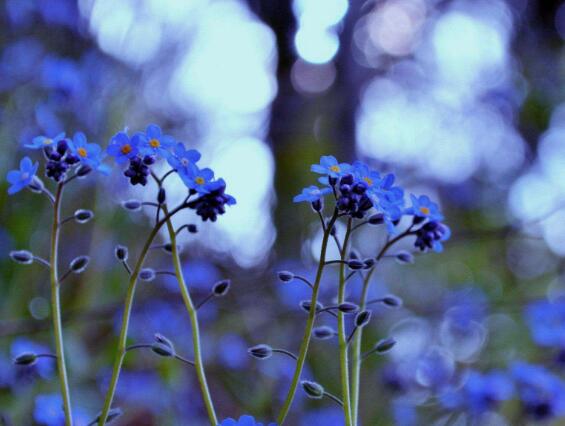
1. Soil Selection
In the process of growing forget-me-nots, soil selection is the first step and a rather important one. Generally, it is best to choose relatively loose soil, as this gives better drainage and is more conducive to its growth. If you choose soil with too high a clay content, it will cause its leaves to turn yellow.
2. Fertilizer Control
Fertilizer is one of the more important nutrients in the growth process of forget-me-nots, but when fertilizing you must also keep it in moderation. If you fertilize too frequently, it will cause the leaves to turn yellow. During the growing process, fertilizing once a quarter is generally enough.
3. Watering Control
Watering is an indispensable part of a plant's growth process, and forget-me-nots are no exception. This plant likes water but fears waterlogging, so when watering, be sure not to let water accumulate, otherwise this yellowing phenomenon will also occur.
4. Light Control
In the growth process of forget-me-nots, light is indispensable. In spring and autumn, when sunlight is relatively suitable, we can choose to place it outdoors to grow, letting it receive ample light. In summer, when the weather is hotter, shading treatment is needed, because the sunlight is too intense, and if it is exposed to the sun for a long time, it will cause its leaves to turn yellow and wither.
5. Temperature Control
The environment is quite important for the growth of forget-me-nots. The most suitable ambient temperature for its growth is between 18-26°C. If the temperature is too high or too low, it will cause the leaves to turn yellow, so everyone should remember this point.
6. Pest and Disease Control
Many pests and diseases can harm the leaves of forget-me-nots and cause them to turn yellow, so at this time we need to promptly prevent and control them. For control methods, everyone can refer to the article on pest and disease control for forget-me-nots, which contains detailed explanations of the prevention and control of various pests and diseases. You can take a look.
In fact, the main cause of yellowing leaves is improper care, so when growing forget-me-nots, you must pay attention to the methods and be careful. As long as you care for them attentively, this phenomenon will generally rarely occur. That is all the editor has to introduce on the question of what to do when forget-me-not leaves turn yellow. I hope it can bring everyone some help.
Complete Guide to Flower Meanings: Pictures and Meanings of Various Flowers
Flower language refers to the various humanized symbolic meanings given by different countries and ethnic groups based on the characteristics, habits, and legends of various plants, especially flowers. It refers to a form of information exchange in which people use flowers to express human language and to express certain feelings and wishes, gradually established by custom under certain historical conditions and recognized by a certain range of people. To appreciate flowers, one must understand flower language. Flower language constitutes the core of flower culture. In floral communication, although flower language is silent, at such times silence speaks louder than words, and the meaning and emotional expression in it surpass speech.Flower language (called language of flowers in English) refers to a form of information exchange in which people use flowers to express human language and to express certain feelings and wishes, gradually formed by convention under certain historical conditions and recognized by a certain range of people. To appreciate flowers, one must understand flower language. Flower language constitutes the core of flower culture. In floral communication, although flower language is silent, at such times silence speaks louder than words, and the meaning and emotional expression in it surpass speech. You cannot, just because you want to express your own feelings, casually give others fresh flowers without understanding flower language first; the result will only be misunderstanding from others.
Flower language first originated in ancient Greece. At that time, not only flowers but also leaves and fruit trees had certain meanings. In Greek mythology, there is a record of the story that the god of love created the rose when he was born, and from that era the rose became synonymous with love. Flower language originated in France in the early 19th century and then spread to Britain and the United States. It was created by some writers, mainly for publishing gift books, especially for the leisure reading of ladies of the upper class at that time.
Flower language truly became popular during the period of the French royal court. Nobles organized and archived folk materials about flowers, which included information about flower language, and such information was perfectly embodied in the garden architecture of the later court period.
The public's acceptance of flower language came in the mid-19th century. At that time, social customs were not yet very open, and expressing love in public was an embarrassing matter, so flowers given between lovers became the messenger of love.
With the development of the times, flowers became a kind of gift in social interactions, and more complete flower language represented the giver's intention.
Rose:
1 rose represents -- You are the only one in my heart
2 roses represent -- There are only the two of us in this world
3 roses represent -- I love you
4 roses represent -- Unwavering until death
5 roses represent -- Sincere appreciation
6 roses represent -- Mutual respect, mutual love, mutual understanding
7 roses represent -- First love
8 roses represent -- Thank you for your care, support, and encouragement
9 roses represent -- Want to spend a lifetime with you
10 roses represent -- Perfect in every way, impeccable
11 roses represent -- Love only you for a lifetime
12 roses represent -- My love for you grows day by day!
13 roses represent -- You are the one I secretly love
14 roses represent -- Pride
15 roses represent -- Night of the full moon
16 roses represent -- Falling at your feet
17 roses represent -- You are my wife
18 roses represent -- Wishing you eternal youth and beauty
19 roses represent -- Patience and expectation
20 roses represent -- I have only one sincere heart
21 roses represent -- Sincere love
22 roses represent -- Wishing you good luck
25 roses represent -- Please love me too
27 roses represent -- Wife~ I love you
30 roses represent -- Falling in love with you is my greatest honor
37 roses represent -- I say I love you in my heart
40 roses represent -- Love that will not change until death
47 roses represent -- You are my only one
50 roses represent -- An unexpected encounter
99 roses represent -- Enduring as heaven and earth, FOREVER!
100 roses represent -- One hundred percent love
101 roses represent -- Favorite
108 roses represent -- Proposal
144 roses flower language -- Love you life after life
365 roses flower language -- Thinking of you every day
999 roses represent -- Enduring as heaven and earth
1001 roses flower language -- Until forever
1314 roses represent -- Love you for a lifetime
Blue Enchantress:
Single-stem Blue Enchantress flower language: Staying together is a promise. Double-stem Blue Enchantress flower language: Meeting is destiny
Three-stem Blue Enchantress flower language: You are my deepest love
Six-stem Blue Enchantress flower language: You are my favorite
Seven-stem Blue Enchantress flower language: Endless blessings
Eleven-stem Blue Enchantress flower language: Wholeheartedly
Twelve stems + baby's breath flower language: Oh, my rose lover, I want to tease you, tempt you, spoil you, indulge you! I want you to be my blue sprite, raise the corners of your mouth proudly to the whole world, and soar in the sky of love
Four-leaf clover:
One leaf represents prayer
Two leaves represent hope
Three leaves represent love
Four leaves represent happiness
Five leaves are for wealth
Six leaves are status and reputation
Seven leaves represent getting the good fortune to survive repeated narrow escapes
Spring Festival
Pine, bamboo, plum: Noble character and sterling integrity
Yellow lily: Happiness, festivity
Beech tree: Prosperity and flourishing
Light pink verbena: Family harmony
Fire lily: Full of joy
White lily: A harmonious union lasting a hundred years, purity. Peach blossom: Grand prospects
Phalaenopsis: Noble purity
Narcissus: Pure and self-loving. Valentine's Day gift for girlfriend
Red rose: Sincere love
Lupine: Happiness
Baby's breath, tricyrtis: Missing
Snapdragon: Joy
Canterbury bells: Tender love
Red tulip: Vow of love
Pink morning glory: Tenderness
Red camellia: Natural beauty
White lilac: Youth, laughter
Yellow tulip: Longed-for love
Patrinia: Purity, tenderness
Purple lilac: First love
Pineapple: Flawless perfection
Sorrel: Love, admiration
Forget-me-not: Eternal love
Phalaenopsis: First love. Valentine's Day gift for boyfriend
Gerbera: Supporting the gentleman
Periwinkle: Pleasant memories
Calla lily: Shyness
Stock: Chastity
Primrose: Youth, beauty
Anthurium: Enduring as heaven and earth
Evening primrose: Silent love
Acorus: Obedience
Lemon tree flower, honeysuckle: Loyal love
Veronica: Female fidelity
Qingming Festival
Remembrance, mourning
Pansy: Longing
Tricyrtis, baby's breath: Missing
Globe amaranth: Simplicity
Asparagus fern: Eternity
Flower hairpin: Sympathy, consolation
Snapdragon: Sorrow
Cypress branches: Mourning
Willow branches: Sadness, mourning, congratulations on opening or completing construction
Lucky bamboo: Evergreen through all four seasons
Chinese rose: Prosperity and success
African daisy: Thriving and flourishing
Peach blossom: Good fortune is coming
Red lily: Beaming with joy
Peony: Wealth and prosperity
Beech tree: Prosperity, flourishing
Sunflower: Respect, eminence
Congratulating a triumphant return
Kapok flower: The flower of heroes
Corn cockle: Bravery
Laurel: Glory
Laurel wreath: A person of merit
Palm: Victory
Congratulating a performance
Oat: Music
Multiflora rose: Genius
Parsley: Triumph
Fennel: Excellence
Balloon flower: Elegance
Dahlia: Grace, nobility
Giving to a friend at parting
Pansy: Longing
Black locust: Friendship
Cardamom flower, peony flower, zinnia: Parting
Giving to a friend for advancement
Canna: Steadfastness
Calla lily: Passion
Boxwood: Resolve
Coltsfoot: God of justice
Fir tree: Loftiness
Fennel: Strength
Hanging branch: Great learning
Palm: Victory
Mother's Day
Carnation: The flower of mothers, the main flower of Mother's Day
Forget-me-not: Eternal love
Jasmine: Amiability
Moss: Motherly love
Mignonette: Noble character
Wood sorrel: A loving mother's love
Pink morning glory: Delicate tenderness
Daylily: Forgotten love (the mother flower of our country)
Dragon Boat Festival
Acorus: Warding off evil and averting disaster
Acorus flower: Gentleness, delicate beauty
Ixora: Striving to be first
Dancing grass: Happiness
Father's Day
Dendrobium orchid: The flower of fathers, fortitude, bravery
Boxwood: Resolve, calmness
Orange tree: Tolerance and magnanimity
Coltsfoot: Justice
Willow tree: Straightforwardness, openness
Grape: Tolerance, universal love
Fennel: Strength
Mid-Autumn Festival
Cassia branch: Great learning
Laurel branch: Honor
Silver grass: The feeling of autumn
Balloon flower: Purity
Patrinia: Pure love
Heather: Solemnity
Bush clover: Elegance
Teachers' Day
Carnation: Kindness, gratitude
Magnolia flower: A noble soul
Rose branch: Seriousness, simplicity
Rose wreath: Virtue
Sycamore: Brilliant talent
Laurel wreath: Merit, honor
Christmas
Poinsettia: Driving out demons and evil spirits
White verbena: Blessing and protection
African daisy: Light, thriving and flourishing
Beech tree: Prosperity, flourishing
Wedding
White lily: Perfection, a harmonious union lasting a hundred years
Anthurium: Everlasting
Silk tree: Mutual love between husband and wife
Ivy, bodhi tree, lemon tree flower: Loyalty, growing old together
Mint: Passionate feelings
Morning glory, Chinese pink: Love forever bound
Spring crocus: Youth
Camellia: True love
Forget-me-not: Eternal love
Birthday congratulations
Pine tree: Wisdom, longevity
Bamboo: Noble integrity
Plum: Braving the snow and frost
Fortune and longevity flower: Abundant fortune and long life
Yellow narcissus: Respect
Orchid: Noble character
Lucky bamboo: Preserving eternal youth
Cineraria: Happiness
Monkshood: Esteem
Bellflower: Gratitude
Snapdragon: Cheerfulness
Visiting the sick
Poppy flower: Comfort
Primrose: Youth
Gladiolus: Strength of character
White poplar: Perseverance, courage
Daisy: Sympathy
Rose petals: Hope
Corn poppy, yarrow, hawthorn: Comfort
Iris: Greetings
Baby's breath: Care
Yellow flower: Encouragement
Wattle: Soothing comfort
January 1 Laurustinus
Flower language: Hope
The laurustinus, native to the Mediterranean, has always been known as an evergreen tree that blooms in the depths of winter. In the cold of winter, the sudden sight of pink buds and white blossoms seems to tell people that spring is near. Therefore the flower language of the laurustinus is: Hope. A person born under the blessing of these abundant flowers is extremely patient and tolerant. He will bring hope to many people, and his own life will be very rich.
February 1 Bay Laurel
Flower language: Pride
In ancient Greece, the crowns worn by emperors and Olympic victors were all woven from bay laurel, a symbol of honor. Therefore the flower language of the laurel is: Pride. Anyone blessed by this flower is both highly talented and respected by others, and will naturally become proud, even unintentionally hurting the other person. Therefore one must learn humility; only by understanding the principle of humility will the honor brought by the laurel tree cover you.
March 1 Chive flower (Leak)
Flower Language: Service
The stem of the chive flower is like that of a scallion, and its greatest function is as food. It is a favorite on the tables of Scots and Welsh. In addition, the Roman Emperor Nero used it as medicine to improve his voice. It is such a useful plant, and therefore its flower language is: Service. Those born under the blessing of this flower are good at social activities and are active leaders whether at school or in society. When it comes to love, they also take the initiative!
April 1 Annual Mercury
Flower Language: Reform
Annual Mercury is the flower dedicated to the eighth-century Bishop of Grenoble, St. Hugh, who devoted himself to the church reform movement. When it blooms, it produces green clustered flowers, and its flower language derives from the reform spirit that St. Hugh embodied. Those born under the blessing of this flower are very earnest and straightforward, and can never overlook unreasonable things. If they must reproach even a tiny fault of their lover, it will be impossible to cultivate affection, and sometimes one must turn a blind eye!
May 1 Red Campion
Flower Language: Friendship
Red Campion is a dioecious plant, with male plants bearing only stamens and female plants bearing only pistils. If it is to reproduce, it must have both male and female plants at the same time. In addition, white campion often blooms beside red campion, and crossing the two produces soft pink flowers. Therefore its flower language is: Friendship. Those born under the blessing of this flower usually have quite good interpersonal relationships and also have many friends of the opposite sex. However, among so many good friends, carefully choosing a lifelong partner is the wise move.
June 1 Yellow Rose
Flower Language: Good Fortune
Roses have played a pivotal role in the gardening world since ancient times, which is to say that the yellow rose can be called the leader among flowers. Therefore its flower language is: Good Fortune. Those born under the blessing of this flower are usually very lucky and do not need to expend much effort to open a path to success for themselves. However, applying this attitude to matters of love will not work. So do not forget that when facing someone you like, you must put in extra effort!
July 1 Agrimony
Flower Language: Do like a baby
Agrimony is a plant with apricot-yellow flowers, and the outer surface of its fruit is covered with a layer of fine hairs. Any person or animal that passes by will pick up its seeds, and in this way they are spread far and wide. So its method of reproduction depends on others, and therefore the flower language of agrimony is: Do like a baby. Those born under the blessing of this flower are especially dependent and lack self-confidence. However, there are quite a few friends of the opposite sex who like this kind of personality, so it seems that acting like a baby really is a winning weapon in the game of love. August 1 Thorn-Apple
Flower Language: Moderately
Thorn-Apple contains narcotic components. A research report by Greek botanists pointed out that when a patient takes an appropriate dose of the medicine, they immediately recover their vitality; when the dose is doubled, they begin to have hallucinations; and if they take three times the dose, it drives them insane. Depending on how much is taken, this plant produces completely different effects, for better or worse. Therefore the flower language of the white thorn-apple is: Moderately. Those born under the blessing of this flower have a very earnest and devoted attitude toward handling matters; when they meet someone they admire, they will also pursue them relentlessly. But please remember that in all things one must know when to stop, otherwise it will end with more harm than good.
September 1 Livelong Sedum
Flower Language: Store
Judging from how Livelong Sedum stores water in its leaves or stems so that it can survive several more days during dry periods or after being picked, this flower possesses the sound trait of preparing for a rainy day. Therefore its flower language is: Store. Those born under the blessing of this flower are people with a sense of planning. They are ordinarily diligent and tirelessly design a blueprint for the future, never idling away their lives. However, life must also include moments of play and relaxation, so letting yourself relax occasionally can add much color to life and make it richer!
October 1 Autumn Snowflake
Flower Language: Sea Wind
Autumn Snowflake grows in clusters along the Mediterranean coast, or is scattered across the small islands of the Mediterranean. This is a plant cultivated through the refreshing sea breeze. Therefore the flower language of the snowflake is: Sea Wind. Those born under the blessing of this flower are like a sea breeze brushing past the face, with a bright and cheerful personality, and are also much loved by everyone. With such a personality, you are better suited to a bright, gentle love; a love that is too passionate or contrary to ethics is unlikely to happen to you.
November 1 Laurustinus
Flower Language: Skillfulness
Because the wood of the laurustinus is very hard and the grain of its trunk is quite beautiful, it is deeply loved by carpenters; that is to say, it is a plant suited for making handicrafts. Therefore its flower language is: Skillfulness. Those born under the blessing of this flower are not only deft with their fingers, but also clever in mind. Such people can overcome the pain brought by setbacks and broken hearts without being defeated by fate, and are people who can fully use their clever minds to live their lives.
December 1 Carrion Flower
Flower Language: Self-contention
The petals have a yellow base with a tea-brown color, and are also covered with a layer of red fine hairs. Moreover, the flower is very large, with a diameter reaching 12 cm, making it quite eye-catching, just like an egoist who insists on their own views. Therefore its flower language is: Egoism. Those born under the blessing of this flower have a very strong sense of egoism. Being so obviously full of themselves, the possibility of breaking up with a lover after a quarrel is very high, and special attention should be paid to the fact that moderate compromise is also very important at times.Every kind of flower has a beautiful legend, and every kind of plant has a romantic interpretation, but no matter how moving the meaning, it cannot be separated from human emotions and expectations. Below is a collection of the flower languages of flowers and trees that carry humanity's beautiful wishes.
The latest and most complete guide to flower languagesFlower name: Forget-me-not (I just learned that its other name is Star Flower. I wonder if this is fate) hahaha;
Flower language: Eternal love, deep affection, a heart that never changesFlower name: Tulip
Flower language: Confession of love, sincere emotion
Red tulip: The voice of a formal proposal
Purple tulip: Everlasting love, dearest
White tulip: Pure friendship
Yellow tulip: Nobility, treasuring, apology
Pink tulip: Beauty, passionate loveFlower name: Carnation
Flower language: Great, sacred, kind, warm maternal love
Red carnation: Passionate love, wishing Mother health and longevity
Pink carnation: Wishing Mother eternal beauty and youth
Yellow carnation: Gratitude to Mother
White carnation: True feeling, purityFlower name: Lily
Flower language: Harmony for a hundred years, smooth career, blessings
White lily: Pure affection, purity
Fire lily: Passionate love
Yellow lily: Nobility, honor, victory
Perfume lily: Wealth and honor, wedding blessingsFlower name: Anthurium (Bromeliad)
Flower language: Grand prospects, great fortune, kindred hearts
White anthurium: Smooth sailing
Bird of Paradise: Lovers in passionate love, a dashing and amorous gentleman
Peony: Wealth and good fortune, prosperity
Phalaenopsis: I love youThe flower language and symbolic meaning of hyacinth: As long as you light the fire of life, you can share a rich life
The flower language of the red hyacinth is - love that moves people
The blue hyacinth is the ancestor of all hyacinths, so its flower language is - life.
Hyacinth flower language: Victory, competition, joy, love, happiness, deep affection, admiration, stubbornness, life
Purple hyacinth: Sorrow, jealousy, melancholy love (having won my love, you will surely be happy)
White hyacinth: Tranquil, quiet love (love one dares not reveal)
Red hyacinth: Thank you, love that moves me (your love fills my heart)
Blue hyacinth: Constancy, chastity, as happy as seeing you.
Yellow hyacinth: Happiness, bliss, very happy to be with you
Pink hyacinth: Admiration, romance
Hyacinth -- eternal remembranceRose: Love, love and beauty, radiant
Rose (red): Passion, loving you
Rose (pink): Moved, declaration of love, engraved in the heart
Rose (white): Innocence, purity, respect
Rose (yellow): Infidelity, jealousy (apology)
Rose (bouquet): Love of happinessLily: Smoothness, wishes coming true, blessings, nobility
Lily (perfume): Purity, wedding blessings, nobility
Lily (white): Purity, solemnity, kindred hearts
Lily (sunflower): Victory, honor, wealth and honor
Lily (hime): Wealth, honor, purity, elegance
Foxtail lily: Nobility, flourishing, outstanding
Corn lily: Persistent love, bravery
Amaryllis: Talent, dignity, outstanding
Christmas lily: Joyous, celebration, true feeling
Alstroemeria: Joy, looking forward to meetingCarnation: Mother, I love you, passion, true feeling
Carnation (red): Believe in your love
Carnation (pink): Passionate love, brightness
Carnation (white): My love endures forever, true feeling, purityIris flower language
Iris (Alice): Good news, messenger, missing you
German iris: Sacred
Small iris: Joining forces to resist, one heartRed rose flower language: I love you, passionate love! Legend says the goddess of love Aphrodite fell in love with the beautiful youth Adonis. One day, he went out hunting and was severely wounded, bleeding without stop. She heard her lover's tragic cry: "Aphrodite..." She flew to rescue him, her hands and feet cut by stones and thorns, her blood dripping all along the way. By the time she arrived, he had already bled out. Wherever her blood dripped along the path amid her heart-rending sobs, vivid red roses bloomed.Begonia flower language: A traveler's homesickness, the sorrow of parting, gentleness, beauty, happiness! Begonia: Bitter love. When people encounter setbacks in love, they often use the begonia flower as a symbol of themselves. The ancients called it the heartbreak flower, using the flower to express the sorrowful feelings of men and women parting.Balloon flower language: Sincere, unchanging love! Legend says there was once a lonely girl named Jiegeng. One day, the young man who came to see Jiegeng every day wanted to pledge themselves to each other for life. Several years later, both had grown up, but the young man had to go far away to fish, and told Jiegeng to wait for him to return. But after a long time he still had not come back, and she waited until old age and until death, yet he still did not return. In the end Jiegeng died and turned into a flower, and afterward people called that flower balloon flower, representing sincere, unchanging love.Calla lily flower language: Pure, happy, elegant, pure love. White calla lily represents: youthful vitality; yellow calla lily represents: noble friendship; orange-red calla lily represents: I like you.Jasmine flower language: Pure and sincere love! It expresses loyalty and respect. Young people use it as a gift for their girlfriend, expressing loyal love to the other person. When a distinguished guest visits, the hospitable host strings jasmine into a wreath and hangs it on the guest's neck to express respect and friendship!Hibiscus flower language: Gentle persistence! The hibiscus blooms in the morning and falls at dusk, but every withering is for the sake of blooming more brilliantly next time. Just like the sun constantly setting and rising, just like spring going and autumn coming as the four seasons turn, yet it is endless and unceasing. It is even more like loving a person: there will be low tides, there will be disturbances, ups and downs are always unavoidable, but nothing will make them waver in their original choice, and the faith in love remains eternal and unchanged.Lilac flower language: Innocence and guilelessness, first love, humility, sorrowful longing, gentle sadness, radiance! It implies love and the hope of a secret mutual bond.Camellia flower language: Lovable, modest and yielding, ideal love, prudence, extraordinary charm! Legend says there was once a lonely woman named Dabu who loved planting flowers and plants very much. Once Dabu went to Kuige Longtan and saw a flower with nine stamens and eighteen petals, and when she looked again it was gone. Later she fell ill. One day a maiden with flowers in her hair and flowers hanging on her chest came to treat her illness. As soon as Dabu saw the flower, she recovered completely, and asked the maiden what flower it was. She said it was the camellia. Later she learned that the maiden was the Camellia Fairy![Red rose] Passionate love;
[Pink rose] Vow of love;
[White rose] Pure love;
[Yellow rose] Eternal smile;
[Deep red rose] I only want to be with you, I only want to know you alone;
[Pink rose] I want to spend my whole life with you, I want to marry you;
[Christmas rose] Love in remembrance;
[Wild rose] Romantic love, going to heaven together with youDaisy flower language: Love hidden deep in the heart; purity, innocence, joy, happiness, peace, hope! In mythology, she was transformed from the forest spirit Belides. When Belides was happily playing with her lover, they were discovered by the god of the orchard, and so she was turned into a daisy while being pursued.Frangipani flower language: Simple love; nurturing hope, resurrection, new life! The blooming period of frangipani is from May to October. It has no mysterious legend, no elegant temperament, no noble bearing, yet it has a very simple appearance - five petals form a fresh flower language full of hope. It is as simple and ordinary as life itself, so it can always be so close to people, without distance..Perfume lily flower language: Love forever, great and pure love! The faint delicate fragrance of the perfume lily, its fresh and elegantly light floral scent, a subtle clear fragrance that seems to exist and yet not, gives people a faint sense of romance. When a breeze passes, a wisp of clear fragrance remains forever in the heart. She contends with no one, has no luxurious colors, only elegant beauty, and not many worldly distractions, but a broad mind and great love!Cherry blossom flower language: Life, happiness for a lifetime without ever giving up, the law of fate is circulation!
Mountain cherry: Smiling at you, beauty of spirit! Western cherry blossom: Education in goodness!
Winter cherry blossom: The mystery of the East! Double-petaled cherry blossom: Gentleness! Primrose: No love other than you! If you want to learn more flower languages, just follow me!
Mountain cherry blossom: Purity / nobility / indifferenceGesang flower language: Cherish the one before your eyes. Tibetans have a beautiful legend: no matter who it is, as long as they find the eight-petaled gesang flower, they will find happiness. At the turn of spring and summer, the snowy plateau has a brilliant good season, and the graceful gesang flowers arrive on the grasslands as promised, bringing good times and also happiness to the bright young girls. So it is also called the happiness flower.White rose flower language: Purity, nobility, innocence, and pure love!Kapok flower language: Cherish the people around you, cherish the happiness around you!Periwinkle flower language: Happy memories, youth forever present, steadfastness! (Also known as: Ri Ri Chun, Ri Ri Xin, Ri Chun Hua, Si Ji Mei, Si Shi Chun, Wu Ban Mei, Yan Lai Hong, Tian Tian Kai.) At the tip of the periwinkle's tender branches, each time a leaf grows, two flowers emerge from the leaf axils, so its flowers are especially numerous, its blooming period especially long, its floral display lush, and its vitality exuberant. It blooms without interruption from spring to autumn, so it has the beautiful name "Ri Ri Chun."Helipterum flower language: Eternal love! Helipterum is a special man-made variety among chrysanthemums. Seen from afar, it looks like beautiful fish scales glittering in the sunlight.Peony flower language: fulfillment, deep affection, wealth and honor, elegant and noble!
Japanese anemone: life, expectation, faint love!
Red peony: king of a hundred flowers, its flower language is 'wealth and honor, fulfillment', attribute fire!
Purple peony: 'embarrassment', attribute dark!
White peony: noble and pure, dignified and elegant, graceful in countless ways, national beauty and heavenly fragrance, a person who keeps their word!
Green peony: life, expectation, faint love, giving with all your heart!
Black peony: love even in death!
Pink peony: elegant and noble!
Yellow peony: bright, wealthy and noble!Cactus (devil's tree, jade lotus): strength!
Legend says the cactus was once the most delicate thing in the world, tender as water, losing its life at the slightest touch. God could not bear it, and placed a suit of armor over her heart, hard as iron, set with sharp spikes that wounded others. Every creature that came near her was left bleeding. Later a brave man came to destroy it, and the cactus split in two, flowing with green liquid - it turned out that was the sealed heart of the cactus!Mint flower language: may I meet you again, love me once more, and it also symbolizes 'virtue'!
Legend: Hades, king of the underworld, fell in love with the beautiful nymph Minthe, and the king's wife, consumed with jealousy, turned her into an unremarkable little plant by the roadside. But after kind Minthe became a little plant, she carried this cool fragrance, growing stronger the more she was trampled. And so more and more people fell in love with her - mint.Blue iris: drifting and shattered passion in destiny, exquisite beauty, yet fragile and fleeting!
White iris: innocence!
Yellow iris: everlasting friendship, warmth and cheerfulness!
Purple iris: love and good fortune!Gardenia flower language: eternal love and promise, a lifetime of waiting and joy, just like the vibrant summer full of unknown hope and joy!Forget-me-not flower language: eternal love, deep affection and friendship, a heart that never changes
! Legend has it that in ancient Europe, a knight was touring the seaside with his beloved. His sweetheart saw a cluster of flowers standing in the water and wanted to pick them to wear. To please her, the knight waded in to pick them, but was swept away by the surging tide. Before being carried off, he still remembered to throw the flowers onto the shore and shouted to his love: "Don't forget me!" From then on, this flower was named forget-me-not, becoming a token of love!Cornflower flower language: slender, elegant, meeting happiness, the happiness of being single
. Legend says some young girls liked to press picked cornflowers flat and place them in their underclothes. After an hour, if the petals remained flat and broad, it meant they would meet their future other half. Hence the flower language is: meeting. Anyone blessed by this flower will meet many benefactors in their life. A cornflower-like girl seems never to grow up, always as sweet and lovely as a little girl.Spider lily flower language: the tenderness of a demon!
Legend says an extremely ugly demon fell in love with a beautiful girl, but the girl did not love him. Out of love, he could only imprison her. Later, a warrior rescued the girl and fell in love with her, and at the same time, the warrior killed the demon with his sword. The demon's blood splashed into the wild grass, and a flower of red and black bloomed brilliantly there. This flower is called the "spider lily".Epiphyllum flower language: the beauty of an instant, the eternity of a moment!
Legend: the epiphyllum was originally a little flower fairy in heaven. Later she fell in love with a mortal named Weituo. When the Jade Emperor learned of this he was furious, and turned the epiphyllum into a small flower, letting her bloom for only one shichen each day. The epiphyllum was deeply devoted; she calculated the time when Weituo went down the mountain to fetch water after dinner each day and chose to bloom at that moment, hoping only to see her beloved once. Thus came the legend of "the epiphyllum blooms but once, only for Weituo".Ginger lily flower language: keep memories forever in summer.
When love reaches a certain point it has no future. The best state of loving someone is like the flower language of the ginger lily, forever keeping memories in summer. Life is like this: at a particular time you meet a particular person, with no reason and no excuse, only because of that person. Having walked through countless mountains and rivers, no more words are needed, only a gentle greeting: so you are here too! Love is filled up in that single phrase!Rosemary flower language: keep the memories (sweep away sorrow in memory, you make me reborn)!
Legend says rosemary flowers were originally white. On the way when the Virgin Mary fled to Egypt with the infant Jesus, the Virgin once hung her cloak on a rosemary tree, and from then on the rosemary flowers turned blue. It also gained a fragrant, noble air and possessed divine power, and was planted all around churches.Calla lily (also known as Guanyin lotus, arrowhead flower): happiness, purity, symbolizing "holy devotion, eternal union of hearts, good fortune and wishes fulfilled"!
In Western countries it is a common flower for bridal bouquets. Colors include white, red, yellow, silver-star and purple-spotted. Generally speaking, the white ones are called calla lilies, and the colored ones we call alocasia. Suitability and taboos: suitable as a bride's bouquet; small white varieties are suitable as gifts for young friends; do not give orange-red varieties to ordinary friends of the opposite sex; give an even number, not an odd number!Lucky bamboo flower language: health, longevity!
Lucky bamboo is suitable for decorating the living room and study. Decorative use: young plants in small pots can be placed on a desk or windowsill for viewing. It is famous for its unique air-purifying ability and can remove: nicotine, formaldehyde. The higher the concentration of pollutants in the air, the better it can exert its purifying ability! (And it is also the best gift for fathers. Did you give it today? Happy Father's Day to all fathers!)Water hyacinth flower language: this feeling never changes!
It survives tenaciously, endlessly, yet in the cycle of growth it stubbornly strives to bloom, not to prove itself, but only to add another wisp of fragrance to the earth. This is a never-ending pursuit of the future, a humble life struggling in circumstances where ideals are constantly shattered and beliefs constantly crushed, tenaciously fighting for a pure land of its own. If this is not a devotion to feeling and to life unto death, then what is it?Carnation flower language: Mother, I love you, passion, true feeling
Carnation (red): believe in your love, wishing mother health and longevity.
Carnation (pink): love, brightness, wishing mother eternal beauty and youth.
Carnation (white): my love is forever, true feeling, purity, and it can also express mourning and longing for a deceased mother!
Carnation (yellow): represents gratitude to mother.Peach blossom flower language: captive of love!
Legend says Emperor Xuanzong of Tang and Consort Yang both loved peach blossoms. A thousand peach trees were planted in the forbidden garden. Every time the peach blossoms bloomed, they met in the peach garden, and each time the emperor would pick a peach blossom and put it in his favored consort's hair, saying "this flower best enhances charm". Peach blossoms are so lovely, how could one not love them!!Hepatica flower language: endurance, patience!
Hepatica is breathtakingly beautiful and fierce. It blooms after the snow, fighting the bitter cold in snowy fields, without a gorgeous appearance yet enduring the cold to display its own life, and it withers when the winter snow melts and spring arrives. This is a curse, and also destiny. The hepatica's flowering period is brief, so it stakes everything on one throw, shining at the edge of the sky. This is a promise, a promise to life. A flower bearing a curse and a promise - without extraordinary endurance and patience, could it withstand the test and display its own life?Black rose flower language: tender and sincere; one of a kind! 1 rose: only you in my heart, ONLY YOU! 2 roses: only the two of us in this world! 3 roses: I love you, I LOVE YOU! 4 roses: steadfast unto death! 5 roses: heartfelt appreciation! 6 roses: mutual respect, mutual love, mutual understanding! 7 roses: I secretly love you! 8 roses: thank you for your care, support and encouragement!Lotus flower language: pure, steadfast and pure!
Legend says there was once a fairy in heaven who envied life in the mortal world. She heard that West Lake was very beautiful, and while the Queen Mother of the West was away from home, she descended to the sky above West Lake. The fairy was captivated by the beautiful scenery here. Later the Queen Mother learned of it and sent heavenly soldiers and generals to capture her. Before leaving West Lake to return to the heavenly palace, the fairy's tears dripped into West Lake. She also threw her jade hairpin into West Lake, and after a while, West Lake was covered with blooming lotus flowers. From then on, flowers bloomed and fell, year after year.Jacaranda flower language: waiting for love in despair; represents tranquility, depth, hesitation!
The flowering period is from April to June! In winter the leaves all fall, appearing so mediocre and aged, representing despair, but when spring comes, before the leaves even unfurl, the whole tree is covered in purple flowers that astonish everyone, so it is called waiting for love in despair!Azalea flower language: represents the joy of love, moderation, moderating desire!
It is said that people who like this flower are pure and innocent!
The motto of the azalea is that when you see azaleas blooming all over the mountain, it is the time when the god of love descends! Its flower language is "moderation", mostly because it only blooms in its own flowering season, even though azaleas always give people a lively and bustling feeling. When it is not the flowering season, its dark green leaves are also very suitable for planting in gardens as a low wall or screen!!Evening primrose flower language: silent love, an unyielding heart, a free heart, a beauty after bathing, magic!Night-blooming jasmine flower language: a pure heart, happiness, beauty, independence, rebellion!
Night-blooming jasmine has a striking fragrance, and its strong scent has the special effect of repelling mosquitoes. It can be placed on a windowsill or balcony.
Reminder: night-blooming jasmine is a plant that is not good for human health, and it is best not to put it indoors. It will affect people's normal sleep!Redbud flower language: family affection, harmony among brothers!
Legend says that during the Eastern Han dynasty, the official Tian Zhen and his brothers Tian Qing and Tian Guang divided up the family property. All the property had been divided, and the remaining redbud tree was to be split into three parts. At dawn, when the brothers came to cut the tree, they found it had already withered, with fallen flowers all over the ground. Tian Zhen could not help sighing to heaven: "People are not as good as trees!" From then on the three brothers no longer divided the family and lived in harmony, and the redbud tree regained its vitality, with abundant flowers and lush leaves.Water lily flower language: pure, high above, innocent of worldly affairs, untouched by dust! Legend says there was once a girl who, while searching for a water source, met a fish with very beautiful blue scales. The fish promised to bring her a jar of water every day if she came to meet it. On the third day the girl fell in love with the fish. Later the villagers found out and killed the fish. She held the fish and walked toward the river. And so they died under people's astonished and suspicious gazes. But their offspring multiplied in the water for generations. That is the water lily.Peony flower language: beautiful and charming, reluctant farewell, hard to part! Legend says the famous ancient Greek physician Asclepius had a clever student, Paeon, who surpassed his master and even healed the wound of Hades, god of the underworld. In jealousy, Asclepius killed young Paeon. Fortunately the king of the underworld remembered the kindness and turned young Paeon into a healing flower, the peony.[Pansy] A beautiful red flower, its flower language is 'thoughtfulness'!
[Yellow pansy] A pansy with yellow petals, its flower language is 'mixed sorrow and joy'!
[Purple pansy] A pansy with purple petals, its flower language is 'silent'!
Why does the pansy have three colors? Myth says the violet flower was originally single-colored, and it was only dyed into three colors by the juice that flowed when the goddess Venus whipped it out of jealousy, hence it is called the pansy.Champagne rose flower language: I only love you alone & falling in love with you is the greatest happiness of my life, missing you is my sweetest pain, being with you is my pride, without you I am like a ship that has lost its course. When a man proposing holds champagne roses to give to the woman, it means: I am worthy of you.Peach blossom flower language - captive of love: people often speak of peach blossom luck; peach blossoms can bring opportunities for love. With the blessing of peach blossoms, believe that you will soon have your own love, so its flower language is captive of love. The ancients once used "the girl's face and the peach blossoms reflect each other's red" to praise a young girl's delicate beauty. Cui Hu of the Tang dynasty's peach...Honeysuckle flower language: mandarin ducks in pairs, devoting all your heart to giving love to you!
Honeysuckle can be cultivated at home. It is a famous garden flower, beautiful in both flower and leaf, evergreen and never withering, suitable as material for vertical greening of fences, balconies, green corridors, flower stands and trellises, and can also be potted. If some brightly colored flowers are also arranged alongside, then heavy makeup and light touch complement each other, with a unique charm! The poet Duan Ke wrote: "There is a vine, the egret vine, born not of man, golden flowers interspersed with silver stamens, verdant and clustered naturally."Yimi flower language: fleeting love, the beauty of an instant, miracle!
Legend says the Yimi flower grows on the Gobi desert of Africa. The Yimi flower is very peculiar: each flower has four petals, one color per petal - red, yellow, blue, white - extremely gorgeous and colorful. The Yimi flower has only one slender root stem, and it must take five years to complete the rooting of its roots into the soil, only budding in the sixth year. But the flowering period is only two days, and after two days the Yimi flower, flower and stem together, withers and diesQiong flower language: beauty, romance, perfect love!
The Qiong flower is the city flower of Yangzhou and one of the three treasures of Kunshan. With its elegant demeanor and unique charm, as well as its legendary and romantic tales and anecdotes, it has won the deep affection of the world and endless praise from literati, and is called a rare and wondrous flower and "China's unique immortal flower". Zhang Wen wrote in<琼花赋>describing it: "Its lovely countenance rivals jasmine, it laughs at the rose as worldly; only the narcissus can match its quiet leisure, and the riverside plum seems to share its clear purity."Heath flower language: harmony, bearing, solitude!
It endures the onslaught of bitter cold and wild winds, yet grows urn-shaped flowers with purple petals, bringing a trace of spring to the wilderness. This flower is called the "flower of bravery".
It is said that a child searching for his mother over a thousand miles picked a flower of bravery at the edge of a cliff, and afterward went through countless hardships, breaking through obstacle after obstacle, and finally found his mother. (There are about seven hundred species of heath in the world! The picture below is Christmas heath!)Marguerite (Marguerite de Valois) also known as: chrysanthemum cinerariaefolium, bush chrysanthemum! (Also known as: maiden flower) Flower language: predicting love, secret love, nobility, expected love, please remember me!
The marguerite is a flower that can predict love. Legend says that as long as you hold a marguerite and pluck the petals one by one, saying "loves me, loves me not, loves me, loves me not..." when you count the last petal, you can divine the outcome of the romance!Wisteria flower language: intoxicating love, lingering longing; devotion to you, the happiest moment; infatuated love!
Legend says a loving man and woman, opposed by their parents, both jumped off a cliff for love. At the edge of the cliff grew a tree, entwined by a vine, which put out cluster after cluster of blossoms, purple tinged with blue - wisteria. Wisteria must entwine a tree to grow and cannot survive alone, so some say wisteria is the incarnation of the girl and the man is the incarnation of the tree! Born for passion, dying for love!Clover (Trifolium) flower language: happiness! If anyone finds a clover with four leaflets, that is, four-leaf clover (also called lucky clover), they will gain happiness!
Irish folklore holds that the four-leaf clover brings good luck and it is Ireland's most famous national symbol. At traditional Irish weddings, the bride's bouquet and the groom's boutonniere must both include lucky clover. Lucky clover is considered an indispensable third person at the wedding!Dahlia flower language: generous, richly beautiful, gratitude, fresh, novel, new meaning! (Also known as: Dahlia, heavenly lotus, Oriental chrysanthemum, tiao flower) According to statistics, there are already more than 30,000 dahlia varieties, making it one of the species with the most flower varieties in the world. The dahlia has many famous names for its colors and flower forms, rich and varied, and is one of the world's famous flowers.Blue datura flower language: false feeling, deceptive love!
Datura flowers always bloom near execution grounds; they are like calm bystanders, recording every moment as life gradually fades. Medically this flower is poisonous and can produce strong hallucinations and allergic reactions. Legend says datura likes to grow in places without people; it is a cursed flower!Silk tree flower language: eternal love, facing each other in pairs! The national flower of Australia! It is said that Yu Shun died on an inspection tour to Cangwu, and his consorts Ehuang and Nüying searched all along the Xiang River but never found him. The two consorts wept all day, and when their tears ran out they wept blood, and when the blood ran out they died, becoming spirits. Later, people discovered that their spirits and Yu Shun's spirit "became one", turning into the silk tree. The leaves of the silk tree open by day and close by night, loving each other. From then on, people often used the silk tree to express steadfast and unchanging love.Black datura flower language: unpredictable darkness; death and a life of wandering love! Legend says every pot of black datura houses a spirit, and they can help you fulfill your wishes! But they also have an exchange condition, and that is human blood! As long as you water the black, bewitching datura flower with your own blood, the spirit in the flower will help you fulfill your wishes! It can only be watered with blood, because they love this passionate yet deadly feeling!Amaryllis flower language: longing to be loved. Pursuing love. (Also known as: pair orchid, amaryllis, knight's lily, lily of the Nile)
Amaryllis leaves are thick and glossy, the flowers soft and gorgeous, and the blooms large and full. It is suitable for potted display in the living room, study and on windowsills.Pink Chinese rose flower language: first love, elegance, nobility, gratitude! One of China's top ten famous flowers. The Chinese rose is hailed as the "queen of flowers". It also has a tenacious and unyielding spirit, and its fragrance carries far! It is the city flower of Beijing, Tianjin and other cities!Goldenrod flower language: solitude, charity, brilliance! Goldenrod was chosen to honor the second-century Roman pope Victor, who had strong healing power through spreading Christianity. People born blessed by this flower like solitude, have abundant compassion, possess a strong character, and have a fairly independent personality.Edelweiss (Leontopodium alpinum) flower language: bravery, important memories! (Also known as: fireweed, thin snow grass) In Austria, edelweiss symbolizes bravery, because wild edelweiss grows on high mountains in harsh conditions, and ordinary people find it hard to see its beautiful face. Many young Austrians risk their lives to climb steep cliffs, just to pick one edelweiss to give to their beloved, because only edelweiss can represent the determination to sacrifice everything for love.Adonis flower language: memories, endurance, persistence! (Also known as: ice flower, flower in the ice, ice youth flower, ice-cold flower) It is the earliest herbaceous flower to bloom in the ice and snow, and enjoys the fine name "snow lotus of the forest sea". In Western myths and legends, the handsome youth Adonis, to comfort his lover Venus who mourned his death, was reincarnated as the Adonis flower.Strawflower (Helichrysum bracteatum) flower language: eternal memory, engraved in the heart!Borage flower language: courage, wit! Anyone born blessed by this flower has a quick mind, is sharp in reaction, diligent and loves work.Crape myrtle flower language: infatuated love, good luck! (Also known as: mantanghong, full-meal flower) It is a very interesting flowering tree, with a special trait: "crape myrtle blooms red for a hundred days, stroke the branch and the whole tree moves." So it is also called the tickle tree!Spider flower language: mystery! (Also known as: Western white flower vegetable, swallowtail grass, purple dragon whisker) Spider flower - many flowers and colors, quite beautiful. The flowers open in the evening and wither the next day, so this flower can be called a flower of summer nights; its brief life gives a feeling of illusory impermanence.Hydrangea (also known as: eight immortals flower, purple sunshine flower) flower language: hope; loyalty, eternity; happiness, reunion! People born blessed by this flower are extremely patient and tolerant. They will bring hope to many people, and their own life is also very richFour o'clock flower language: conjecture, suspicion, caution! (Also known as: grass jasmine, rouge flower, landmine flower, white powder flower) In the past, girls, when they had no cosmetics or nail polish, used the juice of its petals as pigment to dye their nails. The flowers can be picked and squeezed for juice, which can be applied to the lips, so it is also called "rouge flower"; the seeds are rich in white endosperm, which turns into a white powder when dry and can be used to apply to the face, hence the name "white powder flower"!Freesia (also known as: little freesia) flower language: purity, deep affection, clear fragrance! Legend says that in the early 18th century, this flower was still in a wild state. One day, a noble young lady from the Netherlands was hunting in South Africa with her lover and saw this wondrous flower for the first time. She loved it very much and later personally dug it up and brought it back to Europe. The flowers, giving off a delicate fragrance, were blown by the wind onto the snow along the way, and as a result even the ice and snow were tinged with the rich scent, so people gave it a lovely name: "fragrant snow orchid".Mimosa flower language: shyness (Shyness)! Mimosa is a wondrous plant that can foretell changes in sunny and rainy weather. If you touch it with your hand, its leaves quickly close, and when they open it is very slow, this indicates the weather will clear up; if when you touch the mimosa its leaves shrink slowly, droop slowly, or even close a little and then reopen, this indicates the weather will turn from clear to overcast or it is about to rain.Pomegranate flower language: mature beauty, wealth and honor, many blessings and long life, children and grandchildren filling the hall, prosperity and a thriving fire, full of vitality! Legend says eating pomegranate can remove jealousy and hatred from the heart.Aloe (Aloe) flower language: love that is both self-respecting and self-doubting! The source of youth! Quietly observe this bunch of wondrous little flowers; they have no swaying, graceful flower posture, no dazzling, eye-catching colors. She does not compete with a hundred flowers for fragrance and beauty; she just blooms calmly and composedly, silently devoting her own value!Bougainvillea flower language: passion, unyielding perseverance, tenacious striving; without true love it is a kind of sorrow! Bougainvillea in brilliant purples and reds can be seen everywhere, leaves linked to leaves, branches to branches, bright and fervent. When it blooms at its most splendid and colorful, among the red and purple one can hardly find a trace of green leaves. Yet such a passionate and unrestrained flower's language is actually "without true love it is a kind of sorrow".Milk vetch (also known as: grass seed) flower language: happiness, expectation without love! Happiness is not inevitable; as long as you know how to cherish it, happiness is within easy reach.Daylily (also known as forget-sorrow grass) flower language: forgotten love; represents "forgetting all unhappy things"; letting go of him (her) and letting go of sorrow; hidden feelings! Daylily is also China's mother flower!Bird of paradise (also known as: paradise bird) flower language: freedom, happiness, unrestrained elegance, a boy dressed up for love; no matter when, no matter where, never forget that the one you love is waiting for you!Twin flower language: missed love! Twin flowers, two blossoms on one stem, yet always opening in opposite directions. But when the flowering period is about to end, the two flowers will twist their stems with all their strength, and at the moment of falling they finally face each other for the one and only time. Twin flowers that loved all their lives yet faced away from each other finally meet on the eve of death.Tianshan snow lotus flower language: tenacious, noble, auspicious! Legend says the snow lotus is a "fairy thing" given by the creator to **. Legend says the snow lotus was scattered by fairies when the Queen Mother of the West of the Jade Pool went to bathe in Tianchi. In local folk custom, the snow lotus carries a mysterious color; when high-mountain herders encounter a snow lotus on their journey, they consider it an auspicious sign, and even drinking the water droplets on the snow lotus bracts is believed to ward off evil and prolong life!White magnolia flower language: noble and pure, fragrant, pure, steadfast and unchanging love!Lupine flower language: maternal love, hardworking endurance, dedication.Louis XIV flower language: I only love you alone! Named after "Sun King" Louis XIV, symbolizing nobility and authority. For thousands of years people have been seeking that single-minded, harmonious love of holding hands and growing old together. From the moment of holding hands, they long for a love of mutual companionship and devotion, yet life's storms are ever-changing, and how many passionate lovers end up parting unhappily. Therefore, do not hold hands carelessly, and even more, do not let go carelessly. In this life, meeting is the most beautiful thing...Narcissus flower language: respect; please do not forget me; narcissism; intoxication!
Legend says in Greek mythology the beautiful maiden ECHO fell in love with the beautiful youth Narcissus, but was rejected. Narcissus was punished by falling in love with his own reflection in the water, and over time he turned into the narcissus. Anyone born blessed by this flower loves themselves deeply but cannot open their heart to accept others. Such people find it hard to obtain true love, and must open their hearts more.
Flower language
The perfect camellia is my love poem, the grateful narcissus is my old friend, the warm azalea is my wife, the friendly chrysanthemum is my close friend, the foolish geranium is my rival in love, the rose of love is my first love, the pure lily is my sweetheart, the tranquil orchid is my mother, the proud lotus is my past, the gorgeous hibiscus is my bride, the enduring plum blossom is my ideal, and there is also, there is also, the forget-me-not of true love.