What to do when Monstera leaves turn yellow? Care methods and environment are the main causes
Monstera leaves stay green all year round, but if the plant is not cared for properly, the leaves can turn yellow. So what should you do when Monstera leaves turn yellow? Besides adjusting your care methods, you also need to find the cause and take the right steps to fix it.
What to do when Monstera leaves turn yellow
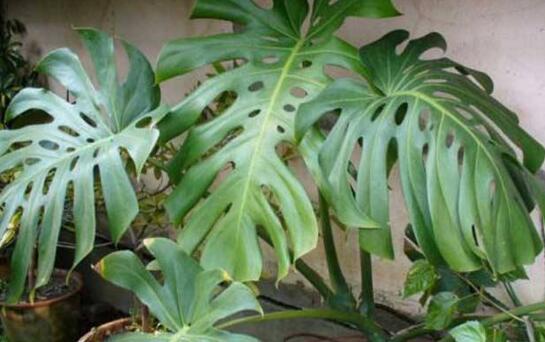
Yellowing leaves usually mean the plant's health is having problems. So what should you do when Monstera leaves turn yellow? It is mainly caused by several factors: soil, watering, light, temperature, fertilizer, and pests and diseases. Below we take a detailed look at the specific causes and solutions.
1. Caused by watering
1. Long-term lack of water
Monstera prefers a moist environment. Long-term lack of water will not only cause the soil to clump, but also lead to poor growth due to water shortage. If you notice yellowing leaves after not watering for a long time, it is usually caused by too little watering.
Solution: In summer, water twice a day; in spring and autumn, water once a day; in winter, you can appropriately reduce the frequency of watering. Do not water excessively each time, and follow the principle of not letting water accumulate.
2. Too much watering
If every time you water you let the water rise above the plant's roots and leave it in waterlogged conditions for a long time, its leaves will turn yellow. So what should you do when Monstera leaves turn yellow? Here is how.
Solution: Repot the Monstera and reduce the amount of water each time, following the principle of alternating dry and wet. Do not water when the surface of the potting soil is not dry, and stop watering once it is moist.
2. Soil
Although Monstera does not have high requirements for soil, clayey or slightly clayey soil can affect root development, and when too much water is given, the water cannot drain away in time, which first causes the leaves to turn yellow.
Solution: When choosing soil, it should mainly be slightly acidic. Usually, pay attention to loosening the soil or repotting to prevent the soil from becoming compacted.
3. Light
1. Long-term exposure to strong sun
Some people grow Monstera outdoors or in a courtyard, and this often leads to a problem: in summer it gets scorched under high temperatures, and the leaves develop what people commonly call sunburn yellowing.
Solution: If it is grown outdoors, provide shade when the sunlight is strong. Also, when choosing a planting location, try to choose a shady spot, because Monstera is a plant with good shade tolerance.
2. Lack of light
If Monstera is kept in a shaded environment for a long time, it will lack photosynthesis, causing some leaves to turn yellow prematurely, so it should receive a certain amount of light.
Solution: Move the Monstera to a place with some light and cut off the yellowed, withered leaves.
4. Fertilizer
One cause of yellowing leaves is lack of fertilizer, and many people do not like to fertilize their Monstera, which is not good for its development and growth.
Solution: If Monstera leaves turn yellow due to fertilizing, what should you do? The answer is to spray with alum fertilizer water, then fertilize it regularly.
5. Temperature
In winter, Monstera leaves turn yellow quite easily, because the temperature at this time is generally relatively low, and Monstera can suffer cold damage at 5 degrees.
Solution: Move the Monstera indoors or to a warmer place, and avoid leaving it in an environment below 5 degrees for a long time.
6. Pests and diseases
Pests and diseases will not only cause leaves to turn yellow, but also have a fatal effect on the health of the Monstera. If not taken seriously, it will soon die.
Solution: Usually pay attention to the care of the Monstera. When pests and diseases appear, treat them promptly, but more importantly, adopt reasonable care to prevent them.
Summary: The causes that make Monstera leaves turn yellow can actually be summarized into two types: environment and care methods. As long as its growing environment is suitable and the care methods are correct, yellowing leaves can be avoided.
What to do when Monstera leaves turn yellow? Solutions for yellowing Monstera leaves
Many gardening enthusiasts report that yellowing Monstera leaves are quite a serious problem. What causes it? How can it be effectively solved? Next, let us introduce in detail the causes and solutions for yellowing Monstera leaves to help everyone grow Monstera better.
Causes and solutions for yellowing Monstera leaves:
My Monstera is sick. The edges of its leaves are starting to turn yellow, and there are dry spots on the leaves. Is it about to die? How much should I water at one time?
Monstera is an evergreen climbing plant, often used in indoor potted plant arrangements at home. Growing Monstera is not troublesome, but occasionally improper care can also cause its leaves to turn yellow. Below we look at the causes and solutions for yellowing Monstera leaves:
Causes of yellowing Monstera leaves: 1. Unsuitable soil
Monstera was originally a parasitic plant, and its well-developed root system consists of fleshy roots, which have relatively high requirements for loose, breathable soil. Clayey and slightly clayey soil will affect root growth to varying degrees. If the soil is not breathable or has not been changed for a long time, the soil may become compacted, affecting the respiration of the Monstera, causing poor growth and yellowing leaves.
Solution: For a home potted Monstera, the growing medium can be a mixed soil made of 2 parts aged loess, 1 part honeycomb coal ash, and 1 part chicken manure. This can both ensure the breathability of the potting soil and meet the fertilizer requirements needed for growth.
Causes of yellowing Monstera leaves: 2. Too much or too little watering
Too much water will cause root rot in Monstera, while too little water will cause poor growth due to water shortage. Both situations will cause yellowing leaves in Monstera.
Solution: Water Monstera regularly, watering thoroughly each time, and keep the surface of the potting soil slightly dry. When the air is dry, sprinkle water on the surrounding environment and on the Monstera leaves.
Causes of yellowing Monstera leaves: 3. Light too strong or too dim
Monstera is shade-tolerant, but if it is kept in a shaded environment for a long time, photosynthesis will be affected and the leaves will turn yellow. At the same time, Monstera should not be placed in strong light, as strong light will scorch the leaves and cause them to turn yellow.
Solution: In summer, pay attention to shading Monstera; it is best to give it some scattered light.
Causes of yellowing Monstera leaves: 4. Temperature too low
The suitable growth temperature for Monstera is 20-25°C. In winter, the nighttime temperature should not be lower than 10°C during the seedling stage. Mature plants can tolerate 5°C for a short time, and below 5°C they are prone to cold damage, causing the leaves to turn yellow.
Solution: In winter, the roots of the Monstera need appropriate warmth to enhance the plant's cold resistance, but do not place the Monstera directly on a radiator or next to an air conditioner.
Causes of yellowing Monstera leaves: 5. Too little fertilizer
Iron is a necessary raw material for plants to synthesize chlorophyll. If the soil or fertilizer lacks iron, it will affect the Monstera's chlorophyll synthesis, causing the leaves to lose green and turn yellow.
Solution: For yellowing leaves caused by iron deficiency, apply alum fertilizer water or spray a 0.1-0.3% ferrous sulfate solution.
Causes of yellowing Monstera leaves: 6. Poor ventilation
Poor ventilation will cause the Monstera leaves to turn yellow from stuffiness.
Solution: Keep indoor ventilation good. You can also place the Monstera indoors for viewing during the day and move it outdoors at night.
Causes of yellowing Monstera leaves: 7. Disease
Monstera gray leaf spot disease, also known as leaf blight, is a common disease of Monstera. When the disease is severe, it can cause the leaves to wither and die. It usually occurs more severely when the indoor temperature is low or after exposure to smoke or pest damage, and the disease mostly appears on old leaves.
Solution: For Monstera prevention and control, strengthen cultivation management and also pay attention to controlling room temperature, which should not be too low. Control pests promptly, cut off diseased leaves or diseased tissue on the leaves, and destroy them together. For chemical control, spray 0.5% Bordeaux mixture or 50% Tuzet 1000x solution.
Monstera is a potted foliage plant favored for home growing. If care is not proper, Monstera is very prone to yellowing leaves, which affects its ornamental value and, in severe cases, can affect its growth or even cause the plant to die. Monstera likes a warm, humid living environment and must not be exposed to strong sunlight or dryness. The suitable growth temperature is 20-25°C. In China, especially in northern regions, the environment of high temperature and high humidity in summer and cold, dry winters is not suitable for Monstera growth.
What to do when Monstera leaves turn yellow: causes and solutions for yellowing Monstera leaves
Because Monstera is a very good indoor ornamental plant, many people like to grow it. But during the growing process, you may encounter yellowing Monstera leaves, so what should we do? Below, let us look at the causes and solutions for yellowing Monstera leaves.
1. Sudden environmental changes cause Monstera leaves to turn yellow: the cause is sudden environmental change, with too great a sudden change in soil, temperature, humidity, and light. Monstera was originally a parasitic plant, and its well-developed root system consists of fleshy roots, which have relatively high requirements for loose, breathable soil. Clayey and slightly clayey soil will affect root growth to varying degrees. If the soil is not breathable or has not been changed for a long time, the soil may become compacted, affecting the respiration of the Monstera, causing poor growth and yellowing leaves.
Solution: For a home potted Monstera, the growing medium can be a mixed soil made of 2 parts aged loess, 1 part honeycomb coal ash, and 1 part chicken manure. This can both ensure the breathability of the potting soil and meet the fertilizer requirements needed for growth.
2. Too much watering causes Monstera leaves to turn yellow (water yellowing): too much water will cause root rot in Monstera, and this situation will cause yellowing leaves.
Solution: Water Monstera regularly, watering thoroughly each time, and keep the surface of the potting soil slightly dry. When the air is dry, sprinkle water on the surrounding environment and on the Monstera leaves.
3. Long-term lack of water causes Monstera leaves to turn yellow (drought yellowing): too little water will cause poor growth due to water shortage, and this situation will cause yellowing leaves.
Solution: Water regularly with a sufficient amount of water
4. Scorching sun causes Monstera leaves to turn yellow (sunburn yellowing): placing Monstera in strong light will scorch the leaves and cause them to turn yellow.
Solution: In summer, pay attention to shading Monstera.
5. Dry air causes Monstera leaves to turn yellow: dry air will cause the Monstera leaves to turn yellow from stuffiness.
Solution: Keep indoor ventilation good. You can also place the Monstera indoors for viewing during the day and move it outdoors at night.
6. Insufficient sunlight causes Monstera leaves to turn yellow (light-deficiency yellowing): Monstera is shade-tolerant, but if it is kept in a shaded environment for a long time, photosynthesis will be affected and the leaves will turn yellow.
Solution: It is best to give the Monstera some scattered light.
7. Temperature too low causes Monstera leaves to turn yellow: the suitable growth temperature for Monstera is 20-25°C. In winter, the nighttime temperature should not be lower than 10°C during the seedling stage. Mature plants can tolerate 5°C for a short time, and below 5°C they are prone to cold damage, causing the leaves to turn yellow.
Solution: In winter, the roots of the Monstera need appropriate warmth to enhance the plant's cold resistance, but do not place the Monstera directly on a radiator or next to an air conditioner.
8. Long-term lack of fertilizer causes Monstera leaves to turn yellow (fertilizer-deficiency yellowing): iron is a necessary raw material for plants to synthesize chlorophyll. If the soil or fertilizer lacks iron, it will affect the Monstera's chlorophyll synthesis, causing the leaves to lose green and turn yellow.
Solution: For yellowing leaves caused by iron deficiency, apply alum fertilizer water or spray a 0.1-0.3% ferrous sulfate solution.
9. Pests and diseases cause Monstera leaves to turn yellow: Monstera gray leaf spot disease, also known as leaf blight, is a common disease of Monstera. When the disease is severe, it can cause the leaves to wither and die. It usually occurs more severely when the indoor temperature is low or after exposure to smoke or pest damage, and the disease mostly appears on old leaves.
Solution: For prevention and control, strengthen cultivation management and pay attention to controlling room temperature, which should not be too low. Control pests promptly, cut off diseased leaves or diseased tissue on the leaves, and destroy them together. For chemical control, spray 0.5% Bordeaux mixture or 50% Tuzet 1000x solution.