How to Rescue a Money Tree with Root Rot: Soil Disinfection, Removal of Rotten Roots, and Post-Care Are Key
As a plant with a sturdy, handsome form and beautiful emerald leaves, the money tree (Pachira aquatica) is loved by a wide audience and kept in many homes. However, many flower enthusiasts report that their money trees often develop root rot. Why is that? How do you rescue a money tree with root rot? To address this, the editor has compiled the causes, symptoms, and rescue methods for money tree root rot. Read on to find out!
I. Causes of Money Tree Root Rot: Waterlogging / Pests and Diseases
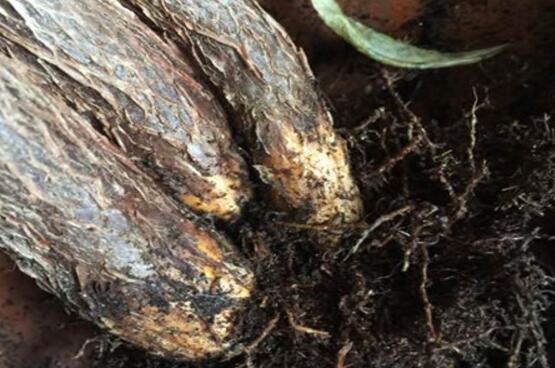
Before answering how to rescue a money tree with root rot, it is necessary to know how a money tree develops root rot in the first place. According to the editor's research, there are two causes of money tree root rot: 1 is overwatering, 2 is pests and diseases.
1. Overwatering / Waterlogging
For the money tree, anyone who has grown one should have some understanding: its root system is not well developed and its water-absorbing capacity is weak. Once it is watered too much, causing waterlogging in the potting soil, the money tree's roots remain in an overly wet environment for a long time, respiration is blocked, and the roots soften and rot.
2. Pests and Diseases
By rights, money trees rarely suffer from pests and diseases, which is also one of the reasons we all like to grow them. However, when people do not follow the money tree's cultivation methods to care for it, or neglect management, it can also be invaded by pests and diseases, leading to root rot. This is explained in detail in the section on money tree pest and disease control, so it will not be discussed further here.
II. Symptoms of Money Tree Root Rot: Yellow Leaves / Peeling Bark
Now that we know the causes of money tree root rot, what if you have confirmed that it has already developed root rot? To address this, the editor has summarized two symptoms of money tree root rot: one is yellowing leaves, and two is peeling bark.
1. Yellowing Leaves
In the article on what to do when money tree leaves turn yellow, we introduced several causes of yellowing in detail, and root rot is one of them! The reason is that when a money tree's roots rot, the normal transport of nutrients and water is blocked, which causes the leaves to turn yellow, and in severe cases even leaf drop occurs in the money tree.
2. Peeling Bark
How do you determine whether a money tree has root rot? Besides looking at the leaves, there is another obvious symptom, and that is peeling bark. Observant flower enthusiasts will notice that around the area near the root of the money tree, a sticky secretion appears, along with white mold-like fuzz, which will fall off at a touch. This is actually a sign of root rot.
III. How to Rescue a Money Tree with Root Rot: Cut Away and Disinfect / Repot and Care
Now that we know the symptoms of money tree root rot and have confirmed the causes, the next step is the rescue stage. How do you rescue a money tree with root rot? Overall, there are two points to cover: one is to cut away the rotten root parts and disinfect, and two is to repot and care for it.
1. Cutting Away Rotting Roots and Disinfecting
After discovering root rot in a money tree, you need to carry out rescue promptly. However, not every money tree can be saved. If only the root system is rotten, then you only need to cut away the rotten roots, soak them in potassium permanganate solution for more than 30 minutes, then replant in sterilized new soil, and after a period of time it will grow new roots again.
Note: If you find that the main trunk of the money tree has also rotted, then there is no need to try to save it, because no matter how you try, it will not come back to life. How to judge: press on the bark of the main trunk; if the inside of the trunk has become soft and waterlogged, it cannot be saved.
2. Medication Treatment
If the root rot is caused by pests and diseases, you can use medication to treat it. Spray with propamocarb (Previcur), tolclofos-methyl (Rizolex), metalaxyl (Ridomil), or fosetyl-aluminium (Aliette), and generally the effect can be seen in two weeks.
3. Repotting and Care
For how to rescue a money tree with root rot, repotting and care are very important. When repotting, you should lay some broken tile pieces at the bottom of the pot to prevent the drainage holes from being blocked. Note that the old potting soil carries pathogens; without disinfection and sterilization treatment, it is not suitable for reuse. After changing to new potting soil, water thoroughly once, then keep it in a shaded, ventilated place, with the temperature maintained above 15°C.
In summary, the money tree's root system is not well developed, and it is very easy for root rot to occur due to overwatering, which is also a situation many flower enthusiasts encounter. So everyone must pay attention when watering, following the correct method for watering a money tree, so that your money tree can grow beautifully. That is all the editor has to share about money tree root rot, and I hope it can be of help to everyone.
Simple Methods for Dealing with Money Tree Root Rot
Flower and Bonsai Network introduction: Today, the Flower and Bonsai Network editor brings you an article on simple methods for dealing with money tree root rot. Let's take a look.
The money tree is a very easy indoor potted plant to grow, but many friends end up growing their money trees to the point of being half-dead.
The editor has said many times that money trees die from two words: watering! Improper watering causes money tree root rot, which leads to the death of the entire money tree.
Rescue plan after money tree root rot:
1. Take the money tree out of the flower pot and gently remove the potting soil from the roots.
2. Use scissors to cut away all the rotten parts of the money tree.
3. After cutting, place the money tree's roots in a basin and soak them in carbendazim solution or potassium permanganate solution for half an hour. After disinfecting, put it in a cool, ventilated place to dry.
4. After drying, apply some rooting powder to the money tree's roots, replant it in a pot, and the soil must be loose and breathable.
5. After replanting, place the money tree in a cool, ventilated place for care. Do not water it for a short period; wait until new leaves grow, then return to normal care.
Appendix: Care Methods
1. Choosing the Environment
The money tree has strong adaptability and can grow well in full sun, partial sun, or shade. However, it cannot be kept in a dark place for a long time, and in summer it cannot be exposed to blazing sun; shade it appropriately. This prevents the scorching sun from causing the leaf tips and leaf edges to wither and burn.
2. Choosing Potting Soil
Generally use loose garden soil or peat soil, leaf mold, coarse sand, plus a small amount of compound fertilizer or chicken manure as base fertilizer and growing medium.
3. Watering
Money trees generally need one thorough watering a month. Usually you can mist money trees more and water less. Better dry than wet.
Hydroponic Money Tree Growing Methods and Precautions: How to Care for a Water-Grown Money Tree
Money trees can be grown hydroponically, and they are highly ornamental, relatively easy to grow, and can purify indoor air. Having seen money trees in soil so often, what happens when they meet water? So how do you care for a water-grown money tree? Today, the wed114 wedding website editor brings you the growing methods and precautions for hydroponic money trees. Let's look at the details together.
Growing Methods for Hydroponic Money Trees
Pay Attention to Trimming the Roots When First Planting
Actually, hydroponic money trees are not difficult. Prepare the container (a container specially for hydroponics). Then it is time to prune the money tree.
Take the money tree out of the soil and remove the leaves at the base so as not to affect the plant's growth. When pruning, decide according to the size of your own flower pot, and remove all the leaves below the bottle mouth.
In addition, use a small knife to cut off part of the roots, which allows the roots to absorb better and keeps the cut surface smooth. Put the plant in a cool place to air-dry for a while, and after the cut has dried, insert it into the hydroponic container.
Water Volume Control and Choice of Water
The water only needs to reach one third of the vase, and should not exceed two thirds.
Before rooting, change the water once every 3 days. After rooting, there is no need to change the water; simply add water to the vase. When the weather is dry and stuffy, spray water on the leaf surface. You can use rainwater, well water, or purified water. If it is tap water, it should be left to stand for 1 day before use.
Maintain Indoor Temperature
The suitable growing temperature for a money tree is between 16 and 26°C, and hydroponics is no exception. In winter, do not place the plant in colder places such as a balcony or windowsill. Observe the plant's growth condition at all times, and do not let the water freeze. When it is too cold, necessary warming measures can be taken.
Ensure Sufficient Light
Hydroponic money trees are usually kept indoors for care and do not have high sunlight requirements, but they need 2 to 3 hours of light every day. If the plant lacks light, the leaves turn yellow and growth is poor. So try to place the plant in a bright, ventilated environment so that it fully receives light.
Fertilize Once a Month
For hydroponic plants, fertilizing is often neglected, but proper fertilizing can make the plant grow better. Hydroponic money trees only need fertilizing once a month. You can buy specialized fertilizer at a flower market, or add a few drops of dissolved vitamin C1 when adding water.
Precautions for Hydroponic Money Trees
Hydroponic money trees should be placed somewhere not reached by electric fans or air conditioning.
Frequently check the plant's growth condition. If there is root rot, promptly cut away the rotten roots. If the water has an unusual smell, promptly change the water and also check whether there is root rot.
When the leaves turn yellow, check whether there is too much fertilizer or insufficient light.
That is all for the hydroponic method and precautions for money trees. Actually, it is not difficult at all. I hope flower enthusiasts will gain something after reading this, with one more growing method and one more choice.