What to do when dahlia leaves turn yellow? Control light and 4 other points to easily solve it
Dahlia is a highly ornamental plant with very showy blooms. Precisely because of this, even a tiny flaw can affect its overall beauty, such as yellowing leaves, which look very out of place. As for what to do when dahlia leaves turn yellow? Below, the editor will walk you through it.
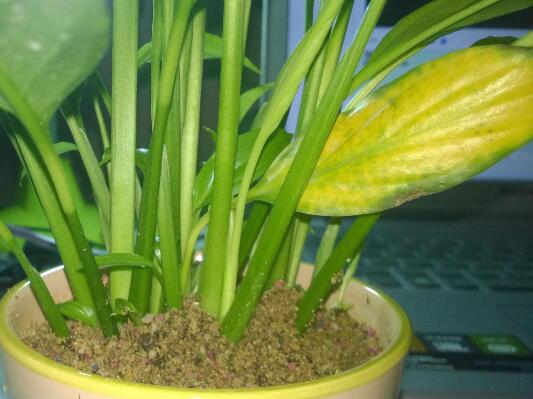
What to do when dahlia leaves turn yellow / Control light
1. Soil problems
If you do not choose suitable soil when planting dahlias, for example choosing soil with a very heavy clay texture, it will cause dahlia leaves to turn yellow, and it also has a huge impact on their growth. If this is the reason, we need to replace the soil in time; you can choose humus soil with good drainage, which is more favorable for dahlia growth.
2. Control the amount of fertilizer
Fertilizer is one of the main nutrients in the dahlia growth process, but the amount of fertilizer still needs to be controlled. Applying too frequently or too little can both cause dahlia leaves to turn yellow. During the growing period, fertilizing once every 15-20 days is generally enough.
3. Water in appropriate amounts
Another cause of dahlia leaves turning yellow is improper watering. This plant is neither tolerant of waterlogging nor drought, so when watering you must grasp the right degree, and you must follow the principle of watering when the soil is dry, so this problem will not occur.
4. Light control
Dahlia is a plant that relatively likes light. Spring and autumn are the seasons more suitable for its growth, and in these two seasons it can be kept outdoors for a long time. In summer, when the sunlight is too strong, it needs to be moved indoors to a semi-shaded place. If it is exposed to the sun outdoors, the leaves are very likely to turn yellow.
5. Pest and disease control
The appearance of pests and diseases is also one of the causes of dahlia leaves turning yellow. If this phenomenon occurs, it needs to be controlled in time. In the article on dahlia pest and disease control, there are control methods for various pests and diseases. You can refer to it; here the editor will not introduce too much.
What to do when dahlia leaves turn yellow
Dahlia is also known as dahlia, tianzhu peony, and dahlia chrysanthemum. There are already more than 30,000 varieties, making it one of the species with the most flower varieties in the world. The colorful and graceful dahlia symbolizes generosity and magnificence, and great fortune, so it has become a frequent guest in gardens and is a world-famous ornamental flower. However, when cultivating dahlias, improper cultivation often causes dahlia leaves to turn yellow and affects their flowering. What to do when dahlia leaves turn yellow? The editor gives you some tips.
The habits of dahlia
To prevent and control dahlia leaves turning yellow, we first analyze the habits of dahlia. Dahlia likes semi-shade; too strong sunlight affects flowering. The light duration is generally 10~12 hours, and when cultivating seedlings, direct sunlight should be avoided. Dahlia likes a cool climate. It blooms largest, brightest, and most abundantly in late September, but it is not frost-tolerant; after frost, the stems and leaves wither immediately. During the growing period, it is not strict about temperature and can grow at 8~35°C, with 15~25°C being suitable. Dahlia is not drought-tolerant and not waterlogging-tolerant. Generally, for potted plants, when the soil is dry, water thoroughly, following the principle of seeing wet and seeing dry; in rainy weather, the pot can be tipped to drain water (for ground planting, frequent watering is not necessary). Dahlia is suitable for cultivation in loose, well-drained, fertile sandy soil.
Causes of dahlia leaves turning yellow
Dahlia leaves will wither, most likely: 1. Mostly because the cultivation land is too low-lying and water accumulates; after several consecutive days of rain, it becomes waterlogged and causes root rot. 2. It may also be caused by improper fertilization, such as applying chemical fertilizer directly to the main root area and burning the roots (or watering with urine fertilizer that has not been diluted).
What to do when dahlia leaves turn yellow
1. Pot soil selection. Dahlia is suitable for cultivation in loose, humus-rich, well-drained sandy loam or artificially prepared nutrient soil. If dahlia leaves are found to be turning yellow, check its soil and replace it in time.
2. Light and temperature. Dahlia likes light; throughout the growing period it needs sufficient sunlight, but it should not be too strong, and during the seedling stage direct sunlight should be avoided. Dahlia is neither cold-tolerant nor tolerant of extreme heat. The most suitable growth temperature is 10-30°C. Observe the dahlia's growing environment to understand whether climate has affected its growth.
3. Water and fertilizer management. Dahlia has fleshy, enlarged tuberous roots, and is neither drought-tolerant nor waterlogging-tolerant. Watering should follow the principle of "water thoroughly when dry." During heavy rain, excess water in the pot should be drained in time. Dahlia likes fertilizer; when applying base fertilizer, be careful not to let it touch the tuberous roots to prevent burning.
4. Disease control. The main diseases of dahlia are powdery mildew and leaf spot, and ventilation and chemical control should be strengthened.
That is all for the prevention and control measures for dahlia leaves turning yellow. When cultivating dahlias, pay attention to loose soil, sufficient sunlight, and good drainage, while also strengthening ventilation and paying attention to the key points of fertilizing to avoid burning the plant roots.
How to prevent dahlia leaves from turning yellow and falling off
Pay attention to pot soil selection
Dahlia is suitable for cultivation in loose, humus-rich, well-drained sandy loam or artificially prepared nutrient soil.
Suitable light and temperature
Dahlia likes light; throughout the growing period it needs sufficient sunlight, but it should not be too strong, and during the seedling stage direct sunlight should be avoided. Dahlia is neither cold-tolerant nor tolerant of extreme heat. The most suitable growth temperature is 10°C~30°C.
Strengthen water and fertilizer management
Dahlia has fleshy, enlarged tuberous roots, and is neither drought-tolerant nor waterlogging-tolerant. Watering should follow the principle of "water thoroughly when dry." During heavy rain, excess water in the pot should be drained in time. Dahlia likes fertilizer; when applying base fertilizer, be careful not to let it touch the tuberous roots to prevent burning.
Strengthen disease control
The main diseases of dahlia are powdery mildew and leaf spot, and ventilation and chemical control should be strengthened.