The benefits and effects of lilac: growing it indoors beautifies the environment and purifies the air
Lilac is a fairly common plant in people's daily lives, with high ornamental value, and beyond that it also has many other uses. What exactly are the benefits and effects of lilac? Let's take a look below.
The benefits and effects of lilac
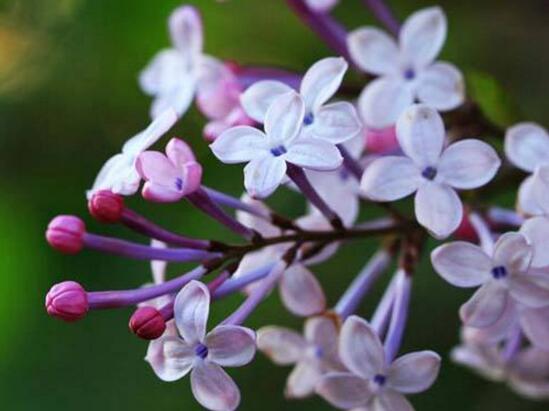
1. Ornamental value
Among the benefits and effects of lilac, ornamental value is arguably the best known. Its flowers are elegant and delicately colored, with a faint fresh fragrance, which is why it is loved by so many people. Growing it at home beautifies the indoor environment, and it is also a great choice as a home decoration.
2. Landscape value
Lilac makes a huge contribution to landscape construction. It can be seen in many gardens in our country, and during its blooming season many visitors flock to the major gardens to admire it, which shows just how powerful the beauty of lilac is.
3. Medicinal value
Among the benefits and effects of lilac, its medicinal use is the most beneficial to the human body. The flower buds of lilac can be used as medicine and have the effect of warming the kidneys, with a certain therapeutic effect on conditions such as impotence and cold womb, which is why lilac is also favored by many men.
4. Beverage value
The beverage value of lilac comes mainly from its leaves. Brewing its leaves together with osmanthus as a tea is extremely beneficial to the human body, with an effect of relieving cough and reducing phlegm, and it also has a certain therapeutic effect on stomach cold and stomach pain.
5. Air purification
Like many plants, lilac grown indoors has the effect of purifying the air. It can absorb harmful substances from the air, thereby making indoor air fresh, and among the benefits and effects of lilac this one is also loved by many people.
6. Gift value
Lilac has a naturally elegant quality that gives people a very comfortable feeling. After you have angered a girl, giving her a bouquet of lilac as an apology can be a good choice, and who knows, it might just bring the two of you back together.
What is lilac? What are the effects of lilac?
In fact, lilac is not delicate at all; it is pure and beautiful, fragrant and elegant. Lilac, also known as baijie and qingke, is a deciduous shrub or small tree of the genus Syringa in the family Oleaceae. The plant is 2 to 8 m tall, with opposite leaves, generally entire, and a few are pinnately compound. The flowers are bisexual, in panicles, terminal or lateral. The flower colors include purple, pale purple or blue-purple, as well as white, purplish red and blue-purple, among which white and purple are the most common. The blooming period lasts two seasons, from the early flowers in April to the late flowers in July. The flower language and symbolic meaning of lilac are innocence, first love, modesty, sorrowful longing and radiance, implying love and the hope of hearts secretly joined as one.
Lilac likes sunlight and tolerates shade, cold and drought, but dislikes waterlogging, so it generally does not need much watering. Lilac requires fertile, well-drained sandy soil. Lilac does not like heavy fertilizer, so do not fertilize too much, otherwise flowering will be affected. Lilac is best transplanted in early spring before the buds sprout. Before transplanting, apply plenty of base fertilizer in the planting hole, cover the base fertilizer with a layer of soil, then place the seedling and fill in soil. Before sprouting in mid-March, lilac should be shaped and pruned: remove overly dense branches, thin and weak branches, and diseased or pest-infested branches, and cut back vigorous long branches so that the crown is well ventilated and lets light through. Lilac has few diseases and pests; the main pests are aphids, bagworms and stinging caterpillars, which can be controlled by spraying with a 800 to 1000 times dilution of 40% dimethoate emulsion or a 1000 times dilution of 25% imidan emulsion.
Lilac is one of the most common ornamental flowering trees in our country. It blooms in mid-spring when all flowers contend in beauty, with an alluring fragrance, abundant flowers and gorgeous colors, lovely in their profusion. It can be planted singly, in groups, or in mass plantings along roadsides, on lawns, at corners and at forest edges, and can also be combined with other trees and shrubs, especially evergreens. A few species can be used as flowering hedges. It can be grown in pots or as bonsai, and can also be used as cut flowers.
The above is the ornamental lilac. There is also another kind, the medicinal lilac. Medicinal lilac and ornamental lilac are two completely different plants. Medicinal lilac is a dicotyledonous medicinal plant of the family Myrtaceae; its flower buds contain clove oil, whose main components are eugenol and caryophyllene. Wild clove also contains eugenone and eugenine. It has the effects of warming the middle, strengthening the stomach, stopping vomiting and fighting bacteria. It mainly treats hiccups, vomiting, nausea, dysentery, cold and painful epigastrium and abdomen, abdominal masses, hernia and ringworm. Below, we introduce the effect of lilac on the home environment and how to grow it.
The effect of lilac on the home environment
Lilac is listed as one of the twelve companion flowers in the chapter novel Flowers in the Mirror. It is one of the most common ornamental flowering trees in our country, with a cultivation history of more than 1000 years in China, and is a precious flower of China.
Plants of the genus Syringa are mainly used for garden ornament. They have a unique faint fragrance, large and luxuriant inflorescences, elegant and harmonious flower colors, and full and beautiful forms, and have become indispensable flowering trees in gardens at home and abroad. They can not only be planted in groups along roadsides, on lawns or on sunny slopes, or combined with other flowering trees at forest edges, but can also be planted in the open in courtyards and gardens, or grown in pots and placed in a study or hall, or used as cut flowers in vases; all of these make people feel the elegance and beauty, fresh and pleasing. Her understated elegance not only brings a touch of noble sentiment to your fine home, but also brings a serene gentleness to your spirit.
Moreover, lilac has strong resistance to many toxic gases such as sulfur dioxide and hydrogen fluoride. Lilac has a clear ability to purify the air, and its sterilizing ability is very strong; placing lilac indoors can, to a certain extent, prevent infectious diseases.
Lilac blooms in mid-spring when all flowers contend in beauty, with an alluring fragrance that can relax the mood and lift the spirits, is good for sleep, and can even improve work efficiency. Therefore, lilac is a good material for outdoor greening and beautification, and a natural remedy for relieving worry and stress indoors. With its rich floral fragrance and beautiful music, strolling quietly in a fragrant world, experiencing an unprecedented ease and relaxation through smell alone, it gives the mind a chance to de-stress. But the fragrance of lilac is strong, so it should not be smelled too much, otherwise you will feel dizzy.
No matter how beautiful the decor, would it not be a pity without a pot of flowers to accent it?
The feng shui role of lilac
Lilac is listed as one of the twelve companion flowers in the chapter novel Flowers in the Mirror. It is one of the most common ornamental flowering trees in our country, with a cultivation history of more than 1000 years in China, and is a precious flower of China.
Plants of the genus Syringa are mainly used for garden ornament. They have a unique faint fragrance, large and luxuriant inflorescences, elegant and harmonious flower colors, and full and beautiful forms, and have become indispensable flowering trees in gardens at home and abroad. They can not only be planted in groups along roadsides, on lawns or on sunny slopes, or combined with other flowering trees at forest edges, but can also be planted in the open in courtyards and gardens, or grown in pots and placed in a study or hall, or used as cut flowers in vases; all of these make people feel the elegance and beauty, fresh and pleasing. Her understated elegance not only brings a touch of noble sentiment to your fine home, but also brings a serene gentleness to your spirit.
Moreover, lilac has strong resistance to many toxic gases such as sulfur dioxide and hydrogen fluoride. Lilac has a clear ability to purify the air, and its sterilizing ability is very strong; placing lilac indoors can, to a certain extent, prevent infectious diseases.
Lilac blooms in mid-spring when all flowers contend in beauty, with an alluring fragrance that can relax the mood and lift the spirits, is good for sleep, and can even improve work efficiency. Therefore, lilac is a good material for outdoor greening and beautification, and a natural remedy for relieving worry and stress indoors. With its rich floral fragrance and beautiful music, strolling quietly in a fragrant world, experiencing an unprecedented ease and relaxation through smell alone, it gives the mind a chance to de-stress. But the fragrance of lilac is strong, so it should not be smelled too much, otherwise you will feel dizzy.
No matter how beautiful the decor, would it not be a pity without a pot of flowers to accent it?
Lilac is just as its name suggests, with a unique fragrance. It is one of the most common ornamental flowering trees in our country. It blooms in mid-spring when all flowers contend in beauty, with an alluring fragrance, abundant flowers and gorgeous colors, lovely in their profusion. The flower language of lilac is even more beautiful: it symbolizes innocence, first love, modesty, sorrowful longing and radiance, implying love and the hope of hearts secretly joined as one.
Because lilac implies diligence and modesty, planting lilac on campus symbolizes a school's good ethos. In classical poetry it symbolizes beauty, purity and quiet sorrow. In the West, lilac has the glorious nickname of the flower of heaven, perhaps because of its noble fragrance; since ancient times it has been greatly treasured, symbolizing the innocence of young people, first love and modesty, and radiance. Those born under the blessing of this flower are blessed by the gods and have a glorious life. "When the lilacs bloom" means the time when the climate is at its best.
In our country, lilac is not easily attacked by diseases and pests and has extremely strong vitality, bearing the plain, forthright and sincere character of northerners, and is therefore deeply loved by the people of Harbin and has been designated the city flower of Harbin as well as of Hohhot. At the same time, lilac symbolizes good fortune and wealth, is one of the flowers loved by the people of all ethnic groups in Xining, and has also been chosen as the city flower of Xining.
Lilac gives people something beautiful, a symbol of beauty, bringing good omens. But lilac is commonly known as bitter lilac, and because of the word "bitter", some people believe that bitter lilac is associated with suffering. Therefore, there is a certain amount of care taken when planting lilac in a courtyard; some believe lilac should be planted behind the house rather than in front of it. Planted in front of the house, it is thought that the bitterness is not yet over; planted behind the house, it is seen as the bitterness having passed. From this it can be seen that lilac is not suitable for planting in front of the house, but this is only the view of some people. Most people believe lilac is still a symbol of beauty. Planted in the open in courtyards and gardens, or grown in pots and placed in a study or hall, or used as cut flowers in vases, it always makes people feel the elegance and beauty, fresh and pleasing.
The role of lilac in matching home styles
The flower color of lilac is elegant and plain, either pure white or pale purple, and it always makes a space look delicate and refined, and its fragrance is unusual, fresh and not vulgar. It is suitable for growing in pots on a balcony or for cut flowers in vases, and can give the home a distinctive flavor.
Because of this understated and elegant quality, lilac is especially suited to a style paired with warm, classic wooden furniture. With a tall ceramic, glass or solid wood vase, it can bring out a taste of elegance and calm, and if it is further accented with some bright yellow-green ornaments or blue-and-white porcelain, so much the better, greatly enhancing the brightness and color saturation of the space.
If you have a small Western-style house, planting a lilac tree in front of it will surely make passersby stop and admire it. Plants of the genus Syringa have a unique fragrance, large and luxuriant inflorescences, elegant and harmonious flower colors, and full and beautiful forms. Planted singly in front of the courtyard or outside the window, or interplanted with various lilacs to create a dedicated lilac garden, how could such a beautiful scene ever be described in words?
Lilac should mainly serve to beautify the environment. It not only gives you visual enjoyment in your elegant home but also purifies the air. Lilac has strong resistance to many toxic gases such as sulfur dioxide and hydrogen fluoride, and the faint fragrance of lilac can also relax the mood and lift the spirits, is good for sleep, and can even improve work efficiency.
So, hurry and add a pot or a plant of lilac to your home. It not only makes your home look elegant but also has a greening effect. What is more, the character of lilac is gentle yet not lacking in passion; though plainly dressed and lightly wrapped, it has much inner beauty. This flower also symbolizes the innocence of young people, first love and modesty. Adding this member to your home shows that the head of the household is also elegant and gentle!
The effects of common indoor flowers and plants, and which flowers are suitable for growing indoors?
Which flowers and plants are suitable for growing indoors? What should be noted when growing flowers at home or in the office?
Nowadays people pay more and more attention to the quality of the indoor environment. Adding green plants to indoor decoration can not only beautify the home, helping people gain psychological adjustment and mental relaxation, but also improve indoor air quality, achieving several benefits at once.
Although flowers and plants have many benefits, the home should not be turned into a "flower house", because indoor ventilation is limited, and placing too many kinds of flowers and trees will "compete for air" with people. Moreover, at night the home is mostly closed up, and the carbon dioxide exhaled by the soil in the flower pots, by people and by pets will increase the carbon dioxide concentration, causing a lack of oxygen in the body, which is instead harmful to health.
Camellia, cyclamen, stock, tuberose, garden balsam, carnation and gladiolus, among others, can convert highly toxic sulfur dioxide into non-toxic or low-toxicity substances such as sulfates through oxidation in their leaves.
Purple heart
Narcissus, four o'clock flower and chrysanthemum, among others, can convert nitrogen oxides into proteins and other substances in plant cells.
Spider plant and aloe can absorb large amounts of indoor pollutants such as formaldehyde, eliminating and preventing indoor air pollution. The spider plant especially: place one pot in a room, and within 24 hours its leaves will "eat up" harmful gases such as carbon monoxide from the indoor air, with an effect even exceeding that of an air filter.
Pomegranate and chrysanthemum, among others, have the ability to absorb sulfur, hydrogen fluoride, mercury and the like.
The bactericides secreted by flowers such as jasmine can kill certain bacteria in the air and inhibit the growth of tubercle bacillus, dysentery bacillus and typhoid bacillus.
The fragrance of jasmine can relieve symptoms such as dizziness, vertigo, colds and nasal congestion. For those with headache, dizziness, colds or blurred vision, frequently smelling chrysanthemum is also quite beneficial.
Jasmine
Cactus plants release carbon dioxide during the day and absorb carbon dioxide and release oxygen at night, so placing a pot of cactus in the bedroom is quite good. Besides cacti, various orchids of the family Orchidaceae, and clivia and narcissus of the family Amaryllidaceae, also have this remarkable function.
Lilac
The purifying function of plants is limited, so it is also necessary to open the windows often to allow air convection.
Pine and cypress bonsai should not be placed in large numbers indoors; their strong pine scent can affect a person's appetite.
Lilac, night-blooming jasmine and the like respire heavily at night, and the harmful gases they release make patients with high blood pressure and heart disease feel short of breath, while normal people may also experience symptoms such as dizziness and insomnia.
Hydrangea, five-color plum and the like can cause allergic reactions in some people. Tulip and mimosa contain toxic alkaloids, which can cause hair loss and the like.