Eustoma cultivation methods and precautions: how to control the amount of watering
Eustoma (prairie gentian) is a flower native to North America with very high ornamental value. Today this plant is cultivated in many regions of our country, and it can also be grown as a houseplant. How do you grow eustoma, and what are the cultivation methods and precautions? Let me walk you through it below.
I. How to grow eustoma / controlling the amount of watering
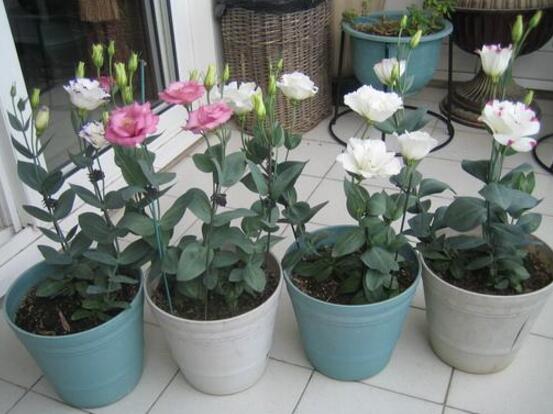
There are actually many things to pay attention to when it comes to growing eustoma, such as temperature, watering, light and so on, and watering in particular allows no carelessness: too much or too little will both affect its growth. Below is a detailed explanation of eustoma cultivation methods and precautions; those who want to grow it can take a look.
II. Eustoma cultivation methods and precautions
1. Soil selection
Among the eustoma cultivation methods and precautions, soil selection is a relatively important point. This plant prefers loose soil; such soil has relatively good drainage, and eustoma can also absorb nutrients better.
2. Temperature control
The most suitable ambient temperature for eustoma growth is between 15-28°C. If the temperature is too low, it will fail to bloom; if the temperature is too high, its flowering period will also be shortened. Therefore, temperature control is especially important during cultivation.
3. Watering requirements
When watering eustoma, the amount matters greatly. If you water too little, the plant will lack moisture and turn yellow; if you water too much and water accumulates, the roots may rot. So when watering, generally just water until the soil has a certain degree of moisture.
4. Light requirements
Eustoma is a light-loving plant and needs long-term exposure to light, so it is best to place it in a spot with ample light for cultivation; even in summer, light cannot be reduced. However, during the few hours around noon when the temperature is too high, it can temporarily be moved indoors to a semi-shaded spot.
5. Pest and disease control
If the points above are not followed properly, eustoma is very prone to pests and diseases. If they appear, we need to carry out control. For specific control methods, you can refer to the article on eustoma pest and disease control; I will not go into too much detail here.
How to grow eustoma? Eustoma cultivation methods and precautions
Eustoma has rich flower colors, an elegant plant form and a fresh tone; used to accent interiors, windowsills or balconies, it presents a fresh and elegant feel. Eustoma is a perennial plant, and as long as it is cared for properly, it can bloom every year. So how should eustoma be grown? Below is an introduction to eustoma cultivation methods and precautions:
Image: Eustoma
I. Eustoma cultivation methods
1. Temperature
The suitable growing temperature for eustoma is 15℃—28℃. It can briefly tolerate a low temperature of 0℃. During the growing period, the nighttime temperature must not be lower than 12℃. In winter, if the temperature is below 5℃, the eustoma leaf rosette will turn into a rosette form and be unable to bloom. In summer, if the temperature is above 30℃, the flowering time of eustoma will be shortened.
2. Watering
Eustoma likes a moist environment, but too much water will damage its roots and make it prone to disease, while too little water will weaken plant growth and cause early flowering.
Therefore, watering should be moderate, and overwatering must be avoided.
3. Light
Eustoma likes a warm environment with ample light. Long-term light helps stem and leaf growth and flower bud development, so it is best to maintain 16 hours of light per day.
4. Soil
Eustoma likes fertile, loose soil with good drainage. It is best to use improved garden soil with added peat soil, rice husk and a small amount of lime.
Image: Eustoma
II. Precautions for growing eustoma
1. Use drip irrigation for watering
Eustoma has strict water requirements: too much water damages the roots, and too little causes weak stem and leaf growth, so it is best to use drip irrigation, which is most beneficial to eustoma growth.
2. Disinfect the potting soil
If eustoma is to be grown in a pot, the substrate used needs to be treated with high-temperature steam or methyl bromide for disinfection. The soil pH is best maintained at 6.5—7.0.
3. Avoid high temperature and high humidity
After the flower buds form, it is necessary to avoid a high-temperature and high-humidity environment, otherwise fungal diseases are very likely to occur.
4. Control the amount of fertilizer
Before planting eustoma, add manure, bone meal and so on to the soil as a base fertilizer. Because eustoma has relatively high fertilizer needs, topdressing should be done in time during growth.
How to grow eustoma: eustoma cultivation methods
Eustoma has rich flower colors and a fresh, elegant tone, and is commonly grown in pots to accent a room, balcony or windowsill. So how do you grow eustoma? Next, Xiao Qi will share eustoma cultivation methods.
I. How to grow eustoma
The ecological conditions of eustoma's place of origin are a dry environment with an annual rainfall of 300-800 mm, so eustoma dislikes waterlogging. Before flowering, it needs a period of low temperature, and it usually blooms in summer. Seedlings are raised in autumn and winter, planted in February to March, and can bloom in June to July; sown in July, planted in autumn, and bloom from April to June the following year. Temperature is an extremely important influencing factor in the growth and development of eustoma.
There are many eustoma varieties, about a hundred or more. By flower color, there are white, pink, yellow, rose, purple and so on; by flower shape, there are cup-shaped, bell-shaped, funnel-shaped and so on; by petal type, there are single-petaled, double-petaled and so on; by growth period, there are early-maturing, late-maturing, mid-maturing and so on.
II. Eustoma planting methods
1. Light: Eustoma is relatively sensitive to light, and long-day conditions promote stem and leaf growth and flower bud formation. Generally, 16 hours of light per day gives the best results. During winter and early spring, special attention should be paid to supplementary lighting, usually adding 2-4 hours at night.
2. Temperature: The suitable growing temperature for eustoma is 20-24℃ during the day and 16-18℃ at night. Its growth rate, such as the degree of internode elongation, the speed of flower bud differentiation and the length of the harvest period, is very easily affected by temperature. Especially at the seedling emergence stage, high temperatures will lead to fewer flowers, excessive elongation of upper internodes, weak flower stalks and poor quality; but if the temperature is too low, growth will be slow or it may even fail to bloom.
3. Fertilization: Eustoma is a plant with relatively high fertilizer needs. If the base fertilizer is insufficient, topdressing is very important. If in the middle and late growth stages the stems break easily, or there is longitudinal splitting of the stems, it may be caused by boron deficiency. Spraying the plants with a diluted boric acid solution can improve this phenomenon.
4. Watering: Eustoma has strict water requirements. Too much water causes poor root growth and makes it prone to disease infection; too little water makes the stems and leaves thin and weak and causes early flowering. Within one month after transplanting, the substrate should be kept moist; drip irrigation can be used to control moisture. Especially after the flower buds form, a high-temperature and high-humidity growing environment should be avoided as much as possible.
5. Pests and diseases: Common diseases of eustoma mainly include damping-off, gray mold, sclerotinia and so on. In addition to promptly removing diseased plants and picking off diseased leaves and flowers, and applying agents such as kangkuening, wanmeiling and mancozeb for prevention and treatment, ventilation should also be strengthened in normal times to reduce air humidity.
The above iseustoma cultivation methodsintroduced above; I believe that after reading it, everyone will be clearer about how to grow eustoma.