How to water and fertilize a ZZ plant? Watering once every half month is enough
The ZZ plant (Zamioculcas zamiifolia), native to Africa, is an indoor foliage plant that not only carries excellent symbolic meaning but also has a range of air-purifying effects. Growing a ZZ plant well is certainly a good thing, yet it is not an easy task, especially when it comes to watering and fertilizing - a slight carelessness can lead to big problems. So how do you water and fertilize a ZZ plant? How often should a ZZ plant be watered? Here, let us answer these questions for you.
1. How to water and fertilize a ZZ plant - just the right amount is enough
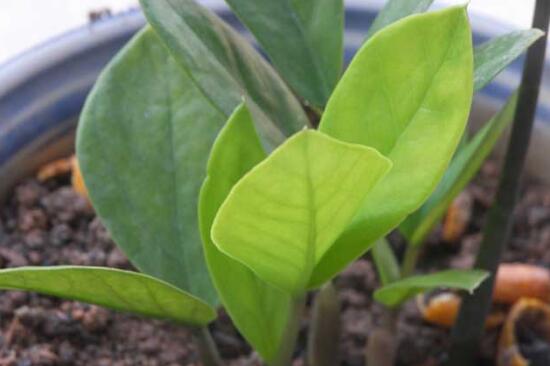
Growing a ZZ plant indoors is not like growing one outdoors; we have to create everything ourselves, especially when it comes to watering and fertilizing. Doing it properly benefits plant growth, but once it is insufficient or excessive, all kinds of problems appear, such as yellowing ZZ plant leaves and root rot in ZZ plants. So how do you water and fertilize a ZZ plant? The method matters a lot. We will discuss watering and fertilizing separately, so read on.
(1) How to water a ZZ plant
In the methods for growing a ZZ plant, we have said that the ZZ plant is a fairly drought-tolerant plant, so when watering, it should be based on how dry or wet the potting soil is. The reason is that, because regions differ, we cannot specify how often a ZZ plant should be watered, but you can judge whether a ZZ plant needs watering based on how dry or wet its potting soil is.
ZZ plant watering method: look at the surface of the potting soil. If you find it has turned white or has cracks, that means it is time to water. Note that when watering a ZZ plant, you must water thoroughly, but do not water too much. The specific amount of water: moisten the potting soil until a small amount flows out of the drainage hole at the bottom of the pot - that is the best way.
(2) How to fertilize a ZZ plant
The ZZ plant likes fertilizer. Besides mixing fertilizer into the potting soil, you also need to fertilize it at different stages. The ZZ plant's optimal growth temperature is 22-32°C; at such temperatures, you can apply liquid fertilizer about once every 10 days; when the temperature is much above 32°C or much below 22°C, you must gradually lengthen the interval between fertilizer applications, for example once every 12 days, then once every 15 days.
Notes: after August, in order for the ZZ plant to make it through winter smoothly, nitrogen fertilizer should be stopped; when the temperature is below 15°C, fertilizing should be stopped. In addition, the ZZ plant is most afraid of fertilizer burn, which is worse than not fertilizing at all, so never give it fertilizer that is too concentrated at one time - light fertilizer applied frequently is the way to go.
2. How often to water a ZZ plant - it differs across the four seasons
Generally speaking, when the temperature is suitable, the answer to how often a ZZ plant should be watered is once every half month. However, this is the situation at around 25°C, and the temperature changes constantly throughout the year, so the watering frequency changes accordingly, as follows:
1. Spring and autumn, once every 15 days
Temperatures in spring and autumn are similar, and the temperature is suitable with appropriate air humidity. At this time, it is recommended to water the ZZ plant about once every 15 days;
2. Summer, once every 7 days
After summer arrives, the temperature rises rapidly and water evaporates quickly. So how often should a ZZ plant be watered at this time? According to the experience of flower growers, in summer you should water the ZZ plant about once every week. Note: once the temperature exceeds 33°C, you also need to spray the plant once a day.
3. Winter
In winter, the temperature drops rapidly and water evaporates very slowly, so the potting soil is best kept on the dry side. At this time, to prevent excess moisture from freezing and damaging the plant, use spraying instead of watering, and occasionally spray the leaf surfaces and the surrounding environment appropriately.
How often to water a ZZ plant and how to grow a ZZ plant
The ZZ plant is a perennial evergreen foliage plant of the genus Zamioculcas in the family Araceae. It is a rather popular large indoor bonsai, especially when placed in a fairly spacious living room, study or sitting room, where it looks elegant and simple with a southern charm. During cultivation, special attention must be paid to the issue of watering. Now let us take a look together at how often a ZZ plant should be watered!
How often to water a ZZ plant
When cultivating a ZZ plant, for plants kept in a greenhouse, once the room temperature reaches above 33°C, the plant should be sprayed with water once a day. Because this plant is fairly drought-tolerant, it is best to keep the potting soil slightly moist and on the dry side, but occasionally applying too much water or fertilizer will not necessarily cause root rot. In winter, pay attention to spraying the leaf surfaces and the surrounding environment so that the relative air humidity reaches above 50%. After mid-autumn, watering should be reduced, or spraying used instead of watering, to help the newly sprouted tender leaves make it through winter safely. In addition, in winter, special attention should be paid to the potting soil not being overly moist - it is best kept on the dry side; otherwise, under low-temperature conditions, overly wet potting soil is more likely to cause the plant's root system to rot, or even the death of the whole plant.
How often to fertilize a ZZ plant
The ZZ plant likes fertilizer fairly well. Besides adding an appropriate amount of composted cake fertilizer or a multi-element slow-release compound fertilizer to the growing medium, during the growing season you can apply a dilute cake fertilizer solution once a month, or use a mixture of 0.2% urea plus 0.1% monopotassium phosphate. For potted ZZ plants in areas north of the Huang-Huai region, you can also add an appropriate amount of ferrous sulfate to the fertilizer solution to prevent physiological yellowing of the leaves. After mid-autumn, to help it make it through winter safely, nitrogen fertilizer should be stopped, and 0.3% monopotassium phosphate solution should be applied 2 to 3 times in a row to promote the hardening and filling out of the young leaf stalks and newly sprouted leaves. Once the temperature drops below 15°C, all forms of topdressing should be stopped, to avoid fertilizer burn damaging the roots under low-temperature conditions.
Notes on growing a ZZ plant
1. Soil mix: the growing medium for a ZZ plant is mostly a mix of peat, coarse sand or washed cinder with a small amount of garden soil, with its pH adjusted to between 6-6.5, in a slightly acidic state.
2. Temperature requirements: the suitable growth temperature for a ZZ plant is 20-33°C.
3. Watering requirements: to care well for a potted ZZ plant, flower growers must create an environment for it that is both moist and on the dry side. In commercial cultivation, for plants kept in a greenhouse, once the room temperature reaches above 30°C, the plant should be sprayed with water once a day, and watering twice a week is enough.
4. Fertilizing requirements: the ZZ plant likes fertilizer fairly well. Besides adding an appropriate amount of composted cake fertilizer or a multi-element slow-release compound fertilizer to the growing medium, during the ZZ plant's growing season you can apply a mixture of 0.2% urea plus 0.1% monopotassium phosphate 2-3 times a month, or apply a balanced fertilizer 20-10-20 at a concentration of 200-250 ppm in combination with calcium nitrate.
5. Preventing root rot: the most important point in growing a ZZ plant is preventing root rot. Generally, the cause of root rot in ZZ plants is watering. You need to promptly tip the plant out of the pot, shake off part of the old soil, place it in a semi-shaded, cool spot to dry for 1-2 days, then replant it in fresh sandy loam.
How to water and fertilize a ZZ plant
Watering methods for the ZZ plant
The ZZ plant is a fairly drought-tolerant plant, so to grow a ZZ plant well, you must create a suitable environment for it. If the temperature reaches above 30°C, then you must sprinkle water on the ZZ plant every day, but you must ensure the plant's potting soil stays in a slightly moist, on-the-dry-side state. In winter, pay special attention to spraying water on the ZZ plant's leaves and the surrounding environment. Starting from August and September, watering should be reduced; in winter, note that the potting soil must not be too wet, otherwise it easily leads to root rot or even death of the plant.
Fertilizing methods for the ZZ plant
The ZZ plant is a plant that likes fertilizer fairly well. Besides mixing fertilizer into its potting soil, you can also fertilize the ZZ plant about once a month during its growing period. After August each year, in order to enable the ZZ plant to make it through winter smoothly, stop applying nitrogen fertilizer to it, and once the temperature drops to below about 15°C, you can stop all fertilizing of the ZZ plant.