How to grow stock (Matthiola incana) and points to note: temperature must be suitable
Many people know that stock flowers are very beautiful, but stock actually has many other benefits and uses: it can whiten and care for the skin, and also clear heat and detoxify. That is why more and more people are planning to grow a few pots at home, but they do not know how to grow stock in the best way. Today the editor recommends to everyone the methods for growing stock and the points to note; after understanding them, anyone can grow stock well.
How to grow stock
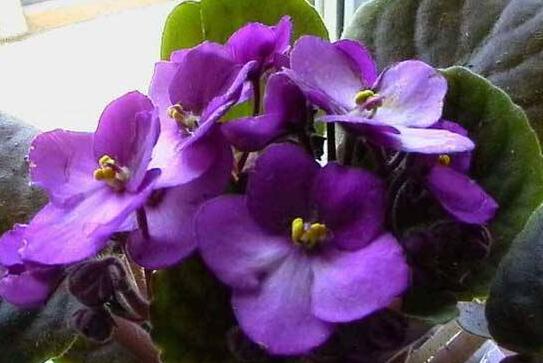
Before understanding how to grow stock, we first need to know its growing habits. Stock originated in the Mediterranean region of Europe. It prefers a cool climate and does not like hot, dry weather; it likes well-ventilated conditions and does not like enclosed environments; it is not strict about soil requirements, but drainage must be good, and slightly alkaline soil is best; it is not suitable for growing in acidic soil; it can tolerate low temperatures but not shade, and it likes environments with good light.
1. Temperature
Stock likes cool weather. Its most suitable growing temperature is 15-18 degrees, and the nighttime temperature is best around 10 degrees. It is not tolerant of high temperatures. It can briefly adapt to 5 degrees or even lower, but it cannot remain below zero degrees for a long time.
Growing methods and points to note: When growing stock, keep its environment at 18-24 degrees. If the temperature exceeds 27 degrees, the growth of stock will be hindered, so in summer it should be given cooling measures, while in winter insulation measures should be taken. This is very important among the methods for growing stock and the points to note.
2. Soil
Stock is not strict about soil requirements, but the soil needs two characteristics: good drainage and good air permeability. The soil is best neutral or slightly alkaline. Do not use acidic soil to grow stock.
Growing methods and points to note: Never use acidic soil to grow stock. You can use leaf mold, peat soil, or sandy soil, etc., to make a growing medium. Pay more attention to loosening the soil to avoid the soil becoming compacted.
3. Watering
Stock has average water requirements. During the growing period, pay attention to the frequency and amount of watering. If you find the potting soil is dry and then water it, that is still soon enough. In winter and spring, when the temperature is lower, the amount of watering should be reduced.
Growing methods and points to note: Among the methods for growing stock and the points to note, watering is very important. Each time you water stock, you should water thoroughly, but remember not to let water accumulate. After watering, place it in a well-ventilated, sunny spot for 3-4 days. Do not pour water on the leaves.
4. Light
Stock has relatively high light requirements. It likes places with plenty of light and cannot be kept in a dark place for a long time. Usually, providing scattered light can meet its growth needs, but if it is exposed to sunlight, it can grow even better.
Growing methods and points to note: When caring for stock, it should be placed in a ventilated and sunny place, but do not let it be exposed to strong sunlight. Too strong light may cause the leaves to turn yellow, so you must both ensure it has enough light and avoid too strong light.
5. Fertilizing
Stock is a relatively fast-growing plant. During its growing period, attention should be paid to frequent fertilizing. The ratio of nitrogen fertilizer, phosphorus fertilizer, and potassium fertilizer is best 1:1:1. Do not use too much nitrogen fertilizer.
Growing methods and points to note: During the growing period, fertilize stock once every 7-10 days, mainly with compound fertilizer; after flower buds appear, mainly use phosphorus and potassium fertilizer. Be careful not to apply fertilizer on the leaves or flower buds.
6. Pests and diseases
Any plant is afraid of pests and diseases because they affect the plant's health, and stock is no exception. In addition to understanding the methods for growing stock and the points to note, the most important thing is to prevent diseases from appearing.
Growing methods and points to note: Stock can be grown in a higher position, which can make the ventilation in its environment better. In moldy rainy weather or extremely hot weather, do not let the leaves and plant come into contact with rainwater.
Summary: This article has introduced in detail the methods for growing stock and the points to note, among which the most important are temperature, watering, fertilizing, light, and so on. Developing good growing habits can provide stock with the best growing environment, and then you can successfully grow stock well.
How to grow stock? Methods for growing stock and points to note
How to grow stock? Recently many friends have asked about the methods for growing stock and the points to note. Therefore, today the editor will introduce to everyone the methods for growing stock and the points to note.
If you want to grow stock well, we first need to understand stock's living habits:
Stock, also known as stock gillyflower, originated in southern Europe. This flower likes a cool climate and avoids hot, dry conditions. It likes a well-ventilated environment, likes mild weather in winter, but can also tolerate a brief low temperature of -5°C. The suitable temperature for flower bud differentiation is 15°C. It is not strict about soil requirements, but grows better in well-drained, neutral to slightly alkaline soil, and avoids acidic soil. Stock is cold-tolerant but not shade-tolerant, fears waterlogging, and is suitable for growing in higher positions with sunlight exposure, good ventilation, and good drainage. It must absolutely avoid muggy heat; in moldy rainy weather that is hot with poor ventilation, it is prone to pest and disease damage.
Methods for growing stock:
Stock should not be planted too densely, otherwise poor ventilation will cause pests and diseases. It is suitable to plant in fertile soil with good drainage. The potting soil can be mixed with 2 parts humus soil, 2 parts garden soil, and 1 part river sand. During the growing season, fertilize once every 10 days. Nitrogen fertilizer should not be excessive; phosphorus fertilizer and potassium fertilizer should be applied. Stop fertilizing during the flowering period and in winter. Generally, when the soil surface is seen to be dry and whitish, water immediately, alternating between moist and dry.
Stock likes a warm climate in winter and should be moved indoors. It can tolerate a brief low temperature of -5°C. Propagation is mainly by sowing. In the central region of China, sowing is generally done in open fields in mid-September. When collecting seeds, single-petaled flowers should be selected as the mother plant. Although double-petaled flowers have high ornamental value, they cannot set seeds because they lack pistils. If seeds are collected from potted mother plants, the second generation will have a higher rate of double petals, accounting for more than about 50%. Before sowing, the potting soil should be relatively moist. After sowing, cover with a thin layer of fine soil and do not water again. If within half a month the potting soil dries out, the pot can be placed halfway in water so that water enters from the bottom of the pot and moistens the soil. After sowing, pay attention to shading; seedlings can emerge in about 15 days.
Points to note for potted growing:
① Selection of pots and substrate
Because stock has a small root mass, when planting, the pot should not be too large; choose a corresponding pot according to the size of the plant. The substrate for potted growing requires loose, fertile, well-drained, neutral to slightly acidic growing soil.
② Watering and fertilizing
The amount of watering should be determined according to the growing season. In winter and early spring, when the temperature is low, watering should not be too frequent; water only after the potting soil has dried, and keep the relative humidity at around 40%. In summer, when the temperature is high, water more, and spray water around it frequently; the relative humidity should not be less than 70%. In autumn, as the climate becomes cooler, watering should be reduced accordingly. During the growing season, apply a thin, fully decomposed cake fertilizer water or liquid fertilizer once every 2 weeks, but be careful not to use excessive nitrogen fertilizer. After flower buds appear, apply 0.5% superphosphate 1-2 times to make the flower colors more vivid. When watering and fertilizing, be careful not to get them on the leaves to avoid rot.
③ Temperature and light
The suitable growing temperature for stock is 18-24°C. In summer, the temperature cannot exceed 30°C, so shading, cooling, and humidity-increasing measures should be taken. It must not be exposed to direct strong light, but it also must not grow for too long under excessively shaded conditions, which can cause fewer flowers, pale colors, or even no flowering. For home flower growing, it can be placed in a place with scattered light and good ventilation. In winter, the temperature cannot be lower than 10°C.
④ Pay attention to preventing and controlling pests and diseases
During cultivation, it is prone to damage from root rot, crown rot, powdery mildew, aphids, mites, thrips, nematodes, and so on. Attention should be paid to ventilation and disinfection of the growing substrate before use. When the above pests and diseases are found, relevant pesticides should be sprayed promptly for control.
Stock likes cool conditions, is cold-tolerant but not shade-tolerant, fears waterlogging, and is suitable for growing in higher positions with sunlight exposure, good ventilation, and good drainage. Friends who want to grow stock must pay attention to this.
How to grow stock: methods for growing stock and points to note
Stock flowers are deeply loved by people for their beautiful flower shapes and colors. So do you know how to grow stock? Next, let us take a look at the methods for growing stock and the points to note.
Methods for growing stock:
1. Soil: Because stock has a small root mass, when planting, the pot should not be too large; choose a corresponding pot according to the size of the plant. It is not strict about soil requirements. For potted growing, the soil requires loose, fertile, well-drained, neutral to slightly acidic growing soil.
2. Temperature: It likes a cool climate and avoids hot, dry conditions. It likes a well-ventilated environment, likes mild weather in winter, but can also tolerate a brief low temperature of -5°C. The suitable temperature for flower bud differentiation is 15°C.
3. Light and ventilation: Stock is cold-tolerant but not shade-tolerant, fears waterlogging, and is suitable for growing in higher positions with sunlight exposure, good ventilation, and good drainage. It must absolutely avoid muggy heat; in moldy rainy weather that is hot with poor ventilation, it is prone to pest and disease damage. It likes plenty of sunlight, but is also slightly tolerant of semi-shade.
4. Water and fertilizer: The amount of watering should be determined according to the growing season. In winter and early spring, when the temperature is low, watering should not be too frequent; water only after the potting soil has dried. During the growing season, apply a thin, fully decomposed cake fertilizer water or liquid fertilizer once every 2 weeks, but be careful not to use excessive nitrogen fertilizer. After flower buds appear, apply 0.5% superphosphate 1 to 2 times to make the flower colors more vivid. When watering and fertilizing, be careful not to get them on the leaves to avoid rot.
5. Pests and diseases: During cultivation, it is prone to damage from root rot, crown rot, powdery mildew, aphids, mites, thrips, nematodes, and so on. Attention should be paid to ventilation and disinfection of the growing substrate before use. When the above pests and diseases are found, relevant pesticides should be sprayed promptly for control.
Points to note for growing stock:
Do not plant too densely, otherwise ventilation will be poor and it will be prone to pests and diseases. During cultivation, pay attention to fertilizing. Do not apply too much fertilizer at one time; apply thin fertilizer frequently, otherwise it is easy to cause leggy growth of the plant and affect flowering.
Stock leaves are thick and have a certain resistance to drought, so watering should not be excessive; keeping the soil moist is enough, as too much water will cause root rot. If it is used for flowerbed arrangement, water should be appropriately controlled in spring, and intertillage should be done to preserve soil moisture, so that the plant is low and compact and achieves a better ornamental effect.
In summer, with high temperature and high humidity, pay attention to the prevention and control of pests and diseases. If cared for properly, it can bloom in mid-April. After flowering, the flower branches need to be cut, and 1-2 topdressings should be applied. In this way, it can sprout branches again and bloom a second time in June-July. When collecting seeds, good mother stock plants should be selected. Seed stock plants should be kept away from other Brassica family species to prevent interspecific hybridization.
More information