What to do when Philodendron leaves rot? Control watering and fertilizing and prevent pests and diseases
When growing Philodendron, yellowing leaves are a headache, and on top of that, rotting leaves are also deeply distressing. Rotting leaves not only affect the appearance but also signal that the Philodendron has health problems. Today we will introduce methods for preventing and treating Philodendron leaf rot.
Methods for preventing and treating Philodendron leaf rot
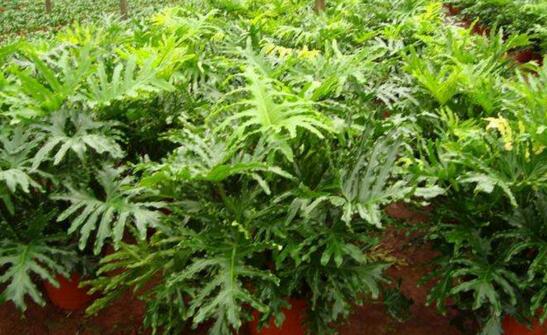
Unlike the causes of yellowing leaves, rot is generally caused by four reasons: excessive fertilizing, fertilizer concentration being too high, watering too much, and pests and diseases. The methods for preventing and treating Philodendron leaf rot are proposed based on these causes, and when choosing which method to use, you must first accurately identify the cause.
1. Excessive fertilizing
To let Philodendron grow healthily, fertilizing is essential, but if too much fertilizer is applied, it will backfire. The roots will not only be damaged, but normal nutrient absorption will also be affected, ultimately causing leaf rot.
Prevention and treatment method: Repot the Philodendron with fresh soil, and pay attention to the fertilizing method. This is described in detail in the Philodendron growing methods and precautions. During the vigorous growth period, fertilize once a month, and there is no need to fertilize frequently.
2. Fertilizer concentration too high
Some people fertilize in the correct way and not too often, but leaf rot still occurs. The reason is that the fertilizer concentration is too high, which causes the Philodendron to absorb excessive fertilizer from the soil. Not only may the leaves rot, but other diseases may also appear.
Prevention and treatment method: During fertilizing, be sure to keep the fertilizer concentration moderate. If the fertilizer concentration is high, dilute it first before applying, and apply it along the edge of the pot soil rather than near the roots. This is a basic method for preventing and treating Philodendron leaf rot.
3. Watering too much
Philodendron likes a humid environment, but if too much water is given, the roots of the Philodendron will be damaged and the leaves will also rot. This is especially likely in hot and stuffy summers when water accumulates in the pot for a long time. This is a major taboo when growing any plant.
Prevention and treatment method: Watering can be changed to once a day. Each time you water, you can observe whether water flows out of the drainage holes at the bottom of the pot. Once the pot soil is moist, stop watering. This can be adjusted according to weather conditions; for example, in winter or on rainy days, reduce the amount of watering.
4. Pests and diseases
Among all the causes that may lead to leaf rot, pests and diseases are the most important. Once any plant suffers from pests and diseases, leaf rot, yellowing, falling off, and other phenomena will quickly appear. Therefore, pests and diseases must be nipped in the bud.
Prevention and treatment method: You can refer to common Philodendron pest and disease control. If pests or diseases appear, deal with them promptly to prevent more leaves from rotting.
Summary: This article has introduced in detail the methods for preventing and treating Philodendron leaf rot, mainly focusing on problems such as pests and diseases, watering, and fertilizing. These are closely related to our care methods. Therefore, developing good care habits during usual growing can prevent leaf rot from occurring.
What to do when Philodendron leaves turn yellow What to do when Philodendron leaves rot
Yellowing, dropping, and rotting leaves are all common problems during plant growing. Generally speaking, such problems mainly come from some part of the plant's growing environment, so we need to eliminate and confirm the causes one by one, thereby solving the problem in a targeted way.
What to do when Philodendron leaves turn yellow
1. Water-induced yellowing: Mainly caused by improper water and fertilizer. Watering too much leads to poor soil aeration, which then causes root rot in the Philodendron. In this case, reduce watering and loosen the soil to enhance soil aeration.
2. Fertilizer-induced yellowing: Mainly caused by too much fertilizer. Old leaves turn yellow and drop, while new leaves are thick and do not spread out. In this case, you can sow a layer of cabbage or radish seeds on the plant, and after they sprout, pull them out to consume the excess nutrients.
3. Drought-induced yellowing: Due to long-term lack of watering or plant dehydration, the lower leaves dry yellow or drop and age. In this case, appropriately increase watering and spray more water to meet the plant's water needs and keep the environment humid, or appropriately spray suitable agents to supply the plant's necessary water.
4. Alkali-induced yellowing: Because Philodendron prefers acidic soil while northern water quality and soil are both alkaline, leaves fade, turn yellow, and drop. In this case, water with fermented rice washing water or rainwater.
What to do when Philodendron leaves rot
If rot has already appeared, when it is not serious, you can prune according to the situation. If it is due to too much water or improper fertilizing, then you need to change the soil and replant.
Before planting, be sure to choose soil with good water permeability and aeration, so that even if you occasionally water too much, it will drain out easily.
During daily watering, do not pour it all at once. You can pour slowly, and when watering you can gauge the amount by seeing how much water you pour before water comes out of the drainage holes at the bottom, then make a record, so that future watering has a comparison. When the temperature drops to 15°C, be sure to control watering, as the plant's demand for water gradually weakens.
When fertilizing normally, be sure to pay attention to the fertilizer concentration, dilute concentrated fertilizer, and slowly apply it along the edge of the pot.
Try to choose a place with good air circulation for care.
What to do when Philodendron has pests and diseases
1. Categories of Philodendron pests and diseases
Generally speaking, plant pests and diseases are divided into diseases and insect pests.
Common diseases of Philodendron include leaf spot disease and anthracnose, among which leaf spot disease is relatively more common than anthracnose. Philodendron ring spot disease mainly appears as nearly circular leaf spots, brown to reddish-brown, with dark brown edges, a yellow halo on the outer ring, and faint reddish-brown concentric rings on the spot surface, with needle-head-sized spots clustered on the diseased spots.
Common insect pests of Philodendron include red spider mites and scale insects. Relatively speaking, scale insects are more common than red spider mites. The appearance of red spider mites is very likely caused by low air humidity, while the appearance of scale insects is very likely caused by poor ventilation.
2. Treatment methods for Philodendron pests and diseases
For diseases such as Philodendron leaf spot disease and anthracnose, wettable powders such as carbendazim, thiophanate-methyl, and zineb can be used for control. Leaf spot disease is more common than anthracnose. Specifically, leaf spot disease needs to be controlled by spraying with a 1000-fold dilution of 50% carbendazim.
For insect pests such as Philodendron red spider mites and scale insects, targeted insecticides can be sprayed for control. Specifically, scale insects need to be controlled by spraying with a 1000-fold dilution of 50% omethoate emulsifiable concentrate. In addition, when preventing red spider mites, air humidity needs to be increased, while scale insects can be prevented by strengthening ventilation.
In addition, if leaves appear yellow, withered, or scorched, they need to be pruned promptly.
Philodendron cutting propagation method
For sandy soil, Philodendron often uses the cutting propagation method. The best propagation season is from May to September. Simply put, cut 2-3 nodes of vigorous stems, insert them into sphagnum moss or coarse sand to root, keep the soil moist, and they generally root in 20 days. Alternatively, cut off the upper part of the Philodendron for cutting, and the old lower plant will sprout many young shoots, which can also be used for propagation.
Besides yellowing leaves and rotting leaves, pests and diseases are also an issue that requires great attention during Philodendron growing. Usually after one plant becomes ill, it will infect other surrounding plants. If not controlled properly, it may threaten all plants, so we must carry out timely prevention, control, and management.
What to do when Philodendron leaves turn yellow, analysis of Philodendron leaf yellowing
Philodendron is a perennial evergreen herbaceous foliage plant. The stem is very short, and the leaves extend from the top of the stem in all directions, arranged densely and neatly, forming a clustered shape. The plant height can reach 1 m, the stem is thick and upright, with a diameter of up to 10 cm, and the stem has obvious leaf scars and wire-like aerial roots. The leaves extend from the top of the stem in all directions, with petioles about 40-50 cm long. The leaf blade is fresh and glossy, ovate-cordate in shape, up to 60 cm long and 40 cm wide, but generally potted ones are only about half that size. The entire leaf is deeply pinnatifid and leathery. The leaves of seedling-stage plants are thinner and triangular; as they grow, the leaves gradually become larger, with more and deeper pinnate lobes and incisions.
Analysis of the causes of Philodendron leaf yellowing
As for the growth habits of Philodendron, because Philodendron likes humidity, tolerates cold, and fears strong light, external causes include unsuitable temperature, low humidity, unsuitable light, excessive fertilizing, too frequent watering, pests and diseases, etc. In addition, there are also pot soil causes.
Pot soil causes and symptoms of Philodendron leaf yellowing
Pot soil nitrogen deficiency: Leaves are small, leaves are pale yellow, and the lower part of the leaves turns yellow first and then all turns from green to yellow.
Pot soil phosphorus deficiency: Leaves curl, color is dark green, and veins of the lower leaves turn yellow.
Pot soil potassium deficiency: The edges of the lower leaves appear brown, and the plant easily lodges.
Pot soil magnesium deficiency: Leaf edges and centers turn white
Pot soil iron deficiency: Scorched brown spots appear and dry up
How to deal with Philodendron leaf yellowing
Water-induced yellowing: Mainly caused by improper water and fertilizer. Watering too much leads to poor soil aeration, which then causes root rot in the Philodendron. In this case, reduce watering and loosen the soil to enhance soil aeration.
Fertilizer-induced yellowing: Mainly caused by too much fertilizer. Old leaves turn yellow and drop, while new leaves are thick and do not spread out. In this case, you can sow a layer of cabbage or radish seeds on the plant, and after they sprout, pull them out to consume the excess nutrients.
Drought-induced yellowing: Due to long-term lack of watering or plant dehydration, the lower leaves dry yellow or drop and age. In this case, appropriately increase watering and spray more water to meet the plant's water needs and keep the environment humid, or appropriately spray suitable agents to supply the plant's necessary water.
Alkali-induced yellowing: Because Philodendron prefers acidic soil while northern water quality and soil are both alkaline, leaves fade, turn yellow, and drop. In this case, water with fermented rice washing water or rainwater.