How to grow the hooker's lips plant? Growing methods and soil selection are very important
The hooker's lips plant (Psychotria elata) is a flower with a rather unusual appearance, looking just like a person's lips, with a distinctive kind of beauty, and people in many regions grow this flower. Regarding how to grow the hooker's lips plant, what are the growing methods for it? Below, the editor takes you through it.
1. How to grow the hooker's lips plant / pay attention to soil selection
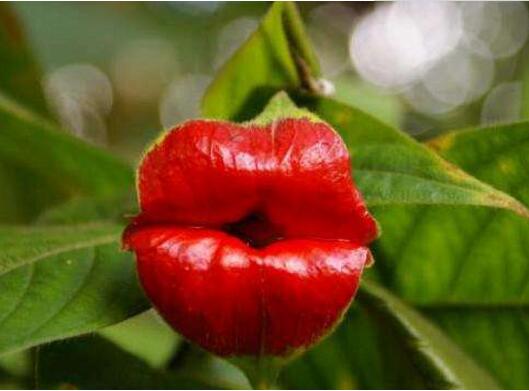
Regarding the question of how to grow the hooker's lips plant, there are many aspects to pay attention to. During cultivation, there are certain requirements for temperature, light and soil, among which soil selection is especially important. Choosing the right soil is also of great help to its growth. Let's continue reading for the specific details.
2. Growing methods for the hooker's lips plant
1. Soil requirements
Among the growing methods for the hooker's lips plant, soil selection is a rather important step. We had best choose relatively fertile humus soil, as this gives better drainage, helps the hooker's lips plant absorb nutrients more effectively, and makes it grow better. Everyone should pay attention to this point.
2. Fertilization requirements
Fertilizer is a relatively important nutrient for the hooker's lips plant and is indispensable during its growth. For fertilizing the hooker's lips plant, organic fertilizer can generally be chosen, and fertilizing once a month is usually enough. Do not apply it too frequently, otherwise it easily causes its leaves to turn yellow.
3. Watering requirements
The hooker's lips plant is a plant that loves water. During cultivation it must never lack water, and the potting soil should be kept moist. If grown at home, it basically needs watering every day, so that it will grow better.
4. Sunlight requirements
During the process of growing the hooker's lips plant, light is indispensable. It must be given sufficient sunlight; even in summer it can be placed outdoors in a bright spot for cultivation. The stronger the light, the better it grows. Everyone should remember this point.
5. Pay attention to pruning
After the hooker's lips plant finishes blooming, proper pruning is also a necessary step. After it flowers, the faded flowers must be cut off in time, so that it can grow new flower buds. We can also cut off some of its dead branches and rotten leaves, so that it can also produce more branches.
Growing methods and growing tips for the hooker's lips plant
The hooker's lips plant, also known as the jade lips flower, is a perennial herbaceous plant. Its leaves are mostly opposite and elliptical, its branches are slender, and its flowers are even more unique in appearance, just like human lips, bright red in color and alluring in fragrance. It is native to the tropical regions of South America and is now a hot-selling variety in the flower market. Many people want to grow it at home, but just do not know how to grow the hooker's lips plant well. Below, the editor introduces the relevant knowledge for everyone.
1. Prepare the potting soil
During cultivation, the hooker's lips plant has relatively high requirements for soil. This plant likes loose soil with good drainage. Usually it is best to choose perlite and vermiculite and add an appropriate amount of leaf mold to prepare the potting soil; this can make the hooker's lips plant grow vigorously.
2. Light conditions
During cultivation, the hooker's lips plant also has relatively high requirements for light conditions. It likes an environment with ample sunshine, but fears strong light. It is best to place it in an environment with ample scattered light. If there are long periods of cloudy days or the indoor conditions are dark, then lighting must be used to meet its light needs. Only with sufficient light duration can it bloom, in large numbers, and with bright flower colors.
3. Temperature regulation
During growth, the hooker's lips plant is very sensitive to temperature changes. It grows fastest when the outside temperature is between 18 and 25 degrees, but after summer enters hot weather, when the temperature exceeds 30 degrees, it will grow poorly, and when the temperature exceeds 35 degrees it will stop growing. It is also afraid of severe cold in winter and must not be placed in an environment below zero degrees, otherwise it will be damaged by excessively low temperatures.
4. Timely pruning
When growing the hooker's lips plant, also pay attention to timely pruning. Yellow leaves and fallen flowers on the plant can be cleaned up regularly, and when its branches become aged or messy, they should also be pruned as soon as possible. Only in this way can new branches be encouraged to grow and can it produce more and more beautiful flowers. In addition, during cultivation this plant must also be fertilized in time, especially before entering the flowering period, when phosphorus fertilizer and potassium fertilizer should be applied in time; this can prolong the flowering period and also increase the number of flowers.
Growing methods for the hooker's lips plant_ Hooker's lips plant picture gallery
The hooker's lips plant is a plant with a special appearance, looking just like sexy, alluring lips, bright red in color. This plant is rarely seen in daily life, so how should the hooker's lips plant be grown? Below, the editor invites everyone to enjoy pictures of the hooker's lips plant together and learn about it.
Introduction to the hooker's lips plant
The hooker's lips plant generally grows in eastern Brazil. The flowers open among the leaves, with bright red flowers and fresh green leaves, and a beautiful and lovely posture. The hooker's lips plant is a plant of the Acanthaceae family, genus Justicia, an evergreen trailing subshrub. Its flowering period lasts all year.
Morphological characteristics of the hooker's lips plant
The hooker's lips plant has a special appearance. Its flower stems grow very long and can hang down. Its leaves are usually elliptical or long ovate, with slightly wrinkled surfaces, acuminate tips and wavy edges. It blooms in spring and summer, with axillary flowers, a tubular corolla with deep lobes, and a pinkish-red color that is quite pleasing to the eye. The leaf blades are smooth, and the branches are fine, soft and easily drooping in all directions, giving it the look of a vine plant, but it does not have twining or climbing structures. The inflorescences grow in the leaf axils and can present a scene of flowers blooming in strings along the branches.
Ecological habits of the hooker's lips plant
Because the hooker's lips plant is rarely seen in our daily lives, many people are unclear about its ecological habits. The hooker's lips plant generally likes an environment ranging from full-day sun to half-day sun. Under full-sun conditions the leaves appear olive green, but this does not affect growth or flowering. High temperature and high humidity can promote growth, while growth is slower during the low-temperature period in the north.
Cultivation techniques for the hooker's lips plant
Cultivating the hooker's lips plant requires fertile soil, ample sunlight and an appropriate amount of water to succeed. Its soil is best as fertile humus soil or sandy loam, with good drainage and light. It has few branches, so the tips can be pinched to encourage more branching. Topdressing is done once every 1 to 2 months. After flowering, pruning and branch trimming should be carried out. If the plant becomes aged, a heavy pruning should be done every spring, along with replacing the soil, to encourage the sprouting of new branches and leaves. It likes high temperatures, and the suitable growing temperature is about 22 to 32 C.
Propagation methods for the hooker's lips plant
The hooker's lips plant can be propagated by cuttings, with spring and autumn being the suitable periods.
Landscape uses of the hooker's lips plant
The hooker's lips plant has quite many uses. It can be planted in garden high spots to beautify the environment, and can also be used as a potted flower for enjoyable cultivation. Because its branches droop, it is suitable for planting in higher positions to admire the strings of flowers. It can be planted in rows in flower boxes or hung in hanging baskets to admire the bright flowers on the trailing branches.