How to fertilize Philodendron selloum? Adjust fertilizer and amount by season
Plants grow at different rates in each season, so fertilization also needs constant adjustment. For example, when fertilizing Philodendron selloum, the amount and frequency of fertilization in summer is much greater than in winter. So what is the correct way to fertilize Philodendron selloum? We have compiled the fertilization techniques commonly used by botanists.
How to fertilize Philodendron selloum
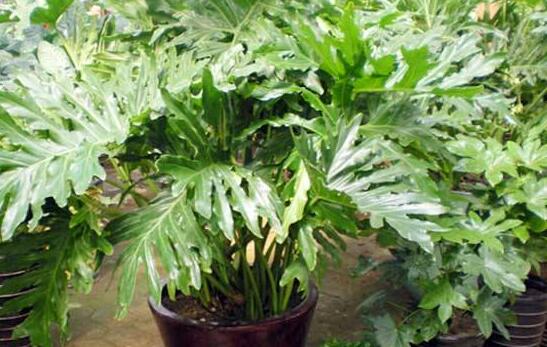
Normally, Philodendron selloum needs to be repotted once a year, and each time you repot it, you should place some hoof and horn pieces or oil residue at the bottom of the pot; academically this is called base fertilizer. Then adjust the frequency of fertilization and the type of fertilizer according to the season. Below we will look at how to fertilize in each season.
1. Spring
Spring is the season when all things revive, and the temperature gradually changes from cold to warm. At this time Philodendron selloum slowly resumes growth. Fertilizing it at this time is generally mainly with nitrogen fertilizer, and you can apply diluted cake fertilizer water once a month. For watering, mainly use rice-washing water, which can increase the fertility of the soil.
2. Summer
Summer is the vigorous growth period of Philodendron selloum. In addition to understanding its cultivation methods and precautions, you also need to master fertilization techniques. At this time, you should apply thin fertilizer frequently, which means the frequency of fertilization can increase, but the amount each time can be appropriately reduced. Never apply too much fertilizer at once. The fertilizer should also be mainly nitrogen fertilizer.
3. Autumn
In autumn the temperature gradually decreases and the climate becomes dry. So how should Philodendron selloum be fertilized at this time? The frequency of fertilization should be reduced to once a month, and phosphorus and potassium fertilizers can be chosen. If the temperature drops below 20 degrees, fertilization should be stopped.
4. Winter
In winter, the growth of Philodendron selloum basically stops, so its demand for fertilizer is the lowest of the four seasons. At this time, fertilization should be stopped until the temperature gradually rises back to around 20 degrees. Do not worry that Philodendron selloum will have its growth hindered due to lack of fertilizer.
How to care for Philodendron selloum in winter
In addition to stopping fertilization in winter, you also need to control temperature, moisture and light to ensure that Philodendron selloum passes through winter smoothly. In terms of temperature, you should ensure that the temperature it is in is above zero degrees, otherwise it will recover its vitality relatively slowly.
1. Watering
Although Philodendron selloum grows slowly in winter and its demand for water decreases, you still cannot forget to water it. If the potting soil becomes dry and cracked, then you should water Philodendron selloum in time, but remember not to let water accumulate in the pot.
2. Light
Philodendron selloum is very tolerant of shade, but in winter you should keep it in a bright place with sufficient light. First, this allows it to be in a warm environment; second, it can make the leaves become more bright green.
Summary: Although fertilizing Philodendron selloum is constantly adjusted according to seasonal changes, as long as we develop good fertilization habits, we can ensure that Philodendron selloum grows healthily and vigorously, with more beautiful leaves and higher ornamental value.
Philodendron selloum Philodenron selloum Koch Philodendron selloum illustrated guide: how to grow Philodendron selloum / how to propagate Philodendron selloum
Philodendron selloum profilePhilodendron selloum Philodenron selloum Koch
Cultivation methods and precautions for Philodendron selloum Introduction to Philodendron selloum
Philodendron selloum is a perennial evergreen herbaceous foliage plant.
The stem is extremely short, and the leaves extend from the top of the stem in all directions, arranged densely and neatly, forming a clustered appearance. The petioles are firm and slender, reaching up to 1 m, and the leaves are huge, with coarse pinnate deep lobes, dark green and glossy.
The stem is upright and woody, producing many aerial roots; the plant is tall, reaching more than 1.5 m.
The leaves are clustered and borne at the end of the stem; the leaves are broadly heart-shaped, with the whole leaf pinnately deeply lobed like a palm, up to 60 cm long and 40 cm wide, leathery, dark green and glossy; the petioles are firm and slender, reaching 80-100 cm.
Morphological characteristics of Philodendron selloum
Philodendron selloum is a perennial evergreen herbaceous foliage plant. The stem is extremely short, and the leaves extend from the top of the stem in all directions, arranged densely and neatly, forming a clustered appearance. The plant height can reach 1 m, and the stem is thick and upright, with a diameter reaching 10 cm. The stem has obvious leaf scars and wire-like aerial roots. The leaves extend from the top of the stem in all directions and have petioles about 40-50 cm long. The leaf blade is fresh, deep green and glossy, ovate-heart-shaped, up to 60 cm long and 40 cm wide, but generally potted plants are only about half that size. The whole leaf is pinnately deeply lobed and leathery. The leaves of seedling-stage plants are thinner and triangular. As growth occurs, the leaves gradually become larger, and the pinnate lobes and notches become more numerous and deeper.
Ecological habits of Philodendron selloum
Philodendron selloum prefers a high-temperature and humid environment. It does not have strict light requirements, is not cold-tolerant, and tolerates shade. It can be grown in pots in indoor places where the light is not too weak. It prefers fertile, loose, well-drained, slightly acidic soil, and the winter temperature should not be lower than 5°C.
It is a perennial evergreen herbaceous plant. It is relatively shade-tolerant. It is one of the more cold-tolerant species in this genus. The suitable growth temperature is 18-25°C. In winter it can tolerate a low temperature of 2°C, but above 5°C is better. It requires sandy soil.
Cultivation techniques for Philodendron selloum
It is a perennial evergreen herbaceous plant. It is relatively shade-tolerant. It is one of the more cold-tolerant species in this genus. The suitable growth temperature is 18-25°C. In winter it can tolerate a low temperature of 2°C, but above 5°C is better. It requires sandy soil. Cutting propagation is commonly used. May to September is best. Cut robust stems with 2-3 nodes and insert them directly into sphagnum moss or coarse sand, keeping them moist. Roots can form in about 20 days. Household cultivation should be renewed every 3-4 years. Leaf spot disease and scale insects are common. For leaf spot disease, spray 50% carbendazim 1000x solution for control; for scale insects, spray 50% omethoate emulsifiable concentrate 1000x solution to kill them.
Pot and soil: You can choose a clay pot for planting, and it can be covered with another pot on the outside, which is both attractive and breathable. Because Philodendron selloum prefers fertile, loose, well-drained, slightly acidic soil, household cultivation can use a mix of leaf mold, peat soil, garden soil, etc. with a small amount of river sand. Depending on the plant's growth, repot once every about 2 years in spring.
Light and temperature: Philodendron selloum prefers warmth, tolerates shade, is not cold-tolerant, and avoids direct strong sunlight. In hot summer it should be kept in a shaded place. In winter, it can be placed in a sunny spot. Its suitable growth temperature is 18-25°C, and the overwintering temperature is preferably above 8°C.
Water and fertilizer: Philodendron selloum likes a humid environment. Usually you can water it with some rice-washing water, and during the growing period pay attention to keeping the potting soil moist. In summer, spray water on the leaves or around the flowerpot every day to maintain a fresh and humid microclimate.
In winter, as the temperature gradually decreases, the frequency of watering should be reduced. Although Philodendron selloum likes warmth and humidity, it has fairly strong adaptability to the dry indoor environment of northern winters. When potting or repotting, place some hoof and horn pieces or oil residue at the bottom of the pot as base fertilizer, and afterward apply liquid fertilizer once a month (such as diluted cake fertilizer water, etc.). In winter, apply less fertilizer or stop fertilizing.
Propagation can be done by division or cutting. Generally, robust plants can produce tillers at the base. After they take root, they can be removed and planted separately. Alternatively, cut off the upper part of the plant and root it as a new plant, and several young buds will sprout from the base of the old plant; these young buds can be used for propagation. In tropical regions, fresh seeds can also be used for propagation, with a suitable germination temperature of 25-30°C. The potting medium is commonly made by mixing leaf mold, peat soil and river sand, and sufficient base fertilizer should be applied at each repotting. During the growing season, some light fertilizer can be applied appropriately, but not too much. Usually spray water on the leaves more often, and appropriately control watering in winter. Outdoor cultivation should be placed in a shaded place. It can grow in any indoor position, but a bright place is better. Pests and diseases are relatively few. In a dry climate ** it has a certain tolerance to both high and low temperatures. It is not cold-tolerant, and in the north it is overwintered indoors in pots. Move it indoors before frost and place it in a sunny spot. As long as the room temperature remains above 8°C, it can overwinter safely. Winter management should control moisture, and water when the potting soil becomes dry. For mature plants, before moving them out each year, change to loose and fertile nutrient soil, and place hoof and horn pieces or oil residue in the pot as base fertilizer. In late April, move the flowerpot outdoors to a sheltered, sunny place for management. In summer, avoid heat and direct strong sunlight, and take shading measures. Philodendron selloum has a high water demand. In summer, water thoroughly twice a day, frequently spray the leaf surface, clean the leaf surface, and maintain a fresh and humid microclimate. Usually water with rice-washing water or mild chicken or fish blood water to increase soil fertility and prevent the potting soil from compacting. Philodendron selloum grows quickly. With water, fertilizer, light and temperature well adjusted, it can grow 375 leaves in a year.
Planting key points
Mainly the soil or the plant roots.
First, watering must not be too frequent; excessive waterlogging will cause this.
Second, check whether the drainage hole at the bottom of the pot drains effectively. If not, change the soil and cover it again with a small tile piece or window screen.
Third, if there are too many earthworms in the soil, this can also happen.
Fourth, the growing environment: is it too closed and shaded, with light that is too dim?
If the upper part has not completely rotted, you can cut it off, remove the rotten part, and replant it in new sandy soil. Also remove most of the lower leaves, keeping only the upper 2 leaves, and cut all leaves into "half leaves" to reduce water transpiration. Place it in a semi-shaded place and frequently spray water on the leaves or the growing environment, but the potting soil is best watered by alternating dry and wet, not too frequently.
Management
The overwintering temperature should not be lower than 5°C. Avoid strong light. The suitable growth temperature is 20°C-30°C, and it begins to grow at around 10°C. It should be placed in a semi-shaded place, and in summer avoid direct strong sunlight to prevent scorching the leaves. During the growing period, keep the soil moist frequently, and avoid excessive dryness. Use frequent spraying on the leaves and watering on the ground to increase environmental humidity, and try to maintain a ventilated, warm, semi-shaded environment. In addition, it is best to place Philodendron 'Golden Diamond' away from radiators and air conditioning vents, because the air in these places is too dry and moisture evaporates quickly, which can easily cause the leaves to dry up. When the air is dry in summer and autumn, you should also spray the plant to preserve moisture and lower the temperature. It likes fertilizer. During the peak growing season from May to September, fertilize with fertilizer water 1-2 times a month. Avoid applying only nitrogen fertilizer, otherwise the petioles will become slender and weak and difficult to stand upright, thus affecting the ornamental effect. In other seasons, also apply as little fertilizer as possible. Watering should be flexible: in the dry seasons of spring and summer, keep the soil moist, while in autumn and winter, water by alternating dry and wet. Well-cultivated Philodendron 'Golden Diamond' will produce some brown-red roots at the rhizome and soon grow new shoots. At this time, you can divide the pot in time. During the division process, be careful and meticulous to avoid damaging the main roots. Plant the separated seedlings separately in loose, fertile sandy soil, then place them in a semi-shaded indoor spot, and pay attention to frequent spraying to prevent the seedlings from wilting. After a week, gradually reduce the frequency of spraying. In about half a month, the seedlings will basically survive, and normal care can be carried out.
Precautions
The temperature needs to be maintained at around 20°C, not lower than 10°C, and it should also avoid radiators, air conditioning and cold wind.
Air humidity should be maintained between 50-75%. Below 50%, leaves easily turn yellow and edges dry. Humidity is often increased by spraying and sprinkling water.
It likes light but avoids direct strong light. The growing environment is best maintained under semi-shaded or diffused light conditions. Do not place it in a shaded environment for a long time, otherwise the leaves will easily turn yellow.
Fertilization should follow the principle of applying thin fertilizer frequently, and mainly use nitrogen fertilizer.
Watering is best done when the surface of the potting soil becomes dry. In the high-temperature period of summer, keep it moist. In winter, if the ambient temperature is below 15°C, water by alternating dry and wet.
Diseases are mainly caused by unsuitable care or environment. They can generally be prevented through good care and management. When disease occurs, spraying carbendazim, chlorothalonil, etc. can control it. Pests mainly include red spider mites, generally caused by dry air. Frequent spraying and wiping the leaves can effectively prevent them. When pests occur, specially targeted pesticides such as dicofol should be sprayed for control.
Cultivation methods for Philodendron selloum
Philodendron 'Golden Diamond' likes a warm, humid, semi-shaded environment, fears severe cold, and the overwintering temperature should not be lower than 5°C;
Light: avoid strong light; the suitable growth temperature is 20°C-30°C, and it begins to grow at around 10°C;
Soil: requirements are not strict. It grows best in sandy loam rich in humus and well drained. For potting, a nutrient soil mixed with peat and perlite is often used.
It should be placed in a semi-shaded place, and in summer avoid direct strong sunlight. During the growing period, keep the soil moist frequently, avoid excessive dryness, and place it away from radiators and air conditioning vents.
Prevent leaf yellowing, pests and diseases. Diseases are mainly caused by unsuitable care or environment and can generally be prevented through good care and management. For pests such as red spider mites, frequent spraying and wiping the leaves can effectively prevent them. Spraying specially targeted pesticides can provide control.
Common leaf problems and causes The main causes of leaf yellowing in Philodendron 'Golden Diamond' are unsuitable temperature, low humidity, unsuitable light, excessive fertilization, too frequent watering, and damage from pests and diseases.
Philodendron selloum has luxuriant plants and large, peculiar leaves. The leaf color is emerald green and glossy, and its shade tolerance is relatively strong. It is currently one of the most commonly used indoor foliage plants in homes and public places. It can be potted and placed in spacious places such as living rooms and lobbies, and small plants can also be hydroponically grown on desks, windowsills and other places.
Philodendron selloum has relatively large leaves, and the petiole plus leaf can reach more than 1 m. Its flowering period is mostly in spring, with a spathe shape, and its ornamental value is not high. It is mainly grown for its foliage. It is not strict about soil, but grows best in loose, fertile, well-drained, slightly acidic soil.
Philodendron selloum originates from the tropical rainforests of Brazil in South America. It likes a warm, humid and semi-shaded environment. It is not strict about light, but it cannot tolerate long-term shaded environments, otherwise the leaf color becomes lighter, the petioles become longer, and the leaves droop, reducing ornamental value. It also fears direct strong sunlight. After exposure to strong sunlight, the leaves easily develop dry leaf tips, scorched leaf margins, and whitened, lusterless leaf color, so it is best maintained under semi-shaded or diffused light. In winter, it can be cared for with sufficient light so that it overwinters safely.
Philodendron selloum is a tropical plant and is not tolerant of severe cold and low temperatures. In winter, the temperature is best kept above 10°C to prevent cold damage. The optimum growth temperature is between 18-30°C. When the temperature is above 30°C, growth is inhibited, and ventilation and cooling are needed, along with increasing the frequency of spraying to increase the relative humidity of the air. During normal growth, maintaining humidity at around 50% is enough to meet its needs. When the temperature is above 25°C, the air humidity needs to be raised to around 70%.
The leaves of Philodendron selloum are large and thin, and it has relatively high water requirements. During the growth cycle, the potting soil needs to be kept moist, especially in the high-temperature period of summer when it cannot lack water. When the temperature is below 15°C, the frequency of watering needs to be reduced, and the potting soil can be kept by alternating dry and wet. It can tolerate brief waterlogging, but long-term water accumulation easily rots the root system and causes plant death.
In late spring, Philodendron selloum enters its vigorous growth period and needs fertilizer mainly based on nitrogen fertilizer to promote rapid growth and restore vitality. Fertilization should follow the principle of thin fertilizer applied frequently.
Do not apply enough at one time and cause fertilizer damage. If during the growing period you can use diluted mild fertilizer water instead of clean water to irrigate the potting soil, growth will be even better. After entering autumn, control the amount of nitrogen fertilizer applied, otherwise it is unfavorable for overwintering, the petioles will also become longer, and the plant shape cannot be effectively controlled. When the winter temperature is below 20°C, fertilization should be stopped. Propagation methods for Philodendron selloum mostly use cutting, sowing and division. At home, it is best to use cutting and division, as the operations are relatively simple. For cutting propagation, May to September is suitable. Cut robust stems with longer branches and insert them directly into clean river sand, place in a semi-shaded place, maintain relatively high air humidity, and keep the temperature at around 25°C. Roots can form in 20-25 days. Division propagation requires that small plants have grown at the base of the old plant. It can be combined with changing soil and repotting. Carefully separate the small plants from the old plant, trying not to damage the old plant or the roots. You can also pinch off the growing tips of side plants in advance, which can both dwarf the plant and produce more side plants. When the new side plants are about 15 cm, cut them off with aerial roots and plant them separately.
Propagation methods for Philodendron selloum
Propagation can be done by division or cutting.
Generally, robust plants can produce tillers at the base. After they take root, they can be removed and planted separately. Alternatively, cut off the upper part of the plant and root it as a new plant, and several young buds will sprout from the base of the old plant; these young buds can be used for propagation. In tropical regions, fresh seeds can also be used for propagation, with a suitable germination temperature of 25-30°C. The potting medium is commonly made by mixing leaf mold, peat soil and river sand, and sufficient base fertilizer should be applied at each repotting.
During the growing season, some light fertilizer can be applied appropriately, but not too much. Usually spray water on the leaves more often, and appropriately control watering in winter. Outdoor cultivation should be placed in a shaded place. It can grow in any indoor position, but a bright place is better. Pests and diseases are relatively few.
Disease control for Philodendron selloum
Common diseases of Philodendron selloum include leaf spot disease and anthracnose, which can be controlled with wettable powders such as carbendazim, thiophanate-methyl and zineb, with obvious effects. If leaves are yellow, withered or scorched, they need to be pruned in time to reduce nutrient loss. Pests mainly include red spider mites and scale insects, which can be controlled by spraying specially targeted pesticides. In addition, red spider mites can be prevented by increasing air humidity, and scale insects can be prevented by strengthening ventilation.
Control methods
The main causes of leaf yellowing in Philodendron 'Golden Diamond' are: unsuitable temperature, low humidity, unsuitable light, excessive fertilization, too frequent watering, and damage from pests and diseases.
Potting soil causes
1. Nitrogen deficiency in the potting soil: leaves are small, leaf color is pale yellow, lower leaves turn yellow first, gradually the whole plant loses greenness, and the lower part becomes more yellow and pale;
2. Phosphorus deficiency in the potting soil: leaves curl, leaf color is dark green, and the areas between veins of lower leaves turn yellow;
3. Potassium deficiency in the potting soil: the edges of lower leaves turn brown and the plant easily lodges;
4. Magnesium deficiency in the potting soil: leaf edges and centers lose green and turn white from bottom to top;
5. Iron deficiency in the potting soil: scorched brown spots appear and dry up.
Other causes
1. In most cases, it is water yellowing caused by improper water and fertilizer, that is, watering too much leads to long-term water accumulation in the soil, poor air permeability, and even partial rotting of fibrous roots. It shows as dull yellow, lusterless young leaves and shrunken new shoots;
2. Fertilizer yellowing, that is, too much fertilizer, shows as old leaves and branch tips turning yellow and falling off. Although new leaves are thick and glossy, they are generally uneven and not spread out. If it is a valuable flower, you can scatter a layer of small bok choy or radish seeds, and pull them out after they sprout for a few days to consume nutrients;
3. Drought yellowing: due to long-term failure to water thoroughly or dehydration, although the new leaves have normal color, the lower leaves gradually dry, turn yellow and fall off upward as they age;
4. Alkaline yellowing: especially some southern flowers that like acidic soil. When northern water quality is somewhat alkaline, the leaves gradually fade, turn yellow and even fall off. The simplest method is to water with fermented rice-washing water or rainwater.
Distribution area of Philodendron selloum
Native to Brazil, Paraguay and other places. It is cultivated in the subtropical evergreen broad-leaved areas of southern China.
Adapted regions: South China southern subtropical evergreen broad-leaved forest region (main cities: Fuzhou, Xiamen, Quanzhou, Zhangzhou, Guangzhou, Foshan, Shunde, Dongguan, Huizhou, Shantou, Taipei, Liuzhou, Guiping, Gejiu)
Tropical monsoon forest and rainforest region (main cities: Haikou, Sanya, Qionghai, Kaohsiung, Tainan, Shenzhen, Zhanjiang, Zhongshan, Zhuhai, Macao, China, Hong Kong, China, Nanning, Qinzhou, Beihai, Maoming, Jinghong)
Uses of Philodendron selloum Ornamental value
Philodendron selloum has huge leaves with coarse pinnate deep lobes, dark green and glossy. The petioles are long and thick, and the aerial roots are extremely developed and drooping. The plant shape is elegant, and the overall ornamental effect is good. At the same time, it is shade-tolerant and is an excellent indoor shade-loving foliage plant. It is suitable for decorating hotel lobbies, indoor gardens, offices, and home living rooms, studies and other places. In rooms with relatively strong light, it can be placed for several months, and plant growth will not be greatly affected; in darker rooms it can also be enjoyed for 2-3 weeks. It is also often used as a large potted plant, and looks very spectacular when displayed in halls.
Decorative applications
Philodendron bipinnatifidum has peculiar leaf forms and is very shade-tolerant. It is suitable for indoor hall display and is especially suitable for decorating music tea houses and hotel lounges.
Philodendron selloum pictures
How to grow Philodendron selloum Cultivation methods and precautions for Philodendron selloum
Most plant names are based on the plant's form and appearance. Philodendron selloum is a green plant whose appearance resembles feathers. It is usually planted in some public places, and because Philodendron selloum is a relatively large plant, the space where Philodendron selloum is placed usually needs to be relatively large.
How to grow Philodendron selloum
Philodendron selloum likes a high-temperature and humid growing environment. It does not have high light requirements and has strong shade tolerance. Philodendron selloum is relatively not cold-tolerant. The suitable growth temperature is between 18°C——25°C, and the overwintering temperature in winter should not be lower than 5°C. Philodendron selloum likes loose, fertile and well-drained sandy soil.
Cultivation methods and precautions for Philodendron selloum
1. Soil
As far as the habits of Philodendron selloum are concerned, Philodendron selloum prefers fertile, loose, well-drained, slightly acidic soil, so its soil requirements are relatively low. For household cultivation of Philodendron selloum, you can use a mixture of leaf mold, peat soil and garden soil with a small amount of river sand.
2. Watering
Philodendron selloum likes a relatively humid environment and has a relatively high water demand, but it is not demanding about water, so usually you can water it with rice-washing water. Note to keep the soil moist during the growing period. It should be noted that the amount of watering needs to change according to the season. In summer, spray water on the leaves and around them more often to maintain a humid environment; in winter, reduce the frequency of watering.
3. Fertilization
Philodendron selloum has strong adaptability and can quickly adapt to either a humid environment or dry conditions. Therefore, its demand for fertilizer is also not high. When potting, place some hoof and horn pieces or oil residue at the bottom, and after that only apply liquid fertilizer once a month, such as diluted cake fertilizer water. In particular, in winter, apply less fertilizer or no fertilizer to meet the plant's needs.
4. Light and temperature
Philodendron selloum likes warmth, tolerates shade, but is not cold-tolerant and fears light. It avoids strong light exposure. The suitable temperature is 18°-25°. Therefore, in summer Philodendron selloum needs to be moved to a cool place to avoid direct sunlight, and in winter it can be moved to a place with sufficient light, keeping the overwintering temperature above 8° as much as possible. 5. Pests and diseases
Common diseases of Philodendron selloum include leaf spot disease and anthracnose, which can be controlled with agents such as carbendazim and thiophanate-methyl. If problems such as yellowing or withering of leaves occur, pruning is needed. Common pests of Philodendron selloum include red spider mites and scale insects, which can be controlled with specialized agents. In addition, more ventilation is needed to prevent pests.
6. Propagation
Keep the temperature at a fixed value around 20°, avoiding an air environment that is too hot or too cold; keep humidity at a high value, spraying and sprinkling water more often to increase environmental humidity; keep light and temperature at normal values, avoiding too high or too low; the fertilization principle is “thin fertilizer applied frequently” and mainly nitrogen fertilizer; watering frequency is high, and in summer it must remain moist at all times, while in winter it needs alternating dry and wet watering.
How Philodendron selloum overwinters
1. Control of room temperature
To be safe, eight degrees and above can allow it to pass winter safely, and it is best not to go below zero degrees Celsius at the lowest. Although the plant may also be able to endure it and slowly recover in the following spring, we still should not gamble with our beloved plant.
2. Control of moisture
We may all have heard that Philodendron selloum originates in hot and humid places, so it has a relatively high water demand. Although it begins dormancy in winter and its water needs decrease accordingly, you still cannot forget to water it. Water it in time when the potting soil becomes dry and cracked, but do not let it soak in water. In addition, you can also care for it by sprinkling water on the leaves and spraying water into the surrounding environment.
3. Control of light
If it is kept in a dark place for a long time, its leaves may slowly turn yellow, and the beautiful green will gradually fade away. So, let it see some light regularly. However, it does not like long periods of light either. Yes, it is a bit demanding. So, choose a semi-shaded environment, or let it bask in the sun for a while and then move it back in time.
4. Fertilizer control
From late autumn onward, pay attention to the amount used. In winter it enters a dormant period and needs almost no nutrients, so fertilization should be suspended.
How to solve leaf rot in Philodendron selloum
If rot has already appeared, when it is not serious, you can prune accordingly. If it is caused by excessive water or improper fertilization, then you need to change the soil and replant.
Before planting, be sure to choose soil with good water permeability and air permeability, so that even if you occasionally water too much, it will drain out easily.
During daily watering, do not pour it all in at once; pour it in slowly. When watering, you can also gauge the amount of water by seeing how much water you pour in before the drainage holes at the bottom start to release water, and then make a record, so that future watering has something to compare with. When the temperature drops to 15°C, be sure to control watering, as the plant's need for water gradually weakens at this time.
When fertilizing normally, be sure to pay attention to the concentration of the fertilizer, dilute relatively concentrated fertilizer, and apply it slowly along the edge of the pot.
Try to choose a place with good air circulation for care.
The important thing in growing plants is to create a suitable growing environment according to the plant's normal growth needs, while also paying attention to some important growth stages of the plant, such as flowering, propagation, overwintering and getting through summer, and to regularly observe the plant's growth state to deal with corresponding pests, diseases and special symptoms.