How to grow Philodendron bipinnatifidum? Care methods and things to note, avoid direct strong sunlight
As a foliage plant, Philodendron bipinnatifidum has long been deeply loved by people. It can be placed in living rooms, gardens and many other places, and can be said to be a very easy plant to grow, but if you want to grow it well, you still need some techniques. So how do you grow Philodendron bipinnatifidum? The editor will give you a detailed introduction to the care methods and things to note for Philodendron bipinnatifidum.
How to grow Philodendron bipinnatifidum
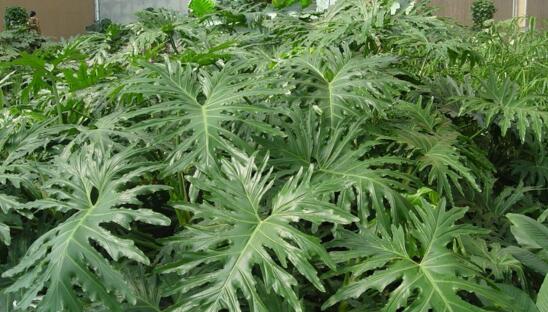
Before learning how to grow Philodendron bipinnatifidum, we first need to know some of its characteristics. Philodendron bipinnatifidum very much likes high-temperature and humid environments, but its requirements for light are not high. Its shade tolerance is very good, and it can grow even in indoor places with weak light. However, it is not cold-tolerant and is more suitable for pot cultivation. Next, we will introduce it in detail from the aspects of soil, light, temperature, water and fertilisation.
1. Light
Because of its shade-tolerant characteristics, Philodendron bipinnatifidum does not have high requirements for light. In summer, it needs to be placed in a shaded place for care, and in winter it can be placed in a place with sufficient sunlight.
Things to note: Never place Philodendron bipinnatifidum under direct sunlight. This is an easily overlooked point in the care methods and things to note for Philodendron bipinnatifidum. Many people think that Philodendron bipinnatifidum, like other plants, likes sunlight, but this is actually not the case. It prefers shady places, though of course it should not be too dark either.
2. Temperature
The suitable growth temperature for Philodendron bipinnatifidum is 15-30 degrees. When the temperature is above 10 degrees, it begins to grow. Its cold tolerance is not good, so it is best not to let it stay in an environment below 5 degrees.
Things to note: In winter, because the temperature in the south is too low, do not keep Philodendron bipinnatifidum in a dark place for a long time. It can be moved to a place with sufficient light, while ensuring the temperature is above 5 degrees.
3. Soil
Philodendron bipinnatifidum relatively likes fertile acidic soil, so loose sandy soil with good drainage is best. For pot cultivation, peat and perlite are generally mixed to make nutrient soil, or leaf mould, peat soil and original soil with a small amount of river sand can also be mixed together.
Things to note: Be sure to ensure the soil has good air permeability and drainage, so that when watering or fertilising, nutrients can be better absorbed by Philodendron bipinnatifidum. In the care methods and things to note for Philodendron bipinnatifidum, the choice of soil is the foundation for ensuring the health of Philodendron bipinnatifidum.
4. Water
When Philodendron bipinnatifidum is in a humid environment, its growth and development are fastest, so in normal times we should water frequently. Its requirements for water are not high, and rice-washing water and similar can be used.
Things to note: Never wait until the potting soil is completely dry before watering. Keeping the potting soil moist is very helpful for the growth of Philodendron bipinnatifidum. In summer, the number of waterings should also be increased.
5. Fertilisation
Philodendron bipinnatifidum does not have high requirements for fertiliser, and its adaptability is strong. However, if you want Philodendron bipinnatifidum to grow more healthily and beautifully, fertilising once a month is very necessary, allowing it to absorb more nutrients and making the leaves more beautiful.
Things to note: When fertilising, it should be sprayed evenly, and fertiliser should not be placed too close to the roots and stems, as this is not conducive to the plant's absorption and may instead affect the development of the roots and stems.
Summary: This article has introduced in detail the care methods and things to note for Philodendron bipinnatifidum, among which the most critical are light, water, temperature, soil, water and fertilisation. By following the above methods and developing good habits, you can ensure that Philodendron bipinnatifidum grows vigorously.
How to grow Philodendron bipinnatifidum? Care methods and things to note for Philodendron bipinnatifidum
Philodendron bipinnatifidum is a perennial evergreen herbaceous foliage plant. Its petioles are long and thick, and its leaves are deeply pinnatifid, richly deep green and glossy, with high ornamental value. Placed in halls, indoor gardens, offices and other places, it has a very good decorative effect and is a very good choice for indoor pot cultivation. So, how should Philodendron bipinnatifidum be grown? The care methods and things to note for Philodendron bipinnatifidum are introduced below.
Image: Philodendron bipinnatifidum
I. Care methods for Philodendron bipinnatifidum
1. Soil:Philodendron bipinnatifidum is not strict about soil requirements. Sandy loam rich in humus and with good drainage is relatively good. For pot cultivation, peat and perlite are generally mixed together.
2. Watering:Philodendron bipinnatifidum likes humid environments and has relatively large water needs. During the growth cycle, the potting soil needs to be kept moist, especially during the high-temperature period in summer when it cannot lack water, but it also cannot be watered too much. Water accumulation in the potting soil can easily cause the roots of Philodendron bipinnatifidum to rot and die.
3. Sunlight:Philodendron bipinnatifidum is not strict about light requirements and cannot tolerate long-term shaded environments, otherwise the leaf colour will become lighter, the petioles will become longer, and the leaves will droop. It also cannot be exposed to direct strong light, otherwise the leaves are prone to dry tips, scorched leaf margins, whitened leaf colour and loss of gloss.
4. Fertilisation:During the vigorous growth period, Philodendron bipinnatifidum needs to be provided with sufficient fertiliser, preferably mainly nitrogen fertiliser. At the same time, note that too much fertiliser should not be applied at one time. It is best to apply light fertiliser frequently. After autumn, attention should be paid to controlling the amount of fertiliser. When the temperature is below 20°C, fertilisation should be stopped.
5. Pests and diseases:The diseases of Philodendron bipinnatifidum include leaf spot disease, anthracnose, etc. Carbendazim, thiophanate-methyl, zineb and others are generally used for prevention and control, with relatively obvious effects. The main pests include red spider mites, scale insects, etc., which can be controlled by spraying. At the same time, the management of the care environment should also be strengthened.
6. Pruning:After Philodendron bipinnatifidum has been grown for a period of time, yellow leaves, withered leaves, scorched leaves and other conditions will begin to appear. At this point, it needs to be checked. If it is not caused by disease but is simply metabolism, then old leaves need to be pruned in time to reduce the loss of nutrients in the plant.
Image: Philodendron bipinnatifidum
II. Things to note when growing Philodendron bipinnatifidum
1. Philodendron bipinnatifidum likes a warm climate. The cultivation temperature needs to be kept at around 20°C and cannot be lower than 10°C. At the same time, it should also avoid being blown by heating, air conditioning and cold wind.
2. Philodendron bipinnatifidum has relatively large water needs, and the air humidity should be kept between 50 and 75%. Below 50%, yellow leaves and dry edges are likely to occur. Air humidity can be increased by spraying water and sprinkling water.
3. Watering Philodendron bipinnatifidum is best done when the surface of the potting soil appears dry. During the high-temperature period in summer, it can be kept moist. In winter, if the ambient temperature is below 15°C, watering needs to alternate between dry and wet.
4. Philodendron bipinnatifidum likes light but also avoids direct strong light. The care environment is best in a place with semi-shade or sufficient scattered light, and it cannot be kept in a shaded environment for a long time.
5. The principle for fertilising Philodendron bipinnatifidum is light fertiliser applied frequently, mainly nitrogen fertiliser, and light fertiliser applied more often is best. Apply a small amount of fertiliser every week (or longer), so as not to cause fertiliser damage.
6. Ventilation is very important for Philodendron bipinnatifidum, but remember not to ventilate excessively, because indoor-grown plants are different from outdoor-grown ones, just as greenhouse plants cannot immediately adapt to the external environment.
Image: Philodendron bipinnatifidum
[Editor's concluding remarks]Philodendron bipinnatifidum likes warm, humid and semi-shaded environments and fears severe cold, so more attention needs to be paid during care. The above has introduced the care methods and things to note for Philodendron bipinnatifidum for everyone, and we hope it can be helpful to everyone!
How to grow Philodendron bipinnatifidum: Care methods and things to note
Plant names are mostly chosen according to the plant's form and appearance. Philodendron bipinnatifidum is a green plant whose appearance resembles feathers. It is usually planted in some public places, because Philodendron bipinnatifidum is a relatively large plant, so the space where Philodendron bipinnatifidum is placed usually needs to be relatively large.
How to grow Philodendron bipinnatifidum
Philodendron bipinnatifidum likes a high-temperature and humid growth environment. It does not have high requirements for light and has relatively strong shade tolerance. Philodendron bipinnatifidum is relatively not cold-tolerant. The suitable growth temperature is between 18°C——25°C, and the overwintering temperature in winter should not be lower than 5°C. Philodendron bipinnatifidum likes loose, fertile sandy soil with good drainage.
Care methods and things to note for Philodendron bipinnatifidum
1. Soil
As far as the habits of Philodendron bipinnatifidum are concerned, Philodendron bipinnatifidum likes fertile, loose, well-drained slightly acidic soil, so its soil requirements are relatively low. For home cultivation of Philodendron bipinnatifidum, leaf mould, peat soil and a small amount of river sand from garden soil can be mixed together.
2. Watering
Philodendron bipinnatifidum likes a relatively humid environment and has relatively large water needs, but its requirements for water are not high, so rice-washing water can be used for watering in normal times. Note that the soil should be kept moist during the growth period. It should be noted that the amount of watering needs to change according to the season. In summer, spray water more on the leaves and around them to maintain a humid environment; in winter, the number of waterings should be reduced.
3. Fertilisation
Philodendron bipinnatifidum has strong adaptability and can adapt quickly whether in a humid environment or dry conditions. Therefore, its demand for fertiliser is also not high. When potting, place some hoof and horn pieces or oil residue at the bottom. After that, only liquid fertiliser needs to be applied once a month, such as dilute cake fertiliser water. Pay special attention to applying less or no fertiliser in winter to meet the plant's needs.
4. Light and temperature
Philodendron bipinnatifidum likes warmth and tolerates shade but is not cold-tolerant and fears light. It avoids strong light exposure. The suitable temperature is 18°-25°. Therefore, in summer Philodendron bipinnatifidum needs to be moved to a cool place to avoid direct sunlight, and in winter it can be moved to a place with sufficient light, keeping the overwintering temperature above 8° as much as possible. 5. Pests and diseases
Common diseases of Philodendron bipinnatifidum include leaf spot disease, anthracnose, etc., and chemicals such as carbendazim and thiophanate-methyl can be selected for prevention and control. If problems such as yellowing and withering of leaves occur, pruning is needed. Common pests of Philodendron bipinnatifidum include red spider mites 1 and scale insects, and dedicated chemicals can be selected for prevention and control. In addition, more ventilation is needed to prevent pests.
6. Propagation
Keep the temperature at a fixed value of around 20°, avoiding an air environment that is too hot or too cold; keep humidity at a high value, spraying and sprinkling water more to increase ambient humidity; keep light and temperature at normal values, avoiding too high or too low; the fertilisation principle is “light fertiliser applied frequently” and mainly nitrogen fertiliser; watering frequency is high, and in summer it needs to be kept moist at all times, while in winter watering needs to alternate between dry and wet.
How Philodendron bipinnatifidum overwinters
1. Control of room temperature
To be safe, 8 degrees and above allows it to pass through winter safely, and it is best not to go below 0°C. Although the plant may also be able to endure it and slowly recover in the spring of the following year, we still should not take risks with our beloved plants.
2. Control of water
We may all have heard that Philodendron bipinnatifidum originates from hot and humid places, so it has relatively large water needs. Although it begins to go dormant in winter and its water needs decrease accordingly, watering still cannot be forgotten. Water promptly when the potting soil becomes dry and cracked, but do not let it become waterlogged. In addition, it can also be cared for by sprinkling water on the leaves and spraying water into the surrounding environment.
3. Control of light
If it is placed in a dark place for a long time, its leaves may gradually turn yellow, and the beautiful green will gradually disappear. Therefore, let it see light regularly. However, it also does not like long-term light. Yes, it is a bit demanding. So, choose a semi-shaded environment, or let it sunbathe for a while and then promptly take it back.
4. Control of fertiliser
From late autumn, attention should be paid to the amount. In winter it enters dormancy and needs almost no nutrients, so fertilisation should be suspended.
Solutions for rotting leaves of Philodendron bipinnatifidum
If rot has already appeared, when it is not serious, it can be pruned accordingly; if it is due to excessive water or improper fertilisation, then the soil needs to be changed and it needs to be replanted.
Before planting plants, be sure to choose soil with relatively good water permeability and air permeability, so that even if too much water is occasionally given, it will drain out easily.
During daily watering, do not pour it all at once. It can be poured slowly, and when watering you can gauge the amount of water by seeing how much water is poured before the drainage hole at the bottom starts to discharge water, then make a record, so that future watering has a comparison. When the temperature drops to 15 degrees, watering must be controlled, as the plant's demand for water gradually weakens at this time.
When fertilising normally, be sure to pay attention to the concentration of the fertiliser. Dilute fertilisers that are relatively concentrated, and apply them slowly along the edge of the pot.
Try to choose a place with relatively good air circulation for care.
The important thing in growing plants is to create a suitable growth environment according to the plant's normal growth needs, while paying attention to some important growth stages of the plant, such as flowering, propagation, overwintering and getting through summer, and often paying attention to the plant's growth state to deal with corresponding pests, diseases and special symptoms.