How to care for dahlias in winter? Prune dead branches and provide appropriate light
Dahlias are a world-famous flower, cultivated in many countries around the world. However, this flower is not very hardy, especially not tolerant of cold, so how do you care for dahlias in winter? Below, the editor will walk you through it.
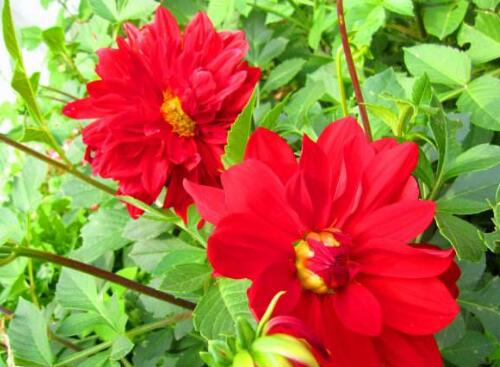
How to care for dahlias in winter / Pay attention to pruning
Regarding the question of how to care for dahlias in winter, there are actually many aspects to pay attention to. This flower is especially afraid of cold environments, so during winter cultivation, even a small mistake can cause the plant to die. Below is a detailed winter care method for dahlias; interested friends can take a look.
1. Pay attention to pruning
Before the onset of winter, the upper part of the dahlia will gradually wither, so at this time it needs to be pruned. Generally, pruning is done about 6cm above the soil, and after pruning is complete, it can be moved indoors for cultivation.
2. Maintain light exposure
Because dahlias are relatively intolerant of cold, they are generally grown indoors in winter, but indoors they cannot receive sunlight, so at noon each day when the weather warms up, we can move them outdoors to receive 3-4 hours of light. This is even more helpful for them to safely get through winter.
3. Control water amount
Many plants enter dormancy in winter and generally do not need much watering, but dahlias still have a certain demand for water in winter. As for the watering method and amount, everyone can take a look at the article on how to water dahlias, which has detailed instructions.
4. Handling of freezing
If during winter care of dahlias you are not careful and cause it to freeze, we should not immediately move it to a high temperature to thaw, as this will only accelerate its death. We should let it gradually thaw in a suitable environment; in this way, it still has a chance to survive.
The winter care method for dahlias is very different from other seasons, but as long as everyone remembers the issues mentioned above by the editor, I believe it will help your dahlias easily overwinter. That is all the editor has to introduce on the question of how to care for dahlias in winter, and I hope it can be of some help to everyone.
Notes on cultivating dahlias
1. Watering
Dahlias have fleshy roots, so the cultivation soil must be loose and breathable; otherwise, it is prone to oxygen deficiency and root rot. Dahlias have lush flowers and leaves, and in high temperatures they need a large amount of water; otherwise, the leaves will wilt. Water thoroughly each time.
2. Sunlight
Dahlias like sunlight and are not tolerant of shade. If there is insufficient light, their root system will weaken, affecting plant growth, flower bud development will be poor, and they may even find it difficult to bloom.
3. Fertilizing
Dahlias have a robust root system and need a large amount of fertilizer. Before cultivation, apply sufficient base fertilizer, and for topdressing apply diluted fertilizer. High fertilizer concentration will lead to withered branches and dead seedlings.
4. Pruning
Dahlias grow vigorously, with lush flowers and leaves, so flowering should be properly controlled. This requires pinching to promote branching and retaining the terminal bud. After flower buds appear, only retain one healthy bud and cut off the excess flower buds. This will make the flowers larger and more brilliant.
The above are the cultivation methods for dahlias. I hope these can help everyone grow healthier and more beautiful dahlias.
How to grow dahlias? Cultivation methods and notes for dahlias
Dahlia, also known as Dahlia pinnata, tianzhu peony, dahlia chrysanthemum, etc., is a perennial herbaceous plant in the genus Dahlia of the Asteraceae family. Dahlia is one of the world's famous flowers, with a long flowering period, large and brightly colored blooms, and many flowers. It is very beautiful and has high ornamental value, making it very suitable for planting in indoor courtyards. So, how do you grow dahlias? The cultivation methods and notes for dahlias are introduced below.
Image: Dahlia
I. Cultivation methods for dahlias
1. Soil:Dahlias grow best in loose, fertile, well-drained sandy loam soil, require crop rotation, have medium fertility requirements, and can grow well at pH 6.7-7.8.
2. Sunlight:Dahlias like light and are not tolerant of shade. If placed in a shaded place for a long time, they will grow poorly, with a weakened root system, thin leaves and slender stems, small and pale flowers, and some may even fail to bloom. Therefore, dahlias should be placed in a place with sufficient sunlight. During the leaf growth period, sufficient light is needed, with daily light requirements of more than 6 hours, so that the plants are robust and the flowers are large and full. If daily sunlight is less than 4 hours, stem and leaf branching and flower seedling formation will be affected to a certain extent. Especially under cloudy and rainy conditions with little light, flowering will be poor, stems and leaves will grow poorly, and they will be prone to disease.
3. Temperature:They prefer a cool climate and do not have strict requirements for ecological factors, so they are relatively adaptable. During the growth period, they are not strict about temperature and can grow normally between 5-35°C, but 10-25°C is most suitable.
4. Watering:The amount of watering can control the height of dahlia plants. During the seedling stage, water should be controlled to promote dwarfing. In summer, to lower the temperature, increase air humidity, and reduce water evaporation from dahlia stems and leaves, spray water 1-2 times daily. Water once at 3-4 pm, and the amount should not be too large.
Image: Dahlia
5. Fertilizing:Dahlias like fertilizer. During the growth period, topdressing should be applied once every 7-10 days, or diluted liquid fertilizer should be applied 2-3 times. However, because dahlias are afraid of heat, they are often in a semi-dormant state in summer, and at this stage they may not be fertilized or may be given extremely dilute fertilizer. After the plant buds, the amount of phosphorus fertilizer applied can be increased to make the flowers bloom better. The root system of dahlias is relatively delicate, and concentrated fertilizer should be avoided throughout the entire growth process.
6. Pests and diseases:Dahlias generally mainly suffer from problems such as powdery mildew, gray mold, bacterial wilt, viral disease, and moth pests, and should be treated with regular spraying.
7. Pruning:For dahlias cultivated for medium and small flowers, only remove the side buds on several nodes of the lower stem so that they bloom successively. If you want to cultivate large single flowers, only retain the terminal bud and remove all other side buds. At the end of June and beginning of July, after the first flowering, the weather gradually becomes hotter and plant growth slows, and pruning can be done at this time. When pruning, first twist and bend the stem downward in the middle of the branch between two leaves, leaving a height of 20-30cm. After a few days, when the wound part has dried and shrunk, then cut. This can prevent rainwater from pouring into the hollow stem and causing rot. When grown until October, it can bloom again.
Image: Dahlia
II. Notes on cultivating dahlias
1. Avoid waterlogging:The root system of dahlias is thick, juicy, fleshy root, with strong aerotropism, so the soil must be loose, breathable, and well-drained. If the soil is compacted and waterlogged with insufficient oxygen, it is very easy to cause root rot, or even death. However, dahlias have many leaves and large flowers, with high transpiration water consumption, so they need a certain amount of water. If high temperature and dryness cause leaf wilting, water immediately, aiming to water thoroughly at one time. Avoid excessive watering to prevent waterlogging. After rain when the sky clears, dahlia leaves may wilt, mainly because the potting soil is too wet, root hairs are damaged and cannot absorb water, and leaf transpiration loses water. But at this time do not water immediately; instead, spray water on the leaves several times. After the soil dries slightly and new roots grow and the absorption function recovers, normal watering can resume.
2. Avoid shade:Dahlias like light and are not tolerant of shade. In an environment with insufficient light and damp shade, the root system will be relatively weak, absorption capacity will decline, leaf photosynthesis will also decrease, flower bud development will be incomplete, flowers will be small and dark, and it may even be difficult to bloom. If light deficiency lasts a long time, the plant becomes frail and is very likely to die. Therefore, during the cultivation of dahlias, the environment must ensure sufficient sunlight so that they can grow and develop normally and produce brilliant flowers. In a shaded and damp environment with insufficient light, the root system weakens, absorption capacity declines, leaf photosynthesis is low, flower bud development is poor, flowers are small and dark, and it may even be difficult to bloom. If severe light deficiency lasts a long time, the plant becomes frail and eventually dies. Therefore, the dahlia cultivation environment must maintain sufficient sunlight so that it can grow and develop normally and produce brilliant flowers.
Image: Dahlia
3. Avoid concentrated fertilizer:Dahlias have a strong root system and many large branches and leaves, so they need a large amount of fertilizer. When planting, in addition to applying sufficient base fertilizer, timely topdressing is also needed. Topdressing should be diluted and applied frequently, and concentrated fertilizer should be avoided, to prevent burning the roots and causing withered branches and dead seedlings.
4. Avoid extreme summer heat:Dahlias like warmth and coolness and are averse to extreme summer heat and high temperatures. The suitable growth temperature is 20 to 25°C. Therefore, dahlias grow and develop well in late spring, early summer, late autumn, and early winter. But by July-August, when the temperature rises, growth slows, and flowering is poor or stops. So in summer, dahlias should be given attention to water supply to ensure healthy growth of young seedlings.
5. Avoid too many flowers:If dahlias have too many large flowers, flower quality will be poor and the flowering period will be short, so flowering should be properly controlled. Therefore, starting from shaping, pinch the tips to promote branching. While the branches are growing, continuously remove small buds and retain only the terminal bud to promote robust branches. After budding, in addition to retaining one healthy flower bud on a short branch, simply cut off the excess flower buds, ensuring that when the flowers bloom they are large and brilliant.
[Editor's conclusion]Dahlias like semi-shaded, cool environments. If the sunlight is too strong, it will affect flowering, so extra attention is needed during care. The above introduced the cultivation methods and notes for dahlias, and I hope it can be helpful to everyone!