What to Do About a Leggy Money Tree? Master the Timely Pruning Solution
As an excellent choice for indoor growing, the money tree (Pachira aquatica) has three advantages: an auspicious meaning, a sturdy and handsome form, and lush green leaves, which is why it is so widely welcomed and loved. However, for certain reasons, the money tree can become leggy, which seriously harms its ornamental value. So what should you do about a leggy money tree? Below are solutions for a leggy money tree; come and take a look with the editor.
I. What to Do About a Leggy Money Tree: Find the Cause
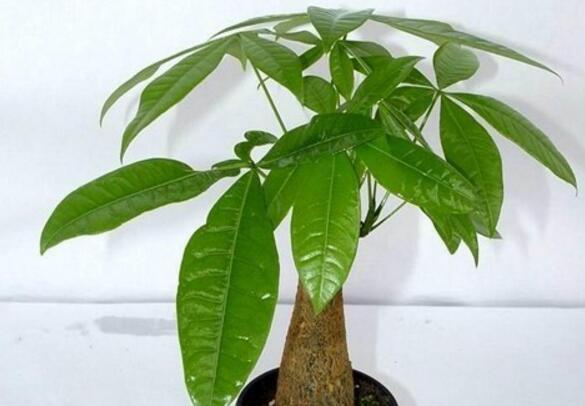
Among excellent indoor plants, the money tree can be said to be one of the most popular, not only for its auspicious meaning but also for its strong ornamental value. But some flower lovers find during cultivation that their money tree keeps growing leggy, looking messy and chaotic with no ornamental value at all. So what should you do about a leggy money tree? It is simple: find the cause and solve it accordingly.
II. Causes of a Leggy Money Tree: Light / Watering / Pruning
Once a money tree becomes leggy, it proves that your care during cultivation was improper. There are mainly three causes: first, insufficient light; second, overly frequent watering; third, delayed pruning. The specific symptoms are as follows:
1. Insufficient light
In the money tree care methods, we already said that the money tree loves light and needs plenty of it to grow. So once light is insufficient, the growth of the money tree is affected, the plant grows poorly and becomes leggy.
2. Overly frequent watering
Next is overly frequent watering. If you water too much, the money tree will grow vigorously, even running rampant, which is legginess. Of course, it may also be that the plant has been growing for a relatively long time, which can also cause legginess.
2. Delayed pruning
There is also another situation: delayed pruning. The money tree is a plant with fairly obvious apical dominance. If you do not prune it in time, the plant will produce fewer branches and keep growing upward, which causes legginess.
III. Solutions for a Leggy Money Tree: Pay Attention to Pruning
If the legginess of the money tree is caused by light and watering, the solution is simple: if light is insufficient, increase light; if watering is too frequent, reduce watering. The trouble lies in delayed pruning. In that case we need to prune the money tree, and there are things to watch out for. The details are as follows:
1. Tree form shorter than 30 cm
Among the solutions for a leggy money tree, pruning requires attention. If the money tree's form is shorter than 30 cm, it is best not to cut the top tip; instead, prune the branches from the side branches. This lets the whole money tree grow tall and strong rather than crazily producing side branches. Once it reaches a suitable size, you can cut the top.
2. Tree form taller than 30 cm
If the money tree's form is taller than 30 cm, you can start pruning from the top, cutting off the leggy branches. For healthy branches, just leave 3-4 bud eyes at the base. Note: all branches on the money tree must be pruned; branches that are too weak should be cut off at the base, because their sprouting ability is weak and they also compete with other strong branches for nutrients, so they cannot be kept.
Overall, the money tree is not hard to grow, but if you do not follow the requirements, or are even slightly careless, the plant will become leggy, seriously harming its ornamental value. So in order for your money tree to look good, be sure to care for it carefully. Even if your money tree does become leggy, there is no need to worry; find the cause and follow the methods above.
What to Do About a Leggy Money Tree? Combine It With Pruning
If you want a money tree to look good, you have to control its growth, especially to prevent it from becoming leggy. Recently I ran into this situation too and looked up information. Flower lovers say the causes of a leggy money tree are generally a dim growing environment, overly frequent watering, and a long growth period. If this happens, you need to prune it.
A leggy money tree seriously harms its ornamental value, and pruning is generally used to deal with it. Pruning mainly means removing the leggy branches; when removing them, for healthy branches just leave 3—4 bud eyes at the base, or leaving about 10 cm is also fine, and cut off all the other upper branches. Note that all branches on the whole plant must be pruned; branches that are too weak should be cut off at the base, because their sprouting ability is weak and they also compete with other strong branches for nutrients, so they cannot be kept.
After pruning, do not let the branches get rained on or spray them with water, to prevent rot. Place the pruned money tree in a fairly bright spot or under tree shade, and control watering, because with no leaves on the whole plant there is less transpiration and less need for water. Too much watering will rot the roots and cause the pruning-and-rejuvenation to fail. Before budding, apply 1-2 doses of a compound fertilizer mainly based on nitrogen, such as a 20-10-10 compound fertilizer. During this period also water in a fungicide once to prevent root rot, such as a systemic 50% carbendazim wettable powder at 800—1000 times dilution. After one month the small branches will grow to about 5 cm, and after two months it may be ready for viewing.
The money tree has obvious apical dominance. If it is not pruned at the proper time and height, the plant will have few branches and keep growing upward, harming its ornamental value. Generally, you can prune in spring each year, cutting off the top shoot above the braid at a height according to personal preference. You can also prune when repotting, cutting off the terminal bud, which encourages the plant to branch more and the base of the stem to swell.
Solutions for a Leggy Money Tree, How to Prune a Money Tree, What to Watch Out For When Pruning?
When it comes to the money tree, I believe everyone is familiar with it. The money tree is a common tree-type plant. It has an auspicious meaning as well as a certain ornamental value. And a leggy money tree will inevitably harm its ornamental value. So how much do you know about pruning a money tree? Let's learn together with the editor.
The Best Time to Prune a Money Tree
The best time to prune a money tree is from early to mid-May (in the Yangtze River basin region you can prune in April; here we mean the Yellow River basin region). The temperature at this time is very suitable for growth and development and helps buds grow into new branches. But it is best, about 1 month before pruning, to place the plant in an environment it likes for care and management and to apply 1-2 doses of nitrogen fertilizer or a compound fertilizer mainly based on nitrogen, so that the plant stores more nutrients. In early May the plant will begin to stir into growth; this is exactly when the plant's sap flows vigorously and its sprouting ability is strong, so after pruning the plant will sprout many new branches and the branches will grow robustly.
How to Prune a Money Tree
A leggy money tree seriously harms its ornamental value, and pruning mainly means removing the leggy branches. When removing them, for healthy branches just leave 3-4 bud eyes at the base, or leaving about 10 cm is also fine, and cut off all the other upper branches. Note: all branches on the whole plant must be pruned; branches that are too weak should be cut off at the base, because their sprouting ability is weak and they also compete with other strong branches for nutrients, so they cannot be kept. After pruning, do not let the branches get rained on or spray them with water, to prevent rot. Place the pruned money tree in a fairly bright spot or under tree shade, and control watering, because with no leaves on the whole plant there is less transpiration and less need for water. Too much watering will rot the roots and cause the pruning-and-rejuvenation to fail.
The Benefits of Pruning a Money Tree
The money tree has obvious apical dominance. If it is not pruned at the proper time and height, the plant will have few branches and keep growing upward, harming its ornamental value. Generally, you can prune in spring each year, cutting off the top shoot above the braid at a height according to personal preference. You can also prune when repotting, cutting off the terminal bud, which encourages the plant to branch more and the base of the stem to swell.
The Principles of Pruning a Money Tree
When pruning, cut back as much as possible; every branch should be cut back, leaving only 2-3 bud eyes on each branch, or adjust flexibly according to the tree form; the principle is simply that the tree looks good. After pruning, because the plant has fewer branches and leaves, water should be slightly controlled, watering alternately dry and moist, but fertilizer should still be applied until it is slightly paused during the hot summer, then in autumn apply mainly phosphorus and potassium fertilizer, which helps it survive the winter.
That is all I have learned about the money tree today. I hope flower lovers will find this article helpful. To learn more about the money tree, please keep following Duorou Huapu, and we will provide you with more related knowledge!