What are the cultivation methods and precautions for lemongrass?
Site selection: Elsholtzia is not strict about soil and can be grown in general soil, but alkaline soil and sandy soil are not suitable. It is drought-sensitive and should not be grown in continuous cropping; the previous crop is best as cereals, legumes or vegetables.
Soil preparation: plow 20 cm deep, apply farmyard manure before plowing, ridge rows 40 cm-50 cm apart, or make flat beds. Because the seeds are very small, the ground must be leveled and harrowed fine.
Sowing: there are two methods, direct sowing and raising seedlings for transplanting; suitable sowing methods are drilling or broadcasting. The specific sowing time is determined by the time bananas are newly stocked. For spring sowing, 6 days-8 days before the last frost ends is best; for balanced market supply, a batch can be sown every 10 days-15 days; for winter marketing, the sowing time should be 80 days-90 days before the first frost. To get a full stand in one sowing, the soil must be kept at a certain humidity, the covering soil should be light, and it should be pressed down.
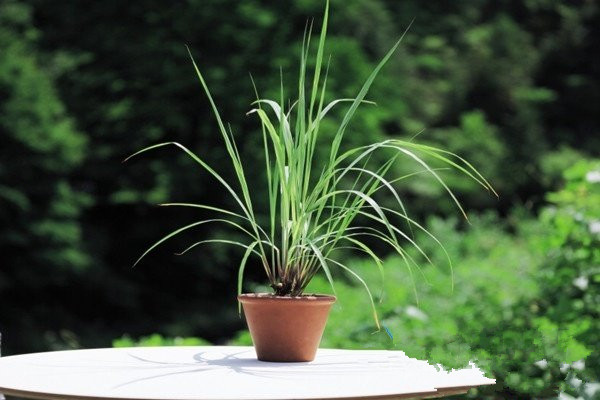
Cultivation methods and precautions for lemongrass
Soil for cultivation
Taro grows with low soil requirements; generally, ordinary soil is enough for cultivation.
Precautions
However, note that alkaline soil and sandy soil cannot be used to grow taro. Taro is drought-sensitive and not suitable for continuous cropping, so the previous crop is best as cereals, legumes or vegetables to ensure taro's growth and development.
Soil management
Before sowing taro, first prepare the soil well and apply farmyard manure first, which helps growth after sowing.
Level and smooth the soil, then sow the seeds.
Precautions
Do not have the soil wet right from the start; sprinkle water only after sowing the seeds, keeping it just moist.
Sowing
Taro sowing is divided into direct sowing and raising seedlings for transplanting, and sowing should be done in spring. It can be sown in batches, once every 10 days.
Precautions
When sowing, make sure the environment is warm, and after sowing cover with soil lightly, keeping the soil at a certain humidity.
Care and management of lemongrass
Pay attention to light; there should be plenty of light every day, but avoid direct strong light. Do not water too much, and avoid waterlogging, so the seeds do not rot and fail to germinate.
When fertilizing, apply according to the growth of the seedlings after the seeds germinate.
Pay attention to winter care and take cold protection measures; it can be placed in a spot with light, and when it is very cold, the potted plant can be covered with plastic film to keep it warm. Once the temperature rises again, uncover the film and ventilate and water it.
Cultivation methods and precautions for rue
Chinese scientific name: RueLatin scientific name: Ruta graveolens L.Other names: Qilixiang, Xiangcao, Yunxiangcao, Xiaoxiangmaocao, Yeyunxiangcao, Shihuicao, ChucaoKingdom: PlantaePhylum: AngiospermsClass: DicotyledoneaeSubclass: ArchichlamydeaeOrder: RutalesSuborder: RutineaeFamily: RutaceaeSubfamily: RutoideaeGenus: RutaSpecies: Ruta graveolens (conserved name)Distribution area: cultivated in northern and southern China, mostly produced in Sichuan, Gansu, Shaanxi, Guizhou, Yunnan and other placesRue, other names: Chucao, Xiangcao, Baiyingcao, Xiaoyexiang, Latin name Ruta graveolens L. Rutaceae, Ruta; plants grown in the ground reach up to 1 m tall, with a strong, distinctive odor on all parts. The final small pinnate lobes are short spatulate or narrowly oblong, gray-green or with a bluish-green tint. Flowers golden yellow; when the flower first opens, the 4 stamens opposite the petals are attached to the petals, while the other 4 opposite the sepals spread obliquely and are exposed, longer; when the flower is fully open, all are aligned together, straight and equal in length; style short; ovary usually 4-locular, with many ovules per locule. The fruit splits from the apex to the middle, and the peel has raised oil dots; seeds very numerous, kidney-shaped, brown-black. Flowering March-June and late winter, fruiting July-September. Common rue (R. graveolens) is a small garden shrub, with evergreen leaves and clusters of dull yellow flowers. The leaves are densely dotted with glands, semi-transparent, used as a spice and medicine. It dispels wind and relieves spasms, regulates menstruation, and kills insects. It clears heat and detoxifies, and disperses blood stasis and relieves pain. Used for cold and fever, toothache, irregular menstruation, and infantile eczema; externally for boils and swollen toxins, and traumatic injuries. It not only has a special fragrance, but is also a valuable medicinal material. Most provincial and municipal-level libraries still use rue to protect precious ancient books and paper collections. Image taken from the Chinese Plant Image Library1. Morphological characteristics
Plants grown in the ground reach up to 1 m tall, with a strong, distinctive odor on all parts. Leaves are bipinnate to tripinnate compound, 6-12 cm long; the final small pinnate lobes are short spatulate or narrowly oblong, 5-30 mm long and 2-5 mm wide, gray-green or with a bluish-green tint.
Flowers golden yellow, about 2 cm across; sepals 4; petals 4; stamens 8; when the flower first opens, the 4 stamens opposite the petals are attached to the petals, while the other 4 opposite the sepals spread obliquely and are exposed, longer; when the flower is fully open, all are aligned together, straight and equal in length; style short; ovary usually 4-locular, with many ovules per locule.
Fruit 6-10 mm long, splitting from the apex to the middle, the peel with raised oil dots; seeds very numerous, kidney-shaped, about 1.5 mm long, brown-black. Flowering March-June and late winter, fruiting July-September.
The plant body usually has oil-storing cells or secretory cavities. Habits diverse. Flowers rarely unisexual, 5-4-merous, rarely without petals. Stamens the same number as the sepals or a multiple thereof, filaments rarely united into several bundles, disk obvious, carpels free or united, ovary superior. Follicles, capsules, samaras, drupelets, hesperidia or berries.
Chromosome number 2n=72, 81.