How to grow and care for the dolphin flower: read this and you can grow it well
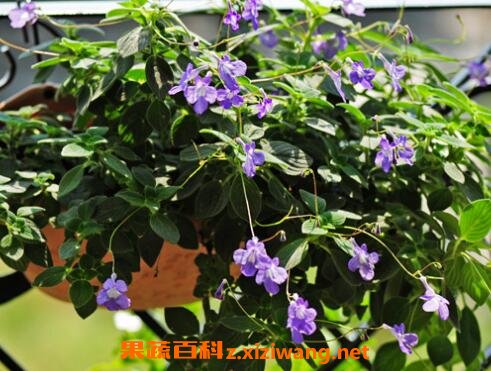
The dolphin flower (Streptocarpus saxorum) suits a partially shaded growing environment, ideally a spot with shade and good ventilation. Choose a soil medium with good drainage for cultivation; in a warm climate it can bloom all year round, but spring and autumn remain the main flowering seasons. Although a partially shaded environment suits its growth best, a moderate amount of sunlight is still needed; it is best to choose a cool but bright environment, receiving scattered light through a curtain or gaps between leaves, and soft direct sunlight in spring and autumn is also fine.
Because the dolphin flower is originally a plant from the mountain areas of southern Africa, it likes a cool climate. In summer, when it is hot and stuffy, be careful to keep it cool and ventilated, and it is best to avoid direct harsh sunlight. In winter, guard against low temperatures below 10c, which easily cause cold damage. Since it can be grown both indoors and outdoors, it is recommended to move it indoors to a ventilated, bright spot when it is too cold outdoors in winter and too hot outdoors in summer.
Spring and autumn are the main growing and flowering periods for the dolphin flower. Besides watering moderately, fertilize regularly; in winter and summer, pause fertilizing, and in winter also reduce watering. The dolphin flower survives very easily from stem cuttings, and for the stemless species of violet (Streptocarpus), leaf cuttings can be made from the thick-veined part of the leaf.
For dolphin flower cuttings, you can choose the more tender upper branches. Of course, older branches can also be used for cuttings, but they root more slowly than tender branches. There are no high requirements for the cutting medium, as long as it is loose; whether you use ordinary garden soil, leaf mold, pure perlite, or perlite + peat moss, it will root. The main factor affecting the rooting speed of dolphin flower cuttings is temperature: when the temperature exceeds ニ+ degrees, rooting is very fast, and below + degrees, rooting is extremely slow.
1. Prepare the potting soil
When growing the dolphin flower at home, you must prepare a suitable potting soil. This plant likes loose, fertile, well-aerated soil, and you must not choose a soil that is too sticky. It is best to use a three-in-one peat mix, or add an appropriate amount of sand to ordinary potting soil to prepare the growing medium. Only in this way can the soil's aeration be increased and the dolphin flower grow healthily and vigorously.
2. Water properly
When growing the dolphin flower, you must water it properly. The leaves of the dolphin flower are fleshy, and it has a fairly high water content itself and a relatively strong drought tolerance. Do not water too frequently in normal times, and do not place a saucer under the bottom of the pot, otherwise its roots will rot due to lack of oxygen. Under normal conditions, watering the dolphin flower once every five to seven days is enough.
3. Moderate light
When growing the dolphin flower, you must place it in an environment with poetic sunlight conditions. This plant likes a semi-shaded environment and cannot tolerate strong light, otherwise its leaves will turn yellow and curl, and in severe cases it may even die. A windowsill or balcony at home with sufficient scattered light is the best choice for placing and growing the dolphin flower.
PrecautionsThe dolphin flower is a plant with fairly strong vitality, and its growing method is relatively simple, but during cultivation you must pay attention to fertilizing. Because this plant does not like strong fertilizer, it is best to use light fertilizer applied frequently; in addition, if sufficient base fertilizer was applied when planting, it can go as long as two or three months without fertilizing. When growing the dolphin flower, also pay attention to temperature regulation. It is a tropical plant, and in winter it must absolutely not be placed in an environment below ten degrees, otherwise it will die from the low temperature.
An introduction to the growing methods and precautions for the dolphin flower (experience edition)
For flower lovers in the north, the dolphin flower is relatively unfamiliar. It has an elegant appearance, comes in many colors, and its forms are endlessly varied. In the south it is very easy to care for and easy to cultivate. Today I will take everyone through an introduction based on experience growing the dolphin flower.
The dolphin flower's flowering period is from November each year to May or June of the following year. Apart from winter, the dolphin flower does not like sunlight, and even if it gets no direct sunlight all summer, it will not mind.
I chose a pipe pot, that is, a pot that can be tied to a thick water pipe, and placed it in a corner for care. This corner gets no sun in summer, and in winter it gets two or three hours of direct sunlight, which the dolphin flower loves.
1. Soil
The dolphin flower is not picky. I have tried garden soil, potting soil and that cheap peat soil, and it adapts well to all of them. However, it does not like heavy, sticky soil, and its roots do not like an environment that is too damp, so everyone should try to choose potting soil for growing the dolphin flower, loose and breathable.
2. Fertilizing
I have never fertilized it. At most, during the one or two months of the flowering period, it gets a bit of top dressing such as flowering fertilizer alongside other herbaceous flowers, and it does not care at all. Fertilizing does not seem to have any special effect, because it already performs very well on its own.
3. Watering
The dolphin flower has a fairly high water content in its plant body, so its water demand is not small. Try not to let it dry out, or it will curl its leaves and look listless. I do not like spraying water on plants, so I always water directly into the pot, trying not to get it on the plant, and the amount is not large. This amount is really hard to describe; anyway, as long as the soil is breathable, everyone can just water freely.
4. Light
Actually, as I said earlier, it does not like fierce sunlight, especially in summer, when the leaves will be scorched, turn yellow and curl. In any case, a dolphin flower that has been exposed to the sun is stunningly ugly. Over the course of a year it can go seven or eight months with no sunlight at all. In Guangzhou's winter, which it loves most and which is also its growing season, a few hours of sun is no problem. Once you notice yellow patches appearing on its leaves, you should move it out of the sunlight.
Growing methods
If you want to achieve the effect of the flower ball I showed above, there is another very important thing to note: you must plant new cuttings every year! I usually do it in early October each year; you can decide your cutting time based on when your dolphin flower baby starts growing.
Use new branches, new branches that have not been topped or pinched, about ten centimeters long, and plant them as densely as possible. The flower ball above was made by planting ten cuttings. Just let it grow and do not fuss over it; it will grow into a big ball by itself. If you cannot bear to part with those old plants you have grown for a long time, then you cannot have the flower ball above. This is because the old branches of the dolphin flower become woody, making it very difficult to sprout new buds, and the old root system is also not enough to support the rapid growth of new branches. If you want a flower ball, pull out the old plants and plant new cuttings every year, and try not to top or pinch them, because whether or not you pinch them, they will branch however they are going to branch, and will not grow two extra branches because of your pinching. Pinching will only leave a big scar on that branch, and there will be a pit at the position of that branch. If you really must pinch, do it as early as possible, then let it grow new branches on its own to cover that scar. If you are afraid of pits, pinch it into a ball shape; as long as the growth rate is consistent, it can still eventually form a ball.
The above is the growing methods and precautions for the dolphin flower that I have put together. I hope it can be helpful to the many flower lovers, and please continue to follow Duorou Huapu to learn more about flower care knowledge.