How to grow and care for the tongue leaf plant (Glottiphyllum)
The tongue leaf plant is a perennial herb. Its flowers open in the afternoon when there is plenty of sunlight and close at night. This cycle of opening by day and closing by night lasts about 7 days. If it meets cloudy and rainy weather or the growing location has insufficient light, the flowers are very difficult to open, but artificial lighting can be used and they will open normally. The plant is cross-pollinated.
Tongue leaf plants tend to cluster easily. Generally, after being grown into a very large cluster, the number of splits produced by shedding skin the following year will decrease noticeably. At this point the plant can be divided: separate it into small clusters one by one, so that nutrients can be supplied again and the splits will gradually return to normal. It goes dormant in summer and grows in the other seasons. The skin-shedding period of the tongue leaf plant is a time of continuous new leaf growth, while the old leaves slowly dry up and their nutrients are supplied to the new plant. The new plant's leaves and the old leaves can grow at the same time, and it grows 3 to 4 pairs of leaves year-round. New leaves begin to sprout in early spring, and the old leaves slowly dry up.
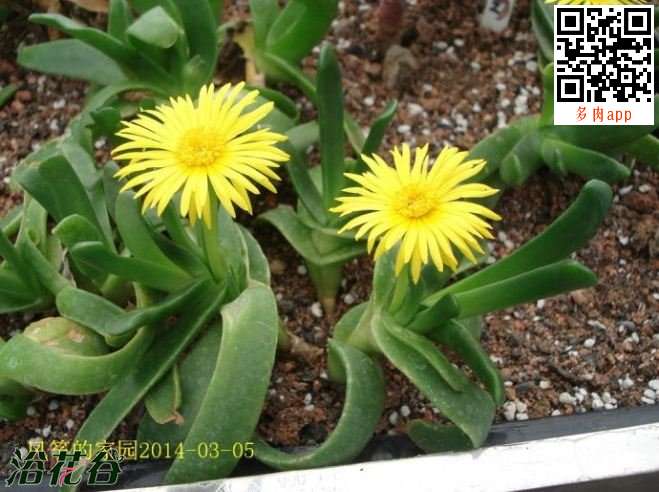
The growing medium for the tongue leaf plant should mainly be permeable and breathable. This variety does not tolerate sun exposure, so shade is essential in summer. During the skin-shedding period of Lvbao, a moderate amount of water can be given. This variety is usually watered only after the soil has dried out a bit, otherwise the roots rot easily. The semi-woody stem is fairly thick. During the growing season, water after the soil has dried out completely, and do not soak the pot. Keep it shaded throughout the summer, placed in a bright, ventilated spot with indirect scattered light. During the summer dormant period, give as little water as possible, since too much will cause rot. After temperatures drop in autumn, watering can be resumed, gradually and step by step. If the plant is plump, it does not need water; if the paired leaves look somewhat wilted, then it needs water. In winter, avoid frost damage from temperatures that are too low. When the potting soil is dry, minus 3 degrees is no problem at all. Conditions differ considerably between north and south, so growers should cultivate according to their own environment. The tongue leaf plant can be propagated by seed or by division.
The role of the tongue leaf plant. How to grow the tongue leaf plant
The tongue leaf plant is also called tongue leaf flower and belongs to the succulent group of plants. The tongue leaf plant is native to South Africa and is cultivated in many countries around the world. The stem is extremely short, and the fleshy leaves are tongue-shaped, growing in opposite pairs with 2 lobes, about 10 cm long and 2-3 wide, bright green, smooth and glossy. The leaf tips turn slightly outward and upward, and the plant's shape resembles a Buddha's hand. It blooms in autumn and winter, with the flowers emerging from the leaf cluster and a golden-yellow corolla. It is a perennial succulent plant. It likes a warm winter and a cool, dry summer environment. Because its fleshy leaves are about 9 cm long, bright green in color, and glossy and translucent on the surface, and the leaves hug and grow in a rosette around the short stem, it is named for its strong resemblance to a Buddha's hand. Morphological characteristics of the tongue leaf plant: stem short or absent. Leaves fleshy and tongue-shaped, bright green, smooth and glossy, with the leaf tips turning slightly outward and upward. It blooms in autumn and winter, with flowers emerging from the leaf cluster, bearing short stalks and golden yellow in color. Its fleshy leaves are tender green, semi-transparent and glossy, and it bears small golden-yellow flowers.
The tongue leaf plant is native to the arid regions of South Africa with warm winters and cool summers, and is cultivated in many countries around the world. The optimum growing temperature for the tongue leaf plant is 18-22°C. When the temperature exceeds 30°C, the plant grows slowly and enters a semi-dormant state. The overwintering temperature must be kept above 10°C. It is suited to growing in fertile, well-drained sandy loam.
The tongue leaf plant is also a very commonly grown variety in today's homes. Why do so many people grow it? What role does it have? And what growing methods are used when cultivating it? Below, let's take a look together.
The role of the tongue leaf plant in matching home decor styles
The tongue leaf plant is also called tongue leaf flower. Its place of origin is South Africa, and it is cultivated in many countries around the world. It belongs to the succulent group of plants. Because its fleshy leaves are about 6 cm long, the leaf surface is glossy and translucent, and the leaves hug and grow in a rosette around the short stem, it is named for its strong resemblance to a Buddha's hand.
The tongue leaf plant has bright green leaves, a glossy and translucent leaf surface, and leaves that hug and grow in a rosette around the short stem, growing much like a Buddha's hand, which is why many people like to grow it at home. Placing a tongue leaf plant at home has the effect of beautifying the home environment. The tongue leaf plant is small and cute, does not take up much space, and is convenient to grow. Growing a tongue leaf plant next to a computer can also absorb radiation, relax the eyes and protect eyesight.
It should be noted that the tongue leaf plant is not suitable for placement in the bedroom; it is mostly used to decorate the study, the living room desk or the coffee table. This is related to its growing conditions: it likes a warm winter and a cool, dry summer environment, with an optimum growing temperature of 18-22°C. When the temperature exceeds 30°C, the plant grows slowly and enters a semi-dormant state, and its respiration produces more carbon dioxide, which is bad for sleep, so bedrooms generally should not have a tongue leaf plant.
The growing medium for the tongue leaf plant should mainly be permeable and breathable. This variety does not tolerate sun exposure, so shade is essential in summer. During the skin-shedding period of Lvbao, a moderate amount of water can be given. This variety is usually watered only after the soil has dried out a bit, otherwise the roots rot easily. The semi-woody stem is fairly thick. During the growing season, water after the soil has dried out completely, and do not soak the pot. Keep it shaded throughout the summer, placed in a bright, ventilated spot with indirect scattered light. During the summer dormant period, give as little water as possible, since too much will cause rot. After temperatures drop in autumn, watering can be resumed, gradually and step by step. If the plant is plump, it does not need water; if the paired leaves look somewhat wilted, then it needs water. In winter, avoid frost damage from temperatures that are too low. When the potting soil is dry, minus 3 degrees is no problem at all.
The feng shui role of the tongue leaf plant
The tongue leaf plant is a succulent plant of the genus Glottiphyllum in the family Aizoaceae, with the scientific name Glottiphyllum uncatum. Because its fleshy leaves are 6-12 cm long, with the tips tongue-shaped and slightly curled, bright green in color, and glossy and translucent on the surface, and the leaves hug and grow in a rosette around the short stem, it is named for its strong resemblance to a Buddha's hand.
The tongue leaf plant is native to the arid regions of South Africa with warm winters and cool summers, and is cultivated in many countries around the world. Stem short or absent, opposite pairs with 2 lobes, about 7 cm long, bright green, smooth and glossy, with the leaf tips turning slightly outward and upward. It blooms in autumn and winter, with flowers emerging from the leaf cluster, bearing short stalks and golden yellow in color. It likes a warm winter and a cool, dry summer environment, and the plant grows slowly and enters a semi-dormant state. The overwintering temperature must be kept above 10°C. It is suited to growing in fertile, well-drained sandy loam. The tongue leaf plant's leaves are extremely short, the fleshy leaves tongue-shaped, in opposite pairs with 2 lobes, about 7 cm long and 2-3 wide, bright green, smooth and glossy. The leaf tips turn slightly outward and upward, and the plant's shape resembles a Buddha's hand. It blooms in autumn and winter, with the flowers emerging from the leaf cluster and a golden-yellow corolla.
The leaves of the tongue leaf plant are thick and juicy, emerald green and transparent, shaped like jade, elegant and distinctive. It blooms in the first month of winter, with golden-yellow flowers that are dazzling and particularly endearing. The tongue leaf plant is suitable for pot culture, placed on a desk, windowsill or small table; it is small and exquisite, very elegant.
The role of the tongue leaf plant in the home
The tongue leaf plant is also called tongue leaf flower, native to South Africa and cultivated in many countries around the world. The stem is extremely short, and the fleshy leaves are tongue-shaped, growing in opposite pairs with 2 lobes, about 10 cm long and 2-3 wide, bright green, smooth and glossy. Succulent plants are often CAM (Crassulacean acid metabolism) plants: their stomata close during the day, and at night they exchange gases, releasing oxygen and absorbing carbon dioxide, which is stored for photosynthesis during the day. The thick, fleshy leaves help store more water and air, and have the effect of purifying the air.
The tongue leaf plant has bright green leaves, a glossy and translucent leaf surface, and leaves that hug and grow in a rosette around the short stem, growing much like a Buddha's hand, which is why many people like to grow it at home. Placing a tongue leaf plant at home has the effect of beautifying the home environment. The tongue leaf plant is small and cute, does not take up much space, and is convenient to grow. Growing a tongue leaf plant next to a computer can also absorb radiation, relax the eyes and protect eyesight.
How to grow the tongue leaf plant
The tongue leaf plant is a succulent plant, named for its strong resemblance to a Buddha's hand because its fleshy leaves are about 6 cm long, glossy and translucent on the surface, and hug and grow in a rosette around the short stem. The tongue leaf plant is propagated by division or by seed. Division is generally carried out in spring together with repotting: cut the old clump into several clumps and pot them separately. The tongue leaf plant comes from southern Africa. It likes a warm, humid environment with plenty of light, fears the cold, and its optimum growing temperature is 18°C to 22°C. It is not strict about soil, but dislikes compaction and waterlogging, and well-drained sandy loam is best. It likes a warm winter and a cool, dry summer environment, and the plant grows slowly and enters a semi-dormant state. It is suited to growing in fertile, well-drained sandy loam.
During the growing season, fertilize the tongue leaf plant once every half month. In summer, when temperatures are high, the potting soil should be kept slightly dry. If it is hot and humid, the stems and leaves rot easily. Growth is most vigorous in autumn, so watering should be increased; after the start of winter, as temperatures drop and growth slows, watering should be reduced accordingly. In the hot summer season, shade appropriately to create a well-ventilated, cool, semi-shaded environment so that it can get through the summer safely. If it grows vigorously in autumn, then nitrogen fertilizer should not be applied in excess, otherwise it easily leads to leggy growth and rotting leaves. In addition, when applying organic fertilizer as a liquid, do not let the fertilizer solution splash onto the leaves, to avoid causing spots and rot.
The above is a share of the roles and growing methods of the tongue leaf plant. Did you understand it? For more home plants, please stay tuned.