How to Grow Spider Plants? 6 Tips to Master the Growing Methods and Precautions
As we all know, spider plants have many uses and benefits. They have high ornamental value and can also remove indoor formaldehyde, so many people plan to keep a few pots at home. So what is the correct way to grow spider plants? Let me introduce the growing methods and precautions for spider plants.
How to Grow Spider Plants
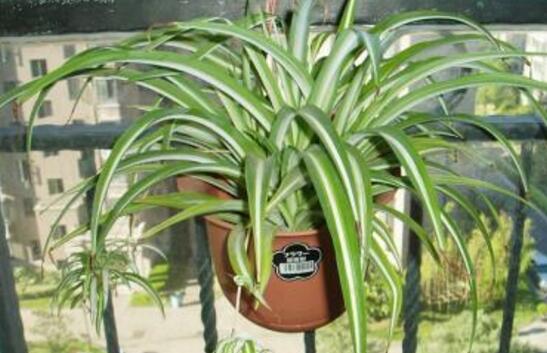
Before learning how to grow spider plants, we can first get familiar with their growing habits. Spider plants prefer a warm, humid, and semi-shaded environment. They are highly adaptable, fairly drought-tolerant but not cold-tolerant; they like fertile, loose soil with good drainage; they have low light requirements and can survive in moderate light, and their tolerance for weak light is also decent; they do not like high temperatures.
Growing Methods and Precautions for Spider Plants
1. What Temperature Is Suitable for Spider Plants
The most suitable temperature for spider plant growth is 15-25 degrees. They grow fastest at 20-24 degrees, but are prone to producing stolons; the overwintering temperature should not be lower than 5 degrees, otherwise cold damage may occur; when the temperature is above 30 degrees, growth will also stop, and leaf tips may turn yellow.
Precautions: In winter, the ambient temperature for spider plants should be kept above 12 degrees; in summer, the temperature should be kept below 30 degrees.
2. What Kind of Pot and Soil Is Good for Spider Plants
Flower pot: For planting spider plants, it is best to use clay pots, plastic pots, porcelain pots, or ceramic pots. You can also use pots with hanging hooks for hanging display, and choose the pot size according to the size of the plant.
Soil: Spider plants like loose, fertile sandy soil. You can mix 3 parts leaf mold, 3 parts garden soil, 3 parts sand, and 1 part decomposed cake fertilizer. If conditions do not allow, you can buy pre-mixed potting soil on the market.
Precautions: The soil must have good drainage, which helps with both watering and fertilizing, and avoids water accumulation caused by overwatering.
3. Light Requirements for Spider Plants
Spider plants like semi-shaded environments and can grow even in very weak light, but in overly dark environments they grow relatively slowly and may also fail to bloom, so avoid environments with light that is too strong or too dark.
Precautions: In spring and autumn, avoid direct sunlight on spider plants; in summer, help shade spider plants from 50-70% of sunlight. Some spider plant varieties, such as the variegated spider plant, are very afraid of sunlight, so be sure to avoid exposing spider plants to blazing sun.
4. How Much Water Is Suitable for Spider Plants
Spider plants are fairly drought-tolerant. Although they can go several days without watering without drying out, they prefer humid environments, so keeping the soil moist is very important, and to do this you need to water frequently.
Precautions: In summer, water more, and at noon you can spray water on the branches and leaves; in winter, when the temperature is below 5 degrees, water less. In the growing methods and precautions for spider plants, temperature is one of the main reasons affecting how fast spider plants grow.
5. Do Spider Plants Need Fertilizer
As a plant with super adaptability, spider plants also have relatively strong fertilizer tolerance. If there is not enough fertilizer, the leaves will turn yellow, so attention should be paid to fertilizing spider plants. During vigorous growth in spring, fertilize once every 7-10 days; you can also fertilize once every two weeks, and stop fertilizing in winter.
Precautions: Although spider plants have a certain tolerance for fertilizer, do not apply too much fertilizer at one time. When the ambient temperature is below 4°C, stop fertilizing; when it is below 4 degrees, fertilizing should be stopped.
6. Do Spider Plants Need Pruning
Spider plants need frequent pruning. Cutting off old roots, rotten roots, and wild growth can promote the growth of new leaves, and pruning can prevent root accumulation. This is an easily overlooked point in the growing methods and precautions for spider plants.
Precautions: When pruning, pay attention to the tools used. Do not use scissors to prune them, because it can cause wounds that cannot heal.
How Can Spider Plants Grow More Vigorously
Doing the above 6 points well can basically ensure healthy and robust growth of spider plants. If you want them to grow more vigorously, controlling the temperature well is very important. In an environment of 20-24 degrees, spider plants will grow faster. If this temperature can be maintained, then it will undoubtedly make spider plants more vigorous.
String of Pearls (Senecio rowleyanus): The Most Artistic Growing Methods and Cultivation Precautions for String of Pearls
In recent years, as more and more people have started growing succulents, growing succulents has gradually become a popular trend. All kinds of succulents have continuously poured into the market and appeared before people's eyes, and String of Pearls is one of them. At first hearing the name String of Pearls, most people might think it is a kind of spider plant, but in fact it is not. This is a relatively special succulent. Its appearance is mainly composed of strings of plump, full, emerald-green oval little leaves. It has very beautiful alternative names such as Buddhist beads, green grapes, green bells, and lover's tears. So how should this plant be grown? Let's take a look below.
Growing Methods for String of Pearls
At present, there are mainly three methods for growing String of Pearls: cuttings propagation, division propagation, and seed propagation. Among them, seed propagation of String of Pearls is very rarely used, so it is not recommended. Cuttings propagation is the simplest and most commonly used method for String of Pearls. To take cuttings of String of Pearls, choose healthy plant stems, preferably cut from the raised parts of the plant, then plant the remaining part of the plant shallowly in prepared soil. Do not bury it too deep, and do not water immediately. After a while, you can water, but only once. After about one month, this stem can sprout on its own.
As for division propagation, it is also a growing method that everyone generally likes. Division propagation of String of Pearls cannot be carried out in winter, because the winter climate is severe and the temperature is too low, which is not conducive to plant growth. Generally in spring, choose healthy String of Pearls for division, divide them into two to several clumps, and pot them separately as new plants.
Cultivation Precautions for String of Pearls
1. String of Pearls likes soil rich in organic matter, loose and fertile. During cultivation, it is best to use leaf mold as its growing soil. Leaf mold is rich in organic matter, loose and breathable, has good water filtration, and is highly fertile, and can provide sufficient nutrients for the growth of String of Pearls.
2. String of Pearls likes warm environments, but it is highly adaptable, tolerant of high temperatures, and also fairly cold-tolerant. However, under high and low temperature conditions, although it can grow normally, it is almost in a dormant state and grows very slowly. The optimal suitable temperature for String of Pearls is between 20 and 28 degrees Celsius.
3. String of Pearls likes moisture, but its drought tolerance is also very good. However, its tolerance for rot is not very good, and it is averse to both drought and waterlogging. For daily watering, remember it is better to keep it dry than wet, especially in summer, when temperatures are high and water evaporates quickly. People greatly increase watering frequency and amount, and too much water in the soil can very easily cause root rot. If rot occurs, the rotten parts should be removed promptly.
4. String of Pearls still has many pests and diseases, among which aphids are a relatively common one, mostly occurring in spring, and can be killed by using 1500 times diluted omethoate. In summer, it is also prone to mite damage, which can be killed with 1000 times diluted dicofol. At the same time, during cultivation, attention should be paid to maintaining a ventilated and breathable state, and strictly preventing pests and diseases.
Conclusion: String of Pearls is a very special succulent. From a distance, its form indeed looks quite like a spider plant, but up close, each tiny oval little leaf is very small and cute. When growing it, you need to put in a lot of thought and cultivate it carefully.
[You May Be Interested In]
?How to Grow Orchid Grass ?What Is Artificial Fiber ?How to Identify Hetian Jade ?Duvet Cover Sizes ?Chrysanthemum Pillow
?Which Mattress Brand Is Good ?What Does a Four-Leaf Clover Represent ?What Is Polyester Fiber ?Pillow Sizes ?Fabric Thread Count
Growing Methods for String of Pearls (Senecio rowleyanus): The Most Artistic Growing Methods and Cultivation Precautions for String of Pearls
In recent years, as more and more people have started growing succulents, growing succulents has gradually become a popular trend. All kinds of succulents have continuously poured into the market and appeared before people's eyes, and String of Pearls is one of them. At first hearing the name String of Pearls, most people might think it is a kind of spider plant, but in fact it is not. This is a relatively special succulent. Its appearance is mainly composed of strings of plump, full, emerald-green oval little leaves. It has very beautiful alternative names such as Buddhist beads, green grapes, green bells, and lover's tears. So how should this plant be grown? Let's take a look below.
Growing Methods for String of Pearls
At present, there are mainly three methods for growing String of Pearls: cuttings propagation, division propagation, and seed propagation. Among them, seed propagation of String of Pearls is very rarely used, so it is not recommended. Cuttings propagation is the simplest and most commonly used method for String of Pearls. To take cuttings of String of Pearls, choose healthy plant stems, preferably cut from the raised parts of the plant, then plant the remaining part of the plant shallowly in prepared soil. Do not bury it too deep, and do not water immediately. After a while, you can water, but only once. After about one month, this stem can sprout on its own.
As for division propagation, it is also a growing method that everyone generally likes. Division propagation of String of Pearls cannot be carried out in winter, because the winter climate is severe and the temperature is too low, which is not conducive to plant growth. Generally in spring, choose healthy String of Pearls for division, divide them into two to several clumps, and pot them separately as new plants.
Cultivation Precautions for String of Pearls
1. String of Pearls likes soil rich in organic matter, loose and fertile. During cultivation, it is best to use leaf mold as its growing soil. Leaf mold is rich in organic matter, loose and breathable, has good water filtration, and is highly fertile, and can provide sufficient nutrients for the growth of String of Pearls.
2. String of Pearls likes warm environments, but it is highly adaptable, tolerant of high temperatures, and also fairly cold-tolerant. However, under high and low temperature conditions, although it can grow normally, it is almost in a dormant state and grows very slowly. The optimal suitable temperature for String of Pearls is between 20 and 28 degrees Celsius.
3. String of Pearls likes moisture, but its drought tolerance is also very good. However, its tolerance for rot is not very good, and it is averse to both drought and waterlogging. For daily watering, remember it is better to keep it dry than wet, especially in summer, when temperatures are high and water evaporates quickly. People greatly increase watering frequency and amount, and too much water in the soil can very easily cause root rot. If rot occurs, the rotten parts should be removed promptly.
4. String of Pearls still has many pests and diseases, among which aphids are a relatively common one, mostly occurring in spring, and can be killed by using 1500 times diluted omethoate. In summer, it is also prone to mite damage, which can be killed with 1000 times diluted dicofol. At the same time, during cultivation, attention should be paid to maintaining a ventilated and breathable state, and strictly preventing pests and diseases.
Conclusion: String of Pearls is a very special succulent. From a distance, its form indeed looks quite like a spider plant, but up close, each tiny oval little leaf is very small and cute. When growing it, you need to put in a lot of thought and cultivate it carefully.
[You May Be Interested In]
?How to Grow Orchid Grass ?What Is Artificial Fiber ?How to Identify Hetian Jade ?Duvet Cover Sizes ?Chrysanthemum Pillow
?Which Mattress Brand Is Good ?What Does a Four-Leaf Clover Represent ?What Is Polyester Fiber ?Pillow Sizes ?Fabric Thread Count