What causes asparagus fern to grow out of control? Learn five tricks to solve it easily
Everyone hopes the asparagus fern they grow will thrive with dense foliage, but sometimes the asparagus fern grows out of control, becoming too tall and causing the plant to become distorted. This is very frustrating. So what should we do if our asparagus fern grows out of control? The editor teaches you 5 tricks to solve it.
Why does asparagus fern grow out of control
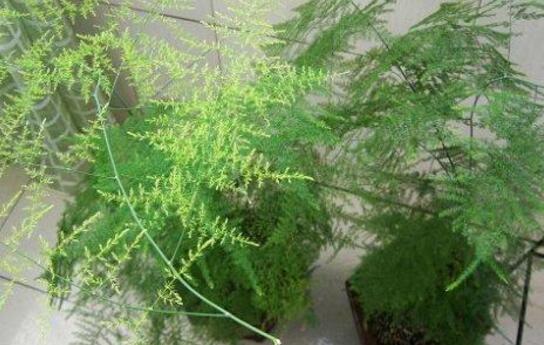
If you follow the asparagus fern's cultivation methods and precautions, it is quite common for asparagus fern to grow out of control. The main causes of this runaway growth are excessive fertilizing, neglect of pruning, too little light, too much watering, and so on. So what is the best way to deal with asparagus fern growing out of control? Learning the following 5 tricks can easily resolve this confusion.
What to do when asparagus fern grows out of control
1. Prune frequently
Sometimes asparagus fern growing out of control is a normal phenomenon, because during the vigorous growth period it grows quite rapidly. At this time you should help prune the asparagus fern more, and you can cut off the longer old branches, but note that you should not damage the roots and stems.
2. Reduce fertilizing
When too much fertilizer is applied, it causes excess nutrients, which results in the asparagus fern growing faster than normal. So what should you do if you have applied too much fertilizer? We introduced this in detail in how to fertilize asparagus fern, and you can refer to the specific methods there.
3. Too little light
Asparagus fern is a plant that likes a cool, shady environment, so some people like to place it in a spot lacking light, which results in the plant growing too quickly while its internal tissues are not solid. When runaway growth occurs, you should check whether it is caused by too little light. If this is the cause of the asparagus fern growing out of control, what should you do? Move it to a place with sufficient light.
4. Too much watering
When growing asparagus fern, frequent watering is encouraged, but that does not mean you should water the asparagus fern many times every day. Too much watering can cause many problems; just keep the soil from drying out completely.
5. Help shape the asparagus fern
If the asparagus fern grows out of control, you can use bamboo strips or wire to make a frame and fix it on the pot, so that the asparagus fern's branches can climb on the frame and its growth can also be guided. This not only benefits the asparagus fern's growth but also makes it more attractive.
Summary: Although asparagus fern growing out of control does not cause direct harm, it affects its ornamental value. Learning the above tricks can solve the problem of runaway growth, but no matter which method you use, be sure not to sacrifice the normal growth of the asparagus fern.
What to do when asparagus fern leaves turn yellow: learn 8 tricks to restore the leaves to normal
Under normal circumstances, asparagus fern leaves should be green all year round, but if you do not pay attention to the cultivation methods and precautions for asparagus fern, yellowing of the leaves may occur. So what should you do when asparagus fern leaves turn yellow? We first need to know the causes of asparagus fern leaves turning yellow, and then we can take corresponding measures.
What to do when asparagus fern leaves turn yellow
There are many causes of asparagus fern leaves turning yellow, such as too little or too much watering, air that is too dry, light that is too strong, temperature that is too low, and so on. So what should you do when asparagus fern leaves turn yellow? Below, the editor lists corresponding solutions for different causes.
1. Too much watering
Cause: Too much watering leads to water accumulating in the potting soil, and the excess water cannot drain out through the holes at the bottom, resulting in root rot and then yellowing of the leaves.
Solution: It is not easy to avoid overwatering each time. You can use a simple method to judge whether watering is needed, such as inserting a toothpick into the soil to a depth of 2-3 cm, then taking it out after 10 minutes. If it is dry, watering is needed; if it is not dry, watering is not needed. Be sure to avoid water accumulation.
2. Too little watering
Cause: In a moist environment, it is very difficult for asparagus fern leaves to turn yellow, and most cases of yellowing leaves are caused by too little watering. So what should you do at this time when asparagus fern leaves turn yellow? The methods are as follows.
Solution: Cut off the yellowed leaves. In the vigorous growing seasons of spring and autumn, water once every 4-5 days, and be sure to water thoroughly. In summer, when water evaporates quickly, water once every 3-4 days.
3. Air is too dry
Cause: Because asparagus fern leaves are relatively small and fine, the leaves easily turn yellow in a dry air environment.
Solution: When the air is dry, use a sprayer to mist the asparagus fern leaves every day. In summer, do this once in the morning and once in the evening.
4. Light is too strong
Cause: Asparagus fern is a plant that likes shade, and its biggest taboo is direct sunlight. If the light is too strong, it often causes the leaves to turn yellow.
Solution: Place the asparagus fern in a bright place, but not close to a windowsill, to avoid direct sunlight. Reducing the light can improve the yellowing of the leaves.
5. Cooking fume pollution
Cause: Although purifying the air is one of the functions and benefits of asparagus fern, if it is kept for a long time in an environment with a lot of cooking fumes, it will inevitably develop yellow leaves.
Solution: Spray the asparagus fern leaves with clean water, try to wash the yellowed leaves, and then move the asparagus fern to a ventilated place.
6. Too much fertilizing
Cause: Asparagus fern likes fertilizer, but too much fertilizer causes its leaves to turn yellow, so fertilizing should be done sparingly rather than heavily.
Solution: Water with fermented rice water, soybean cake water, or water used to soak beans; you can also remove the soil and repot.
Asparagus fern leaves turning yellow in winter
As winter approaches, 2 tricks can prevent the leaves from turning yellow: covering with a plastic bag and moving it to a sunny indoor spot.
1. Cover with a plastic bag
If the asparagus fern is planted outdoors and cannot be moved, you can put a plastic bag over the plant, which can provide some insulation, but note that the plastic bag should not be completely sealed.
2. Move it indoors
If the asparagus fern is potted, you can move it to a sunny indoor spot. As long as the temperature is suitable, the asparagus fern leaves can return to their normal emerald green when spring arrives.
Summary: There must be a reason for asparagus fern leaves turning yellow. Find the cause and then take corresponding measures, and the yellowing of the leaves can be improved, allowing the asparagus fern to revive. So when you see this phenomenon, do not give up easily.
How to grow asparagus fern: cultivation methods and precautions for asparagus fern / 5 tricks to learn
As a plant with extremely high ornamental value, the functions and benefits of asparagus fern are known to more and more people. Many people try to grow some asparagus fern at home, but they do not know how to grow asparagus fern in the best way. Today the editor brings you detailed cultivation methods and precautions for asparagus fern, and answers how to grow asparagus fern so it becomes more vigorous.
How to grow asparagus fern
If you want to know how to grow asparagus fern, you first need to know its growth characteristics. The most suitable growing environment for asparagus fern is a warm, humid, semi-shaded, and ventilated place. It is not tolerant of severe cold or drought, likes sandy soil with good drainage, likes fertilizer, and avoids strong light.
Cultivation methods and precautions for asparagus fern
1. How to water asparagus fern
Asparagus fern is a plant that is not tolerant of drought, so when growing it you must be sure to water it more. You can adjust the watering frequency according to the growth stage and season; for example, in spring you can water once a day; in summer you can water once in the morning and once in the evening.
Precautions: Do not water too much at one time, as that will cause water accumulation in the pot, make the roots rot, and then cause the leaves to turn yellow, and so on. In principle, just keep the potting soil moist.
2. Suitable light for asparagus fern
Asparagus fern relatively likes a semi-shaded environment and can grow very well under scattered light. Therefore, in spring and autumn you can place it in a sunny indoor spot; in winter you can place it in a sunny spot; in summer you need to place it in a cool place.
Precautions: In the cultivation methods and precautions for asparagus fern, light is very important. Light that is too strong will cause leaves to fall off; light that is too weak will hinder the growth of asparagus fern. Therefore, you should adjust the position of the asparagus fern according to the actual situation and give it suitable light conditions.
3. How to fertilize asparagus fern
Asparagus fern is a fertilizer-loving plant and has a relatively high demand for fertilizer during the growth period. In spring and autumn, fertilize once every 15-20 days. You can choose organic liquid fertilizer, or apply additional nitrogen, phosphorus, and potassium chemical fertilizers, and you can also apply a mixed solution of 0.1% urea plus 0.1% potassium dihydrogen phosphate.
Precautions: Fertilizing can be stopped in summer and winter, but do not apply too much fertilizer each time, otherwise leggy growth may occur, which will affect the ornamental value and even damage the plant shape. If you want the plant not to be too tall, you can apply less nitrogen fertilizer and liquid fertilizer.
4. What soil does asparagus fern need
Asparagus fern needs loose, fertile sandy soil with good drainage, and it is best if it is also rich in humus. You can use a ratio of 4 parts garden soil, 2 parts leaf mold, 2 parts compost soil, and 1 part sand.
Precautions: The potting soil should be replaced regularly. If fertilizer burn to the roots occurs because the fertilizer is too concentrated, you should promptly take out the pot to remove the fertilizer, rinse the soil ball with clean water, and then replace the potting soil and grow it again.
5. What temperature is suitable for asparagus fern
In the cultivation methods and precautions for asparagus fern, temperature is also a factor that cannot be ignored. The most suitable temperature for asparagus fern is between 15-25 degrees. If grown indoors, the temperature should be kept at 12-18 degrees.
Precautions: If asparagus fern is grown indoors, when the temperature exceeds 20 degrees, good ventilation should be maintained, which helps with heat dissipation; in winter, when the temperature is below 5 degrees, you should keep it warm, such as covering it with an insulation bag.
Four-season management of asparagus fern
1. Spring
In late spring, you should repot the asparagus fern. In spring, asparagus fern grows relatively vigorously, so you can apply additional fertilizer 1-2 times to the seedlings to ensure an adequate water supply, and at the same time pay attention to increasing air humidity.
2. Summer
In summer, the temperature is relatively high and the light is strong, so place the asparagus fern indoors in a bright and ventilated place, keep the soil moist, and often spray water on its leaves. At this time, fertilizing can be omitted.
3. Autumn
In autumn, the temperature gradually decreases. At this time, asparagus fern will once again enter a vigorous growth period, so pay attention to the supply of water and fertilizer and the supplement of air humidity. After the temperature drops in late autumn, pay attention to maintaining indoor temperature. When winter is about to arrive, gradually reduce the watering frequency.
4. Winter
Asparagus fern can be placed in a 5-degree environment for a short time, but do not let it stay in a low-temperature environment for a long time. In winter, asparagus fern will stop growing. The plant needs to be guaranteed a certain amount of light, and the temperature only needs to be above 10 degrees.
How to grow asparagus fern so it becomes more vigorous
In addition to following the methods and precautions mentioned above, if you want the asparagus fern to grow more vigorously, you also need to pay attention to pruning it in time. Cutting off old branches and leaves can promote the growth of new leaves and reduce the loss of nutrients.
Summary: This article introduces in detail the cultivation methods and precautions for asparagus fern. The key is to create a suitable growing environment for asparagus fern in terms of soil, temperature, water, fertilizer, light, and so on. In addition, if you want it to grow more vigorously, pruning is also essential.