What fertilizer is best for Asparagus fern? Fertilizing time and method are key
We know that among the top ten considerations for growing Asparagus fern, proper fertilizing is very important, so how should you fertilize Asparagus fern to be considered proper? How often should Asparagus fern be fertilized? What should you do if you over-fertilize Asparagus fern? The editor below will answer these one by one.
How to fertilize Asparagus fern
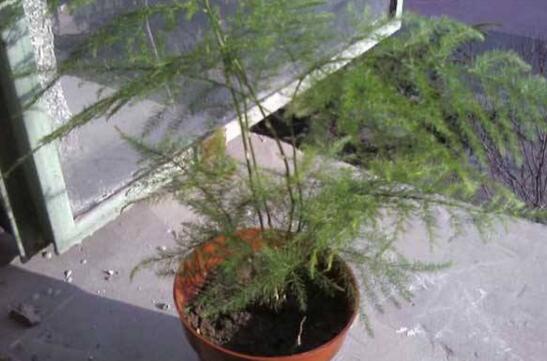
Fertilizing is not simply pouring fertilizer into the potting soil. If you fertilize too little, Asparagus fern will grow spindly and its leaves will turn yellow and drop; if you fertilize too much, Asparagus fern may grow wildly, so fertilizing time and fertilizer choice are both very important. Let's take a look below at how to fertilize Asparagus fern.
1. How often should Asparagus fern be fertilized
1. Spring and autumn are the periods when Asparagus fern grows most vigorously. At this time, you can fertilize it once every 15-20 days; when the temperature is high in summer, you should stop fertilizing Asparagus fern, or you can fertilize once a month; in winter when the temperature is low, Asparagus fern will enter dormancy, and fertilizing should also be stopped at this time.
2. During the flowering period, the amount of fertilizer should be reduced. You can apply one topdressing before the flowering period arrives; after the plant's shape is set, you can reduce the amount and frequency of fertilizing. Fertilizing can be done after watering.
2. What fertilizer is best for Asparagus fern
1. During the growing season, the fertilizers Asparagus fern needs are mainly phosphorus fertilizer and nitrogen fertilizer. Liquid fertilizer can also be applied. They can provide the trace elements and basic nutrients needed for the growth of Asparagus fern.
2. Before the flowering period arrives, nitrogen fertilizer should be applied to Asparagus fern. Nitrogen fertilizer can promote flowering and make the flower color more brilliant.
3. What to do if you over-fertilize Asparagus fern
For most people, how should Asparagus fern be fertilized? It can neither be too much nor too little, but what should you do if you accidentally fertilize too much? This is also something we need to understand. Generally there are two ways to solve it.
1. Place radish or cabbage seeds around the roots of the Asparagus fern. They can absorb part of the nutrients in the fertilizer, but you need to remove the radish seeds in time.
2. Replace the potting soil. To keep the nutrients in the soil balanced, the most direct method is to replace the potting soil, but before replacing the potting soil, note that base fertilizer should be placed at the bottom, and then soil should be added.
Note: If too much fertilizer is applied, it must be dealt with promptly, otherwise it will lead to excessive fertilizer. It will cause Asparagus fern to grow excessively and its leaves to enlarge, seriously affecting the beauty of the Asparagus fern, and may even lead to pests and diseases, so you cannot sit by and do nothing.
Summary: Fertilizing Asparagus fern emphasizes light fertilization applied frequently. You can use a smaller amount each time and fertilize more often. Do not apply too much at once. Once too much fertilizer is applied, corresponding measures must be taken, otherwise the consequences may be more serious.
How to grow Asparagus fern, its cultivation methods and considerations / 5 techniques you need to learn
As a plant with extremely high ornamental value, the uses and effects of Asparagus fern are becoming more and more widely known. Many people try to grow some Asparagus fern at home, but they do not know how to grow it best. Today the editor brings you detailed cultivation methods and considerations for Asparagus fern, and answers how to grow Asparagus fern so it becomes more vigorous.
How to grow Asparagus fern
If you want to know how to grow Asparagus fern, you first need to know its growth characteristics. The most suitable growing environment for Asparagus fern is a warm, humid, semi-shaded and ventilated place. It is not tolerant of severe cold or drought. It likes sandy soil with good drainage, likes fertilizer, and avoids strong light.
Cultivation methods and considerations for Asparagus fern
1. How to water Asparagus fern
Asparagus fern is a plant that is not tolerant of drought, so when planting it you must pay attention to watering it more. The number of waterings can be adjusted according to the growth stage and season. For example, in spring you can water once a day; in summer you can water once in the morning and once in the evening.
Note: Do not water too much at one time, as that will cause water to accumulate in the pot and make the roots rot, which in turn causes leaves to turn yellow and so on. In principle, just keep the potting soil moist.
2. Suitable light for Asparagus fern
Asparagus fern relatively likes a semi-shaded environment and can grow well under scattered light. Therefore, in spring and autumn it can be placed in a sunny spot indoors; in winter it can be placed in a sunny place; in summer it needs to be placed in a cool place.
Note: In the cultivation methods and considerations for Asparagus fern, light is very important. Too strong light will cause leaves to drop; too weak light will hinder the growth of Asparagus fern. Therefore, the position of the Asparagus fern should be adjusted according to the actual situation to give it suitable light conditions.
3. How to fertilize Asparagus fern
Asparagus fern is a fertilizer-loving plant and has a relatively high demand for fertilizer during the growing season. In spring and autumn, it can be fertilized once every 15-20 days. The fertilizer can be organic liquid fertilizer, or nitrogen, phosphorus, and potassium chemical fertilizers can be applied as topdressing. A mixed solution of 0.1% urea plus 0.1% monopotassium phosphate can also be used as topdressing.
Note: Fertilizing can be stopped in summer and winter, but the amount each time should not be too much, otherwise excessive growth may occur, which will affect the appearance and even damage the plant shape. If you want the plant not to be too tall, you can apply less nitrogen fertilizer and liquid fertilizer.
4. What soil does Asparagus fern need
Asparagus fern needs loose, fertile sandy soil with good drainage, preferably rich in humus. You can use a ratio of 4 parts garden soil, 2 parts leaf mold, 2 parts compost soil, and 1 part sand.
Note: The potting soil should be replaced regularly. If fertilizer burn occurs because the fertilizer is too concentrated, you should promptly repot to remove the fertilizer, rinse the root ball with clean water, and then replace the potting soil and grow it again.
5. What temperature is suitable for Asparagus fern
In the cultivation methods and considerations for Asparagus fern, temperature is also a factor that cannot be ignored. The most suitable temperature for Asparagus fern is between 15-25 degrees. If grown indoors, the temperature should be kept at 12-18 degrees.
Note: If Asparagus fern is grown indoors and the temperature exceeds 20 degrees, good ventilation should be maintained, which helps with heat dissipation; in winter when the temperature is below 5 degrees, it should be kept warm, and a thermal bag can be placed over it, and so on.
Four-season management of Asparagus fern
1. Spring
In late spring, Asparagus fern should be repotted. In spring, Asparagus fern grows relatively vigorously, so seedlings can be topdressed 1-2 times to ensure an adequate water supply, while also paying attention to increasing air humidity.
2. Summer
Summer has higher temperatures and strong light, so Asparagus fern should be placed indoors in a bright and ventilated place, keep the soil moist, and frequently spray water on its leaves. At this time, fertilizing can be omitted.
3. Autumn
The temperature in autumn will gradually decrease. At this time, Asparagus fern will once again enter a vigorous growth period. Pay attention to the supply of water and fertilizer and the supplement of air humidity. After the temperature drops in late autumn, attention should be paid to maintaining indoor temperature. When winter is about to begin, the number of waterings should be gradually reduced.
4. Winter
Asparagus fern can be placed in a 5-degree environment for a short time, but do not let it stay in a low-temperature environment for a long time. In winter, Asparagus fern will stop growing. The plant needs to ensure a certain amount of light, and the temperature only needs to be above 10 degrees.
How to grow Asparagus fern so it becomes more vigorous
In addition to following the methods and considerations mentioned above, if you want Asparagus fern to grow more vigorously, you also need to pay attention to pruning it in time. Cutting off old branches and leaves can promote the growth of new leaves and reduce the loss of nutrients.
Summary: This article introduces in detail the cultivation methods and considerations for Asparagus fern. The key is to create a suitable growing environment for Asparagus fern in terms of soil, temperature, water, fertilizer, light, and so on. In addition, if you want it to grow more vigorously, pruning is also essential.
Asparagus fern Asparagus setaceus illustrated guide: how to grow Asparagus fern / how to propagate Asparagus fern
Asparagus fern profileAsparagus fern Asparagus setaceus
Cultivation methods and considerations for Asparagus fern and an introduction to Asparagus fern
Asparagus fern, also known as cloud pine, spiny asparagus, and cloud bamboo, is a perennial evergreen vine foliage plant and a famous ornamental plant. It is Asparagus plumosus Baker of the genus Asparagus in the Liliaceae family. Its roots are used as medicine, have the effect of treating acute bronchitis and relieving cough, and have the function of moistening the lungs. It is mainly grown in pots for its foliage and is also an important cut-foliage material.
A climbing plant, up to several meters tall. Roots slightly fleshy, slender. Stems branch extremely abundantly, branches nearly smooth. Cladodes usually in clusters of 10-13, bristle-like, slightly triangular, 4-5 mm long; scale-like leaves at the base slightly with a spiny spur or the spur inconspicuous. Flowers usually 1-3 (-4) per axil, white, with short pedicels; tepals about 7 mm long. Berry about 6-7 mm in diameter, purplish black when ripe, with 1-3 seeds.
Native to southern Africa, commonly cultivated in various parts of China.
Asparagus fern[3], also known as cloud pine, spiny asparagus, and cloud bamboo, is a perennial evergreen vine stem plant of the genus Asparagus in the Liliaceae family. The roots of Asparagus fern are slightly fleshy, the stems are soft and clustered, and the leaves are reduced to scale-like, light brown, borne at the base of the cladodes; the cladodes have branchlets and are green. The scales on the main stem are mostly spiny. Flowers small, bisexual, white-green, flowering in spring. Berry spherical, purplish black when mature. Native to South Africa, widely cultivated in China.
Asparagus fern is lush and verdant, like layered green clouds, quiet and beautiful. Wu bamboo, originally named asparagus, has soft tender green branches and extending vines, like flowing clouds and water. Asparagus fern and Wu bamboo are both perennial herbaceous flowers of the genus Asparagus in the Liliaceae family, from southern Africa, and have been in China for nearly a hundred years. They are cherished by Chinese people and have entered thousands of households, placed on desks in living rooms. The two bamboos are also important flower arrangement materials, widely used in boutonnieres, flower baskets, and bouquets, setting off artistic flower arrangements and making the beautiful mood even more prominent.
The roots of Asparagus fern are semi-fleshy, and the slender stems climb up to 2-3 m. The leaves are reduced to stem-clasping scales, with spiny tips; the part usually called leaves is actually a modified branch. Each lateral branch is feather-like and spreads horizontally, forming graceful cloud-like layers. Flowers very small, white, small berries spherical, seeds black. The main variety includes dwarf Asparagus fern, whose stems are clustered, short, and upright, with weak or no vine extension, and dense and shorter cladodes.
Asparagus fern likes a mild climate, is not tolerant of cold or extreme heat, and avoids drought. The potting soil needs to stay moist, and the environment should be kept humid. Absolutely avoid waterlogging. It fears scorching sun in spring, summer, and autumn, and indoors in winter it should have scattered light. The potting soil should be sandy culture soil rich in humus and with strong drainage and aeration. Usually propagated by seed. When propagated by division, large plants are not easy to become strong and survive. Seeds mature successively from December to April of the following year. After collecting them, they can be sown in a seedling pot filled with surface sand, spaced 1-2 cm apart, and covered with soil equal to the thickness of 1 seed. After sowing, water thoroughly, cover with glass, then cover with a newspaper, and place indoors in a place with sufficient light, air circulation, and about 20°C. After the seedlings emerge completely in 30-40 days, remove the covering and place them in diffused light. When the seedlings fill the pot, they can be divided and planted. Knock out the whole clump of seedlings and break it apart, use ordinary culture soil or plain surface sand plus 20 percent decomposed manure, and put them into No. 2 or No. 3 cylindrical pots. One plant per pot. After planting, spray water to keep the seedlings alive, and water thoroughly the next day. After late spring, as the temperature rises, it is suitable to maintain them under a shade shed outdoors. Pay attention to keeping the environment fresh and humid, and apply a thin liquid fertilizer once every 10 days. Those sown early can take shape in July. They can also be transferred to No. 1 cylindrical pots in August, with 20 g of hoof pieces placed underneath as base fertilizer, moved indoors in early October, and grown into full large plants by New Year's Day.
For seed-collecting mother plants of Asparagus fern, strong two-year-old large plants need to be removed from their pots, and a corner plot in a greenhouse should be selected for field planting. The soil should be loose and fertile, and hoof pieces can be used as base fertilizer. Set up supports to let the branches and stems extend and climb. Management should be careful, and water and fertilizer should be moderate. Flowers begin to appear in July. During the flowering period, pay attention to fresh and circulating air, control the amount of water moderately, and prevent flower drop. In the high-temperature season, a shade net should be stretched above the greenhouse, and all front and rear doors and windows should be opened to lower the temperature, ensuring the seeds mature and can be harvested.
Wu bamboo, Asparagus densiflorus, has small fleshy tuberous roots, and its clustered stems extend and droop, reaching up to 1 m long. Its cladodes are numerous and dense, it produces small white flowers, and its round fruits turn from green to white and are bright red when mature.
Wu bamboo likes sunlight and is slightly shade-tolerant. It is usually propagated by seed. The seeds mature in December. After collecting them, rub and wash them clean with water, mix plain surface sand and ordinary culture soil in equal halves, put the mixture into a seedling pot, and sow by the "bottom-water" method, spaced 2 cm apart, covered with soil equal to the thickness of 2 seeds. Cover with glass, then cover with a layer of newspaper, place in a place with sufficient light and keep at 20°C, and the seedlings will emerge completely in about 30 days. Gradually remove the covering, and when the seedlings are 2-3 cm tall, apply a thin liquid fertilizer once. When the seedlings fill the pot, remove the whole clump and divide the seedlings into pots. Ordinary culture soil can be used in No. 1 cylindrical pots, with 3-4 seedlings per pot, and the spacing should be even. After mid-April, they can be maintained in the open air. Apply liquid fertilizer once every 10 days; organic fertilizer and chemical fertilizer can be used alternately, or fertilized culture soil can be used, with 50 g of hoof pieces placed underneath, and transferred to No. 2 cylindrical pots for maintenance, and by "National Day" they will become large plants.
Asparagus fern should be repotted once a year, increasing the pot size year by year. If you do not switch to a larger pot, you can turn the pot over, remove part of the small tuberous roots, replace with new soil, and plant in the original pot. Usually pay attention to renewing stems and branches, and remove aged, diseased, and damaged stems and branches at any time.
Ecological habits of Asparagus fern
Fleshy, stems soft and clustered, the elongated stems climbing; the green parts commonly seen.
The "leaves" are actually not true leaves, but cladodes. The true leaves are reduced to scales, light brown, borne at the base of the cladodes; the cladodes are slender and clustered, spreading horizontally in a triangular feather-like form; each cladode has 6-13 branchlets, and the branchlets are 3-6 mm long and green. The scales on the main stem are mostly spiny, like pine needles, delicate and beautiful. Flowers small, bisexual, white-green. 1-3 flowers borne on short stalks, flowering in spring. Berry spherical, purplish black when mature, with 1-3 seeds.
Asparagus fern is native to South Africa and is now cultivated in many parts of the world. It likes warm, humid, and semi-shaded environments, is not tolerant of severe cold or drought, and avoids direct sunlight. It is suitable for growing in sandy loam with good drainage and rich in humus. The optimum growth temperature is 15-25°C, and the overwintering temperature is 5°C.
Cultivation techniques and shaping methods for Asparagus fern
With the increasing improvement of living standards, people's taste in living environments is also getting higher and higher. Because Asparagus fern has elegant leaves and is refined and unconventional, it is often placed in pots on bookshelves, desks, and tea tables to beautify the room. However, because it grows quickly, its small and elegant appearance often cannot last, so it must be shaped. The shaping methods are introduced as follows:
1. Pot control method: The size ratio of the flower pot to the plant should be 1:3, which can limit root growth and keep the plant size unchanged.
2. Remove the growing point: When new buds grow to 2-3 cm, remove the growing point, which can promote new branches and leaves on the stem and control it from growing vines, making the branches and leaves spread horizontally and the plant shape continuously fuller.
3. Use the phototropism of Asparagus fern: Turn the direction of the flower pot in time to correct the growth shape of the branches and leaves and keep the plant shape unchanged.
4. Physical obstruction method: That is, use hard paper to press down the branches and leaves or block the sunlight, so that when the branches and leaves grow, upon encountering an object blocking them, the stems turn or bend, thereby achieving the purpose of shaping.
5. Comprehensive application of several shaping methods:
(1) Tower type: Choose 2-3 tall, upright, and elegant stems as the main peak, remove all growing points on the stems, and set the plant height at 30-35 cm. The remaining branches and new stems should not be higher than the main peak. For new buds, whether to remove the growing point can be decided according to the thickness of the stem. If its stem is thicker than the stem of the main peak, it should be removed; if it is thinner than the main peak, then it does not need to be removed and can be allowed to grow. At the same time, it is also necessary to use the physical obstruction method and the Asparagus fern bonsai's own phototropism to continuously adjust the plant shape.
(2) Double-clump type: Plant one tall and one short Asparagus fern in the pot, the tall one about 30 cm and the short one about 18 cm. During the growth period, shape them as for the tower-type Asparagus fern.
(3) Natural type: Mainly based on the natural growth shape of Asparagus fern, still using basic methods such as removing growing points, physical obstruction, and using its phototropism to make the branches and leaves stretch out, giving people a natural beauty.
It should be noted that shaping Asparagus fern must be combined with controlling fertilizer and water. That is, at a room temperature of 15-18°C, water thoroughly once a week to keep the potting soil moist (it is suitable if a finger can press into it). Do not fertilize easily or fertilize less.
Cultivation methods
For potted Asparagus fern, a mixture of 1 part leaf mold, 2 parts garden soil, and 1 part river sand is commonly used as the substrate. When planting, add a small amount of decomposed livestock manure as base fertilizer. The most critical issue in its cultivation and management is watering. If watered too much, it easily causes root rot and yellow leaves to drop; if watered too little and the potting soil is too dry, it easily causes yellow leaf tips and leaf drop.
Therefore, usually the amount of watering should be appropriately controlled, so that it is not watered when not dry and watered thoroughly when watered, and the potting soil is kept moist regularly. In hot weather, in addition to watering the potting soil, water must also be frequently sprayed on the leaves to increase air humidity; after winter begins, the amount of watering can be appropriately reduced. During the growing period, a thin liquid fertilizer should be applied 1-2 times a month. Avoid applying concentrated fertilizer, otherwise the branches and leaves will turn yellow. After the plant shape is set, the amount of fertilizer can be reduced to avoid excessive growth that affects the beauty of the plant shape, and attention should be paid to appropriate pruning and shaping. It is suitable for growing in a semi-shaded and ventilated environment. Attention should be paid to appropriate shading, especially in summer and autumn, to avoid direct scorching sunlight, so as to prevent the leaves from withering and yellowing. When cultivated indoors, it is better to place it in a place with some diffused light.
The key to managing Asparagus fern is watering. If watered too frequently and too much, the branches and leaves easily turn yellow, growth is poor, and root rot is likely. The amount of watering should be adjusted according to the plant's growth condition and the season. In winter, spring, and autumn, watering should be appropriately controlled. Generally, water again when the surface of the potting soil looks dry. If you find the amount of water difficult to judge, you can also alternate large and small waterings. That is, after 3-5 small waterings, give 1 thorough watering, so that the upper and lower parts of the potting soil remain moist but not too high in water content. In summer, water should be given in both the morning and evening, and a slightly larger amount is not a problem.
The potting soil should be watered only when it looks dry. During the growing period, water fully, but do not water too much, otherwise it easily causes root rot. The standard should be that water quickly seeps into the soil and there is no standing water on the soil surface. After late autumn, watering should be reduced. During the growing period, an organic fertilizer such as decomposed cake fertilizer water can be applied once every 20 days. In winter, it should be placed in a relatively warm place indoors.
Although Asparagus fern does not particularly like fertilizer, when potted, especially for plants intended for seed collection, more nutrients should be supplemented. Fertilizing Asparagus fern should be done with light fertilizer applied frequently, and concentrated fertilizer should be avoided. During the growing season, generally apply decomposed organic liquid fertilizer once every 15-20 days. Asparagus fern likes slightly acidic soil. Therefore, in combination with fertilizing, an appropriate amount of alum fertilizer water can be applied to improve the soil pH.
Asparagus fern should overwinter indoors. The indoor temperature in winter should preferably be kept at about 10°C, and sufficient light should be given. After April of the following year, it can be moved outdoors for maintenance.
For field-planted Asparagus fern, the branches and leaves are luxuriant and new vines grow quickly, so supports must be set up in time to facilitate ventilation and light transmission. Properly prune dead branches and old vines to promote the sprouting of new vines. Apply bone meal or superphosphate once before flowering to increase the seed-setting rate.
For Asparagus fern used as cut branches, when harvesting, choose branches that have reached the length required for market and cut them at the base. Bundle them in groups of 20 branches for market. Generally, the price in winter is more than 20% higher than in summer and autumn.
1. Planting: Plant in spring or repot and change the soil. Pot cultivation is mostly used. The fleshy fibrous roots have strict soil requirements during growth. For potting, use culture soil made by fully mixing leaf mold with a small amount of fine sand, requiring the soil to have good aeration and drainage. Change the potting soil once a year. When the root system fills the pot, replace it with a larger pot. When repotting, cut off the outer fibrous roots, remove part of the old potting soil, and add new fertile soil. As the plant grows and becomes taller, supports should be inserted.
2. Temperature and light: Asparagus fern should be kept indoors in winter, with the room temperature kept above 10°C. Below 5°C, cold damage is likely. In southern China, it can overwinter outdoors. The optimum growth temperature is 15-25°C. At a high temperature of 32°C, it will stop growing and the leaves will turn yellow. If exposed to direct sunlight, in addition to causing the leaves to turn yellow, scorched symptoms will also appear. Poor ventilation will not only cause a large number of leaves to drop, but also prevent seed setting. Therefore, Asparagus fern should be placed indoors or under a shade shed, but it should not be shaded for a long time. It should be placed in a bright indoor place. In late autumn and winter, it should be placed near a south-facing window to receive more sunlight.
3. Watering and fertilizing: During the growing period, Asparagus fern should be watered fully, and the potting soil should be kept moist regularly, but watering should not be excessive, and even less should there be standing water, otherwise it easily causes root rot, leaf drop, and reduced ornamental value. After autumn, watering should be reduced. During the growing period, a thin fertilizer containing nitrogen and phosphorus should be applied 1-2 times a month to promote lush branches and leaves; other liquid fertilizers can also be used. It should be noted that during the flowering period, fertilizing should not be too much. Applying liquid fertilizer twice each in May-June and September-October is sufficient. The amount of watering should be flexibly controlled according to the size of the plant, following the principle of watering when dry and stopping when wet. When the branches grow long, supports should be set up and tied in time, and appropriate shaping and pruning should be done to keep the plant neat and beautiful.
Maintenance notes
First, prevent excessively strong sunlight and keep it in a semi-shaded place. Although Asparagus fern likes warmth, under strong light the leaf tips easily wither.
Second, prevent too much or too little watering. Although Asparagus fern likes moisture, it avoids excessive wetness. If the potting soil is too wet and drainage is poor, the roots will rot. If watered too little or not at all, because Asparagus fern has high evaporation and low absorption, the leaves will scorch and the tips will drop.
Third, prevent pollution from harmful gases. Asparagus fern likes a clean and well-ventilated environment. If stimulated by harmful gases such as smoke, coal gas, and pesticides, the leaves will turn yellow, curl, and even die.
Maintenance key points
1. Asparagus fern likes warmth and avoids strong light. When growing Asparagus fern in winter, a growing environment above 15°C must be created, while in summer it should be kept away from direct strong light.
2. Asparagus fern likes moisture and fears root soaking. When growing Asparagus fern, do not frequently water with "waterlogged" water. Instead, it is better to frequently spray water on the leaves. Generally in summer, along with appropriate watering, spray water on the leaves 1-2 times a day; in winter, while keeping the soil moist, spraying water on the leaves once every 3-4 days is sufficient.
3. Asparagus fern likes fertilizer, especially decomposed organic fertilizer. The scientific fertilizing method is to apply a thin fertilizer once a week in spring and autumn, and once every 15-20 days in winter.
4. Keep Asparagus fern away from marble-type decorative materials. Asparagus fern has an extremely strong ability to absorb gaseous mercury, but while absorbing gaseous mercury, it also causes serious harm to itself. Therefore, when placing Asparagus fern, it should be kept away from building decorative materials such as marble that release gaseous mercury.
5. Prune in time. Excessively dense branches should be pruned in time. If too many suckers sprout, they should be removed or divided into separate pots in time. At the same time, attention should also be paid to tying and staking to maintain a well-spaced shape.
Dwarfing methods
The stems of Asparagus fern are climbing in nature. If allowed to grow freely, they can reach several meters high and lose their light and graceful appearance. The measures to dwarf Asparagus fern are:
1. For young plants, do not fertilize much during the vigorous growing seasons of spring and summer. Generally, fertilizing once a month is enough. The amount of fertilizer should not be too large, and the principle of lightness should be followed. For old plants, it is best to fertilize less or not at all. It is only necessary, when repotting, to take the opportunity to fill the bottom of the pot with fresh soil, or apply a small amount of fertilizer. In this way, whether young or old plants, stable growth vigor can be maintained.
2. Pay attention to frequent pruning. Asparagus fern grows relatively quickly, so old branches and dead stems should be thinned and pruned at any time to maintain a low posture. At the same time, cut off trailing branches in time to keep it upright, elegant, well-spaced, and green.
3. Choose dwarf Asparagus fern varieties. Dwarf Asparagus fern stems have no vining nature and can maintain a small and exquisite appearance.
4. Use chemical dwarfing methods. When new seedlings grow to 10 cm tall, spray the leaves with a 1000-fold diluted solution of paclobutrazol, which can effectively control their growth height and increase their ornamental value and viewing time.
5. After Asparagus fern reaches the finished seedling stage, an appropriate amount of chlormequat or daminozide, B-nine, etc. can also be used for leaf spraying treatment, which also gives a relatively good ornamental effect.
Care methods
Asparagus fern is a perennial trailing evergreen herbaceous flower. In some places it is called cloud bamboo, pine mountain grass, and cloud bamboo mountain grass. Although Asparagus fern has the characteristic of being evergreen for many years, if not cared for properly, symptoms of yellowing branches and leaves often appear, affecting the ornamental effect.
Why do Asparagus fern leaves develop yellowing symptoms? According to the author's practice in caring for Asparagus fern, the reasons are roughly as follows: First, Asparagus fern is placed near a fire for a long time, and not only do the whole fronds turn yellow and drop, but the stems also dry up. Second, when Asparagus fern is placed next to a television, the leaf tips gradually dry up. Third, after being exposed to strong light for too long, the plant first stops growing, and then the leaves turn yellow and drop. Fourth, neglecting watering, or watering only the surface potting soil, so the root system does not absorb enough water, and the stems and leaves slowly turn yellow. Fifth, excessive watering causes the root system to rot, and then the stems and leaves wither. Sixth, improper fertilizing, with too high concentration or the use of not-yet-decomposed fertilizer easily causing fertilizer burn and even drying up; long-term failure to apply topdressing will also cause nutrient deficiency and yellowing. Seventh, being placed in a shaded environment for a long time, the plant grows weakly and then turns yellow. Eighth, suffering cold damage, causing branches and leaves to wither and yellow.
In order to keep Asparagus fern fresh and beautiful, in measures to prevent yellowing of stems and leaves, the following cloud bamboo care should mainly be done well:
1. Regulate fertilizer and water. During the growth period of Asparagus fern, fertilizing does not need to be too frequent. Generally, topdressing is only suitable in spring and autumn, applying a thin decomposed manure or urine or a low-concentration compound fertilizer solution once every 10-15 days.
2. Place it properly. Asparagus fern likes a semi-shaded, semi-sunny, slightly humid environment. First, avoid scorching sun, but it should be a place where it can see sunlight; second, it should be able to feel air circulation; third, keep it away from stoves and televisions; fourth, keep it warm, and the minimum room temperature should not be lower than 5°C. If the room temperature is 0-4°C, use a plastic cover to protect it from the cold.
3. Shape it in time. Asparagus fern tends to cluster. First, when repotting and adding soil, prune old and residual fibrous roots and thin out excess stems and leaves to avoid excessive consumption of nutrients and to protect the roots and leaves; second, cut off locally yellowed leaves; third, for stems and leaves that are yellow and withered at the same time, cut them off together.
Cultivation experience
In summer, a pot of lush, green, elegant, and upright Asparagus fern placed on the table will bring quite a bit of coolness. The author will talk about some successful experience in growing Asparagus fern during the process of growing flowers.
Late March
Asparagus fern can be moved out of the room to fully receive light without shading. Whether the potting soil needs watering can be determined according to the daily weather conditions and the dryness and humidity of the potting soil, while spraying once in the morning and once in the evening occurs almost every day. Apply fertilizer water (urea solution can be used) once a week.
From May to August
The plant needs indirect sunlight or shade, and must not be exposed to direct sun. Water once every 2-3 days, and spray water around the surrounding environment frequently to raise air humidity. This way, the asparagus fern can maintain vigorous growth momentum. The author's room faces east and has no air conditioning, so each year the plant is moved indoors to prevent heat stress, and after a long time the leaves tend to turn yellow. Moving it out of the room and placing it under a tree, it returns to normal after a period of time. In addition, the plant must not be placed under an air conditioner where it is blown by the wind, as this easily causes yellow leaves.
September to November
Move the plant out from under the tree and place it directly on a platform, turn the pot once a week, and manage fertilizer and water the same as in spring care.
Late November
Apply a potassium fertilizer once. In December, move it indoors, water once every half month (using the immersion method), supplement light with a fluorescent lamp on cloudy and rainy days, and mist once every two or three days.
Propagation methods of asparagus fern
Asparagus fern can be propagated by sowing and division. [12] The seeds mature successively from December to April of the following year, and the ripe berries are purplish red. When the fruit changes color, harvest the seeds promptly, remove the seed coat, dry the seeds in the sun, and then sow them on a substrate mixed with equal parts river sand and leaf mold, cover with soil (not too thick), water thoroughly, and keep moist. At a temperature of 20-30°C, they can germinate in about one month. When the seedlings are more than 5 cm tall, they can be transplanted into small pots. Generally, plants 3-5 years old grow more densely and can be propagated by division. Division is generally carried out in spring. Use a sharp knife to divide the clustered stems and roots into 2-3 clumps along their natural lines, so that each clump contains 3-5 buds, and then plant them separately in pots. When dividing, damage the root system as little as possible, and after division pay attention to moisture retention and shading.
1. Propagation by sowing. The berries of asparagus fern mature successively in winter. When the berries turn purplish black, they can be harvested. After harvesting the berries, rub off the outer fruit skin to take out the seeds. After rinsing them clean, they can be sown. If the room temperature is below 15°C, wait until spring is warm before sowing; in the meantime, store them in sand. Sowing is mainly done in pots indoors, generally sown in shallow pots at a seed spacing of 2 cm, with soil covering not too deep. After soaking with water, cover with glass or plastic film to reduce water evaporation and keep the potting soil moist, and place in a sunny spot. After sowing, maintain the temperature at about 20°C, and they can germinate in 25-30 days; at 15-18°C, it takes 30-40 days to germinate. When the seedlings grow to 3-4 cm tall, the seedlings can be separated and transplanted.
2. Propagation by division. Carry it out when repotting in spring. Pull the roots apart, without injuring too many roots, and according to the size of the plant, choose pot planting or ground planting. After dividing and planting, water thoroughly, and place in a semi-shaded area or provide shade. Afterward, watering should be properly controlled, otherwise it easily causes yellow leaves.
Pest and disease control of asparagus fern
When humidity is too high and ventilation is poor, leaf blight easily occurs, so air humidity should be properly reduced and attention should be paid to ventilation and light transmission. After onset, spray 200-times Bordeaux mixture, or 50% carbendazim wettable powder at 500-600 times dilution, or spray 50% thiophanate wettable powder at 1000 times dilution for control. In summer, scale insects and aphids easily occur, and they can be killed by spraying 40% omethoate at 1000 times dilution.
Causes of yellowing
(1) Excessive light. Direct sunlight easily causes leaves to turn yellow. Asparagus fern photo
(2) Improper watering. Asparagus fern likes moisture but fears waterlogging, and should be cultivated in breathable, water-permeable sandy soil.
(3) Insufficient fertilization. Asparagus fern does not like heavy fertilizer, and too much fertilizer easily causes leggy growth, but if no fertilizer is applied for a long time, it will also cause insufficient nutrients. Apply very dilute decomposed fertilizer once every half month, and pay attention to watering and loosening the soil promptly after fertilizing.
(4) Improper fertilization. If raw fertilizer is applied or the fertilizer is too concentrated, the leaves will turn yellow and fall off. At this time, promptly flush the potting soil with water to dilute it, or immediately change the soil to save it.
(5) Poor winter management. In winter, it should be placed indoors in a sunny spot, with the room temperature kept within the range of 8-12°C. Long-term shade and room temperature below 8°C will cause the leaves to turn yellow.
(6) Smoke and dust pollution. Asparagus fern is most afraid of smoke, dust and harmful gases, so during care it should be placed in a place with circulating air to avoid pollution. It should also be sprayed with water on the leaf surface frequently to wash off dust.
(7) Pests. When indoor asparagus fern is managed extensively, it is very easy for it to suffer pest damage. The more serious pest is the red spider mite, whose manifestation is that the leaves and branches are wrapped and covered by white silk webs, and the leaves and branches dry up and turn yellow. Red spider mites are tiny and reproduce quickly. Once found, pest removal should be carried out promptly by manual or chemical means, and the severely damaged branches and leaves should be pruned.
1. Regulate fertilizer and water. During the growth period of asparagus fern, fertilization does not need to be too frequent. Generally, topdressing is only suitable in spring and autumn, applying dilute decomposed human manure or urine or a low-concentration compound fertilizer solution once every 10 to 15 days.
2. Proper placement. Asparagus fern likes a semi-shaded, semi-sunny environment that is slightly moist.
3. Keep away from heating, air conditioning, and televisions.
4. Keep warm; the lowest room temperature must not be below 5°C. If the room temperature is between 0°C and 4°C, use a plastic cover to protect it from the cold.
5. Shape promptly. Asparagus fern easily becomes clustered. In spring, when repotting and adding soil, prune old and residual fibrous roots, thin out excess stems and leaves, avoid excessive consumption of nutrients, and thereby nourish the roots and protect the leaves; cut off locally yellowed leaves; for stems and leaves that are yellow and withered at the same time, cut them off together.
Distribution area of asparagus fern
Asparagus fern is native to South Africa and is widely cultivated in China. In Pingshan County, Yibin, Sichuan, it can be seen on large bluestone surfaces, and it can generally also be seen on relatively dry earthen ridges of large bluestones in crop fields.
Uses and purposes of asparagus fern
Asparagus fern, also known as cloud-pine, spiny asparagus, and cloud bamboo, is a perennial evergreen vine foliage plant and a famous ornamental plant. It is the plant asparagus fern of the genus Asparagus in the family Liliaceae, and its roots are used as medicine; it has the effect of treating acute bronchitis and relieving cough, and has the function of moistening the lungs. It is mainly used as a potted foliage plant and is also an important material for cut foliage.
Asparagus fern can not only improve cultural refinement, but also has a certain regulating effect on people with liver disease, mental depression, and low mood. At night, in addition to absorbing harmful gases such as sulfur dioxide, nitrogen dioxide, and chlorine, asparagus fern can also secrete gases that kill bacteria, reducing the occurrence of infectious diseases such as colds, typhoid, and laryngitis, and is very beneficial to human health.
Feng shui applications of asparagus fern
Asparagus fern is an outstanding choice among home feng shui decorations. If you observe carefully, it is not hard to find that many wealthy families place an asparagus fern at home. Why is it so popular?
1. Placing asparagus fern in front of the door is beneficial to the host's popularity.
Asparagus fern means "the bamboo of elegance." In fact, it is not bamboo; it is only because its leaves are soft and it is evergreen all year round, symbolizing that friendship and love remain fresh forever. People often give asparagus fern to each other to imply lasting friendship and happiness after marriage.
2. Placing asparagus fern beside the television is beneficial to health. Asparagus fern, also known as cloud-pine, spiny asparagus, and cloud bamboo, is a perennial evergreen vine foliage plant and a famous ornamental plant. It is the plant asparagus fern of the genus Asparagus in the family Liliaceae, and its roots are used as medicine; it has the effect of treating acute bronchitis and relieving cough, and has the function of moistening the lungs.
Matching asparagus fern with home styles
Placing asparagus fern in different places at home has different meanings.
1. Placing it at the entrance or in the living room expresses the host's friendliness and implies that guests come like clouds and that friendship lasts long and marriage is happy.
Asparagus fern means "the bamboo of elegance." In fact, it is not bamboo; it is only because its leaves are soft and it is evergreen all year round. People often give asparagus fern to each other to imply lasting friendship and happiness after marriage.
2. Placing it beside the television in the living room expresses the pursuit of health. Cloud bamboo, also known as cloud-pine, spiny asparagus, and cloud bamboo, is a perennial evergreen vine foliage plant and a famous ornamental plant. It is the plant asparagus fern of the genus Asparagus in the family Liliaceae, and its roots are used as medicine; it has the effect of treating acute bronchitis and relieving cough, and has the function of moistening the lungs. It is mainly used as a potted foliage plant and is also an important material for cut foliage. Placing a plant that can serve as medicinal material at home represents a yearning for health.
Medicinal dietary or medicinal value of asparagus fern
The medical information and health dietary therapy information on Huahua Network is for reference only and cannot be used as a basis for diagnosis or medical treatment. Any health problems should be consulted with professional medical staff, and the treatment of any disease should follow medical advice.
Ultimate flower-protecting task: To love yourself, start from reality and strictly follow medical advice. For illness, do not be careless, do not delay, do not give up hope, face it bravely, use love to warm the silent world, and use your heart to care for the flower field within.
Medicinal value
Nature and flavor: bitter, cold.
Effects and indications: cool the blood and detoxify, promote urination and treat strangury.
Usage and dosage: Oral administration: asparagus fern 25-40 grams, decocted in water and taken with rock sugar.
Medicinal material identification: trait identification. The roots are slender, slightly fleshy, 15-24 cm long, 3-4 mm in diameter. The surface is yellowish white, with wrinkles of varying depth, and has slender branch roots. The texture is relatively flexible and not easy to break, and the cross-section is yellowish white. The odor is slightly fragrant, and the taste is bitter.
Cultural background of asparagus fern
Asparagus fern means "the bamboo of elegance." In fact, it is not bamboo; it is only because its leaves are soft, it is evergreen all year round, its branches and stems have nodes like bamboo, and its posture is elegant and unrestrained that it is named asparagus fern. Its leaves are slender and beautiful, densely growing like feathers, with layers of emerald clouds and an elegant plant shape, with a unique charm. It is deeply loved by people and is a famous indoor foliage flower. The best ornamental age for asparagus fern is 1-3 years old; during this period the plant has luxuriant branches and leaves and a intact posture. But even a small plant that has only grown for a few months, with its several leaves and branches growing in staggered arrangement, can also form a very ideal composition, and its form is also very beautiful.
1. "Bencao Wenzhu Yanyi": Asparagus fern has many effects in treating lung heat. Its flavor is bitter, but it only drains and does not specifically astringe, so many people with cold should not take it.
2. "Bencao Mengquan": Asparagus fern and dwarf lilyturf both enter the hand taiyin meridian, and can relieve restlessness and quench thirst, stop cough and dissolve phlegm. Their functions seem the same, but in reality each has its own stronger aspect. Dwarf lilyturf also travels through the hand shaoyin heart meridian, often clearing the heart and reducing fire, so that the lungs are not attacked by pathogenic factors, and therefore it has an immediate effect on stopping cough; asparagus fern also travels through the foot shaoyin kidney meridian, repeatedly nourishing the kidney and assisting primordial qi, so that the lungs obtain the full qi of their mother, and therefore it has a special effect on dissolving phlegm. Phlegm is formed by the congealing of body fluids, and the kidney governs body fluids. When dryness is excessive, they congeal; when moisture is abundant, they transform. Asparagus fern is a moistening agent and also travels through the kidney meridian, so even if body fluids congeal, it can dissolve them. Although dwarf lilyturf is also moistening as a medicinal agent, it differs because it also travels through different meridians, so for stopping cough above it is not as good as dwarf lilyturf, and for dissolving phlegm below it must yield to asparagus fern. Earlier sages also said that the branch manifestation of phlegm lies in the spleen, while the root cause of phlegm lies in the kidney. They also said that pinellia can only treat the branch manifestation of phlegm, not the root cause of phlegm. From this point of view, asparagus fern can only treat the root cause of phlegm, not the branch manifestation of phlegm, and is not only different from dwarf lilyturf, but also different from pinellia.
3. "Bencao Huiyan": Asparagus fern is a medicine that moistens dryness and nourishes yin, reduces fire and clears the lungs. It comprehensively treats diseases caused by fire and dryness in the lungs and kidneys, such as lung heat with scorched lung lobes, which develops into atrophy and abscess, vomiting blood and coughing, excessive thirst that turns into kidney depletion, and steaming bone fever and consumptive diseases; in these it is a necessity. Predecessors said it eliminates hemiplegia and strengthens the bone marrow because lung heat causes atrophy, kidney heat causes depletion of marrow, and tendons wither and fail to nourish, thus forming hemiplegia. Asparagus fern is yin-moistening and cold-tonifying, so that dry areas become moist and hot areas become clear; then the bone marrow becomes strong and hemiplegia can be relieved. However, it must be suitable for those with primordial deficiency and excessive heat.
4. "Changsha Yaojie": Asparagus fern clears metal and transforms water, relieves thirst and promotes fluids, reduces swelling and pain of the throat, and eliminates coughing and vomiting of pus and blood. In "Shanghan," Mahuang Shengma Tang uses it to treat Jueyin cold damage after severe purgation, with throat discomfort, vomiting of pus and blood, and unceasing diarrhea, because it clears reversed fire and benefits the throat, and treats lung abscess and discharges pus and blood. Asparagus fern is moistening, cold and cool, and its power to clear metal and transform water is ten times that of dwarf lilyturf, making it very suitable for those with dry earth and withered water. For those with Yangming cold damage, dry earth injures water, and the intestines and stomach are scorched and parched; for those with pestilential macules and papules, nutritive heat is internally depressed, and the viscera are burned and steamed. In all such cases of blockage and failure to open, Chengqi must be used. When the dry bind is not yet severe, using this to clear metal and drain heat, nourish water and lubricate the intestines, does not damage the primordial root and is better than taking rhubarb. Or if sores and ulcers have exuberant heat and constipation is blocked, a heavy dose decocted in wine and taken warm is also good. Its nature is cold, slippery, damp and moistening, and it most damages the spleen and stomach and drains the large intestine, so those with yang deficiency and yin exuberance, and those with damp earth and slippery stools, should strictly avoid it. For those with water depletion who should take it, it must also be prepared with draining and diuretic flavors to prevent it from assisting dampness.
5. "Bencao Zhengyi": Asparagus fern is plump and rich in fat. Although the "Bencao Jing" says it is bitter and neutral, in fact it is very sweet, with thin qi and thick flavor, and its function is purely to nourish fluids through soft moistening. The "Bencao Jing" says it governs sudden wind, which probably refers to wind stirred internally by withered fluids. By moistening and enriching yin, wind-yang naturally subsides; this is the meaning of treating blood before treating wind. Bi syndrome is also a disease of blood failing to nourish the tendons, and it arrives together with wind-dryness as cause and effect, so those who treat wind can also treat bi, not because it eliminates externally contracted wind-bi. Only dampness is a yin-cold pathogenic factor, and bi disease certainly also has cases caused by dampness, but there is absolutely no principle by which a sweet-cold yin medicine can treat damp bi. This is probably an erroneous interpolation by a copyist. Asparagus fern is soft and moistening, so how could it treat bi caused by the clinging of gloomy damp pathogenic factors? The "Bencao Jing" also says it strengthens the bone marrow, which is indeed the proper meaning of enriching fluids and nourishing yin. The three worms and latent corpses refer to consumptive diseases of withered blood and dry fluids; sweet-cold clearing and moistening is originally used to nourish dryness and moisten withering, and therefore treats them.
"Bielu" says it protects and stabilizes lung qi, referring to lung heat with scorched lung lobes and dry metal being scorched. Sweet-cold moistens dryness, and is originally a chief assistant for tonifying the lungs. Removing cold and heat also refers to the alternating cold and heat from depletion of yin fluids, not the cold and heat of severe externally contracted pathogenic factors. Nourishing the skin and muscles and increasing strength both mean sufficient yin fluids. Promoting urination means that when lung metal descends and purifies, the upper source of the water passage is clear, and also when fluids are abundant, the qi transformation of the bladder is naturally vigorous; this is certainly not speaking of difficult urination caused by mutually obstructed damp-heat. And concluding with the phrase "cold yet able to tonify" shows that asparagus fern is on the cold side, and is suitable only for those with blazing dry fire scorching yin fluids, while for those with declining yang qi, it implies that it may not be up to the task. This is why "Bielu" has the two characters "very cold," and why from the Six Dynasties onward, the various schools' "Bencao" all without exception used it to treat dry-fire conditions. Zhen Quan said it treats lung qi cough and reversed qi, panting and rapid breathing, referring to dry and withered lung metal with uncomfortable rapid breathing, so it is appropriate to use this sweet-cold, soft and moistening medicine to nourish it; then reversed qi can be calmed and panting can be stabilized, which is the meaning of "Bielu" protecting and stabilizing lung qi. Zhang Jiegu also said it treats blood heat invading the lungs with upward panting and rapid breathing, all considering the deficiency pattern side; panting and rapid breathing with cough and reversed qi due to turbid phlegm blockage must not be treated by it. Zhen Quan also said it treats lung atrophy, abscess formation, and vomiting of pus, and removes heat. Atrophy is lung heat with scorched lung lobes, and sweet-cold moistening is appropriate; but abscess means both phlegm and fire are exuberant, with coughing and spitting of pus and blood, and only bitter-cold clearing and draining should be used. This soft, moistening, fat-rich medicine is absolutely unsuitable. One is deficiency and one is excess, greatly different; mentioning them together is not without misunderstanding. And because of this, Jiegu then had the phrase "bitter to drain stagnant blood," which in fact does not match the nature of this medicine and must be distinguished. Only when a lung abscess is about to heal, with pus and phlegm already reduced, turbid filth gone, healthy qi already damaged, and residual flame still exuberant, then asparagus fern, being very cold, can drain residual heat, and its flavor is clear without being too greasy, so it is somewhat close to suitable. In this disease condition there is a distinction between the initial and terminal transmission, and the pathogenic force has distinctions of severity and urgency; it absolutely must not be discussed vaguely without distinction. Wang Haizang said it treats atrophy and reversal with drowsiness and heat and pain in the soles of the feet, which is exactly the pattern of lung heat forming atrophy and yin deficiency with much fire. Sun Zhenren also said that those with failure of yang affairs should take it often, precisely because yin essence is consumed and scorched and becomes useless, so it is appropriate to enrich yin to nourish its dryness.
6. "Bencao Jing": Governs various sudden wind-damp hemiplegia, strengthens the bone marrow, and kills the three worms.
7. "Bielu": Protects and stabilizes lung qi, removes cold and heat, nourishes the skin and muscles, increases strength, promotes urination, and is cold yet able to tonify.
8. "Yaoxing Lun": Governs lung qi cough and reversed qi, panting and rapid breathing, removes heat, frees kidney qi, treats lung atrophy, abscess formation and vomiting of pus, treats damp scabies, stops wasting-thirst, removes heat stroke, and is suitable for long-term use.
9. "Qianjin Fang": Treats consumptive damage and severance injury, aging decline and emaciation, hemiplegia and inability to move, wind-damp numbness, cold bi, accumulations in the heart and abdomen, malignant sores, abscesses and swelling with scrofula, and also treats impotence, deafness, and blurred vision.
10. "Rihua Zi Bencao": Calms the heart, moistens the five viscera, benefits the skin, improves complexion, tonifies the five taxations and seven injuries, treats lung qi and cough, dissolves phlegm, wind-bi heat toxin, wandering wind, restlessness and vomiting blood.
11. Wang Haogu: Governs heart disease with dry throat, heart pain, thirst with desire to drink, atrophy and reversal with drowsiness, and heat and pain in the soles of the feet. 12. "Bencao Mengquan": Can remove heat strangury, stop reckless bleeding, and moisten dry and constipated stools.
13. "Gangmu": Moistens dryness and nourishes yin, clears metal and reduces fire. 14. "Zhiwu Mingshi Tukao": Extracts boil toxin.
Flower language of asparagus fern
It symbolizes eternity, the pure heart of friends, never changing. In wedding flowers, it is a symbol of happy and sweet marriage and everlasting love.
Asparagus fern pictures