How to Grow Asparagus Fern? Master Ten Key Points to Make It Thrive
Asparagus fern is fairly adaptable, so people find that growing it is not difficult, but being able to keep it alive and keeping it thriving are two different things. Some people can grow asparagus fern into a healthy, very beautiful plant, while others end up with one that looks lifeless or even has yellowing leaves. So how do you grow asparagus fern well? Here are ten key points for growing asparagus fern.
How to Grow Asparagus Fern Well
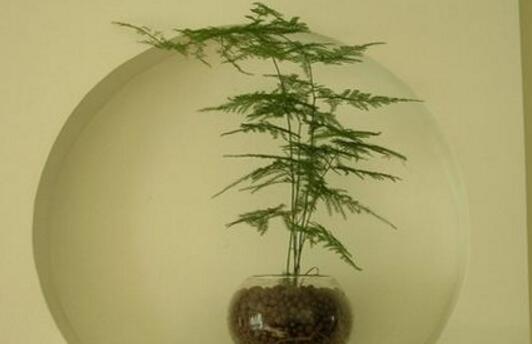
Anyone can grow asparagus fern, but how to grow it well is something everyone needs to consider. To achieve this, you must understand the importance of the environment, because the methods may be the same, but each person's home environment is different. Therefore, when growing asparagus fern, you need to adjust watering, light and other issues at any time according to the environment.
Ten Key Points for Growing Asparagus Fern
1. Repot regularly
Although asparagus fern can still grow normally without repotting, the nutrients in the potting soil are limited. The benefits of repotting are: improving the air permeability, drainage and nutrients of the potting soil, all of which are factors that allow asparagus fern to grow better. How do you grow asparagus fern well? Repotting once a year is very important.
2. Prune regularly
Asparagus fern will keep growing, and the height of the plant will gradually increase. This not only affects its ornamental effect, but also affects the growth of new branches and leaves. Regular pruning can control the growth of asparagus fern and keep its plant shape attractive. Among the ten key points for growing asparagus fern, pruning is easily overlooked by people.
3. Water frequently
Asparagus fern likes moisture and dislikes drought. Watering it often can keep the potting soil moist, but do not let water accumulate in the pot, because that may cause root rot.
4. Loosen the soil regularly
Repotting is one of the ten key points for growing asparagus fern, but loosening the soil regularly is equally important. Loosening the soil can maintain the drainage of the soil and prevent microorganisms produced in the soil from competing with the plant for nutrients.
5. Fertilize reasonably
The soil will provide some of the nutrients asparagus fern needs to grow, but if you want it to grow better, fertilizing is also essential. A lack of fertilizer can cause yellowing leaves. Fertilizing once every 10-15 days according to its growth condition can avoid these problems.
6. Control light
Some people think that all plants should like sunlight, so they put asparagus fern in the sun to bake. Doing so will only hinder its growth. Placing it in a semi-shaded place, under scattered light, will instead make it grow better.
7. Good ventilation
Among the ten key points for growing asparagus fern, the location where the asparagus fern is placed must have good ventilation. Although asparagus fern can absorb harmful substances in the air, if it is kept in a closed environment for a long time, its leaves will curl and may even die. Therefore, good ventilation must be ensured.
8. Tying and shaping
Asparagus fern can grow up to 3 m long. When it reaches a certain height, you should tie it with string or set up a support for it. This can control its growth direction and make its form more attractive.
9. Control temperature
Asparagus fern is not cold-tolerant, so when growing it in the north, you must pay attention. In winter, move it indoors as much as possible. If it cannot be moved, take insulation measures, such as covering the branches and leaves with a plastic bag.
10. Pest and disease control
Under normal circumstances, if the environment is suitable and the methods are proper, asparagus fern will not suffer from pests and diseases. However, pests and diseases may still appear due to negligence. At this time, you cannot ignore them, but should take timely measures.
Summary: To grow asparagus fern well, the ten key points for growing asparagus fern must be understood. In ordinary planting, by developing good habits and correcting some bad habits, you can let asparagus fern grow healthily and vigorously.
Key Points to Note in Growing Common Flowers
Friends who love flowers, do not miss this article on how to grow flowers. Flower lovers are advised to save it for easy reference when planting flowers.
How to grow flowers well is indeed a very important issue for friends who love growing flowers, and everyone's flower-growing experience is different, so the flowers grown also vary from good to bad. The process of growing flowers should be a happy process of mutual learning and mutual exchange. Now I will share the following article on growing flowers with everyone.
(1) Azalea: Likes cool, ventilated conditions, dislikes high temperature and heat; likes semi-shade, dislikes blazing sun; likes moisture, dislikes dryness; likes acidic soil, dislikes alkaline soil; likes well-drained pine needle soil, dislikes waterlogging; if drainage is good, more water is acceptable, and the leaves should be sprayed with water often.
(2) Clivia: Likes warmth, fears cold; likes a semi-shaded environment, dislikes direct scorching sunlight; likes well-drained leaf mold soil, dislikes waterlogging; when flower buds are stuck, the temperature difference between day and night should be adjusted to 7-10 degrees, and a little beer can be poured. When the potting soil is dry, do not spray water on the leaves, as spraying water easily rots the leaves; if there is dust on the leaves, wipe it with a wet cloth. Clivia can only bloom when its leaf veins reach 20 or more.
(3) Camellia: Camellia is a shade-loving flowering plant and requires about 50% shade. It grows well under sparse shade and fears exposure to sunlight. If exposed to direct blazing sun, young leaves are easily scorched, causing weak growth and affecting flowering. In summer it likes cool, moist conditions, and in winter it likes a warm environment. The general suitable growth temperature is 15-25 degrees, and the flowers and leaves should be sprayed with water often. It fears drought and dislikes waterlogging. It grows well only in fertile, loose, well-drained, slightly acidic sandy soil, and will gradually die in alkaline or waterlogged soil.
(4) Poinsettia: Likes a warm, moist environment and is not cold-tolerant; likes sufficient light and is not shade-tolerant; has no strict requirements for soil, but likes fertile, loose, well-drained, slightly acidic soil.
(5) Aglaia odorata: Likes warmth and moisture, fears dryness, and is not cold-tolerant; likes sunlight and is not shade-tolerant; likes fertile, loose, slightly acidic sandy soil. A poem praises it: "Its small leaves like melon seeds are also elegant; the whole tree blooms with rice-shaped flowers; who can compare with its rich fragrance; it welcomes distant guests with fragrant tea."
(6) Bird of Paradise: Likes sunlight but cannot tolerate the blazing summer sun of the north; likes warmth and is not cold-tolerant; requires moderate temperatures in winter and a cool, moist environment in summer; likes well-drained, breathable humus soil.
(7) Bleeding Heart Vine: Likes warmth and moisture and is not cold-tolerant; likes sufficient sunlight but fears direct strong light; likes fertile, well-drained, breathable humus soil.
(8) Serissa: Serissa is an evergreen or semi-evergreen small shrub. It likes shady, moist, warm climates and is not cold-tolerant. It has no strict requirements for soil. It likes well-drained, breathable humus soil. In summer, provide moderate shading; in winter, a room temperature above 10 degrees is enough for it to overwinter safely.
(9) Golden Vein Justice: Likes warmth and moisture and is not cold-tolerant; tolerates semi-shade and fears strong light; likes fertile, loose soil.
(10) Dragon Tree (Brazilian Wood): Likes a warm, humid environment, fears drought, likes light, but is also shade-tolerant; suitable for indoor cultivation, likes well-drained leaf mold soil mixed with peat soil plus cake fertilizer.
(11) Ivy: Likes warm, moist and semi-shaded environments, and is relatively cold-tolerant; likes fertile, loose, well-drained soil.
(12) Snake Plant (Tiger Skin Arrow): Likes warm, sunny environments, tolerates semi-shade, and fears exposure to sunlight; tolerates dryness and dislikes waterlogging; has no strict requirements for soil. Usually place it in a well-ventilated, sunny place, and water it so that it alternates between wet and dry.
(13) Lucky Bamboo: Likes warm, moist and semi-shaded environments, likes scattered light, and dislikes direct blazing sun; likes loose, fertile soil. Usually place it in a bright indoor spot; avoid direct sunlight in summer, and let it receive more sunlight in winter.
(14) Potted Pomegranate: Likes warm, sunny environments and is relatively cold-tolerant; tolerates drought and fears waterlogging; likes loose, fertile soil. Only if light, water, fertilizer and pruning are all in place will it have abundant flowers and fruit.
(15) Christmas Cactus: Likes warm, moist and semi-shaded environments, and fears direct strong light; relatively drought-tolerant and fears waterlogging; not cold-tolerant, and requires soil rich in humus, loose and well-drained. When summer temperatures are high, stop fertilizing and control watering. (Similar to Christmas Cactus is the Easter Cactus; the difference between the two is that the edges of the Easter Cactus stems have no sharp teeth and are shallowly wavy; the edges of Christmas Cactus stems have four sharp teeth on each side and generally produce white or pale flowers, while those with three sharp teeth generally produce red flowers.) When buds are forming and blooming, do not move the pot, otherwise buds and flowers may easily drop.
(16) Jasmine: Likes a hot, humid, sunny environment, is not shade-tolerant, not cold-tolerant, and not drought-tolerant. It grows well at temperatures of 25-30 degrees. Below 4 degrees, cold damage begins to appear, leaves fall, and the plant may even die. It likes loose, fertile, well-drained soil containing organic matter.
(17) Haworthia fasciata: Likes warm, sunny environments, tolerates drought, and fears waterlogging; likes humus-rich, well-drained sandy soil.
(18) Kalanchoe daigremontiana: Likes warm, moist environments. Although it likes sunlight, it is also relatively shade-tolerant; dislikes intense summer heat and tolerates drought; likes well-drained sandy soil, and watering should alternate between wet and dry; in summer, provide appropriate shade and ventilation, and in winter strictly control watering.
(19) Aloe: Likes sunny, warm, moist environments and is not cold-tolerant; likes loose, fertile, well-drained soil. In summer it needs sufficient watering and frequent spraying of water on the leaves; in other seasons control water. In spring and autumn it likes direct light. (Note: Tiger Tooth Aloe is grown in the same way as aloe.)
(20) Epiphyllum: Likes warm, moist and semi-shaded environments, is relatively drought-tolerant but not cold-tolerant, fears direct strong light, dislikes waterlogging, and requires well-drained, loose, fertile soil. Epiphyllum generally blooms at night when it gets dark between 19-20 o'clock, and each flower blooms for about two hours. If you want Epiphyllum to bloom during the day, you can change the light, that is: in the few days before the buds are about to open, place it in a dark place during the day and expose it to light at night.
(21) Chrysanthemum: Belongs to sun-loving flowers and likes cool characteristics and sufficient sunlight; autumn is cool, and it has relatively strong cold tolerance (temperatures of 18-22 degrees are best); it is relatively drought-tolerant but not moisture-tolerant, especially fearing waterlogging; it can tolerate weak alkalinity and requires sandy soil rich in humus, loose and well-drained. Chrysanthemums are generally propagated by division or cuttings, that is: divide pots in April, pinch in May, fertilize in June, pinch again in July, and keep water flowing in August and September. According to the growth of the flowers, when pinching and removing the top in mid-to-late May, keep 3-5 leaves; when pinching and removing the top in mid-to-late July, keep 2-3 leaves. If the methods are proper and management is good, flowering can reach, three, three, nine tripods.
(22) Guangdong Evergreen (also known as Silver Queen): Likes warm, moist conditions and is strongly shade-tolerant, dislikes dryness, fears direct strong light, and is slightly cold-tolerant; keeping the winter room temperature above 5 degrees is enough for safe overwintering. It likes loose, fertile potting soil. Sticky potting soil can cause root rot, so it is best to use leaf mold soil plus a small amount of river sand. It likes compound liquid fertilizer rich in nitrogen and potassium. In summer high temperatures, water more; in spring and autumn, water so that it alternates between wet and dry; in winter, control watering.
(23) Croton (Variegated Leaf Croton, also known as Garden Croton): Likes high temperature, high humidity and sun exposure, and is not cold-tolerant; likes loose, fertile, well-drained sandy soil. It grows well at winter temperatures above 15 degrees, and temperatures below 10 degrees will cause death.
(24) Michelia figo: Likes warmth and moisture and belongs to semi-shade flowers. It requires good ventilation and appropriate shade. When air humidity is high, the leaves are dark green and smooth. It is not drought-tolerant and dislikes exposure to blazing sun, otherwise the leaves easily turn yellow. It likes fertilizer and water but fears waterlogging, is not very cold-tolerant, and likes fertile, loose, slightly acidic sandy soil. A poem praises it: "The flower opens without opening its mouth, shy and bowing its head; it seems like a beauty smiling, deep feelings flowing secretly."
(25) Echeveria: Likes warmth, dryness and sufficient light, and can also tolerate semi-shade. It fears cold and prefers fertile, well-drained sandy loam. During the growth period, maintaining 4-6 hours of light per day will make it grow vigorously and give it bright leaf color. Spray the leaf surface with clean water once every 7-10 days. It does not matter if Echeveria is not watered for ten days to half a month. If it is placed in a dark indoor place for a long time, it will cause leaf drop.
(26) Ficus: Likes warmth, is not cold-tolerant, and in the north must be moved into a greenhouse to overwinter in winter. It needs a humid, sunny environment and is also tolerant of semi-shade. It has no strict requirements for soil and is highly adaptable. Although it likes acidic soil, it can also grow normally in slightly alkaline soil.
(27) Gardenia: Gardenia is an evergreen shrub or small tree. There are four commonly seen types: (1) Large-flowered Gardenia, also known as River Flower Gardenia. The leaves are large and long-elliptical; the flowers are large, mostly double, and strongly fragrant. (2) Small-leaved Gardenia, also known as Sparrow Tongue Flower. The plant is short, the flowers are relatively small, double, and very strongly fragrant. (3) Oval-leaved Gardenia. The leaves are relatively small and obovate; it blooms single small white flowers with a light, elegant fragrance. (4) Walnut-patterned Gardenia. The leaves are large and ovate, with obviously protruding veins in a mottled pattern; the flowers are large and the fragrance is relatively light.
Gardenia likes warm, humid climates and is not cold-tolerant. South of the Yangtze River it can overwinter in the open ground; in the north it is all grown in pots and moved indoors to overwinter in winter. It likes light and is also shade-tolerant; in summer when sunlight is strong, it should be kept in a semi-shaded place for care. The leaves should be sprayed with water often. If direct strong light, high temperature, and excessive watering are combined, it is most likely to cause yellow leaves and may even cause the whole plant to die. Gardenia likes fertile, loose, well-drained, slightly acidic sandy soil.
(28) Peace Lily: Peace Lily is a perennial herbaceous flower, divided into large-leaf and small-leaf types. It likes warmth and moisture and belongs to semi-shade flowers. It requires good ventilation and appropriate shade in summer. Water so that it alternates between wet and dry; too much water easily causes root rot. It requires sandy soil rich in humus, loose and well-drained.
(29) Golden Barrel Cactus: Golden Barrel Cactus is a perennial succulent flower. It likes warm, dry environments, likes sufficient light, and is also tolerant of semi-shade and drought. It will not die if not watered for a long time, but too much water will cause root rot and death. It requires well-drained sandy soil. (Note: The habits of succulent flowers such as Shan Ying, Tiger Head, Dragon Bone, and Hylocereus undatus are basically the same as those of Golden Barrel Cactus.)
(30) Peacock Plant: Also known as Blue-flowered Banana, with a small, beautiful plant and gorgeous leaf color; the patterns on the leaf surface resemble a lifelike peacock displaying its tail. Peacock Plant is a perennial evergreen herbaceous plant of the Marantaceae family. It likes high temperature, high humidity and semi-shaded environments, and is strongly shade-tolerant. It grows well under bright scattered light indoors. The suitable growth temperature is 18-22 degrees, and it requires loose, fertile potting soil. In summer, avoid direct strong light, otherwise the leaf edges are easily scorched. The ambient air must circulate, and clean water should be sprayed on the leaves often. (The cultivation of other Calathea plants is basically the same as this.)
(32) Kalanchoe blossfeldiana: Also known as Shou Xing Flower. It likes sufficient sunlight. In the hot summer of the north, light intensity is high, which easily makes the leaves turn yellow. Therefore, around noon it should be appropriately shaded, or placed in a semi-light indoor spot, but attention should be paid to ventilation and cooling. The potting soil can be made by mixing 40% leaf mold soil, 40% garden soil, and 20% river sand plus a small amount of bone meal. This soil is loose, fertile, well-drained and slightly acidic. Do not use heavy sticky soil, as it will cause poor growth and lead to root rot and leaf drop. In winter, room temperature must not be lower than 10 degrees. If it is around 7 degrees, the leaves will turn red and the flowering period will be delayed.
(33) Freesia: Also known as Fragrant Snow Orchid and Foreign Tuberose. Its leaves are like small swords stuck in the ground, and from the sword cluster several flower spikes full of golden bell-like flowers, about 8 flowers each, are drawn out, just like little golden funnels. The flower colors include bright yellow, pure white, blue-purple, rose red and so on, with fantastic forms. It has both the delicate fragrance of orchids and the aroma of osmanthus. Placing a pot indoors, the fragrance is rich and pure, making people immediately feel fresh and comfortable. Freesia's habit is that it fears both cold and heat. When summer is hot, it enters dormancy. After the weather turns cool, the corms begin to sprout and grow and send up stems to bloom. The suitable growth temperature is 18-20 degrees during the day and 14-16 degrees at night; the overwintering temperature is 6-7 degrees. Freesia is a light-loving plant, so it requires sufficient light, but under strong light and high temperature it easily becomes leggy. Its flower bud formation is completed under short-day conditions, and after flower buds form, long-day conditions also promote its flowering. Freesia has relatively strict water requirements, that is, it fears moisture and is also not drought-tolerant. Too much soil moisture easily causes root rot; lack of soil water hinders growth and makes the leaves lose their luster. Plant it in mid-to-late September each year, about 10 per pot. The flower soil can be mixed with 20% leaf mold soil, 50% garden soil, 20% compost soil, and 10% sandy soil. Freesia has a dormant habit. After flowering, around May, when the leaves turn yellow and wither, the corms can be taken out of the pot, the dead leaves removed, the corms dried in a cool place, and then stored in a cool, ventilated place.
(34) African Violet: Also known as African Violet, it is a perennial herbaceous plant. It likes sufficient scattered light, which is necessary for it to grow vigorously and bloom. African Violet potting soil must not be too dry or too wet. When watering, do not pour water on the leaves, otherwise yellow spots or leaf rot will appear on the leaf surface. It likes warmth, is not cold-tolerant, and is also not tolerant of high temperature. In summer, avoid direct sunlight, and the overwintering temperature should be kept above 12 degrees. It likes fertile, loose, well-drained, slightly acidic sandy soil.
(35) Chinese Rose: Chinese Rose is highly adaptable to the environment and likes warmth. It grows best at an average temperature of 22-25 degrees. Chinese Rose has no strict requirements for soil, but grows vigorously in fertile, loose, slightly acidic soil. During the growth period, sunlight must be sufficient, otherwise the plant will be weak, the leaves will turn yellow, and the flowers will be small and off-color. Chinese Rose must be pruned. The pruning period is generally before and after flowering in spring and autumn. Cut off diseased and weak branches, parallel branches, inward-growing branches, and dead branches and spent flowers. In hot summer, the soil dries out very easily, so water must be given in time to keep the soil moist, especially during bud formation and flowering when the water supply must not be lacking. In the rainy season, drain accumulated water in time. In winter, it is best to put it in a cellar to let it go dormant, and take it out around mid-March of the following year to prune.
(36) Bougainvillea: Also known as Paper Flower, it likes warm, humid climates and sunlight and is not cold-tolerant. Insufficient light will cause very few flowers and leaf drop. It likes fertilizer and water, grows robustly, and has no strict requirements for soil. Pruning is generally done after flowering and before new shoots grow. Cut off overly dense branches, inner branches, and leggy branches, and pay attention to maintaining a beautiful tree shape. The overwintering temperature is best above 12 degrees.
(37) Epiphyllum oxypetalum: A tropical plant. It likes high temperature and high humidity, likes sunlight, likes a well-ventilated environment, and likes fertile soil (the best potting soil is 20% hair, 20% cinders, 30% loam, and 30% sandy soil). It is not cold-tolerant. Keep the potting soil at 40% humidity. When the temperature is low, do not water much and do not fertilize. The overwintering temperature is best above 10 degrees, and place it in a place where sunlight can shine directly.
(38) Anthurium: A perennial evergreen herbaceous plant. Also known as Anzu Flower, Red Crane Taro, Fire Candle Flower, etc. The plant height is 30-50 cm, and the flower form is wonderfully beautiful. It likes warm, humid and semi-shaded environments, dislikes direct strong light, and is not cold-tolerant. In summer, give it sunlight in the morning and evening, provide shade around noon, spray clean water on the leaves often, and water so that dry and wet alternate. For potting soil, it is best to use a mixed substrate of leaf mold soil (or peat soil), sphagnum moss, plus a small amount of garden soil, charcoal, and superphosphate.
(39) Spider Plant: Spider Plant is a perennial evergreen herbaceous flower. It likes warm, semi-shaded and humid air environments, and requires loose, fertile, well-drained soil. The potting soil should be on the dry side, and clean water should be sprayed on the leaves often. Keeping the indoor temperature not lower than 10 degrees is enough for safe overwintering.
(40) Boston Fern: It is a trailing fern. It likes warm, moist and semi-shaded environments and dislikes intense heat. It can be placed in a bright, scattered-light indoor spot for cultivation, and must not be exposed to direct strong light, otherwise the leaves easily turn yellow or the leaf edges dry up. However, it also cannot be placed in a dark place, otherwise the leaves will fall off after a few weeks. Boston Fern has relatively strict water requirements. It should not be too wet or too dry; it is best to keep the potting soil moist at all times. In summer, spray water 2-3 times a day; in winter when room temperature is low, reduce watering. Keeping room temperature above 8 degrees is enough for safe overwintering.
(41) Asparagus Fern: The branches and leaves of asparagus fern spread out horizontally, like layered thin clouds, and the stems are like bamboo, hence it is also called Cloud Bamboo. It likes warmth, humidity, semi-shade, fears drought, is not cold-tolerant, and likes fertilizer. It requires soil rich in humus and well-drained. Asparagus fern is a shade-loving plant and grows well under scattered light. In winter, a room temperature not lower than 10 degrees is enough for safe overwintering.
(42) Hibiscus: Hibiscus likes light, warmth, humidity and a well-ventilated climate. It is not cold-tolerant and is suitable for loose, fertile, deep sandy loam. The lowest winter temperature should not be lower than 15 degrees, otherwise it easily causes leaf drop. If room temperature is kept above 20 degrees, it may continue to bloom in winter. (Note: Growing Wood Chrysanthemum is basically the same as growing Hibiscus. Hibiscus generally blooms trumpet-shaped flowers on behalf of long buds, while Wood Chrysanthemum flowers are mostly double or semi-double. The flower color can be judged from the color of new shoots: if the new shoots are green, they generally produce red flowers; if the new shoots are smoky-colored, they generally produce pink or pale flowers.)
(43) Potted Peach: Likes light, warmth, humidity and a well-ventilated climate, fears waterlogging, and is relatively cold-tolerant. It has no strict requirements for soil, but fertile, loose soil is best. For overwintering, it is best to put it in a cellar when the weather turns cold, or place it indoors in a shady, cool place with less watering, as long as the potting soil does not dry out.
(44) Spider Plant: Spider Plant is a perennial herbaceous flower. It likes warm, humid-air, semi-shaded environments and requires loose, fertile, well-drained soil. In spring and autumn it grows vigorously; place it in semi-shade and apply dilute liquid fertilizer once every half month. In summer, place it in a shady, cool place, water sufficiently, and spray water on the leaves often. In winter, let it receive some light. A room temperature not lower than 10 degrees is enough for safe overwintering.
(45) Billbergia: Also known as Bromeliad, it likes warmth and moisture and belongs to semi-shade flowers. It requires good ventilation and likes acidic sandy loam rich in humus, well-drained and breathable. You can choose leaf mold soil, sphagnum moss and garden soil (sand), mix them and add a small amount of bone meal as base fertilizer. During the growing season, apply dilute liquid fertilizer once every half month. Before flowering, apply 1-2 additional doses of 0.2% potassium dihydrogen phosphate, which will make the flower colors more striking. Fertilizing should be stopped during the flowering period, after flowering and during dormancy. The suitable growth temperature is 20-28 degrees. When summer temperatures exceed 30 degrees, ensure ventilation and cooling. In winter, keep it above 15 degrees and let it receive more light to promote strong growth.
Flower Growing Tips and Key Points for Flower Cultivation
What are the key points for flower cultivation? What are the flower growing tips?
Water reasonably
Water is a necessary condition for the survival and reproduction of flowers. Reasonable watering is the key to successful flower growing. Flower types, environments and climates differ, and water requirements vary greatly. For home flower growing, especially indoor flowers in the living room, because there is no direct sunlight, the transpiration of the flowers is weak, so you cannot water too frequently. Otherwise, the soil will often be in a waterlogged state, and the root system will suffocate and die. Watering too much and too often is an important reason why many home flower-growing attempts fail. Generally speaking, flowers placed on balconies should be watered more, and indoor flowers less; when the temperature is hot, water more, and when the temperature is cool, water less; herbaceous plants should be watered more, and woody plants less. Also proceed according to alternating dry and wet, that is, water only when the soil is relatively dry, and each time water until water seeps out from the bottom of the pot.
Fertilize at the right time
Home flowers generally do not need too much fertilizer, especially the currently popular foliage flowers such as Brazilian Iron Pillar and Money Tree. Because the original plant shape must be maintained and leggy aging prevented, generally fertilize 12 times each in spring and autumn. For other flowers with relatively vigorous growth, fertilizing once a month is generally enough. The fertilizer can be nitrogen-phosphorus-potassium compound fertilizer diluted 500-800 times and poured on, or you can make organic fertilizer yourself. For example, add orange peel and eggshells to rice washing water and water from rinsed milk bottles, seal and soak for half a month, and it becomes an odorless, high-quality organic compound fertilizer.
Pollution-free pest control methods
In home flower growing, the main pests include aphids, red spiders, scale insects, and ants and white grubs in the soil. Because general chemical pesticides are highly toxic, easily pollute the environment, and cause harm to the human body, it is best to mainly catch them by hand. You can also make pollution-free flower sprays to kill them, such as adding a small amount of laundry detergent to mashed garlic juice and diluting 50 times; or adding water to tobacco shreds at 25 times, soaking for 48 hours, taking the filtrate and adding an appropriate amount of laundry detergent; or using essential balm added to water at 500 times. These all have obvious toxic effects on general pests.
Autumn Flower Growing Tips
1. Pay attention to increasing the light time for flowers
For flowers placed in shaded areas in summer, such as broadleaf lady palm, Brazilian iron, ficus, rubber tree, areca palm, Monstera deliciosa, asparagus fern, etc., because daylight gradually decreases after autumn, they should be moved to places with sunlight in the morning and evening at this time to increase light time. At the same time, apply a nitrogen-based nitrogen, phosphorus and potassium fertilizer once, which can not only make the flowers grow vigorously and luxuriantly, but also improve their cold resistance after entering winter.
2. Pay attention to increasing the nutritional components of flowers
Chrysanthemum, wintersweet, white magnolia, Christmas cactus, Daphne, Paphiopedilum, etc. are just about to form buds at this time. Chinese rose, Clivia, etc. are both growing branches and leaves and about to form buds. At this time, attention should be paid to applying nitrogen, phosphorus and potassium fertilizer mainly based on phosphorus 2-3 times to promote bud formation, bud growth and flowering. Otherwise, it will be difficult for them to form buds, grow buds, and bloom. For fragrant flowers such as jasmine and Aglaia odorata, insist on applying the above fertilizer 1-3 times a month. In this way, the flowers can bloom again before entering winter.
3. Pay attention to changing soil and repotting
After entering autumn, it is a good time to repot potted flowers and change the soil. For flowers whose pots are too small and whose root systems densely cover the pot walls, attention should be paid to promptly switching to larger pots to facilitate their growth. Flowers that do not need repotting should also be turned out and given fresh soil.
4. Pay attention to timely pruning branches and removing leaves
In autumn, some flowers develop dead branches and withered leaves. In order to improve the ornamental value of the flowers, attention should be paid at this time to cutting off the dead branches and withered leaves of the flowers so that people can enjoy them.
Flower growing tips collected online, kept for future use.
Flower Growing Tips
1. Watering flowers
① Watering flowers with leftover tea. Using leftover tea to water flowers can both maintain soil moisture and add nutrients such as nitrogen to the plants. But you should water regularly and in moderation according to the humidity of the pot, and you cannot just pour leftover tea in and water whenever you like.
② Watering flowers with spoiled milk. After milk spoils, add water and use it to water flowers; it is beneficial to the growth of the flowers. But add more water to make it relatively dilute. Unfermented milk should not be used to water flowers, because it produces a large amount of heat during fermentation, which will "burn" the roots (root rot).
③ Watering flowers with cool boiled water. Using cool boiled water to water flowers can make the branches and leaves luxuriant and the flowers colorful, and can promote earlier flowering. If used to water asparagus fern, it can make its branches and leaves develop horizontally, becoming short and dense.
④ Watering flowers with warm water. In winter, when the weather is cold and the water is cold, it is better to water flowers with warm water. It is best to place the water indoors and wait until it is close to room temperature before watering. If the water temperature can reach 35°C before watering, even better.
⑤ Watering flowers with rice washing water. Frequently using rice washing water to water flowers such as Aglaia odorata can make their branches and leaves lush and their flower colors bright.
⑥ Watering flowers when no one is home. For people who love growing flowers, if they are away from home for ten days to half a month because of visiting relatives or going out on business, no one will water the flowers. At this time, you can fill a plastic bag with water, prick a small hole in the bottom of the bag with a needle, and place it in the flower pot with the small hole against the soil. Water will slowly seep out and moisten the soil. The size of the hole needs to be controlled well to prevent the water from seeping out too quickly. Or place a container full of cool water next to the flower pot, find a wide cloth strip with good water absorption, put one end into the water in the container and bury the other end in the soil of the flower pot. In this way, the soil can remain moist for at least about half a month, and the flowers will not die.
2. Five fertilizing methods
(1) Maifan stone fertilizer. Sprinkle a layer of Maifan stone granules in the flower pot, which can promote the growth of flowers and prolong the flowering period.
(2) Crushed eggshell fertilizer. Crush eggshells and bury them in the flower pot. This is a very good fertilizer and can make potted flowers grow luxuriantly with abundant leaves and bright flowers.
(3) Cook a small amount of soybeans and set aside. Make three holes in each pot of flowers, put in 3-5 cooked soybeans, at a depth of 2-3 cm, without damaging the flower roots, and cover with soil as usual.
(4) Roast and crush pig bones, fish bones, etc. that are usually prepared for disposal, and apply them at the bottom or on the surface of the pot.
(5) Use rice washing water to water flowers. Rice washing water contains trace elements such as nitrogen, phosphorus and potassium. It is both a compound fertilizer and a mild fertilizer, does not harm flower roots, and can be used at any time as long as the potting soil is not waterlogged.
3. Collecting organic fertilizer for potted flowers
Home flower growing should not often use chemical fertilizers. The main fertilizers needed for cultivating flowers, such as nitrogen, phosphorus and potassium, can all be collected in daily life. For example: moldy waste peanuts, beans, melon seeds and miscellaneous grains that cannot be eaten are all nitrogen-containing fertilizers. After fermentation, they can be used as base fertilizer or soaked into a solution as top dressing, and both can promote vigorous growth of flowers and trees; fish bones, crushed bones, chicken feathers, eggshells, and people's cut nails and hair are all rich in phosphorus. Mix these waste materials into old potting soil, add some water, put them in a plastic bag and place it in a corner. After a period of decomposition, they can become excellent organic fertilizer. If these waste materials are soaked into a solution and used as top dressing, it can make home potted flowers bright in color and heavy with fruit. In addition, fermented rice washing water, water changed from growing bean sprouts, plant ash water, as well as rainwater and wastewater from fish tanks, all contain certain amounts of nitrogen, phosphorus and potassium. As long as they are used in appropriate amounts, they will promote the growth and development of flowers and trees.
4. Fruit peels can neutralize alkaline potting soil
Some flowers from the south are not easy to survive or bloom when potted in the north. This is because the potting soil is too alkaline. There are many ways to neutralize alkaline soil. This method is to soak peeled apple peels and apple cores in cold water, and frequently use this water to water the flower pots. It can gradually reduce the alkalinity of the potting soil, which is beneficial to certain plants.
5. Flower disease prevention
In early spring, all kinds of flowers will enter a vigorous growth season. At this time, spray 1-3 times of 1% Bordeaux mixture on the leaf surface and the back of the leaves to prevent diseases. The preparation method of 1% Bordeaux mixture is: 1 gram of copper sulfate, crushed and dissolved with 50 milliliters of hot water; then 1 gram of quicklime, slaked with a few drops of water, then add 50 milliliters of water, and filter out the residue; pour these two solutions into the same container at the same time and stir evenly. Finally, a sky-blue transparent Bordeaux mixture is obtained.
6. Six methods to eliminate insects and ants in flower pots
(1) When small flying insects appear in the flower pot, you can use three or four cotton swabs (cotton sticks), fully dipped in dichlorvos, to the extent that it does not drip, then insert the handle end into the potting soil around the plant, and the flying insects can be eliminated.
(2) Laundry detergent: Dissolve one tablespoon of laundry detergent in 4 liters of water, and spray on flower leaves every two weeks, which can thoroughly eliminate whiteflies and bacteria.
(3) Milk: Mix 4 cups of flour and half a cup of milk into 20 liters of water, stir, filter with gauze, and spray on flower leaves. It can kill mites and their eggs.
(4) Beer: Pour beer into a shallow basin placed under the flower pot soil. Snails that crawl in will drown.
(5) Garlic: Mash one garlic bulb, mix it with one tablespoon of pepper powder into half a liter of water. After one hour, spray it on flower leaves to prevent rat invasion.
(6) When ants appear in the flower pot, soak cigarette butts and tobacco shreds in hot water for one or two days. When the water turns dark brown, sprinkle part of the water on the flower stems and leaves, and after diluting the rest, pour it into the flower pot, and the ants can be eliminated.
7. Three methods for keeping cut flowers fresh
① Scorch the cut end of a rose stem with fire, then place it in a vase. Autumn chrysanthemum: apply a little menthol crystal to the cut end. Chrysanthemum: add a trace amount of urea or soil extract (a solution made by stirring fertile soil with water and then filtering it) to the clean water holding the chrysanthemums; this can keep the chrysanthemums in the vase from wilting for as long as 30 days, more than 10 days longer than with ordinary clean water. White magnolia: wrap it in a damp cloth at night and uncover it during the day; this can delay wilting by 2-3 days. Hibiscus: first place it in hot water for one or two minutes, then place it in cold water. Dahlia: dip the cut end in hot water for a moment, then place it in cold water. Tree peony: first soak the cut end in hot water, then place it in cold water. Camellia: place it in lightly salted water. Lily: place it in sugar water. Gardenia: add 1-2 drops of fresh meat juice to the water. Narcissus: keep it in water with a salt concentration of one part per thousand. Lotus: seal the air holes with mud, then place it in lightly salted water.
② When leaving home for a long trip, take the cut flowers out of the vase and store them in the fruit and vegetable crisper of the refrigerator; they can be kept from wilting for a long time, and when you return, take them out and put them back in the vase, and they will be as fresh as ever.
③ Dissolve aspirin in water to extend the blooming time of cut flowers kept in a vase.
8. Adjusting flowering time
Put flower seeds, plant bulbs, or cuttings for propagation into a plastic bag, then place them in the refrigerator's cold storage compartment. Take them out to plant at the appropriate time, and the flowering time can be adjusted at will.
9. Method for reviving frozen potted flowers
During cold spring weather, potted flowers placed outdoors can freeze stiff. In this situation, quickly wrap the potted flower, pot and all, in three layers of highly absorbent waste newspaper. When wrapping, be careful not to damage the branches and leaves of the potted flower, and avoid direct sunlight. Let it sit quietly this way for one day so that the temperature of the potted flower gradually rises. After this treatment, the frozen potted flower can revive.
10. Method for keeping clivia cool in summer
In midsummer, the temperature is often above 30°C, which is extremely unfavorable for the growth of clivia. For this reason, people generally build a shade frame to lower the temperature. You can also bury the clivia, pot and all, in sand (burying the pot completely), then sprinkle water on the sand once each morning and evening. This not only keeps the potting soil moist, but more importantly, the heat absorption from the evaporation of water in the sand can achieve the purpose of lowering the temperature.
11. Turning hydrangea blue
Drive a rusty iron nail into the root area of the hydrangea, and the hydrangea will noticeably turn blue.
12. Method for cleaning dust off plants
When many families clean their homes, whether in winter or midsummer, they generally put potted flowers under the faucet to rinse them, which often affects plant growth due to the sudden temperature change. If it is a foliage plant, you can dip water and clean it leaf by leaf along the veins of the branches and leaves. Other plants can be rinsed with a spray bottle.
13. Method for removing odors when growing flowers
If fermented solution is used as fertilizer for indoor flowers, it will give off an unpleasant smell. If orange peel is put into the fertilizer liquid, the smell will disappear. At the same time, orange peel itself is also an excellent fertilizer.
14. Four methods for making homemade insecticide
① Take 200 grams of scallions, chop them, put them into 10 liters of water, and soak for a day and a night. After filtering clear, use it to spray the affected plants several times a day for 5 consecutive days.
② Take 200-300 grams of garlic, crush it and extract the juice, add 10 liters of water to dilute it, and use it immediately to spray the plants.
③ Soak 400 grams of tobacco powder in 10 liters of water for two days and two nights, then filter out the tobacco powder. When using, add another 10 liters of water and 20-30 grams of soap powder, stir well, and spray the affected flowers and trees. ④ Soak 10 liters of water and 3 kilograms of plant ash for 3 days and nights, then it can be used to spray the plants.
15. Method for eradicating weeds
Weeds have very strong reproductive capacity. Soon after weeds in a courtyard are pulled out, within a few days they grow everywhere again. In this situation, do not casually pour out the salt water normally used for pickling duck eggs or pickles. In the season when weeds flourish, splash the salt water on the weeds; three or four times can stop the growth of the weeds. In addition, the water used to boil potatoes can also remove weeds in courtyards or passageways. Also, using bleach powder water to kill weeds is very effective. The method is: sprinkle water on the ground where weeds are to be removed, soak the soil thoroughly, and after 24 hours, water it again with bleach powder water.