How to Grow Asparagus Fern? Learn These 5 Tips to Master the Growing Methods and Precautions
As a plant with extremely high ornamental value, the uses and benefits of asparagus fern are becoming known to more and more people. Many people try to grow some asparagus fern at home, but they don't know how to grow asparagus fern in the best way. Today, the editor brings you detailed growing methods and precautions for asparagus fern, and answers how to grow asparagus fern so it becomes more vigorous.
How to Grow Asparagus Fern
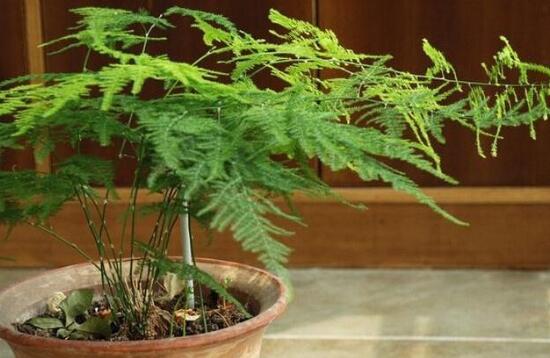
If you want to know how to grow asparagus fern, you first need to know its growth characteristics. The most suitable growing environment for asparagus fern is a warm, humid, semi-shaded and well-ventilated place. It is not tolerant of severe cold or drought, prefers sandy soil with good drainage, likes fertilizer, and avoids strong light.
Growing Methods and Precautions for Asparagus Fern
1. How to Water Asparagus Fern
Asparagus fern is a plant that is not tolerant of drought, so when planting it you must be sure to water it more. The number of waterings can be adjusted according to the growth stage and season. For example, in spring it can be watered once a day; in summer it can be watered once in the morning and once in the evening.
Precautions: Do not water too much at one time, as that will cause water to accumulate in the pot, make the roots rot, and then lead to yellowing leaves, etc. In principle, just keep the potting soil moist.
2. Suitable Light for Asparagus Fern
Asparagus fern relatively prefers a semi-shaded environment and can grow well under scattered light. Therefore, in spring and autumn it can be placed in a sunny spot indoors; in winter it can be placed in a sunny place; in summer it needs to be placed in a cool place.
Precautions: In the growing methods and precautions for asparagus fern, light is very important. Too much light will cause leaves to fall off; too little light will hinder the growth of asparagus fern. Therefore, the position of the asparagus fern should be adjusted according to the actual situation to give it suitable light conditions.
3. How to Fertilize Asparagus Fern
Asparagus fern is a fertilizer-loving plant and has a relatively high demand for fertilizer during the growing period. In spring and autumn, fertilizer can be applied once every 15-20 days. The fertilizer can be organic liquid fertilizer, or nitrogen, phosphorus and potassium chemical fertilizers can be applied as a top dressing. A mixed liquid of 0.1% urea plus 0.1% monopotassium phosphate can also be used as a top dressing.
Precautions: Fertilization can be stopped in summer and winter, but the amount of fertilizer each time should not be too much, otherwise leggy growth may occur, which will affect the appearance and even ruin the plant shape. If you want the plant not to grow too tall, you can apply less nitrogen fertilizer and liquid fertilizer.
4. What Soil Does Asparagus Fern Need
Asparagus fern needs loose, fertile sandy soil with good drainage, and it is best if it is also rich in humus. A ratio of 4 parts garden soil, 2 parts leaf mold, 2 parts compost soil and 1 part sand can be used.
Precautions: The potting soil should be replaced regularly. If fertilizer burn to the roots occurs because the fertilizer is too concentrated, the pot should be turned over in time to remove the fertilizer, and the soil ball should be rinsed with clean water, then the potting soil should be replaced and the plant grown again.
5. What Temperature Is Suitable for Asparagus Fern
In the growing methods and precautions for asparagus fern, temperature is also a factor that cannot be ignored. The most suitable temperature for asparagus fern is between 15-25 degrees. If grown indoors, the temperature should be kept at 12-18 degrees.
Precautions: If asparagus fern is grown indoors, when the temperature exceeds 20 degrees, good ventilation should be maintained, which helps with heat dissipation; in winter, when the temperature is below 5 degrees, it should be kept warm, and a thermal insulation bag, etc. can be used to cover it.
Four-Season Care for Asparagus Fern
1. Spring
In late spring, the asparagus fern should be repotted. In spring, asparagus fern grows relatively vigorously, so seedlings can be top-dressed 1-2 times to ensure an adequate water supply, and at the same time pay attention to increasing air humidity.
2. Summer
Summer has higher temperatures and strong light, so asparagus fern should be placed indoors in a bright and ventilated place, keep the soil moist, and frequently spray water on its leaves. At this time, fertilization can be omitted.
3. Autumn
In autumn, the temperature will gradually decrease. At this time, asparagus fern will once again enter a vigorous growth period. Pay attention to the supply of water and fertilizer and the supplement of air humidity. After the temperature drops in late autumn, attention should be paid to maintaining the indoor temperature. When winter is about to begin, the number of waterings should be gradually reduced.
4. Winter
Asparagus fern can be placed in a 5-degree environment for a short time, but do not let it stay in a low-temperature environment for a long time. In winter, asparagus fern will stop growing. The plant needs to be guaranteed a certain amount of light, and a temperature above 10 degrees is sufficient.
How to Grow Asparagus Fern So It Becomes More Vigorous
In addition to following the methods and precautions mentioned above, if you want asparagus fern to grow more vigorously, you also need to pay attention to pruning it in time. Cutting off old branches and leaves can promote the growth of new leaves and reduce the loss of nutrients.
Summary: This article has introduced in detail the growing methods and precautions for asparagus fern. The key is to create a suitable growing environment for asparagus fern in terms of soil, temperature, water, fertilizer and light, etc. In addition, if you want it to grow more vigorously, pruning is also essential.
How to Grow Dracaena Fragrans: Growing Methods and Precautions for Dracaena Fragrans
Dracaena fragrans is a plant that likes high-temperature weather and a humid climate. If the temperature and humidity conditions are suitable, dracaena fragrans can grow all year round. Dracaena fragrans has a strong ability to adapt to light and can grow in sunlight and in sheltered places. Dracaena fragrans has strong vitality; sunlight, air and water are enough for it to grow healthily. Below, the editor will introduce the growing methods and some precautions for dracaena fragrans.
The first thing to note in the growing methods for dracaena fragrans is temperature and light. The temperature should be controlled at 20°C to 28°C. When the temperature is below 13°C, dracaena fragrans will enter a dormant state; and when the temperature is below 5°C, yellow-brown spots will appear on the leaf tips and leaf margins of dracaena fragrans, and in severe cases it can even lead to death. When dracaena fragrans is placed indoors, it should be placed in a place with sunlight.
Second, the growing methods for dracaena fragrans also require attention to the control of water and humidity. Dracaena fragrans does not need much water, but it has somewhat higher requirements for humidity. Therefore, we only need to keep the potting soil moist and frequently spray water on the leaves to increase the air humidity of the surrounding environment. It is worth noting that water must not be allowed to accumulate in the potting soil, as accumulation of water will cause the roots of dracaena fragrans to rot.
The third point in the growing methods for dracaena fragrans is that attention should be paid to soil and fertilizer. Dracaena fragrans is suitable for growing in loose, fertile river sandy loam. In addition, dracaena fragrans also needs to be repotted and have its soil changed once a year to keep sufficient nutrients in the soil. Fertilization is generally done by first applying organic fertilizer at the base or edges during the growing period, then applying liquid fertilizer once every 15 to 20 days to ensure lush growth of branches and leaves.
The growing methods for dracaena fragrans also require attention to the prevention of insect pests, because sometimes dracaena fragrans will show phenomena such as scorched and withered leaves, which are caused by drought, excessively low temperature, improper watering and fertilization, etc. At this time, we should improve the cultivation and management methods, pay more attention to controlling temperature and humidity, and also remove pests in time and apply some diluted insecticide.
Summary:The plant shape of dracaena fragrans is very elegant, and placing it in the living room immediately makes the living room look high-end, grand and classy. The fragrance of dracaena fragrans is relatively strong. If you are not very comfortable with a relatively strong fragrance, you only need to place it in a spacious and ventilated place. Dracaena fragrans is a very stylish and elegant plant, with a charming southern exotic flavor, and is a fairly famous indoor foliage plant in the world. Have you learned the above growing methods for dracaena fragrans?
▽Latest Information Articles▽
◇ ▏How to Grow Gardenia ▏European Royal Cross-Stitch ▏What to Do When Asparagus Fern Leaves Turn Yellow ▏Modern Abstract Painting ▏◇
◇ ▏What Plants Absorb Formaldehyde ▏Wall Art Paint Liquid Wallpaper ▏Indoor Plant Pictures and Names ▏Iris Flower Language ▏◇
◇ ▏How to Grow Narcissus ▏Cross-Stitch Nian Nian You Yu ▏What Is the Flower Language of Cornflower ▏Chongqing Carpet Cleaning ▏◇
◇ ▏Best Cross-Stitch Brands ▏What Fabric Is Chiffon ▏What Brand of Down Quilt Is Good ▏ Lithops ▏◇
◇ ▏ Is Liquid Wallpaper Good ▏Cross-Stitch Brand Rankings ▏ Bedroom Hand-Painted Wall Pictures ▏ Statice ▏◇
Why Does Asparagus Fern Grow Wildly? Learn Five Tips to Easily Resolve the Confusion
Everyone hopes that the asparagus fern they plant can grow well with dense branches and leaves, but sometimes asparagus fern grows wildly, causing it to become too tall and the plant to become crooked. At this time it is very troublesome. If we encounter asparagus fern growing wildly, what should we do? The editor teaches you 5 tips to solve it.
Why Does Asparagus Fern Grow Wildly
If asparagus fern is grown according to the growing methods and precautions, the situation of asparagus fern growing wildly is relatively common. The main reasons causing it to grow wildly include excessive fertilization, neglect of pruning, too little light, excessive watering, etc. So what is the best way to handle asparagus fern growing wildly? Learning the following 5 tips can easily resolve this confusion.
What to Do When Asparagus Fern Grows Wildly
1. Prune Frequently
Sometimes asparagus fern growing wildly is a normal phenomenon, because during the peak growing period it grows relatively rapidly. At this time, you should help prune the asparagus fern more. Longer old branches can be cut off, but note that you should not damage the roots and stems.
2. Reduce Fertilization
When too much fertilizer is applied, it will lead to excessive nutrients, resulting in asparagus fern growing faster than normal. What should be done if too much fertilizer is applied? In how to fertilize asparagus fern, we introduced this in detail, and you can refer to the specific methods there.
3. Too Little Light
Asparagus fern is a plant that likes a shady environment, so some people like to place it in a place lacking light, resulting in the plant growing too fast while the internal tissues are not solid enough. When wild growth occurs, check whether it is caused by too little light. If this is the reason for the asparagus fern growing wildly, what should be done? Move it to a place with sufficient light.
4. Too Much Watering
Growing asparagus fern advocates watering more, but that does not mean watering asparagus fern many times every day. Too much watering will cause many problems. Just keep the soil from drying out.
5. Help Shape the Asparagus Fern
If asparagus fern grows wildly, you can use bamboo strips or wire to make a frame and fix it on the pot, so that the branches of the asparagus fern can climb on the frame, and it can also guide its growth. This is both beneficial to the growth of asparagus fern and makes it more beautiful.
Summary: Although wild growth of asparagus fern does not bring direct harm, it will affect its ornamental value. Learning the above tips can solve the problem of wild growth. However, no matter which method is used, be sure not to sacrifice the normal growth of asparagus fern as the cost.