Is Lisianthus poisonous? Non-toxic and can purify the air in the bedroom
Lisianthus is a highly ornamental flower, so many people want to grow one at home. However, many plants are toxic to some degree, and this is something you need to clarify before growing one. Is Lisianthus poisonous? Can Lisianthus be placed in the bedroom? Let us walk you through it below.
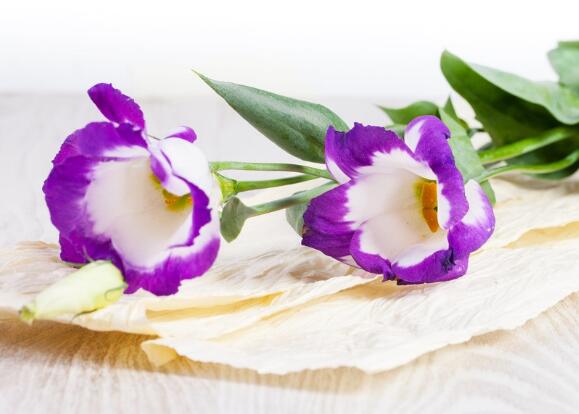
1. Is Lisianthus poisonous? / Non-toxic
As for the question of whether Lisianthus is poisonous, the answer is no. Although most plants in the Gentianaceae family carry some degree of toxicity, Lisianthus is an exception. Not only is it non-toxic, but growing it indoors also brings many benefits. As for what those specifically are, let us continue reading.
2. Can Lisianthus be placed in the bedroom? / Yes
As for whether Lisianthus can be placed in the bedroom, the answer is yes. Not only is it non-toxic, but it also has many benefits. Lisianthus is a natural air purifier; it can absorb harmful substances remaining in the air, making the bedroom air fresher. It is also ornamental in itself, so placing it in the bedroom as decoration is also a good choice.
3. Requirements for growing Lisianthus in the bedroom
1. Growing environment
When growing Lisianthus in the bedroom, be sure to pay attention to ventilation. If it is not ventilated for a long time, it is very easy for some pests and diseases to appear, so you need to pay attention to this. It is also best to keep the indoor temperature at 15-28°C, which will also be beneficial to its growth.
2. Light requirements
During the growth of Lisianthus, light is very important. If you choose to grow it in the bedroom, it is best to move it outdoors at midday every day to receive a few hours of light, so that it can grow better.
3. Watering requirements
When growing Lisianthus in the bedroom, the watering requirements are not much different from growing it outdoors. As for the specific amount of water and precautions, you can refer to the article on Lisianthus growing methods. We will not go into too much detail here.
Can Lisianthus be placed in the bedroom? How many years can Lisianthus be grown?
So-called Lisianthus is a variety of Eustoma origination from abroad. It is currently distributed very widely in our country, and because its ornamental value is very high, many people like to grow some at home. So before growing Lisianthus, many people surely want to have an in-depth understanding of it!
Can Lisianthus be placed in the bedroom?
Lisianthus belongs to the Gentianaceae family, and plants in Gentianaceae are more or less toxic. For example, the root of the closely related Eustoma is toxic; it contains eustoma saponin, a component with strong hemolytic action. Fortunately, Lisianthus is not toxic, and the whole plant is non-toxic. Whether accidentally eaten or in prolonged contact with it, no problems will arise. It can be said to be a very people-friendly plant. Therefore, there is no problem keeping it indoors.
How many years can Lisianthus be grown?
It mainly depends on how each person grows it. Some die after a few months, while some are still doing very well after three years. As long as Eustoma is not cut down and is grown well, you can see its flowers every year, and there is no need to sow and replant it every year.
Lisianthus growing methods
1. Temperature. The suitable growing temperature for Lisianthus is 15℃—28℃. It can endure a low temperature of 0℃ for a short time. During the growing period, the nighttime temperature cannot be lower than 12℃. If the winter temperature is below 5℃, the leaf rosette of Lisianthus will become rosette-shaped and it will be unable to bloom. If the summer temperature is above 30℃, the flowering time of Lisianthus will be shortened.
2. Lisianthus likes a moist environment, but too much water will damage the roots of Lisianthus and make it prone to disease, while too little water will make the plant grow weakly and bloom early. Therefore, watering should be moderate, and you must not overwater.
3. Light. Lisianthus likes a warm, well-lit environment. Long-term light helps stem and leaf growth and flower bud growth, so it is best to maintain 16 hours of light per day.
4. Soil. Lisianthus likes fertile, loose soil with good drainage. It is best to use improved garden soil with added peat soil, rice husk and a small amount of lime.
Precautions for growing Lisianthus
1. The suitable growing temperature for Lisianthus is 15-28℃, and the nighttime temperature during the growing period should not be lower than 12℃. If the winter temperature is below 5℃, the leaf rosette becomes rosette-shaped and cannot bloom. It can also tolerate a low temperature of 0℃ for a short time. If the growing-period temperature exceeds 30℃, the flowering period is noticeably shortened.
2. Lisianthus flowers have relatively strict water requirements. Although Lisianthus likes a moist environment, excessive water is unfavorable to root growth and makes it susceptible to disease invasion. After the flower buds form, avoid a high-temperature and high-humidity environment, otherwise it is easy to cause fungal diseases. At the same time, insufficient water supply during the growing period makes stems and leaves grow thin and weak and causes early flowering. Therefore, when cultivating Lisianthus in Israel, drip irrigation facilities are used, which is very beneficial to the growth and development of Lisianthus.
3. Lisianthus flowers are relatively sensitive to light. Long-day light is very beneficial to the growth and development of Lisianthus and helps stem and leaf growth and flower bud formation. Generally, 16 hours of light per day gives the best effect.
4. Lisianthus flowers require fertile, loose soil with good drainage. Continuous cropping must be avoided. The soil used for potted plants must be disinfected. The soil can be treated with high-temperature steam or methyl bromide, and the soil pH should be 6.5-7.0.
5. Lisianthus flowers are commonly propagated by sowing. It is mainly sown indoors in pots in September-October or January-February. The seeds of Lisianthus flowers are very small, with 22,000-22,500 seeds per gram, a germination rate of 80%-85%, and a suitable germination temperature of 22-24℃. Lisianthus is a light-loving seed; after sowing, do not cover with soil, just press lightly. Before sowing, both the pot soil and the container must be strictly disinfected at high temperature. It germinates 10-14 days after sowing, and thinning is done once 10 days after germination.
Lisianthus is a non-toxic plant, so growing it at home is very good, and placing it in the bedroom has no adverse effect on the human body. Lisianthus is not an annual plant and can be grown for several years, but this requires skill, so as long as you master the techniques for growing it, Lisianthus can still be grown very well.
What is the flower language of Lisianthus? The legend of Lisianthus / sincere and unchanging love
Lisianthus is a relatively common flower in people's lives, with a very elegant temperament, so it is loved by many people. Like most plants, it also has its own flower language. What is the flower language of Lisianthus, and what legends are there about Lisianthus? Let us walk you through it below.
1. What is the flower language of Lisianthus? / Sincere and unchanging love
As for the flower language of Lisianthus, it generally represents sincere and unchanging love, purity, innocence, beauty, being moved, and being full of emotion. The appearance of Lisianthus is relatively delicate, giving people a feeling of wanting to care for it carefully.
2. The legend of Lisianthus
Long ago in a small mountain village, there was a pair of lovers. The woman was called Lisianthus, and she and the man had grown up together since childhood, so they could be said to be childhood sweethearts, and they loved each other very much. However, one day the boy said he was going to a distant place to learn immortal arts and asked Lisianthus to wait for him, but the man never returned and was never seen again. Yet Lisianthus did not give up and kept waiting at the village entrance for the man to return, until one day the girl turned into a flower growing at the village entrance, waiting forever.
3. Introduction to Lisianthus
1. Appearance introduction
Lisianthus is a flower with very rich colors and a very unique flower shape. It has a fresh and elegant temperament and plays a role in beautifying the environment. It originated earliest in North America and only gradually spread to Asia in the 1960s. With decades of development, Lisianthus has become a relatively common plant in people's lives, and many people grow it at home.
2. Introduction to growing methods
Lisianthus is a plant that likes warmth, so during cultivation you must maintain sufficient light, and the environment must also be ventilated. Of course, watering and fertilizing are also indispensable. As for the specific details, you can refer to the article on Lisianthus growing methods, where you can find the answers.
4. Flower language of Lisianthus in different colors
1. White Lisianthus flower language: purity
2. Pink Lisianthus flower language: innocence
3. Purple Lisianthus flower language: full of emotion
4. Green Lisianthus flower language: being moved